Gentle Ben – Ben Webster & Tete Montoliu

Finally writing about Jazz again

I’ve been a bit disappointed by the Jazz releases of the recent months, I’ve been checking out pretty much every new album on my streaming service, but there weren’t a lot of new albums that raised my curiosity.

So let’s go back to the classics and talk about two not very well-known artists that both were outstanding musicians.

Ben Webster 

If you ask Jazz fans about well-known Sax players, you get Bird, Rollins, Coltrane. Does anybody mention Webster? Yes, when you ask them, but he’s clearly not top of mind.

This is really a pity. He has a very unique sound, full, with a lot of “air”. I’m not usually very good at identifying saxophone players at their sound, but Webster is very easily recognizable.

He is as much at ease in uptempo as he is in beautiful ballads.

I could have mentioned several Ben Webster albums here, e.g. Ben Webster Meets Oscar PetersonColeman Hawkins Encounters Ben Webster, or Soulville, all classic Verve albums from the late 1950s.

However, I’ve chosen another one, recorded in 1973, one of his very last albums. Why?

Tete Montoliu

Well, to allow me to write about Tete Montoliu, another not as well-known musician, from Barcelona. No idea why this excellent piano player didn’t become more famous? Maybe because his main career was in the 1970s, when everybody was listening to Fusion?

Gentle Ben
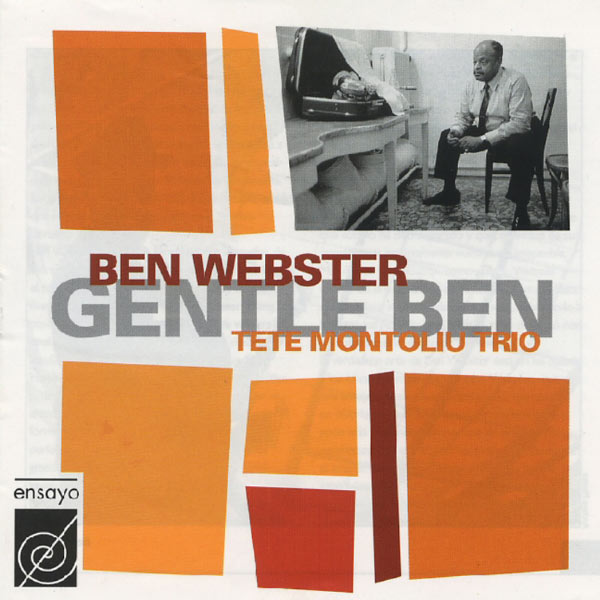
Ben Webster Tete Montoliu Trio Gentle Ben

Whatever the reasons were, this album is proof that both artists were outstanding musicians.

Take the starter track, Ben’s Blues. 9 minutes of pure concentrated swing.

The Man I Love is one of my favorite Jazz ballads. I’ve rarely heard it better played than here. You really can hear Billie Holiday in his saxophone voice.

Or Don’t Blame Me, another beautiful slow ballad, where you get all the nuances of Websters amazing sound.

This album really is a lot of fun all the way.

My rating: 4 stars

You can still download it here (Qobuz), unfortunately, my favorite download and streaming provider seems to be in major financial trouble and may not be around any more in the near future, which would be a pity.
Hype vs. Hype – Lang Lang vs. Benjamin Grosvenor

First of all, to my subscribers, you may have been surprised not to see a post yesterday. This indeed has been the first time since I started this blog nearly 6 month ago that I didn’t post anything on my regular schedule of every 2-3 days. I unfortunately had a health issue in the family. I’ll really target to get fully back on schedule with posts appearing at least every 3 days.

Second, to the Jazz fans among my readers, hope you don’t get bored, my blog has been rather focused on classical music for the last posts. I’m working on getting back to Jazz ASAP.

But well, one more on classical music.

This one was triggered by my mother in law, suggesting I should write about Lang Lang’s latest album. When I spoke to her, I mentioned that I hadn’t heard it yet, but wasn’t a big fan of Lang Lang in general. Her answer was, “So why don’t you compare it to something you like better?”.

Well, here we go.

“Hyped* classical music artists

Every once in a while there are musicians out there, that, usually helped either by YouTube (e.g. Valeria Lisitsa) or by the label (remember Vanessa Mae?) that are rather well-known even to a non classical audience, and have a certain pop-star following. Sometimes (e.g. Jonas Kaufmann) the hype is correlated with quality, more often than not, I find the correlation between fame and quality in classical music to be not very strong.

Lang Lang is a typical example. He’s probably today’s best known pianists (don’t have any data to back this up unfortunately). And as I said to my mother-in-law above, I have yet to hear a Lang Lang album I really like.

But thanks to my streaming subscription I could simply check the latest album out and make up my own mind.

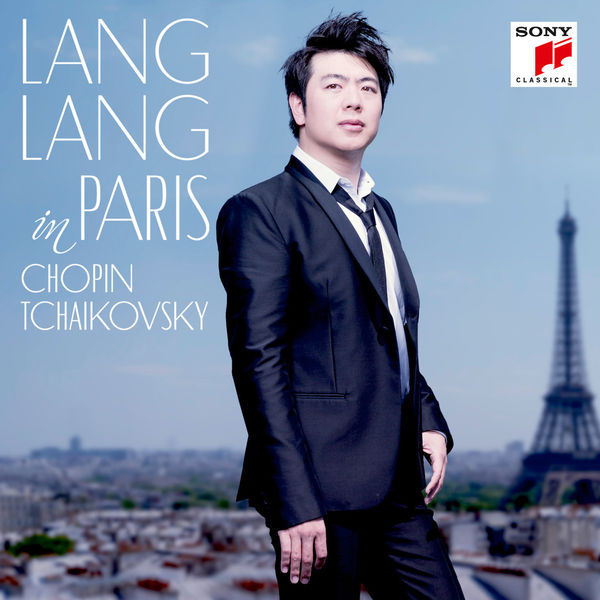
Lang Lang in Paris Chopin Tchaikovsky Sony 2015

The Chopin Scherzi

A word of introduction on the music: the album consists of the four Chopin Scherzi, and Tchaikovsky’s The Seasons for piano. I’m not very familiar with the latter, so I’m not going to comment on the performance.

However, I just love the Scherzi. There is an entire world in the 6-12 minutes of each one, and they are among my absolute favorite piano pieces by Chopin.

So my expectations were rather high. And I’m sorry to say I was disappointed.

No. 1 was just too nervous, to ADHD (my wife told me to switch albums when we listened to it together).

No. 2 is nicely flowing at the beginning, but getting a bit quirky over time, and again too nervous in the fast parts.

No. 3 is probably the best of the four, a bit too much still, but quite enjoyable nevertheless.

The worst was probably no. 4, just too much forte all over the place, and just too slow for my taste.

Benjamin Grosvenor

Now, as suggested by my wise mother-in-law, let me write about my recommended alternative.

And actually another form of “hype”, albeit at a smaller scale.

Benjamin Grosvenor at the tender age of 24 has won more awards already than others in a lifetime. He was Gramophone’s youngest-ever double award winner, and the rest of the British (and partially international) press went just as crazy about him.

So how’s the hype working out here?

Well actually, I’m a HUGE fan. His Chopin Liszt Ravel album, which features all 4 Scherzi, is just outstanding, and his more recent release Dances was not far behind in terms of quality (I mentioned it my comments about the 2015 Gramophone awards here).

There are obviously other outstanding versions of the Scherzi out there (Argerich for no. 3, Rubinstein, and the best I’ve heard was Kristin Zimerman for no. 2 in a live concert), but the recording here is pretty close to perfect.

Benjamin Grosvenor Chopin Liszt Ravel Decca 2011

My rating: 3 stars (Lang Lang) vs. 5 stars (Grosvenor)

You can find the Lang Lang here (Qobuz) if you really insist, and the Grosvenor here (Qobuz) and here (Prestoclassical).

The official “making of” of the Lang Lang in Paris album here:

Cavalli: L’Amore Innamorato – Christina Pluhar’s new album

Francesco Cavalli

I actually thought I knew my composers reasonably well, even more obscure ones, but Cavalli was new to me. I’m probably not the only one, this is one of the composers that was known only to early music

So I was a bit surprised to see two new  recordings on this Venetian composer coming out at pretty much the same time, Mariana Flores Heroines of the Venetian Baroque (which good excellent reviews in the French press by the way), and also from Christina Pluhar’s early music ensemble Arpeggiata.

Cavalli was a singer and Monteverdi protégée who later started writing his own operas. At his time, he was famous enough tube noticed by Louis XIV’s Cardinal Mazarin to play his operas at the wedding of the Sun King.  (That’s probably relatively speaking even better than being invited to play at Kimye’s wedding these days. But I digress.)

L’amore innamorato (Erato 2015)

Christina Pluhar’s ensemble L’Arpeggiata has released some great albums, although the recent ones, especially the “jazzy” Purcell, were reviewed rather controversially.

Cavalli: l'Amore Innamorato Christina Pluhar l'Amore Innamorato Christina Pluhar L'Arpeggiata Erato 2015

I haven’t yet seen any reviews on this new Cavalli album, but I think this will be less controversial, as was their initial Monteverdi Teatro d’Amore album from 2009.

It is basically a lot of fun. The beautiful voice of the Spanish soprano Nuria Rial (helped by Hana Blažíková) is a big part of the fun, but Pluhar’s early music ensemble really is playing with a lot of dedication here.

The program is a best-of of Cavalli’s operas (apparently he wrote at least 24), and this is probably a good thing, as following a full early baroque opera seria can sometimes be a bit tedious.

No boredom here, this is thoroughly enjoyable. I suggest you check it out! I’ve added a Youtube sample below.

My rating: 4 stars

You can download it here (Qobuz) or here (HDtracks).

UPDATE November 22: Alexandra Coghlan reviewed this album on Sinfinimusic and gave it 5 stars.

Pappano’s Aida – We’re Really Lucky This Kind of Album Still Gets Produced

Me and opera – again

I’ve already mentioned previously that I’m far less knowledgeable about opera than about instrumental classical music. I clearly come from an instrumental background, and must admit I judge even opera performances first and foremost by the orchestral performance.

I know true opera experts will be able to discuss singer X vs Y. To me, these things matter, but much less. So take my opera recommendations with a big grain of salt.

Furthermore, Verdi is not my daily fare. I listen to a Mozart opera about once per month, Verdi is only on the playlist every quarter or so.

Okay, so the disclaimers are out of the way.

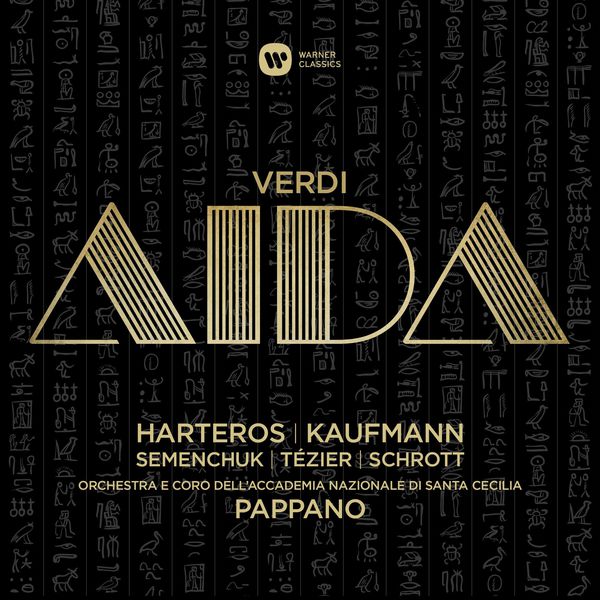
Pappano’s Aida (Warner Classics 2015)

Well, luckily on this album you don’t just need to trust me. I have yet to see a negative review of this outstanding album. The debate is just out whether this is a four or five-star album.

New opera recordings these days are very rare. The productions are simply to expensive for a declining classical music market. So we can count ourselves very lucky if we get new albums at all.

And here we’re even more lucky, because this really hits all the right buttons. Beautiful singing from outstanding artists is matched by the great playing of Pappano with the Santa Cecilia.

Verdi: Aida Pappanis Anja Harteros Jonas Kaufmann

Kaufmann is in a way the most hyped tenor of our days. Luckily for us, this hype really is justified, he has an amazing voice. I fully buy his Radomes. Anja Harteros as Aida is maybe a tiny bit lighter, but to be fair my reference so far is the legendary Karajan version with Tebaldi, so I’m being a bit picky here.

The recording quality is very spacious and resolving, and gives an excellent image of the Sala Santa Cecilia.

If only we’d get more of this kind of opera recordings, so we wouldn’t always have to go back to the 1950s and 60s for our operas. Sure, these legendary recordings will stay, but it is nice to be able to experience something with the sound quality of a 2015 high-res download.

My rating: Five stars

You can download it here (Qobuz) or here (HDtracks)

Keith Jarrett: La Scala

Keith Jarrett’s Live Albums

Keith Jarrett and his solo piano concerts are legendary.

If Wikipedia is to be trusted, his Köln Concert is the best-selling solo and piano album in the history, with more than 3.5M albums sold. This may not be much by Taylor Swift standards, but for Jazz, where albums usually selling a some thousands of albums, this number is just mind-boggling.

And what is probably even more mind-boggling is that the Köln Concert is not a one hit wonder, but Jarrett has turned out dozens of solo concert albums in the last thirty years, and usually nearly all of them are worth having.

I’ve started this blog writing about the lucky chance I had to see Jarrett live earlier this year, and it is truly an outstanding experience.

In my 25 Essential Jazz albums post, I’ve promised to myself that I’ll eventually review all of his live solo albums.

This will be a challenging task, but well, you’ve got to have ambitions in life. Let’s see how long this journey is going to take.

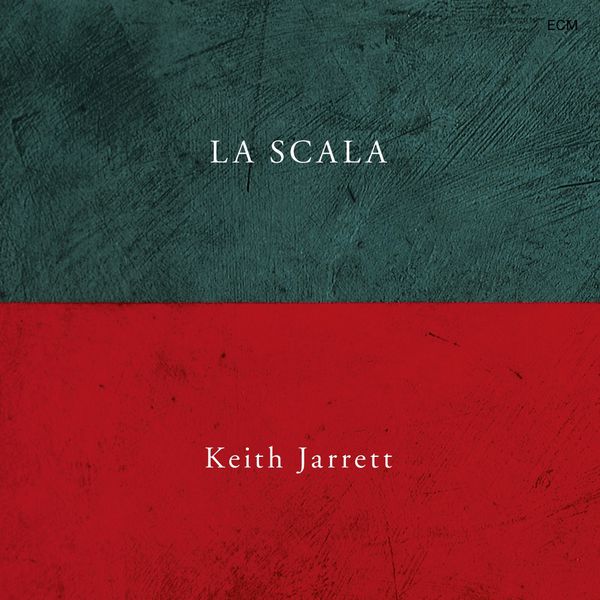
La Scala (ECM 1997)

Every journey has got to start somewhere. I rather randomly chose La Scala for a start. Why? Well, the cover is beautiful, and it is probably one of the lesser known albums.

La Scala was recorded (you would have guessed) in Milan’s famous opera house, in 1995, and released in 1997. Apparently, this is the first time a solo jazz concert was hosted in these illustrious walls.

Keith Jarrett La Scala ECM 1997

The formal structure of the concert is very simple, you have “Part I” (approx 45 min) and Part II, adding 28 more minutes.

Part I evolves very slowly over time. it reminds me of a large river maeandering slowly and majestically. You have time to let your mind wander around while listening to this. In a way, this nearly becomes meditation music, but this is Jarrett, so you can rest assured that you won’t get bored, instead you just keep floating with the river.

Part II starts a bit randomly. This is the style I personally don’t really like that much, I just get lost without a clear melody and rhythm. Well luckily for me he doesn’t overdo the randomness, and structure reemerges rather quickly after around 4 minutes or so. Unlike part I, this part has some much faster flows, and while part I was focused on chords, here you often just get a chain of individual notes. Around 10 min in, the character changes again, chords reappear, and a melodic structure reemerges.

And in my personal opinion, he’s really saving the best for last. The encore is “Over the Rainbow”, in a very simple, minimalistic approach. I’ve mentioned previously how much I love this song, and I’m not disappointed here either.

My rating: 4 stars (not the most essential of Jarrett’s solo albums, but we’re really talking from a very high standard here, this is still better than 95% of other solo piano albums out there).

You can download it here (Qobuz) or here (HDTracks)

Rachel Podger’s Magnificent Mozart

Wolfgang Amadeus Mozart

When I was young and just started listening to classical music, I had a slight disdain for Mozart. “Too easy”, for kids, or similar stereotypes.

How wrong I was. Sure, pretty much every single Mozart piece has something immediately pleasing to it, something that even a non-classical music listener usually easily grasps, and mostly likes.

What I completely missed how hard it is to make something sound easy AND interesting at the same time. The more I discovered the music of Mozart’s now mostly forgotten contemporaries (Stamitz, Salieri, Michael Haydn, etc.) , the more you discover what is really missing there and what makes Mozart’s music so unique.

Mozart’s violin sonatas

When you think about chamber music, and the very simple but elegant form of violin sonatas, usually  people think of Beethoven first, with his famous Kreutzer sonata, or sometimes Brahms (see my review of Brahms sonatas with Isabelle Faust here).

Mozart isn’t the first composer that springs to mind when talking about this genre. Probably this is partially due that quite a number of them were written when he was really young. Luckily, he stuck to this form throughout his life, and ended up writing 36 of them.

Rachel Podger

I’m a big fan of Rachel Podger. She is usually focusing on Baroque music and has recorded some outstanding albums here (more about this later on this blog).

However, she also ventures into Viennese classical music. And how well she does. She has recorded the complete Mozart sonatas in a total of 8 volumes. She plays here with Gary Cooper, who plays a beautiful fortepiano.

Let me arbitrarily talk about vol. 2 here, but honestly, all 8 volumes are worth getting.

Mozart Complete Violin Sonatas vol. 2 Rachel Podger Gary Cooper Channel Classics

On each volume Podger mixes more mature works with some of Mozart’s very early works (e.g. KV7 here). And while it is clearly evident that this is not mature Mozart (the boy was approximately 8 years old when he wrote this, and probably helped by his father), even this one is worth discovering.

But you also get the outstanding KV481 on this album which dates from the same time of his great Da Ponte operas (Don Giovanni, Figaro etc.).

As an additional bonus, Channel Classics is a label that care a lot about recording quality, and this is one more example of it.

My rating: 4 stars (5 stars+ playing, but the inclusion of the early sonatas gives 1 star off, making it just not AS essential as some other works).

You can get it in it’s native recording format of DSD here (Native DSD), note that not all players do support this format. Otherwise you can also purchase the full 8 CD box here much cheaper if you prefer physical media (Prestoclassical). At this point in time, there’s even a special offer ongoing.

The Legacy of the Jazz Messengers (6): Freddie Hubbard’s Hub-Tones

I’ve a little bit neglecting my Jazz Messengers Mini-Series, don’t really know why. Maybe it is because I consider Freddie Hubbard’s albums for example as just a little bit less essential than the artists I’ve written about so far. Well, anyway, here we go again:

Freddie Hubbard

Freddie Hubbard is considered among musicians as one of the trumpet legends. He probably is one of the typical “musician’s musician”. He has, as my title indicates, played with the Jazz Messengers, but has played with pretty much every well-known Jazz musician of the period, be it John Coltrane, Miles Davis, Wayne Shorter, Herbie Hancock, you name it. He also plays on The Blues And The Abstract Truth, one of my 25 Essential Jazz albums.

Hub-Tones

Why the 1962 Blue Note album Hub-Tones?

Well, I was torn for a while whether I should feature Open Sesame, Ready For Freddie (both released 1 and 2 years prior to Hub-Tones on BlueNote), or one of the two subsequent releases on Impulse, The Artistry of Freddie Hubbard, or The Body And The Soul. 

You get the picture, these years between 1960 and 1965 were highly productive for Freddie, and all of the above mentioned albums are worth having.

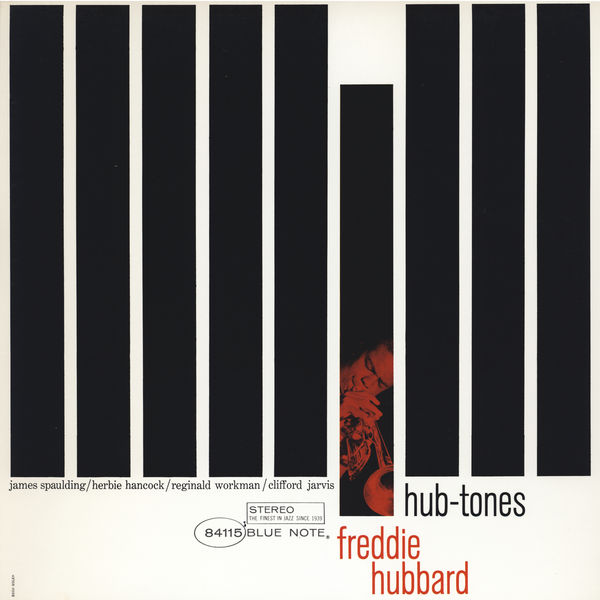
Freddie Hubbard Hub-Tones 24/192 Blue Note 1962

One of the reasons I chose Hub-Tones is probably the cover. Blue Note’s cover art from this period was generally excellent, but I really like the minimalist cover of this particular album.

The other reason is Herbie Hancock, which I prefer slightly to McCoy Tyner on the two previous Blue Note albums (yes, I have a piano background so those things matter to me).

Finally, this album features a lot of Hubbard originals, which I really appreciate.

Another great artist on this album is James Spaulding playing the flute and alto sax alternatively, who is not that well known these days, but has played as a sideman for a large number of Blue Note albums.

My rating: 4 stars

You can download it here (Qobuz) or here (HDTracks)

Classical Life

A classical music blog by music critic Tim Mangan

This Week's Music

Making Classical Accessible

From my Macbook to the Net

Evaporation of my thoughts and observations

Elestra

Author: Artienne

My Life in Music

Playing, Singing and Listening

ArsX3

A brand new journal reviewing books, cinema, music

LawrenceEz's Blog

Creative and Performing Arts: Writing, Classical Music, Photography

Laetitia Strauch-Bonart

Contemporary Politics & Culture

sibling revelry

reveling in all things classical

It's A Raggy Waltz

I collect jazz on vinyl, I dig the Dave Brubeck Quartet, & I write about it

La Musica

By two cousins

thejazzbreakfast

Dishing it out from the heart of England

only jazz

random thoughts about music that matters to me

The Culture Project

Exploring the world of literature, wine, art, music and more.

René Spencer Saller

The music causes me to dream of fabulous empires, filled with fabulous sins.

Breaking Baroque

Blog of Tafelmusik Baroque Orchestra and Chamber Choir

Tasting Nirvana

Eating your Dosha

Shadow of Iris

Poetry, fiction, short stories, more ...

The Immortal Jukebox

A Blog about Music and Popular Culture

April Greene

Writer + Editor

a pianist's musings

A history of your favorite classical music.

Classical music for all

Boris Giltburg's blog

I HEAR VOICES

An orchestra seat in the web space