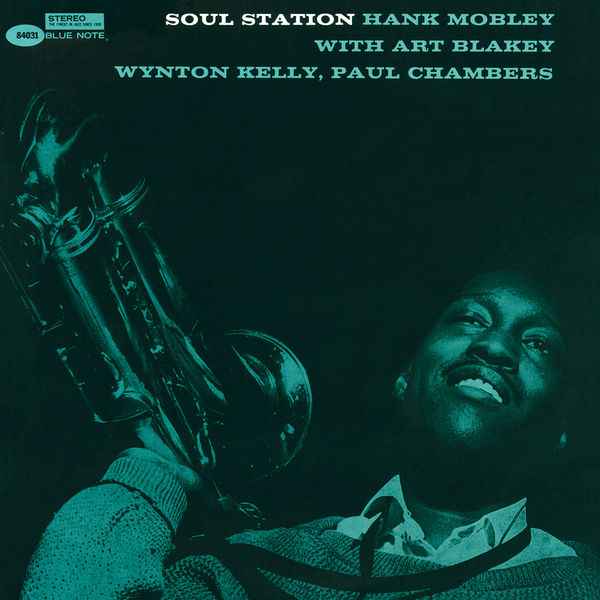
The Legacy of the Jazz Messengers (2): Hank Mobley – Soul Station

For part II of my little mini-series (well, given the number of relevant musicians that I really like, it may turn out maxi, who knows) on the Jazz Messengers, I obviously had a lot of choice. I ended up with Hank Mobley.

Hank Mobley

Why? He’s certainly one of the lesser known artists of the Jazz Messenger stable, and also one of the least well-known Tenor players (Coltrane, Shorter, Rollins, … would anybody spontaneously continue this list with Mobley?)

However, his albums are consistently good. They are never outstanding, I don’t have a single five-star album with Mobley, but I’ve rated most of his albums a very solid four star, they are just always fun to listen too. Getting to such a consistency is already a major achievement for me.

What are those four star albums? Well, you can pretty much chose blindly. Whether it is (in alphabetical order to avoid any impression of ranking) A Caddy For Daddy (what a nice title), Dippin, No Room For Squares, Hi Voltage, Roll Call, Soul Station, or Workout, they are all just a lot of fun. It don’t mean a thing if it ain’t got that swing. Well Mobley and his several groups have plenty.

Mobley grew up learning the … piano. Apparently he starting playing the saxophone only at the age of 16. I sometimes wonder, had he started earlier, would we list him with the Coltranes of this world? If Wikipedia is to be believed,  Miles Davis had considered him as a replacement for Coltrane for a little while (what is for sure is that you’ll find Mobley on the great Miles Davis album “Someday My Prince Will Come” playing alongside Coltrane).

As part of the Messengers he also played with Horace Silver, including the nice album “Horace Silver and the Jazz Messengers” I completely forgot to mention in my previous post.

Soul Station

Hank Mobley Soul Station Blue Note 24 192


So why did I pick his 1960 album Soul Station here? Well, there’s obviously the personnel: Wynton Kelly and Paul Chambers, plus Art Blakey. What could possible go wrong? In any case, I don’t seem to be alone in preferring this album (witness this very nice article about him written by the folks at BlueNote), and Jazz critic Bob Blumenthal wrote that this album could be considered his “Saxophone Colossus” or “Giant Steps”.

Luckily I didn’t even have to research the facts above, as I have a very simple system: given that I try to rate individual songs as much as possible within iTunes, I can simply check the average score of an album. While most of my Mobley albums net out at four stars throughout, Soul Station stands out just a bit at “4.33” stars.

Two exceptional tracks

The album stands out due to two exceptional tracks: This I Dig Of You and Soul Station. I don’t think it is a coincidence that these are the longest tracks on the album. I’ve noticed before that usually the really long tracks (Soul Station is 9:05) are often the best, probably because they just leave more room to the individual soloing.

Overall rating: 4 stars (well 4 1/3 mathematically…)

The Legacy of the Jazz Messengers (1): Song For My Father – Horace Silver

Hard Bop

I’m not going to win a price on originality here writing about one of the greatest Jazz groups in history, Art Blakey’s Jazz Messengers. They’ve been praised over and over again over the last 50 years.

But never mind, my purpose was to write about music I really like, and the hard-bop era is one of my favorites in the entire Jazz history. And probably hard-bop wouldn’t be hard bop without the Jazz Messengers. Therefore, I’m starting this little mini-series about the Jazz Messengers and their spin-offs.

The Jazz Messengers

Starting in 1954, this group around the drummer Art Blakey was composed of an ever-changing group musicians that would pretty much all go on great solo careers, including, little known fact, Keith Jarrett at some point (in a way you could say Art Blakey discovered Jarrett). Other outstanding musicians include Wayne Shorter, Lee Morgan, Benny Golson, Clifford Brown, Curtis Fuller. By the way, most Jazz Messengers albums are worth having, including At the Café Bohemia, A Night In Tunisia, Caravan, and obviously, Moanin’.

The original quintet from 1954 was composed of Horace Silver, Kenny Dorham, Hank Mobley, and Doug Watkins. One of my next entries in this series will be about Mobley, who has done some great albums. But given that I have a piano background, let me start with the pianists of the group, Horace Silver.

Horace Silver

And let me start immediately by what is probably his greatest album, Song For My Father.

5099963650457_600

Recorded in 1963 and 1964, and released in 1965, this album falls around the end of the hard bop period, before most  Jazz musicians moved on to “Free Jazz” and “Fusion” (to me an absolute dead-end in music), and it took until the 1980s to get back to a some form of revival of hard bop. (Some say the sale of the Blue Note label in 1966 also significantly contributed to the decline of hard bop).

On this album, Horace Silver records with two groups of musicians, the first one includes Carmel Jones, Teddy Smith, Roger Humphries and the great Joe Henderson (tracks 1, 2, 4, and 5), the second one being Blue Mitchell, Gene Taylor and Roy Brooks. By the way, the initial group of Horace Silver in his earlier recordings were pretty much “stolen” directly from the 1954 Jazz Messengers group (only Art Blakey stayed on).

As usual, I’m not going to write a track by track review of an album, I usually find those rather tedious to read, especially in the internet age where everybody can just listen to the tracks anyhow.

Let me just point out my two favorite tracks on the album, which are the title track, and Calcutta Cutie. Both songs exceed 7 minutes, a great duration for a jazz song because it really allows for several solos that are really outstanding. But luckily, on this great album, even if you have the CD version with some bonus tracks, there are really no weak tracks.

My rating: 5 stars

Other Horace silver albums that are worth exploring include Blowing the Blues Away, Horace-Scope, The Tokyo Blues, and The Cape Verdean Blues (notice a lot of blues in there? well, that’s probably what’s so special about Silver in the first place, his bluesy tone).

Get the 24/192 remaster

Usually I don’t intend to write about technical details here, this blog should be dedicated to music, but if you intend to purchase this album please don’t buy the CD, especially not the RVG remaster series.

The most recent 2012 remaster is released in 24 bit and 192khz format and is available on several sites including Qobuz, HDTracks and ProStudioMasters. Even if you don’t believe in the benefits of higher resolution than CD, the remastering of the recording per-se is way better than all previous versions I’m aware off.

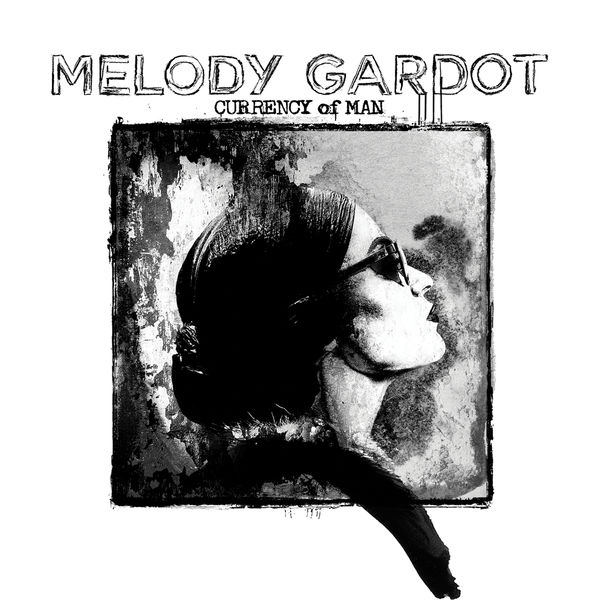
Currency of Man – Melody Gardot goes Soul – A Review

I’ve been a fan of Melody for quite a while now. Her story is touching (serious car accident, very long recovery, music as therapy), and her first three albums (Worrisome Heart, My One And Only Thrill, The Absence) were all very good. She’s also contributed a great track to Autour de Nina.

Currency Of Man (Legacy 2015)

0060254729193_600

Generally, I’m not such a regular listener to vocal jazz. I appreciate the classics, Ella Fitzgerald, Sarah Vaughn, Billie Holiday, but of the contemporary singers, many don’t touch me as much.  Even clearly exceptional artists such as Cecile McLorin Salvant I only listen to occasionally.

So again, what’s different about Melody to all the other contemporary Jazz singers (and there are many): The music is well produced and she writes good songs. Many others do as well. Her unique feature to me is really her voice: pure seduction. This voice is really special and easily recognizable whatever she does.

Obviously, I had to get her latest album, I even had it on pre-order. Just downloaded it when it officially came out this morning.

Probably not Jazz anymore – if it ever was

Now let me put a disclaimer first, or rather a question: is this new album actually Jazz? Well, if you take the definition of many record stores (remember those, they’ll probably soon go the way of video rental places), who insisted on putting Norah Jones (or anything else published on BlueNote or Verve) and sometimes even Katie Melua under Jazz, then probably yes, but this album has more elements of Soul than Jazz.

One thing that struck me about this album were the arrangements. This album contains strings. Usually, the only one who is able to pull off combining Jazz and strings, is Ella Fitzgerald again. But here, it is really tastefully done, not overly cheesy, e.g. on the very intense “If I Ever Recall Your Face“. In other songs, you get typical Soul/Motown elements like brass and background vocals. Again, those just blend in and support the music. Very well done.

Then on some songs, e.g Morning Sun, you initially think she’s entering Norah Jones territory. But no, soon you’ll realize, this really is a Soul album with even funky elements occasionally.

Very enjoyable

How does it all work out? Very very well. I’m a big fan of this album. There is only one song that stands out as slightly weaker compared to the rest of the album “Same To You“; all  the rest is truly enjoyable.

An outstanding next step for an artist who will have a great future. Check it out!

You’ll find some good vids including some “behind the scenes” here.

My rating: 4 stars

EDIT: Deluxe edition

It has just been flagged to me that I didn’t specify whether I reviewed the regular or the deluxe edition of the album. The comments above refer to the regular edition, I hadn’t even realized the existence of the Deluxe Edition until now.

The latter has not only 5 bonus tracks (to be fair, 2 of them are less than 1 min), including the outstanding “Burying My Troubles“, pretty much most of the regular songs appear to be different cuts/mixes to the regular edition. I’ll need to compare a bit more and will report back in the next days.

Autour de Nina – an outstanding Vocal Jazz complilation

Hommage albums are popular these days. Cassandra Wilson and José James just recently released their Billie Holiday inspired albums (see my review of Cassandra Wilson’s album here), but here we are dedicating an entire album to another Vocal Jazz legend: Nina Simone.

Autour de Nina cover

This album, while it was released on Verve, got significantly more press coverage in France then elsewhere. Even the website, and their Facebook page, is written in French. This is a pity, as this album is outstanding and would benefit from being better known globally.

This is a compilation including some relatively well known international celebrities, the most popular probably being Gregory Porter and Melody Gardot (who will release here new album tomorrow by the way). You may also have heard of ACT-label singer Youn Sun Nah.

Then we have some names that are probably more familiar to a French/European audience, including Camille, Lianne La Havas,Olivia Ruiz, and the Swiss rising singer songwriter Sophie Hunger (more about her certainly later in another post).

The quality of this album is outstanding throughout. Olivia Ruiz manages to put a new twist on the TV-commercial-abused “My Baby Just Cares For Me“, Gregory Porter is great in “Black is the Color (Of My True Love’s Hair)”, and Liane La Havas does a great “Baltimore“. The only weak spot to me is “Feeling Good”, which I (shame on me) prefer by our Great Cheesy Canadian, Michael Bublé, Ben L’Oncle Sam’s version just doesn’t make me feel as good (sorry for the bad pun).

I Put A Spell On You

However, let me flag my personal favorites: “Plain Gold Ring” by Youn Sun Nah (one of my favorite Nina Simone songs, from her famous debut), “Four Women” by Melody Gardot, but most of all, Sophie Hunger’s “I Put A Spell On You“, a version that for me personally even beats Screamin’ Jay Hawkins (please don’t stone me…).

Very highly recommended, 5 stars.

Is the Jazz Piano Trio the ideal art form of the 21st century? – Keith Jarrett’s Standards Vol. 2

Let me answer my rhetorical question immediately: obviously not, there are so many art forms out there today that trying to single out one of them is clearly ridiculous.

So let me rephrase: Is the Jazz Piano Trio my ideal art form? And the answer is, pretty close. There is something special about the intimacy of 3 musicians together, interacting and generating something amazing. It is in a way the modern equivalent of the String Quartet, which many consider the summit of classical chamber music.

I’d like to start by one album which I consider somehow the birth of the contemporary (meaning the last 30 years, I’m starting to get older….): Keith Jarrett’s Standards vol. 2 (footnote: vol. 1 is great as well, I just have a very slight preference for the 2nd volume).

Oh no, you’re going to say, not Jarrett again. Well first of all, you’ve been warned, it is in my subtitle of the blog, and second, I promise I’ll be talking about other musicians as well in the future.

Back to my old friend Keith (not that I’ve ever met him beyond being about 25 meters away last Friday): Why is this album so important?

The lost decade

Well, put yourself in the early 1980s (assuming you were already alive then, I was, but not for long). Jazz just came out of an entire decade of trying to break the “limits” of traditional jazz by first going “Free”, and later by going to Jazzrock and Fusion. Well, I’m sure to offend some here, but to me this was a complete dead-end, and both genres bore me to death (slightly exaggerating to make a point here).

As important as the 70s were for genres like Rock, for Jazz it is my personal lost decade. Most of my collection goes from 1956/7 – 1966, and then starts again in the 80s. So in the early 1980s, we have Keith Jarrett, who already did the amazing solo concerts in the 1970s including the famous Köln concert, apparently the best-selling solo piano album of all times, and had been playing some quartet work both in the US and in Europe (I’ll talk about some of my favorite albums from that period later, so it wasn’t 100% a lost decade, just maybe 90%….).

So then, early 1980s, the bass player Gary Peacock, the drummer Jack de Johnette, and Keith, get together to record first Standards vol. 1, in 1983, and then vol. 2, in 1985. Both are obviously inspired from the key representatives of the traditional piano trio, e.g. Bill Evans first trio, Art Tatum, or Oscar Peterson, but represent something new. And obviously, luckily, don’t contain any element of fusion any more.

Standards vol. 2

I’m not going to review Standards vol. 2 in detail, many smarter people than me have done that. It is an album I keep going back to again and again. I’ve actually just purchased it again very recently. ECM just released some weeks ago a new remaster, now in high-res format of up to 24/192 (bit/khz respectively). Whether high-res files are better than the regular CD format (called 16/44 or “red book”) is a debate I’m certainly not going to start here, you’ll have enough sites to get that discussion going. What is really better is the remastering. ECM; Jarrett’s Munich based record label is known for the excellent recordings, and this new remaster really sounds way better than the CD version. I actually still have the original vinyl in my basement, maybe I should actually get a record player again at some point.

(Footnote again: Do I advocate everybody to get the high res version? It is quite pricey, ECM has always been a premium label. So only get it if you have a decent playback chain and care enough about that album).

So to me, Standards vol. 2 is the “standard” (sorry for the cheap pun) to which I compare all my piano trio recordings.

Since then, the standards trio has recorded many live albums, most of which are outstanding and absolutely worth having. Examples include At the Blue Note, Whisper Not, Standards Live, and even again at the KKL in 2009, Somewhere. (a pity I missed that concert, but at least I have the recording, released in 2014)

Luckily, today we’re living in the Golden Age of the piano trio, we have so many fantastic artists out there that we’re not limited to Keith Jarrett any more. But we really have to thank him for revitalizing this genre (EST then took it to the next level in the 90s, but more about that later).

My rating: 5 stars

UPDATE (Oct 2016): I’ve since reviewed many more Jazz piano trio albums, you can check them all out by clicking on this link.

And please let me know if you have any recommendations for me in the comments section below!

Keith Jarrett live in Lucerne May 22, 2015

So, first entry. I had created this blog some time ago, thinking I’ll probably never write anything. The subtitle, from Jarrett to Brahms, I created with the site some time ago. Now I attended yesterday my first ever Keith Jarrett solo concert, so do I really have an excuse not to write about it? Why would you want to read this? No idea, I’m basically writing this for myself. I do love music, and I care about it very much and like sharing it, so if you share my passion, and maybe at least partially my taste, it maybe worth reading anyhow.

So back to the officially named “Kunst- und Kulturzentrum Luzern”, better known by its acronym, KKL. It is a beautiful building in on the shore of lake Lucerne, created by the French architect Jean Nouvel. In spite of heaving a leaky roof (google it if you want to find out more), it is a beautiful space, with loads of glass and steel. Inside you have a museum, some restaurants and cafés, a nice open roof top terrace with an amazing view over the old town and the lake, and most importantly, the main concert hall. It is a beautiful affair, and has excellent acoustics. It is mainly known for hosting the famous Lucerne Festival, but beyond classical you can attend contemporary music and the occasional Jazz concert here as well. They even go into mainstream by having some orchestra play the soundtrack to Pirates of the Caribbean and other stuff (why somebody would want to hear THAT in concert, escapes me, but I digress).

So back to me being in front of this beautiful building. You should know that being disorganized and traveling a lot for work I wasn’t part of the crowd who bought ALL of the tickets in the 48h after they became available. I went nevertheless, trying my luck on the grey market. And lucky I was (well if you consider overpaying 25% over the already pretty ludicrous (Switzerland is a rich country) list price of the ticket.) Note that normally I would have ethically objected to supporting the grey market on this kind of stuff, but for such a rare bird as a Keith Jarrett solo concert, my conscience quickly shut up.

An amazing experience

8pm pretty sharp (this is Switzerland after all), sitting more or less comfortable in my seat in the middle of the first balcony (at least the black market dealer had the kindness of actually choosing one of the best seats available), lights went out, a speaker welcomed us and warned us all to shut up, switch of mobiles, and ABSOLUTELY not to take any pictures of any kind. (It seems that Keith has decided to stop concerts in the past over this) We’re left with one grand piano on the large stage that can easily hold a full Mahler 8th orchestra including Choir, and about 4 microphones (this concert being recorded for ECM, hopefully it will eventually get released). There he comes, wearing his apparently usual outfit of pretty regular pants, shirt, and sunglasses (I assume to protect him from the spotlights). I’m not a religious person at all, but this was pretty close to a catholic mass in a way, with Mr. Jarrett being our high priest. I wouldn’t have been surprised if I had smelled incense.

Then it starts, and here my words start to fail me. WHAT AN EXPERIENCE! I’m a regular concert goer and have seen many great artists both in the Jazz and classical fields live, but this was outstanding. Unlike earlier may of his earlier concerts, he now seems to shy away from the 20-30 min long improvisations that fade one into the other, and he goes for smaller pieces, each 3 to less than 10 min long (I certainly didn’t check my watch…), getting up for applause every time. In a way, this is similar to his latest release solo album on ECM, Creation, where the longest piece doesn’t exceed 9:25). What a marvel each of those little gems were! Let me state first of all that I’m a sucker for melodies, being a bit simple minded, and I don’t like it very much when musicians stray to far from that. Jarrett has his occasional moments where he seems to think “who needs tonality” and just improvises on (to illustrate, take Paris/London Testament Part IX). Luckily for me, there were only two “songs” of this nature last night, and actually sitting there as part of the magical experience I didn’t even mind these parts too much. Let me state the obvious: Having been there in person doesn’t make me a very neutral judge. But what I’ve heard last night takes the best elements of the “old” concerts (Bremen/Lausanne, München/Bregenz, Sun Bear), and combines them with the greatest moments of the new concerts (Rio, Carnegie Hall). Again, I’m not religious, but I wouldn’t mind having some higher authority to pray to that ECM releases this recording (apparently, Jarrett has to ok this and is notoriously hard to please).

Jarrett having fun

I don’t have any other data points to compare to, but overall, he seemed to be in an excellent mood. He was joking with the audience, at some point once the applause faded he just said “What next? What now?”, closed the cover of the Steinway keyboard and pretended to play (“You don’t hear a lot?” was his joking comment back to the audience). Later during the concert, he even went up, walked over to a microphone that had been sitting in the dark, and told us a story about how this entire concert was for his Grandmother, and her Hungarian origins. Walking back to the piano, he rhetorically, and smilingly, asked the audience “but why would you care about this?” He even tolerated somebody very loudly coughing about 2 seconds into a new song, stopping but just joking about it (I assume me and half of the audience were afraid at that point he’d throw a tantrum instead).

Overall, the range of styles we got was amazing, from small introvert pieces that played a lot with Counterpoint (you could hear he played a lot of baroque) too much heavier, larger pieces where every finger was busy. We even got a very special tribute to BB King, with a Blues/Boogie Woogie-type improvisation. But the best (again, I’m a sucker for melodies) part came with encore number 3, a short improvisation over “When I fall in love”. I’ve only heard this from him in trio form (e.g. Live at the Blue Note, Whisper now), but never heard it solo. SOOOO BEAUTIFUL (yes I know I sound like an over excited teenager praising Justin Bieber, but what the heck). Even better than my previous encore favorite (beyond the obvious Köln Concert Part IIc), My Song from the Carnegie Hall Concert. Overall, I’m very glad I finally made it to my first live concert.

If you like his music, and there is a concert coming up even on your continent, I urge you to hop on a plane and go there, no matter how expensive the tickets are. It is truly a once in a lifetime experience. And let’s not forget, Mr. Jarrett just turned 70. We all cross fingers he’s doesn’t decide to retire any time soon,   but let’s enjoy it while it lasts. Let me stop here. In a later blog entry, I’ll talk a bit more about the other recorded live solo albums. No idea how often I’ll be able to write, but again, I just presume nobody will ever read this anyhow.

Classical Life

A classical music blog by music critic Tim Mangan

This Week's Music

Making Classical Accessible

From my Macbook to the Net

Evaporation of my thoughts and observations

Elestra

Author: Artienne

My Life in Music

Playing, Singing and Listening

ArsX3

A brand new journal reviewing books, cinema, music

LawrenceEz's Blog

Creative and Performing Arts: Writing, Classical Music, Photography

Laetitia Strauch-Bonart

Contemporary Politics & Culture

sibling revelry

reveling in all things classical

It's A Raggy Waltz

I collect jazz on vinyl, I dig the Dave Brubeck Quartet, & I write about it

La Musica

By two cousins

thejazzbreakfast

Dishing it out from the heart of England

only jazz

random thoughts about music that matters to me

The Culture Project

Exploring the world of literature, wine, art, music and more.

René Spencer Saller

The music causes me to dream of fabulous empires, filled with fabulous sins.

Breaking Baroque

Blog of Tafelmusik Baroque Orchestra and Chamber Choir

Tasting Nirvana

Eating your Dosha

The Immortal Jukebox

A Blog about Music and Popular Culture

April Greene

Writer + Editor

a pianist's musings

A history of your favorite classical music.

Classical music for all

Boris Giltburg's blog

I HEAR VOICES

An orchestra seat in the web space