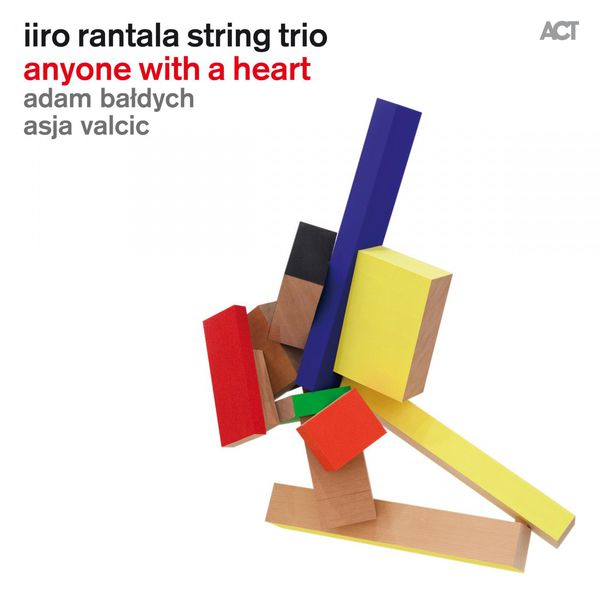
Yes I know, this is a very unusual combination. You get Iiro Rantala from Finland, formerly with the Trio Töykeät, Adam Baldych on Violin, and Asja Valcic on Cello.
But don’t get scared, this is worth exploring!
Iro Rantala String Trio: Anyone With A Heart (ACT 2014)
Well, first of all, is this Jazz? Honestly, no idea. Rantala has studied not only Jazz, but also classical music, and is a proclaimed Bach fan. In any case, it is fascinating music, all composed by Rantala himself.
One of my favorite tracks is Freedom, inspired by Jonathan Franzen’s novel (which I never really liked by the way). Here he dampens the piano to get a very particular sound. The strings even have oriental elements in their playing. All this is driven by a constant groove, that pulls you in and lets you sit on the edge of your chair. Here’s a video of Rantala performing a solo version of Freedom in his own place, to give you an idea what to expect:
My other favorite is the ballad Alone, that prominently features the beautiful sound of Valcic’s cello.
Again, this track probably isn’t what you’d call typical Jazz. I couldn’t care less. This is music that escapes traditional categories and genres, but is beautifully played by musicians who are in it with all their heart.
This is worth exploring if you’re looking for something different.
My rating: 4 stars
You can find it here (Qobuz) and here (Prostudiomasters)
However, with the untimely death of Esbjörn Svensson in 2008, I’ve been wondering who would become a worthy successor.
I’ve written about a number of piano trios already, and there is certainly no lack of exciting new trios around. However, none of the trios I’ve written about got close to the particularity of the EST combining elements outside of Jazz into the art form, and having a focus on rhythms that come more from pop, rock, and electro. Well, maybe the US trio The Big Plus, or the Swiss Rusconi (that I both have yet to write about).
However, there is one trio that probably get’s closest to the originality of EST.
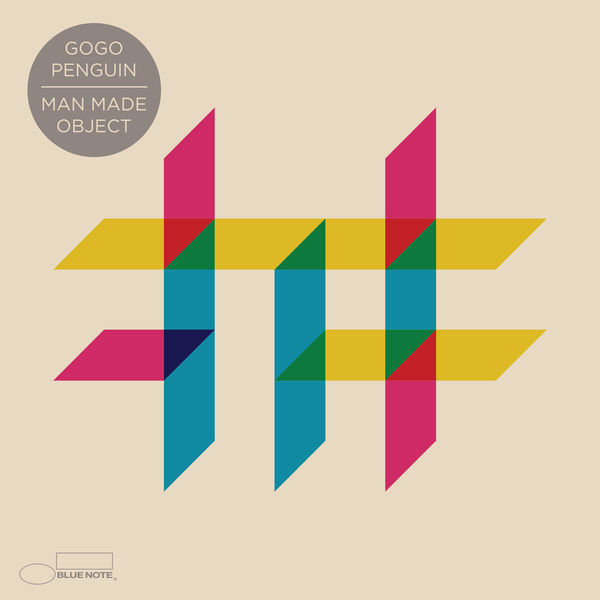
GoGo Penguin
Manchester-based GoGo Penguin, has already released two albums, Fanfares (2012), and v2.0 (2014). I started noticing them with the latter album, which I really like.
The trio is drummer Rob Turner, double bassist Nick Blacka and pianist Chris Illingworth. This order is taken directly from their website, and is inverting the usual order of giving the pianist’s name first. Well, I’m pretty sure this order is a very conscious choice, as Rob’s pulsating rhythms are really what sets this group apart from all other trios I’ve heard so far.
Man Made Object (2016 Blue Note)
This is the group’s first album on Blue Note, which should hopefully help them to get to the level of awareness they should be at.
I bought this album pretty much immediately when it came out.
The rhythmic drive, which is clearly influenced by contemporary electro music, is addictive. Combine to this the groove of Blacka’s bass, and Illingworth’ rather simple, but fascinating harmonics, and you cannot help but being drawn into the music.
My favorite tracks on this album are Weird Cat, epitomizing their style. Smart is another great example. You start out with an experimental intro and then jump pretty much immediately in a strongly syncopated groove by Turner and is joined by Blacka and Illingworth to slowly build up an entire harmonic and rhythmic landscape. Amazing.
Here’s the official video for the opening track, All Res, that should give you a pretty good idea:
My rating: 5 stars
You can find it here (Qobuz) or here (Prostudiomasters)
I’ve written previously about Oscar Peterson twice already, mentioning his Exclusively For My Friends MPS box in my 25 Essential Jazz albums, and also reviewing Oscar Peterson Plays The Cole Porter Songbook. He is one of the three godfathers of the Piano Trio, together with Bill Evans and Keith Jarrett.
Peterson to me represents the archetype of the Jazz Trio type 3 of my personal classification (see here), that I called It Don’t Mean A Thing if It Aint’ Got that Swing.
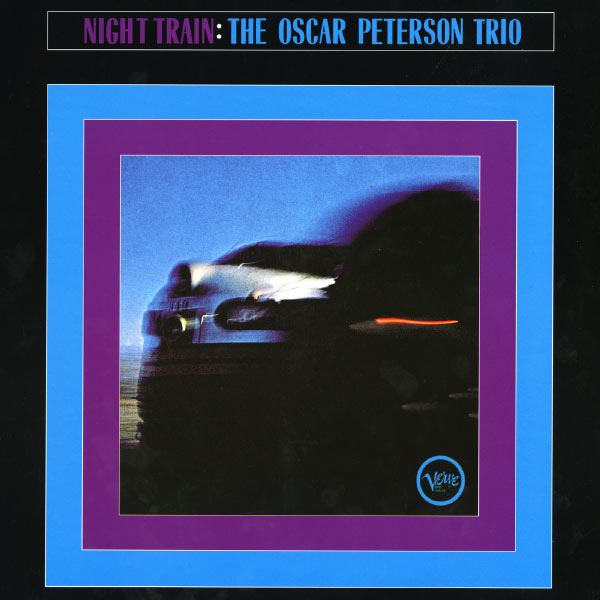
If we needed another example to illustrate this, let’s take this Verve album from 1963, which actually was the second or third Peterson album I ever bought.
Night Train (Verve 1963)
You get classic Oscar Peterson here. The legendary trio with Ray Brown and Ed Thigpen, and produced by Norman Granz, who played an important role in Peterson’s career.
The title track, Night Train, is a good warm-up, but things really start grooving with the great C-Jam blues, uptempo blues at it’s best.
The ballad standard Georgia On My Mind is probably one of the best versions I own. Bag’s Grove is obviously taken from Miles Davis, and honestly, here I prefer the original, the horse are missing a bit. That said, Ray Brown’s soloing manages to keep this song interesting.
Easy Does It is another one of my personal favorites on this album, in spite of it’s apparent simplicity. And then there is the final track, Hymn to Freedom, where Oscar Peterson opens the melody, but the relaxed swing that follows when Brown and Thipgen kicks in, make this track truly memorably.
The only criticism I have with this album is that the tracks are all a bit short. The trio really excels on longer tracks when each of the brilliant musicians get’s more time to solo.
Little anecdote: Apparently Night Train was one of the albums that made Diana Krall wanting to play Jazz (see video below). And she plays it quite well, although I still prefer the original.
Shame on me. Given how much I love this pianist, and the form of the Jazz Piano Trio that he essentially created (or at least brought it to a whole new level), this is a sin.
To be rectified right now.
Bill’s Three Trios
Bill Evans essentially had three trios over time. He started with the mythic combination of Scott LaFaro and Paul Motian in the 1950s and early 60s, until Scott died tragically in a car accident. If you don’t have Live At The Village Vanguard or Waltz for Debbie, you have missed some outstanding recordings.
For many Bill Evans purists, there is no true Bill Evans after LaFaro’s death. Some may concede that his last trio with Marc Johnson and Joe LaBarbera did some outstanding recordings (and I’d agree, hence them being listed in my above mentioned 25 essential Jazz albums with Consecration.
However, the trio that Evans ended up playing the longest time, with Eddie Gomez and several different drummers, doesn’t get the same level of awareness.
Which is a pity as there are some true gems, and Gomez has a very particular sound to his bass, which suits Evans really well.
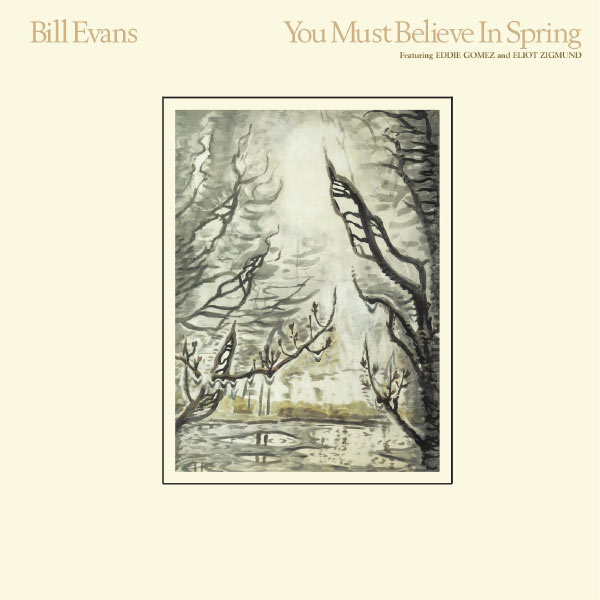
You Must Believe In Spring (Rhino/Warner 1977/1981)
This is the last album that Evans played with Gomez before he left the trio. On drums we feature Eliot Zigmund.
Why do I love this album so much? Well, as mentioned above, Gomez has a really nice sound, and this being a decent studio recording it really comes across very well.
Furthermore there is the title song You Must Believe In Spring, written by the great Michel Legrand for the musical movie Les Demoiselles de Rochefort by the French Director Jacques Demy.
It is taken from one of the most cheesy scenes of the entire movie, the young sailor singing about his troubles trying to find his dream girl, also known as La Chanson de Maxence:
For comparison, here’s Bill Evans version:
For context, I usually hate musicals, and any kind of movie where people all over sudden start singing (sorry, Bollywood), but somehow this movie is different. Probably this is due to the fact that I saw it during my student days in an old Roman theatre in the middle of summer in an open air cinema with good friends.
The entire atmosphere was so nice that I cannot help myself but having positive memories with this movie, and therefore having a Jazz version of this song helps (Note that I had the album before I even saw the movie, and somehow my subconscious recognized the melody when I saw the film for the first time).
The rest of the album is nice mixture of late Bill Evans standards like the famous Theme From M.A.S.H but also some lesser know compositions. All are very enjoyable.
Back from my Christmas holiday hiatus with my family, its high time for a new blog post.
And I promise, I won’t be bothering you with more seasonal music (well, until Easter that is, where I’ll certainly write about Bach’s different Passions).
Jeff Hamilton
I’ve previously mentioned Jeff Hamilton several times. He has played on two of my Essential Jazz albums, among others. He just has an unbeatable swing. I had the pleasure of hearing him live once with Ray Brown and Gene Harris, a concert I still remember 20 years later.
Beyond Ray Brown and Gene Harris, Hamilton has also played with Ella Fitzgerald, Diana Krall (he’s one of the main reasons several of her albums are good), and Count Basie.
This album had been nominated by Jazz critics in Germany in 1997 as best Jazz album. And it really is a very fine achievement.
There are killer uptempo tracks like Apple Honey, where Jeff can show off his technical skills (however, unlike some other drummers who like to impress their audience, with Hamilton, the skills will always just serve the music). According to Jazz Times, this track is nearly 360 bpm. I haven’t verified, but it is certainly very impressive.
But then again, there are also soft ballads like Time Passes On, which are every bit as enjoyable as the fast tracks.
And you have to check out the great drum solo at the end of A Night In Tunisia!
Overall, this is traditional mainstream Jazz, extremely well done, and with the additional energy of a live event. Recommended!
My rating: 4 stars
You can find it here (Qobuz, which I’m happy to report has found an investor and will continue in business for at least the foreseeable future).
I’ve mentioned Giovanni Mirabassi already in my 25 essential Jazz albums. I consider him one of the best contemporary Jazz pianists.
Unfortunately his masterpiece Architectures is a bit hard to get these days as the rights were sold to a Japanese label.
Terra Furiosa (Discograph/Minimum 2008)
Luckily he has done other recordings that are much easier to purchase, like this 2008 recording, Terra Furiosa.
On bass, we have Gianluca Renzi who still plays with Mirabassi today, and the American drummer Leon Parker.
On this album, you clearly hear the influences of the late Bill Evans style, and also Enrico Pieranunzi. That said, he’s made something very personal out of all this, already given that he essentially plays only his own compositions.
My favorite songs is Last Minutes, where Gianluca Renzi gets some time for a beautiful bass intro, turning into a samba-like rhythm when Parker kicks in.
But even beyond this song, you’ll find stunning melodies, seamless interplay between three outstanding musicians. The music never stops evolving, and while the album remains in a certain mood most of the time, there is never any feeling of boredom at all, there just too much going on.
Kenny Dorham is probably one of the least know Jazz Messengers, and this in spite of the fact that he played on the famous Café Bohemia sessions, and being the composer of the great standard Blue Bossa (I just love that song, check it out on Joe Henderson’s Page One or Dexter Gordon’s Biting the Apple).
He has recorded quite a number of noteworthy albums, including Afro-Cuban (1955), Quiet Kenny (1959), Matador (1962), Una Mas (1963), and Trompeta Toccata (1964), all of which are very much worth checking out.
Whistle-Stop (Blue Note 1961)
So why call out Whistle Stop? Well, two reasons: a) the cast is stellar, with Hank Mobley, Kenny Drew, Paul Chambers, and Philly Joe Jones, and b) we have only Dorham originals on this album
My favorite song is the bluesy Buffalo, which swings nicely and gives both Dorham and Mobley enough time to develop their solos. Another nice one is the title track, Whistle Stop, faster paced, but nicely grooving. Philly Twist is not dedicated to Philly Joe Jones, the drummer.
This is well done hard-bop, and deserves to be better known.



 musicophilesblog - From Keith Jarrett to Johannes Brahms