One Of The Few Fusion Albums I Actually Like: Light As A Feather

Fusion Jazz

Regular readers of my blog will know that my sweet spot in Jazz was typically between 1957 and 1966. Before that, the Swing era really wasn’t my thing, and as of somewhere in 1967 jazz decided to go either towards free jazz (which I can’t stand) or towards fusion. I fully understand why a musical genius like Miles Davis cannot be bothered to record one Kind of Blue after another (even if I wish he did), but unfortunately the 1970s really were mostly a kind of no-go-zone for me Jazz-wise, as I already mentioned in my recent blog post about Keith Jarrett going back to what I like with his Standards Trio in the 1980s.

The only 1970s albums I like are usually by Bill Evans, who basically stuck to his beautiful trio style until the very end, and some of Keith Jarrett’s work, like his solo albums (Köln, Bremen/Lausanne, Sun Bear), or a selection of his European work like My Song).

But let me write here about one of the few albums from that era (that is truly fusion) that I like, not only because we played some of its song of the with my amateur Jazz group when I still had time for that (our favorite was 500 Miles High, the crazy chord changes still drive me nuts when I’m trying to play it now).

Chick Corea & Return To Forever – Light As A Feather (Polydor 1973)
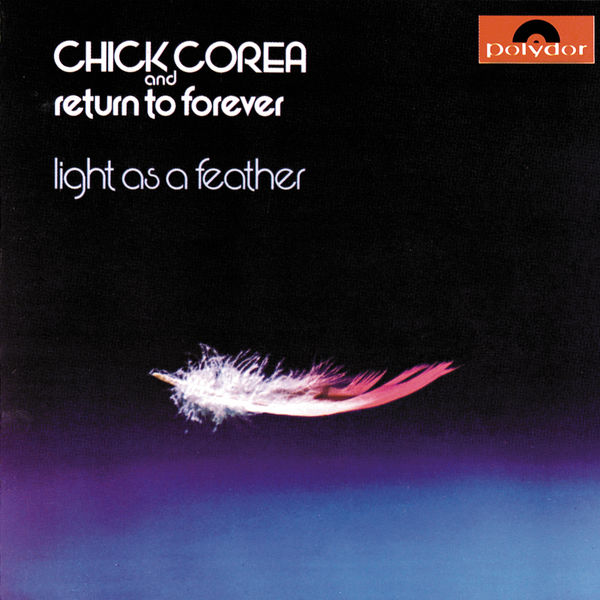
Chick Corea and Return To Forever Light As A Feather 24 96

I’m just noticing that I have had my blog for more than 5 years now and I’ve never written about Chick Corea. Probably just because of the fact that a lot of what he did really is in the fusion genre.

So, who is playing here? Well, Chick obviously, mostly on a Fender Rhodes electrical piano, and then Return To Forever, with Airto Moreira on drums, Joe Farrell on saxophone and flute, and Flora Purim’s beautiful voice. Most of the tracks are Samba inspired, which is the only style of fusion I can listen to (Jazz Rock makes me run away).

This is actually the second album that Corea recorded with Return To Forever, the 1972 predecessor (simple called Return To Forever, recorded by the way by Manfred Eicher who just had started ECM some years earlier), is also very good. I’ll have to review that one another time.

So, what are my highlights here? I’d say, Captain Marvel is really grooving very nicely, but 500 Miles High with it’s 9:14 playing time has even more room to develop, in some of the middle part the percussion just goes crazy.

And then there’s my hidden favorite, Spain, inspired by the Concerto Di Aranjuez (which I wrote about recently), or more likely by Miles Davis adaptation Sketches Of Spain with Gil Evans).

Overall, you should really check this classic out if you’re not aware of it yet.

My rating: 4 stars (the four stars are very personal, I take of one star as fusion still isn’t fully my cup of tea).

You can find it here (Qobuz)

Mozart’s Piano Concertos vol. 4 with Jean-Efflam Bavouzet – A Somewhat Confused Review

Mozart’s Piano Concertos

I haven’t written about the Mozart piano concertos that much yet on this blog. Not sure why. I really like them. Maybe it is because they were just always there, I’ve been listening to them for my entire life. But then, there are many (and many of which if you want to be nasty sound somewhat similar). And while truly enjoyable, one could argue the true masterpieces from Mozart are to be found elsewhere (take the DaPonte operas for example).

That said, I always had a particular fondness for numbers 20 and 21. The andante of no. 21 is even featured on my very own wedding video (I added a personal soundtrack to some of the pieces in the edit).

A quick reminder of my mentions of the Mozart piano concertos on this blog: You’ll find a beautiful recording with the amazing combo of Martha Argerich and Claudio Abbado recommended as part of My Must Have Mozart Albums, which features no. 20, but not no. 21. In the same blog post I also mention the historically informed recordings of Bezuidenout (which I like) and Brautigam (which I’m starting to have some doubts on), as well as the classic Perahia box.

And that’s basically it.

So, when in 2020 a new Mozart album was released that got a Gramophone Editors Choice, a nomination for the Gramophone awards album of the year, as well as a Choc by the French magazine Classica, that I usually really trust, I just had to buy it.

Mozart: Piano Concertos vol. 4 – Jean-Efflam Bavouzet – Gabor Takacs-Nagy – Manchester Camerata (Chandos 2019)

Mozart Piano Concertos No. 21 & 20 - Jean-Efflam Bavouzet - Manchester Camerata - Gabor Takacs-Nagy Chandos 24/96

A quick word about the soloist, orchestra and conductor: While I like and appreciate Jean-Efflam Bavouzet (have a look at my post on his great complete Debussy box), I must admit this is my very first encounter with both the Manchester Camerata and Gabor Takacs-Nagy.

So, what is it like? Well this is going to be a somewhat weird review.

In many ways, it is perfect. It is extremely well played from both orchestra and soloist, and Bavouzet puts a lot of creativity into the solo part, from variations, improvisations and ornaments in many places to the occasional liberty on tempi, and overall, I really wouldn’t know what to criticize.

So what’s wrong? Well, maybe it is the modern instruments and I’ve recently enjoyed the historically informed practice so much, or maybe it is just a bit TOO perfect, and I need the occasional imperfection. Honestly, I don’t know.

You should probably just ignore my opinion here and check it out yourself (please let me know what you think in the comments); as mentioned, both Gramophone and Classica were extremely impressed.

My rating: 4 stars (I may come back on this rating later once I’ve figured out if I’m just making a mistake here).

You’ll find it here (Qobuz)

An Intimate Version of the Christmas Oratorio by the Dunedin Consort and John Butt

The Christmas Oratorio

It’s been a while since I last wrote about Bach’s Christmas Oratorio. The last entry was a blog post about My Favourite Seasonal Music for Christmas back in 2016, and the original post about this work dates back to the beginning of my blog back in 2015.

Nevertheless, the Christmas Oratorio is on constant repeat in the last 2-3 weeks leading up to Christmas every single year. It is as essential as mulled wine, seasonal decorations, and home made Christmas cookies. This year, due to Covid, I probably won’t have any of the first, and a strict diet over the last months stops me from doing the latter.

I’m very happy that listening to Bach is totally carb-free (even though it can be very sweet), and at least played from the stereo very much compatible with social distancing.

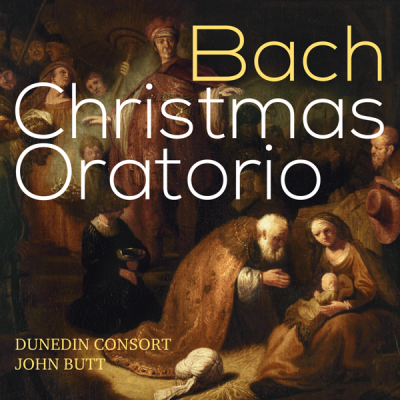
Bach: Christmas Oratorio – John Butt – Dunedin Consort (Linn 2016)

Bach: Christmas Oratorio Dunedin Consort John Butt Linn Records 2016 24 192

I had already mentioned John Butt’s recording in my 2016 post, but didn’t own it at the time. Linn Records has a pretty strict no-streaming policy, so I ended up buying it blindly, given how much I like the Dunedin Consort’s other big Bach works.

The Dunedin’s recording of the St Matthew Passion is one of my 25 Essential Classical Albums, their St John’s passion is equally great, and I can also recommend the recordings of Bach’s Magnificat, Händel’s Messiah also Mozart’s Requiem for that matter. So in short, I didn’t take too much of a risk.

And sure enough, I wasn’t disappointed. The orchestral playing is a beautiful as ever, and the singers are doing an excellent job. The only two things to mention: most of the singers are non native speakers, and while they are doing quite a decent job with the German pronunciation, if you’re picky, you may have an issue with this.

And, for some even more tricky maybe, the typical Dunedin Consort approach of having One Voice Per Part, a concept introduced by Joshua Rifkin in the 1980s. If your Bach oratorio reference is Karl Richter, you’ll be disappointed.

I really like it though. It gives it a very particularly intimate feel. I’m still rotating between the Dunedin’s version, and my other favourites, Gardiner, Herreweghe, and the occasional Suzuki. But this is very much among the best. And if you care for these things, this is a truly “audiophile” version, it is really well recorded.

My rating: 4 stars (It’s a truly beautiful album but I’m still waiting for my imaginary “perfect” recording)

You can find it here (Linn Records)

A Beautiful New Recording of the Concerto di Aranjuez

Rodrigo and the Concerto di Aranjuez

There are some pieces of classical music that even people that usually don’t care about classical music know, like the beginning of Beethoven’s Fifth, or Bach’s Toccata BWV565.

Joaquin Rodrigo’s Concierto di Aranjuez is one of these pieces. Play the second movement to anybody in the street, and I’d be a lot of them would recognize the melody. It has been used extensively in popular culture, adapted in a lot of pop songs, and even into jazz, in Miles Davis very popular album Sketches of Spain.

But then ask even classical music aficionados to name any other piece by Rodrigo, typically they pass. To modern memory, Rodrigo, who lived from 1901 to 1990, is a typical “one hit wonder”, a fate he shares for example with Max Bruch.

The concerto itself is special not only for the very clear Spanish sound, but most importantly for having a solo guitar. It is named after the Aranjuez gardens of the Spanish royal family. I’ve visited the place some years ago, and it is actually a really beautiful setting.

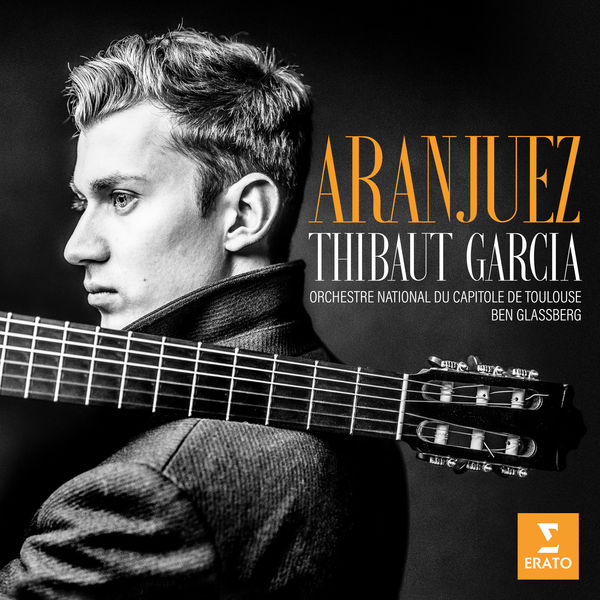
Thibaut Garcia – Aranjuez – Ben Glassberg – Orchestre National du Capitol de Toulouse (Erato 2020)

Thibaut Garcia Aranjuez Orchestre National du Capitole de Toulouse Ben Glassberg Erato Warner Classics 2020 24 96

Soloist Thibaut Garcia, while growing up in Toulouse, France, has Spanish family roots (as the last name gives away). Not sure if you need to have Spanish blood to play this concert this well, but it certainly doesn’t hurt. Being one of the best young (he’s born in 1994) classical guitarists of today helps as well.

The work is performed with a lot of beauty and grace, as it needs to be. The Toulouse orchestra, conducted by another very young artist, the Brit Ben Glassberg, always follows easily and has all the energy and vibrancy this music needs.

But the album doesn’t stop with after the 20 minutes of the concerto. You get a really beautiful performance of Garcia solo, playing guitar music by Regino Sainz de La Maza, another 20th century Spanish guitar composer.

This is followed by another work for guitar and orchestra, Alexandre Tansman’s Musique de Cour d’après Robert de Visée. Tansman, whose name like Sainz de la Maza was unfamiliar to me (I’m not a great expert of the classical guitar), was a Polish composer of the 20th century that was mostly focused on film music. This piece however is clearly inspired by older music, as the title indicates, references back to Robert de Visée, the famous guitarist (and theorbist, luthenist, etc.) at Louis XIV’s court. My somewhat simple mind is very pleased to note that Tansman, like Rodrigo, has completely ignored the unwritten law written by Schönberg et al that 20th century music after 1920 has to go beyond traditional tonality.

Appropriately, after the music above inspired by de Visée, we move back to the 17th century and de Visée himself, that Garcia performs beautifully.

I really recommend checking this album out if you like classical guitar. And by the way, most music critics agree. This album received a Choc from Classica, a Diapason d’or, and a Gramophone Editor’s Choice.

My rating: 4 stars (5 star playing throughout though, one star discount from me as I don’t consider this absolutly essential repertoire)

Less than 4 weeks until Christmas – Need another Christmas Jazz recommendation?

Stacey Kent

Stacey Kent is a Jazz singer that I believe to be more popular and better known in Europe than her native US.

I haven’t explicitly mentioned her on this blog (she does feature on Jazz Loves Disney that I reviewed previously). I quite like her, but these days I’m not listening to a lot of vocal jazz any more, with only few exceptions.

That said, she has done quite a lot of recordings you should definitely check out.

Including this one, if you start to be in the mood for more Christmas music.

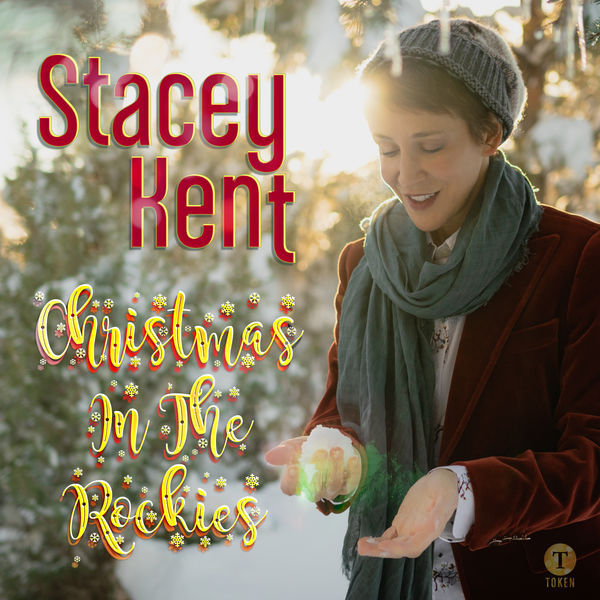
Christmas In The Rockies (EP, Candid Productions 2020)

Stacey Kent Christmas In The Rockies 24/96

Don’t be scared off by the extremely cheesy cover (OMG; these fonts, the colours), this is actually a quite enjoyable performance of Christmas standards.

Note that this is only an EP, you get a total of four tracks.

You start with a very nice, if rather straightforward Sleigh Ride, going through the always beautiful Christmas Time Is Here, a really nice version of Winter Wonderland, and to wrap it all up, my favorite, The Christmas Song (see below)

Normally, I’d always recommend you buy albums, as on streaming revenues no regular artist can reasonably survive (particularly in Covid times when the live revenues are mostly gone).

However, my recommendation would be rather that you buy one of Kent’s other albums instead (check out Breakfast On The Morning Train for example), and add this album to your Spotify or Qobuz Christmas streaming playlist, as I find it a tad expensive for 4 tracks only.

Nevertheless, a solid recommendation for the next 4 weeks!

My rating: 4 stars

You can find it here (Qobuz)

Melody Gardot’s New Album Sunset In The Blue – A Review (sort of)

Melody Gardot

Regular readers of my blog know that I’m a big fan of Melody Gardot. She’s the kind of Jazz(ish) singer that is somewhat different to the many other singers. Let’s be clear, she’s no Cecile McLorin Salvant nor Lady Day, but she has a very particular style and voice, and I’ve praised a lot of her previous albums on this blog (see here and here among others).

So I was very excited when her latest album came out about a week ago.

Sunset In The Blue (Decca 2020)

Melody Gardot Sunset In The Blue Decca 2020 24 96

The cover this time is simply abstract, not even any text on there, and presumably less controversial than the cover of her last live album.

On her previous non-live album, Currency Of Man from 2015, Gardot went to a much more soul influenced style. This new album now is nearly in its entirety a long list of latin ballads, including strings (real ones, not the synthesizer variety). On several tracks Gardot even sings in what is presumably Portuguese.

By the way, given the current Covid situation, it seems that putting this album together was the logistical nightmare you’d imagine with musicians stuck in different parts on the planet. Nevertheless, they pulled it off.

Now I must admit I do like my occasional latin and string inspired ballad (it’s clearly better in my opinion than Diana Krall’s recent But Beautiful), but it is not something that I’m super passionate about. There is the occasional faster samba-type track like Ninguém, Ninguém, or more traditional ballads like From Paris With Love; but you get it, I’m not blown away.

Gardot’s beautiful voice, many original compositions, and the well done arrangements still make this a worthwhile album, but it wouldn’t be my preferred Gardot album by far.

Until we come to the penultimate track, Moon River. I’ve admitted previously that I love this song, it makes me sentimental every time I hear it. So far, Sarah McKenzie’s version was my preferred one, but this could really become my new favorite.

My rating: 4 stars

You can find it here (Qobuz)

Keith Jarrett’s Last (?) Solo Album? The Budapest Concert

Keith Jarrett’s Solo Live Concerts

Keith Jarrett is without doubt the most important solo jazz pianist out there. $

He’s been touring the world for nearly 50 years now with his solo concerts, his 1975 Köln Concert still holds many records from a sales perspective, and I’ve already reviewed a number of his live solo albums on this blog (Munich, Paris, A Multitude Of Angels, Bregenz München, La Scala). I’ve even listed his Bremen Lausanne in My 25 Essential Jazz albums.

In fact, it was me attending a Jarrett solo live concert in Lucerne in 2015 that got me to start this blog in the first place, more than 5 years ago now.

So it was with great sadness that I recently saw in the New York Times that Keith Jarrett may never be able to play again due to severe health issues. What a loss, if true. I sincerely hope he recovers, as other pianists have after similar situations.

So, could this album that was just released today be his final live album ever?

Budapest Concert (ECM 2020)

Keith Jarrett Budapest Concert ECM 2020 24/96

This concert was recorded on July 3, 2016, in Budapest obviously, only some days after the previously released Munich 2016 album that was released last fall, and a bit more than a year after I saw him live myself.

The album lasts nearly 90 minutes, structured as often in his later albums in shorter “parts”, a total of 12 (in Roman numerals) this time, with two encores.

I’m not going to describe each part in detail here, I’m not sure that would make for a very enjoyable reading. I’m just going to flag some of my favorite parts, which are II, a slower improvisation, V, again a slower meandering around melodic impressions, and VII, the most dreaming part of the entire album.

That said, for me, the true highlights are the the two encores, Answer Me, that was previously released as a teaser (and was also part of his encores in Munich), and even more importantly, It’s a Lonesome Old Town (also performed in Munich). I could just spend entire days listening to these simple but very deep improvisations (I’m a simple guy, I like melodies).

Overall, to put things into context, this isn’t my preferred Jarrett live album, it is not an essential album if you’re not a hardcore Jarrett fan like me. I’ll obviously buy it anyhow.

And let’s all hope that this won’t be the last solo album he’ll ever record.

My rating: 4 stars

You can find it here (Qobuz)

Classical Life

A classical music blog by music critic Tim Mangan

This Week's Music

Making Classical Accessible

From my Macbook to the Net

Evaporation of my thoughts and observations

Elestra

Author: Artienne

My Life in Music

Playing, Singing and Listening

ArsX3

A brand new journal reviewing books, cinema, music

LawrenceEz's Blog

Creative and Performing Arts: Writing, Classical Music, Photography

Laetitia Strauch-Bonart

Contemporary Politics & Culture

sibling revelry

reveling in all things classical

It's A Raggy Waltz

I collect jazz on vinyl, I dig the Dave Brubeck Quartet, & I write about it

La Musica

By two cousins

thejazzbreakfast

Dishing it out from the heart of England

only jazz

random thoughts about music that matters to me

The Culture Project

Exploring the world of literature, wine, art, music and more.

René Spencer Saller

The music causes me to dream of fabulous empires, filled with fabulous sins.

Breaking Baroque

Blog of Tafelmusik Baroque Orchestra and Chamber Choir

Tasting Nirvana

Eating your Dosha

The Immortal Jukebox

A Blog about Music and Popular Culture

April Greene

Writer + Editor

a pianist's musings

A history of your favorite classical music.

Classical music for all

Boris Giltburg's blog

I HEAR VOICES

An orchestra seat in the web space