Michael Wollny Klangspuren (Live in Hamburg) – A Review

How did I miss this?

There is a live Wollny trio album out there and I only find out about it a year later. How is this possible? My bad.

Especially after I’ve attended his concert in Basel just some weeks after this album was released (see my concert review here).

But well, better late than never.

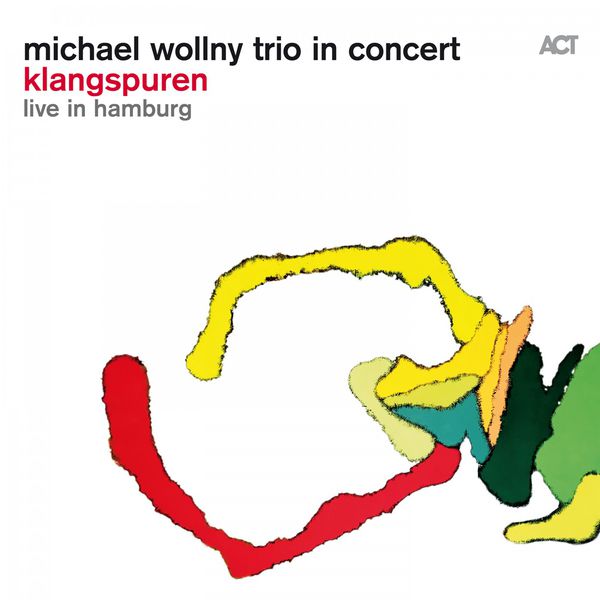
Michael Wollny Trio In Concert: Klangspuren – Live in Hamburg (ACT 2016)

I’m a big Wollny fan (thanks to an old friend from highschool who initially introduced me to him). See for example my reviews of his album Nachtfahrten, or my mention of one of his previous live albums in my 9 Outstanding Live Jazz albums. His album Weltentraum was also mentioned in my 25 Essential Jazz albums.

Michael Wollny Trio In Concert Klangspuren Live in Hamburg ACT 2016


This album is very close in spirit (and material) to the live concert I saw at Kaserne Basel in 2016. Given that it is to a large extend based on his Nocturne-style album Nachtfahrten, it has a lot of long, quiet, but intense passages. My favorite song is White Moon.

Wollny plays with his usual trio of Christian Weber and Eric Schaefer.

But don’t worry, the lion Wollny is occasionally let out of his cage for one of his more improvising elements.

Looking back at his recent studio albums, I rated Weltentraum a full 5 star, while Nachtfahrten was still nice, but only received a 4 star rating.

When we get to live albums, I´d suggest you get one of the Weltentraum live albums first, but this album is still very much worth having.

Wollny remains one of the most important Jazz pianists of our days.

My rating: 4 stars

You can find it here (Qobuz) and here.

FYI, If you prefer to buy it as a physical album you also get a collectors edition that includes a DVD.

The Cunning Little Vixen – Janáček´s enchanting opera with Rattle´s Berlin Philharmonic

Leoš Janáček

In spite of the fact that I don’t write about them very often, I do very much like Czech composers. I just checked: so far two entries on Dvorak (none of them dedicated to him), another short mention of Martinu as part of a concert review. No entries for Smetana, same for Janacek.

Why is that? I really don’t know. Janacek in a way really flew under my radar screen. I had a couple of his string quartets which I liked, but not much beyond this.

So how do I end up seeing an opera he wrote?

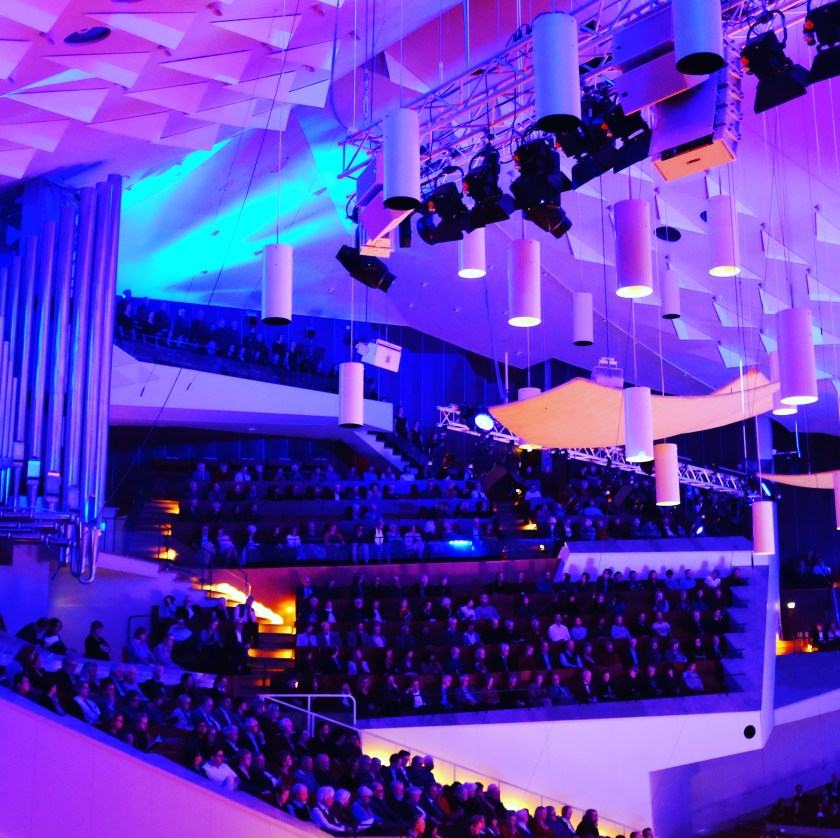
Very simply: I was in Berlin, hadn’t been to see the Berlin Philharmonic for a while, and was able to spontaneously secure last minute tickets. Typically, the BPO with Rattle is booked out, prohibiting spontaneous trips to the amazing Sharoun concert hall.

Luckily, like me, the Berlin audience wasn’t familiar with this opera (original title: Příhody lišky Bystroušky) by Janacek at all.

I’m very glad I went, it was a fantastic evening.

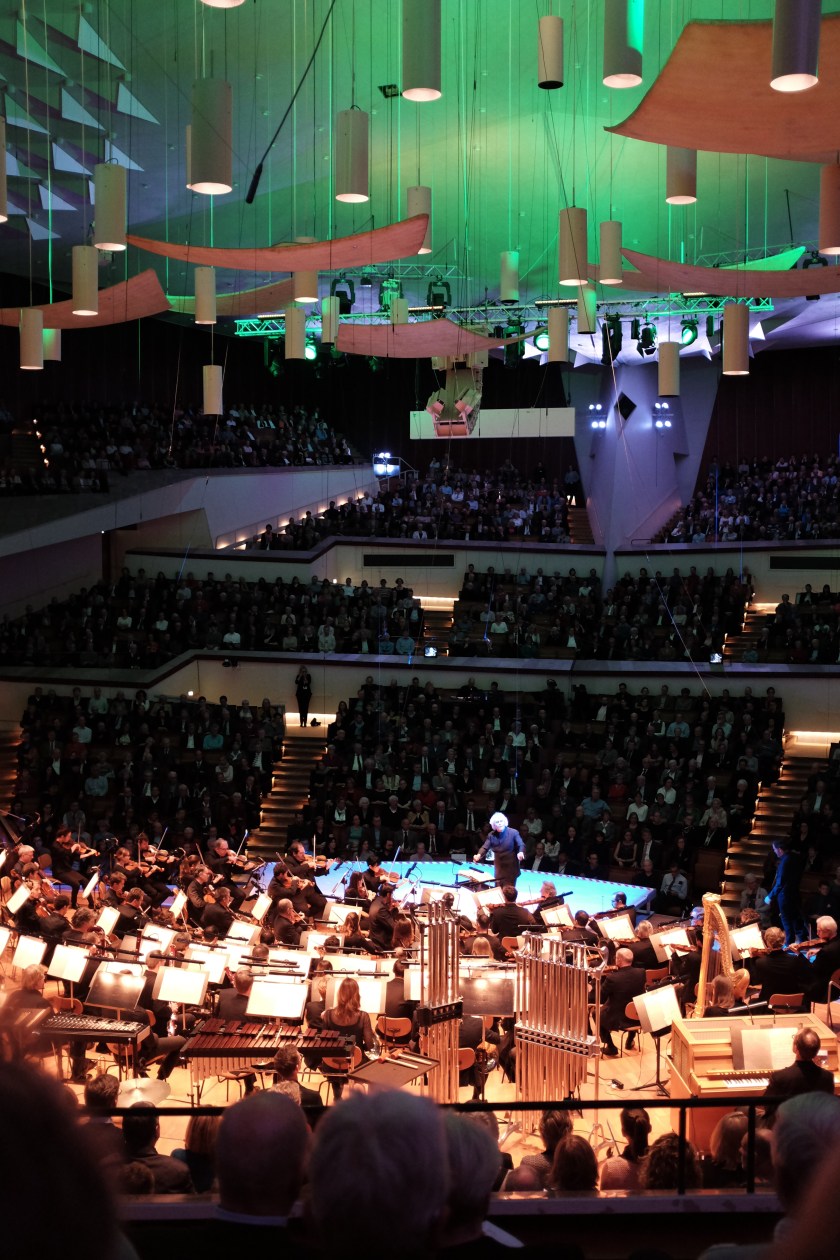
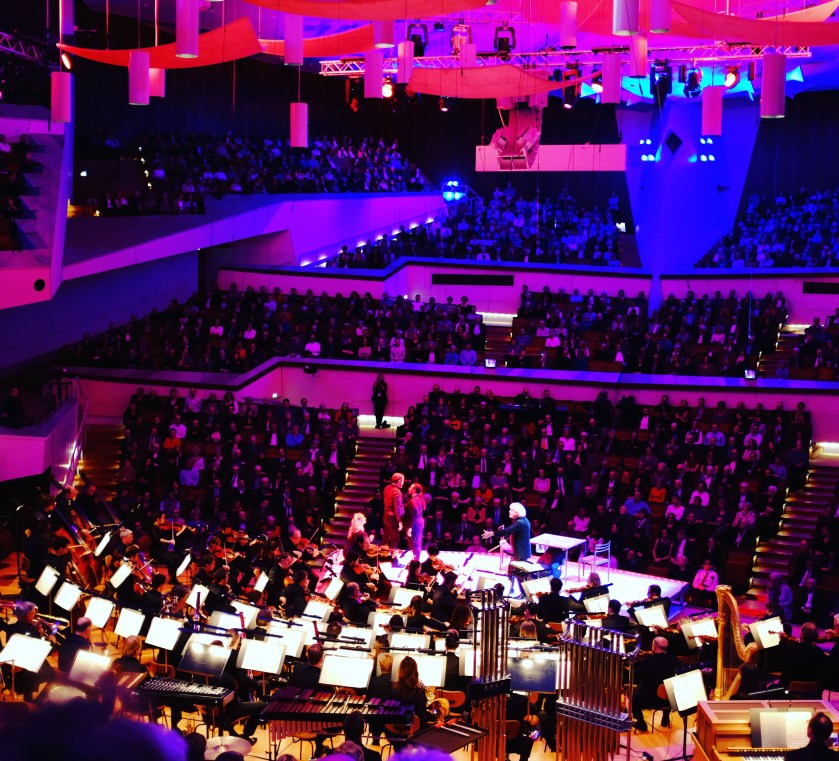
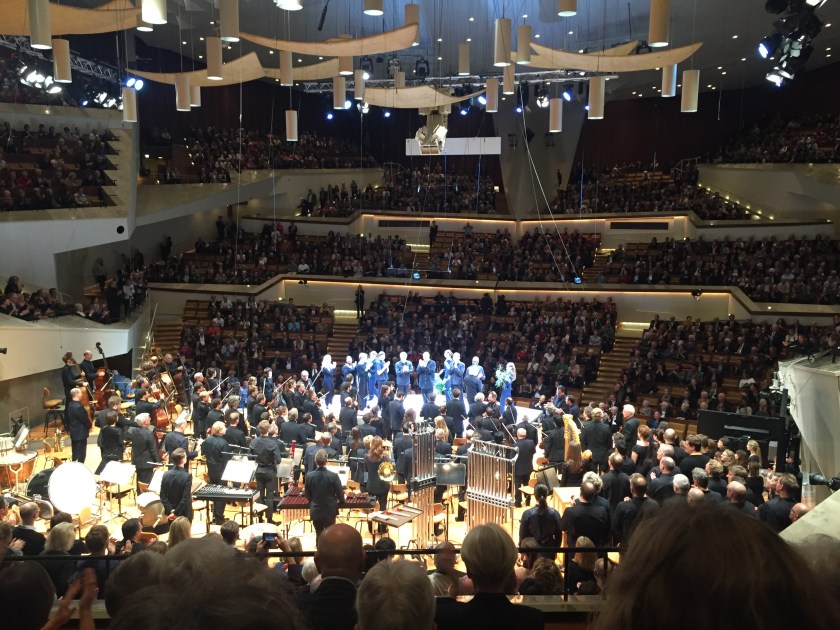
The Cunning Little Vixen – Simon Rattle – Berlin Philharmonic – October 12, 2017

To be fair, my curiosity was helped by the fact that there were some amazing lead singers, with Gerald Finley and Lucy Crowe in the main roles, of Forester and Vixen respectively.

Furthermore, the always interesting Peter Sellars was responsible for the staging of the play, which was performaned not at one of Berlin many opera houses, but instead the traditional Berlin Philharmonic concert hall.

The opera itself has been only very rarely performed, you will find only a handful of recordings on your regular streaming service.

I hope this new performance will make it onto a formal recording, but I´ll make sure to check out the Digital Concert Hall of the Berlin philharmonic, where I hope this recording appears soon.


Berlin Philharmonic - Simon Rattle - Janacek - Cunning Little Vixen
Rattle during the opening of Janacek´s Cunning Little Vixen


The Berlin philharmonic and Rattle really shined, this outstanding music, that changes from sentimental to funny to very introvert by the minute.

The story (sung in Czech, but translated in real time on the displays) is full of double double-entendres and little nuances, and really goes beyond the animal fairy tale nature one could immediately expect looking at the title.


IMG_5484
Gerald Finley, Lucy Crowe, and Paulina Malefane


As mentioned above, Finley and Crowe were outstanding soloists, but the remaining cast was also very good, only some of the choirs and children roles were not fully up to the same standards, but this didn’t hurt the overall impact.

Peter Sellars didn’t have a lot to work with, there was basically one small stage with only the occasional table and chairs added, and large LCD screens with videos to illustrate the scenery (from a creek in the woods to moving images of chicken).

Sellars also used the entire space, with the chorus occasional singing from above you, and with some of the lead singers freely roaming the entire building.


Petter Sellars staging of the Cunning Little Vixen, Berlin Philharmonic
Peter Sllars creative use of space: note the choir on the upper balcony


The Berlin public in the nearly sold out hall was as enchanted and enthusiastic as I was, we got more than 10 minutes of standing ovations and cheering.


Berlin Philharmonic, Cunning Little Vixen, Janacek, Rattle
An enthusiastic Berlin audience after the performance

A truly memorable evening.

My rating: 5 stars

Tartini and Verancini: New Types of Pasta? A Review of Rachel Podger’s Grandissima Gravita

Rachel Podger

After my so-so review of Adam Baldych’ recent Jazz album, where I declared I didn’t really like the sounds of the instrument, one of my readers asked me whether I like the sound of Baroque violin.

Let me put one thing clear: Very much so indeed! And when we get to baroque violin, there are few better players out there than Rachel Podger. I’m a big fan of her.

I’ve previously praised her Biber Rosary sonatas, that deservedly so won a Gramophone award in her category in 2016, and I also love her ventures beyond baroque, for example her outstanding Mozart violin sonatas (see my review here), which also made it into my Must Have Mozart albums.

(I haven’t written about it yet, but her Bach concertos, especially the album on double and triple concertos, is also outstanding).

So you can see a theme emerging up there, with a special focus on violin sonatas with small ensembles.

So, not surprisingly, I was very tempted when I saw her latest album come out.


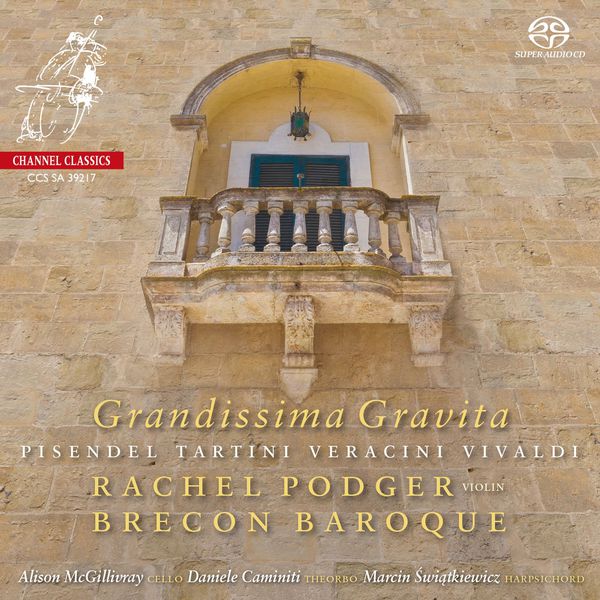
Grandissima Gravita – Rachel Podger – Brecon Baroque (Channel Classics 2017)


Grandissima Gravita Pisendel Tartini Veracini Vivaldi Rachel Podger Brecon Baroque Channel Classics 24/96


What’s the downside? You get several Italian baroque composer that are really not that well known, from Giuseppe Tartini, to Francesco Maria Veracini, to the only non-Italian in the group, Johann Georg Pisendel, a German but who during a trip to Italy became friends with the only well-known composer of this album, Antonio Vivaldi.

So what do we get from these relatively little known Vivaldi contemporaries? Well, musically, this is not a must have. Already Vivaldi is not my favorite cup of tea among the baroque composers, and his contemporaries are usually even less interesting to me.

But after the first stream, I went ahead and bought the album immediately?

Why is this, will you ask after my somewhat negative intro?

Well, it is simply because Podger, with her small ensemble, Brecon Baroque, plays with so much passion and energy that you simply cannot help to be drawn into the music.

I keep playing it over and over again. I really don’t think you could play this any better.

Add on top the outstanding recording quality of Channel Classics, and you have an album that you really should be checking out!

My rating: 4 stars (5+ star playing, down-graded due to the interest of the repertoire)

You can find it here (Native DSD) and here (Qobuz)

Yes, Cecile McLorin Salvant could well be the leading Jazz singer of the 21st century: A Review of Dreams and Daggers

Cecile McLorin Salvant

I’ve written several times about Cecile McLorin Salvant already, about her amazing album For The One To Love, which also featured in my Top 5 Vocal Jazz albums for 2015. I also already had the pleasure of hearing her live, an outstanding experience.

This young singer has already received so much praise, including a Grammy and a DownBeats critics poll, that I’m hardly presenting you a scoop here, but a new album by such a great artist really needs a blog post!

Dreams and Daggers (MackAvenue 2017)

Cecile McLorin Salvant Dreams and Daggers 24 96 MackAvenue 2017

A couple of initial comments: this is a live album, recorded in 2016 at the legendary Village Vanguard in New York that has given us outstanding live albums already back in the days of Bill Evans. And the recording quality is excellent, you really only notice the live character of this album from the audience´s enthusiastic clapping and her occasional comments to the public.

Second comment: you get a double album here. Some could argue, is this a bit long? Actually not at all, you actually really don’t want this album to end.

Third comment: this album is formally slightly less innovative than the first two ones, you get more Irving and Gershwin standards, and the playing by Aaron Diehl and his great musicians is relatively mainstream. Some of you will take that as a criticism. Actually, not at all!

Because McLorin Salvant manages to put her very personal spin on even old try familiar standards like Devil May Care or You’re My Thrill.

My favorite track is Somehow I never could believe, which starts out as a sensitive ballad where Aaron Diehl already gets to shine in the long intro, but the real hero is Paul Sikivie on bass. And then you get Cecile´s voice, which on this track sometimes is even close to whispering. Amazingly intense.

A note on the title: You have Dreams, representing pretty much what you’d think it means. But what about the Daggers? Well, according to McLorin Salvant, this is about the songs about more complex topics, like feminism, racial identity, self-doubt, that really force you to listen to the lyrics.

This album is a must have for any jazz lover. The year is not yet over, but I´d be surprised if this album doesn’t end up in my personal top Jazz albums for 2017.

In my very first post about her I asked the question in the title Will Cécile McLorin Salvant Become The Most Important Jazz Singer of Our Century?.

Well we obviously still have 83 years to go in this decade, but she’s clearly up to a very good start here.

My rating: 5 stars

You can find it here (Qobuz) and here (Prostudiomasters)

Fazil Say´s Chopin Nocturnes – Charming

Fazil Say

Fazil Say, a classical pianist from Turkey usually doesn’t leave people cold. Its often a love it or hate it affair.

The first time I heard Fazil was in a duo with a similarly polarising artist, Patricia Kopachinskaya, playing the Beethoven sonatas. It was clearly a memorable concert. And while fro Kopachinskaya I really don´t like everything she does, I really admire her artistic courage and ambition. She´s always in there with all her heart.

Fazil Say seems also quite emotional, but at least from his performances, his emotions typically translate into very sensitive playing, whether he plays Western classical music, or his own compositions.

I omitted to write about his great recent complete Mozart sonatas cycle recording, which I can really recommend you check out. There is not one boring moment in there.

So I was really intrigued when Say released his very recent Chopin Nocturnes album.

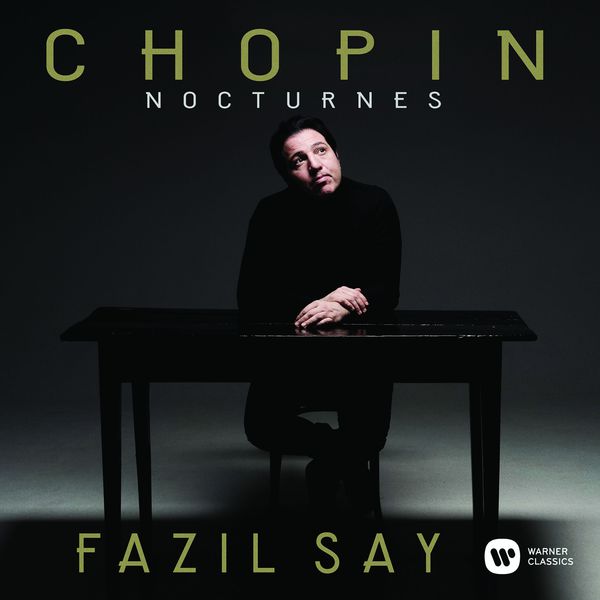
Chopin: Nocturnes – Fazil Say (Warner 2017)

Chopin: Nocturnes - Fazil Say 24/96 Warner Classics 2017

As expected, it is a beautiful recording. You get Say´s characteristic playfulness, sensitivity, interesting play with beautiful rubato.

The feeling you get is of a warm Mediterranean summer night. Chopin being one of the first tourists on Mallorca comes to mind, and Franz Liszt claimed the Nocturnes were inspired by Italian Bel Canto. Both very much apply here.

These are nuanced, intelligent interpretations. The only reproach I have is sometimes the tempi feel a bit fast.

Overall, Moravec´s legendary version not under threat of being kicked of the throne, but Say´s version is very much worth exploring. Recommended!

My rating: 4 stars

You can find it here (Qobuz) and here (HDTracks).

UPDATE Oct 1, 2017: Classic agrees, and gives this album 4 stars as well.

Krystian Zimerman plays Schubert sonatas

Krystian Zimerman

Krystian Zimerman is a living legend.

He is without doubt one of our most important pianists of the 20th and 21st centuries, and has produced a huge number of reference recordings.

I only saw him live once, couple of years ago in Lucerne, and was utterly impressed with his Chopin.

He obviously features in my Top 10 Favorite Classical Pianists, and when I heard that he’s about to release his first solo album since 1994 (!) I really couldn’t wait for it.

Franz Schubert’s late sonatas

And then he plays Schubert! D959 and D960!

The late piano sonatas are among my absolutely preferred works of him  (together with the late chamber works), and I’ve even written a blog post comparing 11 versions of D959. At the time, I selected Perahia, Brendel, and Uchida as my reference versions.

Franz Schubert: Piano Sonatas D959 and 960 – Krystian Zimerman (DG2017)

Franz Schubert Krystian Zimerman Piano Sonatas D959 & D960 Deutsche Grammophon 24 96

So, maybe it is a mistake to get too excited upfront. I really expected miracles here. I mean, take his Chopin Ballades, his Debussy, his Lutoslawski, his Brahms 1, his Liszt b-minor sonata. All miracles.

So you will have guess by now, that I was underwhelmed here.

Don’t get me wrong, this is a very fine recording. Obviously. It’s Zimerman after all. And he really makes these recordings very much his own.

But I’ve now played them over and over again, and I’m still waiting for the “wow”. I simply doesn’t come. I still don’t know what it is. Is it his rubato, his tempi? Is it maybe “too romantic”? I really don’t know.

There are so many subleties in his recording that I all appreciate individually. But the total doesn’t work for me. Well, hold on, “doesn’t work” is a silly way of saying I’m not blown away. It really all boils down to expectations.

Check it out, you have to, this is Zimerman after all. And I won’t be surprised if many of you disagree with my very personal opinion here. But for the moment, I’ll stick with the “cleaner” versions of Brendel and Uchida.

What do you think? I really appreciate your feedback here!

My rating: 4 stars

You can find it here (Qobuz) and here (Prostudiomasters)

UPDATE Oct 1st, 2017: the French magazine Classica is less hesitant and gives this album a “CHOC”, i.e. 5 stars.

UPDATE Oct 7, 2017: Gramophone also is fully convinced, giving this album a “recording of the month” for October. The only more critical review I’ve seen so far is by Elvire James on the French site Classiquenews.com, saying this album has nothing new to offer. Well I really wouln’t go as far as that.

UPDATE Oct 9, 2017: ClassicsToday Jed Distler is in the same range as my rating, with an 8 out of 10 points, quoting some micromanaging.

Your turn to judge! Let me know what you think.

Adam Baldych & Helge Lien Trio: Brothers – A Review

Finally, another jazz review

As the subtitle of my blog indicates, I write about Classical Music and Jazz.

I really don’t have a strong preference between the two genres, I love them both very much. However, I’m not sure how much of an overlap there is between the following of the two genres among the readers of my blog. Please comment below and let me know if you prefer one style over the other, or if you like both like me.

In the beginning of my blog, I usually tried to alternate between Jazz and Classical for my blog posts. Recently, there has been a significantly higher percentage of classical on my blog. This is not because my preferences have changed, but rather because I prefer to review recent new releases, and not be reviewer no. 2173 to tell you that Kind Of Blue is a pretty decent album (it is by the way…)

And recently, the number of Jazz releases I like hasn’t been that big. And given that this blog is my personal one, I feel no obligation to write a bad review of an album I just don’t care about.

That’s why the average review score on my blog is somewhere between 4 and 5 stars, it’s just much more fun writing about stuff that is really good.

When I give lower reviews like the one that follows, it is typically about artists I care about, that often in the pre-streaming days I would have bought just for the name.

To wrap up this long intro: if you like Jazz and have been disappointed a bit by my blog recently, don’t dispair, I haven’t forgotten about this genre. I just can’t guarantee a 50/50 distribution of genres right now. The easiest solution is to subscribe to my blog, check out the headline, like this you can easily get alerted when a new post comes out.

Helge Lien

Helge Lien is one of these names. So far I’ve loved all his trio albums very much, see my review of his latest albums here and here. So I was very pleased to see that after Guzuguzu, Helge now released another album, on the German label ACT.

And as expected, I like very much what Helge does here.

So where is the obvious BUT?

Adam Baldych / Helge Lien Trio / Tore Brunborg – Brothers (ACT 2017)
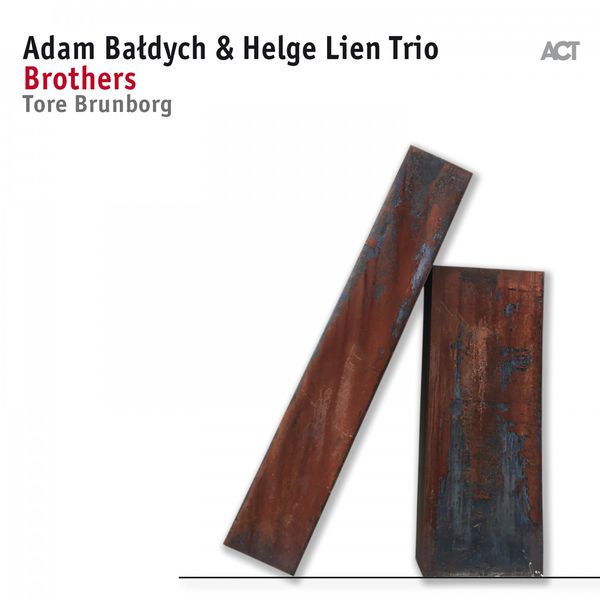
Adam Baldych Helge Lien Trio Brothers Tore Brunborg 24 88 ACT 2017

Well, here it comes; It is the sound of Adam Baldych’s violin. Don’t get me wrong, Baldych is a fantastic musician. I can really appreciate his artistry here.

But I simply cannot get used to the sound of his violin in this context. It doesn’t fit.

So, this review, as usual on my blog, will be a very personal one.

There are tracks I really love, like the appropriately named Love, you get the full beauty of Helge’s trio, and Baldych decides to go pizzicato, during most of the track, i.e. plucking the strings, not using his bow.

But when he uses his bow all the time, I tend to switch off. A typical example is Faith, I simply can’t listen to the entire track.

Or take Cohen’s Hallelujah, a song I love even in the slightly cheesy Jeff Buckley version. If you’d take the violin out of this track, absolutely, like this, sorry, not my cup of tea.

Another solo addition to this album is the Norvegian saxophone player Tore Brunborg, that I knew from collaborations with Tord Gustavsen (Extended Circles) or Manu Katché.

Unfortunately, on this album he very much reminds me of Jan Garbarek. And I must admit, with a few important exceptions, that is a very particular sound I’m also not that fond of. So take a track like One or Brothers, which combine the two, and no way I won’t press the “skip” button before the track is over.

So, in a nutshell, great musicians, but not for me. You should still check it out, the playing is very good.

My rating: 3 stars

You can find it here (Qobuz) and here (Prostudiomasters)


Classical Life

A classical music blog by music critic Tim Mangan

This Week's Music

Making Classical Accessible

From my Macbook to the Net

Evaporation of my thoughts and observations

Elestra

Author: Artienne

My Life in Music

Playing, Singing and Listening

ArsX3

A brand new journal reviewing books, cinema, music

LawrenceEz's Blog

Creative and Performing Arts: Writing, Classical Music, Photography

Laetitia Strauch-Bonart

Contemporary Politics & Culture

sibling revelry

reveling in all things classical

It's A Raggy Waltz

I collect jazz on vinyl, I dig the Dave Brubeck Quartet, & I write about it

La Musica

By two cousins

thejazzbreakfast

Dishing it out from the heart of England

only jazz

random thoughts about music that matters to me

The Culture Project

Exploring the world of literature, wine, art, music and more.

René Spencer Saller

The music causes me to dream of fabulous empires, filled with fabulous sins.

Breaking Baroque

Blog of Tafelmusik Baroque Orchestra and Chamber Choir

Tasting Nirvana

Eating your Dosha

Shadow of Iris

Poetry, fiction, short stories, more ...

The Immortal Jukebox

A Blog about Music and Popular Culture

April Greene

Writer + Editor

a pianist's musings

A history of your favorite classical music.

Classical music for all

Boris Giltburg's blog

I HEAR VOICES

An orchestra seat in the web space