Debussy’s Images – Impressionism For Your Ears

20th century music

Let me first of all do a quick detour here: You won’t find a lot of 20th century classical music on my blog. It is very simple, the further we go away from tonality, the less I like it.

So the territory of the impressionism of a Ravel or Debussy are still borderline, some Prokofiev is as well, but I rarely really enjoy Shostakovich, and don’t even get me started on true twelve-tone and other stuff. I just don’t get it.

As I know some smart people who really adore Schönberg, Webern, Boulez et al. I’ve often wondered why I have this barrier. You see, the visual arts took a similar turn from concrete motives to abstract concepts, and I actually like a 1950 Picasso usually significantly more to a Turner, or any 18th century art. I really appreciate Jason Pollock and Sam Francis (especially the latter). So here I am much more open-minded (OK, when it gets to Duchamp’s Fountain or most of Joseph Boys, I’m out, but at least I get (or believe so) intellectually what they are trying to get at).

But atonal music (and sorry, while some will say there is no atonal music, I think most readers here will get the concept). is something I just don’t get. Probably my brain is to small or too hard-wired in the well-tempered scale to go there.

Claude Debussy’s Images

Back to the early 20th century, and more specifically Debussy. Why write about this right now? Well, I think I’ve mentioned before the excellent Swiss radio show “Diskothek Im 2“, that gets two experts in the studio and compares 5 different version of a given classical work, and this fully blindly.

A very interesting exercise which I should do even more often at home (you’ll be surprised how much your most beloved conducted can disappoint when you don’t know it’s him, or vice versa).

So, a recent show compared 5 recordings of Debussy’s Image. These 6 little poems, with beautiful names like Reflets dans l’eau (reflections on the water), or Poissons d’or (goldfish) are probably among the best known examples of what we call today impressionism, similar to the earlier period in the visual arts (Debussy apparently didn’t like the term by the way).

The editor chose 5 contemporary recordings, and so the classical reference version of these, by the amazing Arturo Benedetti Michelangeli on DG in 1971 was out. By the way, I’m just re-listening to this version right now and it is outstanding, so don’t hesitate to get it in spite of its age.

The versions reviewed included Jean-Yves Thibaudet, Pierre-Laurent Aimard, Alain Planès on a 1902 Blüthner piano (very interesting to discover by the way), Marc-André Hamelin, and the “winner” of this little contest, Jean-Efflam Bavouzet

Complete Debussy vol. 4 – Jean-Efflam Bavouzet
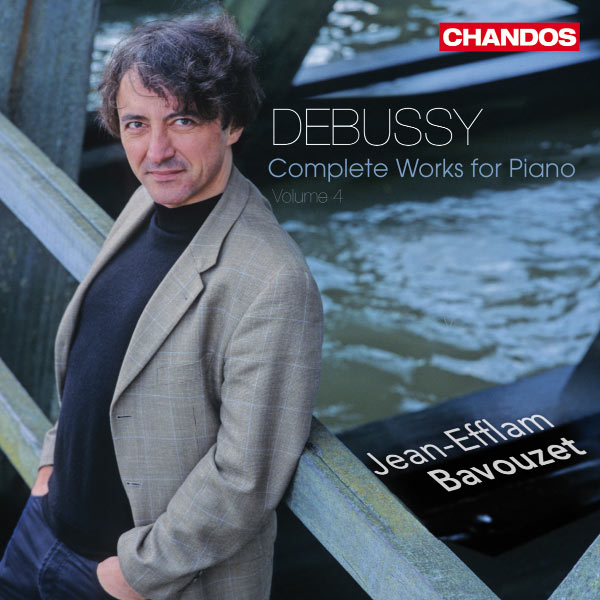
Jean-Efflam Bavouzet Debussy vol. 4 Images Chandos

And here I must admit, while I had heard his name before, I didn’t have a single Bavouzet recording in my collection. Something to be corrected ASAP, as while I don’t always agree with the invited experts, in this case, recording number 4 clearly stood out (in spite of no recording of the 5 being a negative outlier, all had their qualities). I suppose it’s the mixture between extreme precision and the ability to just get sucked into the music.

Have you ever sat in the small west-end Musée Marmottan in Paris? It doesn’t draw the gazillions of visitors that the Musée d’Orsay gets, but it actually has an exceptional Monet collection. There are two main reasons to got there. A, there is an entire corner where you sit surrounded by Monet’s water lilies. Believe me, they are better than the original in Giverny. And there is one, rather little painting, depicting a rising sun over foggy harbor waters, with some small boats passing by, called Impression, Soleil Levant. And yes, this is what gave Impressionism its name.

Sorry for the detour, but watching this particular painting, and listening to Et la lune descend sur le temple qui fut played by Bavouzet gives about the same feeling, that is somewhere out of this world.

This is actually album number 4 of Bavouzet recording Debussy’s complete works, I assume all other volumes are equally worth having, but I didn’t yet have time to check them out.

My rating: 5 stars

You can get it here directly from the label.

Isabelle Faust and Brahms’ Violin Concerto – Just Magical

My blog’s subtitle has Brahms in it, and I haven’t even mentioned good old Johannes for a while.So let me correct this by writing about his violin concerto, and my favorite versions.

Brahms’ Violin Concerto

Brahms was a pianist, not a violinist, and so he needed an expert on what to do and not to do. Luckily, one of his best friends, Joseph Joachim, was one of the leading violinists of his time, so he consulted extensively with him while writing this piece in 1878.

Obviously, this concerto has been recorded over and over again, so there are a lot of amazing versions to choose from. However, there is a relatively recent 2011 recording which I really love more than most others.

Isabelle Faust

Isabelle Faust Brahms Violin Concerto Daniel Harding Mahler Chamber Orchestra Harmonia Mundi 2011

There are so many outstanding young violin players these days, Julia Fischer, Janine Jansen, Hillary Hahn, etc. etc. etc. We are really spoilt these days. However, Isabelle Faust is in a way my personal favorite, probably because she does a lot of excellent chamber music as well (more about that later).

This recording of the violin concerto with the excellent Mahler Chamber Orchestra and Daniel Harding, a young rising star in the conductor scene, has not received praise across the board. Some even called her tone “thin”. Well, I agree her way of playing is always rather on the light than the heavy side, but to me it feels just right. Faust writes in the excellent liner notes that she has studied Joseph Joachim extensively, both his personality, but also historic sources about his playing style. Overall, Faust plays historically informed, but unlike in some other cases this doesn’t mean no vibrato at all, but just a more selective use of it.

The smaller size of the Mahler Chamber Orchestra matches her transparency very well, this is a match made in heaven. As a side note, these days younger orchestras like the MCO or the Chamber Orchestra of Europe are becoming more and more serious competition to the established big boys in Berlin/Vienna/London. I suppose we music lovers we can only be happy about this, as it hopefully keeps everybody on their toes.

A curiosity about this version is the use of the unusual Busoni cadenza, so if you are familiar with this work you’re in for a little surprise.

String Sextet No. 2

As mentioned before, Faust is an excellent chamber musician as well (her Beethoven sonatas are my absolute favorite). So as a “filler” we get the beautiful String Sextet No. 2, which is well worth listening to. A sextet is a more rarely heard form of chamber music, but for Brahms these were actually his first venture into pure string chamber music, and successful in the way that helped further build his name as a composer.

A little piece of trivia: Brahms fell in love many times during his life, but remained a bachelor nevertheless. Occasionally, we get glimpses into his love life from his music, like in the case of the Alto Rhapsody (see my earlier post here). In this case, he was in love with Agathe von Siebold, and nicely enough, you’ll get the motive “A-G-A-H-E” (H being the key for B in German notation) as a leitmotif several times in the first movement.

Overall rating: 5 stars. This, as usual is a very personal judgment. If you agree with me, please comment, if you don’t, I’d love to hear why!

And if you want a more traditional Brahms, you can always go to Oistrakh/Klemperer and Heifetz/Reiner, both outstanding in their own way.

You can get it here as download and here as physical album.

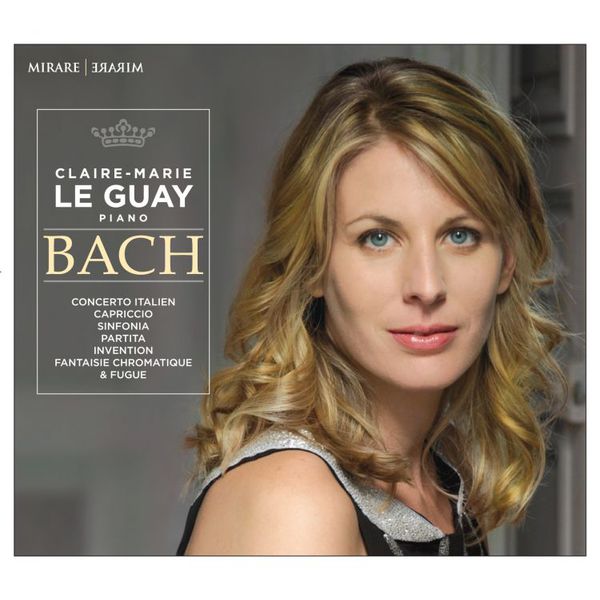
Claire-Marie Le Guay’s Gentle and Perceptive Bach

Bach again, really? I am reviewing too much Bach. But then again, can anybody have too much Bach? Probably not. To be fair, it took me a while to really appreciate Bach. In my youth, I barely listened to him, and my handful of experiences playing him myself made matters worse (I was never a good piano student, to lazy to practice). I assume the beauty and clarify of Bach is something that really needs to grow on you over time. In my thirties (I’m now in my forties) i started realizing that I started to listen more and more to Baroque music, and particularly Bach. It wasn’t a conscious choice, it just happened naturally. And today I literally just can’t get enough (ha, do you have Depeche Mode playing in your head now as well? I do every time I write this phrase in English).

Claire-Marie Le Guay

I must admit I hadn’t noticed her before this “Choc” by Classica some months ago, released on Mirare in 2015. But then I saw her teachers included Alicia de Larrocha and Andreas Staier, I got curious. She has won several competitions and has notably quite busy doing chamber music.

Her Bach album

Claire-Marie Le Guay - Bach Mirare 2015

As usual, when a French magazine reviews a French artist and sells him or her as “the best thing since sliced bread”, I usually take it with a grain of salt. But when I checked out this particular album, I just had to get it pretty much immediately. And this in spite of me being more and more skeptical about Bach on a modern Steinway. What sets this album apart is her touch. Delicate, almost caressing. Bach can be quite tough sometimes, or mechanical, if played by the wrong musician. None of this is here. And in spite of all this gentleness, the music is fully there. You don’t miss any single counterpoint turn in the beautiful Italian Concerto, and even the Chromatic Fantasia BWV903, which sometimes can be a bit academic, is just drawing you in.

Overall rating: 4 stars (I hesitated a long time whether I should give 5 stars, but somehow my subconscious tells me only harpsichord Bach should get the best possible rating, which is probably bullshit)

You can get it here as CD and here as download

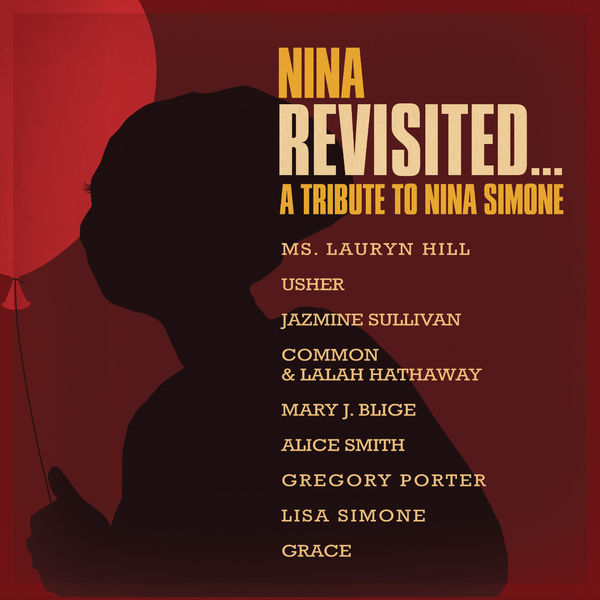
Nina Revisited… or I’d Never Have Thought I’d Ever Mention Usher On This Blog

Hommage albums are all the rage. After the brilliant Autour de Nina (reviewed here), I was nevertheless kind of curious about the new album Nina Revisited… A Tribute to Nina Simone.

0886445281262_600

Well, obviously when I saw that artists like Usher participated (who really represents to me everything that is wrong about today’s top 40 radio “soul”), I kind of assumed I’d hate this album, so I declare openly in front of the jury my potential bias.

But then I figured, what the heck, so far every single album review I’ve done was four or five stars, so I finally felt obliged to also show to you what it is I actually don’t like.

Nina Revisited….

This album is a very good example.

Usher’s version of My Baby Just Cares For Me is massacring this song, which to be fair, was never particularly good in the first place (the producers forced Nina Simone at the time to add it as they felt there were too many ballads on her debut album Little Girl Blue), but at least it can be pleasing and swinging. It is nothing like that here, just brainless drum-computer-plus-overproduced-synthesizers elevator music.

Nina Simone Little Girl Blue 1958 Bethlehem

So why bother mentioning this album at all on my blog? Why waste my energy? Well, because there are actually a handful of tracks on this album that are quite enjoyable.

First of all, Ms. Lauryn Hill does a really good job on Feeling Good; this could even become my favorite version of this feel-good (sorry for the pun) song, and Wild in the Wind is also pretty well done. She shouldn’t have done Ne me quitte pas, but then again, Nina shouldn’t have done either. If you don’t know it, please do yourself the favor and check out Jacques Brel’s original. Once you’ve heard this, you’d wish nobody ever bothered to cover this song with a horrible English accent in the first place.

Alice Smith’s version of I put a spell on you is actually quite interesting, although far from Sophie Hunger’s brilliant version on Autour de NinaGregory Porter’s version of Sinnerman is at least as enjoyable as Keziah Jones. And finally, Lisa Simone’s I Want A Little Sugar In My Bowl is decent background music.

Overall rating: barely 3 starsEDIT: Nah, the couple of decent tracks on here doesn’t make up for the unbearable garbage of some others: 2 stars. 

Do yourself a favor and only buy individual tracks here!

Edgar Knecht – Dance On Deep Waters – Transforming  Traditional Songs into Jazz

To me, Jazz Piano Trio is just an outstanding art form, as already discussed on my previous post on Keith Jarrett’s’ Standards vol. 2.

Actually, Standards fits nicely into a number of trios/albums that have shaped and influenced this particular art form. You could start this lineage with Bill Evans first trio, then move on to Keith Jarrett’s Standards trio, and somehow the third level of evolution came with the late Esbjörn Svensson and his trio. He clearly innovated the trio on many fronts.

Many of today’s piano trios would be unthinkable without EST. And we are very lucky that this art form is not only still alive, but thriving.

About 18 month ago I started a thread on another forum on that topic, called “Are we living in the Golden Age of the Jazz Piano trio?“. This thread has now answered the question I was asking with more than 300 posts today and has become an amazing (if unsorted) list documenting how much is happening around us right now!

Edgar Knecht

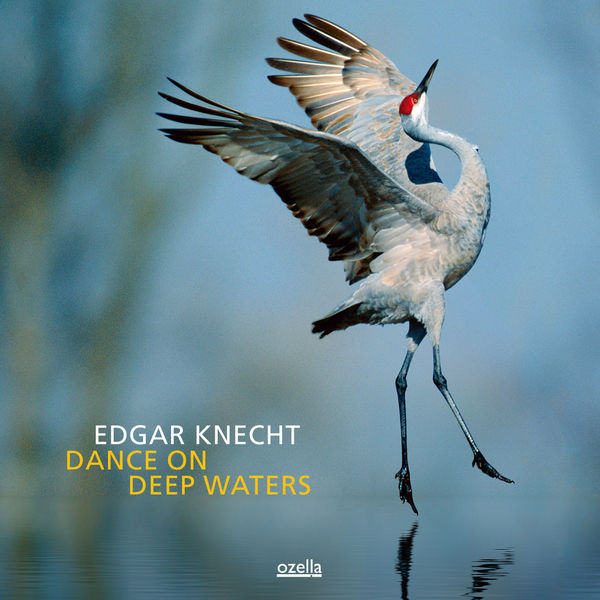
I want to start writing about some of the artists I mentioned or discovered on this thread. Let me kick this off with my most recent purchase, the 2013 album Dance On Deep Waters from the German Edgar Knecht, on Ozella Music. I actually start with a tricky example, this trio is actually a quartet as it includes a percussionist. But well, it is close enough.

Edgar Knecht Dance On Deep Waters Ozella Music 2013

As you can see from the thread, I was actually introduced to this artists (and many other discoveries) by the forum member Elvergunn, who seems to be even more obsessed than me in finding new artists.

(Little side note: The internet is really such a great place for music, you can exchange with music lovers in the entire world, you find stuff that you would have never found in your local record store, and you can all download it in minutes to your computer thanks to the rapidly multiplying specialized online shops, but let’s close the parenthesis here).

Edgar Knecht in my mind is all about melodies and creating a very particular atmosphere. He takes simple music, from German folk songs to even Brahms famous Lullaby “Wiegenlied” and transforms it into something very special. The only little issue I have with this album is that sometimes you’d like a little bit more diversity in terms of approach and style. But I suppose you can’t have it all.

That said, I find this album very enjoyable and keep going back to it quite regularly right now.
My rating: 4 stars

You can get it here as download and here as  CD.

Bach’s Goldberg Variations and The Brilliant Pierre Hantaï

The Goldberg Variations

I’ve already mentioned the written about the Diabelli-Variations, this K2 of the piano variation catalogue. Now I’m attacking the Everest, and all this without Sherpa.

Well to be fair, all I need to do is write about it, I wouldn’t be able to play any of them beyond the Aria in any case. So probably no Sherpa needed.

What makes the Goldberg-Variations so special? I still have a hard time putting my finger on it. Obviously, you’ll have heard it in a gazillion of movies, whenever the director want to portrait a hero as particularly intellectual, the Goldberg’s come up sooner or later. Hannibal Lecter may only be the most prominent of them. In any case, there is something just extremely fascinating how Bach takes this extremely simple melody and deconstructs it 32 times, in an almost analytical cubist way.

Glenn Gould – yes, there’s him, too

You can’t write about the Goldbergs without mentioning Glenn Gould, one of the first pop stars of the classical world (2M copies sold may not impress Madonna, but still). He recorded the variations twice, once in 1955, really helping this work to become world-famous, and once again in 1981. Fans have been arguing forever which version is better. Personally, I prefer the 1981 version, that said, the Goldbergs are somehow really something I appreciate much more on harpsichord. Plus, his humming with the music, I kind of tolerate this with Keith Jarrett, but for classical music it is really annoying.

Anyway, enough ink has been spilled on these, let me go to my personal preferred artist for these, Pierre Hantaï. (If you prefer the Goldbergs on a modern piano, check out Angela Hewitt, Andras Schiff, or Murray Perahia).

Pierre Hantaï

Hantaï is a French harpsichord player and conductor who has worked with all the great masters of baroque, from Gustav Leonhardt to Sigiswald Kuijken to Jordi Savall. Unfortunately, he records way to rarely, so you will find only a handful of albums from him. This probably hasn’t helped his international reputation, he seems to be still relatively unknown in the non-French speaking world. This is a real pity.

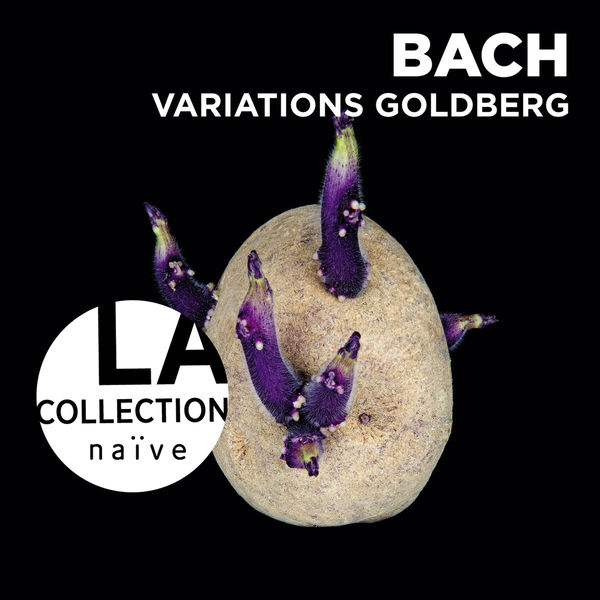
PIerre Hantai Goldberg 1992 recording, Naive reissue

Given how few solo recordings he’s made, you’ll be surprised to see that he has recorded the Goldberg variations twice, in 1992 (recently re-released on the Naïve label) and in 2003 on the Mirare label.

Pierre Hantai Goldberg variations Mirare 2003

Which one to get? Honestly, I don’t know, and I’m going to bail out and say, if you can afford it, both. Both are performances that trump pretty much all of what I’ve heard elsewhere. 1992 is occasionally more energetic, 2003 more reflective, but both are just superb.

In the booklet to the 2003 edition it is mentioned that the Goldberg’s are a work that “he’s played more often than any other since childhood”. Malcolm Gladwell in his book Outliers has written about the 10,000 hours it takes to truly master something. While this claim has recently been challenged, I suppose this is still one of those examples of this rule.

My rating: 5 stars for both

You can find the recordings here and here as downloads and here in physical form (1992 recording only, the 2003 seems to be harder to find on CD).

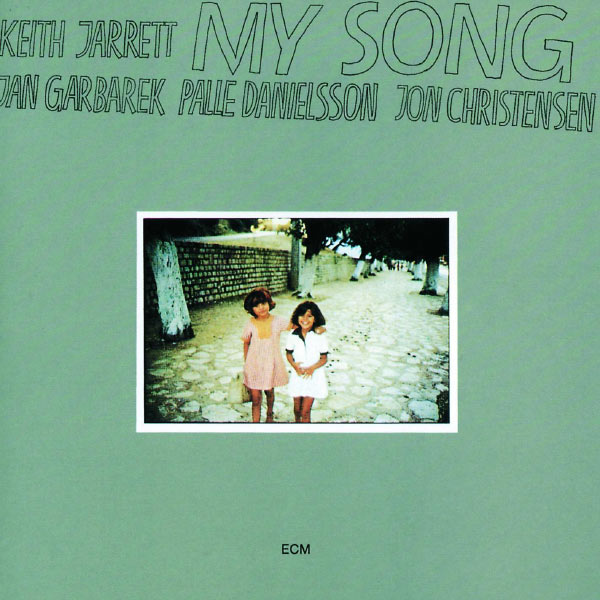
Keith Jarrett’s My Song – I Really Shouldn’t Be Liking This Album

Keith Jarrett again

Time for another post on Keith Jarrett, given that he prominently figures in my blog’s subtitle. I’ve also mentioned My Song is my recent Songs That Give Me Goose Bumps post .

Jarrett is obviously one of the most brilliant artists in the Jazz world. So why do I say I shouldn’t like this album? Well, two things: a) I love most of Jarrett’s solo albums from the 1970s (the obvious Köln Concert, the Sun Bear Concerts, Bremen/Lausanne), but I find his regular 1970s Jazz albums, very much hit and miss to my taste (with significantly more misses than hits). This is not a particular Keith Jarrett problem, but more my personal problem with the 1970 Jazz scene overall.

Furthermore, I’m not a big fan of Jan Garbarek . Most of the albums I’ve heard of him leave me rather cold and slightly bored. No judgment implied here, just personal taste. (A notable exception is the recently released 2009 Dresden live recording).

My Song

Keith Jarrett MySong_600

So how come this 1977 album is among my absolute all-time favorites? Well, to be fair, one thing that plays in its favor is the fact that this was my first ever Jazz album. Before buying this at the age of 18 or so, Jazz was weird people playing weird music in my mind.

And then I heard this album: amazingly beautiful melodies, very simple and straightforward arrangements. I couldn’t really believe this was what Jazz was all about. So I copied the vinyl on compact cassette (quick history lesson for my younger readers, google it for your general education, this is what MP3s used to look like) and played it in the car radio over and over and over.

Usually, with stuff I used to listen to a lot during my youth I’ve outgrown it by now. Not this album though. There is a timeless beauty in the melodies. All original compositions by Keith by the way.

My preferred song is the eponymous title song, which is one of my preferred melodies of all times (you can hear the crowd cheering when Jarrett plays this as an encore on the Carnegie Hall solo concert, see also the above mentioned post for a Youtube clip).

The other favorite is the relatively short Country, where Jarrett introduces the theme, before Garbarek get’s to take it over. The rest of the album is very nice as well, with the exception of the slightly random (to my ears) Mandala. All the rest, after all these years, I can still listen to over and over and over again. A rare achievement.

My rating: 5 stars

If you want to buy it, the recent 2015 remaster available in 24/96 and 24/192 is of astounding quality. It’s rather expensive, but you could never guess listening to it that this recording is nearly 40 years old. This was originally recorded and mastered in Oslo by Jan Erik Kongshaug, a true recording magician.

You can find it here and here.

Classical Life

A classical music blog by music critic Tim Mangan

This Week's Music

Making Classical Accessible

From my Macbook to the Net

Evaporation of my thoughts and observations

Elestra

Author: Artienne

My Life in Music

Playing, Singing and Listening

ArsX3

A brand new journal reviewing books, cinema, music

LawrenceEz's Blog

Creative and Performing Arts: Writing, Classical Music, Photography

Laetitia Strauch-Bonart

Contemporary Politics & Culture

sibling revelry

reveling in all things classical

It's A Raggy Waltz

I collect jazz on vinyl, I dig the Dave Brubeck Quartet, & I write about it

La Musica

By two cousins

thejazzbreakfast

Dishing it out from the heart of England

only jazz

random thoughts about music that matters to me

The Culture Project

Exploring the world of literature, wine, art, music and more.

René Spencer Saller

The music causes me to dream of fabulous empires, filled with fabulous sins.

Breaking Baroque

Blog of Tafelmusik Baroque Orchestra and Chamber Choir

Tasting Nirvana

Eating your Dosha

Shadow of Iris

Poetry, fiction, short stories, more ...

The Immortal Jukebox

A Blog about Music and Popular Culture

April Greene

Writer + Editor

a pianist's musings

A history of your favorite classical music.

Classical music for all

Boris Giltburg's blog

I HEAR VOICES

An orchestra seat in the web space