Currency of Man – Melody Gardot goes Soul – A Review

I’ve been a fan of Melody for quite a while now. Her story is touching (serious car accident, very long recovery, music as therapy), and her first three albums (Worrisome Heart, My One And Only Thrill, The Absence) were all very good. She’s also contributed a great track to Autour de Nina.

Currency Of Man (Legacy 2015)
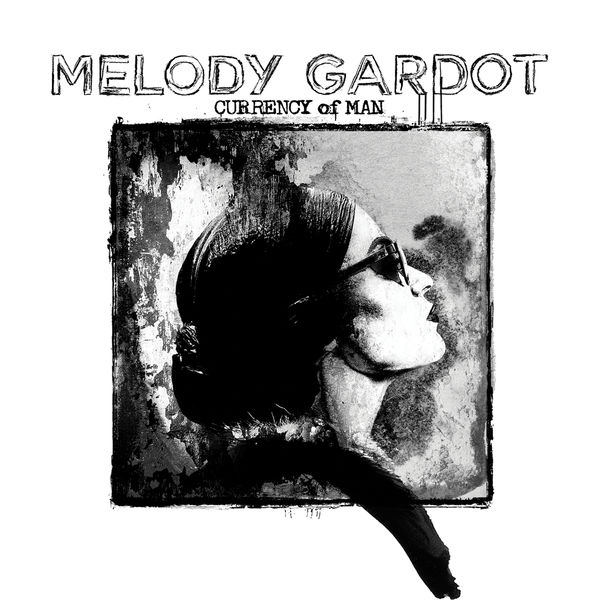
0060254729193_600

Generally, I’m not such a regular listener to vocal jazz. I appreciate the classics, Ella Fitzgerald, Sarah Vaughn, Billie Holiday, but of the contemporary singers, many don’t touch me as much.  Even clearly exceptional artists such as Cecile McLorin Salvant I only listen to occasionally.

So again, what’s different about Melody to all the other contemporary Jazz singers (and there are many): The music is well produced and she writes good songs. Many others do as well. Her unique feature to me is really her voice: pure seduction. This voice is really special and easily recognizable whatever she does.

Obviously, I had to get her latest album, I even had it on pre-order. Just downloaded it when it officially came out this morning.

Probably not Jazz anymore – if it ever was

Now let me put a disclaimer first, or rather a question: is this new album actually Jazz? Well, if you take the definition of many record stores (remember those, they’ll probably soon go the way of video rental places), who insisted on putting Norah Jones (or anything else published on BlueNote or Verve) and sometimes even Katie Melua under Jazz, then probably yes, but this album has more elements of Soul than Jazz.

One thing that struck me about this album were the arrangements. This album contains strings. Usually, the only one who is able to pull off combining Jazz and strings, is Ella Fitzgerald again. But here, it is really tastefully done, not overly cheesy, e.g. on the very intense “If I Ever Recall Your Face“. In other songs, you get typical Soul/Motown elements like brass and background vocals. Again, those just blend in and support the music. Very well done.

Then on some songs, e.g Morning Sun, you initially think she’s entering Norah Jones territory. But no, soon you’ll realize, this really is a Soul album with even funky elements occasionally.

Very enjoyable

How does it all work out? Very very well. I’m a big fan of this album. There is only one song that stands out as slightly weaker compared to the rest of the album “Same To You“; all  the rest is truly enjoyable.

An outstanding next step for an artist who will have a great future. Check it out!

You’ll find some good vids including some “behind the scenes” here.

My rating: 4 stars

EDIT: Deluxe edition

It has just been flagged to me that I didn’t specify whether I reviewed the regular or the deluxe edition of the album. The comments above refer to the regular edition, I hadn’t even realized the existence of the Deluxe Edition until now.

The latter has not only 5 bonus tracks (to be fair, 2 of them are less than 1 min), including the outstanding “Burying My Troubles“, pretty much most of the regular songs appear to be different cuts/mixes to the regular edition. I’ll need to compare a bit more and will report back in the next days.

Autour de Nina – an outstanding Vocal Jazz complilation

Hommage albums are popular these days. Cassandra Wilson and José James just recently released their Billie Holiday inspired albums (see my review of Cassandra Wilson’s album here), but here we are dedicating an entire album to another Vocal Jazz legend: Nina Simone.

Autour de Nina cover

This album, while it was released on Verve, got significantly more press coverage in France then elsewhere. Even the website, and their Facebook page, is written in French. This is a pity, as this album is outstanding and would benefit from being better known globally.

This is a compilation including some relatively well known international celebrities, the most popular probably being Gregory Porter and Melody Gardot (who will release here new album tomorrow by the way). You may also have heard of ACT-label singer Youn Sun Nah.

Then we have some names that are probably more familiar to a French/European audience, including Camille, Lianne La Havas,Olivia Ruiz, and the Swiss rising singer songwriter Sophie Hunger (more about her certainly later in another post).

The quality of this album is outstanding throughout. Olivia Ruiz manages to put a new twist on the TV-commercial-abused “My Baby Just Cares For Me“, Gregory Porter is great in “Black is the Color (Of My True Love’s Hair)”, and Liane La Havas does a great “Baltimore“. The only weak spot to me is “Feeling Good”, which I (shame on me) prefer by our Great Cheesy Canadian, Michael Bublé, Ben L’Oncle Sam’s version just doesn’t make me feel as good (sorry for the bad pun).

I Put A Spell On You

However, let me flag my personal favorites: “Plain Gold Ring” by Youn Sun Nah (one of my favorite Nina Simone songs, from her famous debut), “Four Women” by Melody Gardot, but most of all, Sophie Hunger’s “I Put A Spell On You“, a version that for me personally even beats Screamin’ Jay Hawkins (please don’t stone me…).

Very highly recommended, 5 stars.

Is the Jazz Piano Trio the ideal art form of the 21st century? – Keith Jarrett’s Standards Vol. 2

Let me answer my rhetorical question immediately: obviously not, there are so many art forms out there today that trying to single out one of them is clearly ridiculous.

So let me rephrase: Is the Jazz Piano Trio my ideal art form? And the answer is, pretty close. There is something special about the intimacy of 3 musicians together, interacting and generating something amazing. It is in a way the modern equivalent of the String Quartet, which many consider the summit of classical chamber music.

I’d like to start by one album which I consider somehow the birth of the contemporary (meaning the last 30 years, I’m starting to get older….): Keith Jarrett’s Standards vol. 2 (footnote: vol. 1 is great as well, I just have a very slight preference for the 2nd volume).

Oh no, you’re going to say, not Jarrett again. Well first of all, you’ve been warned, it is in my subtitle of the blog, and second, I promise I’ll be talking about other musicians as well in the future.

Back to my old friend Keith (not that I’ve ever met him beyond being about 25 meters away last Friday): Why is this album so important?

The lost decade

Well, put yourself in the early 1980s (assuming you were already alive then, I was, but not for long). Jazz just came out of an entire decade of trying to break the “limits” of traditional jazz by first going “Free”, and later by going to Jazzrock and Fusion. Well, I’m sure to offend some here, but to me this was a complete dead-end, and both genres bore me to death (slightly exaggerating to make a point here).

As important as the 70s were for genres like Rock, for Jazz it is my personal lost decade. Most of my collection goes from 1956/7 – 1966, and then starts again in the 80s. So in the early 1980s, we have Keith Jarrett, who already did the amazing solo concerts in the 1970s including the famous Köln concert, apparently the best-selling solo piano album of all times, and had been playing some quartet work both in the US and in Europe (I’ll talk about some of my favorite albums from that period later, so it wasn’t 100% a lost decade, just maybe 90%….).

So then, early 1980s, the bass player Gary Peacock, the drummer Jack de Johnette, and Keith, get together to record first Standards vol. 1, in 1983, and then vol. 2, in 1985. Both are obviously inspired from the key representatives of the traditional piano trio, e.g. Bill Evans first trio, Art Tatum, or Oscar Peterson, but represent something new. And obviously, luckily, don’t contain any element of fusion any more.

Standards vol. 2

I’m not going to review Standards vol. 2 in detail, many smarter people than me have done that. It is an album I keep going back to again and again. I’ve actually just purchased it again very recently. ECM just released some weeks ago a new remaster, now in high-res format of up to 24/192 (bit/khz respectively). Whether high-res files are better than the regular CD format (called 16/44 or “red book”) is a debate I’m certainly not going to start here, you’ll have enough sites to get that discussion going. What is really better is the remastering. ECM; Jarrett’s Munich based record label is known for the excellent recordings, and this new remaster really sounds way better than the CD version. I actually still have the original vinyl in my basement, maybe I should actually get a record player again at some point.

(Footnote again: Do I advocate everybody to get the high res version? It is quite pricey, ECM has always been a premium label. So only get it if you have a decent playback chain and care enough about that album).

So to me, Standards vol. 2 is the “standard” (sorry for the cheap pun) to which I compare all my piano trio recordings.

Since then, the standards trio has recorded many live albums, most of which are outstanding and absolutely worth having. Examples include At the Blue Note, Whisper Not, Standards Live, and even again at the KKL in 2009, Somewhere. (a pity I missed that concert, but at least I have the recording, released in 2014)

Luckily, today we’re living in the Golden Age of the piano trio, we have so many fantastic artists out there that we’re not limited to Keith Jarrett any more. But we really have to thank him for revitalizing this genre (EST then took it to the next level in the 90s, but more about that later).

My rating: 5 stars

UPDATE (Oct 2016): I’ve since reviewed many more Jazz piano trio albums, you can check them all out by clicking on this link.

And please let me know if you have any recommendations for me in the comments section below!

Classical Life

A classical music blog by music critic Tim Mangan

This Week's Music

Making Classical Accessible

From my Macbook to the Net

Evaporation of my thoughts and observations

Elestra

Author: Artienne

My Life in Music

Playing, Singing and Listening

ArsX3

A brand new journal reviewing books, cinema, music

LawrenceEz's Blog

Creative and Performing Arts: Writing, Classical Music, Photography

Laetitia Strauch-Bonart

Contemporary Politics & Culture

sibling revelry

reveling in all things classical

It's A Raggy Waltz

I collect jazz on vinyl, I dig the Dave Brubeck Quartet, & I write about it

La Musica

By two cousins

thejazzbreakfast

Dishing it out from the heart of England

only jazz

random thoughts about music that matters to me

The Culture Project

Exploring the world of literature, wine, art, music and more.

René Spencer Saller

The music causes me to dream of fabulous empires, filled with fabulous sins.

Breaking Baroque

Blog of Tafelmusik Baroque Orchestra and Chamber Choir

Tasting Nirvana

Eating your Dosha

The Immortal Jukebox

A Blog about Music and Popular Culture

April Greene

Writer + Editor

a pianist's musings

A history of your favorite classical music.

Classical music for all

Boris Giltburg's blog

I HEAR VOICES

An orchestra seat in the web space