Brahms 2nd with Paavo Järvi and the Kammerphilharmonie Bremen – Outstanding!

Brahms

Did I mention I like Brahms? Well to be fair, the subtitle of my blog kind of gives it away.

These are good times for lovers of Brahms symphonies. Only recently Andris Nelsons has released his fantastic cycle of the 4 symphonies with the Boston Symphony Orchestra (see my 5 star review here), now finally Paavo Järvi starts his Brahms cycle with the Kammerphilharmonie Bremen as well.

Paavo Järvi

I really liked his Beethoven cycle with the same orchestra, actually it is among my current references. His Schumann is also great. So obviously I had high hopes for his Brahms.

And I’m not disappointed.

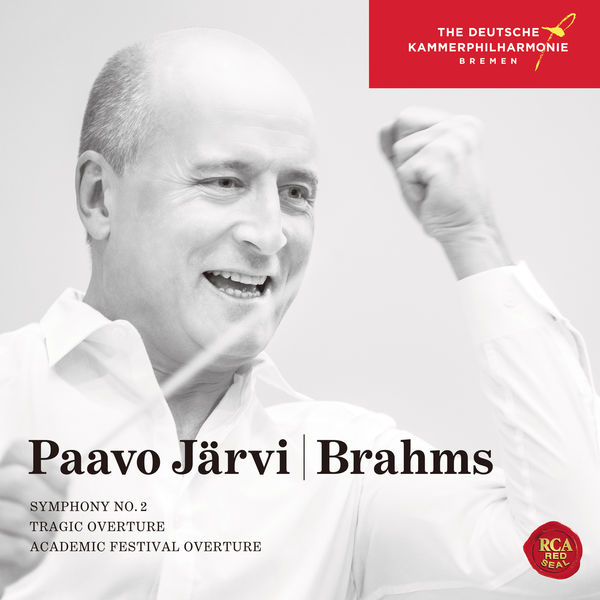
Brahms Symphony No. 2 – Paavo Järvi – Kammerphilharmonie Bremen (RCA 2017)

Brahms Symphony No. 2 Tragic Overture Academic Festival Overture Deutsche Kammerphilharmonie Bremen RCA 2017 SACD

The 2nd symphony is not my favorite of the four. 1 and 4 are outstanding, 3 is great, and 2 is just nice in my personal classification. Many have described the 2nd as Brahms “Pastorale“. Obviously, there is more to it, but a certain influence in the peaceful moments cannot be completely discarded. That said, , as the booklet also nicely explains, Brahms himself called the work “melancholic” and “sad” and even had the score printed with a black border.

How does Järvi deal with the symphony? The Kammerphilharmonie Bremen, as the name indicates, is a chamber orchestra, so you’d expect a slimmer sound than e.g. with the Berlin Philharmonic.

But don’t expect this to sound like a HIP baroque orchestra, you still get the full color of  a symphony orchestra, maybe just not as cinemascope as e.g. the latest Rattle cycle or Nelsons with the BSO. There have been some interesting adaptations, e.g the drums are having goat skin giving them a very particular sound.

Overall, it is very balanced, and nuanced. You get plenty of romanticism though, after all this is Brahms we are talking about. I particularly like the end of the 2nd movement, where

As a “filler”, you get the Tragic Overture and Academic Festival Overture. Both are nice to have, but nothing I´d listen to on a regular basis. There is too much outstanding music elsewhere.

Overall this is one of the best Brahms 2 currently on the market.

My rating: 5 stars

You can find it here (Qobuz) or on many other streaming sites.

If you prefer the original SACD, it is unfortunately very pricey (only found it for $40-60, what’s going on here?)


A new Trout Quartet recording with Daniil Trifonov and Anne Sophie Mutter – Very Enjoyable

Two superstars and prodigies

Anne-Sophie Mutter, for those of us who are old enough to remember, was a classical music  prodigy. Herbert von Karajan put her on the map when he performed a Mozart violin concerto with her in 1977, when she was 13. Anne-Sophie Mutter was a major star for the Deutsche Grammphon label in the 1980s and 90s.

I must admit I never very much liked her early recordings, to my ears they suffered from the same problem as Karajan´s late work on DG, just too much of everything. However, in recent years, Mutter style has evolved significantly, and her recent recordings, e.g. her 2013 recording of the Dvorak concerto with the Berlin Philharmonic, or her 2008 recording of the Bach violin concertos with the Trondheim Soloists show a very different Anne-Sophie Mutter.

Daniil Trifonov (born in 1991) started a tiny bit later, winning third price in the Chopin competition in 2010, and winning some major competitions one year later. Since then, he has released some fantastic albums, e.g. his great Rachmaninov album in 2015, or his recent Liszt Transcedental Etudes, all justify that he was named “Artist of the year” by Gramophone in 2016. Deutsche Grammophon (or whatever is left of it within the big Universal Music Group conglomerate) clearly still has a good taste in selecting musicians.

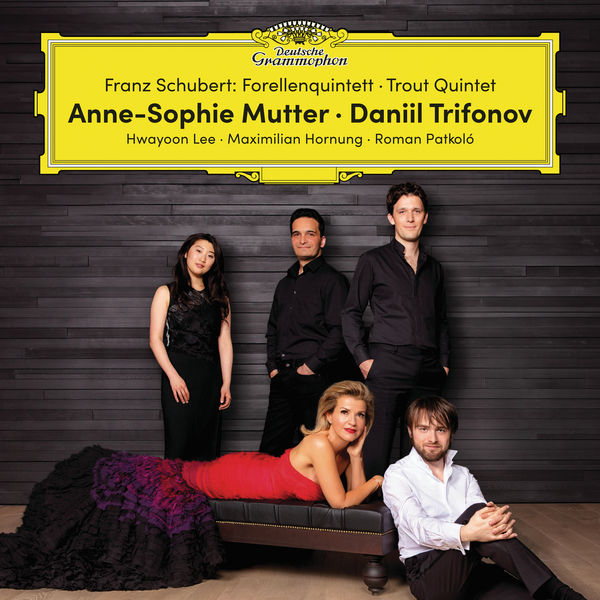
Schubert: Forellenquintett – Anne-Sophie Mutter – Daniel Trifonov (Deutsche Grammophon 2017)

Schubert: Trout Quintet / Forellenquartett Anne-Sophie Mutter Daniil Trifoniv 24/96 Deutsche Grammophon 2017

I’ve written quite a bit how much I love Schubert´s Chamber music (see here and here for my favorite versions of the string quintet, or an article here about the Rosamunde quartet), but so far I’ve never mentioned the Forellen or Trout piano quintet.

I really don’t know why, but somehow this work never ranked as highly in my personal scale as the pure string chamber works. Silly, I know, it is truly beautiful.

Before we go into the album itself, who else do we have here beyond our two super stars? I must admit I had never heard the names of Hwayoon Lee (viola), Maximilian Hornung (cello), and Roman Patkoló (double bass) before. And even the booklet of the album doesn’t bother to give any more information about them. After some googling it turns out all of them are young musicians that Hornung and Lee both are being developed by Anne-Sophie Mutters Young Talent foundation. Patkoló himself is currently a professor in Basle and has played with Mutter beforehand.

So what do we get here?

This album is the result of a live recording in Baden-Baden in June 2017. And you really feel the energy of a live event. There is passion, drive, and pleasure in every single movement of the Trout. Sometimes, when you have musicians that are not playing in a regular ensemble do chamber music, there is a risk of the music not being fully coherent.

This is not the case here, while Mutter and Trifonov are clearly the stars, all of the instruments merge smoothly in this adventure.

On top of the Trout, you get the Notturno for piano, violin, and cello D897, one of my absolute favorite Schubert works, and some song adaptations for violin and piano, including the famous Schwanengesang.

The only thing I´d have to criticize is that sometimes Mutter (and to some extent also Trifonov) seem to fall back into what I didn’t like about the early recordings, i.e. a bit too much of everything, a bit too much drama and vibrato, where I´d personally prefer even more intimacy (e.g. in the Notturno).

But overall, this is a very enjoyable album.

My rating: 4 stars

You can find it here (Qobuz) and here (HDtracks)


UPDATE Feb 28, 2018: It took Classica a while to review this, and the result isn’t pretty: 1 star, doesn’t get worse than this. They criticize the focus on Mutter and Trifonov and a lack of coherence.

Musicophile’s Top 10 Chopin Albums

This list was triggered by a very interesting thread on a discussion forum I participate in, on Computer Audiophile. The thread is called “My Essential Classical Albums” by a forum participant called Sphinxsix.

The entire thread is very much worth checking out, I found a lot of recommendations on there already.

But with this specific question regarding Chopin, I noticed that I already pretty much had all the recordings I recommended covered on my blog. So in part, this is also a “best of list” of my Chopin blog posts. But there are also quite a number of albums I haven’t featured yet.

For those albums previously covered, you will find links in the entries below to the original blog posts. In the original blog posts, you’ll also find their respective download links.

1. The Nocturnes – Moravec
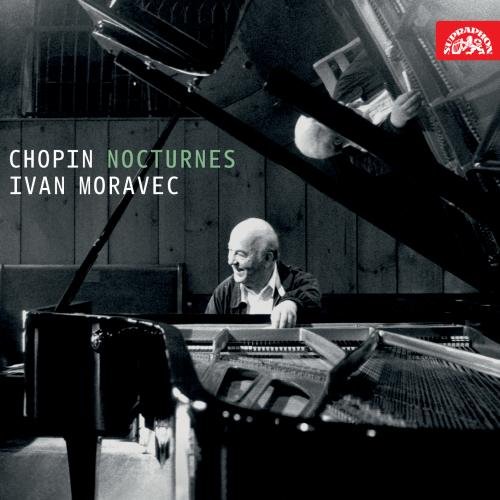
Ivan Moravec Chopin Nocturnes

To me, the Nocturnes are the quintessential Chopin, even more than the Preludes or the Etudes. And when we talk Nocturnes, the legendary Ivan Moravec version really is unbeatable. It is not by coincidence that I’ve ranked Moravec in my in My Top 10 Favorite Classical Pianists for this album alone. I’ve also mentioned this Album in My 25 Essential Classical Music album, as it is so important to me.

2. The Preludes – Blechacz

Chopin Complete The Preludes Rafal Blechacz Deutsche Grammophon

Right after the Nocturnes, the Preludes are my favorite Chopin, both op. 10 and 25 are oustanding achievements. Here again I could have listed dozens of recordings, but for a Top10 list I’d really like to restrict myself to the young Polish pianists Rafal Blechacz, who recorded this as one of his first albums on Deutsche Grammophon after winning the Warsaw Chopin competition. Another “triple winner”, as he also shows up in My Top 10 Classical Pianists and My 25 Essential Classical Music albums with this recording.

3. The Scherzos – Grosvenor
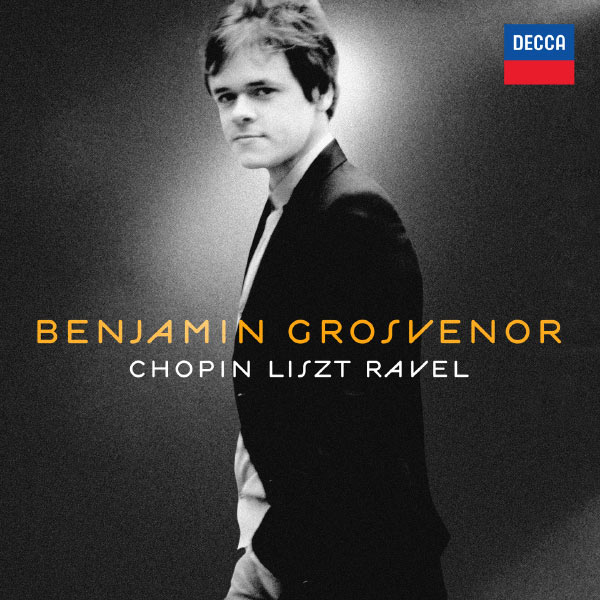
Benjamin Grosvenor Chopin Liszt Ravel Decca 2011

Some readers may be suprised that I rank these so high, but these little gems are very close to my heart. Completely different, each one of them is a world on its own.

Here, my favorite version comes from the young British pianist Benjamin Grosvenor.

Grosvenor is also a part of my Top 10 Favorite Classical pianists.

4. Piano Concertos – Krystian Zimerman
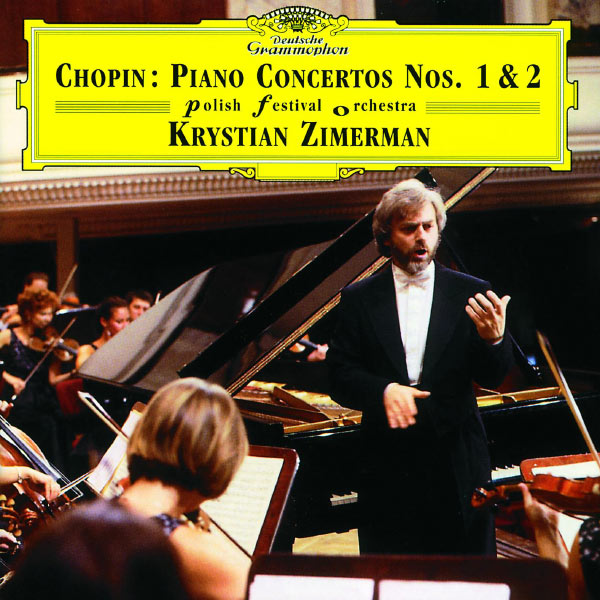
Chopin Piano Concertos No. 1 & 2 Krystian Zimerman Polish Festival Orchestra Deutsche Grammophon 1999

The legendary Polish pianist Krystian Zimerman, himself also winner of the famous Chopin competition, has recorded the concertos twice. Once with the LA Philharmonic under Giulini in the late 1980s. Knowing that Zimerman is one of the most perfectionist pianists out there, if he records something twice, you can be sure, he does it for a reason.

This second recording from 1999 with a hand-picked “Polish Festival Orchestra”, and while the Giulini recording is already excellent, this one really is a true benchmark.

A must have.

My rating: 5 stars

5. Ballades / Barcarolle – Krystian Zimerman

Chopin 4 Balladen Barcarolle Fantasie Krystian Zimerman Deutsche Grammophon 1988

Zimerman (also one of my Top 10 Favorite Classical pianists) is also my recording of choice for the Ballades.

I’ve had the pleasure of hearing Zimerman perform some of these live, including the beautiful Barcarolle that you’ll also find on this outstanding 1988 album. Don’t miss it.

My rating: 5 stars

6. Etudes – Pollini

Chopin Etudes Maurizio Pollini Deutsche Grammophon

A Chopin list without Maurizio Pollini wouldn’t be complete. I could have easily mentioned him for the Preludes, and several of his other Chopin recordings are legendary. He, like Blechacz, Zimerman above and Argerich below, is also a winner of the Warsaw piano competition (Not that this competition is held only every 5 years, winning it is truly a big deal).

The Etudes are technically extremely challenging. Apparently even a true master like Pollini needed cuts in recording (hundreds of them if you believe some reports). In spite of this piecemeal type recording, the result is just fantastic, and can be described with only one word: fantastic.

Perahia would have been a nice alternative, but Pollini really remains the reference.

My rating: 5 stars

7. Argerich Legendary Chopin
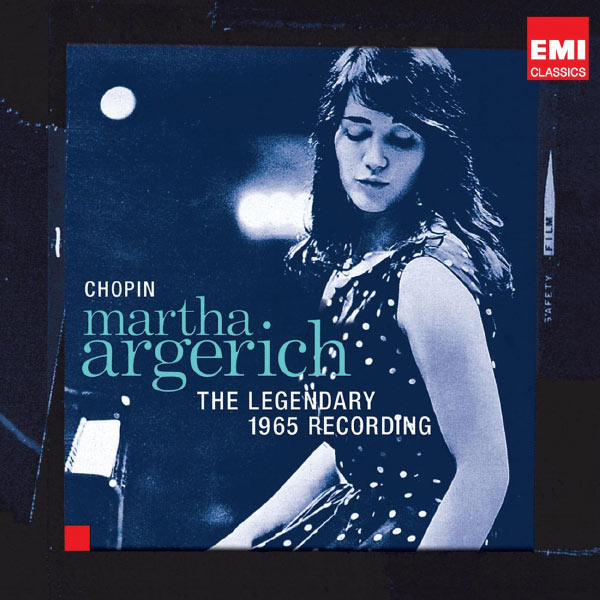
Martha Argerich The Legendary 1965 Chopin Recording Emi

Marta Argerich won the Chopin Competion 5 years after Pollini.

This was one of her first recordings. You will never hear Chopin’s sonata no. 3 played more passionately. Argerich (another member of my Top 10 Favorite Classical Pianists) is in a way the complete opposite of Pollini. Pollini is typically the perfectionist, rational architect, and Argerich is known for her energy and fire. Check out her recording of the piano concertos for another example of her extraordinary talent.

My rating: 4 stars

8. Cello Sonata – Argerich / Rostropovich
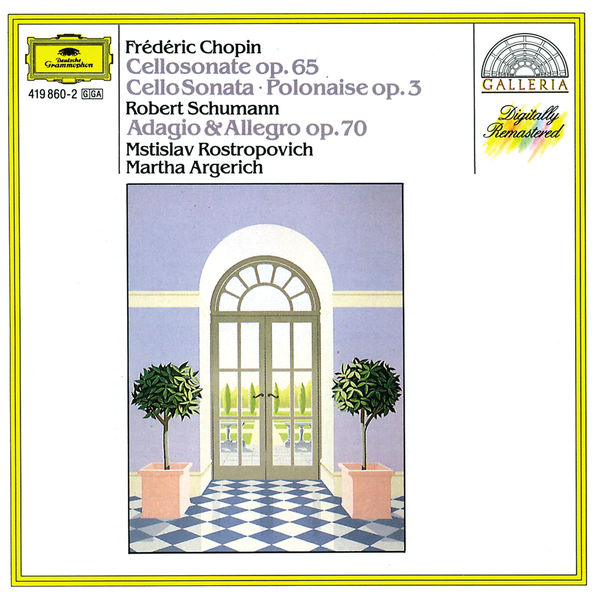
Chopin Cello sonata op. 65 Polonaise op. 3 Schumann Adagio & Allegro op. 70 Mstislav Rostropovich Martha Argerich Deutsche Grammophon

Chopin really isn’t well known for his chamber music. So I must admit that until recently I only knew one recording of this, by Sol Gabetta. In preparation of this blog post I checked out several versions, and end up again with the great Martha Argerich, joined here by the cello giant, Mstislav Rostropovich.

My rating: 4 stars (excellent playing, but the music is not as essential as the piano pieces)

9. Mazurkas – Rubinstein

No Chopin list can be complete without the name that is most closely associated with this composer: Artur Rubinstein.

This recommendation is following up to a recommendation in the forum thread that I should check out his earlier recordings. I ended up liking this version most:
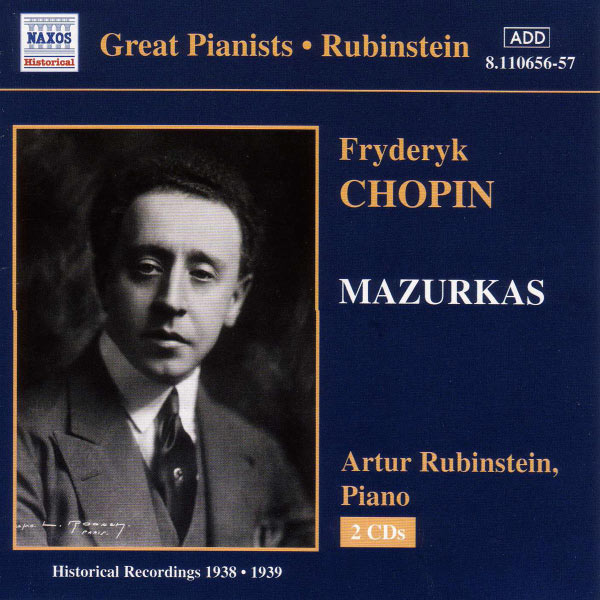
Great Pianists Rubinstein Frederic Chopin Mazurkas 1938-1939 Naxos

Yes, it truly is a historic pre-war recording, but the playing really makes up for it. I usually didn’t care so much about these little dances, but Rubinstein really gives these little pieces such a very special meaning, it is a pleasure to listen to.

My rating: 4 stars

10. The Complete Chopin Edition on Deutsche Grammophon

Deutsche Grammophon Complete Chopin Edition 2009

I typically don’t recommend box sets. Even the better ones are typically hit and miss, as they are typically just “recycling” of older catalog material.

But you probably have noticed the large number of yellow covers above, and DG really did a great job on this 17 CD box.

You’ll get the Zimerman piano concertos in the Polish Festival version, the Ballades again by Zimerman, the Pollini etudes, and the Nocturnes by Maria João Pires (my second favorite after Moravec), the Preludes by Blechacz, and the Cello Sonata by Argerich

In a way, you could think that for this blog post pretty much all I did was copy this box set. Well, actually no, I got all of these albums individually over many years (and also I’m not getting any incentive from DG here). But I’m truly impressed by the selection that DG did here (having all this in their archives obviously helped).

On top, you’ll also get the Mazurkas and Valses well played by Vladimir Ashkenazy, some individual pieces with Anatol Ugorsky, the Scherzos by Pollini again, and the piano sonatas by Lilya Zilberstein and Pollini again.

So if you want to kick-off your Chopin journey, this box really is all you need for a start with truly outstanding recordings.

My rating: 5 stars


You can find the recordings either in the respective original blog post or here:

Concertos / Zimerman: here (Qobuz) and here (Prestoclassical) (note that Presto has a special offer on Zimerman recordings until the end of 2017)

Ballades / Zimerman: here (Qobuz) and here (Prestoclassical)

Etudes / Pollini: here (Qobuz) and here (Prestoclassical)

Argerich Legendary 1965 recording: here (Qobuz)

Argerich Rostropovich Cello Sonatas: here (Qobuz) and here (Prestoclassical)

Chopin Mazurkas Rubinstein here (Qobuz) and here (Prestoclassical)

The Complete Chopin Edition here (Qobuz) and here (Prestoclassical)

A Truly Moving Performance of Brahms Requiem by Yannick-Nezet Séguin and the Berlin Philharmonic: My Review

Serendipity

Who would have thought that I end up back at the Berlin Philharmonie so soon after the last concert by Simon Rattle just some days ago? Certainly not me.

This was really pure coincidence. I happened to stroll by the Berlin Philharmonic hall purely by chance. Suddenly, a guy approaches me, and asks “Would you want a ticket for the concert? Brahms, right now?” Well, who can say no to that? So 5 min later I find myself sitting in the Berlin Philharmonic hall watching as the BPO and the Rundfunkchor Berlin reassemble (I only got there during the break).

Ein Deutsches Requiem

I haven’t written that much about requiems yet on my blog. I have a certain respect for this category of music, as I always remember it is written for a very serious occasion, the death of a loved one. Maybe because of this I don’t listen to requiems enough.

I’ve previously mentioned Mozart´s requiem on my blog as part of My Must-have Mozart Albums. The other requiems I really love are Fauré’s (this really would need its own blog post), and obviously Brahms’.

Brahms German Requiem is a particular in many ways. First of all, it was written under very personal circumstances, around the death of Brahms own mother. Second, given Brahms´protestant background (he’s from Hamburg), he doesn’t use the traditional latin text of the catholic requiem, but instead parts of the Bible that are of personal importance to him. These are sung in German, hence the name.

Yannick Nézet Séguin – Berlin Philharmonic Orchestra – Rundfunkchor Berlin – Hanna-Elisabeth Müller – Markus Werba

I was indeed very lucky last night. Not only I get to see again the BPO, one of the best orchestras in the world, but also finally get to see Yannick Nézet-Séguin live.

I’ve written a lot about his recordings, from his Cosi Fan Tutte to his FigaroMost recently I did a more ambivalent review of his Mendelssohn symphony box. But taken together, he is one of the most relevant conductors of the 21st century.

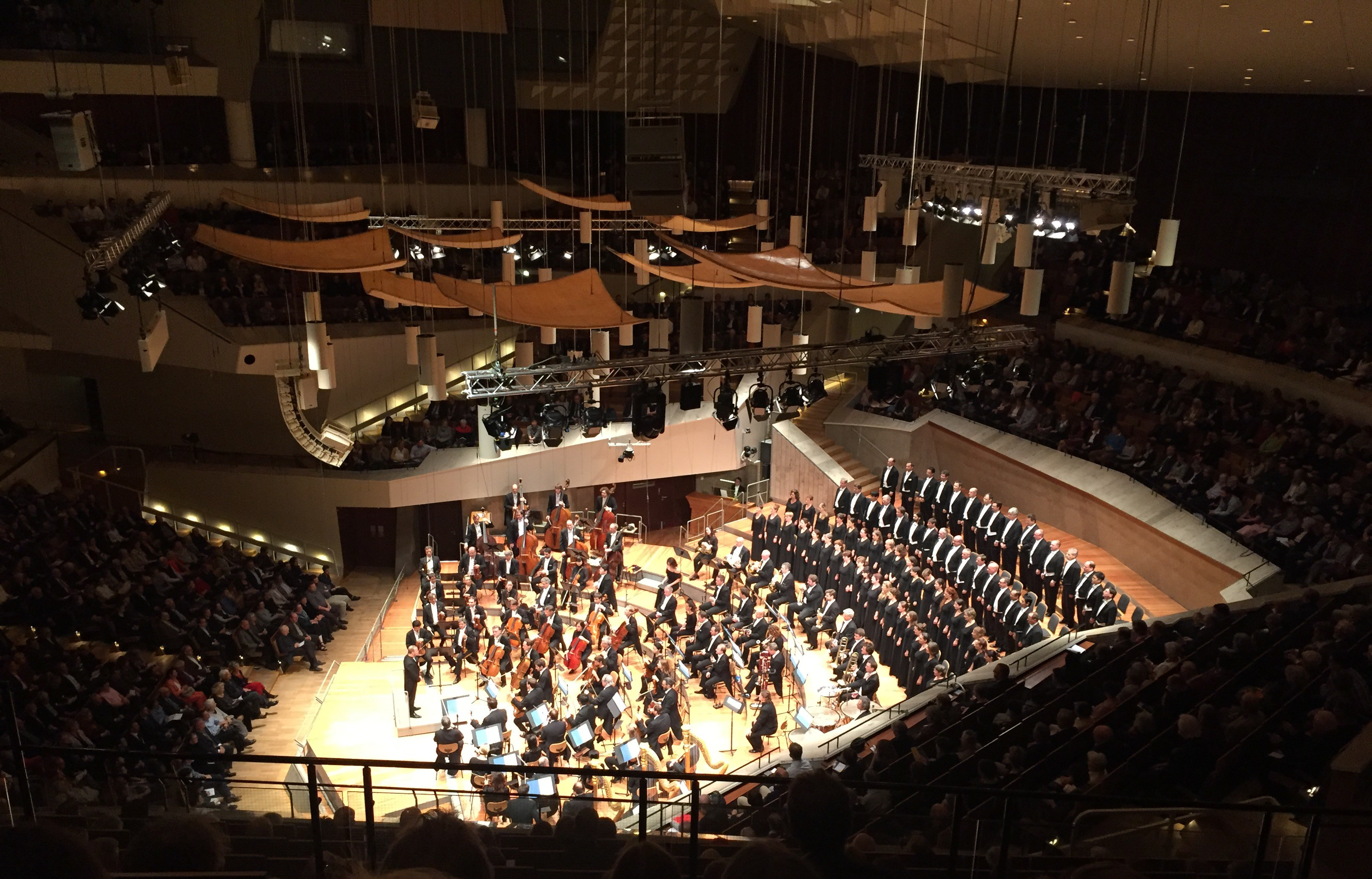
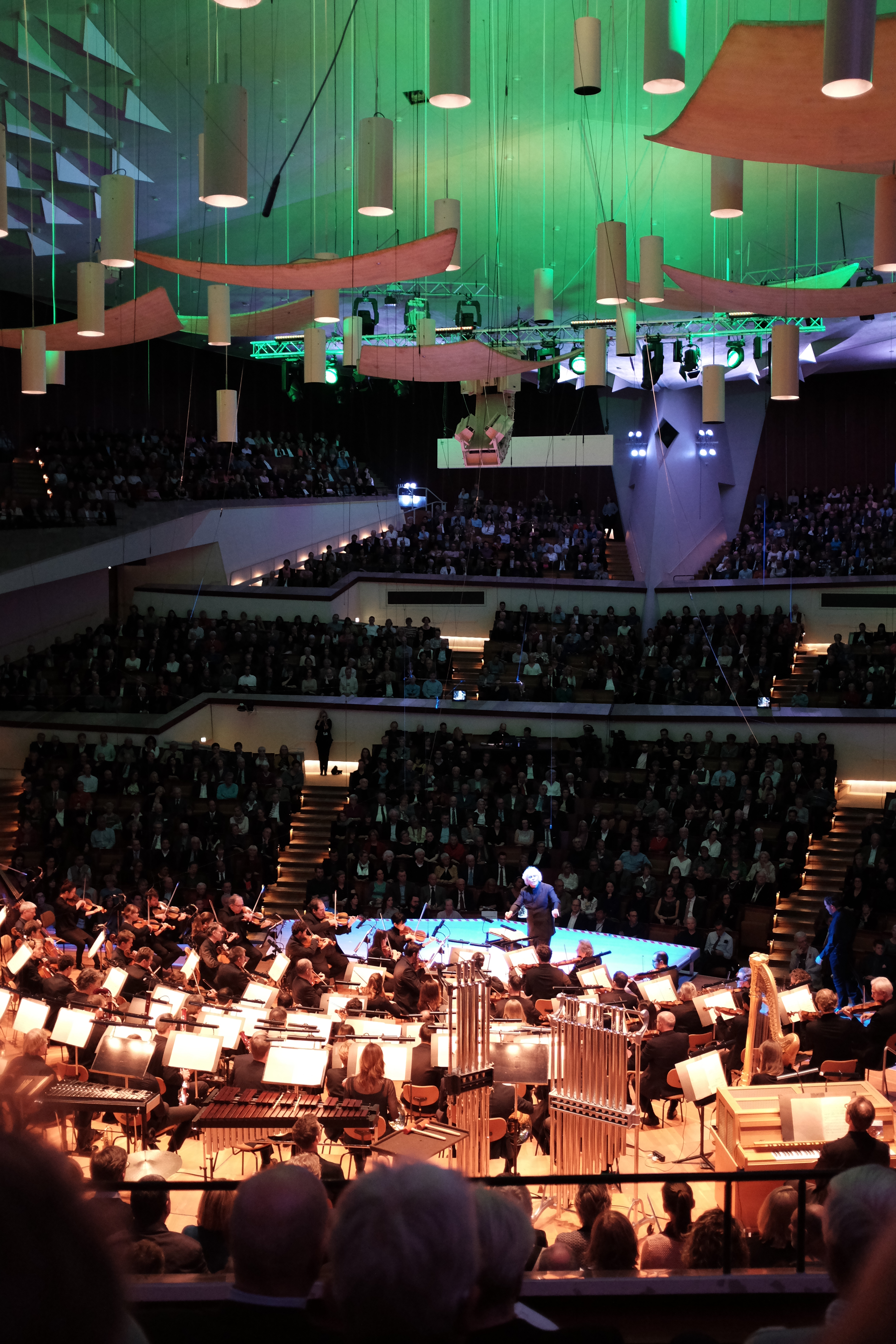
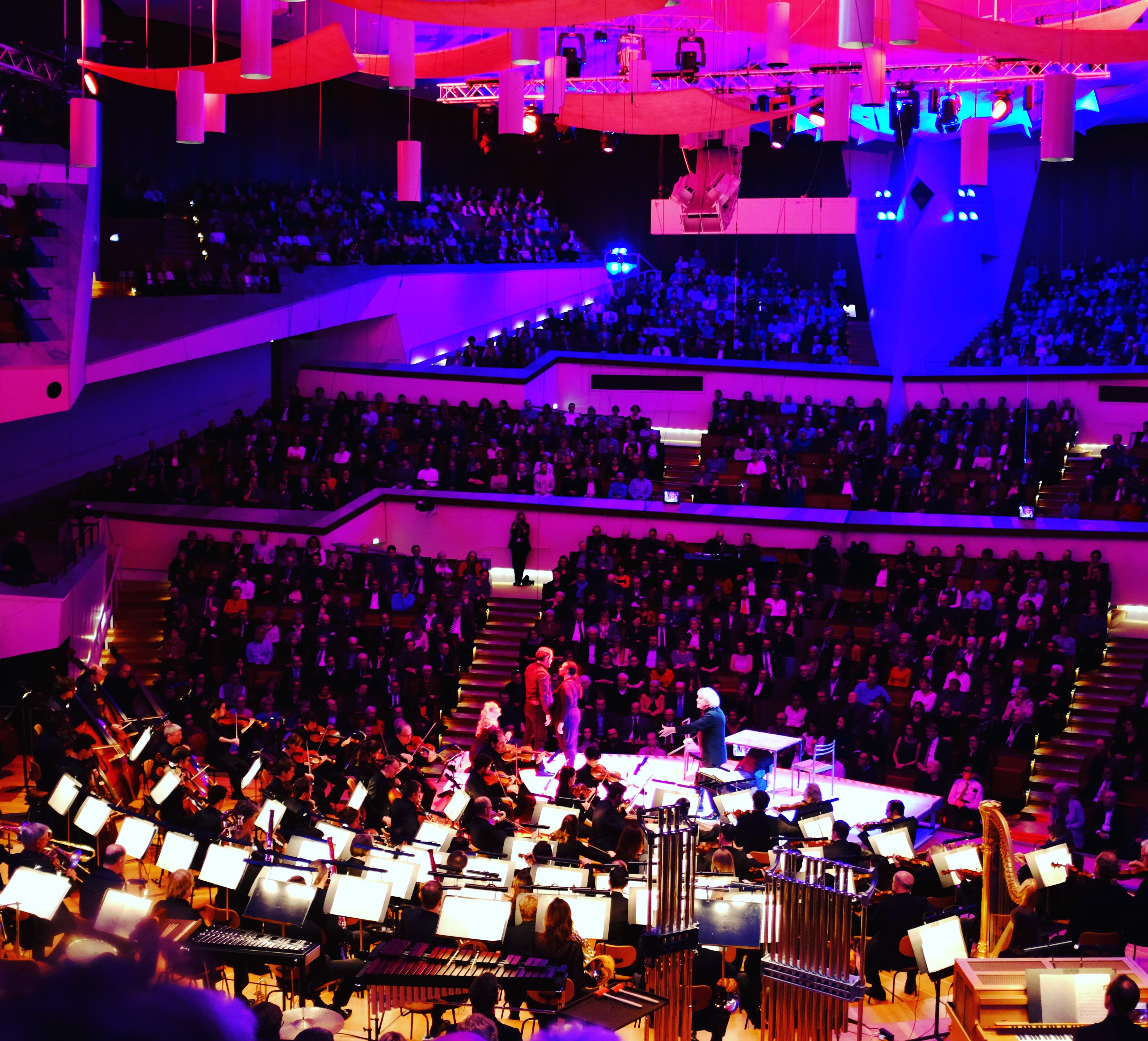
Yannick Nézet-Séguinm, The Berlin Philharmonic Orchestra, and the Rundfunkchor Berlin, Brahms German Requiem Oct 19, 2017
Yannick Nézet-Séguinm, The Berlin Philharmonic Orchestra, and the Rundfunkchor Berlin

Given his previous recordings, I expected this concert to be a relatively fast and lean performance. Well, from the first measure I was proven wrong. This was BPO beauty in full blast, with relatively slow tempo throughout.

Actually, I’m glad he did. Given the nature of this work, the grandiose and emotionally charged way Nézet-Séguin conducted this just worked out perfectly.

A word about the soloists: they don’t really have such an important role in this work (maybe with the exception of the central soprano solo Ihr habt nun Traurigkeit), and overall the soloists did an good job, but were not the most memorable parts of the evening. The audience seems to think the same: they got decent applause, but nothing out of the the ordinary.

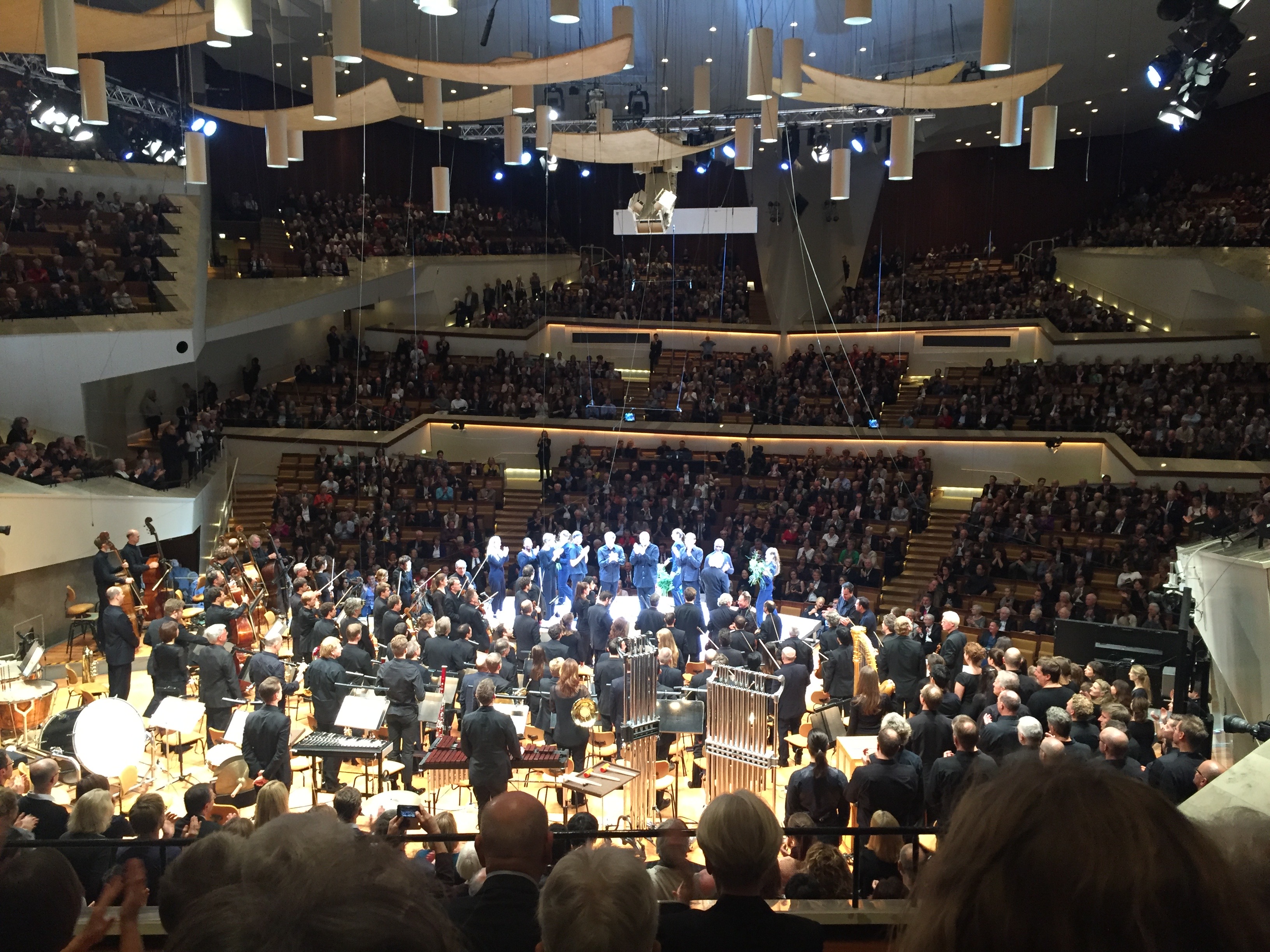
The true star of the evening was the Rundfunkchor Berlin, under Gijs Leenaars.  Their performance was just amazing. Not surprisingly, they received standing ovations at the end. Well deserved

Yannick Nezet Seguin Berlin Philharmonic Orchestra Brahms Ein Deutsches Requiem Oct 19 2017
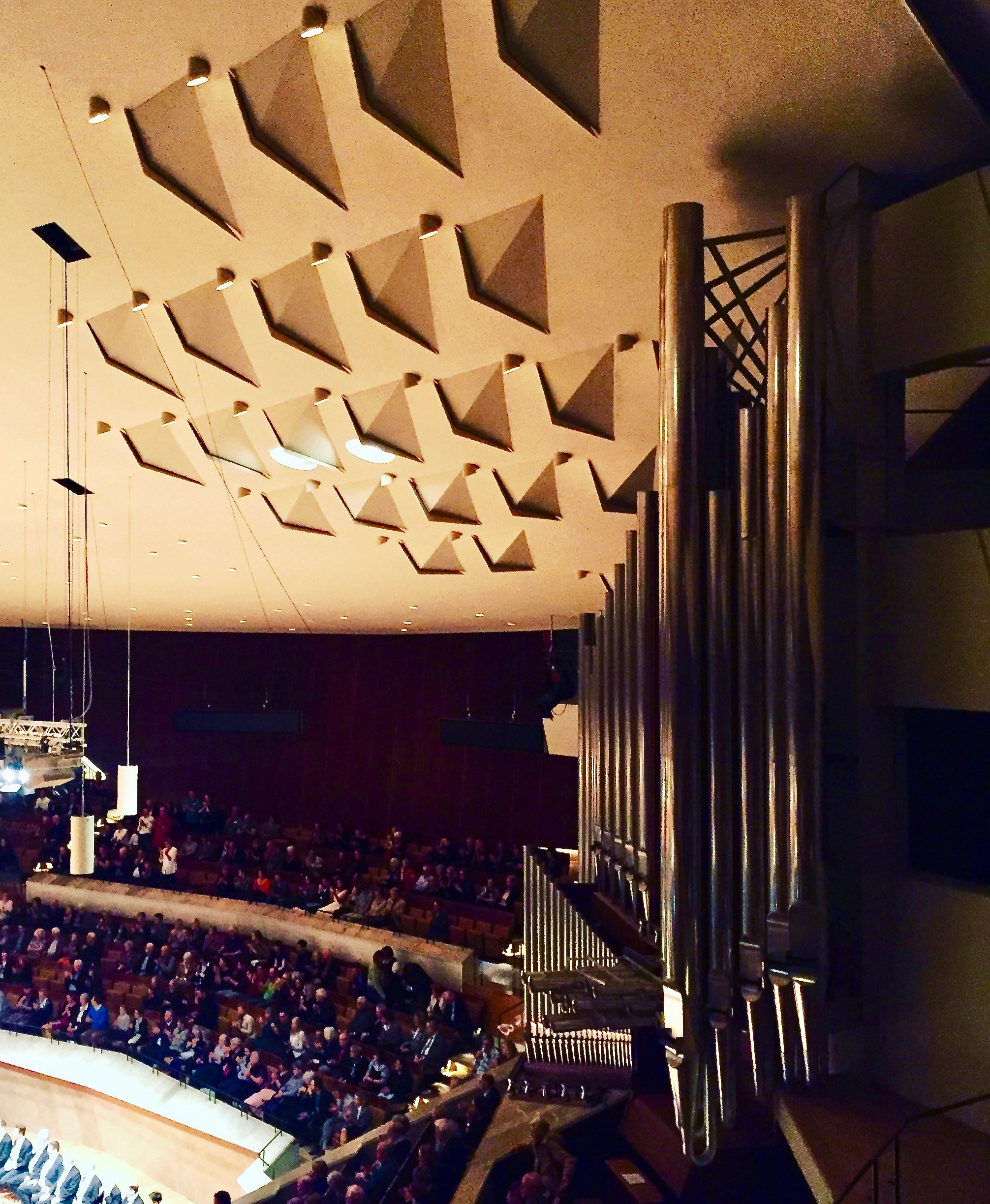
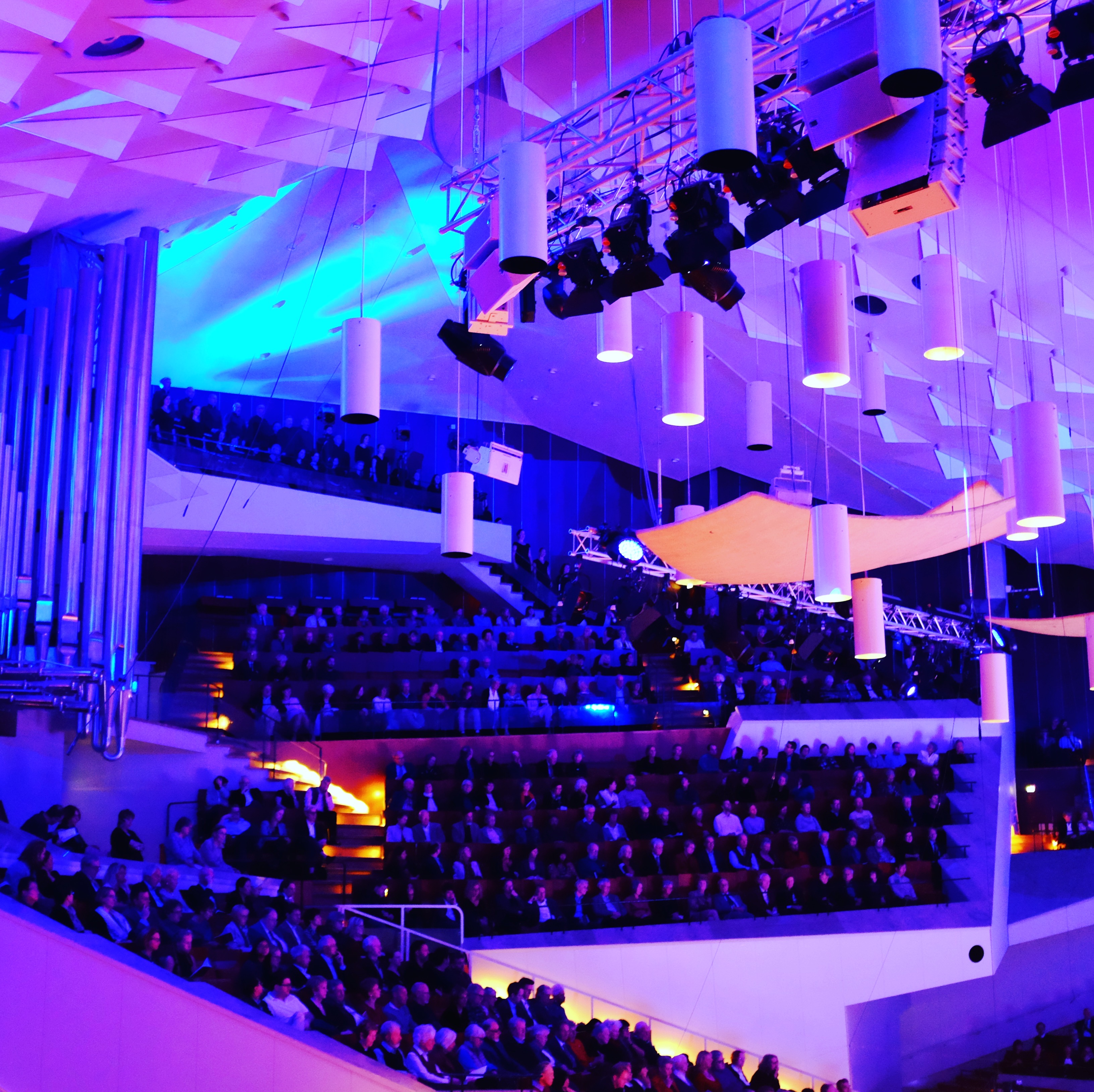
The BPO hall organ was a major player in the performance

The highlight of the evening for me was the second movement, Und alles Fleisch, es ist wie Gras.  The combined power of the BPO, the powerful BPO hall organ, and the 80+ voices power (but also nuances) of the choir made this a performance I will never forget.

Truly outstanding.

My rating: 5 star

P.S. If you want to see it yourself, and are not in Berlin (note that there are some tickets left for tonight Oct 20 and tomorrow Oct 21), you can also see the Saturday performance streamed live in the Digital Concert Hall.

The Cunning Little Vixen – Janáček´s enchanting opera with Rattle´s Berlin Philharmonic

Leoš Janáček

In spite of the fact that I don’t write about them very often, I do very much like Czech composers. I just checked: so far two entries on Dvorak (none of them dedicated to him), another short mention of Martinu as part of a concert review. No entries for Smetana, same for Janacek.

Why is that? I really don’t know. Janacek in a way really flew under my radar screen. I had a couple of his string quartets which I liked, but not much beyond this.

So how do I end up seeing an opera he wrote?

Very simply: I was in Berlin, hadn’t been to see the Berlin Philharmonic for a while, and was able to spontaneously secure last minute tickets. Typically, the BPO with Rattle is booked out, prohibiting spontaneous trips to the amazing Sharoun concert hall.

Luckily, like me, the Berlin audience wasn’t familiar with this opera (original title: Příhody lišky Bystroušky) by Janacek at all.

I’m very glad I went, it was a fantastic evening.

The Cunning Little Vixen – Simon Rattle – Berlin Philharmonic – October 12, 2017

To be fair, my curiosity was helped by the fact that there were some amazing lead singers, with Gerald Finley and Lucy Crowe in the main roles, of Forester and Vixen respectively.

Furthermore, the always interesting Peter Sellars was responsible for the staging of the play, which was performaned not at one of Berlin many opera houses, but instead the traditional Berlin Philharmonic concert hall.

The opera itself has been only very rarely performed, you will find only a handful of recordings on your regular streaming service.

I hope this new performance will make it onto a formal recording, but I´ll make sure to check out the Digital Concert Hall of the Berlin philharmonic, where I hope this recording appears soon.


Berlin Philharmonic - Simon Rattle - Janacek - Cunning Little Vixen
Rattle during the opening of Janacek´s Cunning Little Vixen


The Berlin philharmonic and Rattle really shined, this outstanding music, that changes from sentimental to funny to very introvert by the minute.

The story (sung in Czech, but translated in real time on the displays) is full of double double-entendres and little nuances, and really goes beyond the animal fairy tale nature one could immediately expect looking at the title.


IMG_5484
Gerald Finley, Lucy Crowe, and Paulina Malefane


As mentioned above, Finley and Crowe were outstanding soloists, but the remaining cast was also very good, only some of the choirs and children roles were not fully up to the same standards, but this didn’t hurt the overall impact.

Peter Sellars didn’t have a lot to work with, there was basically one small stage with only the occasional table and chairs added, and large LCD screens with videos to illustrate the scenery (from a creek in the woods to moving images of chicken).

Sellars also used the entire space, with the chorus occasional singing from above you, and with some of the lead singers freely roaming the entire building.


Petter Sellars staging of the Cunning Little Vixen, Berlin Philharmonic
Peter Sllars creative use of space: note the choir on the upper balcony


The Berlin public in the nearly sold out hall was as enchanted and enthusiastic as I was, we got more than 10 minutes of standing ovations and cheering.


Berlin Philharmonic, Cunning Little Vixen, Janacek, Rattle
An enthusiastic Berlin audience after the performance

A truly memorable evening.

My rating: 5 stars

Tartini and Verancini: New Types of Pasta? A Review of Rachel Podger’s Grandissima Gravita

Rachel Podger

After my so-so review of Adam Baldych’ recent Jazz album, where I declared I didn’t really like the sounds of the instrument, one of my readers asked me whether I like the sound of Baroque violin.

Let me put one thing clear: Very much so indeed! And when we get to baroque violin, there are few better players out there than Rachel Podger. I’m a big fan of her.

I’ve previously praised her Biber Rosary sonatas, that deservedly so won a Gramophone award in her category in 2016, and I also love her ventures beyond baroque, for example her outstanding Mozart violin sonatas (see my review here), which also made it into my Must Have Mozart albums.

(I haven’t written about it yet, but her Bach concertos, especially the album on double and triple concertos, is also outstanding).

So you can see a theme emerging up there, with a special focus on violin sonatas with small ensembles.

So, not surprisingly, I was very tempted when I saw her latest album come out.


Grandissima Gravita – Rachel Podger – Brecon Baroque (Channel Classics 2017)


Grandissima Gravita Pisendel Tartini Veracini Vivaldi Rachel Podger Brecon Baroque Channel Classics 24/96


What’s the downside? You get several Italian baroque composer that are really not that well known, from Giuseppe Tartini, to Francesco Maria Veracini, to the only non-Italian in the group, Johann Georg Pisendel, a German but who during a trip to Italy became friends with the only well-known composer of this album, Antonio Vivaldi.

So what do we get from these relatively little known Vivaldi contemporaries? Well, musically, this is not a must have. Already Vivaldi is not my favorite cup of tea among the baroque composers, and his contemporaries are usually even less interesting to me.

But after the first stream, I went ahead and bought the album immediately?

Why is this, will you ask after my somewhat negative intro?

Well, it is simply because Podger, with her small ensemble, Brecon Baroque, plays with so much passion and energy that you simply cannot help to be drawn into the music.

I keep playing it over and over again. I really don’t think you could play this any better.

Add on top the outstanding recording quality of Channel Classics, and you have an album that you really should be checking out!

My rating: 4 stars (5+ star playing, down-graded due to the interest of the repertoire)

You can find it here (Native DSD) and here (Qobuz)

François-Frédéric Guy Live at Maison de la Radio Paris – Sep 29, 2017

François-Frédéric Guy

I’ve written previously about Guy´s great recording of the Brahms piano sonatas. As I was in Paris last weekend, I noticed him giving a piano recital at the Maison de la Radio. Liszt, Beethoven, and Brahms sonata no. 3. I was lucky enough to still get tickets.

Guy is one of those underrated pianists that outside of his home country typically are not well known. But I heard good things about his Beethoven cycle as well, and had very high expectations.

François-Frédéric Guy: Clair de Lune – Liszt, Beethoven, and Brahms – Live at Maison de la Radio, Paris

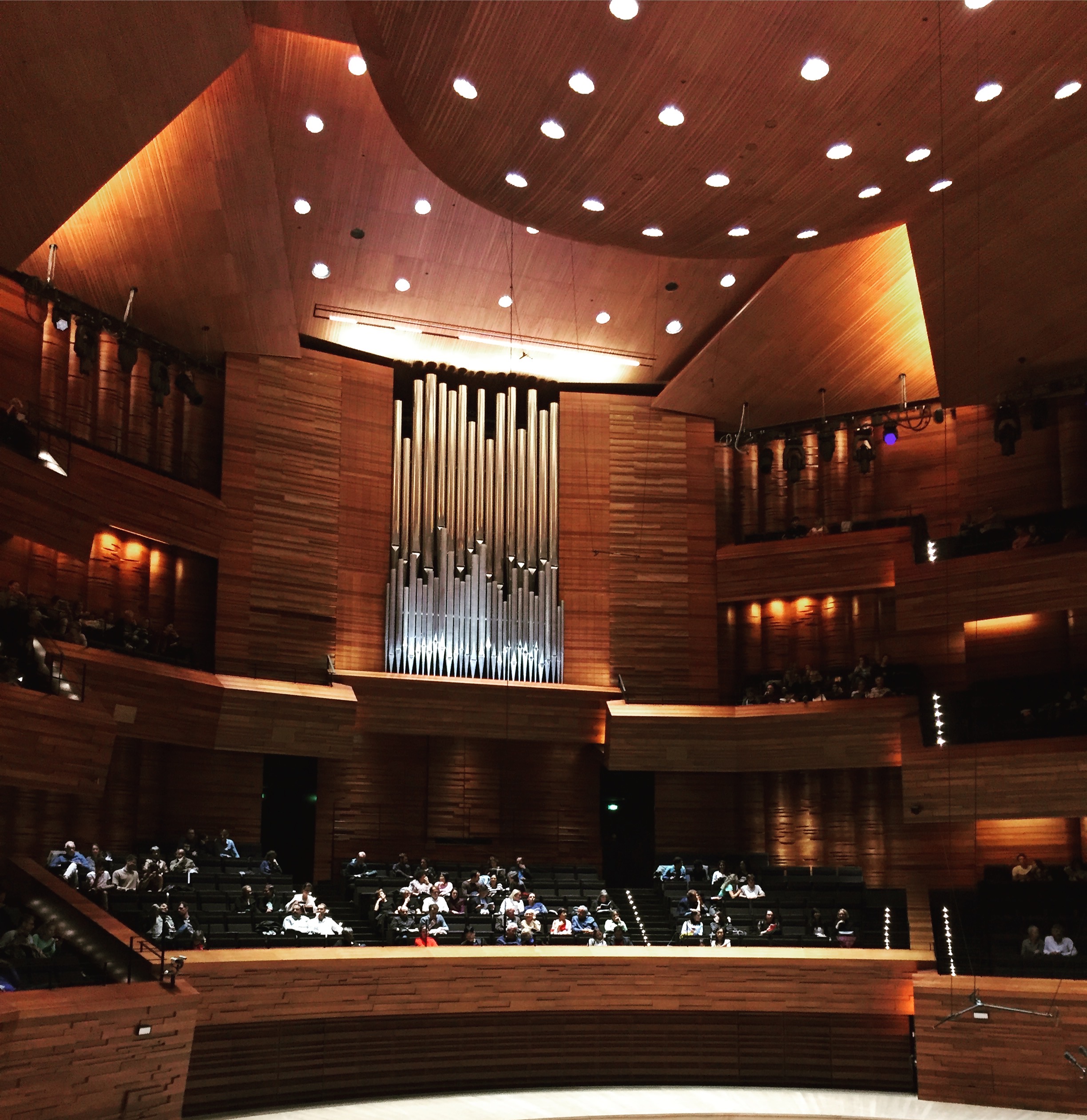
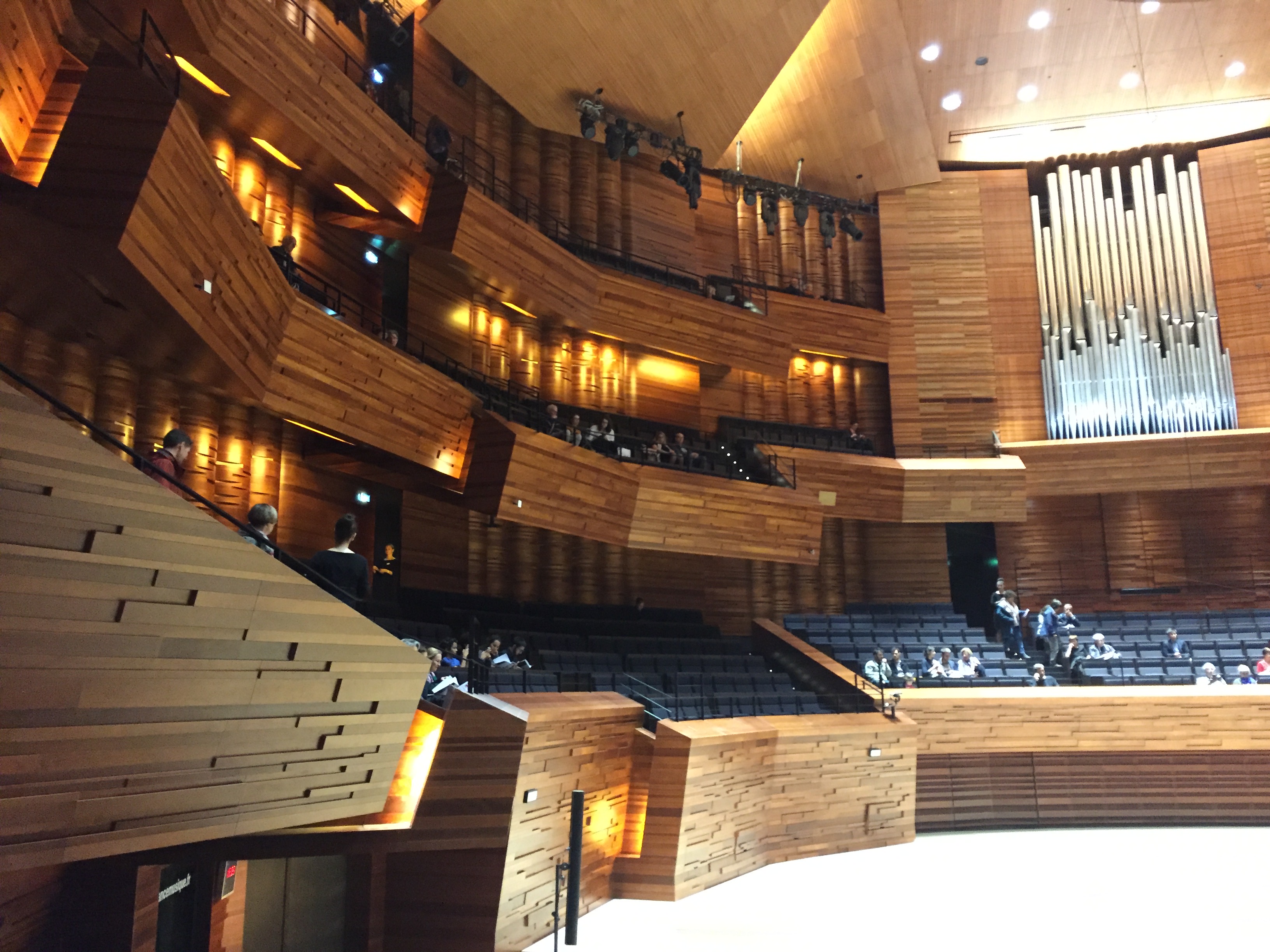
Maison de la Radio, hidden in the quite 16th arrondissement of Paris, is a 1960s building that has housed French public radio for decades now.

They have several rooms for public concerts, but the biggest one is the beautiful Auditorium, very recently renovated.

Auditorium of Maison de la Radio, Paris

Therefore I already had a visual treat, before the music even started

Auditorium Maison de la Radio, Paris


The concert itself started with Liszt, Bénédiction de Dieu dans la Solitude from his Harmonies poétiques et religieuses. Liszt these days often tends to be underestimated compared to the big names of Brahms and Beethoven. And maybe his orchestral work is not always top notch, and even his very large piano work sometimes tends to go a bit overboard.

But when Liszt gets it right, and is well played (not obvious, given the technical hurdles), it is really just outstandingly beautiful. This was the case here, I was mesmerized by the beauty of this piece.

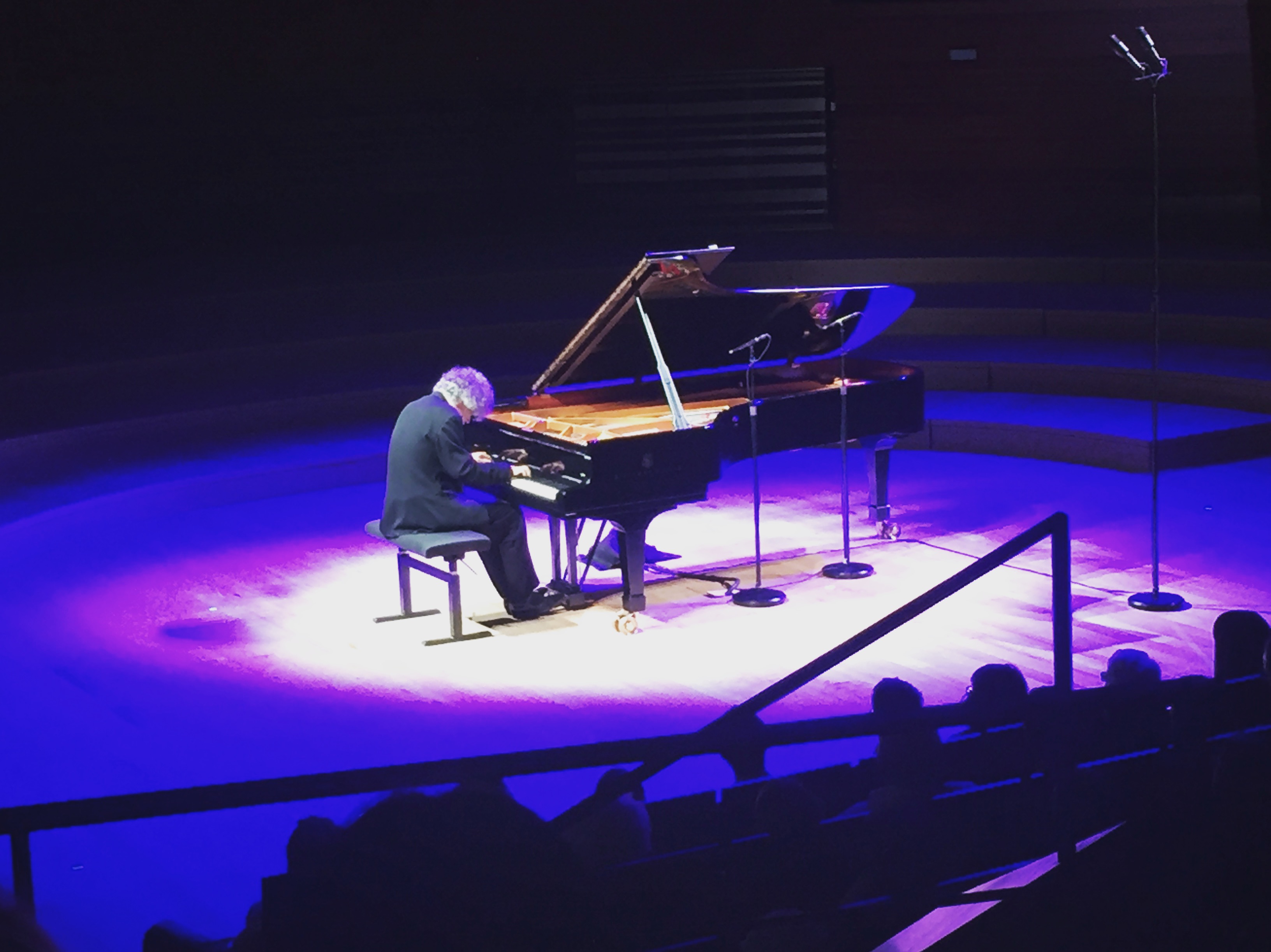
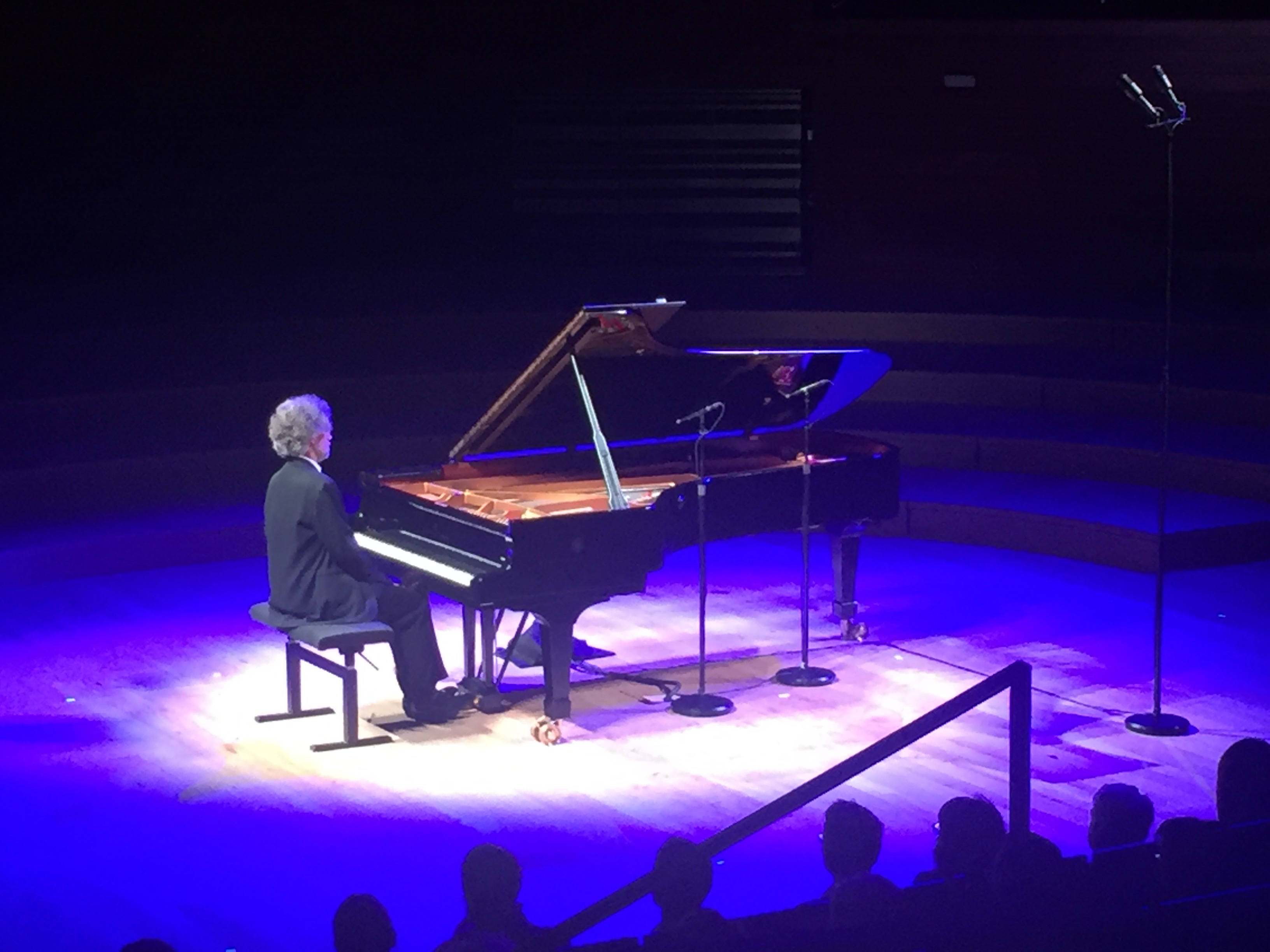
François-Frédéric Guy at La Maison de la Radio (c) 2017 Musicophile
François-Frédéric Guy at La Maison de la Radio

After this fantastic start came the title piece of the concert, Beethoven’s Moonlight sonata no. 14, (Clair de lune in French). I wasn’t as taken by this part of the concert as I was by the Liszt. One part of the problem was potentially that a young teenager noisily dropped his cell phone and it fell several steps down in the middle of the quiet intense beginning. This kind of stuff really can ruin my mood for a bit.

It may also have been simply the fact that we all have heard the Mondscheinsonate so many times, that we form a certain idea in our head. Don’t get me wrong, it was beautifully played (even with the occasional false note in the Presto), with a lot of rubato in the slow movement, a very personal version. So let’s just blame it on the noisy kid that I couldn’t enjoy this part as much.

After the break, Guy started his Brahms sonata. And wow, he really played is as intensely as I’ve ever heard anybody play Brahms. You could literally see how physically exhausted he was after this long piece of music with its 5 movements. An outstanding experience.

François-Frédéric Guy at La Maison de la Radio

Guy got the applause he deserved, and thanked us with not only one, but two encores.

After another Brahms, we were all ready to get up and leave, but he sat down again, and guess what he played: Für Elise. Yes, that one. the one that every piano student plays, the one that even people who don’t know anything about classical music recognize immediately. And guess what, it showed that there is so much more in this music than typically meets the eye.

A beautiful closure to an evening full of emotions.

My rating: 4 stars

Classical Life

A classical music blog by music critic Tim Mangan

This Week's Music

Making Classical Accessible

From my Macbook to the Net

Evaporation of my thoughts and observations

Elestra

Author: Artienne

My Life in Music

Playing, Singing and Listening

ArsX3

A brand new journal reviewing books, cinema, music

LawrenceEz's Blog

Creative and Performing Arts: Writing, Classical Music, Photography

Laetitia Strauch-Bonart

Contemporary Politics & Culture

sibling revelry

reveling in all things classical

It's A Raggy Waltz

I collect jazz on vinyl, I dig the Dave Brubeck Quartet, & I write about it

La Musica

By two cousins

thejazzbreakfast

Dishing it out from the heart of England

only jazz

random thoughts about music that matters to me

The Culture Project

Exploring the world of literature, wine, art, music and more.

René Spencer Saller

The music causes me to dream of fabulous empires, filled with fabulous sins.

Breaking Baroque

Blog of Tafelmusik Baroque Orchestra and Chamber Choir

Tasting Nirvana

Eating your Dosha

Shadow of Iris

Poetry, fiction, short stories, more ...

The Immortal Jukebox

A Blog about Music and Popular Culture

April Greene

Writer + Editor

a pianist's musings

A history of your favorite classical music.

Classical music for all

Boris Giltburg's blog

I HEAR VOICES

An orchestra seat in the web space