Tchaikovsky Symphony No. 5 with Neeme Järvi or Why I Don’t Like Tchaikovsky

Tchaikovsky

There are several reasons why I don’t like Tchaikovsky. The first one is a bit silly and absolutely not his fault, but his Russian name Пётр Ильи́ч Чайко́вский has been transcribed into several different European languages in a different spelling, so trying to search for him in any kind of database or streaming service is an absolute nightmare.

The second reasons is that in general, Tchaikovsky is either “too much” in the sense that 1 pancake in the morning makes you want more, 4 and you already feel a bit stuffed, and 9 as I’ve been served in some US hotels just makes you want to run away. This is the occasional Tchaikovsky, let’s take his unfortunately totally overplayed piano concerto for example. Just can’t hear that thing any more. Even the Violin Concerto, that i kind of like, has some moments where less would be more.

I’ve tried all Tchaikovsky symphonies several times, and none of them speak to me in any way (the one exception will be mentioned below). To be fair, I haven’t really tried his operas yet, I’m still a bit hesitant when I don’t understand a word of what is being sung in an opera, makes the enjoyment harder.

There are exceptions within his oeuvre that I like, I on (rare) occasions listen to his ballets, which have some magical melodies, the first movement of the string serenade is kitsch, but beautiful, and obviously his Violin Concerto played by Jascha Heifetz (or Julia Fischer) is kind of special.

By the way, I strongly recommend you read a biography about Tchaikovky’s life, he surely didn’t have an easy one. Closet homosexual (one suspects), suffering from regular depression, died of Cholera (could have been a suicide), etc. etc. Your regular soap opera doesn’t get as dramatic as that. (EDIT: please check out the responses to this thread, it seems like some of this is inaccurate according to latest research).

Symphony No. 5 e-minor

So what is different about symphony no. 5? I don’t know really, it is really the overall character of this symphony in the dramatic and sad key of e-minor.

It basically starts out as kind of funeral march, and somehow is linked mentally to Beethoven’s 5th (I suppose no composer could ever write a fifth symphony without thinking of the famous “original”, and you hear influences e.g. in Mahler’s 5th as well. Some speculate even there’s a reason why Brahms stopped at 4). I also plays around with th notion of fate, a familiar motive within the symphony

There is something weird about the ending. Tchaikovsky himself considered it failed. I don’t care at all, this symphony really draws me in, and keeps my attention until the end. Tons of emotions again, but unlike after 9 pancakes, you don’t feel stuffed (exhausted maybe instead)

Neeme Järvi
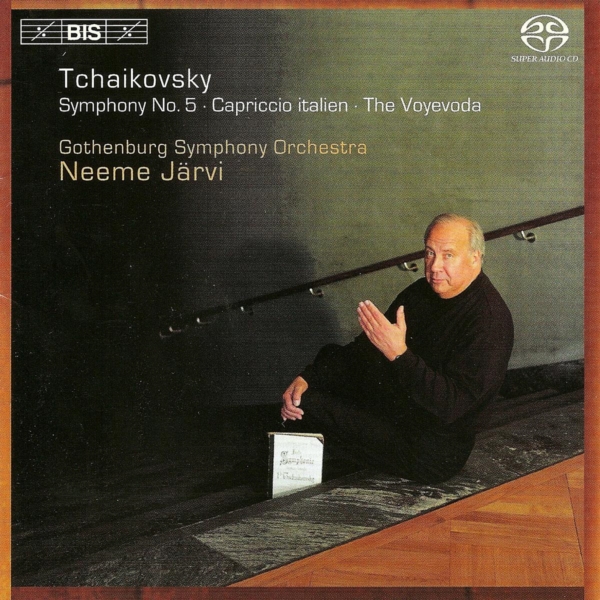
Tchaikovsky Symphony No. 5 Neeme Järvi Gothenburg Symphony

Estonia is a weird place. 1.3m in habitants, but it is the birthplace of an entire outstanding family of excellent conductors, with Neeme, Kristjan, and Paavo, and also the home of Arvo Pärt, one of the most important contemporary composers.

I’m a big fan of most of Paavo’s playing, especially his recordings with the Kammerphilharmonie Bremen. More about that later. But this is about his dad, Neeme. While Neeme never had any formal ties with any of the grand old orchestras in Berlin, Vienna, or New York, his work with smaller ensembles like the Gothenburg Symphony or the Royal Scottish National Orchestra contain many hidden gems.

This recording is one of them. Very well recorded  (the Swedish label BIS is usually excellent at this), the smaller Gothenburg Orchestra and Järvi’s conducting give it a nice transparency, but still you get the full dose of emotions. Tradition says that Russian symphonies are best played by Russian conductors and orchestras, and while there are good examples for this (e.g. Mravinsky), these two neighbouring countries (Estonia and Sweden) do just fine for my ears.

Overall rating: 5 stars (meaning I don’t think you could play the symphony any better than this. Not meaning these 5 stars mean as much to me as e.g. Bach’s b-minor mass)

Side note: You can download it here from BIS’ own download shop, E-classical. What I really like about this shop that you are not obliged to buy entire albums, you can just buy individual tracks, and this is exactly what I did, I only went for the symphony, so cannot really comment on the two other works that were bundled on this album.
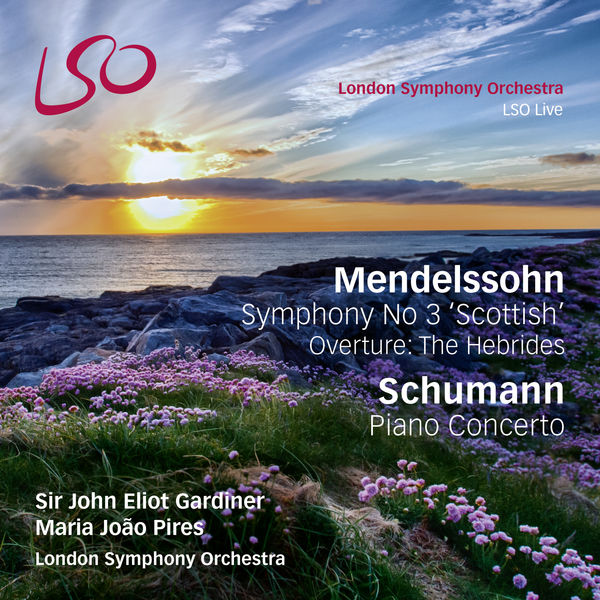
Am I Deaf or How Could This Go So Wrong – Gardiner & Pires’ Schumann & Mendelssohn

Sometimes there are albums coming out where just looking at the artists involved you really anticipate something great.

So when I read about this album of Maria João Pires playing the Schumann piano concerto together with the LSO conducted by Gardiner, I was really looking forward to hearing this. A beautiful pairing as well with Mendelssohn’s Scottish symphony that I really like.

Schumann piano concerto Mendelssohn Symphony No. 3 Maria Joao Pires John Eliot Gardiner LSO Live

Pires plays fantastic Mozart and Chopin (e.g. her Nocturnes are just beautiful), and I’m a big fan of Gardiner not only for his Bach cantatas, but also for his symphony recordings with the ORR. And obviously, the London Symphony is a great orchestra.

So all the stars are aligned. On top this album has received a Gramophone Editor’s Choice, plus some other great reviews.

And then I start listening (luckily I went for streaming first instead of just immediately buying), and can’t help to think I must have clicked on the wrong album. The Schumann piano concerto is just plain boring! Total lack of passion and energy. And a perceived speed that feels way too slow. Then I check, and it is really Gardiner and Pires playing here. How could this go wrong?

You have plenty of other alternatives here, go for Radu Lupu, Dino Lipatti (a disc to convert Karajan haters by the way), Andsnes again, etc. etc. etc.

But I don’t give up and check the Scottish symphony. Again, I can’t believe my ears. At best, an average performance. The worst is the forth movement which feels plump, and on some occasions (this is a live recording) the LSO even sounds out of sync. This is not the brilliant Gardiner of Schumann’s 4th with the ORR, this is somebody else entirely.

For Mendelssohn, I’d recommend you rather go with Abbado, or Christoph von Dohnanyi.

No idea what the guys at Gramophone heard here. I just don’t get it.

Overall rating: Just about 3 stars (It really pains me to give such a mediocre rating as these are all amazing musicians individually. But I just can’t help it.)

Debussy’s Images – Impressionism For Your Ears

20th century music

Let me first of all do a quick detour here: You won’t find a lot of 20th century classical music on my blog. It is very simple, the further we go away from tonality, the less I like it.

So the territory of the impressionism of a Ravel or Debussy are still borderline, some Prokofiev is as well, but I rarely really enjoy Shostakovich, and don’t even get me started on true twelve-tone and other stuff. I just don’t get it.

As I know some smart people who really adore Schönberg, Webern, Boulez et al. I’ve often wondered why I have this barrier. You see, the visual arts took a similar turn from concrete motives to abstract concepts, and I actually like a 1950 Picasso usually significantly more to a Turner, or any 18th century art. I really appreciate Jason Pollock and Sam Francis (especially the latter). So here I am much more open-minded (OK, when it gets to Duchamp’s Fountain or most of Joseph Boys, I’m out, but at least I get (or believe so) intellectually what they are trying to get at).

But atonal music (and sorry, while some will say there is no atonal music, I think most readers here will get the concept). is something I just don’t get. Probably my brain is to small or too hard-wired in the well-tempered scale to go there.

Claude Debussy’s Images

Back to the early 20th century, and more specifically Debussy. Why write about this right now? Well, I think I’ve mentioned before the excellent Swiss radio show “Diskothek Im 2“, that gets two experts in the studio and compares 5 different version of a given classical work, and this fully blindly.

A very interesting exercise which I should do even more often at home (you’ll be surprised how much your most beloved conducted can disappoint when you don’t know it’s him, or vice versa).

So, a recent show compared 5 recordings of Debussy’s Image. These 6 little poems, with beautiful names like Reflets dans l’eau (reflections on the water), or Poissons d’or (goldfish) are probably among the best known examples of what we call today impressionism, similar to the earlier period in the visual arts (Debussy apparently didn’t like the term by the way).

The editor chose 5 contemporary recordings, and so the classical reference version of these, by the amazing Arturo Benedetti Michelangeli on DG in 1971 was out. By the way, I’m just re-listening to this version right now and it is outstanding, so don’t hesitate to get it in spite of its age.

The versions reviewed included Jean-Yves Thibaudet, Pierre-Laurent Aimard, Alain Planès on a 1902 Blüthner piano (very interesting to discover by the way), Marc-André Hamelin, and the “winner” of this little contest, Jean-Efflam Bavouzet

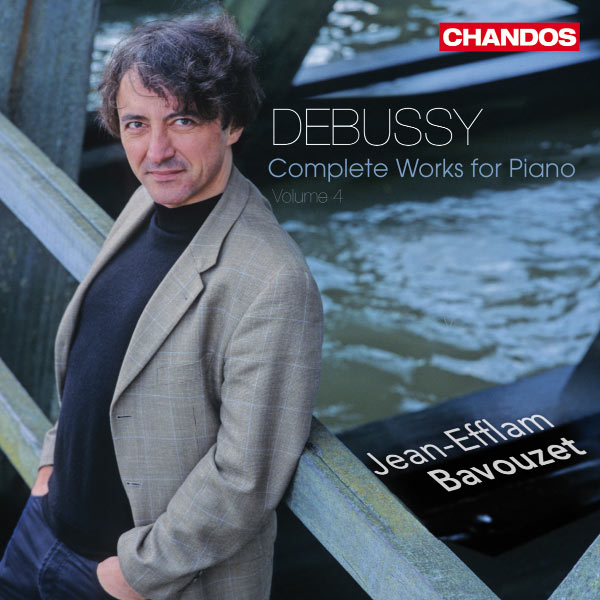
Complete Debussy vol. 4 – Jean-Efflam Bavouzet

Jean-Efflam Bavouzet Debussy vol. 4 Images Chandos

And here I must admit, while I had heard his name before, I didn’t have a single Bavouzet recording in my collection. Something to be corrected ASAP, as while I don’t always agree with the invited experts, in this case, recording number 4 clearly stood out (in spite of no recording of the 5 being a negative outlier, all had their qualities). I suppose it’s the mixture between extreme precision and the ability to just get sucked into the music.

Have you ever sat in the small west-end Musée Marmottan in Paris? It doesn’t draw the gazillions of visitors that the Musée d’Orsay gets, but it actually has an exceptional Monet collection. There are two main reasons to got there. A, there is an entire corner where you sit surrounded by Monet’s water lilies. Believe me, they are better than the original in Giverny. And there is one, rather little painting, depicting a rising sun over foggy harbor waters, with some small boats passing by, called Impression, Soleil Levant. And yes, this is what gave Impressionism its name.

Sorry for the detour, but watching this particular painting, and listening to Et la lune descend sur le temple qui fut played by Bavouzet gives about the same feeling, that is somewhere out of this world.

This is actually album number 4 of Bavouzet recording Debussy’s complete works, I assume all other volumes are equally worth having, but I didn’t yet have time to check them out.

My rating: 5 stars

You can get it here directly from the label.

Isabelle Faust and Brahms’ Violin Concerto – Just Magical

My blog’s subtitle has Brahms in it, and I haven’t even mentioned good old Johannes for a while.So let me correct this by writing about his violin concerto, and my favorite versions.

Brahms’ Violin Concerto

Brahms was a pianist, not a violinist, and so he needed an expert on what to do and not to do. Luckily, one of his best friends, Joseph Joachim, was one of the leading violinists of his time, so he consulted extensively with him while writing this piece in 1878.

Obviously, this concerto has been recorded over and over again, so there are a lot of amazing versions to choose from. However, there is a relatively recent 2011 recording which I really love more than most others.

Isabelle Faust

Isabelle Faust Brahms Violin Concerto Daniel Harding Mahler Chamber Orchestra Harmonia Mundi 2011

There are so many outstanding young violin players these days, Julia Fischer, Janine Jansen, Hillary Hahn, etc. etc. etc. We are really spoilt these days. However, Isabelle Faust is in a way my personal favorite, probably because she does a lot of excellent chamber music as well (more about that later).

This recording of the violin concerto with the excellent Mahler Chamber Orchestra and Daniel Harding, a young rising star in the conductor scene, has not received praise across the board. Some even called her tone “thin”. Well, I agree her way of playing is always rather on the light than the heavy side, but to me it feels just right. Faust writes in the excellent liner notes that she has studied Joseph Joachim extensively, both his personality, but also historic sources about his playing style. Overall, Faust plays historically informed, but unlike in some other cases this doesn’t mean no vibrato at all, but just a more selective use of it.

The smaller size of the Mahler Chamber Orchestra matches her transparency very well, this is a match made in heaven. As a side note, these days younger orchestras like the MCO or the Chamber Orchestra of Europe are becoming more and more serious competition to the established big boys in Berlin/Vienna/London. I suppose we music lovers we can only be happy about this, as it hopefully keeps everybody on their toes.

A curiosity about this version is the use of the unusual Busoni cadenza, so if you are familiar with this work you’re in for a little surprise.

String Sextet No. 2

As mentioned before, Faust is an excellent chamber musician as well (her Beethoven sonatas are my absolute favorite). So as a “filler” we get the beautiful String Sextet No. 2, which is well worth listening to. A sextet is a more rarely heard form of chamber music, but for Brahms these were actually his first venture into pure string chamber music, and successful in the way that helped further build his name as a composer.

A little piece of trivia: Brahms fell in love many times during his life, but remained a bachelor nevertheless. Occasionally, we get glimpses into his love life from his music, like in the case of the Alto Rhapsody (see my earlier post here). In this case, he was in love with Agathe von Siebold, and nicely enough, you’ll get the motive “A-G-A-H-E” (H being the key for B in German notation) as a leitmotif several times in the first movement.

Overall rating: 5 stars. This, as usual is a very personal judgment. If you agree with me, please comment, if you don’t, I’d love to hear why!

And if you want a more traditional Brahms, you can always go to Oistrakh/Klemperer and Heifetz/Reiner, both outstanding in their own way.

You can get it here as download and here as physical album.

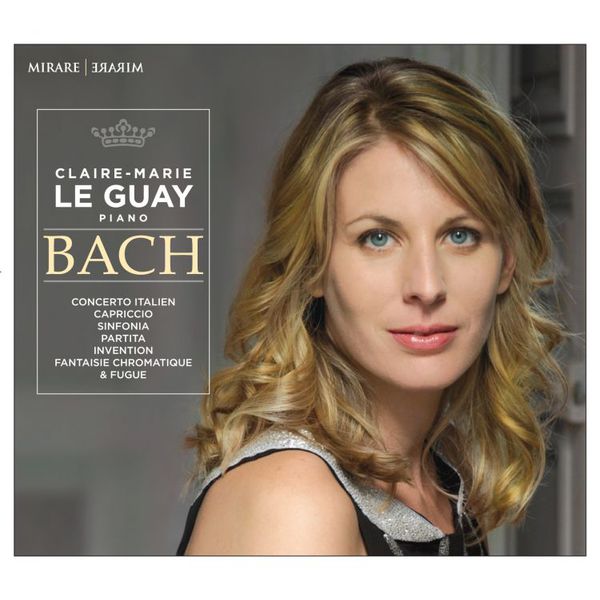
Claire-Marie Le Guay’s Gentle and Perceptive Bach

Bach again, really? I am reviewing too much Bach. But then again, can anybody have too much Bach? Probably not. To be fair, it took me a while to really appreciate Bach. In my youth, I barely listened to him, and my handful of experiences playing him myself made matters worse (I was never a good piano student, to lazy to practice). I assume the beauty and clarify of Bach is something that really needs to grow on you over time. In my thirties (I’m now in my forties) i started realizing that I started to listen more and more to Baroque music, and particularly Bach. It wasn’t a conscious choice, it just happened naturally. And today I literally just can’t get enough (ha, do you have Depeche Mode playing in your head now as well? I do every time I write this phrase in English).

Claire-Marie Le Guay

I must admit I hadn’t noticed her before this “Choc” by Classica some months ago, released on Mirare in 2015. But then I saw her teachers included Alicia de Larrocha and Andreas Staier, I got curious. She has won several competitions and has notably quite busy doing chamber music.

Her Bach album

Claire-Marie Le Guay - Bach Mirare 2015

As usual, when a French magazine reviews a French artist and sells him or her as “the best thing since sliced bread”, I usually take it with a grain of salt. But when I checked out this particular album, I just had to get it pretty much immediately. And this in spite of me being more and more skeptical about Bach on a modern Steinway. What sets this album apart is her touch. Delicate, almost caressing. Bach can be quite tough sometimes, or mechanical, if played by the wrong musician. None of this is here. And in spite of all this gentleness, the music is fully there. You don’t miss any single counterpoint turn in the beautiful Italian Concerto, and even the Chromatic Fantasia BWV903, which sometimes can be a bit academic, is just drawing you in.

Overall rating: 4 stars (I hesitated a long time whether I should give 5 stars, but somehow my subconscious tells me only harpsichord Bach should get the best possible rating, which is probably bullshit)

You can get it here as CD and here as download

Bach’s Goldberg Variations and The Brilliant Pierre Hantaï

The Goldberg Variations

I’ve already mentioned the written about the Diabelli-Variations, this K2 of the piano variation catalogue. Now I’m attacking the Everest, and all this without Sherpa.

Well to be fair, all I need to do is write about it, I wouldn’t be able to play any of them beyond the Aria in any case. So probably no Sherpa needed.

What makes the Goldberg-Variations so special? I still have a hard time putting my finger on it. Obviously, you’ll have heard it in a gazillion of movies, whenever the director want to portrait a hero as particularly intellectual, the Goldberg’s come up sooner or later. Hannibal Lecter may only be the most prominent of them. In any case, there is something just extremely fascinating how Bach takes this extremely simple melody and deconstructs it 32 times, in an almost analytical cubist way.

Glenn Gould – yes, there’s him, too

You can’t write about the Goldbergs without mentioning Glenn Gould, one of the first pop stars of the classical world (2M copies sold may not impress Madonna, but still). He recorded the variations twice, once in 1955, really helping this work to become world-famous, and once again in 1981. Fans have been arguing forever which version is better. Personally, I prefer the 1981 version, that said, the Goldbergs are somehow really something I appreciate much more on harpsichord. Plus, his humming with the music, I kind of tolerate this with Keith Jarrett, but for classical music it is really annoying.

Anyway, enough ink has been spilled on these, let me go to my personal preferred artist for these, Pierre Hantaï. (If you prefer the Goldbergs on a modern piano, check out Angela Hewitt, Andras Schiff, or Murray Perahia).

Pierre Hantaï

Hantaï is a French harpsichord player and conductor who has worked with all the great masters of baroque, from Gustav Leonhardt to Sigiswald Kuijken to Jordi Savall. Unfortunately, he records way to rarely, so you will find only a handful of albums from him. This probably hasn’t helped his international reputation, he seems to be still relatively unknown in the non-French speaking world. This is a real pity.

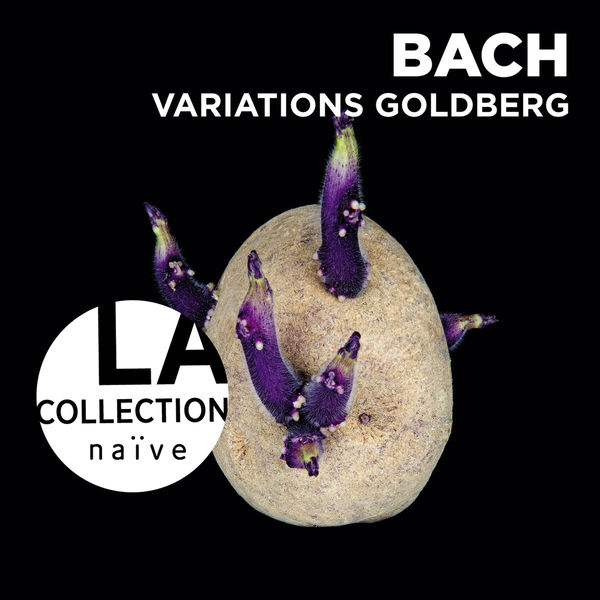
PIerre Hantai Goldberg 1992 recording, Naive reissue

Given how few solo recordings he’s made, you’ll be surprised to see that he has recorded the Goldberg variations twice, in 1992 (recently re-released on the Naïve label) and in 2003 on the Mirare label.

Pierre Hantai Goldberg variations Mirare 2003

Which one to get? Honestly, I don’t know, and I’m going to bail out and say, if you can afford it, both. Both are performances that trump pretty much all of what I’ve heard elsewhere. 1992 is occasionally more energetic, 2003 more reflective, but both are just superb.

In the booklet to the 2003 edition it is mentioned that the Goldberg’s are a work that “he’s played more often than any other since childhood”. Malcolm Gladwell in his book Outliers has written about the 10,000 hours it takes to truly master something. While this claim has recently been challenged, I suppose this is still one of those examples of this rule.

My rating: 5 stars for both

You can find the recordings here and here as downloads and here in physical form (1992 recording only, the 2003 seems to be harder to find on CD).

May The Wind Be Gentle – Nézet-Séguin’s Cosi Fan Tutte

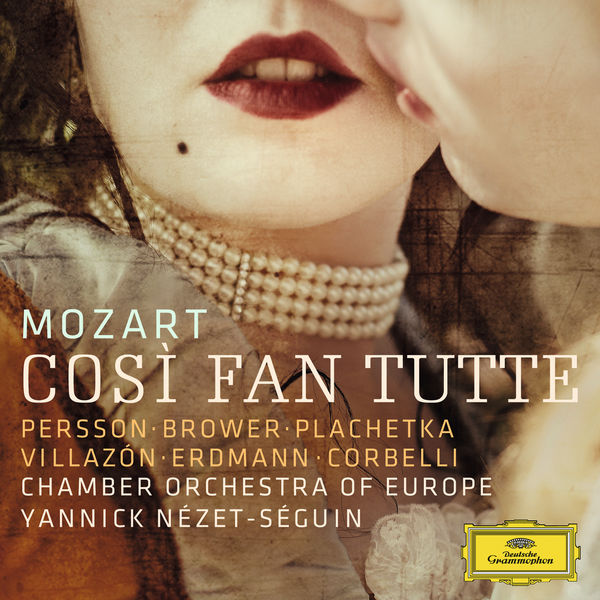
Three HUGE gaps to fill on my blog: haven’t yet written about Mozart, haven’t talked about a single opera, and haven’t yet mentioned one of my favorite young conductors, Yannick Nézet-Séguin. How convenient is it that I can fill all three gaps in one go, with Nézet-Séguin’s 2013 recording with the Chamber Orchestra of Europe of Cosi Fan Tutte.

Nezet Seguin Cosi Fan Tutte

Me and Opera

Some introductory words first: my background is certainly much more in instrumental classical music than in opera. I can “blame” my parents in a way, they constantly listened to classical music at home, so I grew up with pretty much the entire classical spectrum in my young ears. However, both don’t like opera, so I had to acquire that taste myself much later. To this day, the first thing I’ll notice on an opera recording, is the orchestral playing. So my judgment is heavily biased to this part. I’m much more tolerant to individual slightly weaker singers. I know true opera buffs are singers first, orchestra second.

Nézet-Séguin and Mozart

These days, there are hardly any new opera recordings released. You can’t blame the music industry, the cost of an opera production is huge obviously, and the returns in the shrinking classical market are not what they were in the heydays of “Perfect Sound Forever” when everybody re-bought everything on CD; or even in the great 50s-60s, when all the great operas were all recorded for the first time in Stereo on LP, and many of these recordings are still of reference quality. Luckily, the young Canadian conductor Yannick Nézet-Séguin got a deal with Deutsche Gramophon to record 7 Mozart operas. DG is piggy-backing here on existing performances at the Baden-Baden festival. So far, they have released 3, Don Giovanni, Die Entführung aus den Serail (to be released these days), next will be Le Nozze di Figaro (can’t wait) which is being recorded these days.

Thus Do All Women (no shitstorm please, it’s just the English translation of the title)

I just love Mozart’s operas. They are among the most beautiful things he’s ever written, and to me THE best operas out there. Cosi has a very special place in my heart. The story is obviously a bit silly and potentially slightly sexist, but who cares with this kind of music. And luckily my Italian is bad enough that I can switch it of and don’t have to follow the lyrics if I don’t concentrate on it. There are so many beautiful parts, I can’t even list them all. So let me just stick to my favorite part of all, the Terzettino “Soave Sia Il Vento”, gentle be the wind. where the two female protagonist wish their male companions smooth sailing in their fake trip to war. This could easily be among my top10 most beautiful musical pieces ever (actually I’ve just written a post about just that here).

Nézet’s Cosi

What is there to say about this particular recording? Well first of all, the orchestral playing of the Chamber Orchestra of Europe is outstanding. So as said above, this already gives me 80% of what I’m looking for in Opera. Nézet is consistent with his typical style, which can be summarized as “reasonably fast” and most of all “tight” (not sure if I’m making sense here), in a nutshell, he’s always in control, and there is always great tension. Personally I like all the protagonists singer here, although I’ve seen several reviews criticizing  Roberto Villazon especially. That said, Gramophone had this album shortlisted for the Gramophone Awards.

Overall rating: 5 stars

You can download the album here (I recommend the 24/96 high-res version) or buy the physical CD here.

Classical Life

A classical music blog by music critic Tim Mangan

This Week's Music

Making Classical Accessible

From my Macbook to the Net

Evaporation of my thoughts and observations

Elestra

Author: Artienne

My Life in Music

Playing, Singing and Listening

ArsX3

A brand new journal reviewing books, cinema, music

LawrenceEz's Blog

Creative and Performing Arts: Writing, Classical Music, Photography

Laetitia Strauch-Bonart

Contemporary Politics & Culture

sibling revelry

reveling in all things classical

It's A Raggy Waltz

I collect jazz on vinyl, I dig the Dave Brubeck Quartet, & I write about it

La Musica

By two cousins

thejazzbreakfast

Dishing it out from the heart of England

only jazz

random thoughts about music that matters to me

The Culture Project

Exploring the world of literature, wine, art, music and more.

René Spencer Saller

The music causes me to dream of fabulous empires, filled with fabulous sins.

Breaking Baroque

Blog of Tafelmusik Baroque Orchestra and Chamber Choir

Tasting Nirvana

Eating your Dosha

Shadow of Iris

Poetry, fiction, short stories, more ...

The Immortal Jukebox

A Blog about Music and Popular Culture

April Greene

Writer + Editor

a pianist's musings

A history of your favorite classical music.

Classical music for all

Boris Giltburg's blog

I HEAR VOICES

An orchestra seat in the web space