Cassandra Wilson: Coming Forth by Day – Lady Day Meets Nick Cave

Billie Holiday

Tribute albums are really hot again these days, see for example Autour de Nina (praised here), or Nina Revisited (not very positively reviewed here), focusing on Nina Simone.

Billie Holiday is another Jazz legend that gets her share of tribute albums (José James, Carmen McRae, even Tony Bennett, just to name a few).

I have to admit something here, as much as I admire Billie, I don’t listen to her very often, as her early albums where her voice was still fully developed are usually poorly recorded, and the late albums that have a decent sound quality show her beyond her peak.

Cassandra Wilson

Cassandra Wilson has always been a Jazz singer that was never afraid of getting close to pop music; actually, I’m not a universal fan of her because of that.

In any case, her last album, Another Country, I really liked (with the exception of the awkward O Sole Mio), so I was really looking forward to her new 2015 release.

Coming Forth By Day
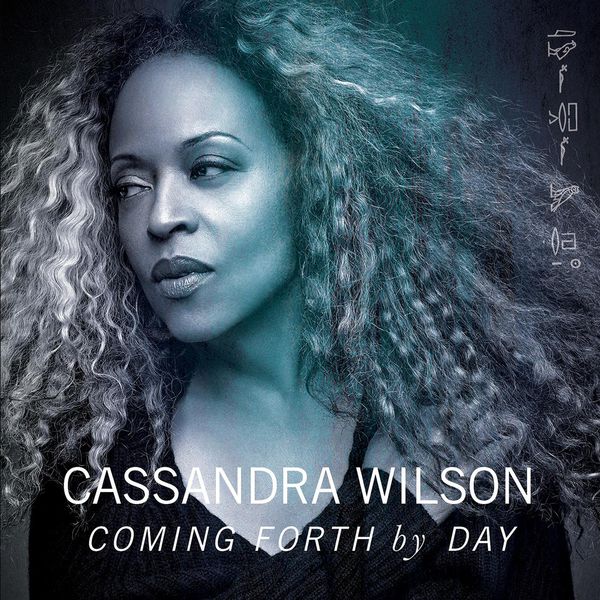
Cassandra Wilson Coming Forth By Day 2015

Coming Forth by Day is, as mentioned above, a tribute album to Billie Holiday, and it was released very timely on Lady Day‘s 100th birthday.

The tracks include well-known standards like Don’t ExplainStrange Fruit, and You Go To My Head. However, you’ll be surprised when you hear them here how different they sound.

The key difference is the production. Nick Launey, better known for working with Nick Cave, is responsible for the arrangements. T-Bone Burnett, who ruined (to my ears) the Diana Krall album Glad Rag Doll, is limited to playing the guitar, so he doesn’t do too much damage.

In summary, you get Bille Holiday Meets Nick Cave, with Wilson’s absolutely unmistakable voice. Is it worth getting? Not across the board, but some tracks are good enough to justify the purchase. I’d personally pick Don’t Explain, You Go To My Head, and Strange Fruit for that honor. Ah, and Good Morning Heartache is a bit weird, but needs a special mention.

Unfortunately, unlike some earlier albums, this album isn’t particularly “audiophile”, as a bit overproduced and compressed. But in a way, that goes well with the overall ambiance.

So listen before you buy, but it is certainly worth checking out.

Overall rating (in spite of some annoying tracks): 4 stars

Shai Maestro – This Avishai Cohen Alumni Will Go Places

Avishai Cohen

You cannot write about Israeli Jazz without mentioning Avishai. This bass player from Jerusalem probably is the most prominent Israeli Jazz musician, after being “discovered” by nobody less than Chick Corea back in 1996. Personally, unfortunately, I’m not such a big fan of his albums, there are some individual tracks that I really like, but there isn’t a single album I really love throughout.

Shai Maestro

Luckily, he in turn discovered Shai Maestro, when needing a piano player, and he hired him pretty much directly out of school apparently. Talk about risk-taking, but well done! You’ll hear Maestro playing the piano on Gently Disturbed, Sensitive Hours, Seven Seas, and Aurora. During this time, Maestro relocated to New York City, probably a smart choice for a Jazz musician.

Then, in 2011, at the tender age of 24, Shai Maestro decided he wanted to launch his own trio, together with Jorge Roeder (from Peru) on bass and Ziz Ravitz (Israel) on drums, and they launched their first album, simply called Shai Maestro Trio, in early 2012, on the French label Laborie Jazz.

Shai Maestro Trio Laborie Jazz 2012

I had heard Shai Maestro shortly after that on his first European tour, and fell in love with the music immediately. From what I could see during the concert, the guy is not only abrillant musician, but also very modest and humble

Since the debut album (pictured above), Maestro has recorded two more albums, The Road To Ithaca and Untold Stories (the latter including some live tracks), both are very good, but his debut still is my favorite album.

There is just such a beautiful mixture of evolving melodies, some Middle-Eastern influences, and a great understanding of the piano trio tradition (legend has it Shai discoverd Jazz at the age of 8 with an Oscar Peterson album), that you just don’t stop listening to this beautiful album.

And if you get the chance to see him live, go for it. The handful of live tracks on Untold Stories gives you some idea on what to expect, but the additional time and freedom the trio has live just creates something very very beautiful. They really interact as if they’d been together for decades.

This is one of the few musicians where I’ll safely buy any future album blindly. He’s only 28 now, so we’ll hopefully be enjoying many more albums in the future.

My rating: 5 stars (yes I know, I keep giving 5 stars quite often recently, but it is just so much more fun writing about the truly outstanding albums).

You can download it here.

Edgar Knecht – Dance On Deep Waters – Transforming  Traditional Songs into Jazz

To me, Jazz Piano Trio is just an outstanding art form, as already discussed on my previous post on Keith Jarrett’s’ Standards vol. 2.

Actually, Standards fits nicely into a number of trios/albums that have shaped and influenced this particular art form. You could start this lineage with Bill Evans first trio, then move on to Keith Jarrett’s Standards trio, and somehow the third level of evolution came with the late Esbjörn Svensson and his trio. He clearly innovated the trio on many fronts.

Many of today’s piano trios would be unthinkable without EST. And we are very lucky that this art form is not only still alive, but thriving.

About 18 month ago I started a thread on another forum on that topic, called “Are we living in the Golden Age of the Jazz Piano trio?“. This thread has now answered the question I was asking with more than 300 posts today and has become an amazing (if unsorted) list documenting how much is happening around us right now!

Edgar Knecht

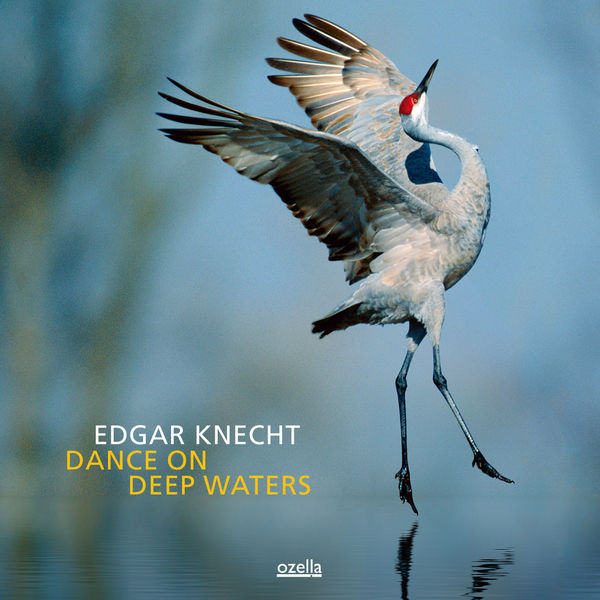
I want to start writing about some of the artists I mentioned or discovered on this thread. Let me kick this off with my most recent purchase, the 2013 album Dance On Deep Waters from the German Edgar Knecht, on Ozella Music. I actually start with a tricky example, this trio is actually a quartet as it includes a percussionist. But well, it is close enough.

Edgar Knecht Dance On Deep Waters Ozella Music 2013

As you can see from the thread, I was actually introduced to this artists (and many other discoveries) by the forum member Elvergunn, who seems to be even more obsessed than me in finding new artists.

(Little side note: The internet is really such a great place for music, you can exchange with music lovers in the entire world, you find stuff that you would have never found in your local record store, and you can all download it in minutes to your computer thanks to the rapidly multiplying specialized online shops, but let’s close the parenthesis here).

Edgar Knecht in my mind is all about melodies and creating a very particular atmosphere. He takes simple music, from German folk songs to even Brahms famous Lullaby “Wiegenlied” and transforms it into something very special. The only little issue I have with this album is that sometimes you’d like a little bit more diversity in terms of approach and style. But I suppose you can’t have it all.

That said, I find this album very enjoyable and keep going back to it quite regularly right now.
My rating: 4 stars

You can get it here as download and here as  CD.

Keith Jarrett’s My Song – I Really Shouldn’t Be Liking This Album

Keith Jarrett again

Time for another post on Keith Jarrett, given that he prominently figures in my blog’s subtitle. I’ve also mentioned My Song is my recent Songs That Give Me Goose Bumps post .

Jarrett is obviously one of the most brilliant artists in the Jazz world. So why do I say I shouldn’t like this album? Well, two things: a) I love most of Jarrett’s solo albums from the 1970s (the obvious Köln Concert, the Sun Bear Concerts, Bremen/Lausanne), but I find his regular 1970s Jazz albums, very much hit and miss to my taste (with significantly more misses than hits). This is not a particular Keith Jarrett problem, but more my personal problem with the 1970 Jazz scene overall.

Furthermore, I’m not a big fan of Jan Garbarek . Most of the albums I’ve heard of him leave me rather cold and slightly bored. No judgment implied here, just personal taste. (A notable exception is the recently released 2009 Dresden live recording).

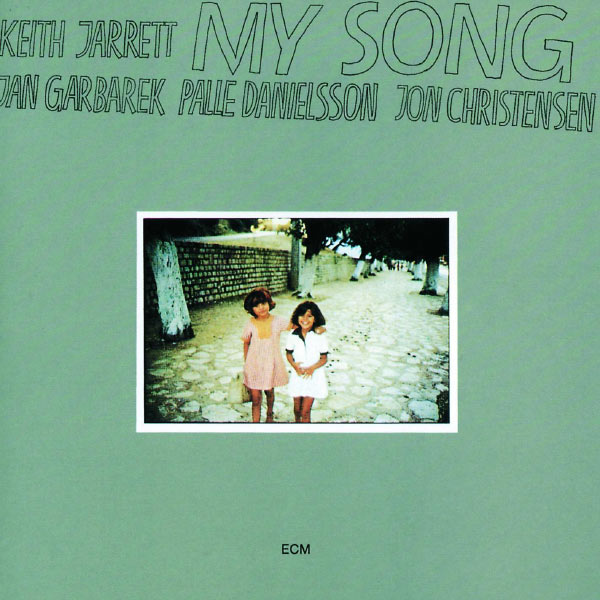
My Song

Keith Jarrett MySong_600

So how come this 1977 album is among my absolute all-time favorites? Well, to be fair, one thing that plays in its favor is the fact that this was my first ever Jazz album. Before buying this at the age of 18 or so, Jazz was weird people playing weird music in my mind.

And then I heard this album: amazingly beautiful melodies, very simple and straightforward arrangements. I couldn’t really believe this was what Jazz was all about. So I copied the vinyl on compact cassette (quick history lesson for my younger readers, google it for your general education, this is what MP3s used to look like) and played it in the car radio over and over and over.

Usually, with stuff I used to listen to a lot during my youth I’ve outgrown it by now. Not this album though. There is a timeless beauty in the melodies. All original compositions by Keith by the way.

My preferred song is the eponymous title song, which is one of my preferred melodies of all times (you can hear the crowd cheering when Jarrett plays this as an encore on the Carnegie Hall solo concert, see also the above mentioned post for a Youtube clip).

The other favorite is the relatively short Country, where Jarrett introduces the theme, before Garbarek get’s to take it over. The rest of the album is very nice as well, with the exception of the slightly random (to my ears) Mandala. All the rest, after all these years, I can still listen to over and over and over again. A rare achievement.

My rating: 5 stars

If you want to buy it, the recent 2015 remaster available in 24/96 and 24/192 is of astounding quality. It’s rather expensive, but you could never guess listening to it that this recording is nearly 40 years old. This was originally recorded and mastered in Oslo by Jan Erik Kongshaug, a true recording magician.

You can find it here and here.

The Legacy of the Jazz Messengers (5): Wayne Shorter – Adam’s Apple

Wayne Shorter

Why did I wait so long, you may ask? Why write about 4 other guys before Wayne Shorter, the absolute heavyweight among the Jazz Messengers Alumni, the only one (to my knowledge) that is still alive and playing?

The guy who got a letter of recommendation by saxophone god John Coltrane to join the Jazz’ Jupiter (big boss of the gods) Miles Davis. Who helped kick off (sadly to my mind, but who am I to judge) the Jazz-Rock and Fusion movement with the group Weather Report he co-founded, and even played with the Stones at some point?

Well, don’t know really. Two issues come to mind: a) respect: what can I still say about such a genius that hasn’t been said before (didn’t stop me in the other posts you may argue, and you’re right). b) choice: So far in my little series on the Jazz Messengers I’ve always picked one, the most enjoyable album, only. That was still kind of doable with the other 4 guys I’ve mentioned here, but which one do you choose for Wayne? At least 3 albums spring to mind that need to be mentioned!

You know what, I’ll just take the liberty (it’s my blog after all, I can do what I want, ain’t it nice?) and do several posts about Wayne, each one with one of my favorite albums.

Adam’s Apple

Wayne Shorter Adam's Apple

Why start with Adam’s Apple? Well, alphabetically it comes first.

No, just kidding, even easier: It is simply the album that got the most plays of all Shorter albums in the last five years. Computer audio is amazing, I not only know what you did last summer (sorry for the stupid movie pun), but thanks to iTunes I can be my own personal NSA and check what I was listening on November 4th, 2011, 8pm for example (Ton Koopman’s Bach cantatas vol. 6, if you’re interested).

Back to Adam’s Apple. I mean, look at the rhythm section, there’s another genius, Herbie Hancock on piano. He’s probably the key reason why I like this album so much. Also, in spite of being released in 1966 (usually a bit “late” for me), it is still very much a proper hard bop album, no fusion or other on here.

And then there are two songs that are worth highlighting as I can’t get enough of them. First there is the title track, it is just swinging and grooving as hard bop should be. Even the guys a blue note tell me on this album Shorter “finds the Groove”, check out this link, it’s got interesting background info on the album.

And then there is the magical (to me) Footprints. Apparently it is not a Jazz waltz (the experts tell me, as this is 6/8 and not 3/4, plus the song keeps changing meter), but still I’d put in one line with the great Jazz Waltzes I really appreciate (probably I need to write another top ten list here). On top of that, Herbie Hancock’s playing here reminds me a lot of Maiden Voyage. 

In short: I really hesitate between 4 and 5 stars here. On one hand it’s Shorter, and has two outstanding songs, on the other hand some of the other songs are not at the same level.

Well if I have to decide: 4 stars in total. 

You can find it here and here. I strongly suggest you go for the recent 24/96 remaster if you care about sound quality (skip the more expensive 24/192), as it is significantly better than the RVG remaster CD released in the 2000’s.

The Legacy of the Jazz Messengers (4): Lee Morgan – The Sidewinder

Part 4 now of my mini-series on the Jazz Messengers’ spin-offs.

Lee Morgan

Lee Morgan was famous even before the Jazz Messengers, as he’d already played with Dizzie Gillespie. But his stardom even rose further after playing on the famous Moanin‘ album from the Messengers, which I still need to write about.

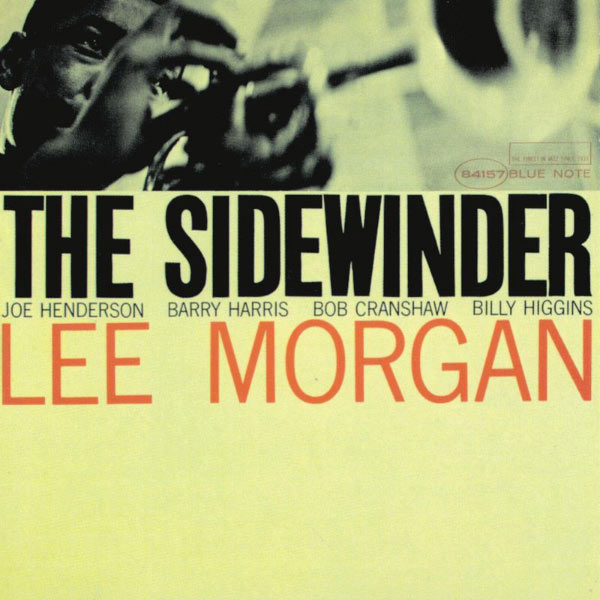
The Sidewinder

I was a bit hesitant at first whether I should really write about this particular 1963 album, which obviously is by far his largest commercial success as a leader. Doesn’t he have many other great albums, like The GigoloDelightfulee, Vol. 3, Tom Cat, The Cooker, or Cornbread, all of which I’d highly recommend.

0724349533257_600

Well even though I wanted to be creative, and not recommend an album that made it into the Billboard pop charts (heresy!) I gave up in the end. There is something just magical about the bluesy groove of The Sidewinder’s 10:28 title track, that I just had to recommend this first. It may not be the most creative album, nor the most artistically developed, but hey, it is just addictive.

A great rhythm section

Obviously, a great deal of this addictiveness stems from the rhythm section (especially Harris, but also Crenshaw, Higgins), but we also get another taste of Joe Henderson (although his solo on the title track is not very memorable, he get’s better on Totem Pole).

And then there is Lee himself, his playing is fantastic, and he actually wrote all the songs himself. A little bit of trivia on Morgan: he died a rather unusual death for a Jazz musician of the time (i.e. not of drugs or alcohol), but was shot by his long-term girlfriend of the time in 1971 for unclear reasons.

Luckily, this is not a “one-hit-wonder” album, all the other tracks of the album are very good, I particularly like Gary’s Notebook.

Overall rating: Groovy, Baby! (formerly known as 5 stars)

Addendum: Reader Bob Ryan kindly commented here that I omitted to mention “Search For The New Land” as one of the must have albums for Lee Morgan. I absolutely concur with his opinion.

The Legacy of the Jazz Messengers (3): Joe Henderson – Inner Urge

Not properly speaking a Jazz Messenger Alumni

Putting Joe Henderson into my little Jazz Messengers mini series is probably slightly incorrect, I don’t think Henderson ever played directly at the Jazz Messengers, but he started playing quite a bit with Kenny Dorham, another Messengers alumni, and he also contributes to my previously mentioned Horace Silver album “Song for my Father“, and the hardbop classic “Sidewinder” by Lee Morgan (more about this later).

Joe Henderson

I nevertheless wanted to mention him here, as I believe he was heavily influenced by his first real gigs, including those above (although Henderson himself cited mainly Charlie Parker as a lead influence). He went on rather quickly to lead several albums on Blue Note. Funnily enough, apparently he was “discovered” by another great saxophone player Dexter Gordon (who I personally never particularly liked, as a side note).

The other reason for bringing him up here is that I had the pleasure of hearing 3 out of four of the musicians on the album this post will eventually get to live (albeit all individually) including Henderson himself at a gig in the late 80s in Hamburg, and Elvin Jones and McCoyTyner in the early 2000s in Paris. So there’s a (if tiny) personal connection here.

Like Hank Mobley, Henderson is maybe not one of the real A-league saxophonists, but still better known compared to the former, probably also due to the fact that he continued recording albums up to the 1990s.

Joe Henderson’s greatest albums in my humble (is it really humble? hopefully) opinion, are all on Blue Note, from a short period between 1963 and 1966 (notice a pattern here, how glorious these days were for Jazz…). Namely, Page One, In ‘n Out, Mode For Joe, and, obviously:

Inner Urge

MMBST-84189-2

Why this album? Well, being a pianist (well that’s stretching it, but let’s rather say having played the piano), my answer is called McCoy Tyner. He really does an outstanding job on this album, in the beautiful combination with Elvin Jones on drums. These two obviously knew each other well from playing with Coltrane, including on the legendary “A Love Supreme“.

The title track – Amazing

There is a very simple reason to buy the album: the eponymous title track. Nearly 12 minutes of tension and harmonic complexity that reminds me in some places of the above mentioned “A Love Supreme“. 5 stars plus for this track only.

The other tracks, with the exception of the great “El Barrio“, where Elvin Jones builds a mesmerizing latin groove, are more fillers. Isotope is swinging nicely, but not very memorable, Night and Day is a bit light for an album ending (but Jones drums manage to keep it interesting), but overall never mind, this album is worth purchasing for two tracks only. Or if you have a download site that allows purchasing by track, stick to 1 and 3 and you’re all set.

Overall rating: 5 stars (I’m a bit hesitant here and probably should rather give 4.5 stars, but I don’t want to dilute my rating system even further and just decide that the title tracks on its own is worth the 5 stars).

Classical Life

A classical music blog by music critic Tim Mangan

This Week's Music

Making Classical Accessible

From my Macbook to the Net

Evaporation of my thoughts and observations

Elestra

Author: Artienne

My Life in Music

Playing, Singing and Listening

ArsX3

A brand new journal reviewing books, cinema, music

LawrenceEz's Blog

Creative and Performing Arts: Writing, Classical Music, Photography

Laetitia Strauch-Bonart

Contemporary Politics & Culture

sibling revelry

reveling in all things classical

It's A Raggy Waltz

I collect jazz on vinyl, I dig the Dave Brubeck Quartet, & I write about it

La Musica

By two cousins

thejazzbreakfast

Dishing it out from the heart of England

only jazz

random thoughts about music that matters to me

The Culture Project

Exploring the world of literature, wine, art, music and more.

René Spencer Saller

The music causes me to dream of fabulous empires, filled with fabulous sins.

Breaking Baroque

Blog of Tafelmusik Baroque Orchestra and Chamber Choir

Tasting Nirvana

Eating your Dosha

Shadow of Iris

Poetry, fiction, short stories, more ...

The Immortal Jukebox

A Blog about Music and Popular Culture

April Greene

Writer + Editor

a pianist's musings

A history of your favorite classical music.

Classical music for all

Boris Giltburg's blog

I HEAR VOICES

An orchestra seat in the web space