Cassandra Wilson: Coming Forth by Day – Lady Day Meets Nick Cave

Billie Holiday

Tribute albums are really hot again these days, see for example Autour de Nina (praised here), or Nina Revisited (not very positively reviewed here), focusing on Nina Simone.

Billie Holiday is another Jazz legend that gets her share of tribute albums (José James, Carmen McRae, even Tony Bennett, just to name a few).

I have to admit something here, as much as I admire Billie, I don’t listen to her very often, as her early albums where her voice was still fully developed are usually poorly recorded, and the late albums that have a decent sound quality show her beyond her peak.

Cassandra Wilson

Cassandra Wilson has always been a Jazz singer that was never afraid of getting close to pop music; actually, I’m not a universal fan of her because of that.

In any case, her last album, Another Country, I really liked (with the exception of the awkward O Sole Mio), so I was really looking forward to her new 2015 release.

Coming Forth By Day
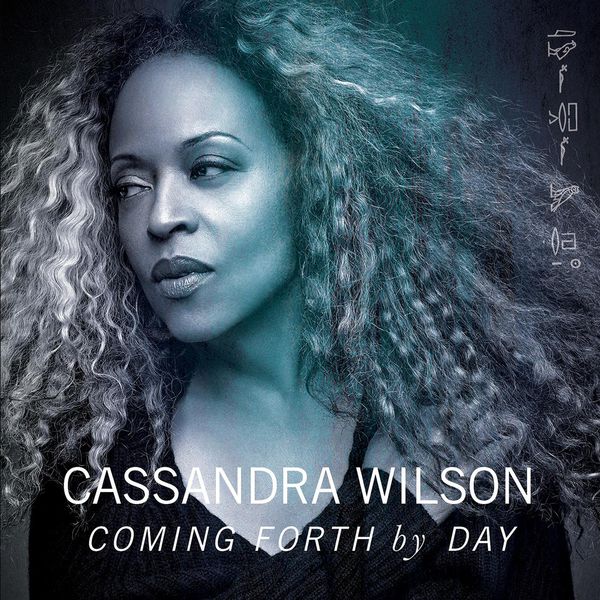
Cassandra Wilson Coming Forth By Day 2015

Coming Forth by Day is, as mentioned above, a tribute album to Billie Holiday, and it was released very timely on Lady Day‘s 100th birthday.

The tracks include well-known standards like Don’t ExplainStrange Fruit, and You Go To My Head. However, you’ll be surprised when you hear them here how different they sound.

The key difference is the production. Nick Launey, better known for working with Nick Cave, is responsible for the arrangements. T-Bone Burnett, who ruined (to my ears) the Diana Krall album Glad Rag Doll, is limited to playing the guitar, so he doesn’t do too much damage.

In summary, you get Bille Holiday Meets Nick Cave, with Wilson’s absolutely unmistakable voice. Is it worth getting? Not across the board, but some tracks are good enough to justify the purchase. I’d personally pick Don’t Explain, You Go To My Head, and Strange Fruit for that honor. Ah, and Good Morning Heartache is a bit weird, but needs a special mention.

Unfortunately, unlike some earlier albums, this album isn’t particularly “audiophile”, as a bit overproduced and compressed. But in a way, that goes well with the overall ambiance.

So listen before you buy, but it is certainly worth checking out.

Overall rating (in spite of some annoying tracks): 4 stars
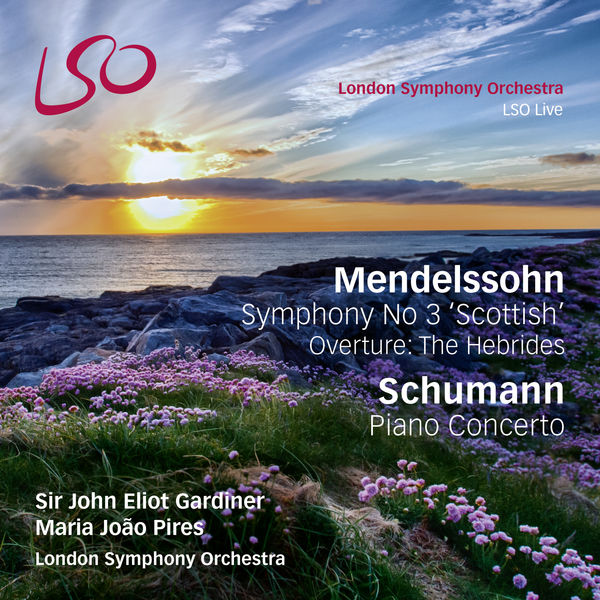
Am I Deaf or How Could This Go So Wrong – Gardiner & Pires’ Schumann & Mendelssohn

Sometimes there are albums coming out where just looking at the artists involved you really anticipate something great.

So when I read about this album of Maria João Pires playing the Schumann piano concerto together with the LSO conducted by Gardiner, I was really looking forward to hearing this. A beautiful pairing as well with Mendelssohn’s Scottish symphony that I really like.

Schumann piano concerto Mendelssohn Symphony No. 3 Maria Joao Pires John Eliot Gardiner LSO Live

Pires plays fantastic Mozart and Chopin (e.g. her Nocturnes are just beautiful), and I’m a big fan of Gardiner not only for his Bach cantatas, but also for his symphony recordings with the ORR. And obviously, the London Symphony is a great orchestra.

So all the stars are aligned. On top this album has received a Gramophone Editor’s Choice, plus some other great reviews.

And then I start listening (luckily I went for streaming first instead of just immediately buying), and can’t help to think I must have clicked on the wrong album. The Schumann piano concerto is just plain boring! Total lack of passion and energy. And a perceived speed that feels way too slow. Then I check, and it is really Gardiner and Pires playing here. How could this go wrong?

You have plenty of other alternatives here, go for Radu Lupu, Dino Lipatti (a disc to convert Karajan haters by the way), Andsnes again, etc. etc. etc.

But I don’t give up and check the Scottish symphony. Again, I can’t believe my ears. At best, an average performance. The worst is the forth movement which feels plump, and on some occasions (this is a live recording) the LSO even sounds out of sync. This is not the brilliant Gardiner of Schumann’s 4th with the ORR, this is somebody else entirely.

For Mendelssohn, I’d recommend you rather go with Abbado, or Christoph von Dohnanyi.

No idea what the guys at Gramophone heard here. I just don’t get it.

Overall rating: Just about 3 stars (It really pains me to give such a mediocre rating as these are all amazing musicians individually. But I just can’t help it.)

Shai Maestro – This Avishai Cohen Alumni Will Go Places

Avishai Cohen

You cannot write about Israeli Jazz without mentioning Avishai. This bass player from Jerusalem probably is the most prominent Israeli Jazz musician, after being “discovered” by nobody less than Chick Corea back in 1996. Personally, unfortunately, I’m not such a big fan of his albums, there are some individual tracks that I really like, but there isn’t a single album I really love throughout.

Shai Maestro

Luckily, he in turn discovered Shai Maestro, when needing a piano player, and he hired him pretty much directly out of school apparently. Talk about risk-taking, but well done! You’ll hear Maestro playing the piano on Gently Disturbed, Sensitive Hours, Seven Seas, and Aurora. During this time, Maestro relocated to New York City, probably a smart choice for a Jazz musician.

Then, in 2011, at the tender age of 24, Shai Maestro decided he wanted to launch his own trio, together with Jorge Roeder (from Peru) on bass and Ziz Ravitz (Israel) on drums, and they launched their first album, simply called Shai Maestro Trio, in early 2012, on the French label Laborie Jazz.

Shai Maestro Trio Laborie Jazz 2012

I had heard Shai Maestro shortly after that on his first European tour, and fell in love with the music immediately. From what I could see during the concert, the guy is not only abrillant musician, but also very modest and humble

Since the debut album (pictured above), Maestro has recorded two more albums, The Road To Ithaca and Untold Stories (the latter including some live tracks), both are very good, but his debut still is my favorite album.

There is just such a beautiful mixture of evolving melodies, some Middle-Eastern influences, and a great understanding of the piano trio tradition (legend has it Shai discoverd Jazz at the age of 8 with an Oscar Peterson album), that you just don’t stop listening to this beautiful album.

And if you get the chance to see him live, go for it. The handful of live tracks on Untold Stories gives you some idea on what to expect, but the additional time and freedom the trio has live just creates something very very beautiful. They really interact as if they’d been together for decades.

This is one of the few musicians where I’ll safely buy any future album blindly. He’s only 28 now, so we’ll hopefully be enjoying many more albums in the future.

My rating: 5 stars (yes I know, I keep giving 5 stars quite often recently, but it is just so much more fun writing about the truly outstanding albums).

You can download it here.

Debussy’s Images – Impressionism For Your Ears

20th century music

Let me first of all do a quick detour here: You won’t find a lot of 20th century classical music on my blog. It is very simple, the further we go away from tonality, the less I like it.

So the territory of the impressionism of a Ravel or Debussy are still borderline, some Prokofiev is as well, but I rarely really enjoy Shostakovich, and don’t even get me started on true twelve-tone and other stuff. I just don’t get it.

As I know some smart people who really adore Schönberg, Webern, Boulez et al. I’ve often wondered why I have this barrier. You see, the visual arts took a similar turn from concrete motives to abstract concepts, and I actually like a 1950 Picasso usually significantly more to a Turner, or any 18th century art. I really appreciate Jason Pollock and Sam Francis (especially the latter). So here I am much more open-minded (OK, when it gets to Duchamp’s Fountain or most of Joseph Boys, I’m out, but at least I get (or believe so) intellectually what they are trying to get at).

But atonal music (and sorry, while some will say there is no atonal music, I think most readers here will get the concept). is something I just don’t get. Probably my brain is to small or too hard-wired in the well-tempered scale to go there.

Claude Debussy’s Images

Back to the early 20th century, and more specifically Debussy. Why write about this right now? Well, I think I’ve mentioned before the excellent Swiss radio show “Diskothek Im 2“, that gets two experts in the studio and compares 5 different version of a given classical work, and this fully blindly.

A very interesting exercise which I should do even more often at home (you’ll be surprised how much your most beloved conducted can disappoint when you don’t know it’s him, or vice versa).

So, a recent show compared 5 recordings of Debussy’s Image. These 6 little poems, with beautiful names like Reflets dans l’eau (reflections on the water), or Poissons d’or (goldfish) are probably among the best known examples of what we call today impressionism, similar to the earlier period in the visual arts (Debussy apparently didn’t like the term by the way).

The editor chose 5 contemporary recordings, and so the classical reference version of these, by the amazing Arturo Benedetti Michelangeli on DG in 1971 was out. By the way, I’m just re-listening to this version right now and it is outstanding, so don’t hesitate to get it in spite of its age.

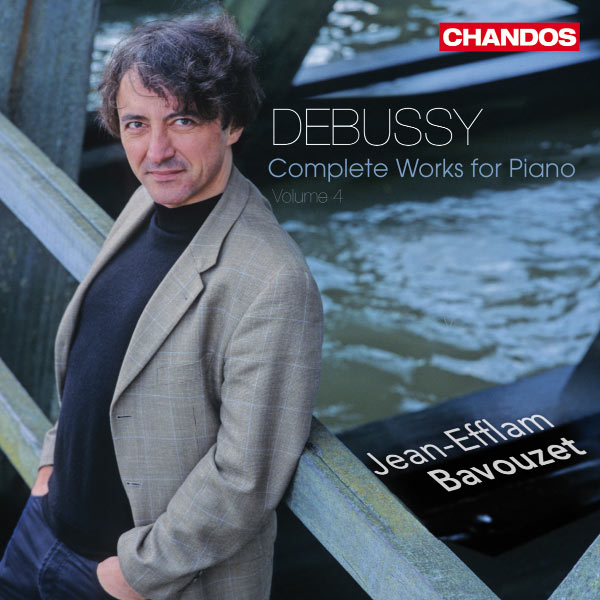
The versions reviewed included Jean-Yves Thibaudet, Pierre-Laurent Aimard, Alain Planès on a 1902 Blüthner piano (very interesting to discover by the way), Marc-André Hamelin, and the “winner” of this little contest, Jean-Efflam Bavouzet

Complete Debussy vol. 4 – Jean-Efflam Bavouzet

Jean-Efflam Bavouzet Debussy vol. 4 Images Chandos

And here I must admit, while I had heard his name before, I didn’t have a single Bavouzet recording in my collection. Something to be corrected ASAP, as while I don’t always agree with the invited experts, in this case, recording number 4 clearly stood out (in spite of no recording of the 5 being a negative outlier, all had their qualities). I suppose it’s the mixture between extreme precision and the ability to just get sucked into the music.

Have you ever sat in the small west-end Musée Marmottan in Paris? It doesn’t draw the gazillions of visitors that the Musée d’Orsay gets, but it actually has an exceptional Monet collection. There are two main reasons to got there. A, there is an entire corner where you sit surrounded by Monet’s water lilies. Believe me, they are better than the original in Giverny. And there is one, rather little painting, depicting a rising sun over foggy harbor waters, with some small boats passing by, called Impression, Soleil Levant. And yes, this is what gave Impressionism its name.

Sorry for the detour, but watching this particular painting, and listening to Et la lune descend sur le temple qui fut played by Bavouzet gives about the same feeling, that is somewhere out of this world.

This is actually album number 4 of Bavouzet recording Debussy’s complete works, I assume all other volumes are equally worth having, but I didn’t yet have time to check them out.

My rating: 5 stars

You can get it here directly from the label.

Isabelle Faust and Brahms’ Violin Concerto – Just Magical

My blog’s subtitle has Brahms in it, and I haven’t even mentioned good old Johannes for a while.So let me correct this by writing about his violin concerto, and my favorite versions.

Brahms’ Violin Concerto

Brahms was a pianist, not a violinist, and so he needed an expert on what to do and not to do. Luckily, one of his best friends, Joseph Joachim, was one of the leading violinists of his time, so he consulted extensively with him while writing this piece in 1878.

Obviously, this concerto has been recorded over and over again, so there are a lot of amazing versions to choose from. However, there is a relatively recent 2011 recording which I really love more than most others.

Isabelle Faust

Isabelle Faust Brahms Violin Concerto Daniel Harding Mahler Chamber Orchestra Harmonia Mundi 2011

There are so many outstanding young violin players these days, Julia Fischer, Janine Jansen, Hillary Hahn, etc. etc. etc. We are really spoilt these days. However, Isabelle Faust is in a way my personal favorite, probably because she does a lot of excellent chamber music as well (more about that later).

This recording of the violin concerto with the excellent Mahler Chamber Orchestra and Daniel Harding, a young rising star in the conductor scene, has not received praise across the board. Some even called her tone “thin”. Well, I agree her way of playing is always rather on the light than the heavy side, but to me it feels just right. Faust writes in the excellent liner notes that she has studied Joseph Joachim extensively, both his personality, but also historic sources about his playing style. Overall, Faust plays historically informed, but unlike in some other cases this doesn’t mean no vibrato at all, but just a more selective use of it.

The smaller size of the Mahler Chamber Orchestra matches her transparency very well, this is a match made in heaven. As a side note, these days younger orchestras like the MCO or the Chamber Orchestra of Europe are becoming more and more serious competition to the established big boys in Berlin/Vienna/London. I suppose we music lovers we can only be happy about this, as it hopefully keeps everybody on their toes.

A curiosity about this version is the use of the unusual Busoni cadenza, so if you are familiar with this work you’re in for a little surprise.

String Sextet No. 2

As mentioned before, Faust is an excellent chamber musician as well (her Beethoven sonatas are my absolute favorite). So as a “filler” we get the beautiful String Sextet No. 2, which is well worth listening to. A sextet is a more rarely heard form of chamber music, but for Brahms these were actually his first venture into pure string chamber music, and successful in the way that helped further build his name as a composer.

A little piece of trivia: Brahms fell in love many times during his life, but remained a bachelor nevertheless. Occasionally, we get glimpses into his love life from his music, like in the case of the Alto Rhapsody (see my earlier post here). In this case, he was in love with Agathe von Siebold, and nicely enough, you’ll get the motive “A-G-A-H-E” (H being the key for B in German notation) as a leitmotif several times in the first movement.

Overall rating: 5 stars. This, as usual is a very personal judgment. If you agree with me, please comment, if you don’t, I’d love to hear why!

And if you want a more traditional Brahms, you can always go to Oistrakh/Klemperer and Heifetz/Reiner, both outstanding in their own way.

You can get it here as download and here as physical album.

Claire-Marie Le Guay’s Gentle and Perceptive Bach

Bach again, really? I am reviewing too much Bach. But then again, can anybody have too much Bach? Probably not. To be fair, it took me a while to really appreciate Bach. In my youth, I barely listened to him, and my handful of experiences playing him myself made matters worse (I was never a good piano student, to lazy to practice). I assume the beauty and clarify of Bach is something that really needs to grow on you over time. In my thirties (I’m now in my forties) i started realizing that I started to listen more and more to Baroque music, and particularly Bach. It wasn’t a conscious choice, it just happened naturally. And today I literally just can’t get enough (ha, do you have Depeche Mode playing in your head now as well? I do every time I write this phrase in English).

Claire-Marie Le Guay

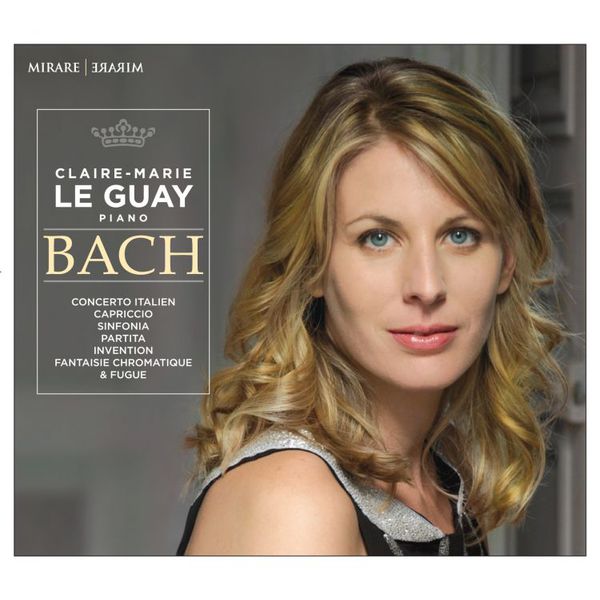
I must admit I hadn’t noticed her before this “Choc” by Classica some months ago, released on Mirare in 2015. But then I saw her teachers included Alicia de Larrocha and Andreas Staier, I got curious. She has won several competitions and has notably quite busy doing chamber music.

Her Bach album

Claire-Marie Le Guay - Bach Mirare 2015

As usual, when a French magazine reviews a French artist and sells him or her as “the best thing since sliced bread”, I usually take it with a grain of salt. But when I checked out this particular album, I just had to get it pretty much immediately. And this in spite of me being more and more skeptical about Bach on a modern Steinway. What sets this album apart is her touch. Delicate, almost caressing. Bach can be quite tough sometimes, or mechanical, if played by the wrong musician. None of this is here. And in spite of all this gentleness, the music is fully there. You don’t miss any single counterpoint turn in the beautiful Italian Concerto, and even the Chromatic Fantasia BWV903, which sometimes can be a bit academic, is just drawing you in.

Overall rating: 4 stars (I hesitated a long time whether I should give 5 stars, but somehow my subconscious tells me only harpsichord Bach should get the best possible rating, which is probably bullshit)

You can get it here as CD and here as download

Nina Revisited… or I’d Never Have Thought I’d Ever Mention Usher On This Blog

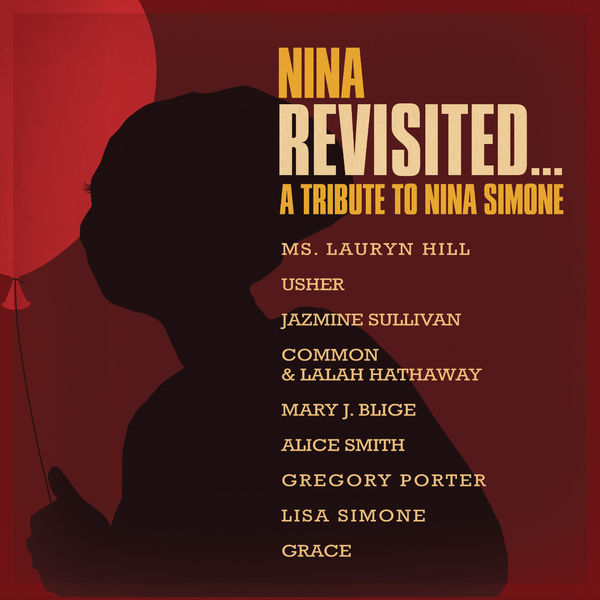
Hommage albums are all the rage. After the brilliant Autour de Nina (reviewed here), I was nevertheless kind of curious about the new album Nina Revisited… A Tribute to Nina Simone.

0886445281262_600

Well, obviously when I saw that artists like Usher participated (who really represents to me everything that is wrong about today’s top 40 radio “soul”), I kind of assumed I’d hate this album, so I declare openly in front of the jury my potential bias.

But then I figured, what the heck, so far every single album review I’ve done was four or five stars, so I finally felt obliged to also show to you what it is I actually don’t like.

Nina Revisited….

This album is a very good example.

Usher’s version of My Baby Just Cares For Me is massacring this song, which to be fair, was never particularly good in the first place (the producers forced Nina Simone at the time to add it as they felt there were too many ballads on her debut album Little Girl Blue), but at least it can be pleasing and swinging. It is nothing like that here, just brainless drum-computer-plus-overproduced-synthesizers elevator music.

Nina Simone Little Girl Blue 1958 Bethlehem

So why bother mentioning this album at all on my blog? Why waste my energy? Well, because there are actually a handful of tracks on this album that are quite enjoyable.

First of all, Ms. Lauryn Hill does a really good job on Feeling Good; this could even become my favorite version of this feel-good (sorry for the pun) song, and Wild in the Wind is also pretty well done. She shouldn’t have done Ne me quitte pas, but then again, Nina shouldn’t have done either. If you don’t know it, please do yourself the favor and check out Jacques Brel’s original. Once you’ve heard this, you’d wish nobody ever bothered to cover this song with a horrible English accent in the first place.

Alice Smith’s version of I put a spell on you is actually quite interesting, although far from Sophie Hunger’s brilliant version on Autour de NinaGregory Porter’s version of Sinnerman is at least as enjoyable as Keziah Jones. And finally, Lisa Simone’s I Want A Little Sugar In My Bowl is decent background music.

Overall rating: barely 3 starsEDIT: Nah, the couple of decent tracks on here doesn’t make up for the unbearable garbage of some others: 2 stars. 

Do yourself a favor and only buy individual tracks here!

Classical Life

A classical music blog by music critic Tim Mangan

This Week's Music

Making Classical Accessible

From my Macbook to the Net

Evaporation of my thoughts and observations

Elestra

Author: Artienne

My Life in Music

Playing, Singing and Listening

ArsX3

A brand new journal reviewing books, cinema, music

LawrenceEz's Blog

Creative and Performing Arts: Writing, Classical Music, Photography

Laetitia Strauch-Bonart

Contemporary Politics & Culture

sibling revelry

reveling in all things classical

It's A Raggy Waltz

I collect jazz on vinyl, I dig the Dave Brubeck Quartet, & I write about it

La Musica

By two cousins

thejazzbreakfast

Dishing it out from the heart of England

only jazz

random thoughts about music that matters to me

The Culture Project

Exploring the world of literature, wine, art, music and more.

René Spencer Saller

The music causes me to dream of fabulous empires, filled with fabulous sins.

Breaking Baroque

Blog of Tafelmusik Baroque Orchestra and Chamber Choir

Tasting Nirvana

Eating your Dosha

The Immortal Jukebox

A Blog about Music and Popular Culture

April Greene

Writer + Editor

a pianist's musings

A history of your favorite classical music.

Classical music for all

Boris Giltburg's blog

I HEAR VOICES

An orchestra seat in the web space