Writing About and Reviewing Classical Music and Jazz
Author: Musicophile
I'm not a professional musician, I don't work in the music industry, I'm just what the name says, somebody who loves music.
I've been in love with music for all of my life, took piano lessons for nearly 10 years, and played in several amateur Jazz groups. I go to concerts, both classical and Jazz, quite regularly. And I collect music previously on vinyl and CDs, now on my computer, and am slightly OCD on my music collection.
You can reach me at Musicophile1(AT)gmail.com
I know this blog has been quite heavy on classical music recently. I’ll promise I’ll try to increase the frequency of Jazz articles!
So, here we go.
GoGo Penguin
I only discovered GoGo Penguin some years ago. I was really on board they came out with their album Man Made Object, which remains my favorite album of the group until now.
I’ve also listed Man Made Object in My Top 5 Jazz Albums of 2016. I actually had noticed them with their previous 2014 album, V 2.0, which I also really liked. I also had the pleasure of seeing them live already
Nicely enough, when their latest album came out yesterday, I was immediately hooked.
If you want to know more about the style of GoGo Penguin, click on any of the links above, but just to quickly summarise, we’re talking about the setup of a traditional Jazz piano trio here, but with music that clearly takes cues from EST, but is equally influenced by Philipp Glass type minimal music, and probably even more by the beats of contemporary Electronica.
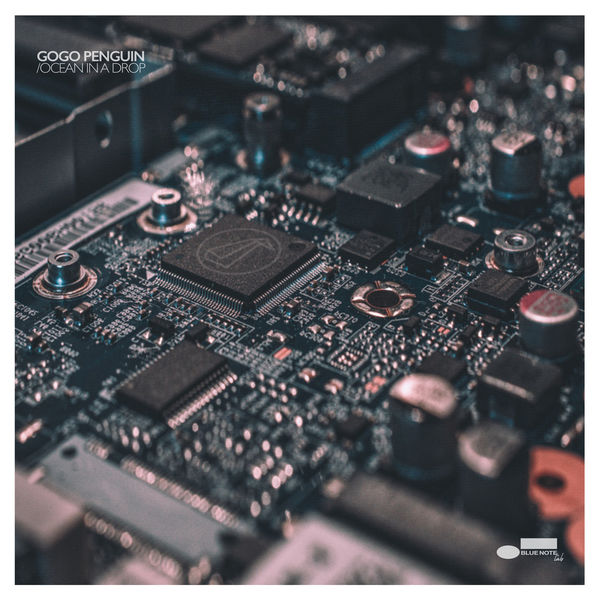
GoGo Penguin: Ocean In A Drop (Music For Film) (BlueNote 2019)
So here’s the genesis of this album. Apparently the thee artists of GoGo Penguin, Chris Illingworth, Nick Blacka, and Rob Turner, really liked the Philipp Glass written soundtrack to the 1982 film Koyaanisqatsi.
They liked it so much that they played their own soundtrack to the film. Everything was recorded live while watching the movie.
Yes, this may remind you of another famous movie soundtrack that was recorded in a similar manner (which is a great album and should be discussed on these pages at some point), but I digress.
This music was never intended to be released. Nicely though, enough people in their immediate entourage bugged them enough, so now we have a new fantastic album.
It is quite short, EP-style, only 22 min (and one could argue, a bit expensive for the duration), but the music is just fantastic, very inspired. We’re back to the mesmerising mix of fast rhythms and beautiful minimalist melodies that I so loved on Man Made Object.
Gramophone has just revealed the 2019 award winners here. Let’s have a look at how my predictions turned out.
Concerto
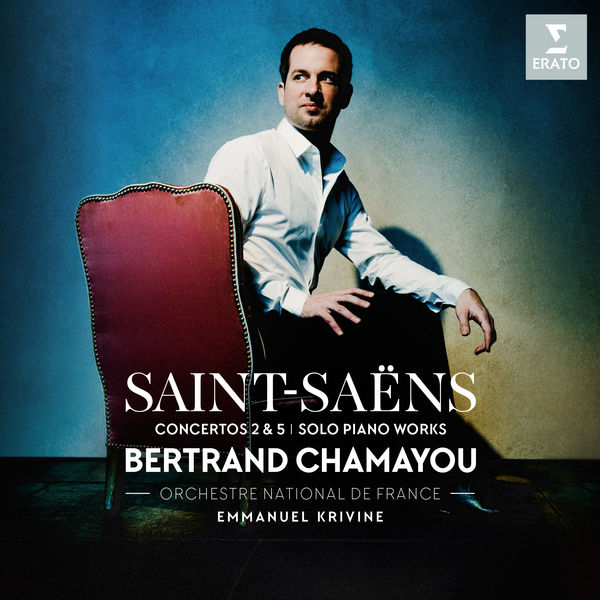
Chamayou’s recording deserves the price. (As I predicted in my post, though my personal favourite would have been Isabelle Faust Bach album which I love).
Orchestral
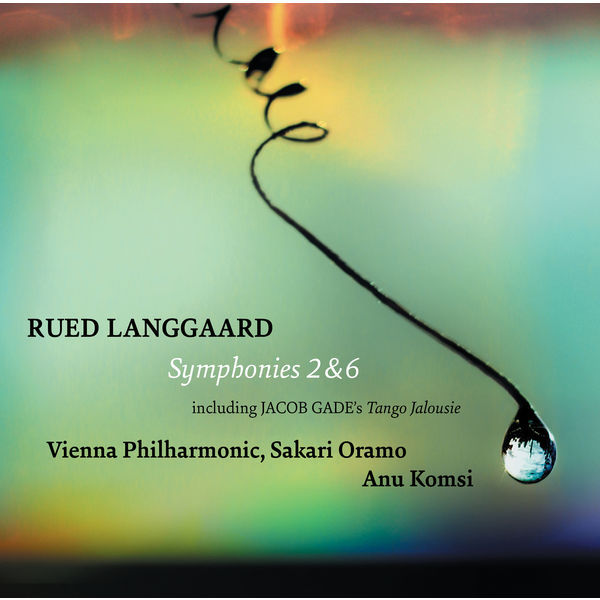
Gramophone went with the Langgaard recording, while my personal preference would have been for the Sibelius, I predicted again that this album would win (sorry for all the bragging). And it is a really interesting discovery. Not sure it will make my personal top 5 for 2019 though.
Chamber
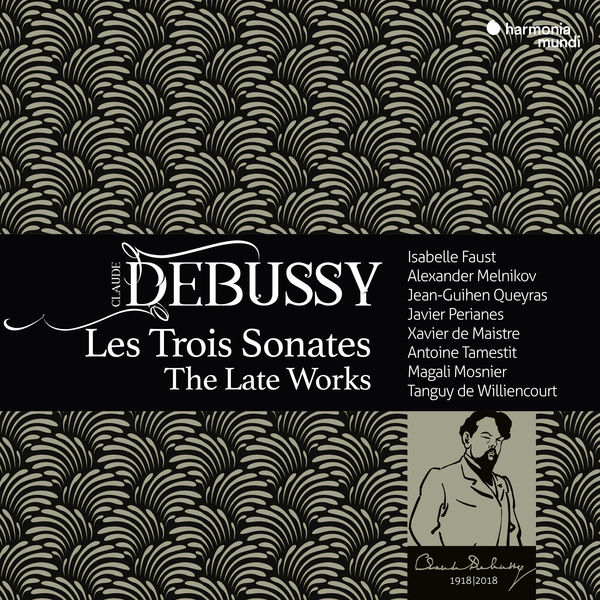
So Isabelle Faust did win another award after all, just in a different category. I agree this album is very good. Here my prediction was completely off (can’t win all the time…)
Instrumental
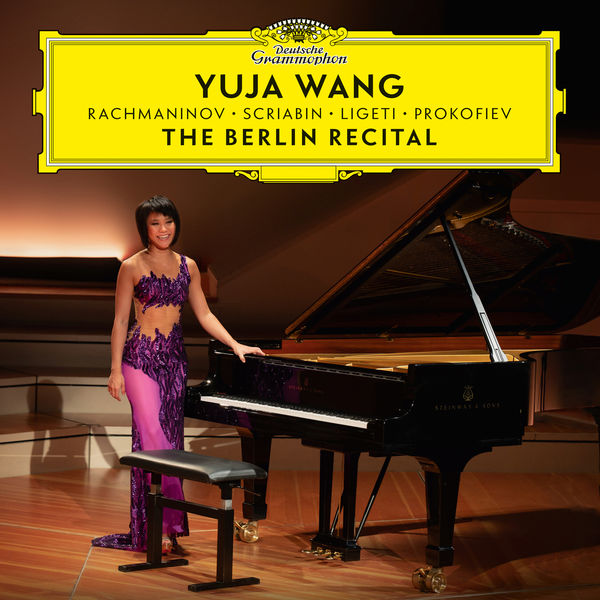
And yes, 3/4 predictions correct! (last time bragging, promised!). In any case, Gramophone was spot on when they said (much better than I could ever have, there’s clearly an advantage to being a native speaker…) “Anyone hitherto more put off than drawn in by Yuja Wang’s glamorous image may have to do some rethinking in the light of this recital.”
So, with such a success rate, Grammophone, do you have a job for me? (Just kidding, I’m happily employed in a completely unrelated industry).
Take home for you as a reader: get the Wang & get the Chamayou. And sure, also get the Debussy while you’re at it. You won’t regret any of these purchases, I promise.
And if you disagree, just let me know in the comments (I don’t offer any money back guarantee though, that’s why we have streaming in 2019…).
I haven’t written a lot about Max Bruch yet. To be a bit more precise, there is not a single blog entry in 5 years that is dedicated to Max Bruch.
Why is that? Maybe because he’s the 19th century equivalent of the One Hit Wonder. Do you know any work beyond his violin concerto (which is to be precise his violin concerto no. 1, but nobody knows the two others)?
Maybe occasionally you’ll find a recording of Kol Nidrei, a orchestral work with a solo cello part. Even more rarely, you’ll get the Romance in F (sometimes coupled with the violin concerto no. 1).
And beyond this, you have to be a proper classical music buff, if you’ve heard his symphonies, his chamber music works, or even his choral works. All pretty much disappeared today. And by the way, not only today, even while he was alive, Bruch complained that he was always reduced to this work, and apparently became quite bitter about it.
Overall, he should probably not have complained to much, his violin concerto no. 1 is still considered part of the list of the 4 great German violin concertos, the others being Beethoven, Brahms, and Mendelssohn.
So what triggered me to write about this concerto right now? Well a nice coincidence of two of the media I follow for classical music inspiration talked about it at the same time.
The first one is the Swiss radio program Disques en lice, from the French speaking part of Switzerland, which usually compares 6 versions of a given work, with 3 experts in a blind test. If you do speak French, I strongly encourage you to seek this program out, you’ll get it twice per week on their worldwide live stream (select Espace2) or if you are lucky enough to pass through Switzerland, you can even download the podcast (unfortunately the podcast has a rather strict geolocating feature).
So, as mentioned Disques en lice covered Bruch’s concerto on September 23, 2019. At the very same time, the most recent September issue of the French magazine Classica that I subscribe to on my iPad has a monthly section Ecoute en aveugle (blind listening) in which they go through pretty much the entire history of recordings of a given work, select what they believe are the 8 most promising ones, and then again proceed to a blind listening session comparing said 8 recordings.
So, which albums got selected?
Let me start with Disques en lice.
The host, Jean-Luc Rieder, had a hard time choosing, so ended up selecting 8 instead of the usual 6. So during the 2h30 of the program, we compared some legendary classics (Christian Ferras and Jascha Heifetz) from the 1950s, two recordings from the 1980s and 90s, Shlomo Mintz and Kyung-Wha Chung, and four more contemporary versions, notably Renaud Capuçon, Nicola Benedetti, Daniel Hope, and Janine Jansen.
Interestingly enough, the selection by the Classica reviewers Stéphanie-Marie Degand, Fabienne Bouvet and Michel le Naour ended up selecting a choice with only one overlap: Itzak Perlman, Isaac Stern, Nathan Milstein, Maxim Vengerov, Ida Haendel, Isabelle van Keulen, Salvatore Accordo, and the overlap being Mintz.
Now, who won at Classica: the top 3 are Perlman (with Haitink), Stern (with Ormandy), and Milstein (with Barzin). As much as I usually agree with Classica’s reviews, I checked out the winning recording with Perlman, and really didn’t like it.
So, who then is my favourite recording you are going to ask after all this intro?
Well, while often I don’t agree with the winning choices of Disques en lice (I much prefer the winning recordings of the Swiss German equivalent by SRF2, Diskothek im 2.), in this particular case I fully agree with the winning album.
(And allow me to brag a little bit, I actually did recognise that recording blindly, together with my other favourite, Jascha Heifetz).
It turns out to be Janine Jansen’s excellent2006 recording with Riccardo Chailly and the Leipzig Gewandhaus.
This recording is just perfect to me. It combines the appropriate level of romantic engagement with Chailly’s perfect leadership of the magnificent Gewandhaus.
To be fully transparent, this isn’t the first time I write about this album. It is actually featured in my 25 Essential Classical Albums post, but I must admit I focused much more on her Mendelssohn recording in my comment there than on her equally outstanding Bruch.
So you get it, this album is an absolute must have.
And on top of one of the best ever recorded versions of Mendelssohn’s concerto, you even get Bruch’s Romance in F (op. 85).
This is another favorite category of mine, as typically it is mainly piano recordings.
This year, interestingly enough a solo violin recording starts the selection, Giuliani Carmignola’s recent recording of the Bach Sonatas and Partitas. I’m really puzzled by this choice. Let me make it clear, I really like Carmignola (his Four Seasons are among my absolute favorites), and I also love the solo sonatas and partitas. However, Carmignola’s version sounds completely “wrong” to me. I know this is a very unspecific remark, and I’m not going to dwell on it, as this won’t be helpful for my readers. But I’ll stick with Milstein anytime.
So let’s rather go directly to the recording that is most likely going to make my Top 5 Classical albums of the year 2019, and that I sincerely hope will win this category: Yuja Wang’s fantastic Berlin recital.
As you can see from my review, I really love this album. It has completely changed my perception of Wang as an artist. This recital combines a fantastic selection of repertoire, a playing that is both nuanced and passionate.
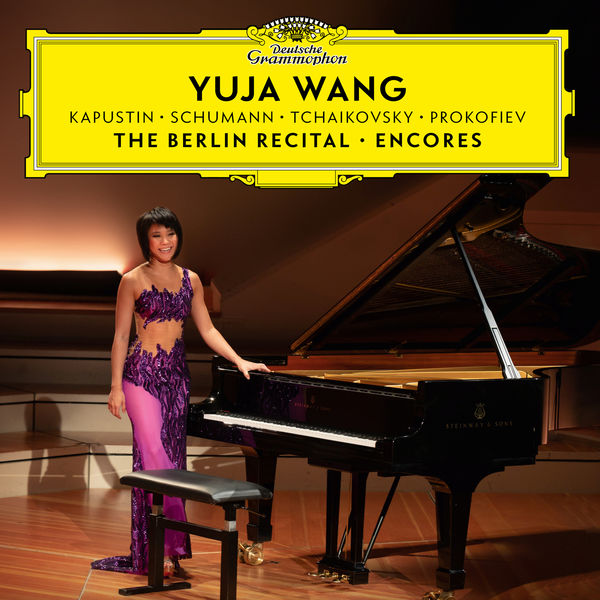
I’d like to thank my reader Ed for his comment on the article flagging the extra album of the 4 encores she played at this concerto. This is a must have as well. You could argue with DG why they simply didn’t include this into the main album, but in any case this 4 track album is very cheap, and a must have.
Next in line is another favorite artist of mine, Igor Levit. I haven’t yet formally reviewed his latest recording of the Beethoven sonatas, but have seen him play a selection live at this year’s Lucerne festival, and can already say his set is worth checking out. You may not like all his choices, especially on his sometimes extreme tempi, but this will be a worthy addition to the long catalogue of complete sonata recordings, more to come).
But Gramophone focused on Levit’s other release in the last 12 months, his very personal album “Life”.
I’ve reviewed it here, and if you haven’t done so yet, you should absolutely check out this five star gem.
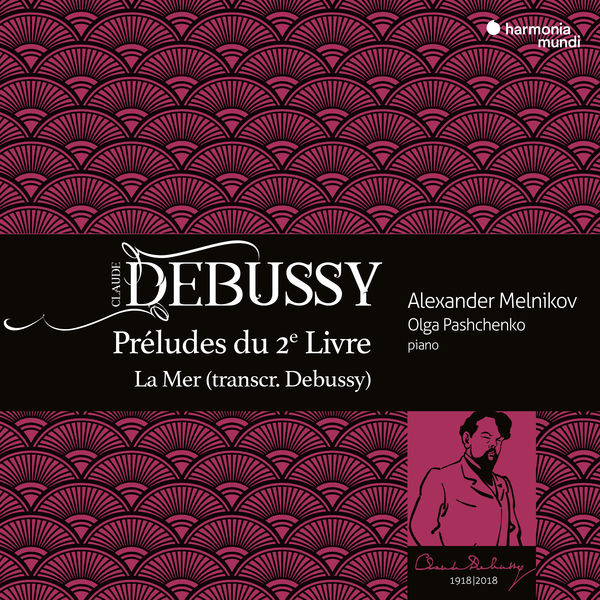
I’ve only just started listening to another recommendation of this selection, Alexander Melnikov’s recording of Debussy’s 2nd book of Préludes.
As you know, I’m far from being a Debussy expert, I typically just go to my complete Debussy recordings by Jean-Efflam Bavouzet, but my first impression of this album is very positive. What is very interesting about this recording is the sound of the piano, an Erard, presumably from the time of Debussy. Melnikov has recorded quite a bit on period instruments, and it truly gives a different color and perspective.
I can’t comment on the two other albums that made the original 6 album shortlist, Steven Osborne’s recording o fthe late Beethoven sonatas, and Stephen Hough’s “Dream Album”, as Hyperion still refuses to stream and I refuse to buy albums blindly.
Now, as you know in the meantime Gramphone has narrowed down the shortlist from 6 to 3 albums. The finalists are Carmignola, Wang, and Levit.
I’m willing to bet that Wang will be the winner this year, and it would be well deserved!
I presume this will be the last part of this year’s mini-series on the Gramophone Awards. Maybe I’ll do one more post on the remaining categories lumped together (Choral, Contemporary, Early Music, and Opera, Recital, Solo Vocal) if I find time, but I’m much less comfortable and familar here, so let’s see. So most likely you’ll hear back from me on the Gramphone Awards once the winners are announced on October 1st.
What do you think? What would be your favorites among all these albums?
Chamber is a particularly rewarding catogory for the Gramophone awards this year, at least from my perspective. Out of the 6 initially shortlisted (now narrowed to 3, see below), I fully support and like 5. Nice quota.
So let’s take them one by one:
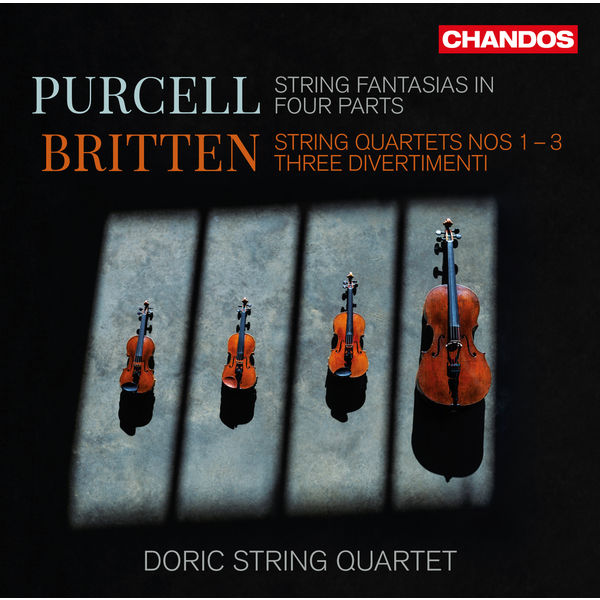
Britten’s string quartets played by the Doric quartet is the only album I’m not going to comment about. I like the Doric as an excellent quartet, but Britten is a composer I just don’t get. Probably again, mainly due to my general issue with 20th century music.
Another 20th century album that I had completely missed comes from Debussy (a lot of Debussy recordings due to the 100 years of his death in 1918). We’re talking about an album called in a nice international mixture LesTrois Sonates – Late Works. Not sure how I missed this as it features my heroine, Isabelle Faust. I’ve only started streaming it over the last few days but really like it. Also look at the list of musicians, Queyras, Melnikov, Perianes. Wow! Expect a more detailed review, but in any case, this is really promising!
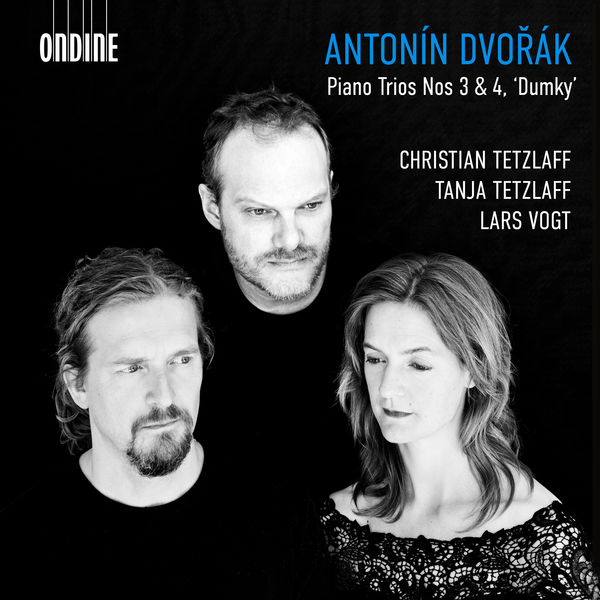
Next on the list is another favourite of mine, Christian Tetzlaff and his sister Tanja and Lars Vogt on piano playing the piano trios no. 3 & 4 by Antonin Dvorak.
This trio is truly fantastic, having recorded some outstanding Brahms albums previously, and from the first bars of this album it is very clear this new release is also very special. Dvorak isn’t part of my most core repertoire, but this album could easily make it into heavy rotation on my computer.
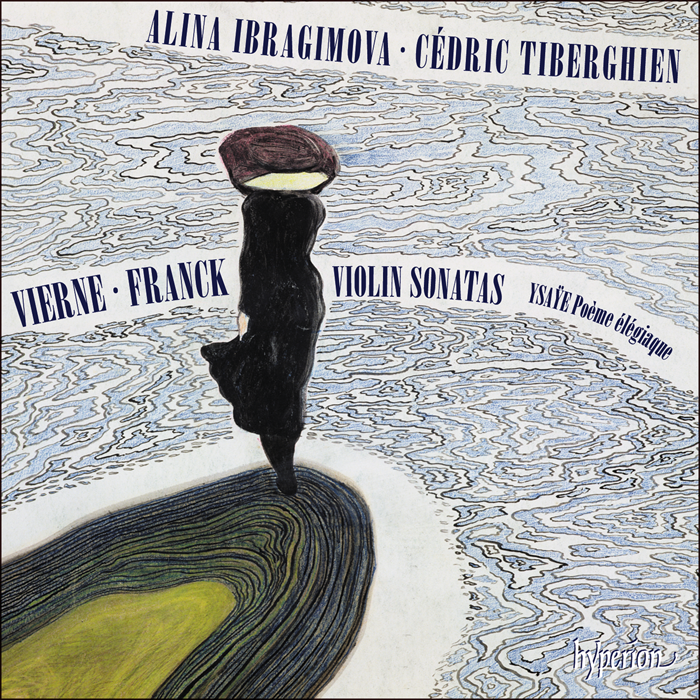
I have a special relationship to the next album as well, given that I’ve seen the artists perform it live in concert. Alina Ibragimova and Cédric Tiberghien, two fantastic artists on their own, but even more special as a perfect duo. The composers on this album, Franck, Vierene, Boulanger and Ysaÿe are less known, but the music is very much worth discovering. The two of them have also recently recorded the Brahms sonatas, and I’ll probably have to get my credit card out soon.
“Papa Haydn” really isn’t my favourite composer. That said, his symphonies are being freshly recorded by Giovanni Antonini (see here), his string quartets are fantastic, and his trios are also really worth exploring.
The French Trio Wanderer has recorded some very good albums before, check out their complete Beethoven trios for example. What is there to say, beautiful playing, charming music, a treat!
And, to wrap up the list of the 6 shortlisted albums, Shostakovich.
I must admit I’m still new to most of Shostakovich’s oeuvre, and finding my way through the very special world of this composer. But I’ve recently acquired the piano quintet which is really worth discovering. I bought the version by the Takacs Quartet with Marc-André Hamelin on Hyperion, but the album selected here was truly the best alternative and I probably will add it to my collection soon.
We’re talking about the Belcea quartet, with Piotr Anderszewski. You also get String Quartet no. 3.
So, out of the 6 albums above, which ones made the shortlist of the shortlist? Let’s make it short (sorry for the bad pun): the Britten, Debussy, and the Franck. Given Gramophones slightly patriotic tendencies, I’m willing to bet that the Britten album will win, but I’d prefer Faust or Ibragimova to get the price. We’ll know more soon.
Overall, a very strong selection this year, or what do you think?
This is part II of my mini-series on the 2019 Gramophone awards. I need to hurry up with my posts, as the winners will be revealed early October. You’ll find part I (concerto) here.
Orchestral
This is another section where I normally feel very much at home with.
That said, this year this comment will be quite a bit shorter as there is only one selected album that I can actually comment on.
Let me quickly start by skimming over the recordings that Gramophone selected that I won’t be writing about, as I don’t feel qualified enough or don’t know them:
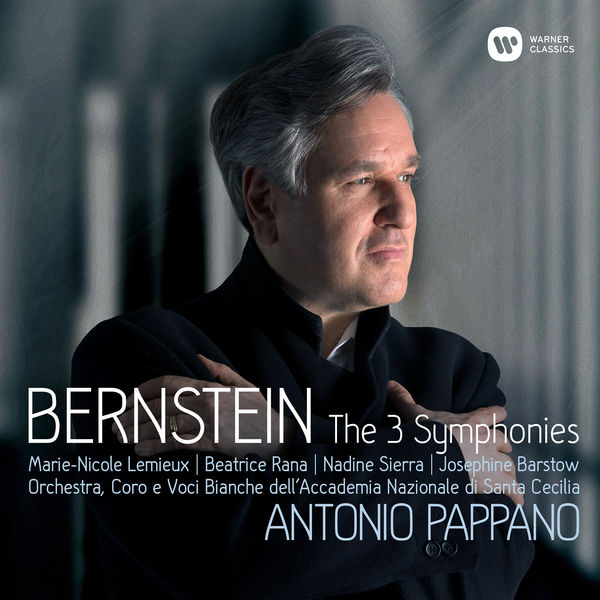
The recommendations start with a box of Bernstein orchestral works played by Antonio Pappano with his Accademia Nazionale di Santa Cecilia. As much as I appreciate this conductor, I really can’t comment here as Bernstein really isn’t my cup of tea (both as a composer and conductor with few exceptions).
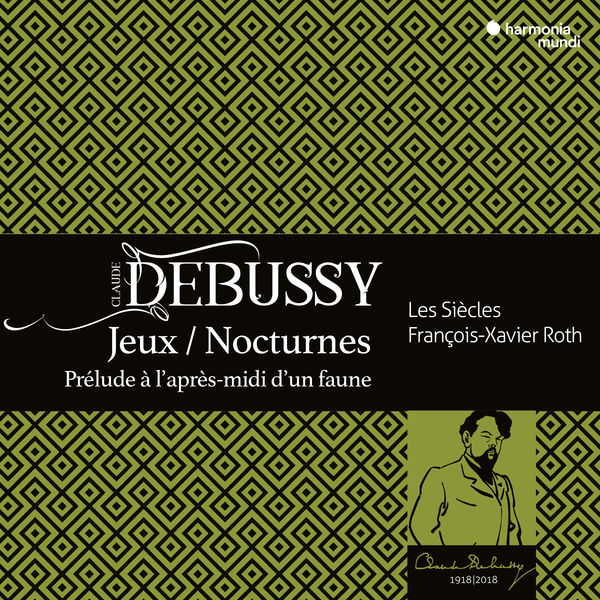
The next one is an album I should be going back to more in-depth for a review, orchestral works by Debussy played by François-Xavier Roth with his Les Siècles. As I mentioned here, I like the conductor quite a bit, and I had a very good impression when I briefly checked this album out when it was released, but then left it for quite a while given that Debussy isn’t my core repertoire (I mentioned before that the 20th century isn’t my favourite).
Talking about the 20th century, the next album is also from this era, as it is Langgaard’s 2nd and 6th symphony by Sakari Oramo and the Vienna Philharmonic. I must admit I had skipped this so far, but I’m streaming it right now as I write this and will have to have a closer look, as I like what I hear. So I recommend checking it out as well.
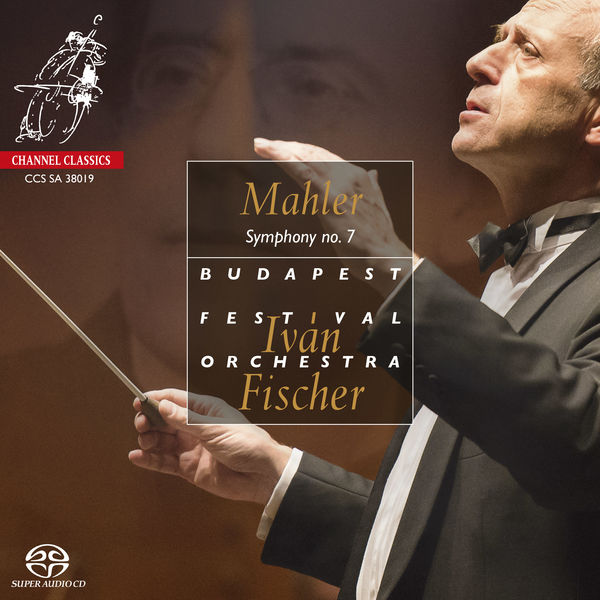
The next one is Ivan Fischer’s Mahler 7. Fischer’s Mahler recordings are often love it or hate it affairs (see my article here on his 9th). Personally, I like his 1st and 4th symphony recordings, even if they are a bit “middle of the road”, but his approach to the 7th doesn’t blow me away. I’d rather stick with Klemperer on this one, but don’t consider this a formal review, as I’m really no expert on the later Mahler symphonies.
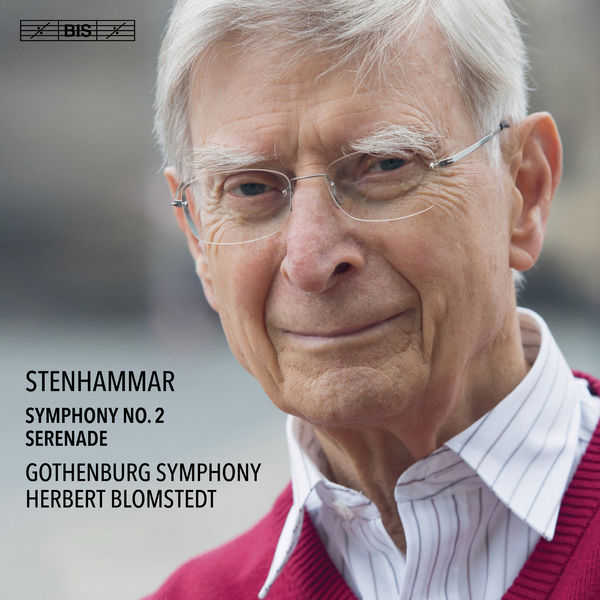
The final album of the list is Stenhammar’s 2nd symphony with Herbert Blomstedt and the Gothenburg Symphony Orchestra. I have a huge respect for Herbert Blomstedt, but Stenhammar’s work is again really not my cup of tea. Another 20th century composition (there seems to be a pattern in this years Concerto awards category), so don’t expect me to comment here.
OK, so after this long rambling section talking about stuff I really don’t know much about, let me write about the only album from this list that I actually have listened to several times.
Given the pattern of the other nominated recordings it had to be either late 19th century or 20th century. This selection fits, as we’re talking about Sibelius 1st symphony, composed in 1899.
I’ve mentioned in my review of Sibelius’ violin concerto, I still struggle really getting into Sibelius symphonic works. So this album, by young Finnish conductor Santtu-Matias Rouvali, was an eye-opener for me. Similar to Petrenko’s recording of Tchaikovsky’s Pathétique, this recording really made me more interested in Sibelius. I hope he’ll record more.
Congrats to the Gothenburg Symphony for being featured twice in this selection.
As usual, I’d love to hear what you think. Any feedback, any different opinions on the presented works?
Update Sep 19: I just noticed that in the October issue of Gramophone only 3 albums remain shortlisted: the Bernstein, the Langgaard, and the Stenhammar. My personal preference among these three would go to the Langgaard.
Update Sep 26: As I mentioned above, Mahler reviews are even more inconsistent than others. The French magazine Classica, who when in doubt I often agree with more than with Gramophone, gives the latest Fischer Mahler 7 only 3 stars, which is much closer to my opinion.
Every year I tend to comment on the Gramophone awards nominees, you’ll find some examples here (2015), here (2016) and here (2017).
In late 2018 I was unfortunately too busy at work to get into this, but I hope I can get back on track this year.
Obviously, I’ll only be able to comment on albums that I’ve actually listened to, or ideally reviewed myself. Therefore, some categories will be less represented here.
The Gramophone awards are probably the most relevant and most highly regarded price in the classical music world, so it is always interesting to see what Gramophone comes up with, even if I don’t always agree.
You’ll find the published list of the 2019 nominees here.
Concerto
You’ve probably noticed that the “concerto” category is among my favorites.
Not suprisingly, I had already reviewed several of the nominees.
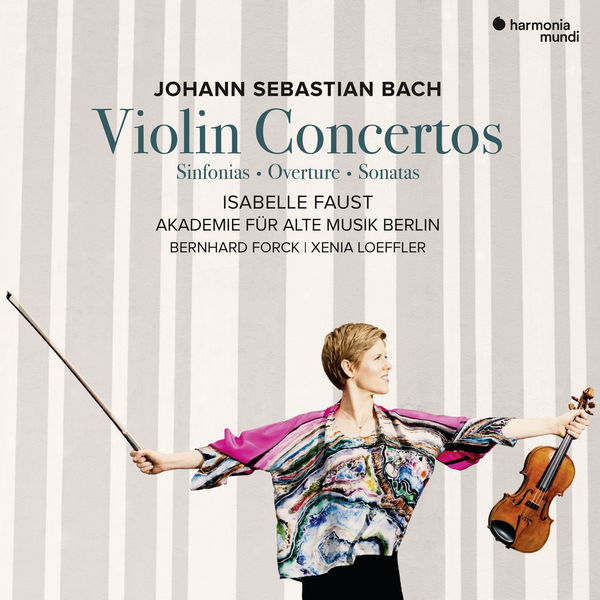
Bach – The Violin Concertos – Isabelle Faust
I mean, what can I say, I’ve heard her play these live, I’ve given the album a very clear 5 star review, and anyhow I’m a self-declared Isabelle Faust fanboy. So absolutely, this is fantastic. And unlike the Trifonov below, I believe there is pretty much general consensus among reviewers that this is a great performance.
This one is more tricky. I already predicted in my 5 star review before any of the professional reviews came out that this would be a love it or hate it affair. Turns out both professional reviewers and a lot of people who commented on my blog really don’t agree. So, while I love it, this is one of those albums I strongly suggest you check out before you buy. To me nevertheless is is one of my favorite performances of the work.
Saint-Saëns: Piano concertos 2 & 5 – Chamayou – Krivine
Here’s another album where I agree with Gramophone, the reason why my rating in my review was only four stars is because I didn’t rate Saint-Saëns highly enough from a repertoire perspective. But the playing is fantastic.
So, overall, good alignment between my reviews and Gramophone’s recommendations.
The category contains three other albums that I haven’t yet heard.
Leila Josefowicz playing John Adams violin concerto. I must admit I’m not familiar enough with Adams’ work to allow any proper review. As mentioned several times, I’m typically not very comfortable with 20th century music. But I may give this a try.
Kirill Gerstein playing Busoni’s piano concerto, with Sakari Oramo, and the Boston Symphony Orchestra. This is an album that I’m really intrigued by as I recently discovered my interest in Busoni, but it isnt’ available for streaming, and I’m really hesitant these days to buy an album blindly.
MIchael Collins playing Crusell’s Clarinet concerto. Who’s Crusell I presume you’re going to ask. I must admit I don’t have the faintest idea. Apparently a Finnish composer. I may give this one a try just out of curiosity.
To wrap up, who do I predict will win this year? My bet is on Isabelle Faust. This is truly a reference version of the Bach concertos, and so it would be really deserved. The only thing that could stop her is that she already won the recording of the year in the 2017 Gramphone awards. Not sure if this may influence the jury. Let’s see in some weeks.
UPDATE Sep 19: I just noticed that in the October issue of Gramophone, only 3 albums remain shortlisted. Specifically the Adams, Busoni, and Saint-Saëns recordings. So Faust is apparently already out. I hope Chamayou wins, he deserves it.








 musicophilesblog - From Keith Jarrett to Johannes Brahms