Oops, He Did It Again: Benjamin Grosvenor with Another Great Album!

Benjamin Grosvenor

I’ve mentioned Benjamin Grosvenor several times already, including here, and here in my comments about last year’s Gramophone Awards. If you read through these reviews and comments, you’ll quickly see I’m a huge fan. This young artist (he’s only 24!) is really spectacular.

So far, I have yet to hear a disappointing album from him.

So my hopes were high when he released his new album, Homages.

Homages (Decca 2016)
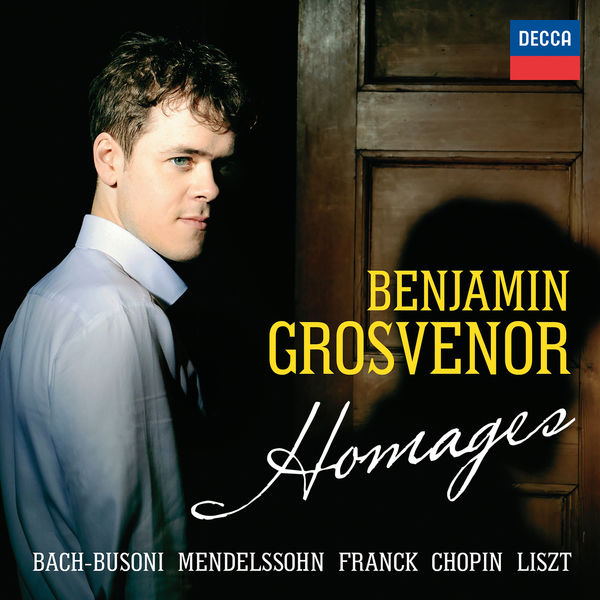
Benjamin Grosvenor Homages (24/96) Decca 2016

Grosvenor likes albums mixing several composers around a theme. His last album was called Dances, now we’re talking about Homages.

And we start strongly, with Busoni’s piano setting of the famous Chaconne from Bach’s suites for solo violin. This is rather rarely played, which is a pity, as for once a transcription actually adds something (more often than not, they do not work that well for me). You really get the full bandwidth of this beautiful piece, and the outstanding beauty of Milstein’s legendary interpretation comes to mind, while Busoni’s fireworks around the well known melody really works. This sounds almost like Brahms (who by the way also transcribed the Chaconne, but into a version for left hand only), or actually even occasionally like Rachmaninov. A true showpiece, but without any negative connotation that is usually associated with this term.

From this grandiose opening, we move to another rather unfamiliar music, Mendelssohn’s preludes & fuges op. 35. Mendelssohn was essential for the “rediscovery” of Bach in his time, and you can hear the spirit of Bach in these little-known, but beautiful gems.

From these Bach homages, we move on to more traditional romantic piano music with Chopin and Liszt, an area where Grosvenor feels very much at home.

The booklet tries to give some story around why Chopin’s beloved Barcarolle and parts of Liszt’ Années de Pélérinage are homages as well. I must admit I don’t care that much, I just love his playing.

The Barcarolle op. 60 is one of my all time favorites from Chopin. I heard it some years ago by Krystian Zimerman live, in what remains my personal reference. However, this interpretaion really stands on its own, and I like it a lot.Liszt’s Venezia e Napoli is also really well played.

He closes off with Ravel, as already in his Decca debut, focusing Le Tombeau de Couperin, where the homage aspect is already evident from the title.

I wonder if Grosvenor ever will record e.g. an entire cycle or work, or if he’ll stick to this kind of “concept” album. I wouldn’t be surprised if he sticks to the latter, which is great, because it gets me to discover music I wouldn’t necessarily have discovered without him.

Keep going!

My rating: 4 stars (to clarify: this is absolutely 5 stars playing, but not always essential repertoire)

You can find it here (Qobuz) or here (Prestoclassical)

Congratulations to Igor Levit and Daniil Trifonov!

A final short note on the Gramphone Awards. We had had some outstanding awards remaining, to be revealed during last night’s award ceremony.

These included:

Album of the Year

Igor Levit Bach Goldberg Variations Beethoven Diabelli Variations Rzewski The People United Will Never Be Defeated Sony 2015

A well deserved victory for Igor Levit. See my five star review here.

Artist of the Year

Rachmaninov Variations Trifonov Nézét-Séguin Philhadelphia Orchestra Deutsche Grammophon 2016

Daniil Trifonov is another of the most exciting pianists of our generation.

Here’s my blog post on his Rachmaninov album.

Young Artist of the Year

Here we got a name that was completely unknown to me, the young German baritone Benjamin Appl. A name to watch I guess. The entire world of the Schubert Lieder is one I’m only just starting to discover.

Lifetime Achievement Award

Christa Ludwig!!! Yes of course! I didn’t even know she was still alive. But I very much treasure many of her great recordings from the 1960s, be it the Verdi Requiem with Giulini, Das Lied von der Erde with Klemperer, Cosi Fan Tutte with Böhm, and obviously the great Fidelio, again with Klemperer.

Congratulations to all the winners!

It’s Gramophone Award Time Again – My Reflections Part I: Concerto

Feeling terribly guilty

Dear readers, I’m really sorry.

I just checked, and my last entry dates back more than a month ago. Shame on me. Lots of reasons, too much travel, too busy, too whatever. Who cares, let’s get back to it, shall we?

Gramophone Awards

Although I’ve recently had quite a number of disagreements with reviews by this venerable magazine, it probably remains the most important source for the entire classical music industry, and winning a Gramophone Award is rather prestigious.

I’ve already started reflecting about them last year, which generated some really interesting discussions here and elsewhere (plus lead me to discover David Watkin’s outstanding Cello Suites), so let’s have a look at who has been nominated this year.

If you want to do the same, best is to get our your tablet, get the Gramophone App, and get the Gramophone Awards issue for free.

As last year, I have no ambition to be exhaustive, I’m just giving my 2 cents on a number of albums that I’ve heard as well.

Concerto

Concerto is usually my favorite category, and the one where I’ve heard the largest number of the recordings.

We have 8 albums nominated this year, 5 of which I’ve heard and can comment on.

Brahms Violin Concerto x 2

We start with two versions of Brahms violin concerto, one coupled with Bartok, the other one with Brahms’ own String Quintet No. 2.

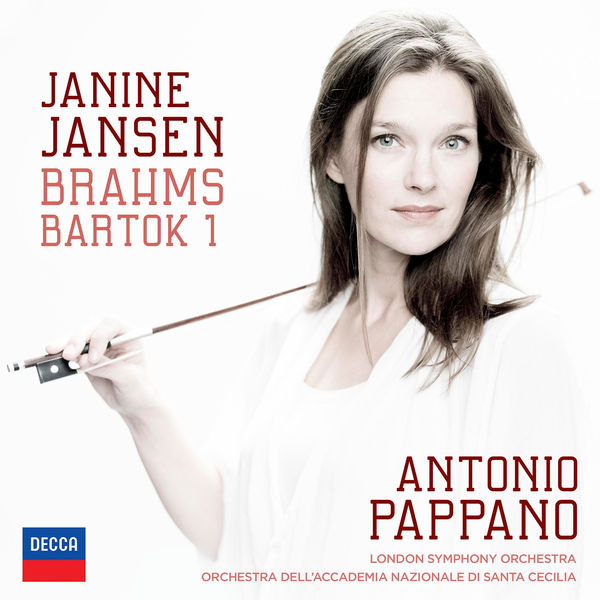
The first one is the new Janine Jansen recording, which I’ve reviewed here. I still fully stand by the 5 stars I’ve given there, and this is an album absolutely worth having in spite of heavy competition.


Janine Jansen Brahms Bartok Violin Concertos Antonio Pappano London Symphony Orchestra Orchestra dell'Accademia Nazionale di Santa Cecilia Decca 2015

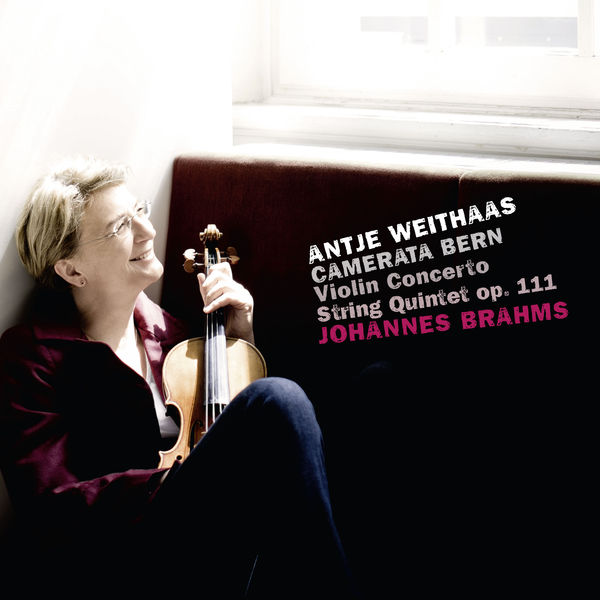
The second Brahms recording is with the less known German violinist Antje Weithaas, with the Camerata Bern.

Brahms Violin Concerto String Quartet No. 2 Antje Weithaas Camerata Bern

I must admit I didn’t expect a lot, as I was pretty disappointed by the recording of Bach’s keyboard concertos with the Camerata Bern (2010  on Universal).

Well, I was positively surprised, up to a point. To be clear: Weithaas really plays exceptionally well.

However, the Camerata Bern is unfortunately no match for Pappano’s Santa Cecilia. They are really the limiting factor on this recording, which becomes especially apparent in the highly energetic third movement.

The string quintet is ok, but a bit heavy. Overall, I’d probably give this 3 stars.

Beethoven’s piano concertos x 2

The next two albums aren’t albums, but DVDs. I don’t have a DVD/Blueray player, and so have no way of reviewing these.

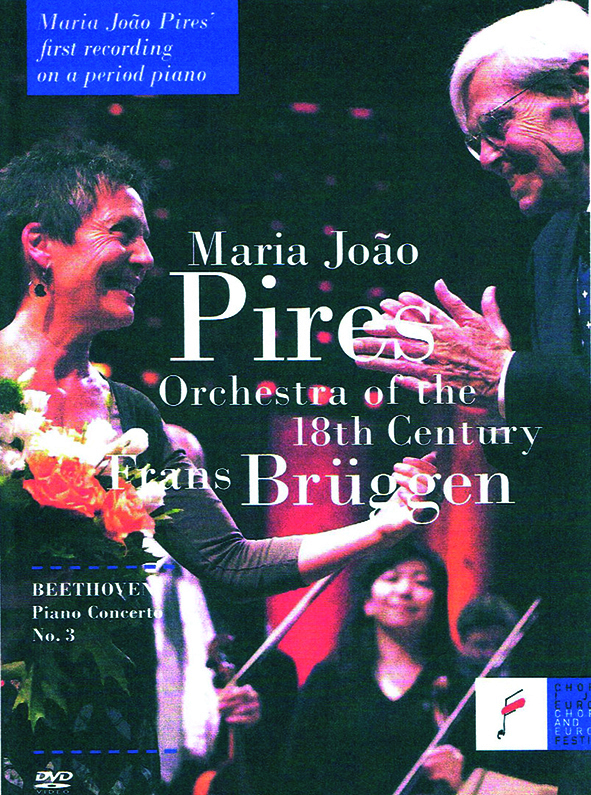
DVD no. 1 is Maria Joao Pires with Frans Brüggen playing Beethoven’s concerto no. 3.

Beethoven Piano Concerto No. 3 Frans Brüggen Orchestra of the 18th Century Maria Joao Pires DVD

There is a snippet on Youtube, and I wasn’t particularly impressed, but one shouldn’t judge from 39 seconds.

Interestingly enough, Pires won already last year with the same concerto but Daniel Harding conducting. Again, didn’t really impress me back then either. But if you’re into DVD’s, you may want to check it out. Just to clarify, I’m a big fan of Pires for a lot of solo recordings (e.g. Chopin, Mozart), but her recent orchestral recordings just aren’t my cup of tea (see also my review of her Schumann recording with Gardiner here).

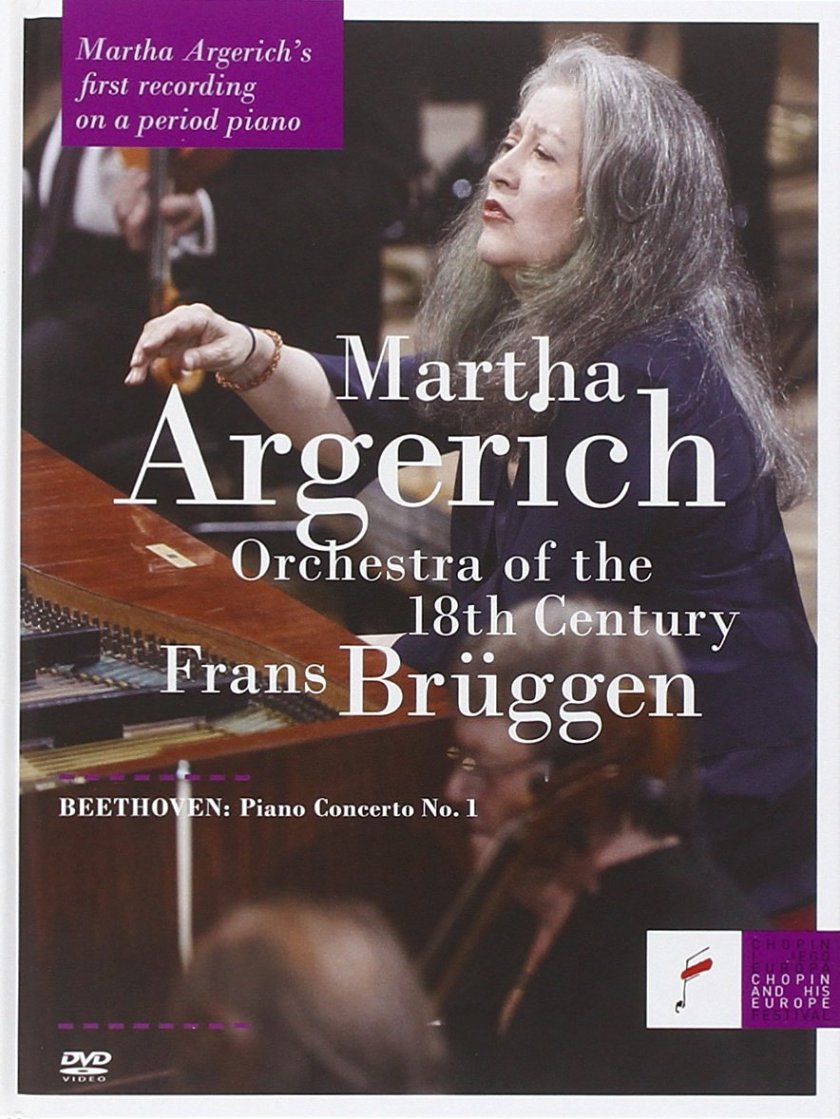
The other DVD, also from Warsaw, again with Frans Brüggen, has one of my absolute piano godesses on the piano, the mighty Martha Argerich.

Beethoven Piano Concerto No. 1 Frans Brüggen Orchestra of the 18th Century Martha Argerich DVD

Here’s the 40 second Youtube snippet:

This is already more to my taste. But again, you simply cannot judge a recording on 40 seconds.

Britten & Korngold by Vilde Frang

Britten/Korngold Violin Concertos James Gaffigan Frankfurt Radio Symphony James Gaffigan

I’m a big Vilde Frang fan, her Sibelius is one of my all time favorites, see here.

Unfortunately, the music on this album really isn’t getting me excited, so I’m not qualified enough to comment about the interpretation.

I must admit I wouldn’t even know Korngold if it weren’t for some old Heifetz albums, and even here, his music that would at moments be rather fitting for the next Star Wars soundtrack doesn’t inspire me very much. OK to listen to once or twice, but nothing I’d consider purchasing.

I can comment even less on the Britten. There is unfortunately only one English composer I really love, Henry Purcell, everything after just isn’t for me.

Rachmaninov by Trifonov

Rachmaninov Variations Trifonov Nézét-Séguin Philhadelphia Orchestra Deutsche Grammophon 2016

Now we’re getting back into my home turf (not physically, obviously, I’m not Russian), but musically speaking.

This is an album I should have reviewed a long time ago, as it is a true 5 star recording.

We start with Nézét-Séguin, who here again is in top form, and with the Paganini Variations. Already an exceptional start.

However, this album shouldn’t actually be in the “Orchestral” section, as the entire rest of the 1:18 are all solo piano.

We’re talking about the Variations On A Theme Of Chopin, Op.22, the Variations On A Theme Of Corelli, Op.42, and some Rachmaniana pieces by Trifonov himself.

The Corelli’s are already great, but my absolute favorite here are the quite rarely played Chopin variations. Amazing, you really get the best of both worlds here, the melodical genius of Chopin together with the romantic virtuoso of Rachmaninov. Absolutely worth having.

My rating: 5 stars

So, my take home messages (or albums) are clearly Jansen and Trifonov. Both are absolutely worth having.

And my prediction for the Gramophone Award winner? The Trifonov.

What do you think? Let me hear!


Update August 18,2016: Gramophone has released the three finalists for the category: Pires’ Beethoven, Frang’s Britten, and Trifonov’s Rachmaninov. So my prediction above (written previously) could still come true.


You can find the albums here:

Brahms/Jansen

Brahms/Weithaas

Beethoven/Pires

Beethoven/Argerich

Korngold & Britten/Frang

Rachmaninov/Trifonov

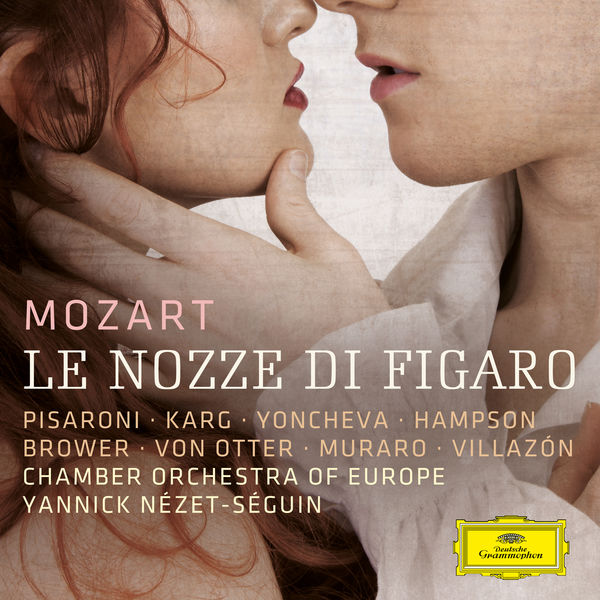
Nézet-Séguin’s Figaro – Nice, but lacking some sparkle

I don’t regularly write about opera, as I don’t really consider myself an opera expert. I come from instrumental music, and tend to judge operas much more on the orchestral performance than on the singers.

But then again, occasionally there are operas I really care about and therefore feel comfortable enough sharing my impression. My favorite opera composer by far is Mozart, and I’ve mentioned Jacobs’ beautiful Idomeneo in My Must Have Mozart Albums

Furthermore, there is one more five star rating opera review, Nézet-Séguin’s Cosi Fan Tutte, recorded live in  Baden-Baden. Cosi is my absolute favorite Mozart opera, closely followed by Le Nozze di Figaro.

So as you can kind of guess, when Nézet-Séguin’s Figaro was very recently released, I clicked buy pretty much instantaneously.

Le Nozze di Figaro – Nézet-Séguin (Deutsche Grammophon 2016)

Mozart: Le Nozze di Figaro - Yannick Nézet-Séguin - Chamber Orchestra of Europe 24/96 Deutsche Grammophon 2016

Maybe I should have used my streaming subscription first.

No, that’s a bit harsh, I don’t expect to regret the purchase. It’s just that after the great Cosi I just expected more. I expect drive, lightness, sparkle! Just what the libretto of this slightly silly story requires.

And what we get here is slightly different. Nothing really wrong, beautiful singers, and the COE plays well, but there is the certain “Je ne sais quoi” missing.

I mean, we have with Thomas Hampson and Sonya Yoncheva a beautiful Almaviva couple.

However, both Pisaroni and Karg convince me a bit less. They sound a bit too much Belcanto, and not enough Mozart, if you know what i mean.

And even Nézet, who usually plays so energetically, just takes a slightly lower, heavier tone here with the COE. Nuances, I admit, but I still rather go back to Jacobs, Erich Kleiber, or James Levine at the Met.

I’m curious to hear if these are only my personal impressions, or if you share them. Please agree or disagree with me in the comments section!

My rating: 4 stars (it is still very much worth owning, may just not be the best out there)

You can find it here (Qobuz) and here (Prestoclassical)

UPDATE Aug 15: Gramophone agrees with me in their September 2016 issue, saying that “the drama slips through his [Nézet-Séguin’s] fingers at some places.

Recommended: Brahms Cello Sonatas by Marie-Elisabeth Hecker

OutThere Music – Alpha Classics

In the old days (i.e. 1980s and previous), you basically had a number of big guys in the classical music industry, Deutsche Grammophon, Philips, RCA, Decca. Minor labels didn’t play such a big role, as most of the important artists were all signed to one of these major labels.

These days, while the big guys are still around (as brands that are part of large conglomerates), the smaller labels really strive.

BIS, Chandos, Hyperion, Harmonia Mundi, all of the really produce excellent classical albums, and if you were to check my 4 and 5 star recommendations on this site, I bet (but haven’t checked) that the independents probably outweigh the former majors by 2:1 at least.

Alpha Classics, now part of the Belgian/French OutThere Music, is one of those labels, that produces an outstanding number of great recordings, featuring great artist like Céline Frisch (see my review of her Well-Tempered Clavier here), Nelson Goerner, Alexis Kossenko’s Les Ambassadors (see my review of their Telemann album here), or Café Zimmermann (review of their Bach albums coming up).

One more strong point about most of these labels is that they do care about the sound quality of the recordings, which is not always guaranteed with the majors, who often tend to “over”-produce a recording.

Brahms’ Cello Sonatas

Brahms two cello sonatas were the first work of chamber music I ever owned by Brahms. I was lucky and started with a very nice version, with Leonard Rose on cello and Jean-Bernard Pommier on piano.

Since then, the cello sonatas have always been around, and I’ve constantly been on the lookout for the “perfect version”. On the way, I collected at least a dozen of versions, my most recent additions (both good) are Torleif Thédeen and Roland Pötinen on BIS and Ophelie Gaillard and Louis Schwizgebel-Wang on Aparté Music (note that both are independent labels…)

But to quote U2, I still haven’t found what I’m looking for.

Until now, at least for sonata no. 2.

Brahms Cello Sonatas – Marie-Elisabeth Hecker – Martin Heimchen (Alpha Classics 2016)

I had already started listening to this album briefly, as my streaming provider of choice, Qobuz, has a list of recommendations, where this album popped up.

Brahms Cello Sonatas Marie-Elisabeth Hecker Martin Heimchen Alpha Classics 2016 24 96

Being the Brahms fan I am (see my blog title), I obviously went to check it out.

I was pleased by what I heard in the first two movements of sonata no. 1, but not blown away. Well played, but not so different from many other recordings I’ve heard. So I got distracted and never got to the end of the album. Big mistake.

The July issue of my favorite classical music magazine, Classica, just came out, and had the album as a “Choc”. Usually, our tastes match quite well, so I gave it another virtual spin on Qobuz.

And guess what, once I got to the F-major sonata, I was blown away. In spite of being the later of the two sonatas (by approximately 20 years), this one is the much more passionate one.

And here finally you get all the passion I’ve always been waiting for. Hecker (winner of the famous Rostropovich award in 2005) and Helmchen (Concours Clara Haskil 2001) just play with so much energy, it just sucks you in.

Therefore, sonata no. 2 is the true highlight of this album for me, while the search continues for the e-minor sonata.

Nevertheless:

My rating: 5 stars (worth it for the 2nd sonata!)

You can find it here (Qobuz) and here (Prostudiomasters)

Argerich vs. Angelich – Liszt’s B-Minor Sonata

Gramophone

The new July issue of Gramophone appeared rather early on my iPad (I’m not into paper subscriptions any more).

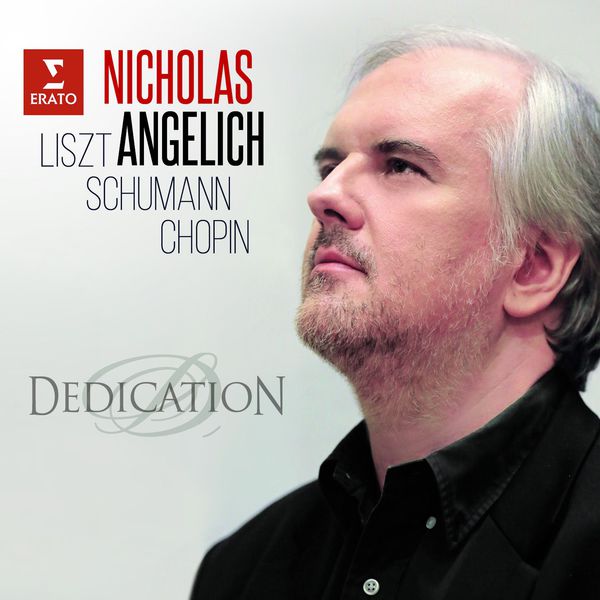
As usual, impatient that I am, I jump immediately to the Editor’s Choices, starting with the Recording of the Month. This time, Nicolas Angelich recent Dedication Liszt/Schumann/Chopin album. Cool, I think to myself, another great recording to check out of Liszt’s b-minor sonata.

Liszt’s b-minor sonata

I’m not a huge fan of Liszt in general (too much, especially his orchestral works). But there are certain works I really like, including most of all his great b-minor sonata.

My favorite version by the way is Michael Pletnev’s recording on DG by the way (maybe to be reviewed at some point in the future).

In any case, I must admit, I didn’t really even get to listen to the entire Angelich album, I stopped about 5 minutes into the b-minor sonata. I was really stunned. Liszt was supposed to be the greatest virtuoso of his time, and this version, well, let’s just say, it didn’t touch me at all.

To be fair, my taste may not be universal, as I really liked Katia Buniatishvili’s recording on Sony, which was anything if not controversial, to say the least (some just hated it, stating is was too much…).

But again, this post won’t be about Angelich (which I have yet to properly listen to beyond my 5 minute trial) nor about Pletnev or Buniatishvili, but about one of the greatest pianists  of all times:

Martha Argerich

Yes, the fiery Argentine pianist. She has a very particular sound and style (in a blind test on Swiss radio, two experts blindly identified her vs another artist on 5 out of 5 different pieces, and even I got 3 out of 5), and once you’ve heard her, you’ll never forget her.

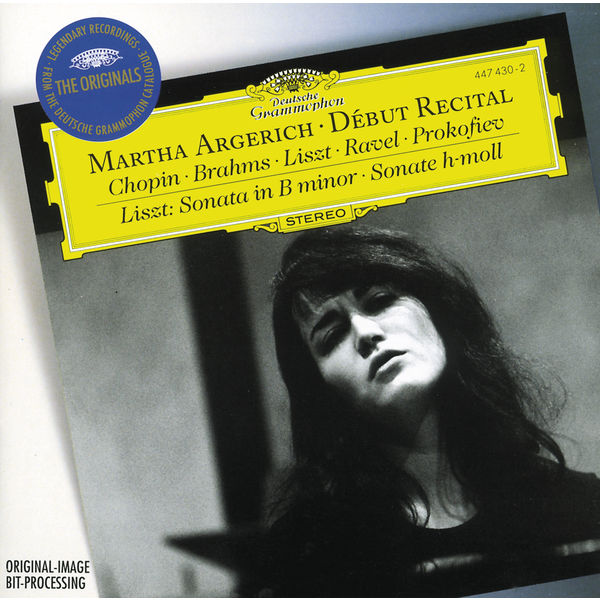
So I recently found myself buying her legendary debut album, remastered and released as a 24/96 download (I had bought in on CD ages ago, but hadn’t listened to it regularly enough).

Martha Argerich: Debut Recital (DG)

Martha Argerich Debut Recital Deutsche Gramophon 24 96

Wow.

Somehow, the Chopin competition really means something. Look at the winners, Pollini, Blechacz (see here), Yundi, and Argerich! (well, this year seems to be a bit of an outlier, see my comment here). Basically she was a pure genius from day one.

Her Chopin barcarolle, so beautiful. And the Scherzo no. 3, my favorite! Her Brahms is ok, not outstanding, but when we get to Liszt, all hell breaks loose! Already the Hungarian Rhapsody is full of fire and energy, her trademark, but go to b-minor, and check out every savory moment, from the quiet introvert moments to the amazing prestissimo (track 17).

If this leaves you bored, you’re probably deaf.

And now go back to your streaming provider of choice and check out the Angelich against it, and I guess you’ll understand what I mean.

My rating: 5 stars plus!

You can find it here (Qobuz) and here (Prostudiomasters)

Note that getting the 24/96 remaster is not necessarily a must, unfortunately the original recording was already rather poor, and even the remaster still sounds rather like a shoe box.


UPDATE June 11: Another word about the Angelich recording that I browsed over a little bit superficially above.

The Angelich album not only got high praises from Gramophone as mentioned above, but also a Choc from Classica magazine, and this recording of the b-minor sonata was just selected in their June 2017 issue as best version in a blind test comparing 10 recordings out of the ones released in the last 20 years.

Nicholas Angelich Liszt Schumann Chopin Dedication Erato 2017

Triggered by this I listened again to Angelich. Well, to be fair, it is a good recording. However, I still prefer much more the more extreme versions like Argerich, Bunatishvili, etc. For me, this extreme work requires extreme playing. I find the Angelich a bit too “middle of the road”. But given that several reviewers I really respect disagree with me, you have to check it out.

Pachelbel: Beyond the Canon with Amandine Beyer

Johann Pachelbel

Do you know Pachelbel? Sure you do. Like probably most of the population of the Western world, from his famous Canon and Gigue in D, as the Canon is one of the most popular pieces played at weddings (and by street musicians).

Now do you know anything else from Pachelbel? Well, I must admit, I really didn’t. In my entire classical music library, I have the sad number of 15 tracks from this composer, pretty much entirely on some Baroque compilations.

So I was curious when Amandine Beyer with her ensemble Gli Incognito recently released an entire Pachelbel album.

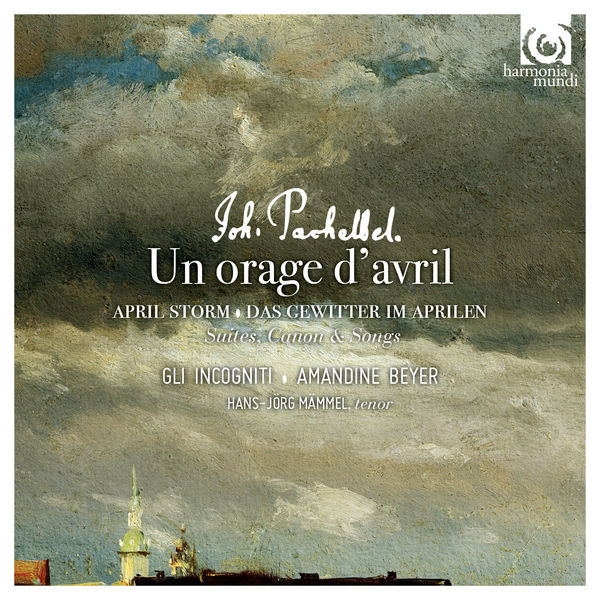
Pachelbel: Un Orage d’Avril (Harmonia Mundi 2016)

Pachelbel: Un orage d'avril - Amandine Beyer - Gli Incogniti - Hans-Jörg Bammel Harmonia Mundi 2016

Well, I was positively surprised. This is mainly instrumental baroque musique, with the occasional song (beautifully performed by tenor Hans-Jörg Mammel) thrown in.

Let’s admit it, baroque music  can be boring. Sometimes it is just a bit too repetitive, to formalized, too much of the same (e.g. quite a bit of Vivaldi’s massive oeuvre IMHO). So it usually takes a genius like Bach to break out of the conventions of baroque music to really make it interesting (and even he doesn’t always succeed).

And obviously, Pachelbel is no Bach, probably not even a Vivaldi. That said, I still think there is enough to discover on this album that I highly recommend you to check it out.

A brief comment on Amandine Beyer: I sometimes find the sound of her violin a bit too “rough” for my taste (e.g. on her celebrated recording of the Four Seasons) This is nicely enough not the case here, the album is quite well recorded.

Give it a try!

My rating: 4 stars

You can find it here (Qobuz) and here (Prestoclassical)

Classical Life

A classical music blog by music critic Tim Mangan

This Week's Music

Making Classical Accessible

From my Macbook to the Net

Evaporation of my thoughts and observations

Elestra

Author: Artienne

My Life in Music

Playing, Singing and Listening

ArsX3

A brand new journal reviewing books, cinema, music

LawrenceEz's Blog

Creative and Performing Arts: Writing, Classical Music, Photography

Laetitia Strauch-Bonart

Contemporary Politics & Culture

sibling revelry

reveling in all things classical

It's A Raggy Waltz

I collect jazz on vinyl, I dig the Dave Brubeck Quartet, & I write about it

La Musica

By two cousins

thejazzbreakfast

Dishing it out from the heart of England

only jazz

random thoughts about music that matters to me

The Culture Project

Exploring the world of literature, wine, art, music and more.

René Spencer Saller

The music causes me to dream of fabulous empires, filled with fabulous sins.

Breaking Baroque

Blog of Tafelmusik Baroque Orchestra and Chamber Choir

Tasting Nirvana

Eating your Dosha

The Immortal Jukebox

A Blog about Music and Popular Culture

April Greene

Writer + Editor

a pianist's musings

A history of your favorite classical music.

Classical music for all

Boris Giltburg's blog

I HEAR VOICES

An orchestra seat in the web space