Writing About and Reviewing Classical Music and Jazz
Category: *****
The rare bird – exceptional albums that are a must have IMHO. I try to be rather selective about giving 5 stars, less than 10% of my personal album collection fall in this category.
I’ve mentioned Giovanni Mirabassi already in my 25 essential Jazz albums. I consider him one of the best contemporary Jazz pianists.
Unfortunately his masterpiece Architectures is a bit hard to get these days as the rights were sold to a Japanese label.
Terra Furiosa (Discograph/Minimum 2008)
Luckily he has done other recordings that are much easier to purchase, like this 2008 recording, Terra Furiosa.
On bass, we have Gianluca Renzi who still plays with Mirabassi today, and the American drummer Leon Parker.
On this album, you clearly hear the influences of the late Bill Evans style, and also Enrico Pieranunzi. That said, he’s made something very personal out of all this, already given that he essentially plays only his own compositions.
My favorite songs is Last Minutes, where Gianluca Renzi gets some time for a beautiful bass intro, turning into a samba-like rhythm when Parker kicks in.
But even beyond this song, you’ll find stunning melodies, seamless interplay between three outstanding musicians. The music never stops evolving, and while the album remains in a certain mood most of the time, there is never any feeling of boredom at all, there just too much going on.
If reading the blog post title you wonder what the connection is between a 1990s Eurythmics title, Mozart, and some sisters called Weber, let me explain.
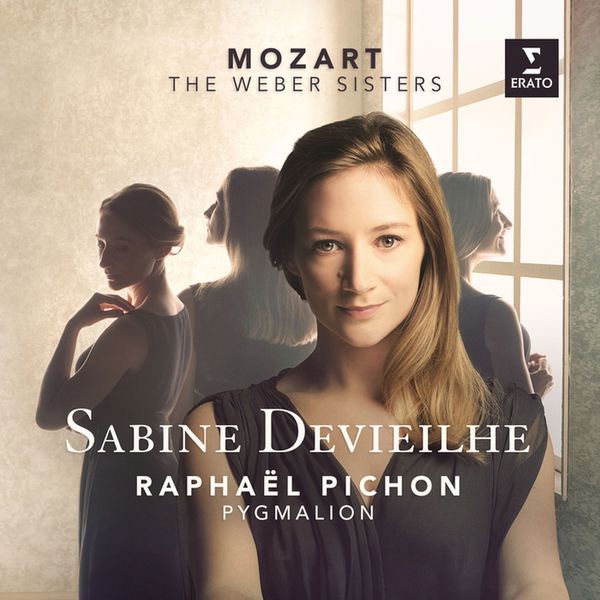
The angel is simply referring to Sabine Devieilhe, the young soprano on the album I’m about to write about. Not only she looks pretty much like one (see the cover photo below), she really has an angelic voice. Clear, bright, shiny, with a beautiful color and an amazing range.
I first noticed her in her debut recording on Erato, with Alexis Kossenko (previously mentioned for his Telemann recording here), Le Grand Théatre de l’Amour dedicated to Jean-Philippe Rameau.
Mozart: The Weber Sisters (Erato 2015)
This is Sabine Devileilhe’s second album on Erato, recorded this time with Raphaël Pichon’s ensemble Pygmalion.
I hesitated for quite some time to write about his album as I’m generally not a big fan of “best-of” type albums. I don’t mind them for baroque music as much, as it can be sometimes a bit tedious to go through 3+ hours of an opera seria, but for Mozart and beyond I prefer to listen to the entire opera instead. However, the selection on this particular album includes quite a number of single arias that are not part of a larger opera and are not recorded that often.
Let me briefly explain the Weber Sisters title of his album, as this is kind of a concept album. The most famous Weber sister is Constanze, Mozart’s wife, but actually Mozart was a close friend of the Weber family and as the booklet extensively explains, was at some point in love with the youngest sister, Aloysia, and the middle sister, Josepha, also played an important role in his life.
What music do you get? Well known hits like the famous Queen of the Night aria, or the French song Ah vous dirais-je maman, but also as mentioned previously several lesser known arias. All this is beautifully player by Raphaël Pichon’s ensemble, and Devileilhe’s voice is an absolute pleasure to hear.
This albums was elected among the albums of the year by Classica magazine, and I fully agree that his album is highly recommended.
In my previous post on Tchaikovsky’s symphony no. 5 I’ve stated that I don’t like Tchaikovsky very much. However, I must admit he really did some magical (and not in the Disney sense of the word) melodies in his ballets.
Western Christmas traditions now include regular performances of the Nutcracker. The story was originally a German fairy tale of a prince turned into a nutcracker, by E.T.A Hoffmann, later adapted by Alexandre Dumas. Tchaikovsky conducted the premiere in 1892, and both the ballet and the “best-of” excerpt, the suites, are these days among the most famous of his works.
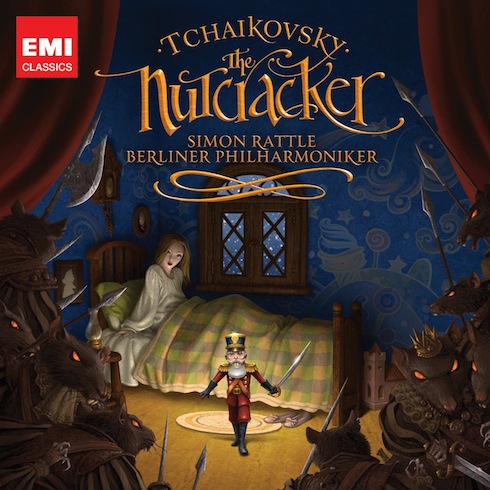
Tchaikovsky: The Nutcracker – Simon Rattle – Berliner Philharmoniker (EMI Classics 2010)
My first version was the legendary one by André Previn with the London Symphony Orchestra (also on EMI). That version is still very nice, so I didn’t look for a new recording for years (I basically listen to this work literally once or twice per year, usually some time in December).
However, two years ago I heard about this relatively new (2010) recording by Rattle on the radio, and I checked it out and I really liked it. Beautiful orchestral colors by the great BPO, and most importantly all the energy that this music really needs (I’m anything but a dancer, but this music makes me want to get up from my sofa and move to it).
You’ll find some excerpts of the recording here, with a nice interview with Sir Simon Rattle and some BPO musicians:
Note that some people say that Russian music can only be played well by Russian conductors, and indeed Gergiev did a great job on his Decca recording with the Kirov orchestra from the 1990s.
But still, Rattle did such a fine version that I doubt I’ll ever buy another Nutcracker again (well, never say never).
My rating: 5 stars
You can buy the CD here, I haven’t found a decent lossless download source.
First of all, to my subscribers, you may have been surprised not to see a post yesterday. This indeed has been the first time since I started this blog nearly 6 month ago that I didn’t post anything on my regular schedule of every 2-3 days. I unfortunately had a health issue in the family. I’ll really target to get fully back on schedule with posts appearing at least every 3 days.
Second, to the Jazz fans among my readers, hope you don’t get bored, my blog has been rather focused on classical music for the last posts. I’m working on getting back to Jazz ASAP.
But well, one more on classical music.
This one was triggered by my mother in law, suggesting I should write about Lang Lang’s latest album. When I spoke to her, I mentioned that I hadn’t heard it yet, but wasn’t a big fan of Lang Lang in general. Her answer was, “So why don’t you compare it to something you like better?”.
Well, here we go.
“Hyped* classical music artists
Every once in a while there are musicians out there, that, usually helped either by YouTube (e.g. Valeria Lisitsa) or by the label (remember Vanessa Mae?) that are rather well-known even to a non classical audience, and have a certain pop-star following. Sometimes (e.g. Jonas Kaufmann) the hype is correlated with quality, more often than not, I find the correlation between fame and quality in classical music to be not very strong.
Lang Lang is a typical example. He’s probably today’s best known pianists (don’t have any data to back this up unfortunately). And as I said to my mother-in-law above, I have yet to hear a Lang Lang album I really like.
But thanks to my streaming subscription I could simply check the latest album out and make up my own mind.
The Chopin Scherzi
A word of introduction on the music: the album consists of the four Chopin Scherzi, and Tchaikovsky’s The Seasons for piano. I’m not very familiar with the latter, so I’m not going to comment on the performance.
However, I just love the Scherzi. There is an entire world in the 6-12 minutes of each one, and they are among my absolute favorite piano pieces by Chopin.
So my expectations were rather high. And I’m sorry to say I was disappointed.
No. 1 was just too nervous, to ADHD (my wife told me to switch albums when we listened to it together).
No. 2 is nicely flowing at the beginning, but getting a bit quirky over time, and again too nervous in the fast parts.
No. 3 is probably the best of the four, a bit too much still, but quite enjoyable nevertheless.
The worst was probably no. 4, just too much forte all over the place, and just too slow for my taste.
Benjamin Grosvenor
Now, as suggested by my wise mother-in-law, let me write about my recommended alternative.
And actually another form of “hype”, albeit at a smaller scale.
Benjamin Grosvenor at the tender age of 24 has won more awards already than others in a lifetime. He was Gramophone’s youngest-ever double award winner, and the rest of the British (and partially international) press went just as crazy about him.
So how’s the hype working out here?
Well actually, I’m a HUGE fan. His Chopin Liszt Ravel album, which features all 4 Scherzi, is just outstanding, and his more recent release Dances was not far behind in terms of quality (I mentioned it my comments about the 2015 Gramophone awards here).
There are obviously other outstanding versions of the Scherzi out there (Argerich for no. 3, Rubinstein, and the best I’ve heard was Kristin Zimerman for no. 2 in a live concert), but the recording here is pretty close to perfect.
My rating: 3 stars (Lang Lang) vs. 5 stars (Grosvenor)
You can find the Lang Lang here (Qobuz) if you really insist, and the Grosvenor here (Qobuz) and here (Prestoclassical).
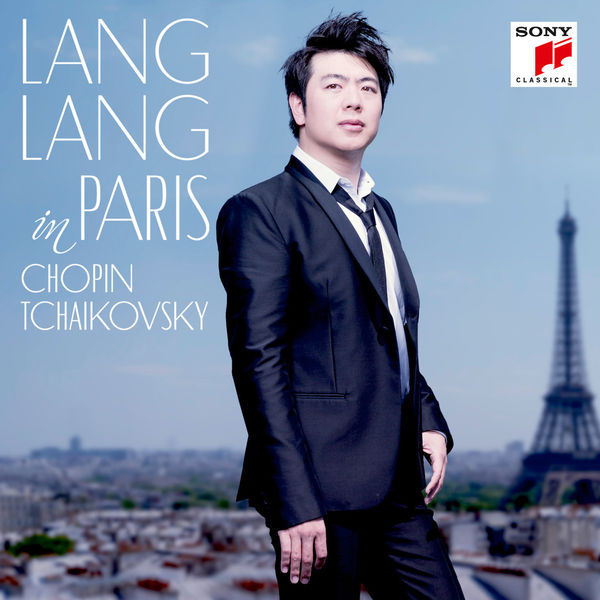
The official “making of” of the Lang Lang in Paris album here:
I’ve already mentioned previously that I’m far less knowledgeable about opera than about instrumental classical music. I clearly come from an instrumental background, and must admit I judge even opera performances first and foremost by the orchestral performance.
I know true opera experts will be able to discuss singer X vs Y. To me, these things matter, but much less. So take my opera recommendations with a big grain of salt.
Furthermore, Verdi is not my daily fare. I listen to a Mozart opera about once per month, Verdi is only on the playlist every quarter or so.
Okay, so the disclaimers are out of the way.
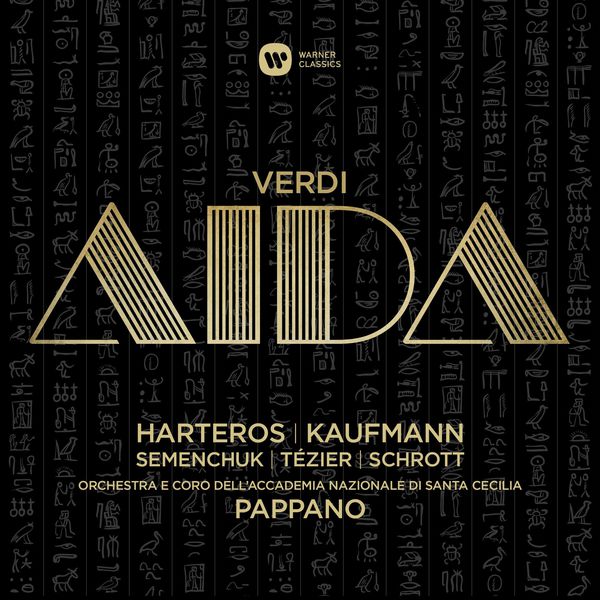
Pappano’s Aida (Warner Classics 2015)
Well, luckily on this album you don’t just need to trust me. I have yet to see a negative review of this outstanding album. The debate is just out whether this is a four or five-star album.
New opera recordings these days are very rare. The productions are simply to expensive for a declining classical music market. So we can count ourselves very lucky if we get new albums at all.
And here we’re even more lucky, because this really hits all the right buttons. Beautiful singing from outstanding artists is matched by the great playing of Pappano with the Santa Cecilia.
Kaufmann is in a way the most hyped tenor of our days. Luckily for us, this hype really is justified, he has an amazing voice. I fully buy his Radomes. Anja Harteros as Aida is maybe a tiny bit lighter, but to be fair my reference so far is the legendary Karajan version with Tebaldi, so I’m being a bit picky here.
The recording quality is very spacious and resolving, and gives an excellent image of the Sala Santa Cecilia.
If only we’d get more of this kind of opera recordings, so we wouldn’t always have to go back to the 1950s and 60s for our operas. Sure, these legendary recordings will stay, but it is nice to be able to experience something with the sound quality of a 2015 high-res download.
My rating: Five stars
You can download it here (Qobuz) or here (HDtracks)
The classical music scene, like all other entertainment industries, likes hypes. Quite often those are a bit fabricated, and at a closer look tend to disappoint (sorry, Lang Lang), or their presence in the limelight is very short-lived just to be replaced by the next wunderkind. And I’m afraid, the big classical labels have their share of the blame (well, they have to sell their stuff, too).
That said, in this long list of young stars and starlets, every once in a while you’ll find a true artist. I’ve already written about Rafal Blechacz and Benjamin Grosvenor, both of which will end up in the pantheon of the best pianists of the 21st century, I’m willing to be a lot of money on that.
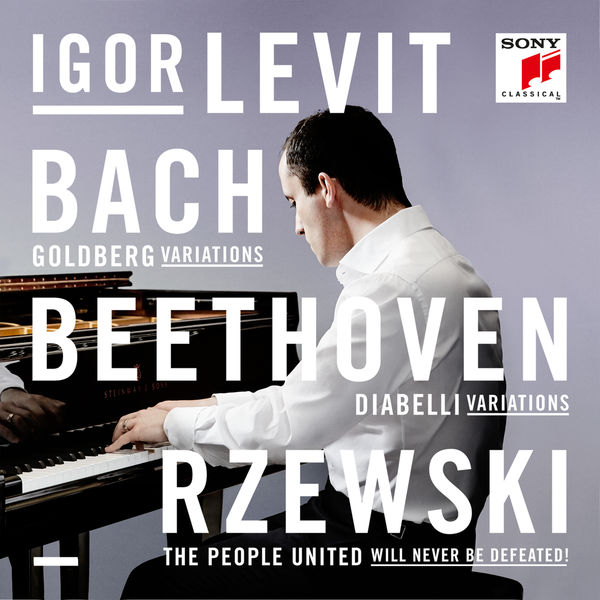
Igor Levit
My third name in the triumvirate of 21st century giants is Igor Levit. I’ve already praised his outstanding partitas here, and his first album, the late Beethoven sonatas, is also exceptional.
Levit was born in Russia but moved at the age of 8 to Hanover, Germany, where he lives to this day (why somebody would stay in what is probably the dullest city in Germany escapes me, but at least nothing there distracts him from practicing, which is good for the rest of us).
He has now released his third album, a massive 3 CD affair (or what used to be 3 CDs in the pre-download area). It takes some guts to start your recording career on nothing less than Beethoven’s late piano sonatas at the age of 26. Well, with his latest release, he doesn’t attack only one, but two of the absolute summits of the piano repertoire, the Goldberg AND the Diabelli variations. So will he lose his breath in this Himalaya?
Goldberg and Diabelli
I’ve already shared my preference on both (see here for the Goldberg’s and here for the Diabelli’s), so how does Levit compare to Hantaï, Schiff, and Staier?
Well, let’s make it quick: this is yet another outstanding album. His Goldberg’s are really among the best I’ve ever heard on modern piano. All you Gould lovers out there, check this out! Really. You may miss Glenn’s humming, but honestly there is nothing else to miss here.
Levit plays with astonishing precision, but at the same time you just hear every note is just there, just at the right moment, with just the right weight. This immediately becomes my go-to version on modern piano (although I still prefer harpsichord here, so will remain loyal to Hantaï nevertheless).
Again, what wins me over immediately is the precision and timing. And don’t get me wrong, just because I mention precision so much doesn’t mean this is heartless robot playing. To the contrary.
Just to quote some examples: On the slow variations 14 and 20, time just seems to stop. For a moment you are in a different time and space. Absolutely absorbing.
Or take variation 21. moving from fast to slow all the time, which on some recordings can make you feel a bit sea-sick. Not here, any tempo change just comes along completely natural.
You get a glimpse of his virtuosity in the breathtaking speed of variation 27. But Levit is anything but your classical virtuoso, he uses his outstanding technical capabilities only for purely musical purposes, never to impress (although I’d be very curious to hear Levit eventually moving away from Bach and Beethoven and attack Rachmaninov et al, unfortunately he’s already said he doesn’t want to play Chopin as Blechacz does it so well).
I’m not going to comment on the Rzewski, I’m just completely incompetent to add any meaningful comment to any music that goes beyond traditional tonality. That said, this piece has enough moments that make me want to listen to more, which is more that I can say about a lot of other 21st century classical music.
So, overall, yet another absolute must have album from Levit.
My rating: 5 stars
UPDATE Nov 6, 2015: Gramophone agrees with me and gives this album a “Recording of the Month”.
UPDATE Nov 29: My other preferred classical review magazine, Classica, is also pleased and gives this recording 4 stars.
You can get it here (Qobuz) and here (Prestoclassical)
Another post on Chopin? Why not, given that the Chopin competition in Warsaw is going on right now, and I’ve mentioned in my previous post on the Préludes how important this competition is.
The Nocturnes
Furthermore, I’ve just had an interesting discussion on the Nocturnes on a forum, which triggered me to listen to several of my Nocturnes again.
The Nocturnes actually are not one single opus, they are individual or coupled words Chopin wrote over nearly 20 years. They share however a common character, not surprisingly, nocturnal.
Chopin is the name everybody associates with this “genre” these days, but actually other composers (e.g. the Irishman John Fields) have used this title previously.
They are less focused on virtuosity and glamour, but are much more intimate. So you don’t need all the pianistic firepower to shine here, you need delicacy and insight.
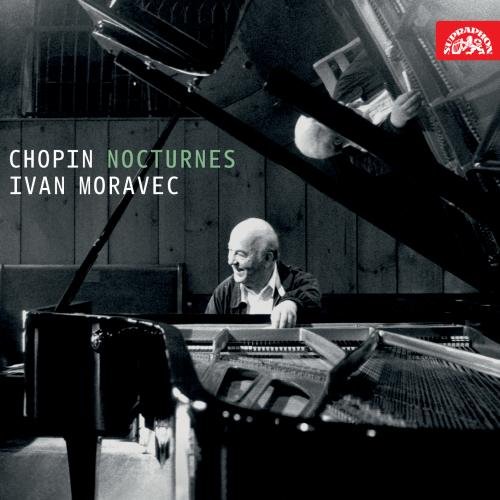
Moravec
The are many good recordings out there. Rubinstein has recorded them at least 3 times (my preferred version dates from the 1930s), the Chopin legend Samson François has done a version, Claudio Arrau, Nelson Freire, and many others are worth considering.
However, my personal favorites are Ivan Moravec and Maria Joao Pires.
Moravec’s Nocturnes are legendary, are rightfully so. I’ve never heard the Nocturnes played with more intensity and emotion. The recording is from the 1960s with only average sound quality but you’ll quickly for get that listening to this album. Just outstanding.
I haven’t been very friendly to Pires in my recent review of her album with Gardiner, but there is absolutely no fault to be found with this recording. Less intense then Moravec, but even more intimate. You feel like you’re sitting at home late at night in front of your fireplace, having a nice glass of wine in your hand, and she’s in the room playing just for you. This is the image that ever always comes up when I listen to her version.
I wouldn’t want to miss either one of these two outstanding recordings. My rating for both albums: 5 stars
You can find the remastered Moravec here (Prestoclassical).




 musicophilesblog - From Keith Jarrett to Johannes Brahms