Rafal Blechacz’ Magnificent Chopin Préludes

The Chopin Piano Competition

It feels like these days there are so many competitions out there for young musicians. One one hand, that is a good thing, increasing their exposure, on the other hand it is hard for the outside to judge the quality of the different competitions.

Well, there is one competition that clearly has proven its relevance over time, the Chopin Piano competition in Warsaw. First of all it is only held every five years. Furthermore, it’s been around for nearly a century. Several times, the jury was critical enough not go give a first price.

And then, most importantly, are the winners. What is the common ground between Maurizio Pollini, Martha Argerich, Krystian Zimerman, and Yundi Li, beyond the fact that they are all recognized world-class artists today? Well you’ve guessed it.

In 2005, after Krystian Zimerman, another Pole won this competition (you probably know that Chopin, in spite of his French name, was Polish by origin), Rafal Blechacz.

I have added below a link to a Youtube video from Polish television of the recital of the winner. I suggest you ignore the poor image and sound quality and skip the introduction, and go directly to the music. Amazing isn’t it?

(Update Jan 31, 2016: see also my blog post on the winner of the 2015 competition, Song-Jin Cho here)

Rafal Blechacz

I’ve had the pleasure of seeing Blechacz live two years ago, he still looks rather shy and is not your flashy Lang Lang-style virtuoso at first sight. But then he sits down at the piano and you cannot be but amazed but how beautiful he plays.

Chopin’s Préludes

Chopin’s préludes, especially op. 28, are among his most famous works. And in my opinion, they are among the most beautiful pieces for piano ever written. Don’t get me wrong, Beethoven sonatas are amazing, Schubert’s late works are very beautiful, etc. But there is a certain intensity in the Preludes that makes them very special to me.

Obviously, they’ve been recorded many times, both Argerich and Pollini, Blechacz predecessors in Warsaw, have done excellent versions. You also wouldn’t go wrong with Rubinstein (obviously) or Chopin Complete The Preludes Rafal Blechacz Deutsche Grammophon

But my favorite these days is Rafal Blechacz recording on Deutsche Grammophon. Particularly beautiful are no. 13 in F sharp minor, and the Raindrops no. 15 is so delicately played it really reminds you of a light summer drizzle.

My rating: 5 stars

You can find it here (Prestoclassical), both physically and as download.

And as promised above, the Polish TV show on the winning recital at the 2005 Warsaw competition.
A Follow-Up on Grieg’s Piano Concerto – Andsnes Still Wins

Disques en lice

I’ve mentioned several times that Swiss radio has two great shows, one in German, one in French, that both have the same approach, select 5-6 versions of a classical work, get 2-3 experts and a  moderator in a radio studio, and have the experts compare these versions blindly. The German version is called Diskothek im Zwei, the French version is called Disques en lice.

I follow both regularly. I often don’t agree with the invited experts, but it is a really nice challenge to see if you listen to the same music without knowing who’s playing, you still like it (or maybe like it less if you’re not aware one of your heros is playing).

A similar concept exists with wine (my other passion), and unlike my wife who has a much better nose, I’m only average at blind tastings. Luckily, I usually do better with music.

Grieg’s piano concerto

I’ve already written about Grieg’s piano concerto previously in this post about Javier Perianes recent recording. There I mentioned that my all time favorite is the version with Leif-Ove Andsnes.

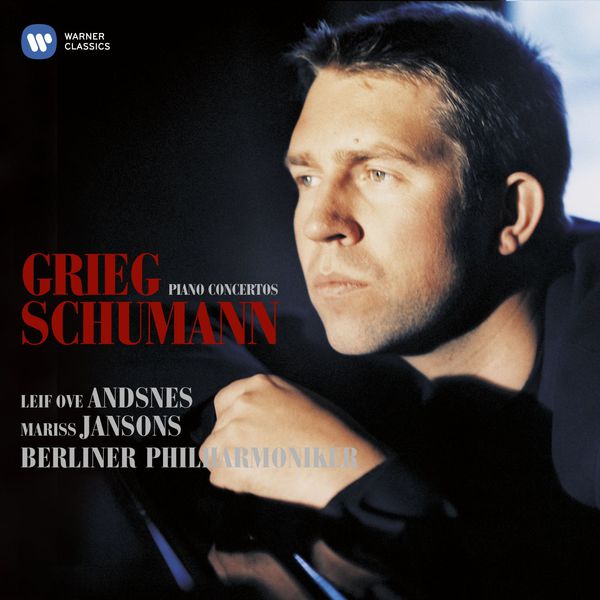
Grieg Schumann Piano Concertos Leif Ove Andsnes Maris Jansons Berliner Philharmoniker

I’m a big Andsnes fan boy, as also documented in my recent commentary about his Beethoven concertos here. So I was really hoping that Disques en lice would include his version, as I wanted to ensure that I still like the version when actually I don’t know it’s him. Luckily for me they did (link to the show here).

Let me brag a little here (sorry!), but I recognized his version blindly in all three movements, and am still as enthusiastic about it as before! I really don’t know how one could do this concerto any better than Andsnes and Jansons.

The competition included:

  • The very recent Vadym Kholodenko recording on Harmonia Mundi with the Norjan Radion Orkesteri. Well, overall I kind of liked the version but must agree with the experts that the orchestra just isn’t the same level than the others, so this got kicked out after the first round (3 stars)
  • Nikolai Lugansky with Kent Nagano and the DSO Berlin: well, ok, but nothing special. Also got voted out rather rapidly, fine by me (3 stars)

The three versions that made it to the final round (3rd movement) are Andsnes, and these two:

  • Nelson Freire, Rudolf Kempe, with the Munich Philharmonic. Interesting version, the still very young Freire has tons of energy here. Unfortunately I liked the orchestral playing quite a bit less (4 stars overall). Nevertheless, this version convinced one  of the three commenting experts

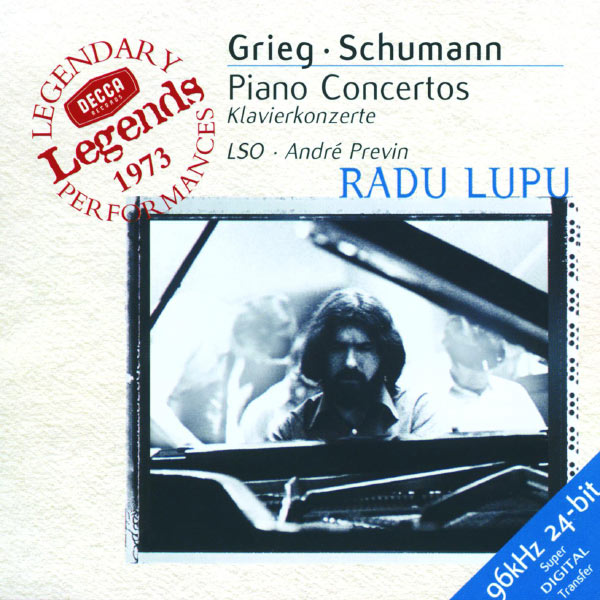
Grieg Schumann Piano Concertos Radu Lupu André Previn, London Symphony Orchestra Decca

  • Radu Lupu, André Previn, London Symphony. This version won for the two other experts. Well, I get what they like, Lupu is obviously doing an outstanding job, and the way they play the 2nd movement is out of this world! Unfortunately, overall this version is just a tad too slow for me, losing too much energy in the process especially in the first movement (still 4 stars though).

Therefore, Andsnes remains my hero for Grieg, and I reconfirm my 5 stars for this album!

The Perianes version from my last post was played at the beginning of the show unfortunately “hors concours”, I still like this recording a lot

And the Moog recording I commented about last time I’ve seen reviewed twice now. Gramophone really loved it, Classica in the latest issue only give it 3 star, in line with my rating.

Bill Evans’ Heritage At Its Best – Enrico Pieranunzi’s Deep Down

Enrico Pieranunzi

When starting this post I was trying to find a good reason why I didn’t mention the brilliant Italian pianist Enrico Pieranunzi in my 25 Essential Jazz albums. Actually, I couldn’t really find one.

Probably the only one that comes to mind that out of the enormous recording legacy that Pieranunzi has done over the years (and he’s still recording) it is really hard to pick a winner, there are so many good albums in his discography.

Obviously, Bill Evans influenced many contemporary pianists. However, his influence is audible even more with Pieranunzi. He certainly doesn’t make a secret out of it, he’s even written a book about Bill Evans, and on the 1986 recording below and many others, he’s even taken on Marc Johnson, the bassist of Evans last trio (see his brilliant playing on Consecration).

That said, don’t think that Pieranunzi is merely a Evans clone, far from that, he is one of the most extraordinary piano players of our times for me.

Deep Down

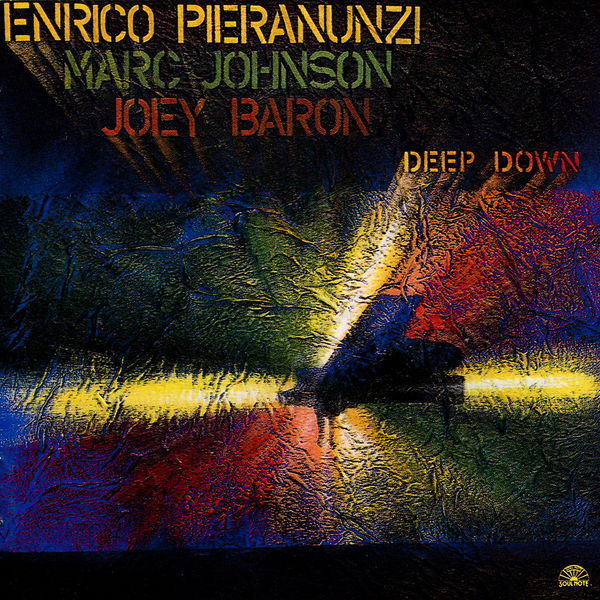
Enrico Pieranunzi Marc Johnson Joey Barron Deep Down 1987 Soul Note

This 1986 album is an excellent example of what I like about Pieranunzi. You get beautiful ballads (We’ll Be Together Again or Atigny), swinging melodies (Dee Song), and one of my most loved standards (Someday My Prince Will Come) in a beautiful, very individual version.

Overall, Pieranunzi will never only record standards, he’ll always contribute his own compositions (4 of the 9 album tracks, with Marc Johnson contributing another original).

My rating: 5 stars (yes I know, again 5 stars, but rest assured, my blog so far just has a very heavy bias to the stuff I really like, it is really not that I’ll fork out 5 stars at every corner).

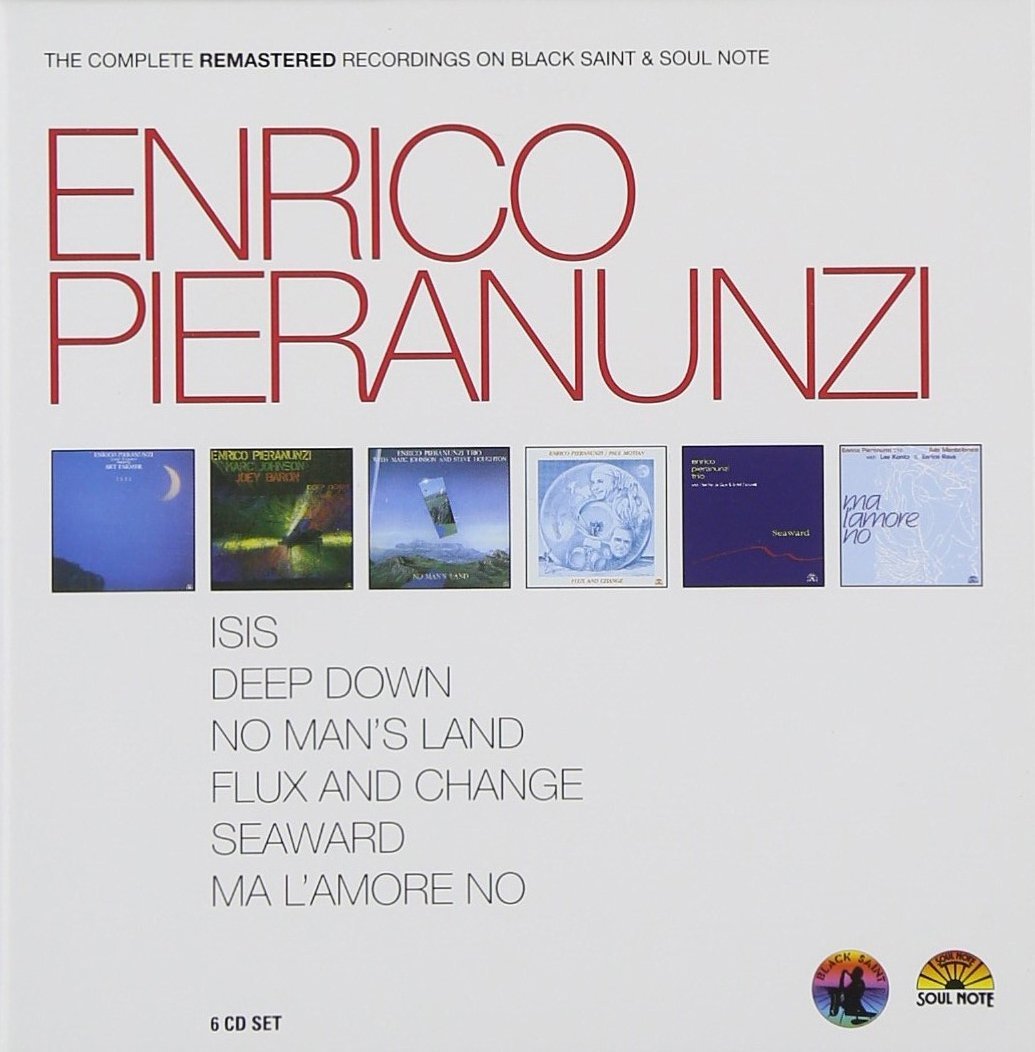
I strongly suggest you don’t limit yourself in the exploration of Pieranunzi to this album, there is so much more to discover. For example, I’d recommend you get this full 6CD box at Amazon, which includes 5 other albums from his earlier period, all good to excellent.

Enrico Pieranunzi The Complete Recordings on Black Saint and Soul Note 6 CD Box

You can also just download the individual album here (Qobuz).

Gramophone’s Artist of the Year, Paavo Järvi, and his Beethoven Symphony no. 4

Paavo Järvi

Maestro Paavo Järvi just got voted Artist of the Year as part of the yearly Gramophone Awards.

As much as I wasn’t totally in agreement with some of Gramophone’s other choices (see my comment here), I fully agree with this readers choice, in fact, I also voted for him.

The son of Neeme (see my review of his Tchaikovsky here) and brother of Kristjan, certainly comes from a very musical family. He’s been recording with a number of orchestras, in Frankfurt, Bremen, Paris and elsewhere, and is producing an enormous amount of recordings. In spite of this quantity, his quality has been consistently very high.

Beethoven’s symphonies

I just noticed I hadn’t written a single post on Beethoven’s symphonies yet. In a way, they are the summit of classical music, that all other composers after him looked up to, and have been recorded and played thousands of times.

So if you still bother to record them in the 21st century, you better have a good reason. And interestingly enough, it is often smaller or lesser known orchestras that really offer a fresh view on things, e.g. Osmo Vänskä’s cycle with the Minnesota Orchestra, or the young Kammerphilharmonie Bremen with Paavo Järvi here. Berlin, Vienna, and NY, you better be on your toes (and Berlin certainly did  a smart and creative choice with Petrenko).

Deutsche Welle has published an excellent documentary on Paavo’s work with the Kammerphilharmonie, which can be found on Youtube (see part 1 at the end of this post).

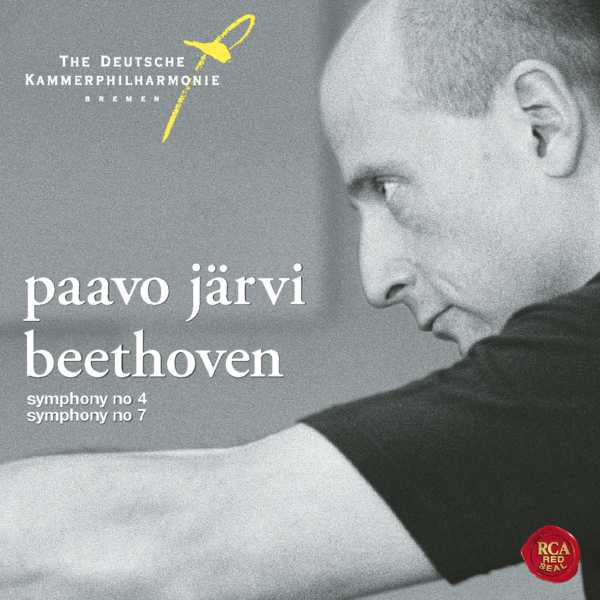
Symphony no. 4 and 7

Beethoven symphonies 4 & 7 - Paavo Järvi - Deutsche Kammerphilhamonie Bremen

Why of all the albums did I pick symphonies no. 4 and 7?

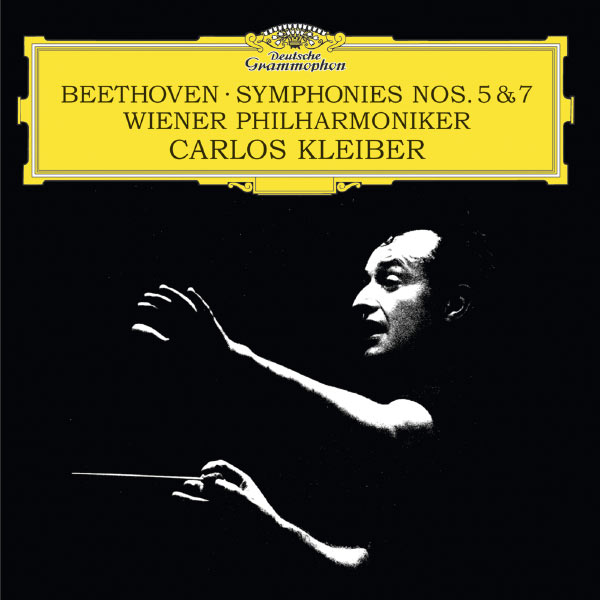
Not not for my beloved symphony no. 7 (my preferred Beethoven symphony). But unfortunately, for this symphony, the definite recording has already been done some time ago, and while Järvi does an excellent job here, he cannot beat the legendary Kleiber version.

Beethoven Symphonies no. 5 and 7 Carlos Kleiber Wiener Philharmoniker Deutsche Grammophon

However, where I really think Järvi does a small miracle is symphony no. 4.

This symphony overall reminds me way to much of Haydn, and sorry to all Haydn fans, but his symphonies just don’t grab my attention enough (disclaimer: his string quartets and cello concertos are a different story. And I’m watching closely the Haydn 2032 project of Giovanni Antonini, that may eventually change my mind about the symphonies).

Big blocks of b-flat major orchestral tuttis all over the place, it is in a very unfortunate place between the monsters of the Eroica and the 5th, kind of the ugly step-child of Beethoven symphonies (the only one I like even less is the 8th).

Now what does Järvi do with this? Two words come to mind: Energy and transparency. This is not a recording that sounds like “Papa Haydn”. This is a recording that will have you sit on the edge of your seat all of the time, eagerly waiting what comes next. There is no moment to breathe, no moment to relax, it is tension, but a very positive one, all the time. This is exactly how this should be played!

Obviously, you can safely check out all other symphonies of the Beethoven cycle as well, you’ll never be disappointed by Järvi and the Kammerphilharmonie.

My rating: 5 stars

As promised above, part 1 of the documentary about Järvi’s Beethoven, you’ll find the three other parts on Youtube as well.

Brahms Sonatas: Another Masterpiece from Faust and Melnikov

Yes I know, I come across a an Isabelle Faust fan boy (see my review of her Brahms concerto here and of her contribution to the Schumann trio here). Well what the heck, I stand by it, she’s great.

And in the fabulous combination with Alexander Melnikov even more. Their Beethoven violin sonatas are my absolute favorite version.

And now they release a Brahms recording! As you have seen from the title of my blog, I’m a big Johannes fan as well. So, expectation were high, high enough for me to even pre-order the album (don’t know why I bother doing this, it’s not that you get it any sooner, and I could otherwise stream the content before making my purchase to check). Well, call it dedication, or silliness.

Brahms Violin Sonatas 2 & 3

Brahms Isabelle Faust Alexander Melnikov Violin Sonatas 2 & 3 Harmonia Mundi 2015

Well, this one’s got tough competition, as my reference version is none less than Szeryng and Rubinstein for op. 108! (to be fair, this was also my first ever recording of the sonatas, so I may be biased.

On top of the sonatas 2&3 (op. 100 and 108) from Brahms, you get a set of Romances (op. 94) by Schumann, and a very rarely played work, the “F.A.E.” (“frei aber einsam“, free but lonely) collaboration of Brahms, Schumann, and Schumann’s unknown pupil Albert Dietrich. Frei aber einsam was the motto of Joseph Joachim, the famous violin player, friend of both Schumann and Brahms, he actually introduced the two in the first place. Both “fillers” are beautiful pieces that are well worth being discovered.

But you’ll obviously buy this mainly for the sonatas, and you won’t be disappointed. Alexander Melnikov plays a beautiful 1875 Bösendorfer period instrument, and Faust her regular “Sleeping Beauty” Stradivarius. You get energy, passion, but also extremely nuanced quieter moments.

Does this kick my Szeryng/Rubinstein version from the throne? Maybe not quite. But it stands on equal foot right next to it.

Highly recommended. Plus you get the beautiful Harmonia Mundi sound.

My rating: 5 stars

You can buy it here (Qobuz) or here (Prestoclassical)

P.S. My iMac bluetooth keyboard is going nuts, the “s” and “w” keys don’t work properly any more. Have you ever noticed how ubiquitous the letter “S” is? And guess what pleasure it is writing a post about “sonatas” without the letter “s”…. This took forever to write!

UPDATE Sep 29: Just noticed the latest Classica gave this album a “Choc”, i.e. 5 stars as well.

My Favorite Bruckner – Günter Wand’s Late Recordings With The Berlin Philharmonic

Anton Bruckner

Pretty much at the same time, around the end of high school, my two favorite composers were Brahms and Bruckner. As you can see, one survived and made it to the subtitle of my blog.

The other one, good old Anton, I listen too much less regularly these days. I still love mainly symphonies no. 4 and 7, but overall the broad romanticism and huge mountains of symphony blocks appeal less to me than they did at back then. Probably for similar reasons, I really still don’t appreciate Wagner that much, with some rare exceptions.

In parallel my taste moved backwards in time from the late romantic area to really appreciating Mozart and Bach. When I was really young I thought of Mozart as “too light”, and Bach as “could be composed by a computer, like painting by numbers”, Ah, the stupid arrogance of teenagers.

Anyhow, back to Bruckner. I still like him, even if I listen to his works only occasionally.

But if I do, it is usually with this box:

Anton Bruckner: Symphonies – Günter Wand – Berliner Philharmoniker

Günter Wand Anton Bruckner Symphonies Berliner Philharmoniker RCA Red Seal

Günter Wand is one of those amazingly underrated conductors, and usually only well known by die-hard Bruckner fans. There is something special about Wand and Bruckner. To be fair, Wand has recorded the symphonies at least 3 times, from a very good cycle in Cologne in the seventies, to several recordings with the NDR Symphony Orchestra in Hamburg he lead for many years, to this one, where he got to lead the BPO for a selection of the symphonies.

I grew up on Wand’ reading with the NDR. I even had the pleasure of hearing him live twice, with Bruckner 4 and 8. So obviously I’m biased, and you should certainly also check out other Bruckner specialists like Eugen Jochum or good old Karajan (yes, you Karajan haters out there, his Bruckner is great. Mind you, I used to be a Karajan hater as well….).

I only got introduced to this set 3-4 years ago from a good friend of mine from high school, who attended some of the Wand concert with me. A I had kind of moved on from Bruckner, I simply stuck to my old CDs whenever I wanted to go back and hadn’t really looked in to new recordings for nearly 20 years.

So what do I like about this? Well, it’ best of two worlds, you get Günter Wand who knows Bruckner inside out, and really has a lot of insights to offer, and you get a world-class orchestra like the Berlin Philharmonic. The sound of the BPO is just perfect for Bruckner. As much as I like the NDR, they are obviously in a different league.

Wand approaches the symphonies in a very clean way: there is no romantic overload, no sweet sugary drama, just illustrating the actually rather introvert struggle of an underrated, very catholic Austrian organ player with an inferiority complex that Anton Bruckner apparently was for most of his life.

(Bruckner experts, if I painted a wrong portrait taken mainly from reading too many booklets, please correct me!).

My rating: 5 stars (I notice I’m giving too many five stars recently. But I still think this is purely due to selection bias of me wanting to write about music I really like and not some kind of star inflation).

You can get it here (Qobuz).

P.S. David Hurvitz disagrees with me and thinks Wand’s Hamburg recordings are superior to the BPO ones. You may want to check them out too if you find them, e.g. in this box set. You never know, I may eventually return to my “roots” as well.

UPDATE Jan 29, 2016: In the Feb 2016 issue of Classica magazine, the reviewers compared blindly ten selected versions of Bruckner’s 9th. Günter Wand’s BPO version comes out on top! Here’s the comment: “The best possible version for discovering this work. Pure music, marked by the seal of infinity and eternity” (French sometimes have a certain way of getting very poetic with their language).

Esbjörn Svensson Trio Live In Hamburg

I’ve received quite a bit of feedback on my posts on my 25 essential Jazz albums. Many of them were asking why artist X, Y or Z wasn’t listed. Most of these had a point.

The Esbjörn Svensson Trio

One example is the Esbjörn Svensson Trio (e.s.t.). Why didn’t I list it? if we do a brief history of (no, not time, come on guys, I’m not Stephen Hawking) the Jazz Piano Trio, from its early starts in the 1950s with the like of Art Tatum, Errol Garner, and Oscar Peterson, I see three major steps in the development:

Bill Evans took this art form to a much higher intellectual level, and made sure all 3 musician are true partners. Keith Jarrett took over when Bill unfortunately left us and dominated the art for for twenty years, until a bunch of Scandinavians around Esbjörn Svensson came, and brought this art form to the 21st century, and introducing it to audiences way beyond the traditional Jazz audience, as there is a lot of rock and electronic influence.

So why the heck haven’t I reviewed any album of this trio yet (although to be fair I mention it regularly)? The answer is easy, e..t. is a bit too much out of the box for me on most of their albums (I’m a guy who’s extremely comfortable IN the box!). There’s usually some “craziness” going on, and quite often just a bit too much for my personal taste. That said, I fully recognize their importance. Unfortunately we lost an outstanding musician when Esbjörn died in a diving accident in 2008.

 Live in Hamburg

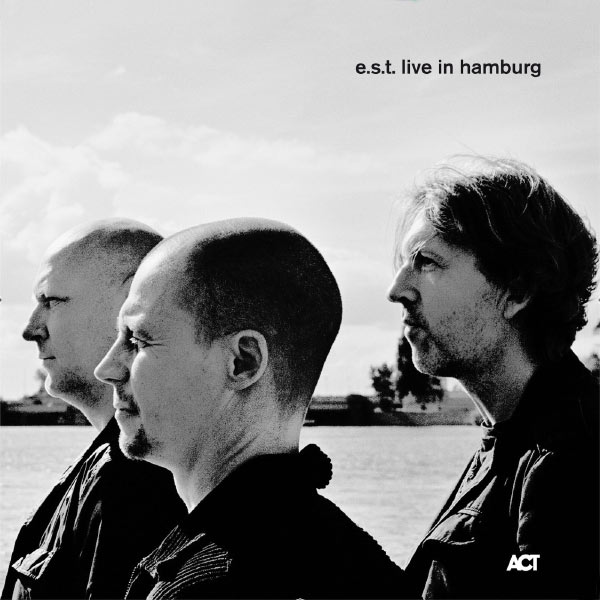
Esbjörn Svensson Trio Live in Hamburg

This 2007 live album (released on ACT) from a late 2006 concert (in Hamburg obviously) is just outstanding, and shows e.s.t. at their peak.

There is still some craziness ongoing (e.g. Definition of A Dog), but overall it is tame enough for my ears to really enjoy it,. And then, there is just tons of energy, including outstanding 17:39 minute long tracks like Dolores In A Shoestand. There is not a minute of boredom. This is two hours of pure adrenaline!

My rating: 5 stars

You can get it here (Qobuz), or go for the high quality 4 vinyl edition

Classical Life

A classical music blog by music critic Tim Mangan

This Week's Music

Making Classical Accessible

From my Macbook to the Net

Evaporation of my thoughts and observations

Elestra

Author: Artienne

My Life in Music

Playing, Singing and Listening

ArsX3

A brand new journal reviewing books, cinema, music

LawrenceEz's Blog

Creative and Performing Arts: Writing, Classical Music, Photography

Laetitia Strauch-Bonart

Contemporary Politics & Culture

sibling revelry

reveling in all things classical

It's A Raggy Waltz

I collect jazz on vinyl, I dig the Dave Brubeck Quartet, & I write about it

La Musica

By two cousins

thejazzbreakfast

Dishing it out from the heart of England

only jazz

random thoughts about music that matters to me

The Culture Project

Exploring the world of literature, wine, art, music and more.

René Spencer Saller

The music causes me to dream of fabulous empires, filled with fabulous sins.

Breaking Baroque

Blog of Tafelmusik Baroque Orchestra and Chamber Choir

Tasting Nirvana

Eating your Dosha

The Immortal Jukebox

A Blog about Music and Popular Culture

April Greene

Writer + Editor

a pianist's musings

A history of your favorite classical music.

Classical music for all

Boris Giltburg's blog

I HEAR VOICES

An orchestra seat in the web space