Schubert’s amazing chamber music (2) – Rosamunde played by the Takacs Quartet

My second post on the Schubert’s chamber music.  Rosamunde this time, his String Quartet no. 13.

You could ask why I’m not really talking about the famous Death and the Maiden? Is there anything wrong with it? The simple answer is: absolutely not. I just don’t know how to decide on the best version here. The Pavel Haas Quartet’s recording of the String Quintet I discussed last week already has a near perfect version on there, and coupled with the Rosamunde I’ll recommend today you’ll get another really good recording of “Der Tod und das Mädchen“.

Rosamunde

This quartet was written pretty much at the same time as the more famous Death and the Maiden, and it is equally beautiful. It is named Rosamunde after the incidental music Schubert wrote for this play on a princess from Cyprus, which is by now pretty much forgotten. YOu’ll find elements from this music in the 2nd movement.

Schubert’s quartets 13-15 are really a league on its own compared to his earlier works. I keep repeating myself, but this is chamber music at its absolute peak. I discovered these works in earlier versions, played by the Quartetto Italiano and the Alban Berg quartet. While these versions are still good, the more recent Pavel Haas and Takacs quartet recordings are even better to my ears.

Takacs Quartet

The Takacs quartet has been around for 40 years, so obviously the personnel has changed over time. The quality hasn’t. Their early 2000 Beethoven cycle on Decca is very good, and an even earlier cycle on Bartòk is also highly recommended. By the way, don’t be fooled by the name, while the Quartet was founded in Hungary, it has moved to Boulder, Colorado ages ago.

Given the age of the quartet, they’ve recorded the coupling of Schubert’s 13 and 14 twice. The first one in 1993 on Decca was already good, the newer one (2006) I’m referring to here on Hyperion is even better.

034571175850

I wanted to be original in my review, but it is hard to find better words than Gramophone in this particular case, so let me quote from their review here: “‘The Takács have the ability to make you believe that there’s no other possible way the music should go”. Let me just sign this statement here and now for no. 13, Rosamunde.

Der Tod und das Mädchen

To be fair, at least for the Death and the Maiden, if you take the version by the Pavel Haas quartet I mentioned earlier, you realize that there is a possible other way the music could go. Now which one is better? I’m really struggling to make up my mind. You’re probably best of having two versions. It’s like chosing between a Meursaut Premier Cru and a Riesling Grosses Gewächs. Both are different, but both are excellent.

My rating: 5 stars (yes I know, my ratings seem to feel a bit inflationary now, I’ve been giving quite a number of 5 stars recently. This is however not a coincidence as I just like to share those particularly great albums first).

Best way to buy it is to simply download it directly from Hyperion here.
The Legacy of the Jazz Messengers (4): Lee Morgan – The Sidewinder

Part 4 now of my mini-series on the Jazz Messengers’ spin-offs.

Lee Morgan

Lee Morgan was famous even before the Jazz Messengers, as he’d already played with Dizzie Gillespie. But his stardom even rose further after playing on the famous Moanin‘ album from the Messengers, which I still need to write about.

The Sidewinder

I was a bit hesitant at first whether I should really write about this particular 1963 album, which obviously is by far his largest commercial success as a leader. Doesn’t he have many other great albums, like The GigoloDelightfulee, Vol. 3, Tom Cat, The Cooker, or Cornbread, all of which I’d highly recommend.

0724349533257_600

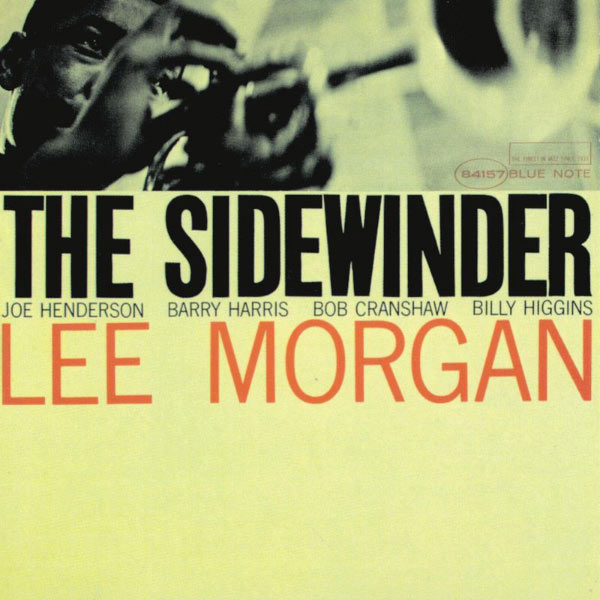
Well even though I wanted to be creative, and not recommend an album that made it into the Billboard pop charts (heresy!) I gave up in the end. There is something just magical about the bluesy groove of The Sidewinder’s 10:28 title track, that I just had to recommend this first. It may not be the most creative album, nor the most artistically developed, but hey, it is just addictive.

A great rhythm section

Obviously, a great deal of this addictiveness stems from the rhythm section (especially Harris, but also Crenshaw, Higgins), but we also get another taste of Joe Henderson (although his solo on the title track is not very memorable, he get’s better on Totem Pole).

And then there is Lee himself, his playing is fantastic, and he actually wrote all the songs himself. A little bit of trivia on Morgan: he died a rather unusual death for a Jazz musician of the time (i.e. not of drugs or alcohol), but was shot by his long-term girlfriend of the time in 1971 for unclear reasons.

Luckily, this is not a “one-hit-wonder” album, all the other tracks of the album are very good, I particularly like Gary’s Notebook.

Overall rating: Groovy, Baby! (formerly known as 5 stars)

Addendum: Reader Bob Ryan kindly commented here that I omitted to mention “Search For The New Land” as one of the must have albums for Lee Morgan. I absolutely concur with his opinion.

Vilde Frang’s Outstanding Version of Sibelius’ Violin Concerto

Let me start a bit off-topic: Why do I write about Sibelius right now?

If you’ve watched this blog for a bit, or if you’ve bothered to scroll down my main page, you’ll see that my blog topic selection look rather arbitrary and randomly selected and doesn’t follow a clear pattern. And to be fair, this is pretty much exactly how I chose my topics, by inspiration. It is very similar to how i decide to which album to listen next, whatever inspires me. The only connecting factor is that I only write about music or related topics that I really care about.

Diskothek im 2 / Disques en lice

So back to the question: Why Sibelius right now? The simple answer is: I just listened to a great podcast about it. Or actually 2. Let me clarify: My adopted country, Switzerland, has rather average public television, but two great classical music radio stations, one German (SRF2) one French (Espace 2) speaking. Both get to produce their own proprietary content, including a show that is based on the principle of inviting a couple of experts, and listening to a select number of recordings of a certain classical work, and have the expert discuss them blindly, and chose a “winner”. This show is called “Diskothek im 2” for the German, and “Disques en lice” for the French version.

Both recently decided to review Sibelius violin concerto, with a slightly different selection of versions. There was one overlap however, the winner, which is the album I’ll be talking about in a minute. And while I don’t always agree with the experts (in the end, it is all also a question of taste), listening blindly is really a good way of seeing if you REALLY like a version or you’re just preferring it because of the great name of the artist.

Sibelius’ violin concerto

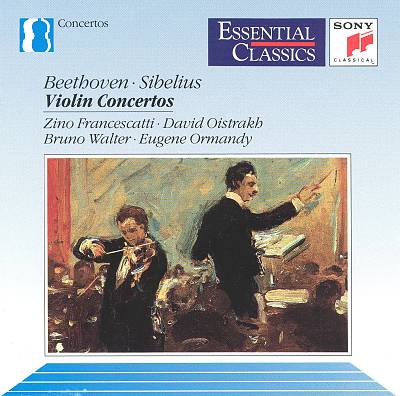
Again, I don’t want to be Wikipedia, if you want to find more about the violin concerto, go here or here. Let me just say that the violin concerto is the only piece from Sibelius i really love. I still need to “get used” to the symphonies and symphonic poems he wrote. I fell in love with the violin concerto early on as it was coupled with the Beethoven violin concert on this low-price Sony release from the 1990s. I was lucky, because it included the Sibelius in a version by the great David Oistrakh which is recommended in the second link above, so by chance I ended up having a very good version.

MI0000958869

So feel free to check this version out, it is still very much recommended.

However, today I want to talk about the recording that won both Disques en Lice and Diskothek im 2: the 2009 recording with Vilde Frang

Vilde Frang

5099968441357_600

This was Frang‘s first major commercial record at the age of 22. And what a performance it is. It has both the cold/ghostly nordic impressions of what I imagine Finland must look like (I’ve never been) but also at the right moments has all the fire and energy this late romantic concerto needs. She’s from Norway by the way, so geographically not very far from Finland. No idea if this helps or if this is just a cliché. The conductor, that I wasn’t otherwise familiar with, Thomas Søndergård, is as you can see from the Ø’s and å’s in the name also from Scandinavia, Denmark in this case. Only the orchestra being from the nice town of Cologne, doesn’t qualify as Scandinavian at all.

A side note on German radio orchestras (recognizable by the WDR/NDR/HR or whatever abbreviation, the R meaning radio) are usually quite good, albeit not at the level of a Berlin Philharmonic. However, some of them can be really great, like this one. The Orchestra and Søndergård are doing a great job here as well, and soloist and orchestra are really well-integrated.

This being an “album”, a concept which was forced on us by the LP, and later CD, but doesn’t make a lot of sense for classical music, we not only get the Sibelius, which would have been perfectly fine by me, but you also get a violin concerto by Prokofiev, and some minor “Humoresques” by Sibelius. While I like some of Prokofievs piano music and his “classical” symphony, I cannot find a lot of interest in his violin concerto (no judgment on quality here, just personal preference), and the Humoresques are nice fillers.

Overall rating: 5 stars (applies to the Sibelius concerto, the rest of the album I cannot be bothered with)

A nice alternative recording which I also really like, with another young rising star on the violin, is the version with Lisa Batiashvili (We are living in great times with so many fantastic violin players around). On this recording, you even get a Finnish orchestra with it.

0886971293623_600

Schubert’s amazing chamber music (1) – The String Quintet played by the Pavel Haas Quartet

Franz Schubert

I’ve previously written about Schubert’s piano music, which I love. As a side note, I’m not a big fan of his symphonies, even his “great” 8th (or 9th depending on the counting system) doesn’t particularly motivate me to listen to it. I occasionally play the Unfinished, but being unfinished it’s over rather quickly. Anything else in his symphony repertoire is really just a bit too juvenile for me (if only he’d lived as long as Beethoven or Brahms…).

In my personal opinion, his late string quartets and especially the string quintet are the greatest pieces of chamber music ever written. Full stop. I know others will prefer Beethoven, but the emotional density and beautiful “singing” (let’s not forget Schubert was also a major composer of “Lieder”) in the music you’ll only find with Schubert.

The String Quintet

This absolute masterpiece beats by far every symphony Schubert has ever written. With over 50 minutes of playing time, it is also longer than pretty much everything he’s written. If length translates into too many repetitions, like with the C-major symphony, it can be boring. None of this you’ll find here. Actually, you’d (or at least I’d) love this work to go on forever, it is that beautiful.

Pavel Haas Quartet

Gramophone has a certain tendency of “hyping” some artist, they can’t do anything wrong, and every album of them gets an Editors-Choice or more. Sometimes, I quite disagree with this assessment. In the case of the Pavel Haas quartet, I fully agree, I’ve yet to hear a bad album from this young Czech quartet named after a Czech composer killed in Auschwitz.

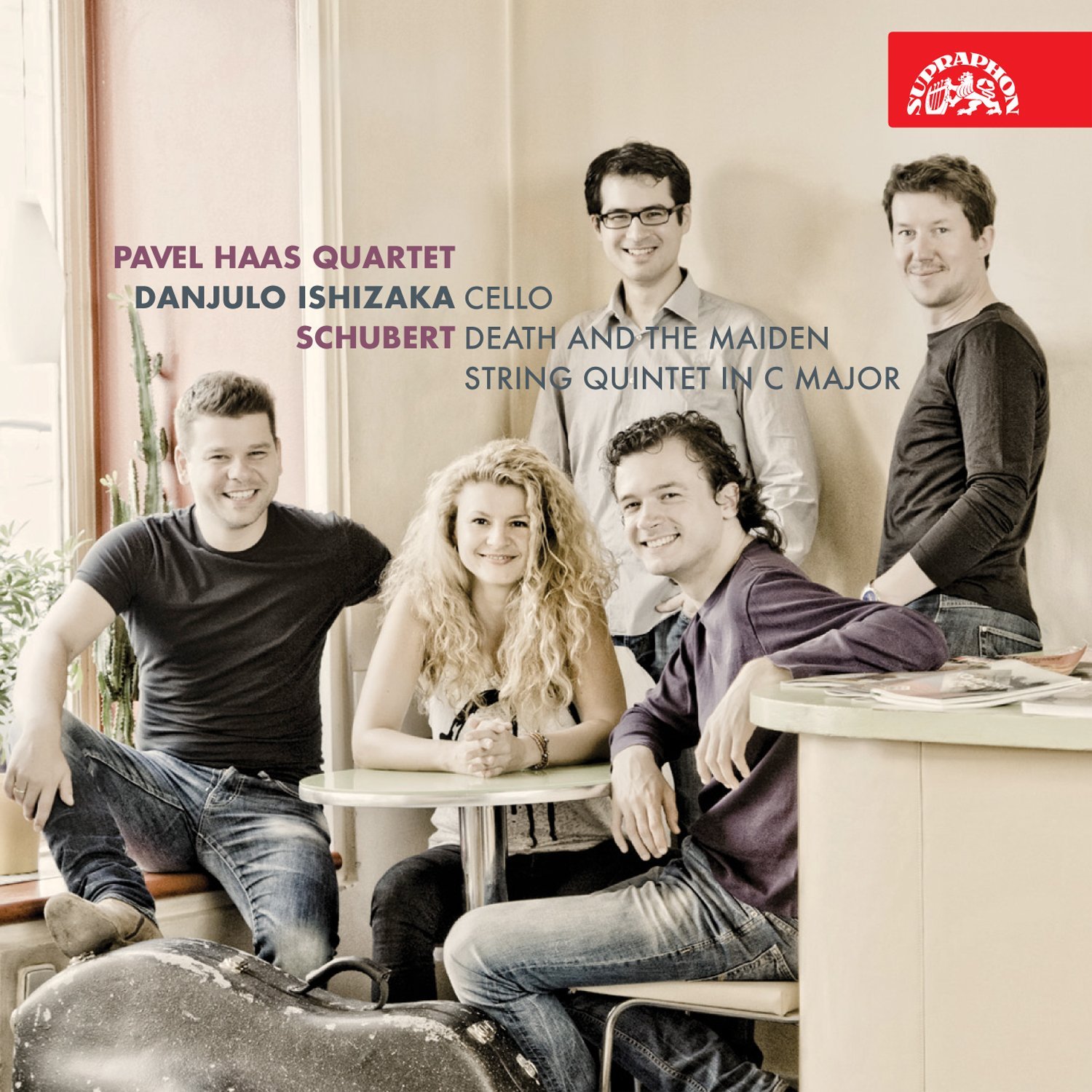
Pavel Haas Quartet String Quintet Schubert Death and the Maiden

This particular recording, which also includes an outstanding recording of the Death and the Maiden quartet no. 14, has been Gramophone Awards winner in the chamber music category in 2014, and very rightfully so. They are joined for the Quintet by the 2nd cello, played by the German-Japanese Danjulo Ishizaka.

What set’s this recording apart is the pure energy level that goes into the playing. This is not music to be enjoyed leaning back sipping a glass of bourbon on the rocks in your favorite rocking chair, this is music made for listening to with constant attention, barely keeping you on your couch any more.

There are many other good to outstanding versions out there, including the Takacs Quartet, the Tokyo Quartet, the Hagen Quartet with Heinrich Schiff, but this one really beats them all. The Czech label Supraphone has done quite a decent job on the recording quality.

My rating: 5 stars (with no hesitations)

You can get it here if you prefer downloads, and here if you prefer a physical disc (or 2 of them to be precise)

UPDATE April 27, 2016: see also my review of the String Quintet by the Quatuor Ebène and Gautier Capuçon here

The Legacy of the Jazz Messengers (3): Joe Henderson – Inner Urge

Not properly speaking a Jazz Messenger Alumni

Putting Joe Henderson into my little Jazz Messengers mini series is probably slightly incorrect, I don’t think Henderson ever played directly at the Jazz Messengers, but he started playing quite a bit with Kenny Dorham, another Messengers alumni, and he also contributes to my previously mentioned Horace Silver album “Song for my Father“, and the hardbop classic “Sidewinder” by Lee Morgan (more about this later).

Joe Henderson

I nevertheless wanted to mention him here, as I believe he was heavily influenced by his first real gigs, including those above (although Henderson himself cited mainly Charlie Parker as a lead influence). He went on rather quickly to lead several albums on Blue Note. Funnily enough, apparently he was “discovered” by another great saxophone player Dexter Gordon (who I personally never particularly liked, as a side note).

The other reason for bringing him up here is that I had the pleasure of hearing 3 out of four of the musicians on the album this post will eventually get to live (albeit all individually) including Henderson himself at a gig in the late 80s in Hamburg, and Elvin Jones and McCoyTyner in the early 2000s in Paris. So there’s a (if tiny) personal connection here.

Like Hank Mobley, Henderson is maybe not one of the real A-league saxophonists, but still better known compared to the former, probably also due to the fact that he continued recording albums up to the 1990s.

Joe Henderson’s greatest albums in my humble (is it really humble? hopefully) opinion, are all on Blue Note, from a short period between 1963 and 1966 (notice a pattern here, how glorious these days were for Jazz…). Namely, Page One, In ‘n Out, Mode For Joe, and, obviously:

Inner Urge

MMBST-84189-2

Why this album? Well, being a pianist (well that’s stretching it, but let’s rather say having played the piano), my answer is called McCoy Tyner. He really does an outstanding job on this album, in the beautiful combination with Elvin Jones on drums. These two obviously knew each other well from playing with Coltrane, including on the legendary “A Love Supreme“.

The title track – Amazing

There is a very simple reason to buy the album: the eponymous title track. Nearly 12 minutes of tension and harmonic complexity that reminds me in some places of the above mentioned “A Love Supreme“. 5 stars plus for this track only.

The other tracks, with the exception of the great “El Barrio“, where Elvin Jones builds a mesmerizing latin groove, are more fillers. Isotope is swinging nicely, but not very memorable, Night and Day is a bit light for an album ending (but Jones drums manage to keep it interesting), but overall never mind, this album is worth purchasing for two tracks only. Or if you have a download site that allows purchasing by track, stick to 1 and 3 and you’re all set.

Overall rating: 5 stars (I’m a bit hesitant here and probably should rather give 4.5 stars, but I don’t want to dilute my rating system even further and just decide that the title tracks on its own is worth the 5 stars).

The Legacy of the Jazz Messengers (1): Song For My Father – Horace Silver

Hard Bop

I’m not going to win a price on originality here writing about one of the greatest Jazz groups in history, Art Blakey’s Jazz Messengers. They’ve been praised over and over again over the last 50 years.

But never mind, my purpose was to write about music I really like, and the hard-bop era is one of my favorites in the entire Jazz history. And probably hard-bop wouldn’t be hard bop without the Jazz Messengers. Therefore, I’m starting this little mini-series about the Jazz Messengers and their spin-offs.

The Jazz Messengers

Starting in 1954, this group around the drummer Art Blakey was composed of an ever-changing group musicians that would pretty much all go on great solo careers, including, little known fact, Keith Jarrett at some point (in a way you could say Art Blakey discovered Jarrett). Other outstanding musicians include Wayne Shorter, Lee Morgan, Benny Golson, Clifford Brown, Curtis Fuller. By the way, most Jazz Messengers albums are worth having, including At the Café Bohemia, A Night In Tunisia, Caravan, and obviously, Moanin’.

The original quintet from 1954 was composed of Horace Silver, Kenny Dorham, Hank Mobley, and Doug Watkins. One of my next entries in this series will be about Mobley, who has done some great albums. But given that I have a piano background, let me start with the pianists of the group, Horace Silver.

Horace Silver

And let me start immediately by what is probably his greatest album, Song For My Father.

5099963650457_600

Recorded in 1963 and 1964, and released in 1965, this album falls around the end of the hard bop period, before most  Jazz musicians moved on to “Free Jazz” and “Fusion” (to me an absolute dead-end in music), and it took until the 1980s to get back to a some form of revival of hard bop. (Some say the sale of the Blue Note label in 1966 also significantly contributed to the decline of hard bop).

On this album, Horace Silver records with two groups of musicians, the first one includes Carmel Jones, Teddy Smith, Roger Humphries and the great Joe Henderson (tracks 1, 2, 4, and 5), the second one being Blue Mitchell, Gene Taylor and Roy Brooks. By the way, the initial group of Horace Silver in his earlier recordings were pretty much “stolen” directly from the 1954 Jazz Messengers group (only Art Blakey stayed on).

As usual, I’m not going to write a track by track review of an album, I usually find those rather tedious to read, especially in the internet age where everybody can just listen to the tracks anyhow.

Let me just point out my two favorite tracks on the album, which are the title track, and Calcutta Cutie. Both songs exceed 7 minutes, a great duration for a jazz song because it really allows for several solos that are really outstanding. But luckily, on this great album, even if you have the CD version with some bonus tracks, there are really no weak tracks.

My rating: 5 stars

Other Horace silver albums that are worth exploring include Blowing the Blues Away, Horace-Scope, The Tokyo Blues, and The Cape Verdean Blues (notice a lot of blues in there? well, that’s probably what’s so special about Silver in the first place, his bluesy tone).

Get the 24/192 remaster

Usually I don’t intend to write about technical details here, this blog should be dedicated to music, but if you intend to purchase this album please don’t buy the CD, especially not the RVG remaster series.

The most recent 2012 remaster is released in 24 bit and 192khz format and is available on several sites including Qobuz, HDTracks and ProStudioMasters. Even if you don’t believe in the benefits of higher resolution than CD, the remastering of the recording per-se is way better than all previous versions I’m aware off.

Autour de Nina – an outstanding Vocal Jazz complilation

Hommage albums are popular these days. Cassandra Wilson and José James just recently released their Billie Holiday inspired albums (see my review of Cassandra Wilson’s album here), but here we are dedicating an entire album to another Vocal Jazz legend: Nina Simone.

Autour de Nina cover

This album, while it was released on Verve, got significantly more press coverage in France then elsewhere. Even the website, and their Facebook page, is written in French. This is a pity, as this album is outstanding and would benefit from being better known globally.

This is a compilation including some relatively well known international celebrities, the most popular probably being Gregory Porter and Melody Gardot (who will release here new album tomorrow by the way). You may also have heard of ACT-label singer Youn Sun Nah.

Then we have some names that are probably more familiar to a French/European audience, including Camille, Lianne La Havas,Olivia Ruiz, and the Swiss rising singer songwriter Sophie Hunger (more about her certainly later in another post).

The quality of this album is outstanding throughout. Olivia Ruiz manages to put a new twist on the TV-commercial-abused “My Baby Just Cares For Me“, Gregory Porter is great in “Black is the Color (Of My True Love’s Hair)”, and Liane La Havas does a great “Baltimore“. The only weak spot to me is “Feeling Good”, which I (shame on me) prefer by our Great Cheesy Canadian, Michael Bublé, Ben L’Oncle Sam’s version just doesn’t make me feel as good (sorry for the bad pun).

I Put A Spell On You

However, let me flag my personal favorites: “Plain Gold Ring” by Youn Sun Nah (one of my favorite Nina Simone songs, from her famous debut), “Four Women” by Melody Gardot, but most of all, Sophie Hunger’s “I Put A Spell On You“, a version that for me personally even beats Screamin’ Jay Hawkins (please don’t stone me…).

Very highly recommended, 5 stars.

Classical Life

A classical music blog by music critic Tim Mangan

This Week's Music

Making Classical Accessible

From my Macbook to the Net

Evaporation of my thoughts and observations

Elestra

Author: Artienne

My Life in Music

Playing, Singing and Listening

ArsX3

A brand new journal reviewing books, cinema, music

LawrenceEz's Blog

Creative and Performing Arts: Writing, Classical Music, Photography

Laetitia Strauch-Bonart

Contemporary Politics & Culture

sibling revelry

reveling in all things classical

It's A Raggy Waltz

I collect jazz on vinyl, I dig the Dave Brubeck Quartet, & I write about it

La Musica

By two cousins

thejazzbreakfast

Dishing it out from the heart of England

only jazz

random thoughts about music that matters to me

The Culture Project

Exploring the world of literature, wine, art, music and more.

René Spencer Saller

The music causes me to dream of fabulous empires, filled with fabulous sins.

Breaking Baroque

Blog of Tafelmusik Baroque Orchestra and Chamber Choir

Tasting Nirvana

Eating your Dosha

The Immortal Jukebox

A Blog about Music and Popular Culture

April Greene

Writer + Editor

a pianist's musings

A history of your favorite classical music.

Classical music for all

Boris Giltburg's blog

I HEAR VOICES

An orchestra seat in the web space