Writing About and Reviewing Classical Music and Jazz
Category: *****
The rare bird – exceptional albums that are a must have IMHO. I try to be rather selective about giving 5 stars, less than 10% of my personal album collection fall in this category.
I had written previously some time ago that I don’t particularly like Scarlatti. Or to be more precise, to quote myself “I’ve never heard any Scarlatti that has touched me”.
I got quite a lot of readers comments on this, recommending some very good recordings of Scarlatti. And while there were some that I found somewhat interesting (e.g. Pletnev), I still really hadn’t found my way into the universe of Scarlatti.
I’m pleased to report I’ve finally found the first Scarlatti album I go back to on a regular basis.
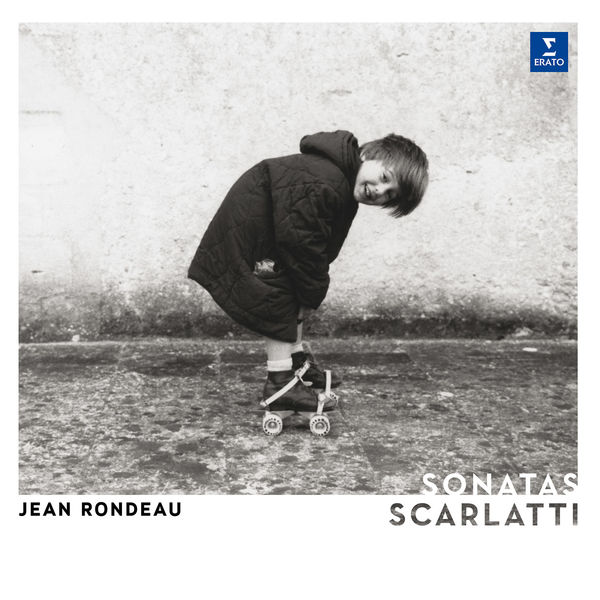
Scarlatti: Sonatas – Jean Rondeau (Erato 2018)
I’ve mentioned Rondeau’s very good Bach album here; I really like this young French harpsichord player.
So I was naturally curious about his take on Scarlatti? Would it finally be for me?
Well, I’ve given it away above, the answer is a clear yes.
To be fair, an important factor is the very beautiful sound of the harpsichord Rondeau is playing, apparently a quite recent construction built in 2006 after historic German models by Jonte Knif and Arno Pelto just has a fantastic roundness, and none of the sometimes annoying characteristics of the harpsichord that can be annoying for longer listening sessions.
Rondeau, winner of the first prize at the International Harpsichord Competition in Bruges, plays these with a power, energy, and conviction that is just blowing me away. Some other Scarlatti recordings sometimes can have that “typewriter” playing, none of that here.
I’m curious to hear what the Scarlatti experts, which I’m clearly not, will be saying about this new album.
In the meantime, I can strongly recommend you check it out!
My rating: 5 stars
You can find it here (Qobuz) and here (Acoustic Sounds)
He has a very particular style. There is a certain perfectionism (his outstanding technique clearly helps), but it is never going towards the mechanical perfection of some virtuosos, the perfectionism, particularly about timing, is always serving the music.
Levit doesn’t tend to be a virtuoso in general, he could easily be with his mastering of the piano, but he really never shows off. In many way, it is a very introvert way of playing which makes it even more interesting.
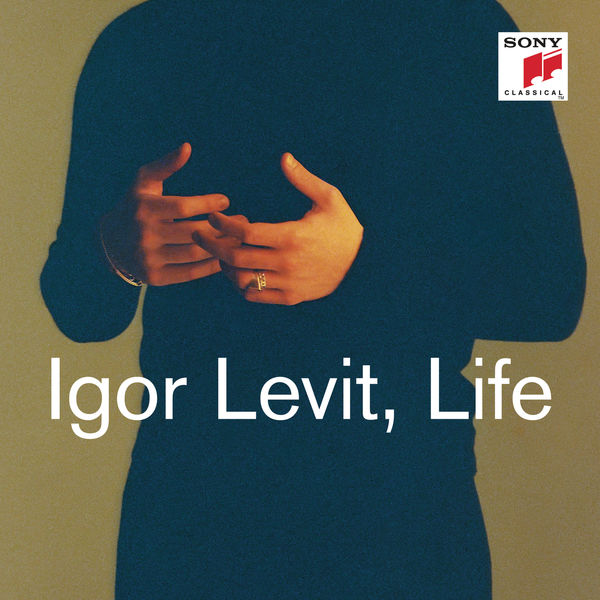
This album in many ways shows an even more intimate side of Levit. It is a very personal selection of music, from Busoni, via Schumann, to Rzewski and even Bill Evans. The common thread of the album can be found in the title, “Life”, as this album was strongly influenced by the death of a close friend of Levit.
The album starts with two transcriptions by Busoni of Bach originals. The Chaconne is a very good example of the intimate style I described above, in many ways it is the complete opposite of the somewhat overwhelming fireworks in fascinating recording of the same work by the young Benjamin Grosvenor. EDIT Dec 2018: A reader kindly pointed out to me that the Chaconne is actually Brahms’ transcription for the left hand, a much more subdued affair than Busonis fireworks. So basically this entire paragraph is just rubbish. I’ll leave the original text on just to alert you that sometimes I could benefit from doing some more background research when writing my reviews. In the meantime, take my notes with a grain of salt.
We continue with a rarely played variations work by Schumann, which makes me really hope that Levit will record more of his work. I’d love to hear his take on the Davidsbündlertänze or the Kreisleriana.
Another highlight of this album are the two Wagner transcriptions, from Parsifal and Tristan. I must admit not being a great fan of Wagner in general (this is actually the first time this composer even appears on this blog), but he clearly has written some great harmonies.
The album wraps up with one of my favorite compositions of Bill Evans, the simple Peace Piece from the 1958 album Everybody Digs Bill Evans.
There really couldn’t be a better ending to this very particular, personal album than this solemn, simple, but breathtakingly beautiful interpretation.
My rating: 5 stars
You can find it here (Qobuz) and here (Acoustic Sounds)
Trifonov is without doubt one of the best pianists of our age, and I start to regret not having included him in my list of my Top 10 classical pianists, maybe that blog post needs an update at some point. And Nézet-Séguin is on his path to be one of the truly great conductors of the 21st century.
So when I saw they just released the legendary Rach 2 together, I bought the album immediately.
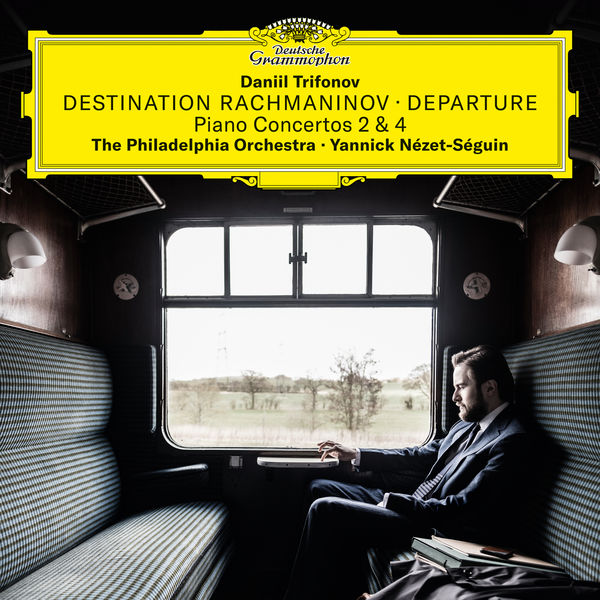
Destination Rachmaninov: Departure. Piano concertos No. 2 & 4 – Daniil Trifonov – Yannick Nézet-Séguin – The Philadelphia Orchestra
There is no lack of great recordings of Rach2. Andsnes, Zimerman, Buniatishvili (although this recording is bit controversial), not to mention the greats like Richter, or even the composer himself.
How to play this piece? Do you try to keep it more factual, or do you go with the full romantic power of the piece?
Some lessons can be taken from the recording of Rachmaninov with Leopold Stokowski, featuring the very same Philadelphia Orchestra than the current recording. And one thing is clear, already at the time (1924), they went BIG. A lot of power, a lot of rubato, a lot of everything. And guess what, that works! (well the composer should know, you’d presume)
Trifonov and Nézet-Séguin take a very big approach here. You can really float in the big sound of the Philharmonia Orchestra, and soloist and conductor clearly connect. Trifonov clearly is a virtuoso of the highest caliber, so the technical challenges of this massive work just go unnoticed.
Overall, there is a lot of rubato, and the tempo is relatively slow. In some of the slower passages, one even gets reminder of a Bruckner symphony.
Some would argue this is too much. I haven’t seen many reviews yet, but I predict this recording will be a love it or hate it affair.
To make it clear: I love it!
You also get concerto no. 4, but to this day, I’m like quite a large majority of music lovers, I love nos. 2 and 3, and just don’t get 4. So no comment from my side.
What you do get on top is much more interesting, at least to me. Rachmaninov did his transcription of the Violin Partita BWV 1006, a true gem, that I should probably add to my blog post on transcriptions of the Chaconne. Very much worth discovering.
I’m kind of curious about the album title, Departure, and am really wondering where this train takes us next. Let’s hope to an equally spectacular Rach 3!
My rating: 5 stars.
I’m curious to see if my prediction holds true, and there will be both raving and bad reviews of this. I’ll report back when I see them. In the meantime, try before you buy!
You can find it here (Qobuz) or here (Prostudiomasters)
UPDATE Oct 30: Well, my prediction of this being a very controversial album already holds true. Check out the comments of my readers below, and you’ll find both love and hate.
Update March 2, 2019: Classica agrees, and gives this album a “CHOC”, their highest rating. Whereas Gramophone is much less impressed “Overall, this is another fine, well-recorded addition to the lengthy discography but one which neither astonished nor moved me.”
So my prediction that this would be a love it or hate it affair, I was spot on. I still like it very much.
Regular readers know that I’m a fanboy of some violin players, notably Rachel Podger (see last weeks post on her Four Seasons, and several others, e.g. this one) and Isabelle Faust (see for example here and here).
The real reason why I haven’t heard more of her is quite simple: Hyperion doesn’t allow streaming. Given that having access to a great streaming service is now my number one source for new music discovery, and how much new music there is to discover, it’s just hard to buy stuff blindly these days.
Plus, on the Bach violin concertos in question, I really had more than enough choice already in my library (just checked, 15 versions of BWV1041), not to mention the hundreds of versions available via streaming. And there is great stuff like above mentioned Rachel Podger, Julia Fischer, Janine Jansen, Giuliano Carmignola, just to mention a few.
So the hurdles for buying this were high. But I’m very glad that today I clicked on “Buy” on the Hyperion website this weekend and added version number 16 to my library.
So, this version immediately rises to the top of my recommendations.
Before I talk about the soloist, let me first spend some words on the excellent orchestra. Given it’s young age, it was founded in 2010 by Jonathan Cohen, it is not yet as well known as for example Les Arts Florissants or other historically informed ensembles.
However, it immediately becomes audible that this really is a world class ensemble. They play with both precision and joy, and really are essential in making this album so enjoyable.
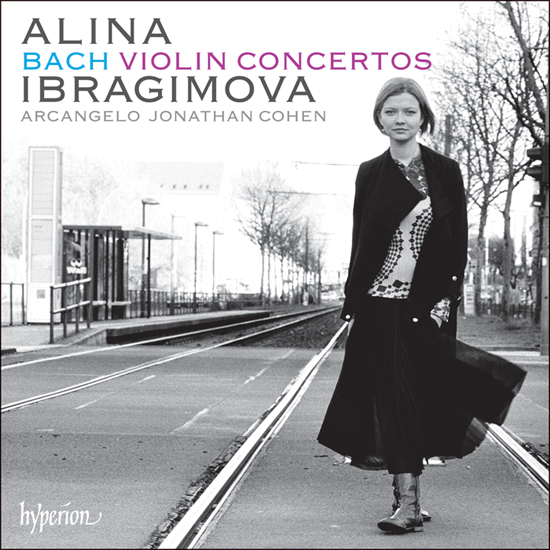
Now to Ibragimova. She keeps things very simple. Very little vibrato (HIP obliging), but even beyond that, she keeps everything very transparent and clear. To my ears, this is exactly what this music needs, it is of such an outstanding beauty (take for example the adagio of BWV 1042) that really there is nothing that needs to be added. It is just blowing you away by the sheer power of the music.
Outstanding!
I think I have to return to Hyperion’s website (link below) more often. Ibragmova’s Mozart sonatas just received fantastic reviews, and I’ll need to see how they compare to my favorite version with, again, Rachel Podger (see here).
My rating: 5 stars
You can find it here (Hyperion Records, download) or here (Prestoclassical, CD)
P.S. I know I’ve been reviewing a lot of baroque music recently, I promise a bit more diversity going forward
Many of them where trying to convince me that there’s more to Vivaldi, and that he certainly hasn’t written the same concerto 400 times as Stravinsky famously joked.
Well to set the record straight: I do like Vivaldi, kind of. Not all of it, and only in certain doses. And just to prove that I do, I’ll be doing a little mini-series about Vivaldi now.
The Four Seasons (again)
And yes, please don’t kill me if I start with the most overplayed piece of classical music ever (well, in close competition with the opening of Beethoven’s 5th symphony probably).
I’ve written about my favorite version of the four seasons already, it is the version with Giuliano Carmignola. This, to this day, is outstanding. So why do I really need to write about yet another recording (Discogs shows nearly 2,500 entries of this work already…)?
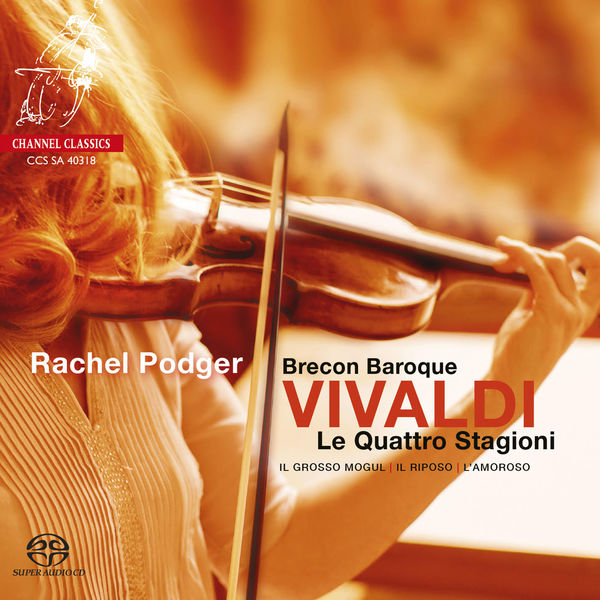
Vivaldi: Le Quattro Stagioni – Rachel Podger – Brecon Baroque (Channel Classics 2018)
So, sorry to repeat myself, but this is yet another outstanding recording by Mrs. Podger.
Her ensemble, Brecon Baroque, isn’t particularly large. This conveys a nice sense of intimacy. The entire recording is extremely nuanced, subtle, but always joyful.
The highlight of the album is the 3 movements of Winter. The Allegro non-molto is even a bit scary, you can feel the shivers of the cold in the opening chords (and I’m writing this on a sunny spring weekend).
And when you get to the second movement of the Winter, the Largo (which has always been a favorite of mine), it is the most “swinging” largo I’ve ever heard, you can really feel yourself taking a nice walk in the sun in a white winter landscape.
So, I’m sure you already have a Four Seasons recording in your collection. If you don’t, this is a must have. if you do, you should still strongly consider this, it is one of the best versions ever recorded, in a very particular and individual style. And as a plus, Channel Classics is known for their excellent recording technique, so this is an audiophile gem as well.
And to top it of, you get two other violin concertos by Vivaldi thrown in (and yes, they don’t all sound the same!).
My rating: 5 stars
You can find it here (Channelclassics), and here (NativeDSD), in both cases you get it in native DSD resolution up to multichannel.
I ended up as usual buying it here (Qobuz, PCM 24/192 only), as with my Sublime subscription it is quite significantly discounted (and no, I’m still not sponsored by Qobuz).
UPDATE April 23, 2018: Gramophone agrees, giving it an Editor’s Choice in it’s May 2018 issue, with this statement: “If ever a disc were self-recommending, this is it: one of today’s most consistently brilliant Baroque violinists, records one of the era’s most famed and engaging works. Enjoy!”. Please note that Gramophone, very much like me, is a bit positively biased on Podger.
So when a new Beethoven album from the great master came out on Deutsche Grammophon, I bought it pretty much immediately, without checking out the version via streaming as I’d typically do otherwise. His latest Beethoven sonata recording dates back to 2008, since then he’s been much more focused on Bach.
Perahia attacks two of the most famous Beethoven sonatas here. No. 29, Hammerklavier, and the one that even non-classical listeners would recognize, the Moonlight.
Let me start by saying you immediately hear that Perahia has been playing a lot of Bach recently. If I had to summarize this album in one word, it would be “Clarity”, or “Transparency”. The counterpoint complexity of Bach certainly shines through on this album. Nothing is ever “too much”, even for these two sonatas that both mark the transition from the “classical” period to the starting “romantic” era.
Let’s start, as Perahia does, with the Hammerklavier heavyweight. This is one of the most pianistically challenging piano pieces out there. Especially if you’re trying to follow Beethoven’s original metronome marks, which some have considered unplayable. Perahia starts with a quite ambitious speed, but at no point this ever feels forced.
You get plenty of nuances especially in the beautiful Adagio, and the highlight could be the last movement, which stars seemingly simple with a little Largo, but then builds into a compex fuga type Allegro & Presto, where you can clearly hear that Beethoven knew his Bach, so Perahia really shines here.
I have yet to find my “perfect” Hammerklavier. Recently, the impressive version of Ronald Brautigam (played on an actual Hammerklavier-type historic instrument), or Igor Levit’s beautiful recording of the late sonatas, or you can obviously go back to the classics and pick your Serkin, Brendel, or Arrau. Actually, the complexity of this masterpiece is such that no one version will ever be “perfect”, you’ll always need more than one interpretation of this jewel.
Going to the Mondschein sonata, I’m going to contradict myself immediately: This could well be “the” perfect version of the Moonlight sonata, at least of the world famous Adagio sostenuto.
Let me explain: He takes the movement relatively fast, with 5:16 I have only 3 versions in my library that take less time (my fastest version is Schnabel by the way, with 4:51).
What is so outstanding about this version goes back to the word I used earlier, “clarity”. This is played in a very plain, no-nonsense style. With such an overloaded romantic piece, there often is a tendency of just doing a bit too much, too much rubato, too much dynamic variation, etc. etc.
But honestly, this outstanding beauty of masterwork doesn’t need any of this. This apparent simplicity is just what makes this music truly shine. I can’t get enough of it. This could well become my new personal reference for No. 14.
UPDATE Feb 28, 2018: For once, we have an album where all critics agree. In their respective March editions, both Gramophone (Editor´s Choice & Recording Of The Month) and Classica (CHOC) give this album their highest rating.
She is a fantastic talent, with an amazing voice, and a very versatile style, from her early vocal jazz/singer-songwriter style albums Some Lessons, Worrisome Heart, and My One And Only Thrill,via the latin Swing of The Absence, to the much more soul-oriented Currency Of Man.
However, so far I haven’t yet seen her live (what a miss), so I was very excited when this latest live album was announced in late 2017.
Now it’s out, and I must admit it exceeded even my high expectations.
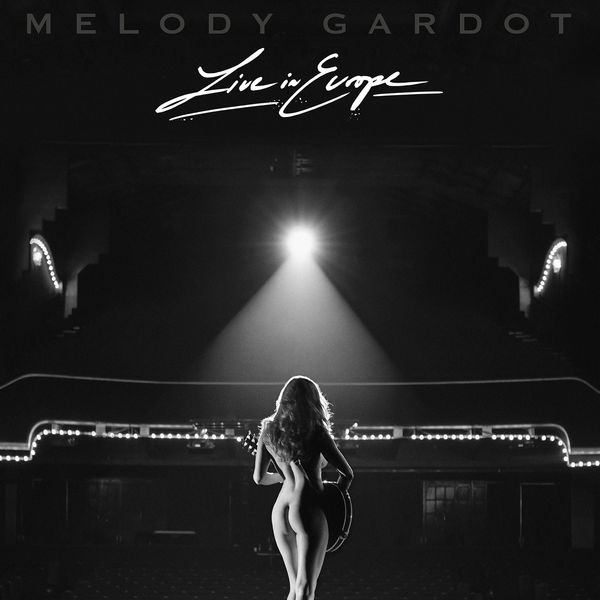
Live in Europe (Decca 2018)
So, what’s so great about this album?
First of all, the length, 1h45, so the band can really take the time to develop the songs, with the longest example, Morning Sun taking more than 12 minutes. Not one too many by the way, as this is one of the true highlights of the album.
The other great thing is that this in many places is a very minimalistic, “unplugged” style album, just Melody’s fantastic voice with very little instrumentation, which makes this even more special, and a very intimate experience. One example is the opening track, Our Love Is Easy, which over quite a while has her together with only a double bass. Outstanding!
This is a mix of several concerts in Europe, and you get the full bandwidth of styles. Lisboa (nicely enough taken from a concert in Lisbon)is an excellent example that the band can do a true latin samba-style swing, you get her “classics” like My One And Only Thrill, but even the more soul-type songs like Morning Sun get a very special, fresh treatment.
Melody Gardot is clearly surrounded by outstanding musicians here, as witnessed in the nearly 4 minutes instrumental intro of The Rain.
Another highlight of the album is March For Mingus, as it is really swinging and groving like crazy. The “original” of this song was a short 1:02 fragment on Currency of Man, which finally gets the 11:03 that it truly deserves.
Get this album as fast as you can! This is an instant classic.
My rating: 5 stars
You can find it here (Qobuz) and here (Prostudiomasters)


 musicophilesblog - From Keith Jarrett to Johannes Brahms