Aaron Diehl’s Space, Time, Continuum – Another Young Piano Grandmaster to Watch

These days from my admittedly biased European perspective you could say that all new great Jazz is coming out of Europe these days, especially in the Jazz piano trio space, basically since Esbjörn Svensson brought this art form into the 2000s, taking over a great legacy dating back to Bill Evans and Keith Jarrett.

This is rubbish admittedly, although I have quite a number of posts in the making (at least in my head) about great artists like Triosence, Giovanni Mirabassi, the Tingvall Trio, Tord Gustavsen, etc., all from Old Europe.

But obviously already Shai Mastro I mentioned last week is from Israel, and the  birthplace of Jazz is still an absolute Jazz hotspot, and I’m jealous of anybody living in NYC for their live scene.

Aaron Diehl

Diehl really is an extraordinary talent. His first non-live album, The Bespoke Man’s Narrative (2013) was already eye-opening, and he certainly is respond for a large part in the appeal that Cecile McLorin Salvant’s debut album Woman Child had on me and many others (the album got a Grammy award nomination).

This guy, born in 1985 in Ohio, is still very young, only two years older than Shai Maestro I recently mentioned. I expect this guy to have a great career, and be part, if needed, of the living proof that Jazz is not dead, but clearly very much alive (unfortunately in too much of a niche habitat).

Space, Time, Continuum

Aaron Diehl Space, Time, Continuum 2015 Mack Avenue

Nice title, first of all. It really illustrates the relevance of punctuation.

Side note, can an album that has a track called Flux Capacitor be bad? (I assume I’ve just given away my age. If you have no idea what a flux capacitor is, think Doc Brown and DeLorean, if that still doesn’t ring a bell, well, you missed an entire decade and will just have to google it yourself).

Diehl plays here with his regular trio of David Wong and Quincy Davis, but this isn’t, except for some selected tracks, a trio album. They are joined, in various permutations, by Bennie Golson, Joe Temperley, Stephen Riley, (sax all of them) and Bruce Harris (on trumpet).

But no matter how many horns you add, the star remains Diehl. He is always present, and very nicely so. What is so special about him, is probably his touch, it always sounds easy and relaxed, no matter how complex the material gets.

On the last track, we even get a guest appearance of Cecile McLorin Salvant. Well, she’s always welcome to pop up anywhere as far as I concerned, she is truly very special. I’m looking forward to her soon to be released new album.
My rating: 4 stars, very enjoyable throughout.
You can get it here or here as downloads..

Cassandra Wilson: Coming Forth by Day – Lady Day Meets Nick Cave

Billie Holiday

Tribute albums are really hot again these days, see for example Autour de Nina (praised here), or Nina Revisited (not very positively reviewed here), focusing on Nina Simone.

Billie Holiday is another Jazz legend that gets her share of tribute albums (José James, Carmen McRae, even Tony Bennett, just to name a few).

I have to admit something here, as much as I admire Billie, I don’t listen to her very often, as her early albums where her voice was still fully developed are usually poorly recorded, and the late albums that have a decent sound quality show her beyond her peak.

Cassandra Wilson

Cassandra Wilson has always been a Jazz singer that was never afraid of getting close to pop music; actually, I’m not a universal fan of her because of that.

In any case, her last album, Another Country, I really liked (with the exception of the awkward O Sole Mio), so I was really looking forward to her new 2015 release.

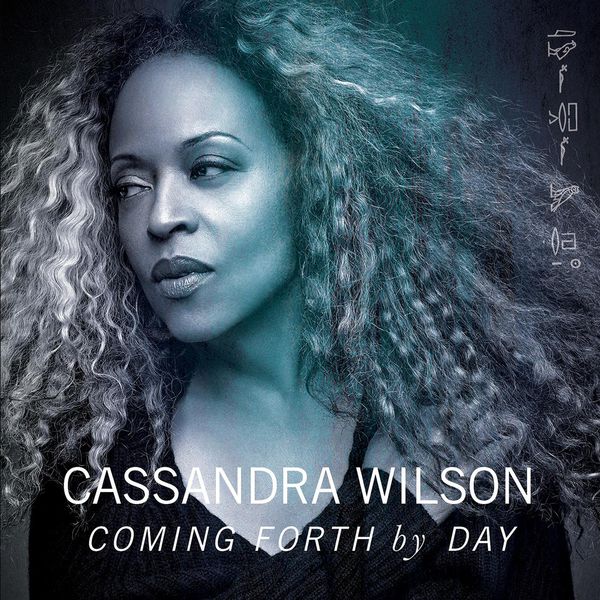
Coming Forth By Day

Cassandra Wilson Coming Forth By Day 2015

Coming Forth by Day is, as mentioned above, a tribute album to Billie Holiday, and it was released very timely on Lady Day‘s 100th birthday.

The tracks include well-known standards like Don’t ExplainStrange Fruit, and You Go To My Head. However, you’ll be surprised when you hear them here how different they sound.

The key difference is the production. Nick Launey, better known for working with Nick Cave, is responsible for the arrangements. T-Bone Burnett, who ruined (to my ears) the Diana Krall album Glad Rag Doll, is limited to playing the guitar, so he doesn’t do too much damage.

In summary, you get Bille Holiday Meets Nick Cave, with Wilson’s absolutely unmistakable voice. Is it worth getting? Not across the board, but some tracks are good enough to justify the purchase. I’d personally pick Don’t Explain, You Go To My Head, and Strange Fruit for that honor. Ah, and Good Morning Heartache is a bit weird, but needs a special mention.

Unfortunately, unlike some earlier albums, this album isn’t particularly “audiophile”, as a bit overproduced and compressed. But in a way, that goes well with the overall ambiance.

So listen before you buy, but it is certainly worth checking out.

Overall rating (in spite of some annoying tracks): 4 stars

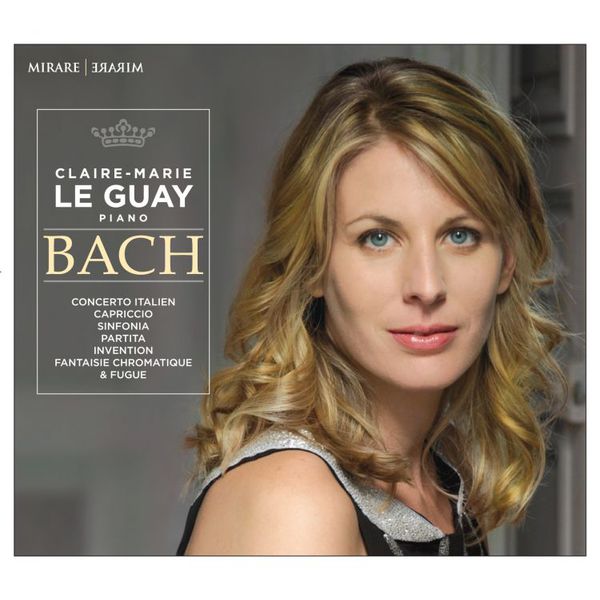
Claire-Marie Le Guay’s Gentle and Perceptive Bach

Bach again, really? I am reviewing too much Bach. But then again, can anybody have too much Bach? Probably not. To be fair, it took me a while to really appreciate Bach. In my youth, I barely listened to him, and my handful of experiences playing him myself made matters worse (I was never a good piano student, to lazy to practice). I assume the beauty and clarify of Bach is something that really needs to grow on you over time. In my thirties (I’m now in my forties) i started realizing that I started to listen more and more to Baroque music, and particularly Bach. It wasn’t a conscious choice, it just happened naturally. And today I literally just can’t get enough (ha, do you have Depeche Mode playing in your head now as well? I do every time I write this phrase in English).

Claire-Marie Le Guay

I must admit I hadn’t noticed her before this “Choc” by Classica some months ago, released on Mirare in 2015. But then I saw her teachers included Alicia de Larrocha and Andreas Staier, I got curious. She has won several competitions and has notably quite busy doing chamber music.

Her Bach album

Claire-Marie Le Guay - Bach Mirare 2015

As usual, when a French magazine reviews a French artist and sells him or her as “the best thing since sliced bread”, I usually take it with a grain of salt. But when I checked out this particular album, I just had to get it pretty much immediately. And this in spite of me being more and more skeptical about Bach on a modern Steinway. What sets this album apart is her touch. Delicate, almost caressing. Bach can be quite tough sometimes, or mechanical, if played by the wrong musician. None of this is here. And in spite of all this gentleness, the music is fully there. You don’t miss any single counterpoint turn in the beautiful Italian Concerto, and even the Chromatic Fantasia BWV903, which sometimes can be a bit academic, is just drawing you in.

Overall rating: 4 stars (I hesitated a long time whether I should give 5 stars, but somehow my subconscious tells me only harpsichord Bach should get the best possible rating, which is probably bullshit)

You can get it here as CD and here as download

Edgar Knecht – Dance On Deep Waters – Transforming  Traditional Songs into Jazz

To me, Jazz Piano Trio is just an outstanding art form, as already discussed on my previous post on Keith Jarrett’s’ Standards vol. 2.

Actually, Standards fits nicely into a number of trios/albums that have shaped and influenced this particular art form. You could start this lineage with Bill Evans first trio, then move on to Keith Jarrett’s Standards trio, and somehow the third level of evolution came with the late Esbjörn Svensson and his trio. He clearly innovated the trio on many fronts.

Many of today’s piano trios would be unthinkable without EST. And we are very lucky that this art form is not only still alive, but thriving.

About 18 month ago I started a thread on another forum on that topic, called “Are we living in the Golden Age of the Jazz Piano trio?“. This thread has now answered the question I was asking with more than 300 posts today and has become an amazing (if unsorted) list documenting how much is happening around us right now!

Edgar Knecht

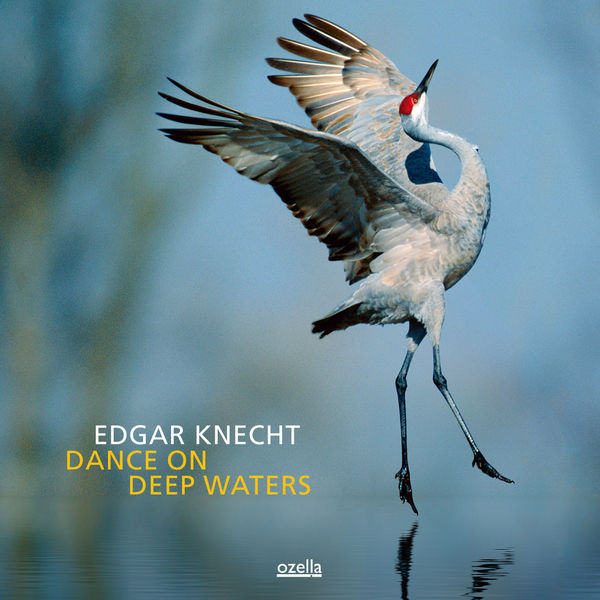
I want to start writing about some of the artists I mentioned or discovered on this thread. Let me kick this off with my most recent purchase, the 2013 album Dance On Deep Waters from the German Edgar Knecht, on Ozella Music. I actually start with a tricky example, this trio is actually a quartet as it includes a percussionist. But well, it is close enough.

Edgar Knecht Dance On Deep Waters Ozella Music 2013

As you can see from the thread, I was actually introduced to this artists (and many other discoveries) by the forum member Elvergunn, who seems to be even more obsessed than me in finding new artists.

(Little side note: The internet is really such a great place for music, you can exchange with music lovers in the entire world, you find stuff that you would have never found in your local record store, and you can all download it in minutes to your computer thanks to the rapidly multiplying specialized online shops, but let’s close the parenthesis here).

Edgar Knecht in my mind is all about melodies and creating a very particular atmosphere. He takes simple music, from German folk songs to even Brahms famous Lullaby “Wiegenlied” and transforms it into something very special. The only little issue I have with this album is that sometimes you’d like a little bit more diversity in terms of approach and style. But I suppose you can’t have it all.

That said, I find this album very enjoyable and keep going back to it quite regularly right now.
My rating: 4 stars

You can get it here as download and here as  CD.

The Legacy of the Jazz Messengers (5): Wayne Shorter – Adam’s Apple

Wayne Shorter

Why did I wait so long, you may ask? Why write about 4 other guys before Wayne Shorter, the absolute heavyweight among the Jazz Messengers Alumni, the only one (to my knowledge) that is still alive and playing?

The guy who got a letter of recommendation by saxophone god John Coltrane to join the Jazz’ Jupiter (big boss of the gods) Miles Davis. Who helped kick off (sadly to my mind, but who am I to judge) the Jazz-Rock and Fusion movement with the group Weather Report he co-founded, and even played with the Stones at some point?

Well, don’t know really. Two issues come to mind: a) respect: what can I still say about such a genius that hasn’t been said before (didn’t stop me in the other posts you may argue, and you’re right). b) choice: So far in my little series on the Jazz Messengers I’ve always picked one, the most enjoyable album, only. That was still kind of doable with the other 4 guys I’ve mentioned here, but which one do you choose for Wayne? At least 3 albums spring to mind that need to be mentioned!

You know what, I’ll just take the liberty (it’s my blog after all, I can do what I want, ain’t it nice?) and do several posts about Wayne, each one with one of my favorite albums.

Adam’s Apple

Wayne Shorter Adam's Apple

Why start with Adam’s Apple? Well, alphabetically it comes first.

No, just kidding, even easier: It is simply the album that got the most plays of all Shorter albums in the last five years. Computer audio is amazing, I not only know what you did last summer (sorry for the stupid movie pun), but thanks to iTunes I can be my own personal NSA and check what I was listening on November 4th, 2011, 8pm for example (Ton Koopman’s Bach cantatas vol. 6, if you’re interested).

Back to Adam’s Apple. I mean, look at the rhythm section, there’s another genius, Herbie Hancock on piano. He’s probably the key reason why I like this album so much. Also, in spite of being released in 1966 (usually a bit “late” for me), it is still very much a proper hard bop album, no fusion or other on here.

And then there are two songs that are worth highlighting as I can’t get enough of them. First there is the title track, it is just swinging and grooving as hard bop should be. Even the guys a blue note tell me on this album Shorter “finds the Groove”, check out this link, it’s got interesting background info on the album.

And then there is the magical (to me) Footprints. Apparently it is not a Jazz waltz (the experts tell me, as this is 6/8 and not 3/4, plus the song keeps changing meter), but still I’d put in one line with the great Jazz Waltzes I really appreciate (probably I need to write another top ten list here). On top of that, Herbie Hancock’s playing here reminds me a lot of Maiden Voyage. 

In short: I really hesitate between 4 and 5 stars here. On one hand it’s Shorter, and has two outstanding songs, on the other hand some of the other songs are not at the same level.

Well if I have to decide: 4 stars in total. 

You can find it here and here. I strongly suggest you go for the recent 24/96 remaster if you care about sound quality (skip the more expensive 24/192), as it is significantly better than the RVG remaster CD released in the 2000’s.

David Fray’s elegant and intimate Schubert

Franz Schubert and the piano

I’ve been writing quite a bit about Schubert recently (see here and here). I’ve said before that one area where this amazing composer really excelled was chamber music. This is to be expected given that he grew up learning the violin. However, soon after that instrument (started at the age of five), he also got his first lessons on the organ, and he became a decent player of the piano as well (although never to the professional standard of other composers, and he rarely performed in public).

Many of his piano works (let’s keep “late in perspective, the guy died at the age of 31…) are nearly as outstanding as his chamber compositions. Namely, the late piano sonatas, the Impromptus, the Moments Musicaux and the Wanderer-Fantasie. I’ll be writing about all of these later.

And finally, his third category of musical excellence was the Lied or song obviously. I’ve only recently started to fully discover the riches of this repertoire, and will also come back to this.

Side note: If you want a great overview of his piano works, played at the highest level and very well recorded, there is, besides the obvious Alfred Brendel, mainly Mitsuko Uchidas’ great box on Decca, which can sometimes be found very cheaply (e.g here and here)

David Fray playing Schubert

So, with all these great recordings already existing (and you could easily add Paul Lewis, Radu Lupu, Paul Badura-Skoda etc. etc.) recordings, why bother buying another version in 2015?

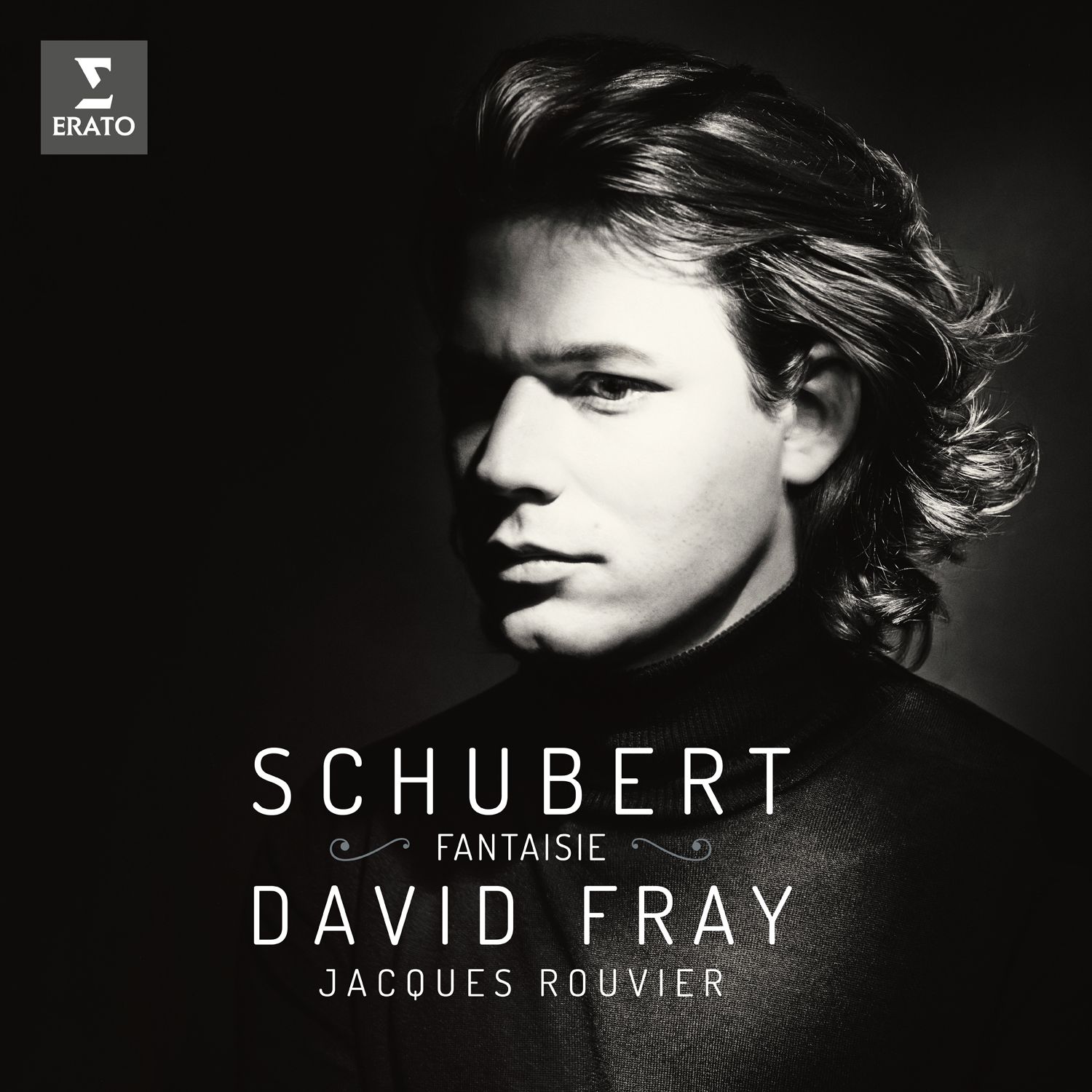
David_Fray_Jacques_Rouvier-Franz_Schubert_Fantaisi

David Fray is a young French pianist. He got his lucky break when he was asked to jump in for Hélène Grimaud (they shared the same piano teacher) at some concerts. He has some other musical background: his father in law is the famous conductor Riccardo Muti. He already recorded several Schubert albums earlier, but this is the first time I noticed him.

He plays the lesser known Sonata D894 (nicknamed “Fantasie“), and some smaller works, including two for four hands with Jacques Rouvier. What is so special about his Schubert? Two words come to mind: elegance and fragility. In some parts this Schubert sounds more like Bach than a composer who was at the beginning of the romantic period. With this comes an outstanding transparency, but also a really intense intimacy. Very very touching.

Critics for once seem to like this album as well, Gramophone named it Editors choice, Classica gave it the “Choc”, 5 stars from Diapason, the only review I saw that didn’t like it was the BBC, calling it “Beautiful, certainly, in its way; but static.”. Sorry, dear old BBC; but I don’t hear anything static in here.

Erato is a label that usually cares about sound quality, this one is quite well recorded as well, much better than the sometimes a bit harsh sound of some of Brendel’s old recordings, so one more argument to get this new recording (if you need one more).

My rating: 4 stars (the playing only would be 5 stars, but this sonata is not as essential to have for me, albeit very nice to have)

Get it here as download (the 24/96 version is worth it), or here for a physical album

Georg Friedrich Händel – beyond the Messiah

I’ve already mentioned before that my personal ranking of Baroque composers is Bach first, Händel is second.

So let me write about no. 2 on the list. Händel is German, although he spent quite a bit of his professional life in London and is somehow adopted English, so probably you’re more familiar with the George Frideric spelling of his name.

Most well-known classical music pieces

If you ask the average guy on the street whose typical musical fare is contemporary pop music, chances are he or she has at least heard a couple of ultra-famous classical pieces. These often include the “Da-da-da-daaaa” from Beethoven’s 5th, Bach’s Toccata BWV565 etc. etc.. Somebody even bothered to compile a top 10. Not surprisingly, this top 10 list includes our friend Georg Friedrich (sorry, I’ll stick to his birth name). Guess which one it is? Obviously: “Hallelujah” from the Messiah.

I’m not such a big fan of the Messiah, it’s good, but I can only listen to it ever so often. But it summarizes one of the two things Händel does really well: Glorious Oratorios, often with festive character. His two other rather well-known pieces, the fireworks- and water music, are of similar character.

The other thing Händel is really great at, is related, amazing stage drama. His Baroque operas and oratorios (many oratorios are actually operas, but weren’t allowed to be called opera as the pope Clement XI had some issue with this form of entertainment). I’ll certainly post more about the baroque operas later.

Music for Queen Caroline

3149028063127_600

Back to the festive music. Obviously key clients for composers at the time were royals, and royal festivities like the arrival of a new queen, the coronation, or even funerals, required the appropriate musical soundtrack.

This album from William Christie and his Les Arts Florissants ensemble from 2014 brings you all three. Like many others, William Christie, the American turned French conductor has created his own label for this release. By the way, usually you can buy most of Christie’s releases blindly, he’s rather ever done a bad album and many are outstanding. His Messiah is still my personal reference version.

You’ll get three oeuvres on this album, all related to Queen Caroline (another German in the long history of German blood in the British royal family by the way): The Coronation Anthem, a Te Deum that was even nicknamed after her, and her funeral music.

All three are just outstanding pleasure to listen to, and William Christie does an amazing job here. This is 1h12 packed with emotions, with very little time to relax. Furthermore, this album is very well recorded, which makes the impact on a good stereo even stronger.

Highly recommended.

My rating: 4 stars

(this is one potential 5 star candidate, but I’ve only acquired it recently and need to give it some more spins before making u p my mind).

Update Oct 2016: I’ll stick to the 4 star rating. It is really nice to have but not essential.

What is your favorite piece by Händel?

Classical Life

A classical music blog by music critic Tim Mangan

This Week's Music

Making Classical Accessible

From my Macbook to the Net

Evaporation of my thoughts and observations

Elestra

Author: Artienne

My Life in Music

Playing, Singing and Listening

ArsX3

A brand new journal reviewing books, cinema, music

LawrenceEz's Blog

Creative and Performing Arts: Writing, Classical Music, Photography

Laetitia Strauch-Bonart

Contemporary Politics & Culture

sibling revelry

reveling in all things classical

It's A Raggy Waltz

I collect jazz on vinyl, I dig the Dave Brubeck Quartet, & I write about it

La Musica

By two cousins

thejazzbreakfast

Dishing it out from the heart of England

only jazz

random thoughts about music that matters to me

The Culture Project

Exploring the world of literature, wine, art, music and more.

René Spencer Saller

The music causes me to dream of fabulous empires, filled with fabulous sins.

Breaking Baroque

Blog of Tafelmusik Baroque Orchestra and Chamber Choir

Tasting Nirvana

Eating your Dosha

Shadow of Iris

Poetry, fiction, short stories, more ...

The Immortal Jukebox

A Blog about Music and Popular Culture

April Greene

Writer + Editor

a pianist's musings

A history of your favorite classical music.

Classical music for all

Boris Giltburg's blog

I HEAR VOICES

An orchestra seat in the web space