Ray Brown – 3 Dimensional – Swinging Like Crazy

Ray Brown

I only recently noticed that the Jazz giant Ray Brown doesn’t have his own blog entry yet.

What a miss!

To be fair, I’ve written about several records featuring him already, like Gene Harris’ Listen Here (a 1989 album), Oscar Peterson’s Night Train and Plays The Cole Porter Song Book (from 1962 and 1959 respectively), which also shows how long this genius has been active. I was very lucky to see him live once with his trio, back in the early 1990s about when the album below came out.

I even listed one of his albums with his own trio, Summer Wind, Live at the Loa in my 25 Essential Jazz albums.

Ray Brown really made the Oscar Peterson trio special. Obviously, Peterson is a genius himself, but only the extreme synergy with Brown made his trio work so outstanding. I personally don’t think his later work with other bassists like Nils Henning Ørsted Pedersen was ever the same level of fun as his first and main trio.

But still, no dedicated blog entry. Let me rectify this on a sunny autumn saturday morning, where the sunny mood of this great album is just the perfect fit for my mood.

Ray Brown Trio: 3 Dimensional (Concord Jazz 1992)
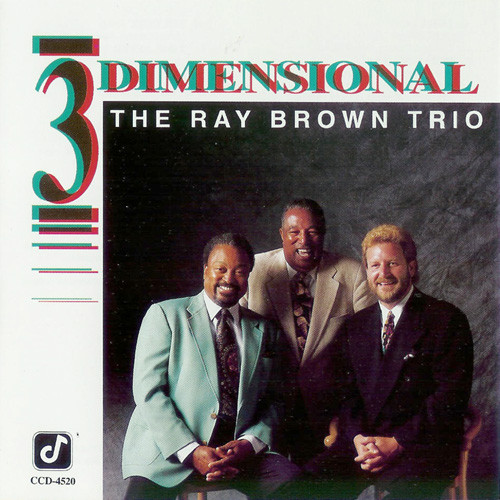
Ray Brown Trio 3 Dimensional Concord Jazz 1992

This album was released on Concord Jazz, a small Jazz label formed by Jazz Enthousiast Carl Jefferson. Unfortunately, soon after this album was produced, in 1994, Jefferson passed away and this great little label was sold.

Probably due to these changes in ownership, to this day, it is a bit trickier to find this album, I’ve given you two leads below. It is worth seeking out. The late 1980s and early 1990s Concord Jazz albums are really well recorded, and typically musicall they are simply a lot of fun.

Who do we get on this album? Well, you get the “typical” Ray Brown trio of this time, with Jeff Hamilton on drums and Gene Harris on the piano. This is probably the trio that get’s closest in fun and energy to the original Oscar Peterson trio with Brown, and Ed Thigpen on drums.

Some words about my favorite songs: Classical in G reminds me in a way of You Look Good To Me from Peterson’s classic We Get Requests, given that it also starts and ends with a Brown playing the bass with a bow. Paradise is slower but extremely groovy.

But my real favorite is probably Gumbo Hump, as the mix of Harris, Hamilton and Brown here really is just fantastic.

My rating: 4 stars
You can find it here (Amazon) and here (Spotify)

Michael Wollny Klangspuren (Live in Hamburg) – A Review

How did I miss this?

There is a live Wollny trio album out there and I only find out about it a year later. How is this possible? My bad.

Especially after I’ve attended his concert in Basel just some weeks after this album was released (see my concert review here).

But well, better late than never.

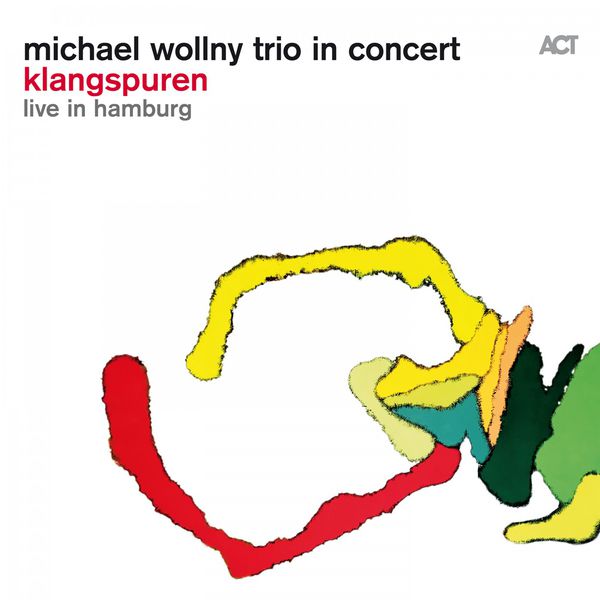
Michael Wollny Trio In Concert: Klangspuren – Live in Hamburg (ACT 2016)

I’m a big Wollny fan (thanks to an old friend from highschool who initially introduced me to him). See for example my reviews of his album Nachtfahrten, or my mention of one of his previous live albums in my 9 Outstanding Live Jazz albums. His album Weltentraum was also mentioned in my 25 Essential Jazz albums.

Michael Wollny Trio In Concert Klangspuren Live in Hamburg ACT 2016


This album is very close in spirit (and material) to the live concert I saw at Kaserne Basel in 2016. Given that it is to a large extend based on his Nocturne-style album Nachtfahrten, it has a lot of long, quiet, but intense passages. My favorite song is White Moon.

Wollny plays with his usual trio of Christian Weber and Eric Schaefer.

But don’t worry, the lion Wollny is occasionally let out of his cage for one of his more improvising elements.

Looking back at his recent studio albums, I rated Weltentraum a full 5 star, while Nachtfahrten was still nice, but only received a 4 star rating.

When we get to live albums, I´d suggest you get one of the Weltentraum live albums first, but this album is still very much worth having.

Wollny remains one of the most important Jazz pianists of our days.

My rating: 4 stars

You can find it here (Qobuz) and here.

FYI, If you prefer to buy it as a physical album you also get a collectors edition that includes a DVD.

Tartini and Verancini: New Types of Pasta? A Review of Rachel Podger’s Grandissima Gravita

Rachel Podger

After my so-so review of Adam Baldych’ recent Jazz album, where I declared I didn’t really like the sounds of the instrument, one of my readers asked me whether I like the sound of Baroque violin.

Let me put one thing clear: Very much so indeed! And when we get to baroque violin, there are few better players out there than Rachel Podger. I’m a big fan of her.

I’ve previously praised her Biber Rosary sonatas, that deservedly so won a Gramophone award in her category in 2016, and I also love her ventures beyond baroque, for example her outstanding Mozart violin sonatas (see my review here), which also made it into my Must Have Mozart albums.

(I haven’t written about it yet, but her Bach concertos, especially the album on double and triple concertos, is also outstanding).

So you can see a theme emerging up there, with a special focus on violin sonatas with small ensembles.

So, not surprisingly, I was very tempted when I saw her latest album come out.


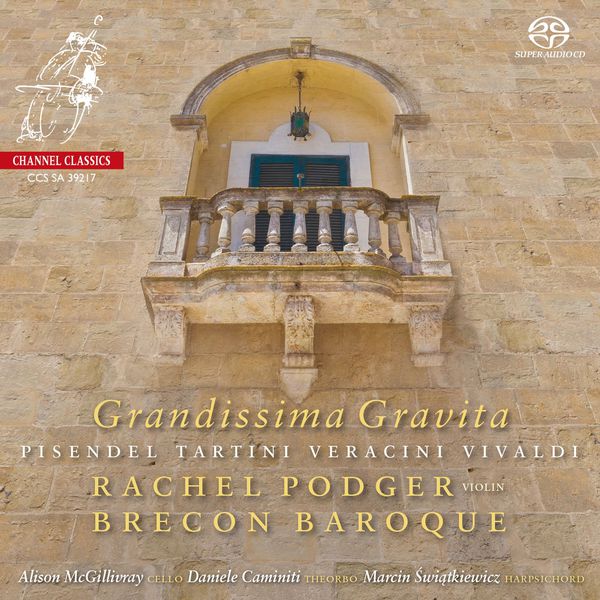
Grandissima Gravita – Rachel Podger – Brecon Baroque (Channel Classics 2017)


Grandissima Gravita Pisendel Tartini Veracini Vivaldi Rachel Podger Brecon Baroque Channel Classics 24/96


What’s the downside? You get several Italian baroque composer that are really not that well known, from Giuseppe Tartini, to Francesco Maria Veracini, to the only non-Italian in the group, Johann Georg Pisendel, a German but who during a trip to Italy became friends with the only well-known composer of this album, Antonio Vivaldi.

So what do we get from these relatively little known Vivaldi contemporaries? Well, musically, this is not a must have. Already Vivaldi is not my favorite cup of tea among the baroque composers, and his contemporaries are usually even less interesting to me.

But after the first stream, I went ahead and bought the album immediately?

Why is this, will you ask after my somewhat negative intro?

Well, it is simply because Podger, with her small ensemble, Brecon Baroque, plays with so much passion and energy that you simply cannot help to be drawn into the music.

I keep playing it over and over again. I really don’t think you could play this any better.

Add on top the outstanding recording quality of Channel Classics, and you have an album that you really should be checking out!

My rating: 4 stars (5+ star playing, down-graded due to the interest of the repertoire)

You can find it here (Native DSD) and here (Qobuz)

Fazil Say´s Chopin Nocturnes – Charming

Fazil Say

Fazil Say, a classical pianist from Turkey usually doesn’t leave people cold. Its often a love it or hate it affair.

The first time I heard Fazil was in a duo with a similarly polarising artist, Patricia Kopachinskaya, playing the Beethoven sonatas. It was clearly a memorable concert. And while fro Kopachinskaya I really don´t like everything she does, I really admire her artistic courage and ambition. She´s always in there with all her heart.

Fazil Say seems also quite emotional, but at least from his performances, his emotions typically translate into very sensitive playing, whether he plays Western classical music, or his own compositions.

I omitted to write about his great recent complete Mozart sonatas cycle recording, which I can really recommend you check out. There is not one boring moment in there.

So I was really intrigued when Say released his very recent Chopin Nocturnes album.

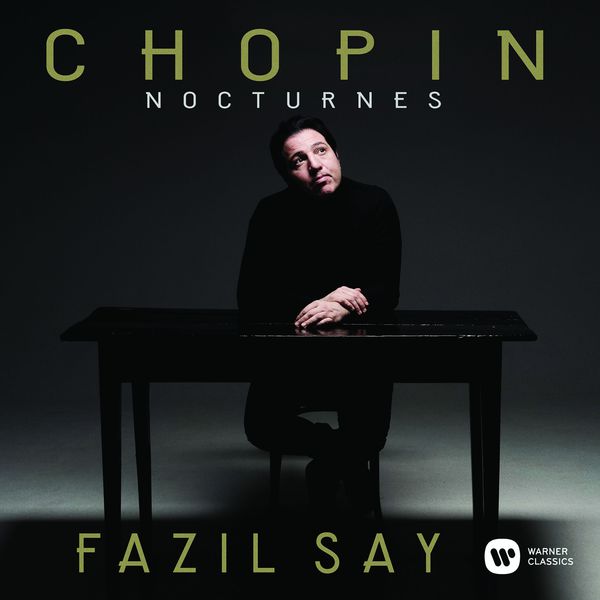
Chopin: Nocturnes – Fazil Say (Warner 2017)

Chopin: Nocturnes - Fazil Say 24/96 Warner Classics 2017

As expected, it is a beautiful recording. You get Say´s characteristic playfulness, sensitivity, interesting play with beautiful rubato.

The feeling you get is of a warm Mediterranean summer night. Chopin being one of the first tourists on Mallorca comes to mind, and Franz Liszt claimed the Nocturnes were inspired by Italian Bel Canto. Both very much apply here.

These are nuanced, intelligent interpretations. The only reproach I have is sometimes the tempi feel a bit fast.

Overall, Moravec´s legendary version not under threat of being kicked of the throne, but Say´s version is very much worth exploring. Recommended!

My rating: 4 stars

You can find it here (Qobuz) and here (HDTracks).

UPDATE Oct 1, 2017: Classic agrees, and gives this album 4 stars as well.

Krystian Zimerman plays Schubert sonatas

Krystian Zimerman

Krystian Zimerman is a living legend.

He is without doubt one of our most important pianists of the 20th and 21st centuries, and has produced a huge number of reference recordings.

I only saw him live once, couple of years ago in Lucerne, and was utterly impressed with his Chopin.

He obviously features in my Top 10 Favorite Classical Pianists, and when I heard that he’s about to release his first solo album since 1994 (!) I really couldn’t wait for it.

Franz Schubert’s late sonatas

And then he plays Schubert! D959 and D960!

The late piano sonatas are among my absolutely preferred works of him  (together with the late chamber works), and I’ve even written a blog post comparing 11 versions of D959. At the time, I selected Perahia, Brendel, and Uchida as my reference versions.

Franz Schubert: Piano Sonatas D959 and 960 – Krystian Zimerman (DG2017)

Franz Schubert Krystian Zimerman Piano Sonatas D959 & D960 Deutsche Grammophon 24 96

So, maybe it is a mistake to get too excited upfront. I really expected miracles here. I mean, take his Chopin Ballades, his Debussy, his Lutoslawski, his Brahms 1, his Liszt b-minor sonata. All miracles.

So you will have guess by now, that I was underwhelmed here.

Don’t get me wrong, this is a very fine recording. Obviously. It’s Zimerman after all. And he really makes these recordings very much his own.

But I’ve now played them over and over again, and I’m still waiting for the “wow”. I simply doesn’t come. I still don’t know what it is. Is it his rubato, his tempi? Is it maybe “too romantic”? I really don’t know.

There are so many subleties in his recording that I all appreciate individually. But the total doesn’t work for me. Well, hold on, “doesn’t work” is a silly way of saying I’m not blown away. It really all boils down to expectations.

Check it out, you have to, this is Zimerman after all. And I won’t be surprised if many of you disagree with my very personal opinion here. But for the moment, I’ll stick with the “cleaner” versions of Brendel and Uchida.

What do you think? I really appreciate your feedback here!

My rating: 4 stars

You can find it here (Qobuz) and here (Prostudiomasters)

UPDATE Oct 1st, 2017: the French magazine Classica is less hesitant and gives this album a “CHOC”, i.e. 5 stars.

UPDATE Oct 7, 2017: Gramophone also is fully convinced, giving this album a “recording of the month” for October. The only more critical review I’ve seen so far is by Elvire James on the French site Classiquenews.com, saying this album has nothing new to offer. Well I really wouln’t go as far as that.

UPDATE Oct 9, 2017: ClassicsToday Jed Distler is in the same range as my rating, with an 8 out of 10 points, quoting some micromanaging.

Your turn to judge! Let me know what you think.

Søren Bebe Trio: Home – A Review

We Get Requests

Just a quick intro here paraphrasing one of my favorite Oscar Peterson album titles: I get contacted quite regularly to review albums.

I usually check out what I receive when it sounds interesting, but so far I’ve never received anything for review that was musically interesting enough for me to write about.

Given that this is my personal blog and I don’t intend to make any money of this (as a matter of fact, this thing is even costing me a bit of money every year to maintain).

This nicely gives me the opportunity to write about only music I care about, one way or another.

Søren Bebe Trio

Søren reached out to me some weeks ago. He did it very smartly, with some namedropping, quoting that he’d recorded his latest album at the great Rainbow studios with the great Jan Erik Kongshaug. He really is an exceptional sound engineer, so my curiosity was piqued. Nicely enough, the album is available for streaming on Qobuz and TIDAL, so it was easy to check out (although he also provided me with a free download link, so full disclosure here)

I must admit I had never heard of him before, shame on me, but even if you care about the Jazz Piano Trio like me, it is really hard these days to keep track.

In a nutshell, Søren with his trio is based in Denmark, and plays with Kasper Tagel on bass and Anders Mogensen on drums.


Søren Bebe Trio – Home (2016 Out Here Music)

5707471047941_600

So what do you get? Let me put it in the Amazon way: Customers who bought this also bought…. Basically, if you like Keith Jarrett´s trio, and the nordic trios in particular in the style of Tord Gustavsen, you need to check this out.

You get beautiful, dreamy ballads like Floating (that the cover picture really represents well), but you also get slightly more uptempo pieces like A Simple Song. It really always stays very Scandinavian (although I always thought Denmark was different to Sweden and Norway, but here you find a lot of commonalities).

Check out the long ballad Trieste as a very representative example:

And all of this, not surprisingly given the recording venue & personnel, is very well recorded.

My rating: 4 stars. Definitely worth checking out.

You can find it here (Bandcamp)

Tingvall Trio’s New Album Cirklar – A Review

Tingvall Trio

When I started this post, I was suprised to notice that I hadn’t written a single post on this trio yet. I kind of assumed I had. But my search function told me otherwise.

Martin Tingvall’s Hamburg, Germany-based piano trio is a pretty international affair. Tingvall himself is Swedish, his Bass player Omar Rodriguez Calvo is Cuban, only the drummer is German.

They have a pretty strong following in Germany, but start to get better known beyond the borders.

Let me open a parenthesis here: I’m still surprised that Jazz is a very regional affair. You’d think that in the days of the internet any artist can be heard and known everywhere. And especially in a niche area like Jazz people wouldn’t really care where an artist comes from. But then again, quite often I see artists available due to some weird label rights in Europe, but not in the US, or vice versa.

Probably it boils down to the fact that album sales really don’t matter that much any more these days, and concerts are the main way a Jazz artists gets to their audience these days. And concerts quite often remain a very local affair. Great artists like Triosence for example rarely venture out of their native Germany. Parenthesis closed.

Tingvalls albums in the past have been very consistent, weird-sounding (to non Swedish ears) Scandinavian names like Vägen, Vattensaga, or Norr, and also have followed a certain style.

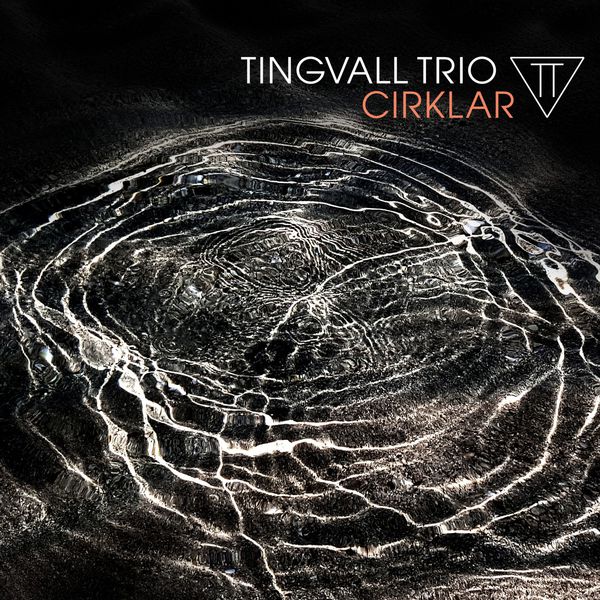
Tingvall Trio: Cirklar (Skip Records 2017)


Tingvall Trio Cirklar 24/96 2017 Skip Records

The latest album keeps this consistency. A weird name (that the booklet doesn´t bother explaining), and a very Tingvall-like Scandinavian-inspired jazz.

If you´ve followed my blog for a bit you know which kind of style I like in piano trio. Basically either the Oscar-Peterson swinging and grooving style, or the more melodic approach.

Tingvall clearly is the latter. They do groove up to a point in the faster tracks, but the real beauty is revealed in the slow tracks, that evolve into always interesting melodic and harmonic developments.

Track 4, Black Molnen is a perfect example of this, the type of ballad I just love.


Some may ask: but where is the Jazz in that? And I agree, this music is probably borderline in that respect. But to me, the melodic and harmonic beauty is just what I’m looking for.

As mentioned above, faster tracks on this album don´t always work for me. Track 5, Skansk Blues, is too much of a regular blues to be attractive. Blues obviously live from simplicity, but here the recipe just gets a bit too repetitive.

The title track, another ballad, then again gives me exactly what I want from Tingvall. If you like this track, buy the album.

That’s not to say that I only like the slow tracks on this album. Tidlös for example is a very groove uptempo track that has just the right amount of creativity. And Bumerang (See clip above) is quite well done, too.

Finally, Elis Visar really gives you the feeling of an open Nordic landscape.
Overall, really worth checking out.

 My rating: 4 stars

You can find it here (Qobuz) and here (Prostudiomasters)

Classical Life

A classical music blog by music critic Tim Mangan

This Week's Music

Making Classical Accessible

From my Macbook to the Net

Evaporation of my thoughts and observations

Elestra

Author: Artienne

My Life in Music

Playing, Singing and Listening

ArsX3

A brand new journal reviewing books, cinema, music

LawrenceEz's Blog

Creative and Performing Arts: Writing, Classical Music, Photography

Laetitia Strauch-Bonart

Contemporary Politics & Culture

sibling revelry

reveling in all things classical

It's A Raggy Waltz

I collect jazz on vinyl, I dig the Dave Brubeck Quartet, & I write about it

La Musica

By two cousins

thejazzbreakfast

Dishing it out from the heart of England

only jazz

random thoughts about music that matters to me

The Culture Project

Exploring the world of literature, wine, art, music and more.

René Spencer Saller

The music causes me to dream of fabulous empires, filled with fabulous sins.

Breaking Baroque

Blog of Tafelmusik Baroque Orchestra and Chamber Choir

Tasting Nirvana

Eating your Dosha

Shadow of Iris

Poetry, fiction, short stories, more ...

The Immortal Jukebox

A Blog about Music and Popular Culture

April Greene

Writer + Editor

a pianist's musings

A history of your favorite classical music.

Classical music for all

Boris Giltburg's blog

I HEAR VOICES

An orchestra seat in the web space