Wilhelm Friedemann Is Not My Cup Of Tea

Bach, again

Another blog post on Bach you’ll ask? Haven’t I written enough about this genius yet? Well a) no, absolutely not, and b) this is actually one of his many sons.

I quite like Carl Philipp Emanuel, but Wilhelm Friedemann really was a blank spot in my library.

So when I read in the January 2016 edition about a new WF Bach recording that even got an Editor’s Choice, I got curious.

Other French reviewers (Diapason, Telegram) also liked this album, so thanks to Qobuz streaming surviving (after having found a new investor late last year), I was able to check it out.

And here comes the bad news: I just don’t get it.

Wilhelm Friedemann Bach: Concertos for Cembalo and Strings – Maude Gratton – Il Convito (Mirare 2015)
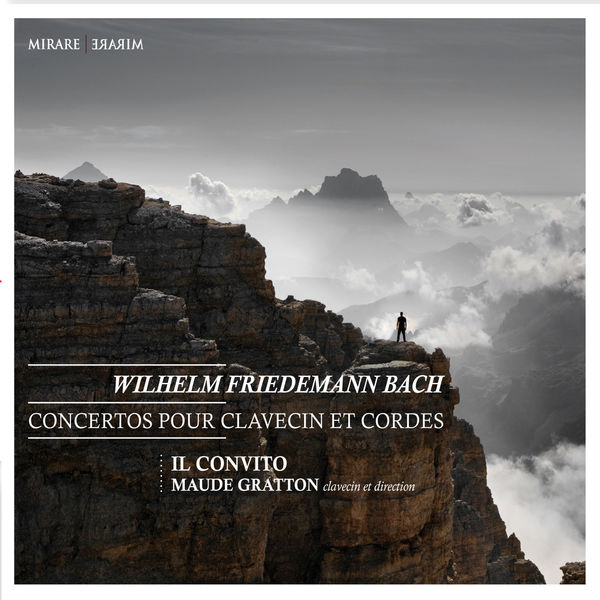
Wilhelm Friedemann Bach: Concertos pour Clavecin et Cordes / Cembalo Concerts Maude Gratton Il Convito

But before I get there, there is really a lot about this album that I really like: First of all, this is really top-notch playing. This is obviously a rather small ensemble, so the playing of each individual musician can be heard (also due to the fact that the album is quite well recorded). The young French harpsichordist Maude Gratton and her ensemble do an outstanding job here.

Second, I really appreciate the fact that we have a female conductor here, something which is still to rare these days (Simone Young, Emmanuelle Haïm, and Marin Alsop are the only ones that come to my mind spontaneously).

Third, I really appreciate the fact if somebody tries to stay away from the mainstream repertoire and discover new gems.

Not my cup of tea

Well, now we obviously have to come to the downside: I just don’t particularly care about the music. There are obviously beautiful moments. But I cannot help myself to think too many times “Why is he (the composer) doing this now and not something else?”, or “isn’t there something missing?”. I know this may sound presumptuous, and it probably is (especially because I’m pretty clueless about composing). But in any case, I don’t get this music.

I often wonder how in musical history some composers stay on top and others are completely forgotten. I guess true quality often pays off in the long run. That doesn’t mean, as mentioned above that lesser known composers don’t deserve the attention (and my recent discovery of Cavalli thanks to Christina Pluhar is a case in point. But overall, there is probably a reason why Wilhelm Friedemann to this day still is rather far away from  his father’s father’s fame.

But again, this is my personal taste and nothing else, so if you disagree with me, please comment! I always appreciate feedback!

My rating: 3 stars (note that this is 5 star playing, but I just cannot be bothered with the music)

You can find it here (Qobuz) or here (Prostudiomasters)

UPDATE Jan 28, 2016: Classica agrees with me and gives this album 3 stars (out of 5), proving again that Classica probably is the magazine that overall has the highest overlap with my personal taste, and that Gramophone’s recommendations need to be taken with a grain of salt, at least for me personally.

Jeff Hamilton Trio – Live!

Back from my Christmas holiday hiatus with my family, its high time for a new blog post.

And I promise, I won’t be bothering you with more seasonal music (well, until Easter that is, where I’ll certainly write about Bach’s different Passions).

Jeff Hamilton

I’ve previously mentioned Jeff Hamilton several times. He has played on two of my Essential Jazz albums, among others. He just has an unbeatable swing. I had the pleasure of hearing him live once with Ray Brown and Gene Harris, a concert I still remember 20 years later.

Beyond Ray Brown and Gene Harris, Hamilton has also played with Ella Fitzgerald, Diana Krall (he’s one of the main reasons several of her albums are good), and Count Basie.

My last blog post mentioning Jeff Hamilton was Montreux Alexander Live , with Monty Alexander, which like the album I’m just about to mention, was taken from fellow music lover JoeWhip’s recommendations on Audiostream.

Live! (1996 Mons Records)

Jeff Hamilton Trio Live! 2007 Mons Records

This album had been nominated by Jazz critics in Germany in 1997 as best Jazz album. And it really is a very fine achievement.

There are killer uptempo tracks like Apple Honey, where Jeff can show off his technical skills (however, unlike some other drummers who like to impress their audience, with Hamilton, the skills will always just serve the music). According to Jazz Times, this track is nearly 360 bpm. I haven’t verified, but it is certainly very impressive.

But then again, there are also soft ballads like Time Passes On, which are every bit as enjoyable as the fast tracks.

And you have to check out the great drum solo at the end of A Night In Tunisia!

Overall, this is traditional mainstream Jazz, extremely well done, and with the additional energy of a live event. Recommended!

My rating: 4 stars

You can find it here (Qobuz, which I’m happy to report has found an investor and will continue in business for at least the foreseeable future).

Merry Christmas With 3x the Messiah!

The Messiah

Given the season, I’ve been quite busy writing about Christmas and Seasonal music recently. You will find my musings about the Christmas Oratorio, Bach’s Christmas Cantatas, the Nutcracker, and even my favorite Christmas Jazz albums.

However, one major piece is certainly missing from the list above, and potentially the most famous of all, Georg Friedrich Händel’s Messiah. I guess even most non classical listeners will be able to recognize the famous “Hallelujah” from his best-know oratorio.

I’ve previously written about some other beautiful vocal music of Händel, as well as started writing about his operas (see my post about Rinaldo here) which I like very much. I’ve so far avoided writing about the Messiah, not because I don’t like it, but I just didn’t get to it yet.

To be fair, the Messiah is not properly speaking Christmas music, although the entire first part focuses on the prophecies of the birth of the Messiah, but it is often enough played in this season, so I include it here.

There are about a gazillion recording of this piece, not surprisingly, starting from early ones like the famous Otto Klemperer version, to luckily (to my ears) many contemporary versions influenced by the Historically Informed Practice (HIP).

All the versions I recommend below are HIP, if you prefer big-scale, traditional playing, the Klemperer recording is not a bad place to start.

My Three Favorite Versions

My three favorite versions date from last three decades. The earliest from the early 90s, the middle one from the mid-2000’s, and the latest one is barely a year old at the time of writing (2015).

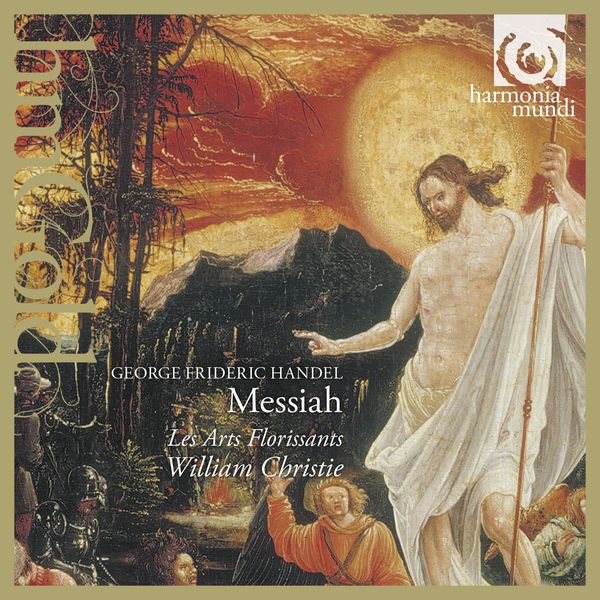
William Christie, Les Arts Florissants (Harmonia Mundi 1994)

William Christie is one of the greatest baroque conductors ever (see also his beautiful recent album Music for Queen Caroline, reviewed here).

His 1994 recording of the Messiah was my first ever version which I bought shortly after it came out, and I turned out to be very lucky as this remains a great version to this day.

Some great singers (e.g. Mark Padmore, Sandrine Piau), and the ever beautiful playing of the great French ensemble Les Arts Florissants, make this, 20 years later, still a very nice recording.

Handel: Messiah - Les Arts Florissants - William Christie Harmonia Mundi


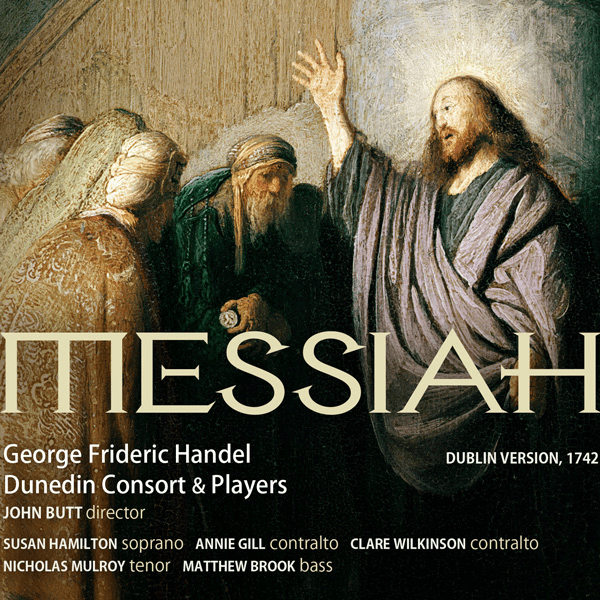
John Butt, Dunedin Consort (Linn Records 2007)

Pretty much every recording of the Dunedin Consort under John Butt is worth having. They have a clear fanclub at Gramophone, but while I sometimes disagree with the UK-artist hyping of this British magazine, for the Dunedin Consort I share their excitement.

This recording is probably the most polished of the three, with beautiful acoustics, sometimes a bit more moderate tempos, but a lot of insights and beauty. Wholeheartedly recommended.

Handel: Messiah - Dunedin Consort & Players John Butt Linn Records

Emmanuelle Haïm, Le Concert D’Astrée (Erato/Warner Classics 2014)

The second French recording in my list (William Christie, in spite of his American origins, has worked most of his life in France). I haven’t written about Emmanuelle Haïm yet on this blog, which is a big mistake. I’m a huge fan of hers, and what she does with her Concert d’Astrée is nearly always worth checking out (note that I’ve previously praised the Concert d’Astrée’s version of Mozart’s c-minor mass, but under a different conductor).

This is the most recent recording of the Messiah that I own (2014), and it quickly became my favorite. Why? Well, most of all it is the orchestral playing which has a beautiful “swing” to it. While this is obviously a festive work, baroque music is often based on or inspired by dance music, and this is probably the version of the three that gets closest to that ideal. Love it!

Handel: Messiah - Emannuelle Haïm Le Concert d'Astree Erato 24/96

My ratings: 4 stars (Christie & Butt), 5 stars (Haïm)

You can find the Christie here (Prestoclassical), the Dunedin here (Linn), and the Haïm here (Qobuz).

Merry Christmas!

I wish all of you a relaxing year end break, Merry Christmas if you celebrate it, and all the best! This is most likely my last post of the year, check back in in 2016! It’s been great fun sharing all this beautiful music with you, and getting all the feedback from you! Thanks for taking this journey with me!


Giovanni Mirabassi (one of my preferred Jazz piano trios) – Terra Furiosa

Giovanni Mirabassi

I’ve mentioned Giovanni Mirabassi already in my 25 essential Jazz albums. I consider him one of the best contemporary Jazz pianists.

Unfortunately his masterpiece Architectures is a bit hard to get these days as the rights were sold to a Japanese label.

Terra Furiosa (Discograph/Minimum 2008)

Luckily he has done other recordings that are much easier to purchase, like this 2008 recording,  Terra Furiosa.

On bass, we have Gianluca Renzi who still plays with Mirabassi today, and the American drummer Leon Parker.

Giovanni Mirabassi Gianluca Renzi Leon Parker Terra Furiosa 2008

On this album, you clearly hear the influences of the late Bill Evans style, and also Enrico Pieranunzi. That said, he’s made something very personal out of all this, already given that he essentially plays only his own compositions.

My favorite songs is Last Minutes, where Gianluca Renzi gets some time for a beautiful bass intro, turning into a samba-like rhythm when Parker kicks in.

But even beyond this song, you’ll find stunning melodies, seamless interplay between three outstanding musicians. The music never stops evolving, and while the album remains in a certain mood most of the time, there is never any feeling of boredom at all, there just too much going on.

My rating: 4 stars

You can find it here (Qobuz) and here (HDTracks)

In Tempore Nativitatis – Bach’s Christmas Cantatas by Philippe Pierlot

Christmas Music

Finding tasteful Christmas music is not always an easy task.

Obviously, not everything is as bad as this:

or this:

But nevertheless, there is still a lot of tasteless stuff around. I’ve tried to point to some of my sources for tasteful Christmas music, the timeless Christmas Oratorio, the Nutcracker, and my favorite Christmas Jazz albums previously, but luckily good old Johann Sebastian has also written more than the Christmas Oratorio.

Bach’s Christmas Cantatas

The Christmas Oratorio itself is basically a collection of cantatas, and as part of his large collection of cantatas (that I yet need to write about in more detail), he’s also written several cantatas for specific seasons.

Typically, there are three cantatas closely associated with Christmas.

BWV 63, Christen, ätzet diesen Ta(Christians, engrave this day), was written in 1713 for the first day of Christmas, referring to the announcement of Christ. In character, it is very festive, but not necessarily very “christmassy”.

BWV 110, Unser Mund sei voll Lachens (May our mouth be full of laughter), is my favorite of the three. This is partially due to the fact that its opening is based on Bach’s Orchestral Suite BWV 1069, which I really love. And here, the addition of the choir really gives it a fully new structure and beauty. Again, this cantata was written for the first day of Christmas, in 1725, while Bach was working in Leipzig.

BWV 151, Süßer Trost, mein Jesus kömmt (Sweet comfort, my Jesus comes), was also written in 1725, for St. John’s day, the third day of Christmas, is the most intimate of the three cantatas, but doesn’t lack any beauty nevertheless. Just check out the beautiful flute solo in the first movement.

There is obviously no shortage of recordings of Bach cantatas, there is a sizable number of complete recordings out there. My personal favorites usually are Koopman and Gardiner, but Suzuki’s and Rilling also are very nice alternatives.

In Tempore Nativitatis – Christmas Cantatas – Philippe Pierrot – Ricercar Consort (Mirare 2013)

Bach: In Tempore Nativitatis - Weihnachten Kantanten - Christmas Cantatas - Canates de Noël - Ricercar Consort Philippe Pierlot Mirare

The Ricercar Consort is a Belgian ensemble lead by Philippe Pierlot. The musicians play with a lot of love for the music, and generate a very transparent and spacious sound.

The voices are also very beautiful. My favorite is Maria Keohane in Süsser Trost, but also really like Julien Prégardien, son of Christoph, here as well

If you want to go for a complete collection of cantatas, you may well go directly to Koopman and Gardiner, but if you are looking for a modern, beautifully recorded version of the Christmas cantatas specifically, you really cannot go wrong with this album.

My rating: 4 stars

You can find it here (Qobuz) or here (Prestoclassical)

The Legacy Of The Jazz Messengers (7): Kenny Dorham’s Whistle Stop

I haven’t been continuing my Jazz Messengers Mini-Series for a while. It’s really time to change that.

Kenny Dorham is probably one of the least know Jazz Messengers, and this in spite of the fact that he played on the famous Café Bohemia sessions, and being the composer of the great standard Blue Bossa (I just love that song, check it out on Joe Henderson’s Page One or Dexter Gordon’s Biting the Apple).

He has recorded quite a number of noteworthy albums, including Afro-Cuban (1955), Quiet Kenny (1959), Matador (1962), Una Mas (1963), and Trompeta Toccata (1964), all of which are very much worth checking out.

Whistle-Stop (Blue Note 1961)

Kenny Dorham Whistle Stop Blue Note 1961


So why call out Whistle Stop? Well, two reasons: a) the cast is stellar, with Hank Mobley, Kenny Drew, Paul Chambers, and Philly Joe Jones, and b) we have only Dorham originals on this album

My favorite song is the bluesy Buffalo, which swings nicely and gives both Dorham and Mobley enough time to develop their solos. Another nice one is the title track, Whistle Stop, faster paced, but nicely grooving. Philly Twist is not dedicated to Philly Joe Jones, the drummer.

This is well done hard-bop, and deserves to be better known.

My rating: 4 stars

You can find it here (Qobuz) or here (HDtracks)

There Must Be An Angel: Mozart – The Weber Sisters

If reading the blog post title you wonder what the connection is between a 1990s Eurythmics title, Mozart, and some sisters called Weber, let me explain.

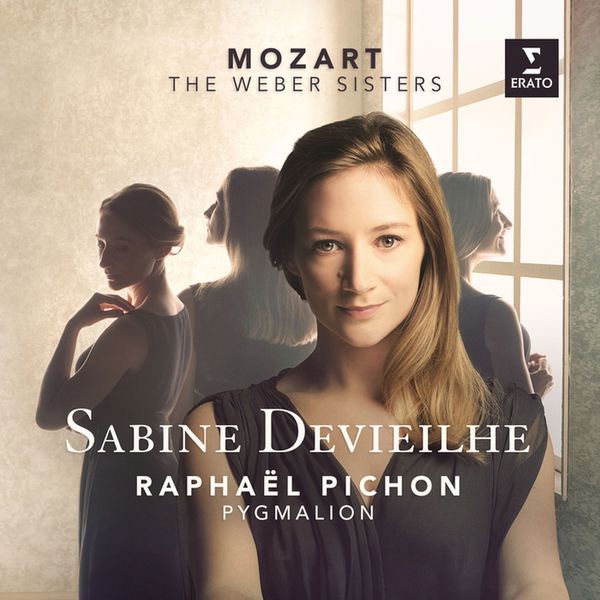
The angel is simply referring to Sabine Devieilhe, the young soprano on the album I’m about to write about. Not only she looks pretty much like one (see the cover photo below), she really has an angelic voice. Clear, bright, shiny, with a beautiful color and an amazing range.

I first noticed her in her debut recording on Erato, with Alexis Kossenko (previously mentioned for his Telemann recording here), Le Grand Théatre de l’Amour dedicated to Jean-Philippe Rameau.

Mozart: The Weber Sisters (Erato 2015)

Mozart: The Weber Sisters Sabine Devielhe Raphael Pichon Pgymalion Erato 2015

This is Sabine Devileilhe’s second album on Erato, recorded this time with Raphaël Pichon’s ensemble Pygmalion.

I hesitated for quite some time to write about his album as I’m generally not a big fan of “best-of” type albums. I don’t mind them for baroque music as much, as it can be sometimes a bit tedious to go through 3+ hours of an opera seria, but for Mozart and beyond I prefer to listen to the entire opera instead. However, the selection on this particular album includes quite a number of single arias that are not part of a larger opera and are not recorded that often.

Let me briefly explain the Weber Sisters title of his album, as this is kind of a concept album. The most famous Weber sister is Constanze, Mozart’s wife, but actually Mozart was a close friend of the Weber family and as the booklet extensively explains, was at some point in love with the youngest sister, Aloysia, and the middle sister, Josepha, also played an important role in his life.

What music do you get? Well known hits like the famous Queen of the Night aria, or the French song Ah vous dirais-je maman, but also as mentioned previously several lesser known arias. All this is beautifully player by Raphaël Pichon’s ensemble, and Devileilhe’s voice is an absolute pleasure to hear.

This albums was elected among the albums of the year by Classica magazine, and I fully agree that his album is highly recommended.

My rating: 5 stars

You can find it here (Qobuz)

Classical Life

A classical music blog by music critic Tim Mangan

This Week's Music

Making Classical Accessible

From my Macbook to the Net

Evaporation of my thoughts and observations

Elestra

Author: Artienne

My Life in Music

Playing, Singing and Listening

ArsX3

A brand new journal reviewing books, cinema, music

LawrenceEz's Blog

Creative and Performing Arts: Writing, Classical Music, Photography

Laetitia Strauch-Bonart

Contemporary Politics & Culture

sibling revelry

reveling in all things classical

It's A Raggy Waltz

I collect jazz on vinyl, I dig the Dave Brubeck Quartet, & I write about it

La Musica

By two cousins

thejazzbreakfast

Dishing it out from the heart of England

only jazz

random thoughts about music that matters to me

The Culture Project

Exploring the world of literature, wine, art, music and more.

René Spencer Saller

The music causes me to dream of fabulous empires, filled with fabulous sins.

Breaking Baroque

Blog of Tafelmusik Baroque Orchestra and Chamber Choir

Tasting Nirvana

Eating your Dosha

Shadow of Iris

Poetry, fiction, short stories, more ...

The Immortal Jukebox

A Blog about Music and Popular Culture

April Greene

Writer + Editor

a pianist's musings

A history of your favorite classical music.

Classical music for all

Boris Giltburg's blog

I HEAR VOICES

An orchestra seat in the web space