St. John Passion – Philippe Pierlot – Ricercar Consort

No, I haven’t disappeared

More than 2 weeks without a blog post. Shame on me. In my defense, I was first sick and then crazily busy at work. But this cannot go on!

I’ll get back to writing as of now, and still target at least two posts per week. So check back regularly, or even better, subscribe!

Good Friday

I’ve already written about the St Matthew Passion some weeks ago here.

In the meantime, I had the extreme pleasure of hearing this masterpiece live in Lucerne, and played by none less than the magnificent Monteverdi Choir lead by Gardiner! To be fair, I haven’t always been convinced by some of Gardiners latest releases (especially this one), but I still consider him an absolute legend for Bach.

And I wasn’t disappointed. I wanted to write a review of this concert, but Sarah Bartschelet  in her review on Backtrack  has already done such an excellent job, that I just have to add that while Mark Padmore as Evangelist was indeed sublime, an absolute highlight for me was the counter-tenor Reginald Mobley, and Michael Niesemann on the first oboe. Both received standing ovations from the more than usually enthusiastic Swiss audience.

St John Passion BWV245

The St John passion is often considered the “little brother” of the St Matthew Passion. I’d be hard pressed to say which one I prefer, both are absolute masterpieces.

In any case, why choose?

Philippe Pierlot – Ricercar Consort (Mirare 2011)

Again, there is no shortage of good versions available. I could have easily written about the Dunedin Consort again, Suzuki’s version is also fantastic, and Herreweghe again is reliable as usual.

However, let me write here about a different version which I particularly like. I first came across Philippe Pierlot in his beautiful album of the Bach Christmas cantatas (reviewed here).
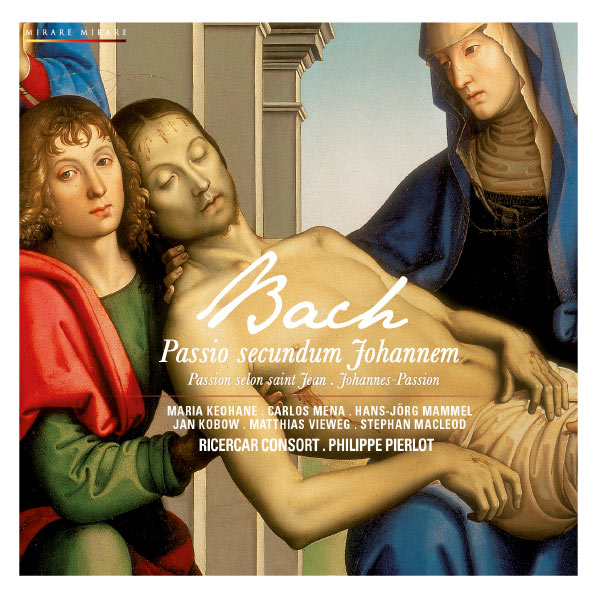
Bach: St John Passion Philippe Pierrot Ricercar Consort Mirare 2011 24 88

What is special about this recording is the lightness of the playing and singing. Obviously, this is an extremely tragic subject (even if you’re not Christian), but Pierlot and his ensemble give us a very clean and balanced version. It is never too heavy or overloaded. Furthermore, the soloists all do an excellent job, particularly Matthias Vieweg as Jesus.

If you don’t speak German, I strongly recommend you follow the booklet to be able to follow the story. It is really amazing how Bach was able to match the atmosphere of every single moment of this tragic story of treason and suffering.

This recording was shortlisted for Gramophone’s Baroque Vocal album of the year.

My rating: 5 stars

You can find it here (Qobuz) or here (Prestoclassical)
 

Easter Time Is Coming Up Soon – And With It The Magnificent Matthew Passion

Seasonal Music For Easter

Easter time is coming. At least over here in Europe, that means most shops fill up with chocolate eggs and bunnies. Nothing wrong with that.

But while I’m not religious, there are two pieces of music that are intrinsically linked for me to this time of the year. Both essentially tell the same story, the well-known biblical story of the last days of Jesus Christ as accounted for in the gospels of John and Matthew respectively.

At yes, this will be yet another blog post about Bach. Sorry for this, but he put both of these accounts into such beautiful music that it really doesn’t matter what religion you follow (or if at all), both of these works, the BWVs 245 and 244, respectively the Johannes-Passion and Matthäus-Passion, are among the most outstanding musical works ever written.

I’ll write about the St John Passion later, it is the possibly slightly less well-known of the two.

St Matthew Passion BWV244

But let me start with the St Matthew Passion, for the simple reason that I just spent a lot of money on a concert ticket. I’ll have the pleasure in a couple of weeks to see John Eliot Gardiner and the Monteverdi Choir live playing this masterpiece.

I highly encourage you to seek this concert out if you live in Europe, they are touring several countries starting with Valencia, Spain. I can guarantee this to be an outstanding concert experience by one of the greatest Bach interpreters and choirs ever. It also includes the great Mark Padmore as Evangelist.

I’ll be certainly writing about this concert experience here.

This work is also of historical importance, as its revival in the 19th century by Mendelssohn triggered also a much more general appreciation of Bach as the musical genius he truly was.

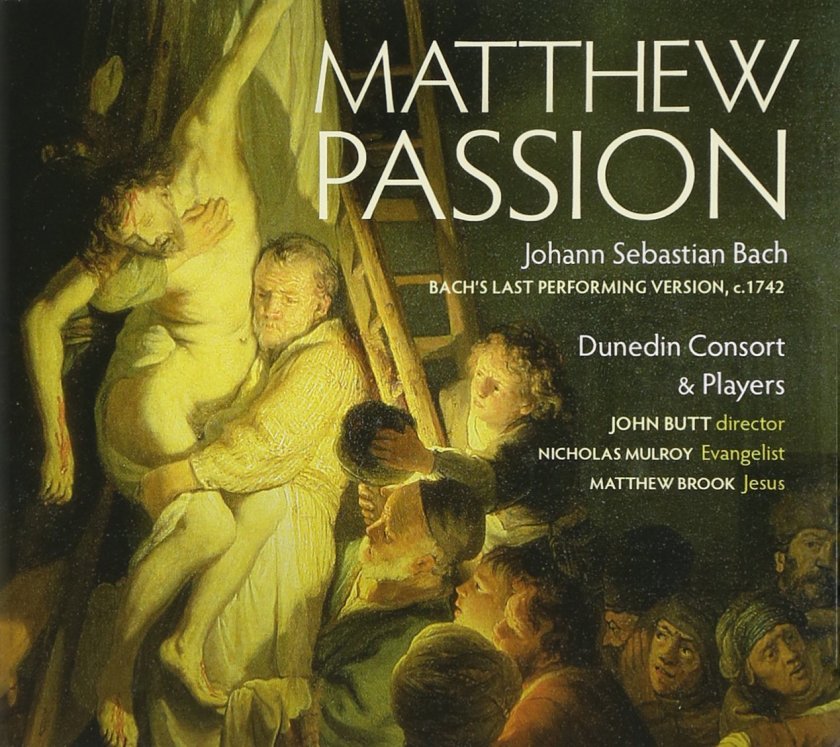
St Matthew’s Passion – John Butt – Dunedin Consort

Let me talk about another outstanding Bach interpreter here. I’ve written about John Butt and the Dunedin Consort several times already, regarding the Mozart Requiem, Händel’s Messiah, and more recently on the Brandenburg concertos.

If you believe Gramophone Magazine, he rarely misses a recording, having received a number of Gramophone Editor’s choices and Awards. Obviously, one needs to be a bit careful as Gramophone often suffers from a certain anglophilia in their reviews, and local artists more often than not get rather favorable reviews.

However, in this particular case, I fully concur with Gramophone’s opinion, whatever John Butt and his Dunedin Consort touch is usually worth checking out. Furthermore, being recorded on the Linn label (of legendary turntable fame), these recordings are what is often to referred as audiophile.

Matthew Passion Dunedin Consort John Butt Linnrecords 24 88

A word of advice, even if the story may be familiar to you if you are Christian, take the booklet and follow the lyrics (even better if you speak German obviously). It is just outstanding how much Bach’s music reflects the feeling of what is going on at any time of the 2h18, and really helps absorbing this masterpiece better.

This is particularly true in the very last Chorus Wir setzen uns mit Tränen nieder (we sit down in tears). If this track doesn’t touch your emotions, I don’t know what does.

The Dunedin’s version brings an astounding amount of clarity to the reading. This doesn’t mean it is lightweight, but it is played with beautiful transparency. Nicely enough, although none of the singers are German, their pronunciation of the text is exceptional.

Now is John Butt’s version the one and only to have for Matthew? Certainly not. There are other great versions out there that are worth checking out, from Gardiner’s and Herreweghe’s classic accounts in the late 1980s, via Kuijken and Suzuki, to the recent controversial but thought-provoking René Jacobs reading.

And although you’ll have noticed that I’m a big fan of historically informed practice, the legendary version of Karajan, with Gundola Janowitz, Christa Ludwig, Peter Schreier and Dietrich Fischer-Dieskau is worth checking out for the beautiful singing (although the tempi are really too slow for my ears with Kommt Ihr Töchter taking a full 9:21 vs. 6:38 with the Dunedins).

But overall the Dunedin version is an excellent starting point for exploring this masterpiece.

My rating: 5 stars

You can find it here (Linn Records)

My Favorite Version of the Brandenburg Concertos

Bach, once more

I hope you’re not getting bored by me writing about good old Johann Sebastian. I have to admit my obsession with the composer only developed in the last decade of my life, before I was much more into Romantic composers like Brahms or Bruckner.

But I suppose, sooner or later the timeless beauty of this potentially best of all composers sooner or later gets you. What is outstanding that he was able to write intellectual masterpieces like the Goldberg variations, bring religious music to absolute summits (e.g. the b-minor Mass reviewed here), but also write extremely approachable music that even non-classical listeners appreciate or at least have heard (Air on the g-string anybody?)

The Brandenburg Concertos

Today I’ll be writing again about another one of his “greatest hits”, as the Brandenburg concertos are among the most popular of his works.

The 6 concertos got their name from the nobleman they were dedicated to, Christian Ludwig, Margrave of Brandenburg-Schwedt. While they are ususally presented as a group, they actually each feature quite different solo instruments (harpsichord, flute, trumpets, etc.), this is probably one of the reasons why they are so popular, as they present an interesting variety.

These concertos have been recorded hundreds of times. Personally, I can only listen to more recent recordings influenced by the historically informed practice, on smaller ensembles. However, this shouldn’t stop you from checking out how this music was played by the likes of Herbert Karajan in the 1950’s and 60’s, nothing wrong with it, but not my cup of tea, it just sounds wrong to my ears.


Renaldo Alessandrini / Il Concerto Italiano (Naïve 2005)

I’ve checked out dozens of recordings to find my personal favorite. This 2005 recording by Rinaldo Alessandrini with the Concerto Italiano (who I had the pleasure to hear live playing Vivaldi in a church some years ago) has all I want, which is mainly: fun, fun, and fun.

Bach Brandenburg Concertos Rinaldo Alessandrini Naive 2005

You just never get bored listening to this music with all the energy and refinement you’re getting from this outstanding ensemble. I love when Jazz is swinging, but let’s face it, this music is (and has to) swing as well. It is clearly visible and audible that baroque music in many ways was strongly influenced by the dance music of the time.

Obviously, Alessandrini is not the only outstanding version out there. I particularly like the efforts by the French ensemble Café Zimmermann, John Butt’s Dunedin Consort is also excellent. But I keep going back to Alessandrini as my personal reference.

My rating: 5 stars

You can find it here (Qobuz) and here (Prestoclassical)


Bach’s Well-Tempered Clavier – beautifully played by Céline Frisch

Das wohltemperierte Klavier

Yes, I know, Bach once more.

But to my defense, this is the first time I’ve written about this particular work, the famous Well-Tempered Clavier BWV 846-893.

Prelude no. 1 in C-major is probably known even to many  non-classical listeners, as it forms the basis of Gounod’s Ave Maria, and it is accessible enough for most piano students to attack it at some point during their classes (including me).

Obviously, there is much more to this cycle of works that takes you through every single key step by step. It consists of two “books” or parts of preludes and fugues covering all keys of our Western scale

Side note: In case you didn’t know, the term “well-temperament” refers to the tuning of the keyboard that was at that time recently invented. Before the well-tempered tuning, any given tuning used at the time worked well for some keys but didn’t really work for others. To simplify, the well-tempered scale by Andreas Werkmeister was the first where you could easily switch between keys without any of the keys sounding out of tune.

I already had a couple of nice recordings of this work, from old-fashioned but great Sviatoslav Richter to Andras Schiff (obviously), to both recordings of Angela Hewitt.

However, I never had a recording on harpsichord that really convinced me. Earlier I used to like Keith Jarrett’s recording on ECM. However, I’ve outgrown this recoding a bit. Both Egarr and Levin are very good, but still I wasn’t 100% satisfied.

Céline Frisch’s Well Tempered Clavier Book 1 

Céline Frisch The Well Tempered Clavier Book I Alpha 2015

I had first heard about Céline Frisch regarding her Goldberg Variation recording. But I never checked her out I must admit. I was too happy with Hantaï, and more recently Levit.

However, the February 2016 issue of Classica pointed me towards her Well-Tempered Clavier recording, so I went to Qobuz and gave it a listen. They awarded this album a “Choc“, their way of saying 5 stars, and called this “une interprétation magistrale“, probably best translated with “authoritative recording”. (It also received the highest rating from Diapason, the Diapason d’or).

And I was impressed, this version is so spot-on, so precise, but never technical, never dull. Bach on a harpsichord can easily get boring or annoying, when it is played too much like robot, or lacking any other kind of differentiation, as obviously on a harpsichord you cannot modulate your touch like you can do on a modern piano.

None of this here, you will be drawn into the music from the first second, and will want to listen to the entire thing. Not an easy achievement, given that this was composed to use Bach’s own words (translation thanks to Wikipedia) “for the profit and use of musical youth desirous of learning, and especially for the pastime of those already skilled in this study”, i.e. essentially a piece to study your skills, not really for public performance and for somebody else to listen to it.

Frisch plays a copy of a Silbermann harpsichord. This instrument at the beginning takes some getting used to, it being a bit bright and slim. However, you get into it really quickly, also thanks to Alpha’s usual good recording technique, and after a while you really appreciate the transparency that let’s you hear through even more complicated fugues.

My rating: 5 stars

You can find it here (Qobuz) and here (Prostudiomasters)

P.S. And you can be sure her Goldberg’s are next on my playlist.

Wilhelm Friedemann Is Not My Cup Of Tea

Bach, again

Another blog post on Bach you’ll ask? Haven’t I written enough about this genius yet? Well a) no, absolutely not, and b) this is actually one of his many sons.

I quite like Carl Philipp Emanuel, but Wilhelm Friedemann really was a blank spot in my library.

So when I read in the January 2016 edition about a new WF Bach recording that even got an Editor’s Choice, I got curious.

Other French reviewers (Diapason, Telegram) also liked this album, so thanks to Qobuz streaming surviving (after having found a new investor late last year), I was able to check it out.

And here comes the bad news: I just don’t get it.

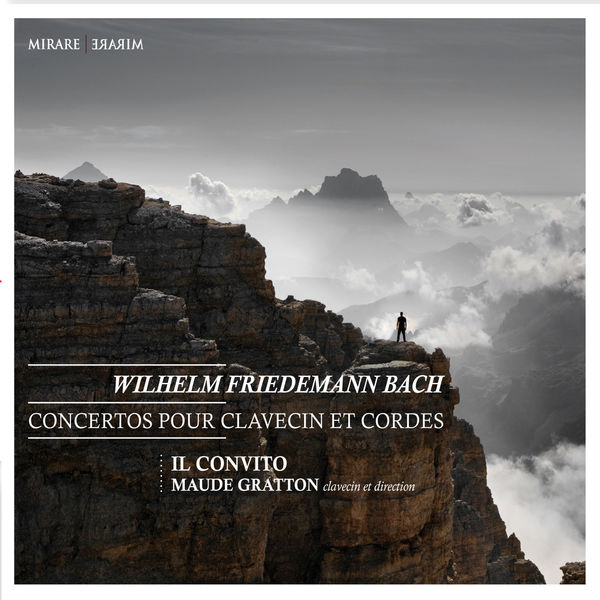
Wilhelm Friedemann Bach: Concertos for Cembalo and Strings – Maude Gratton – Il Convito (Mirare 2015)

Wilhelm Friedemann Bach: Concertos pour Clavecin et Cordes / Cembalo Concerts Maude Gratton Il Convito

But before I get there, there is really a lot about this album that I really like: First of all, this is really top-notch playing. This is obviously a rather small ensemble, so the playing of each individual musician can be heard (also due to the fact that the album is quite well recorded). The young French harpsichordist Maude Gratton and her ensemble do an outstanding job here.

Second, I really appreciate the fact that we have a female conductor here, something which is still to rare these days (Simone Young, Emmanuelle Haïm, and Marin Alsop are the only ones that come to my mind spontaneously).

Third, I really appreciate the fact if somebody tries to stay away from the mainstream repertoire and discover new gems.

Not my cup of tea

Well, now we obviously have to come to the downside: I just don’t particularly care about the music. There are obviously beautiful moments. But I cannot help myself to think too many times “Why is he (the composer) doing this now and not something else?”, or “isn’t there something missing?”. I know this may sound presumptuous, and it probably is (especially because I’m pretty clueless about composing). But in any case, I don’t get this music.

I often wonder how in musical history some composers stay on top and others are completely forgotten. I guess true quality often pays off in the long run. That doesn’t mean, as mentioned above that lesser known composers don’t deserve the attention (and my recent discovery of Cavalli thanks to Christina Pluhar is a case in point. But overall, there is probably a reason why Wilhelm Friedemann to this day still is rather far away from  his father’s father’s fame.

But again, this is my personal taste and nothing else, so if you disagree with me, please comment! I always appreciate feedback!

My rating: 3 stars (note that this is 5 star playing, but I just cannot be bothered with the music)

You can find it here (Qobuz) or here (Prostudiomasters)

UPDATE Jan 28, 2016: Classica agrees with me and gives this album 3 stars (out of 5), proving again that Classica probably is the magazine that overall has the highest overlap with my personal taste, and that Gramophone’s recommendations need to be taken with a grain of salt, at least for me personally.

Merry Christmas With 3x the Messiah!

The Messiah

Given the season, I’ve been quite busy writing about Christmas and Seasonal music recently. You will find my musings about the Christmas Oratorio, Bach’s Christmas Cantatas, the Nutcracker, and even my favorite Christmas Jazz albums.

However, one major piece is certainly missing from the list above, and potentially the most famous of all, Georg Friedrich Händel’s Messiah. I guess even most non classical listeners will be able to recognize the famous “Hallelujah” from his best-know oratorio.

I’ve previously written about some other beautiful vocal music of Händel, as well as started writing about his operas (see my post about Rinaldo here) which I like very much. I’ve so far avoided writing about the Messiah, not because I don’t like it, but I just didn’t get to it yet.

To be fair, the Messiah is not properly speaking Christmas music, although the entire first part focuses on the prophecies of the birth of the Messiah, but it is often enough played in this season, so I include it here.

There are about a gazillion recording of this piece, not surprisingly, starting from early ones like the famous Otto Klemperer version, to luckily (to my ears) many contemporary versions influenced by the Historically Informed Practice (HIP).

All the versions I recommend below are HIP, if you prefer big-scale, traditional playing, the Klemperer recording is not a bad place to start.

My Three Favorite Versions

My three favorite versions date from last three decades. The earliest from the early 90s, the middle one from the mid-2000’s, and the latest one is barely a year old at the time of writing (2015).

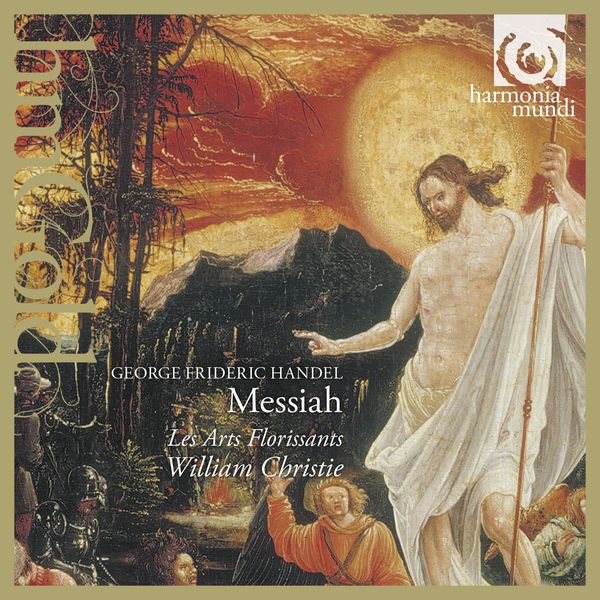
William Christie, Les Arts Florissants (Harmonia Mundi 1994)

William Christie is one of the greatest baroque conductors ever (see also his beautiful recent album Music for Queen Caroline, reviewed here).

His 1994 recording of the Messiah was my first ever version which I bought shortly after it came out, and I turned out to be very lucky as this remains a great version to this day.

Some great singers (e.g. Mark Padmore, Sandrine Piau), and the ever beautiful playing of the great French ensemble Les Arts Florissants, make this, 20 years later, still a very nice recording.

Handel: Messiah - Les Arts Florissants - William Christie Harmonia Mundi


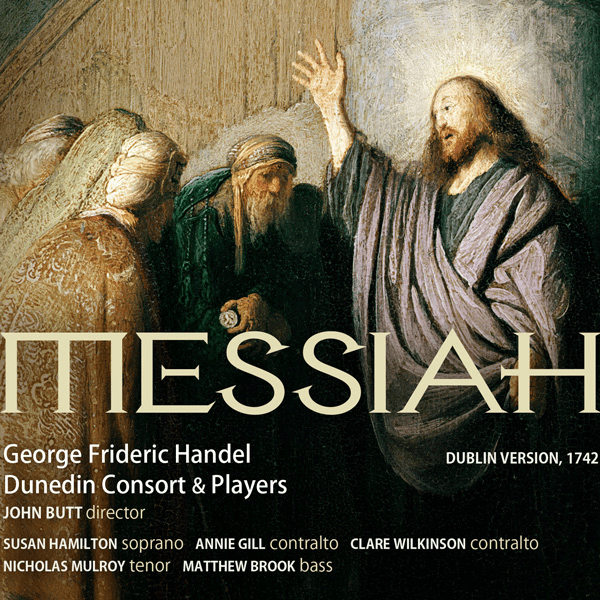
John Butt, Dunedin Consort (Linn Records 2007)

Pretty much every recording of the Dunedin Consort under John Butt is worth having. They have a clear fanclub at Gramophone, but while I sometimes disagree with the UK-artist hyping of this British magazine, for the Dunedin Consort I share their excitement.

This recording is probably the most polished of the three, with beautiful acoustics, sometimes a bit more moderate tempos, but a lot of insights and beauty. Wholeheartedly recommended.

Handel: Messiah - Dunedin Consort & Players John Butt Linn Records

Emmanuelle Haïm, Le Concert D’Astrée (Erato/Warner Classics 2014)

The second French recording in my list (William Christie, in spite of his American origins, has worked most of his life in France). I haven’t written about Emmanuelle Haïm yet on this blog, which is a big mistake. I’m a huge fan of hers, and what she does with her Concert d’Astrée is nearly always worth checking out (note that I’ve previously praised the Concert d’Astrée’s version of Mozart’s c-minor mass, but under a different conductor).

This is the most recent recording of the Messiah that I own (2014), and it quickly became my favorite. Why? Well, most of all it is the orchestral playing which has a beautiful “swing” to it. While this is obviously a festive work, baroque music is often based on or inspired by dance music, and this is probably the version of the three that gets closest to that ideal. Love it!

Handel: Messiah - Emannuelle Haïm Le Concert d'Astree Erato 24/96

My ratings: 4 stars (Christie & Butt), 5 stars (Haïm)

You can find the Christie here (Prestoclassical), the Dunedin here (Linn), and the Haïm here (Qobuz).

Merry Christmas!

I wish all of you a relaxing year end break, Merry Christmas if you celebrate it, and all the best! This is most likely my last post of the year, check back in in 2016! It’s been great fun sharing all this beautiful music with you, and getting all the feedback from you! Thanks for taking this journey with me!


In Tempore Nativitatis – Bach’s Christmas Cantatas by Philippe Pierlot

Christmas Music

Finding tasteful Christmas music is not always an easy task.

Obviously, not everything is as bad as this:

or this:

https://www.youtube.com/watch?v=xBAshnF0HwY

But nevertheless, there is still a lot of tasteless stuff around. I’ve tried to point to some of my sources for tasteful Christmas music, the timeless Christmas Oratorio, the Nutcracker, and my favorite Christmas Jazz albums previously, but luckily good old Johann Sebastian has also written more than the Christmas Oratorio.

Bach’s Christmas Cantatas

The Christmas Oratorio itself is basically a collection of cantatas, and as part of his large collection of cantatas (that I yet need to write about in more detail), he’s also written several cantatas for specific seasons.

Typically, there are three cantatas closely associated with Christmas.

BWV 63, Christen, ätzet diesen Ta(Christians, engrave this day), was written in 1713 for the first day of Christmas, referring to the announcement of Christ. In character, it is very festive, but not necessarily very “christmassy”.

BWV 110, Unser Mund sei voll Lachens (May our mouth be full of laughter), is my favorite of the three. This is partially due to the fact that its opening is based on Bach’s Orchestral Suite BWV 1069, which I really love. And here, the addition of the choir really gives it a fully new structure and beauty. Again, this cantata was written for the first day of Christmas, in 1725, while Bach was working in Leipzig.

BWV 151, Süßer Trost, mein Jesus kömmt (Sweet comfort, my Jesus comes), was also written in 1725, for St. John’s day, the third day of Christmas, is the most intimate of the three cantatas, but doesn’t lack any beauty nevertheless. Just check out the beautiful flute solo in the first movement.

There is obviously no shortage of recordings of Bach cantatas, there is a sizable number of complete recordings out there. My personal favorites usually are Koopman and Gardiner, but Suzuki’s and Rilling also are very nice alternatives.

In Tempore Nativitatis – Christmas Cantatas – Philippe Pierrot – Ricercar Consort (Mirare 2013)

Bach: In Tempore Nativitatis - Weihnachten Kantanten - Christmas Cantatas - Canates de Noël - Ricercar Consort Philippe Pierlot Mirare

The Ricercar Consort is a Belgian ensemble lead by Philippe Pierlot. The musicians play with a lot of love for the music, and generate a very transparent and spacious sound.

The voices are also very beautiful. My favorite is Maria Keohane in Süsser Trost, but also really like Julien Prégardien, son of Christoph, here as well

If you want to go for a complete collection of cantatas, you may well go directly to Koopman and Gardiner, but if you are looking for a modern, beautifully recorded version of the Christmas cantatas specifically, you really cannot go wrong with this album.

My rating: 4 stars

You can find it here (Qobuz) or here (Prestoclassical)

Classical Life

A classical music blog by music critic Tim Mangan

This Week's Music

Making Classical Accessible

From my Macbook to the Net

Evaporation of my thoughts and observations

Elestra

Author: Artienne

My Life in Music

Playing, Singing and Listening

ArsX3

A brand new journal reviewing books, cinema, music

LawrenceEz's Blog

Creative and Performing Arts: Writing, Classical Music, Photography

Laetitia Strauch-Bonart

Contemporary Politics & Culture

sibling revelry

reveling in all things classical

It's A Raggy Waltz

I collect jazz on vinyl, I dig the Dave Brubeck Quartet, & I write about it

La Musica

By two cousins

thejazzbreakfast

Dishing it out from the heart of England

only jazz

random thoughts about music that matters to me

The Culture Project

Exploring the world of literature, wine, art, music and more.

René Spencer Saller

The music causes me to dream of fabulous empires, filled with fabulous sins.

Breaking Baroque

Blog of Tafelmusik Baroque Orchestra and Chamber Choir

Tasting Nirvana

Eating your Dosha

Shadow of Iris

Poetry, fiction, short stories, more ...

The Immortal Jukebox

A Blog about Music and Popular Culture

April Greene

Writer + Editor

a pianist's musings

A history of your favorite classical music.

Classical music for all

Boris Giltburg's blog

I HEAR VOICES

An orchestra seat in the web space