My Favorite Versions of Bach’s Christmas Oratorio

Christmas Music

Only three weeks left until Christmas. Usually, during this time there are three unavoidable things: Some singer releasing a Christmas album (that reminds me that I need to write a post about my favorite Jazz Christmas albums, watch this space), you hear Wham again on the radio 5 times per day, and most households that have some form of love for classical music play the Christmas oratorio, in a similar frequency to the Last Christmas repetitions on popular radio.

I’m very similar, during the month of December the Oratorio gets played at least 10-20 times. I wonder myself why I still like it. But let’s face it, this is Bach, and you can never get too much Bach.

Listening to this work you’re best of when you speak at least some German, as you get the entire beautiful Christmas story told to you by the Evangelist, but if you don’t, either get the booklet or just enjoy the music

(Side note: I’m not religious, but having grown up in a Western country Christmas has become more of a family tradition than a religious event for me like for many others).

Gardiner / Monteverdi Choir (DG Archiv 1987)
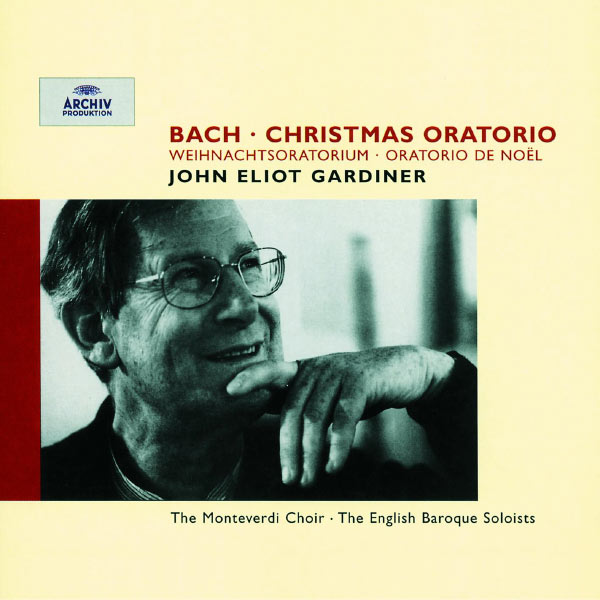
Bach Christmas Oratorio John Eliot Gardiner Monteverdi Choir English Baroque Soloists DG Archiv 1987

Gardiner’s version from 1987 is probably the best known, and it is still my favorite version. I’m not sure if my preference isn’t biased by the fact that I’ve heard it so much over and over again, but Gardiner plays with so much drive and energy, that although I must have heard this hundreds of times, it still doesn’t get boring.

There are obviously many alternatives.

Philippe Herreweghe (Erato 1992)

One of my favorite alternatives around is also a bit older. Philippe Herreweghe’s version is a bit more mellow than Gardiner, but still has all the beauty in both playing and singing.
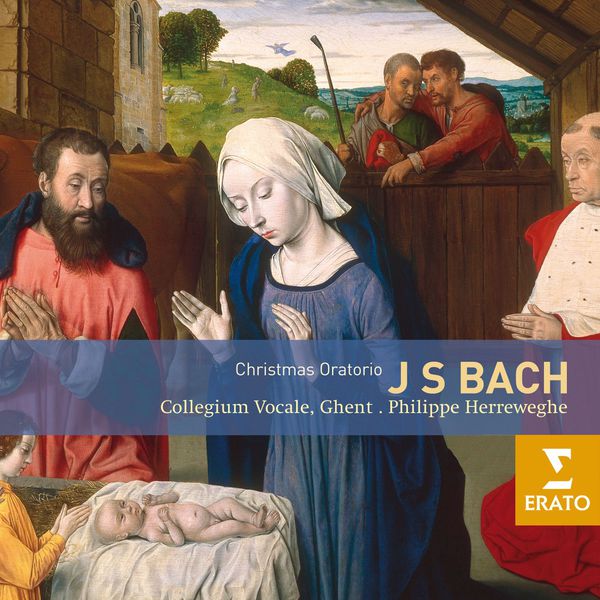
Bach Christmas Oratorio Philippe Herrweghe Collegium Vocale Ghent Erato

I have listened to a number of more recent versions, but still go back to these two above most of the time. Among the more recent alternatives I’ve tried are Mazaaki Suzuki (polished, but a bit too behaved), Diego Fasolis (really fast, not my cup of tea), and Gramophone’s favorite version, Harnoncourt 2nd version on Deutsche Harmonia Mundi (good but I like both versions above better).

My rating: 4 stars for both (I’m still waiting for the perfect version, but both come pretty close)

You can download the Gardiner here (Qobuz) and the Herreweghe here (Qobuz again)

Nearly (But Not Quite) Perfect – Gardiner’s New Recording of Bach’s B-Minor Mass

Bach’s b-minor mass was the subject of one of my first blog posts nearly six months ago. I just love and admire this monumental work of beauty.

John Eliot Gardiner

I’m also a big fan of Gardiner. Many of his recordings with the Orchestre Révolutionnaire et Romantique of the classical and romantic symphonies are outstanding (e.g. his Schumann cycle), and his entire Bach cantata cycle with the Monteverdi choir is among my favorite versions.

The 2015 recording of the B-minor Mass (SDG 2015)

So when Gardiner released a new recording of the b-minor mass (his first dates back to 1985 for Deutsche Grammophon, still early days for the historically informed practice movement) I was all ears and have listened to it now for several times.

Obviously, a lot of thought and the experience gained from the entire cantata cycle went into this new recording (there is a great article about it in the November 2015 issue of Gramophone).

Bach: Mass in B-Minor - Gardiner (2015) - SDG

How does it compare to my reference version, Herreweghe’s 2012 recording? Well, it’s really very good, but doesn’t replace it. Let me try to explain why.

With this monumental work, one thing you need to get right is the balance between power and nuance. The old recordings of the 1960s and 70s (e.g. Otto Klemperer’s legendary version, or Karl Richter) are powerful grandiose affairs, and then you have other versions that very much limit the number of singers, resulting in a very light and transparent sound.

Gardiner choses something more on the lighter side (approx 30 singers), and also goes for a very clear and natural orchestral playing.

And here we get to the only minor bit of criticism to the otherwise beautiful and near perfect recording, very occasionally, I’d just like a little bit more power and brilliance, exactly what Herreweghe does.

Basically, the little additional sparkle, which he so often has in his cantata cycles, but here it feels somehow a little bit held back, not going at their full power.

Enough nitpicking, this is an excellent recording, and really worth checking out. But I’m in love with Herreweghe and will stick to his version for the moment.

My rating: 4 stars

You can download it here (Qobuz) or here (Prostudiomasters)

UPDATE Dec 5: Gramophone really likes this album and gives it an Editor’s Choice in the December 2015 issue

Rameau’s Zaïs – Beautiful French Baroque Opera by Christophe Rousset

Jean-Philippe Rameau

As mentioned previously, I’m anything but a French baroque expert. I’m a big fan of Bach, love Händel’s operas and oratorios, but my main encounter with Rameau has so far been two excellent “best of” albums, the 2014 Le Jardin de Monsieur Rameau by the brilliant William Christie, and the equally beautiful 2013 album by the young soprano Sabine Devielhe with Alexis Kossenko, Le Grand Théatre de l’Amour.

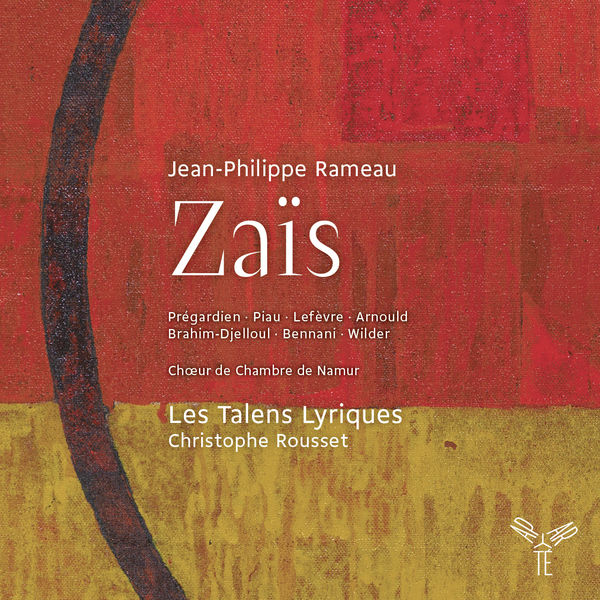
Zaïs (Aparté 2015)

So I had a vague idea of what to expect when I purchased the latest release by Christophe Rousset and his ensemble Les Talens Lyriques.

By the way, I’m not the only one who will discover the beauty of this opera. Unlike many of Händel’s operas that have seen major revivals in the last 30 years, the last time this has been recorded was 40 years ago by one of the fathers of the historically informed practice, Gustav Leonhard.

Whether the story is worth following is up for debate. Luckily I speak French so I am able to follow the singing, but whether you’re actually interested in understanding what the genie Zaïs is up to, well your call. Basically, not surprisingly, he’s after a woman (Zélide), disguises himself as a shepard, and eventually is willing to give up his magic powers to be able to marry her. Luckily, his boss, Oromazès, king of the genies, is so impressed by the sacrifice that he’s ok to immortalize them both. Nice, isn’t it? What is interesting to note is that apparently, similar to Mozart’s Zauberflöte, this is a work inspired by freemasonry, the booklet tells me.

Rameau Zais Christophe Rousset Les Talens Lyriques 24 96 2015

Rousset is  well known for his recordings of Rameau’s harpsichord works. He does a brilliant job leading his baroque ensemble, there is power and drive (check out the dramatic overture), but also always the right level of nuance if required.

Some great singers as well. Sandrine Piau (love her), Julien Prégardien (son of Christophe), and their colleagues, if unknown to me, all do a great job.

This album has been awarded “Choc de l’Année” (their equivalent of album of the year) by Classica Magazine and 5 stars by Diapason d’or.

I wouldn’t go just as far. On my personal scale, Rameau still comes behind Bach and Händel, but he’s climbed some serious steps on my personal appreciation ladder with this album.

My rating: 4 stars (true 5 star playing, but as said above, I still prefer other baroque composers). But you won’t regret buying it, I guarantee!

You can download it here (Qobuz, hoping they survive their current financial difficulties), or here (Prestoclassical)

Cavalli: L’Amore Innamorato – Christina Pluhar’s new album

Francesco Cavalli

I actually thought I knew my composers reasonably well, even more obscure ones, but Cavalli was new to me. I’m probably not the only one, this is one of the composers that was known only to early music

So I was a bit surprised to see two new  recordings on this Venetian composer coming out at pretty much the same time, Mariana Flores Heroines of the Venetian Baroque (which good excellent reviews in the French press by the way), and also from Christina Pluhar’s early music ensemble Arpeggiata.

Cavalli was a singer and Monteverdi protégée who later started writing his own operas. At his time, he was famous enough tube noticed by Louis XIV’s Cardinal Mazarin to play his operas at the wedding of the Sun King.  (That’s probably relatively speaking even better than being invited to play at Kimye’s wedding these days. But I digress.)

L’amore innamorato (Erato 2015)

Christina Pluhar’s ensemble L’Arpeggiata has released some great albums, although the recent ones, especially the “jazzy” Purcell, were reviewed rather controversially.

Cavalli: l'Amore Innamorato Christina Pluhar l'Amore Innamorato Christina Pluhar L'Arpeggiata Erato 2015

I haven’t yet seen any reviews on this new Cavalli album, but I think this will be less controversial, as was their initial Monteverdi Teatro d’Amore album from 2009.

It is basically a lot of fun. The beautiful voice of the Spanish soprano Nuria Rial (helped by Hana Blažíková) is a big part of the fun, but Pluhar’s early music ensemble really is playing with a lot of dedication here.

The program is a best-of of Cavalli’s operas (apparently he wrote at least 24), and this is probably a good thing, as following a full early baroque opera seria can sometimes be a bit tedious.

No boredom here, this is thoroughly enjoyable. I suggest you check it out! I’ve added a Youtube sample below.

My rating: 4 stars

You can download it here (Qobuz) or here (HDtracks).

UPDATE November 22: Alexandra Coghlan reviewed this album on Sinfinimusic and gave it 5 stars.

My favorite Four Seasons by Giuliano Carmignola with the Venice Baroque Orchestra

Another blog post triggered by the series of blind comparisons on Swiss radio, Disques en lice, the French version, this time. They’ve recently compared 7 versions of the world famous Four Seasons.

Antonio Vivaldi and The Four Seasons

I’ve mentioned previously that I’m not a very big Vivaldi fan. On my personal scale, Bach and even partially Händel are miles ahead of the Red Priest. I wouldn’t go as far as Stravinsky who said Vivaldi had written the same concerto 400 times, he has a point though.

But obviously, you just HAVE to have a version of the world most famous program music, the Four Seasons, in any decent record collection (or music collection to be more generic, does anybody still collect records out there?).

Obviously this has been overplayed to death. But if you haven’t listened to it for a while and actually give it a go again with a fresh ear, there are many beautiful elements in there that makes it worth going back to it occasionally. On my personal playlist it appears about 1 per year.

How to choose a version

Obviously, this work has been recorded a gazillion times. I had chosen my personal preference, the recording by Carmignola below, some time ago after comparing about 20 versions. So take this with a grain of salt, obviously there are many other good recordings out there.

In any case, I was obviously very curious if it would appear in the Disques en lice selection, and how it would compare.

Unfortunately, exactly this recording didn’t appear. However, luckily for me, Carmignola actually recorded the Four Seasons twice, and his earlier recording with the Sonatori de la Gioiosa Marca was selected. I was surprised how close these two versions were, in spite of being recorded with 10 years between them.

In a nutshell, that program confirmed my clear preference for Carmignola. The three experts in the program liked it as well, but in the end found it a bit too middle of the road (and they have a point in a way) and preferred in the end the more extreme recordings by Diego Faso’s,  very theatrical, worth checking out, but a bit “too much” for me, and Midori Seiler with the Akademie für Alte Musik, a really good recording but I personally don’t like the sound of Seiler’s violin very much).

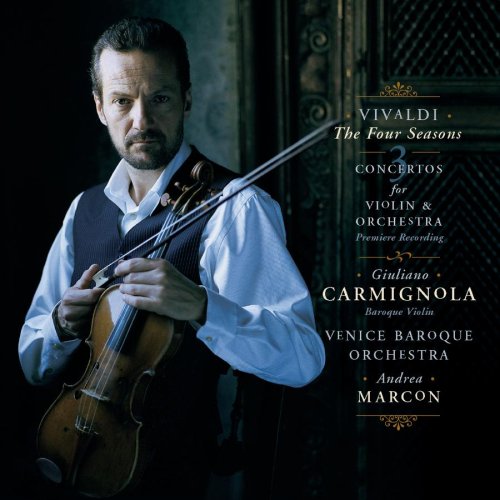
Carmignola’s 2nd recording of the Four Seasons

Vivaldi Four Seasons Giuliano Carmignola Andrea Marcon Venice Baroque Orchestra Sony

So what does Carmignola do? Well nothing special, just everything right, and very right. His Guarneri has a beautiful voice, and the Venice Baroque Orchestra plays with just the right level of energy, speed and drive, and a lot of transparency (which by the way luckily is very well recorded, so you get the same transparency transported very well).

Ah yes, and you also get two world premiere recordings of two previously unknown violin concertos as a filler. But in a way, we’re back here to Stravinsky’s 400 times the same, there don’t really disturb, but I really don’t feel you would have missed anything if these had stayed unrecorded for just a little bit longer.

My rating: Four stars (It’s a true five-star performance though, but I just cannot get myself to give 5 stars to Vivaldi, so just ignore the star rating and get it anyhow).

You can get it here (Prestoclassical) and here (Qobuz).

Let Me Weep – Rinaldo, Händel’s First Major Opera

In my post some time ago on The Top 10 Music That Gives Me Goose Bumps, I mentioned the famous aria “Lascia ch’io pianga” (Let me weep).

Georg Friedrich Händel

I still haven’t written about this piece, or actually about Georg Friedrich Händel  (I still prefer his German spelling, although in later years he became one of the first “expats” of all times in London and the English spelling of George Frideric may be more familiar to you) in general

Rinaldo, as its HWV number of 7 indicates, is one of the earlier Händel works, but in spite of this, Lascia is what we’d call recycling today, as it has been used twice before in other works, once without words in his op. 1, the opera Almira (rarely played these days), and also in the oratorio Il Trionfo Del Tempo E Del Disinganno (which in spite of its HWV number of 71 is also really early, but was reworked).

This kind of recycling in the baroque area was very common, even Bach used it all over the place, by the way. Many cantatas all over sudden will remind you of the Christmas Oratorio, or have a piece of the Brandenburg concertos.

Rinaldo HWV7

But back to Rinaldo. This was probably the first of his London operas. The story, is based during the first crusade near Jerusalem, and based on an epic by Torquato Tasso.

In spite of the great success of Lascia, the entire opera hasn’t been recorded that often. These days you basically have the choice between three versions (plus some DVD editions).

The oldest one is Jean-Claude Malgoires 1977 recording on Sony, still quite nice.

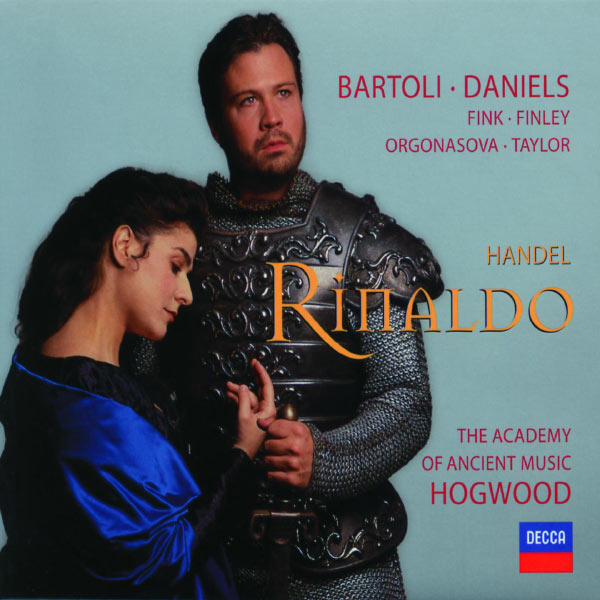
The to more recent ones are René Jacobs that I haven’t written about a lot yet, and Christopher Hogwood, both from the first decade of this century. Between the two I have a preference for Hogwood, thanks to its outstanding cast, in spite of the fact that Cecilia Bartoli sometimes is a bit heavy in terms of vibrato (I prefer the cleaner singing of the modern “historically informed performance” style).

This recording should be on every collectors shelf (or these days more likely, hard drive).

My rating: 4 stars (as beautiful as it is, I still think this can be bettered in a future version).

Handel Rinaldo Christopher Hogwood Cecilia Bartoli Decca

Recitals or “Best Of Compilations”

When I was younger, I was very snobby towards Best Of or “Highlight” versions of operas, I always wanted to get the full opera. With operas of the classical period, I’m still that way, however, for baroque opera, that are usually very long, have rather complex and/or weird stories I must admit I don’t always have the patience for 3h plus of Opera seria. Luckily you’ll find the most popular (and outstandingly beautiful) arias of Händel et al quite often on recital albums by individual soloist.

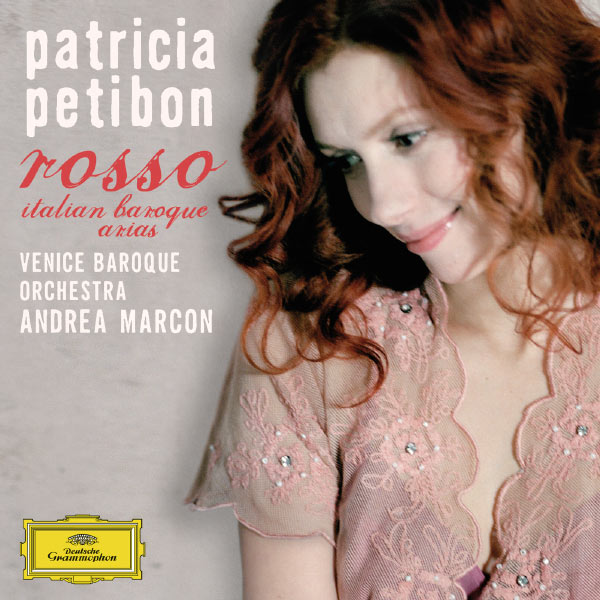
Let me recommend two very beautiful ones here that feature Lascia, by Patricia Petibon and Simone Kermes, respectively called Rosso and Drama, and both highly recommended. They offer an excellent entry into baroque opera.

Patricia Petitbon Rosso Andrea Marcon Venice Baroque Orchestra Deutsche Grammophon

Simone Kermes Dramma Sony

And finally, let me mention another beautiful version of Lascia, in a Jazz version this time, by the amazing trumpet player Paolo Fresu, on the album Kosmopolites:

http://https://www.youtube.com/watch?v=d3bXeGwSJBc

Download Sources:

Hogwood’s Rinaldo: here (Qobuz)

Patricia Petitbon: Rosso: here (Qobuz)

Simone Kermes: here (Qobuz)

Paolo Fresu: Kosmopolites: here (Qobuz)

Gramophone Award Nominees – Baroque Instrumental – A Quick Note Before It’s Too Late

The list of nominees in the Baroque Instrumental category looked less attractive to me this year, already driven by the fact that I didn’t own any of the listed recordings. Plus the fact that the list contains 3x Vivaldi, who isn’t very high on my priority list.

But given that the winners will be formally announced tomorrow, I had a quick rather unprofessional scan, and let me pull out my crystal ball here on who should win in my humble rather biased opinion. Please take this with a huge grain of salt, it is based on rather limited listening and even more on gut feel than my previous posts here (instrumental), here (concerto), and here (chamber), where I actually spent some decent amount of time listening.

Too much Vivaldi

Just looking at the nominee list, without listening to the albums, I would have predicted Rachel Podger to win, as I usually love what she does. Based on the snippets I heard, she does well on the Vivaldi, too. But I don’t care enough about Vivaldi to actually buy this album.

Same goes for the two other candidates with Vivaldi albums, which I quickly streamed. I didn’t particularly like the Venice Golden Age album, although I usually like AKAMUS a lot. Maurice Steger’s flute concerto sounds ocasionally like Papageno on speed, but actually is quite a bit of fun. I may end up buying this eventually just for the good mood.

I only quickly skimmed the CPE Bach album of Rebecca Millers approach to the symphonies, but this is not repertoire I listen to a lot (CPEs keyboard concertos with Staier are much better), and what I heard didn’t motivate me to go much further.

I like Mahan Esfahani’s work elsewhere, but Hyperion is another label not allowing streaming, so I didn’t properly listen to this one either. I’m also much less familiar with Rameau overall, so anyhow I wouldn’t be a good judge. Probably worth checking out.

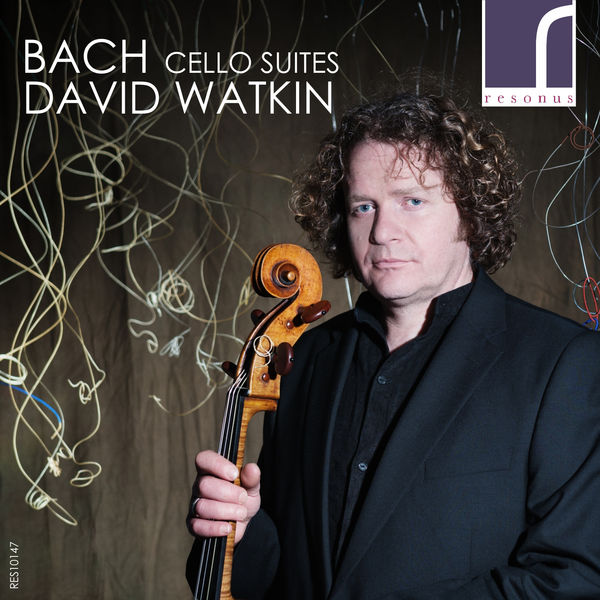
David Watkin

So let me get to the positive surprise of this lot: David Watkin’s Cello Suites on Resonus. I must admit that initially I kind of thought to myself “Seriously, another recording of the Cello Suites is all what we need” (note that I’ve recently praised Steven Isserlis excellent recording here).

I even had missed all the praise in the press this recording had previously received, probably due to the same biased thinking.

David Watkin Bach Cello Suites Resonus

But then I started listening.

And honestly, I was very positively surprised, this version sounded incredibly “right” to me, intuitively exactly like it should have sounded. The historic cello he plays is probably part of it, I don’t know what it is, but if this recording doesn’t win in the category I’d be very surprised!

In less than 24h we’ll know more.

Classical Life

A classical music blog by music critic Tim Mangan

This Week's Music

Making Classical Accessible

From my Macbook to the Net

Evaporation of my thoughts and observations

Elestra

Author: Artienne

My Life in Music

Playing, Singing and Listening

ArsX3

A brand new journal reviewing books, cinema, music

LawrenceEz's Blog

Creative and Performing Arts: Writing, Classical Music, Photography

Laetitia Strauch-Bonart

Contemporary Politics & Culture

sibling revelry

reveling in all things classical

It's A Raggy Waltz

I collect jazz on vinyl, I dig the Dave Brubeck Quartet, & I write about it

La Musica

By two cousins

thejazzbreakfast

Dishing it out from the heart of England

only jazz

random thoughts about music that matters to me

The Culture Project

Exploring the world of literature, wine, art, music and more.

René Spencer Saller

The music causes me to dream of fabulous empires, filled with fabulous sins.

Breaking Baroque

Blog of Tafelmusik Baroque Orchestra and Chamber Choir

Tasting Nirvana

Eating your Dosha

Shadow of Iris

Poetry, fiction, short stories, more ...

The Immortal Jukebox

A Blog about Music and Popular Culture

April Greene

Writer + Editor

a pianist's musings

A history of your favorite classical music.

Classical music for all

Boris Giltburg's blog

I HEAR VOICES

An orchestra seat in the web space