Captivating Period Schumann from Alexander Melnikov

Alexander Melnikov / Isabelle Faust / Jean-Guihen Queyras

I’ve already praised Isabelle Faust and Alexander Melnikov for their excellent Hindemith chamber album, and the outstanding Brahms violin concerto, but they have done many other beautiful recordings together, including a recent version of the Beethoven Archduke trio with Queyras, or my preferred version of the Beethoven violin sonatas. Queyras is one of our leading cellists these days, and has recently recorded the complete Beethoven cello sonatas (very much worth checking out) with Melnikov. So as you can see, these three play regularly together, and you can hear it.

Schumann

This outstanding trio is now working for the second time together (hence the “2” on the cover) on their Schumann trilogy. This trilogy is twofold: it combines in each volume one of the three Schumann Piano Trios, and one of the three solo concertos (violin, piano, cello) he wrote, in collaboration with the Freiburger Barockorchester (which I usually like very much, although I was disappointed this week by their latest Bach release) under the young Spanish conductor Pablo Heras-Casado.

The series started with Faust playing the little known violin concerto (Clara Schumann even actively suppressed it, deeming it not worth of her husband’s legacy), which is very much worth checking out, and is now moving to the warhorse of the a-minor piano concerto.

The Schumann piano concerto
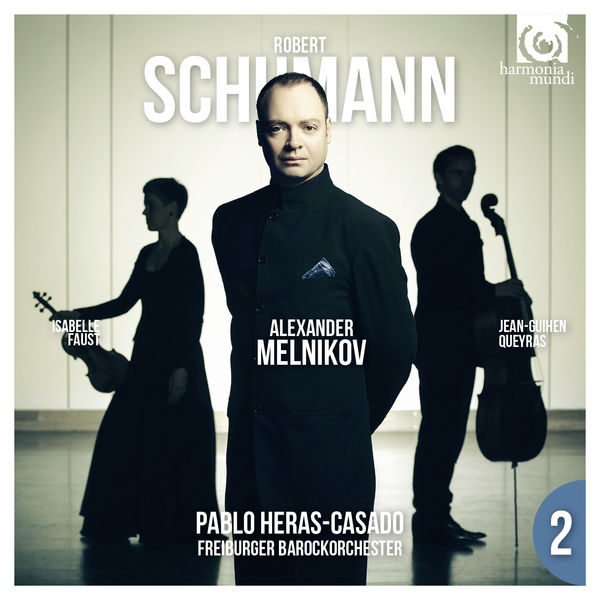
Schumann piano concerto Melnikov Freiburger Barockorchester Pablo Heras-Casado Harmonia Mundi 2015

This beautiful romantic work is one of the most recorded and best known piano concertos out there, and so you have literally hundreds of recordings to chose from, including some outstanding ones. Among my favorites you’ll find Dinu Lipatti with the young Herbert von Karajan, or Radu Lupu with André Previn.

However, I haven’t yet heard this romantic concerto on period instruments. The Freiburger Barockorchester, as their name indicates, are focused on HIP (historically informed) performance, and even more interesting, Melnikov plays on a 1837 Erard, which really gives the work a different color. I’m sure Schumann would have loved a modern Steinway, but it is interesting to hear how this sounded when it was composed.

However, period instruments are not a goal in itself. The performance has to match. And here I’m a bit torn. I love the way movements 1 and 2 are handled, but the third movement, while powerful, is just too slow,. which takes too much energy away for me. I wonder whether this choice was driven by Melnikov or Heras-Casado. In any case, it was clearly a very conscious choice. The overall movement takes 12:14, by far the longest I have in the 10+ versions in my library(as a comparison, my beloved Lipatti/Karajan took 10:01), and even the recent Pires/Gardiner  recording I didn’t particularly like (review here) was only 11:04.

That said, overall this concerto is still a real pleasure, and while it may not become my reference version, it is a very interesting alternative, to hear Schumann’s most famous work like you’ve never heard it before.

In any case, when you get to the trio, all is well, Melnikov, Faust, and Queyras play together as beautiful as ever, and this relatively unknown Schumann chamber work really shines.

I’m really looking forward to vol. 3 with Queyras playing the Cello concerto.

Overall rating: 4 stars (FYI, the reviews I’ve seen so far are divided, Gramophone loved it (Editor’s choice), the Guardian’s Kate Molleson didn’t like it very much with 3 stars), you really need to make up your own mind. It is absolutely worth checking out.

You can download it here (Qobuz), or here (eclassical)

My Reflections on the 2015 Gramophone Award Nominees – Part III – Chamber

Following my two previous posts on the categories of Instrumental and Concerto, let me comment this time about the Chamber music category.

I have had the occasion to listen to four of the 6 nominated albums.

To quickly just list them, the ones I didn’t hear are:

Winds & Piano – Les Vents Français, Eric Le Sage

and

Langgard: String Quartets vol. 2 – Nightingale Quartet.

The ones I have heard are:

Hindemith: Sonatas –  Alexander Melnikov, Teunis van der Zwart, Alexander Rudin , Gerard Costes, Isabelle Faust

Hindemith Sonatas Melnikov Faust Harmonia Mundi 2015

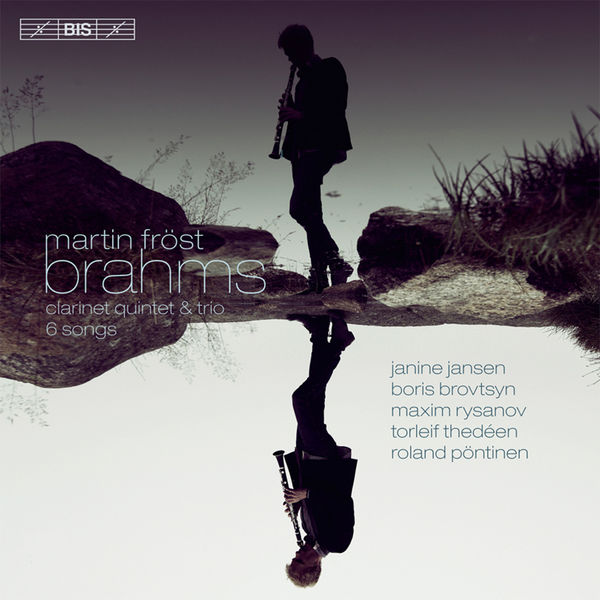
Brahms: Clarinet Quintet & Trio – Martin Fröst, Janine Jansen, Boris Brovtsyn, Maxim Rysanov, Torleif Thedéen, Roland Pöntinen

Brahms: Piano Quintet - Martin Fröst - Janine Jansen - Boris Brovtsyn - Maxim Rysanov, Torleif Thedeen, Roland Pötinen

Haydn: String Quartets op. 20 – Doric String Quartet

Haydn String Quartets op. 20 - Doric String Quartet - Chandos

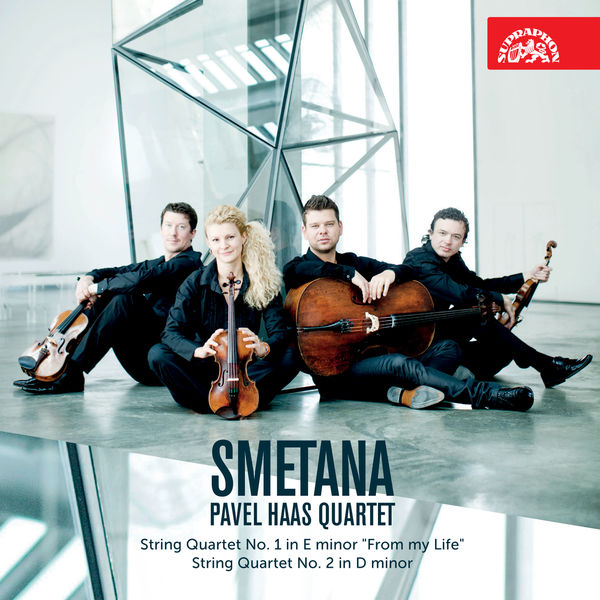
Smetana: String Quartets 1&2 – Pavel Haas Quartet

Smetana String Quartets Pavel Haas Quartet Supraphon 2015

Let’s start with the Haydn, as I’ve played this album only twice so far, it’s still a little bit too early to judge it properly. The issue is that on Haydn there’s obviously a lot of competition, but the Doric’s do a fine job. I guess in chamber music there’s always a trade-off between precision (which is outstanding here), and just pure joyfulness in playing, which I sometimes would like to have a little bit more here at first listen, especially with “Papa” Haydn (although the string quartets are certainly the works where general Haydn-skeptics like me have the least to complain). All right, let me shut up my rambling here and spend some more time listening. No rating here yet.

Next Brahms: I don’t know why, but the clarinet works have always been among my least favorite Brahms chamber compositions. However, two recent albums are making me change my mind right now, a) the excellent clarinet sonatas by Lorenzo Coppola and Andreas Staier, and b) this very nice album.

When it gets to the clarinet, Martin Fröst is one of the few superstars, and rightly so. He has released several outstanding recordings in recent years, e.g his Mozart concerto from 2013 with the Kammerphilharmonie Bremen which to my ears is even better than his previous recording with the Amsterdam Sinfonietta.

Not surprisingly, this Brahms album is very good as well. To be fair, he’s playing with some outstanding musicians here. Thorleif Thedeen and Roland Pöntinen have already recorded a very nice version of the Brahms Cello Sonatas, Janine Jansen is always a pleasure to listen to, and Maxim Rysanov is a safe bet on the Viola.

On top of the quintet and the trio, you get something that is really rather special, which is a an arrangement of some Brahms songs for Clarinet by Fröst himself. If you ever doubted that the clarinet can sing, here’s your proof.

Overall rating: 4 stars (playing is 5 stars, but I still need to fully overcome my issues with Brahms and the clarinet, so take this rating with a grain of salt)

Smetana: I assume the average classical listener knows exactly one work from this Czech composer, the ultra-famous Moldau. If they are a bit educated, they even know that the Moldau is just one part of the cycle Ma Vlast or “my homeland”. If you’re really into classical music, you may be aware of his opera “The Bartered Bride”. Beyond that, I’m pretty sure many would struggle to come up with other works from this composer.

So here’s a chance to change that. You get two of his chamber music works by one of the best string quartets that are currently out there. I’ve already praised them for their magnificent recording of the Schubert Quintet (see here), and they don’t disappoint here either. Their playing is outstanding, full of energy, but also very delicate and soft elements when needed.

My rating: 4 stars (not for the playing, which is certainly 5 stars) but at least to my ears, Smetana’s works are interesting, but there are chamber works I’d listen to first. Like for example the next one:

Hindemith: I’ve made it clear before that 20th century music, especially when we get to the borders of or beyond tonality, is really not my cup of tea. Well, exceptions confirm the rule. And this one is clearly one of those exceptions. This is a collection of sonatas with different musicians, and Alexander Melnikov on piano. Ever heard a Sonata for Trombone? Well here’s your chance. My beloved Isabelle Faust (see my admiring review of her Brahms concerto here), also get’s to play a sonata. Any album with Faust and Melnikov is usually a safe bet (take their outstanding Beethoven violin sonatas, the very nice Beethoven trio recording, their current cycle of Schumann works, etc. etc.)

And guess what, this album is truly outstanding throughout, and therefore my candidate for the Gramophone Award in the chamber category!

My rating: 5 stars. 

So, what are your favorites?

My Reflections on the 2015 Gramophone Award Nominees – Part II – Concerto

After my comments on the “Instrumental” category of the Gramophone Awards last Saturday here, let me highlight some more gems in the Concerto category.

Nominated are:

The Beethoven Journey – Leif Ove Andsnes with the Mahler Chamber Orchestra playing Beethoven’s piano concertos 2 & 4

The Beethoven Journey - Beethoven Piano Concertos 2 & 4 - Leif Ove Andsnes - Mahler Chamber Orchestra

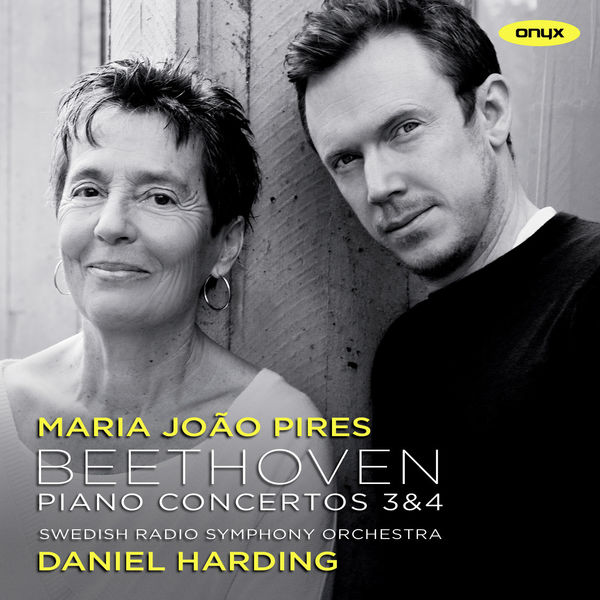
Beethoven again, piano concertos 3 & 4 by Maria Joao Pires with Daniel Harding and the Swedish Radio Symphony Orchestra

Beethoven Piano Concertos 3 & 4 - Maria Joao Pires - Daniel Harding - Swedish Radio Symphony Orchestra

Britten / MacMIllan / Vaughan Williams played by the Britten Sinfonia (not heard)

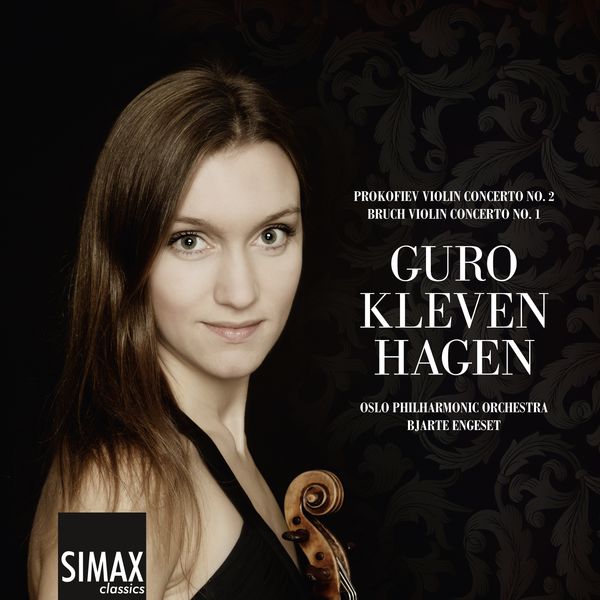
Bruch & Prokofiev’s Violin Concertos by Guro Kleven Hagen with the Oslo Phlharmonic and Bjarte Engeset

Bruch Prokofiev Violin Concertos Guro Kleven Hagen Oslo Philharmonic Bjaerte Engeset

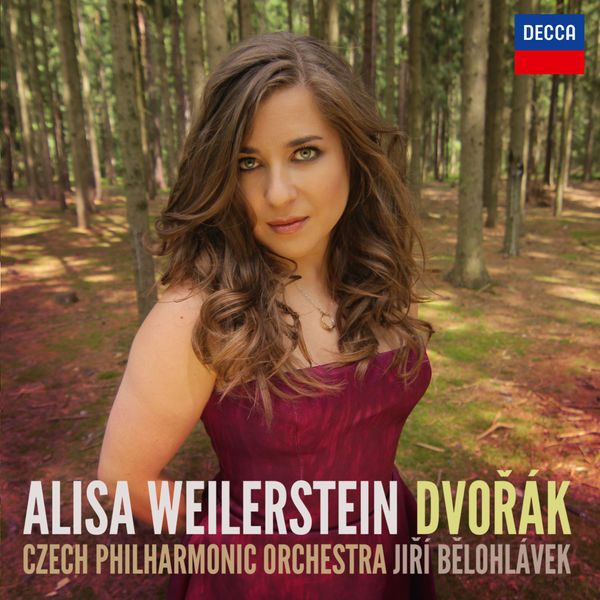
Dvorak’s Cello Concerto by Alisa Weilerstein with Jiri Belohlavek and the Czech Philharmonic Orchestra

Alisa Weilerstein Jiri Belohlavek Dvorak Cello Concerto Decca Classics

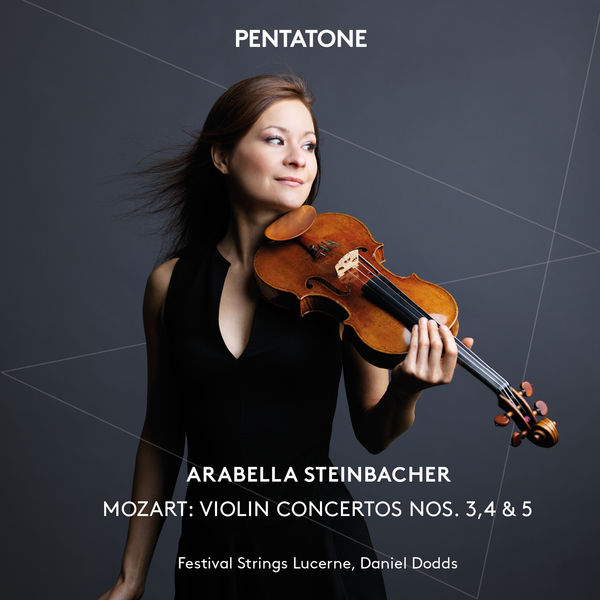
Mozarts Violin Concertos 3 – 5, Arabella Steinbacher, Daniel Dodds, Festival Strings Lucerne

Mozart Violin Concertos 3, 4, 5 - Arabella Steinbacher - Festival Strings Lucerne - Daniel Dodds

As said above, I haven’t heard the Britten album (and actually don’t care much about Britten in the first place, so wouldn’t be in a good place to talk about the album.

Two other albums I only gave a quick spin, so I’m not going to rate them, which are the Mozart concertos by Arabella Steinbacher, and the Prokofiev/Bruch combo by the young Norvegian violin player Guro Kleven Hagen, that I hadn’t heard of before. My admittedly superficial impression on both were solid performances, nothing wrong with them, but also nothing that would motivate me to go back. One argument in favor of the Arabella Steinbacher is that it is recorded on Pentatone, that usually has an outstanding recording quality, so if you have a good Hifi, you may want to check it out.

The three albums I have heard in more detail are the two Beethovens and the Dvorak.

Let me start with Maria Joao Pires first. I’m very happy to report that after my rather lukewarm review of her Schumann concerto with Gardiner, in this recording I can reconfirm that I’m a fan. Very delicate, nuanced playing. I’ve already praised Daniel Harding in his recording of the Brahms Violin Concerto, and also the Orchestral part is doing a fine job here.

My rating: 4 stars

However, to my ears, with Leif Ove Andsnes it gets even better. I’ve already declared how much I like his Grieg, and here on Beethoven with the excellent Mahler Chamber Orchestra which Andsnes conducts from the piano, the result is just really really nice. I’ve had the pleasure of hearing this combo play concertos 2-4 live late last year, and the recording fully  captures the energy and passion by both soloist and orchestra. No. 4 is anyhow my preferred Beethoven concerto, and this is definitely one of the best versions I have. However, to my ears, they are even better on piano concerto no. 2 (side note: wrongly numbered, this should have been his no. 1 chronologically), which really benefits from the lighter sound of the Mahler Chamber.

My rating: 5 stars

But who is my predicted category winner? Well, by exclusion you could have guessed it: Alisa Weilerstein’s Dvorak. We recently already got an excellent reading of this concerto with Stephen Isserlis on Hyperion, and obviously there are a lot of outstanding historic recordings (Starker, Du Pré, etc.), this version just gets what is the essential for me in this concerto (my favorite piece by Dvorak by the way): the romantic passion. (Side note: When Brahms, who mentored Dvorak for a while, read the score, he’s quoted: “If I had known that it was possible to compose such a concerto for the cello, I would have tried it myself!” If only he had…). This recording is pure emotion. I suppose having a Czech orchestra playing music by their most famous local composer helps. There are some minor technical glitches here and there, but they don’t really matter, you don’t even notice.

My rating: 5 stars

So, what do you think? What are your predictions?

My Reflections on the 2015 Gramophone Award Nominees – Part I – Instrumental

Gramophone Award Nominees

The Gramophone awards nominees are now officially declared. This award is probably among the most prestigious award in classical music (beyond the obvious Grammy), so it is always interesting to see who’s in.

As said before, I don’t always agree with Gramophone but their opinions are always worth checking out.

If you have an iPad, you can download the Gramophone magazine app (the primary way I read the magazine these days, no shipment, no paper wasted) and get the Gramophone awards nominee issue for free. It’s worth checking out.

Let me comment on some recordings I know well and also play Oracle of Delphi who will eventually win.

Instrumental

There are four album in here I own or have heard, three of which I’ll be talking about here.

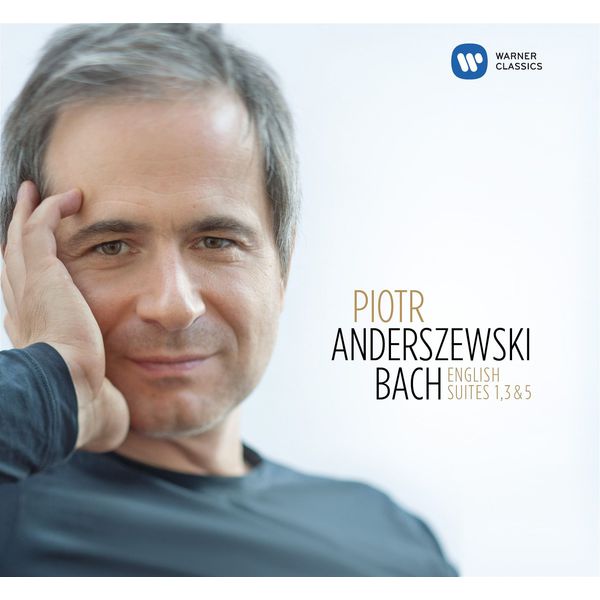
Bach’s English Suites with Piotr Anderszewski

Piotr Anderszewski Bach English Suites 1 3 5 Warner Classics

Well this one is a typical example where I don’t agree with Gramophone.  I can’t really put my finger on it but this album just doesn’t excite me. Maybe it is the tempo, maybe it is the touch, don’t know. Bach on a modern piano is always tricky, you really need to justify these days why you’d use the “wrong” instrument (instead of a harpsichord or similar).

My rating: 3 stars

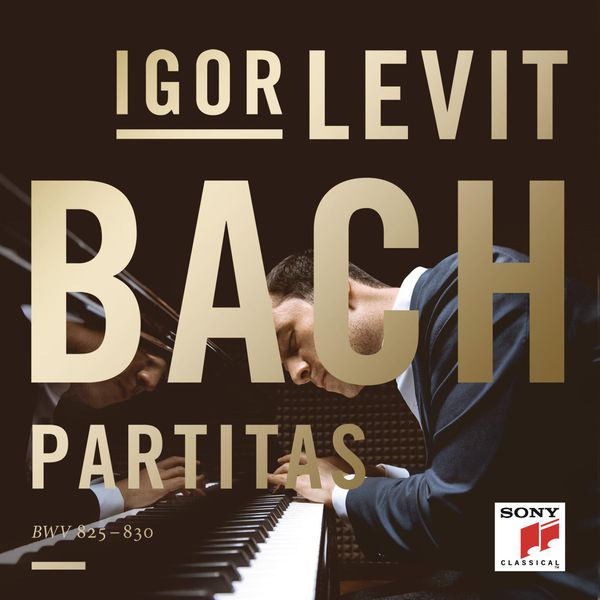
Bach: Partitas – Igor Levit

Igor Levit Bach Partitas Sony Classical

This album, however, is a typical example of getting it just right. I don’t mind one second not hearing a harpsichord. Levit is an extraordinary talent; his previous recording of the late Beethoven sonatas was outstanding as well.

I’ve been listening to this times and times over, it’s been replacing even Perahia as my go-to version. So this album to me is a hot contender to win this category.

My rating: 5 stars

However, if I had to bet, I’d say the following will be the category winner (and not only because let’s say Gramophone sometimes seems to have a certain preference for their countrymen):

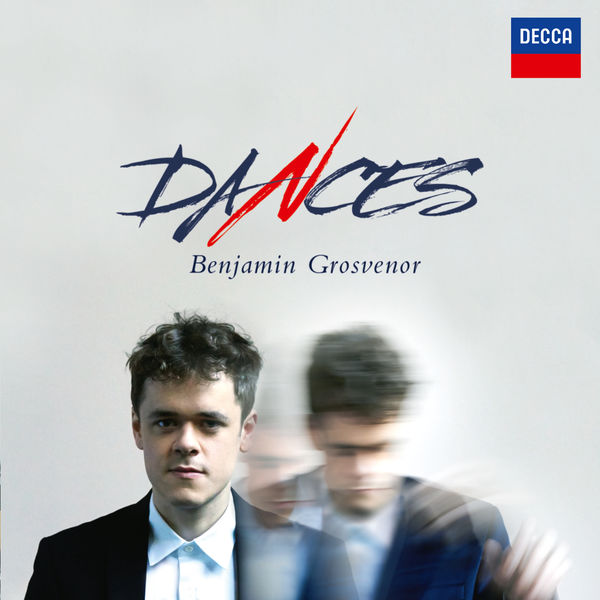
Benjamin Grosvenor – Dances

Benjamin Grosvenor Dances Decca Classics

5 years younger than the still very young Levit (years of birth 1992 and 1987 respectively), Grosvenor could be qualified as a Wunderkind. What a horrible term.

Actually, it really goes beyond this, he is just a truly brilliant artist who just happens to be very young. His previous album Chopin/Liszt/Ravel was truly fantastic, and his new release with “Dances” from Bach via Granados to Scriabin is another example of what he can achieve. With him, even relatively useless (sorry) pieces like Schulz-Evler’s questionable version of An der schönen Blauen Donau become enjoyable. (Ok, he could have skipped the Boogie-Woogie…).

An absolute must have!

My rating: 5 stars

Also nominated are a live recital of Mahan Esfahani (haven’t heard), Sokolov’s Salzburg recital (his Chopin Preludes here really aren’t my cup of tea, 3 stars), and La Fauvette passerinette by Peter Hill (haven’t heard either).

So what are your thoughts and ideas? Who would you have chosen?

Tchaikovsky Symphony No. 5 with Neeme Järvi or Why I Don’t Like Tchaikovsky

Tchaikovsky

There are several reasons why I don’t like Tchaikovsky. The first one is a bit silly and absolutely not his fault, but his Russian name Пётр Ильи́ч Чайко́вский has been transcribed into several different European languages in a different spelling, so trying to search for him in any kind of database or streaming service is an absolute nightmare.

The second reasons is that in general, Tchaikovsky is either “too much” in the sense that 1 pancake in the morning makes you want more, 4 and you already feel a bit stuffed, and 9 as I’ve been served in some US hotels just makes you want to run away. This is the occasional Tchaikovsky, let’s take his unfortunately totally overplayed piano concerto for example. Just can’t hear that thing any more. Even the Violin Concerto, that i kind of like, has some moments where less would be more.

I’ve tried all Tchaikovsky symphonies several times, and none of them speak to me in any way (the one exception will be mentioned below). To be fair, I haven’t really tried his operas yet, I’m still a bit hesitant when I don’t understand a word of what is being sung in an opera, makes the enjoyment harder.

There are exceptions within his oeuvre that I like, I on (rare) occasions listen to his ballets, which have some magical melodies, the first movement of the string serenade is kitsch, but beautiful, and obviously his Violin Concerto played by Jascha Heifetz (or Julia Fischer) is kind of special.

By the way, I strongly recommend you read a biography about Tchaikovky’s life, he surely didn’t have an easy one. Closet homosexual (one suspects), suffering from regular depression, died of Cholera (could have been a suicide), etc. etc. Your regular soap opera doesn’t get as dramatic as that. (EDIT: please check out the responses to this thread, it seems like some of this is inaccurate according to latest research).

Symphony No. 5 e-minor

So what is different about symphony no. 5? I don’t know really, it is really the overall character of this symphony in the dramatic and sad key of e-minor.

It basically starts out as kind of funeral march, and somehow is linked mentally to Beethoven’s 5th (I suppose no composer could ever write a fifth symphony without thinking of the famous “original”, and you hear influences e.g. in Mahler’s 5th as well. Some speculate even there’s a reason why Brahms stopped at 4). I also plays around with th notion of fate, a familiar motive within the symphony

There is something weird about the ending. Tchaikovsky himself considered it failed. I don’t care at all, this symphony really draws me in, and keeps my attention until the end. Tons of emotions again, but unlike after 9 pancakes, you don’t feel stuffed (exhausted maybe instead)

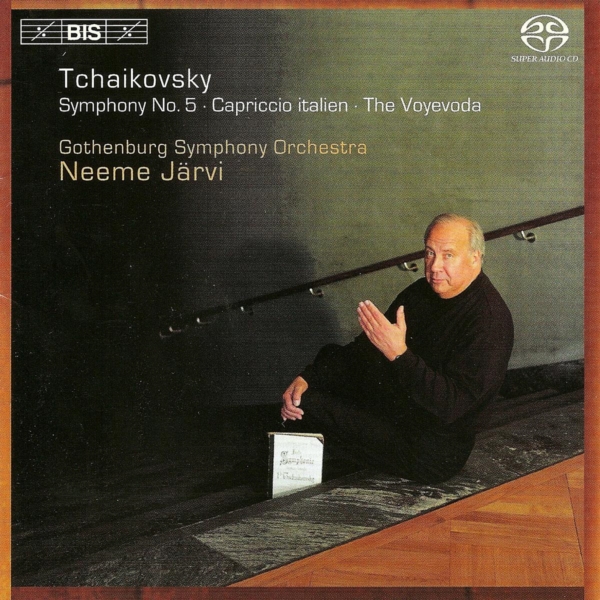
Neeme Järvi

Tchaikovsky Symphony No. 5 Neeme Järvi Gothenburg Symphony

Estonia is a weird place. 1.3m in habitants, but it is the birthplace of an entire outstanding family of excellent conductors, with Neeme, Kristjan, and Paavo, and also the home of Arvo Pärt, one of the most important contemporary composers.

I’m a big fan of most of Paavo’s playing, especially his recordings with the Kammerphilharmonie Bremen. More about that later. But this is about his dad, Neeme. While Neeme never had any formal ties with any of the grand old orchestras in Berlin, Vienna, or New York, his work with smaller ensembles like the Gothenburg Symphony or the Royal Scottish National Orchestra contain many hidden gems.

This recording is one of them. Very well recorded  (the Swedish label BIS is usually excellent at this), the smaller Gothenburg Orchestra and Järvi’s conducting give it a nice transparency, but still you get the full dose of emotions. Tradition says that Russian symphonies are best played by Russian conductors and orchestras, and while there are good examples for this (e.g. Mravinsky), these two neighbouring countries (Estonia and Sweden) do just fine for my ears.

Overall rating: 5 stars (meaning I don’t think you could play the symphony any better than this. Not meaning these 5 stars mean as much to me as e.g. Bach’s b-minor mass)

Side note: You can download it here from BIS’ own download shop, E-classical. What I really like about this shop that you are not obliged to buy entire albums, you can just buy individual tracks, and this is exactly what I did, I only went for the symphony, so cannot really comment on the two other works that were bundled on this album.

Am I Deaf or How Could This Go So Wrong – Gardiner & Pires’ Schumann & Mendelssohn

Sometimes there are albums coming out where just looking at the artists involved you really anticipate something great.

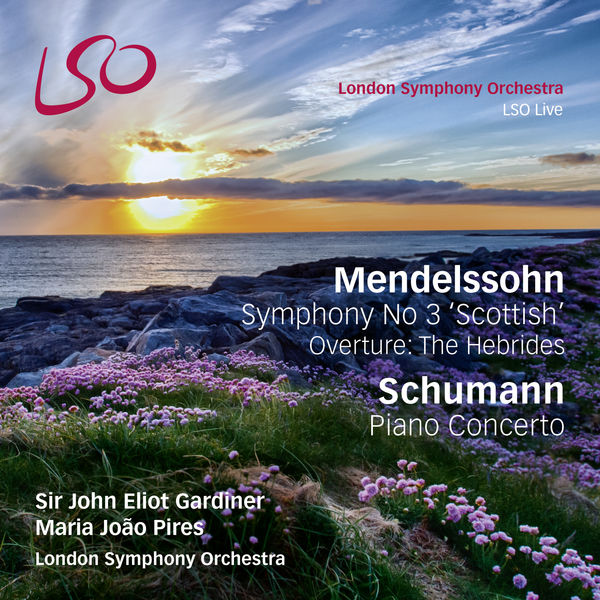
So when I read about this album of Maria João Pires playing the Schumann piano concerto together with the LSO conducted by Gardiner, I was really looking forward to hearing this. A beautiful pairing as well with Mendelssohn’s Scottish symphony that I really like.

Schumann piano concerto Mendelssohn Symphony No. 3 Maria Joao Pires John Eliot Gardiner LSO Live

Pires plays fantastic Mozart and Chopin (e.g. her Nocturnes are just beautiful), and I’m a big fan of Gardiner not only for his Bach cantatas, but also for his symphony recordings with the ORR. And obviously, the London Symphony is a great orchestra.

So all the stars are aligned. On top this album has received a Gramophone Editor’s Choice, plus some other great reviews.

And then I start listening (luckily I went for streaming first instead of just immediately buying), and can’t help to think I must have clicked on the wrong album. The Schumann piano concerto is just plain boring! Total lack of passion and energy. And a perceived speed that feels way too slow. Then I check, and it is really Gardiner and Pires playing here. How could this go wrong?

You have plenty of other alternatives here, go for Radu Lupu, Dino Lipatti (a disc to convert Karajan haters by the way), Andsnes again, etc. etc. etc.

But I don’t give up and check the Scottish symphony. Again, I can’t believe my ears. At best, an average performance. The worst is the forth movement which feels plump, and on some occasions (this is a live recording) the LSO even sounds out of sync. This is not the brilliant Gardiner of Schumann’s 4th with the ORR, this is somebody else entirely.

For Mendelssohn, I’d recommend you rather go with Abbado, or Christoph von Dohnanyi.

No idea what the guys at Gramophone heard here. I just don’t get it.

Overall rating: Just about 3 stars (It really pains me to give such a mediocre rating as these are all amazing musicians individually. But I just can’t help it.)

Debussy’s Images – Impressionism For Your Ears

20th century music

Let me first of all do a quick detour here: You won’t find a lot of 20th century classical music on my blog. It is very simple, the further we go away from tonality, the less I like it.

So the territory of the impressionism of a Ravel or Debussy are still borderline, some Prokofiev is as well, but I rarely really enjoy Shostakovich, and don’t even get me started on true twelve-tone and other stuff. I just don’t get it.

As I know some smart people who really adore Schönberg, Webern, Boulez et al. I’ve often wondered why I have this barrier. You see, the visual arts took a similar turn from concrete motives to abstract concepts, and I actually like a 1950 Picasso usually significantly more to a Turner, or any 18th century art. I really appreciate Jason Pollock and Sam Francis (especially the latter). So here I am much more open-minded (OK, when it gets to Duchamp’s Fountain or most of Joseph Boys, I’m out, but at least I get (or believe so) intellectually what they are trying to get at).

But atonal music (and sorry, while some will say there is no atonal music, I think most readers here will get the concept). is something I just don’t get. Probably my brain is to small or too hard-wired in the well-tempered scale to go there.

Claude Debussy’s Images

Back to the early 20th century, and more specifically Debussy. Why write about this right now? Well, I think I’ve mentioned before the excellent Swiss radio show “Diskothek Im 2“, that gets two experts in the studio and compares 5 different version of a given classical work, and this fully blindly.

A very interesting exercise which I should do even more often at home (you’ll be surprised how much your most beloved conducted can disappoint when you don’t know it’s him, or vice versa).

So, a recent show compared 5 recordings of Debussy’s Image. These 6 little poems, with beautiful names like Reflets dans l’eau (reflections on the water), or Poissons d’or (goldfish) are probably among the best known examples of what we call today impressionism, similar to the earlier period in the visual arts (Debussy apparently didn’t like the term by the way).

The editor chose 5 contemporary recordings, and so the classical reference version of these, by the amazing Arturo Benedetti Michelangeli on DG in 1971 was out. By the way, I’m just re-listening to this version right now and it is outstanding, so don’t hesitate to get it in spite of its age.

The versions reviewed included Jean-Yves Thibaudet, Pierre-Laurent Aimard, Alain Planès on a 1902 Blüthner piano (very interesting to discover by the way), Marc-André Hamelin, and the “winner” of this little contest, Jean-Efflam Bavouzet

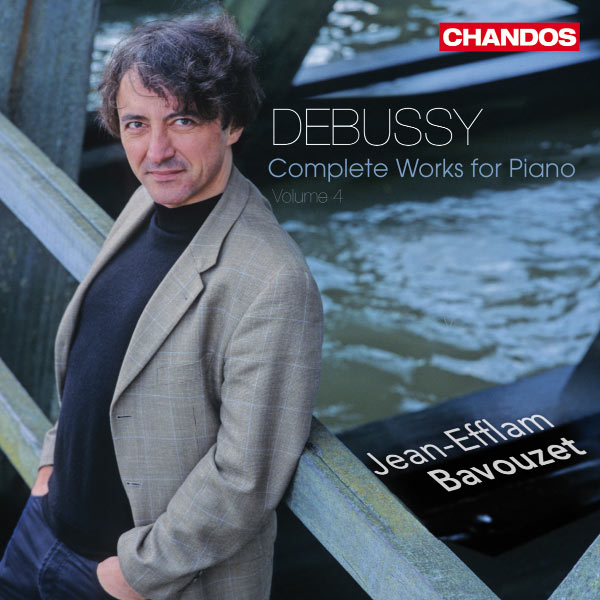
Complete Debussy vol. 4 – Jean-Efflam Bavouzet

Jean-Efflam Bavouzet Debussy vol. 4 Images Chandos

And here I must admit, while I had heard his name before, I didn’t have a single Bavouzet recording in my collection. Something to be corrected ASAP, as while I don’t always agree with the invited experts, in this case, recording number 4 clearly stood out (in spite of no recording of the 5 being a negative outlier, all had their qualities). I suppose it’s the mixture between extreme precision and the ability to just get sucked into the music.

Have you ever sat in the small west-end Musée Marmottan in Paris? It doesn’t draw the gazillions of visitors that the Musée d’Orsay gets, but it actually has an exceptional Monet collection. There are two main reasons to got there. A, there is an entire corner where you sit surrounded by Monet’s water lilies. Believe me, they are better than the original in Giverny. And there is one, rather little painting, depicting a rising sun over foggy harbor waters, with some small boats passing by, called Impression, Soleil Levant. And yes, this is what gave Impressionism its name.

Sorry for the detour, but watching this particular painting, and listening to Et la lune descend sur le temple qui fut played by Bavouzet gives about the same feeling, that is somewhere out of this world.

This is actually album number 4 of Bavouzet recording Debussy’s complete works, I assume all other volumes are equally worth having, but I didn’t yet have time to check them out.

My rating: 5 stars

You can get it here directly from the label.

Classical Life

A classical music blog by music critic Tim Mangan

This Week's Music

Making Classical Accessible

From my Macbook to the Net

Evaporation of my thoughts and observations

Elestra

Author: Artienne

My Life in Music

Playing, Singing and Listening

ArsX3

A brand new journal reviewing books, cinema, music

LawrenceEz's Blog

Creative and Performing Arts: Writing, Classical Music, Photography

Laetitia Strauch-Bonart

Contemporary Politics & Culture

sibling revelry

reveling in all things classical

It's A Raggy Waltz

I collect jazz on vinyl, I dig the Dave Brubeck Quartet, & I write about it

La Musica

By two cousins

thejazzbreakfast

Dishing it out from the heart of England

only jazz

random thoughts about music that matters to me

The Culture Project

Exploring the world of literature, wine, art, music and more.

René Spencer Saller

The music causes me to dream of fabulous empires, filled with fabulous sins.

Breaking Baroque

Blog of Tafelmusik Baroque Orchestra and Chamber Choir

Tasting Nirvana

Eating your Dosha

Shadow of Iris

Poetry, fiction, short stories, more ...

The Immortal Jukebox

A Blog about Music and Popular Culture

April Greene

Writer + Editor

a pianist's musings

A history of your favorite classical music.

Classical music for all

Boris Giltburg's blog

I HEAR VOICES

An orchestra seat in the web space