I’ve mentioned Giovanni Mirabassi already in my 25 essential Jazz albums. I consider him one of the best contemporary Jazz pianists.
Unfortunately his masterpiece Architectures is a bit hard to get these days as the rights were sold to a Japanese label.
Terra Furiosa (Discograph/Minimum 2008)
Luckily he has done other recordings that are much easier to purchase, like this 2008 recording, Terra Furiosa.
On bass, we have Gianluca Renzi who still plays with Mirabassi today, and the American drummer Leon Parker.
On this album, you clearly hear the influences of the late Bill Evans style, and also Enrico Pieranunzi. That said, he’s made something very personal out of all this, already given that he essentially plays only his own compositions.
My favorite songs is Last Minutes, where Gianluca Renzi gets some time for a beautiful bass intro, turning into a samba-like rhythm when Parker kicks in.
But even beyond this song, you’ll find stunning melodies, seamless interplay between three outstanding musicians. The music never stops evolving, and while the album remains in a certain mood most of the time, there is never any feeling of boredom at all, there just too much going on.
Finding tasteful Christmas music is not always an easy task.
Obviously, not everything is as bad as this:
or this:
But nevertheless, there is still a lot of tasteless stuff around. I’ve tried to point to some of my sources for tasteful Christmas music, the timeless Christmas Oratorio, the Nutcracker, and my favorite Christmas Jazz albums previously, but luckily good old Johann Sebastian has also written more than the Christmas Oratorio.
Bach’s Christmas Cantatas
The Christmas Oratorio itself is basically a collection of cantatas, and as part of his large collection of cantatas (that I yet need to write about in more detail), he’s also written several cantatas for specific seasons.
Typically, there are three cantatas closely associated with Christmas.
BWV 63, Christen, ätzet diesen Tag (Christians, engrave this day), was written in 1713 for the first day of Christmas, referring to the announcement of Christ. In character, it is very festive, but not necessarily very “christmassy”.
BWV 110, Unser Mund sei voll Lachens (May our mouth be full of laughter), is my favorite of the three. This is partially due to the fact that its opening is based on Bach’s Orchestral Suite BWV 1069, which I really love. And here, the addition of the choir really gives it a fully new structure and beauty. Again, this cantata was written for the first day of Christmas, in 1725, while Bach was working in Leipzig.
BWV 151, Süßer Trost, mein Jesus kömmt (Sweet comfort, my Jesus comes), was also written in 1725, for St. John’s day, the third day of Christmas, is the most intimate of the three cantatas, but doesn’t lack any beauty nevertheless. Just check out the beautiful flute solo in the first movement.
There is obviously no shortage of recordings of Bach cantatas, there is a sizable number of complete recordings out there. My personal favorites usually are Koopman and Gardiner, but Suzuki’s and Rilling also are very nice alternatives.
In Tempore Nativitatis – Christmas Cantatas – Philippe Pierrot – Ricercar Consort (Mirare 2013)
The Ricercar Consort is a Belgian ensemble lead by Philippe Pierlot. The musicians play with a lot of love for the music, and generate a very transparent and spacious sound.
The voices are also very beautiful. My favorite is Maria Keohane in Süsser Trost, but also really like Julien Prégardien, son of Christoph, here as well
If you want to go for a complete collection of cantatas, you may well go directly to Koopman and Gardiner, but if you are looking for a modern, beautifully recorded version of the Christmas cantatas specifically, you really cannot go wrong with this album.
My rating: 4 stars
You can find it here (Qobuz) or here (Prestoclassical)
Kenny Dorham is probably one of the least know Jazz Messengers, and this in spite of the fact that he played on the famous Café Bohemia sessions, and being the composer of the great standard Blue Bossa (I just love that song, check it out on Joe Henderson’s Page One or Dexter Gordon’s Biting the Apple).
He has recorded quite a number of noteworthy albums, including Afro-Cuban (1955), Quiet Kenny (1959), Matador (1962), Una Mas (1963), and Trompeta Toccata (1964), all of which are very much worth checking out.
Whistle-Stop (Blue Note 1961)
So why call out Whistle Stop? Well, two reasons: a) the cast is stellar, with Hank Mobley, Kenny Drew, Paul Chambers, and Philly Joe Jones, and b) we have only Dorham originals on this album
My favorite song is the bluesy Buffalo, which swings nicely and gives both Dorham and Mobley enough time to develop their solos. Another nice one is the title track, Whistle Stop, faster paced, but nicely grooving. Philly Twist is not dedicated to Philly Joe Jones, the drummer.
This is well done hard-bop, and deserves to be better known.
If reading the blog post title you wonder what the connection is between a 1990s Eurythmics title, Mozart, and some sisters called Weber, let me explain.
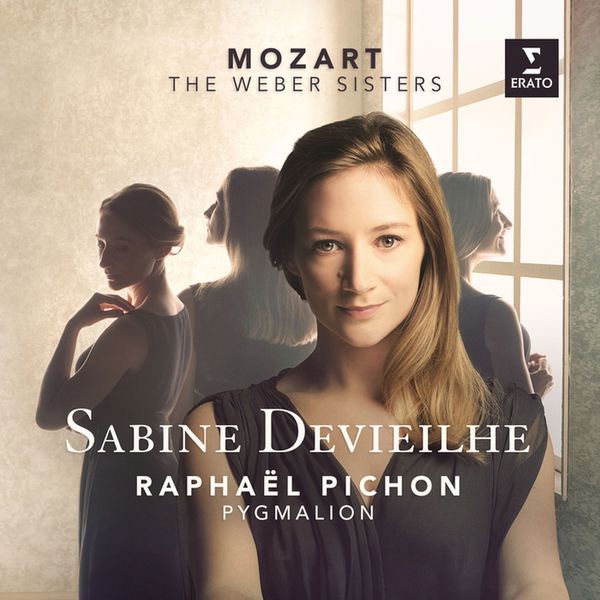
The angel is simply referring to Sabine Devieilhe, the young soprano on the album I’m about to write about. Not only she looks pretty much like one (see the cover photo below), she really has an angelic voice. Clear, bright, shiny, with a beautiful color and an amazing range.
I first noticed her in her debut recording on Erato, with Alexis Kossenko (previously mentioned for his Telemann recording here), Le Grand Théatre de l’Amour dedicated to Jean-Philippe Rameau.
Mozart: The Weber Sisters (Erato 2015)
This is Sabine Devileilhe’s second album on Erato, recorded this time with Raphaël Pichon’s ensemble Pygmalion.
I hesitated for quite some time to write about his album as I’m generally not a big fan of “best-of” type albums. I don’t mind them for baroque music as much, as it can be sometimes a bit tedious to go through 3+ hours of an opera seria, but for Mozart and beyond I prefer to listen to the entire opera instead. However, the selection on this particular album includes quite a number of single arias that are not part of a larger opera and are not recorded that often.
Let me briefly explain the Weber Sisters title of his album, as this is kind of a concept album. The most famous Weber sister is Constanze, Mozart’s wife, but actually Mozart was a close friend of the Weber family and as the booklet extensively explains, was at some point in love with the youngest sister, Aloysia, and the middle sister, Josepha, also played an important role in his life.
What music do you get? Well known hits like the famous Queen of the Night aria, or the French song Ah vous dirais-je maman, but also as mentioned previously several lesser known arias. All this is beautifully player by Raphaël Pichon’s ensemble, and Devileilhe’s voice is an absolute pleasure to hear.
This albums was elected among the albums of the year by Classica magazine, and I fully agree that his album is highly recommended.
Note there are a couple of “only” four star albums here, which means I don’t consider them absolutely essential. That said, I very much like all of the below and would recommend them without hesitation.
Cecile McLorin Salvant: For One To Love (Mack Avenue 2015)
Sarah McKenzie is my other discovery of this year (reviewed here). Less innovative than Cecile McLorin Salvant, she does just old fashioned 1960-style vocal jazz. The thing is, she does it with so much charm and also includes her own originals, I’m convinced we’ll continue hearing from this young artist.
If you can catch her live as I did (see here), go for it, she’s even better live than on this album.
Cassandra Wilson: Coming Forth By Day (Legacy Records 2015)
I’ve said it before, I have a love-hate relationship with Cassandra Wilson. Quite often, she just gets too close to a style that I just don’t like. On this Billie Holiday album, all is well from my perspective (see my review here).
Melody Gardot: Currency of Man (Universal 2015)
To be fair, this is more Soul than Jazz, but in any case, I really like this album. See my review here.
Autour de Nina (Verve 2015)
A beautiful Nina Simone Tribute album from a variety of artists. One of my favorite vocal jazz albums of the year, reviewed here.
In my previous post on Tchaikovsky’s symphony no. 5 I’ve stated that I don’t like Tchaikovsky very much. However, I must admit he really did some magical (and not in the Disney sense of the word) melodies in his ballets.
Western Christmas traditions now include regular performances of the Nutcracker. The story was originally a German fairy tale of a prince turned into a nutcracker, by E.T.A Hoffmann, later adapted by Alexandre Dumas. Tchaikovsky conducted the premiere in 1892, and both the ballet and the “best-of” excerpt, the suites, are these days among the most famous of his works.
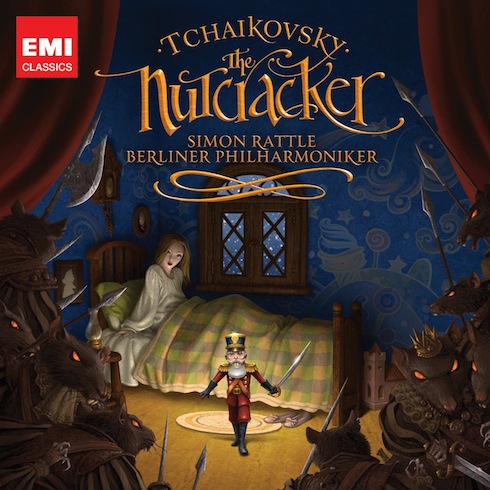
Tchaikovsky: The Nutcracker – Simon Rattle – Berliner Philharmoniker (EMI Classics 2010)
My first version was the legendary one by André Previn with the London Symphony Orchestra (also on EMI). That version is still very nice, so I didn’t look for a new recording for years (I basically listen to this work literally once or twice per year, usually some time in December).
However, two years ago I heard about this relatively new (2010) recording by Rattle on the radio, and I checked it out and I really liked it. Beautiful orchestral colors by the great BPO, and most importantly all the energy that this music really needs (I’m anything but a dancer, but this music makes me want to get up from my sofa and move to it).
You’ll find some excerpts of the recording here, with a nice interview with Sir Simon Rattle and some BPO musicians:
Note that some people say that Russian music can only be played well by Russian conductors, and indeed Gergiev did a great job on his Decca recording with the Kirov orchestra from the 1990s.
But still, Rattle did such a fine version that I doubt I’ll ever buy another Nutcracker again (well, never say never).
My rating: 5 stars
You can buy the CD here, I haven’t found a decent lossless download source.
Yes, obviously, non-classical Christmas music usually is rather cheesy. If you take it to the extremes, it can feel like a bit too much.
But let’s face it, isn’t this the time for “a bit too much”?
The trick is to find the albums that are still giving you the Christmas feel without completely overdoing it. I’ve looked around quite a bit and found 5 albums that are certainly a bit kitsch, but you (or at least I) can listen to an entire album without the feeling of just too much sugar.
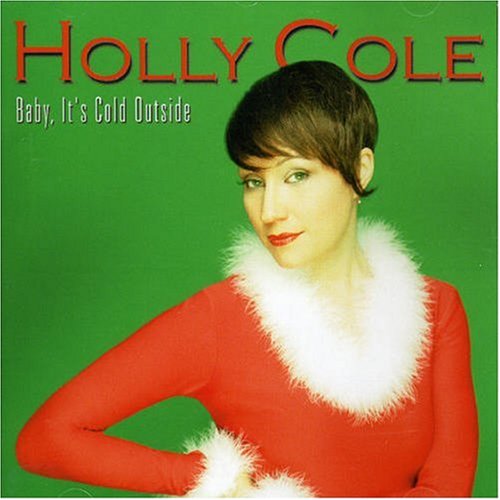
Holly Cole: Baby, It’s Cold Outside (Alert Records 2001)
I’m actually surprised I haven’t mentioned Holly on my blog yet, as I like her music very much. She’s located somewhere between Jazz and Pop/Singer Songwriter, and I really like her voice.
My favorite song on this album is the track that is probably given you the least holiday spirit, a cover of Merle Haggard’s If We Make It Through December. You can see from this song already that this is not your typical Christmas album.
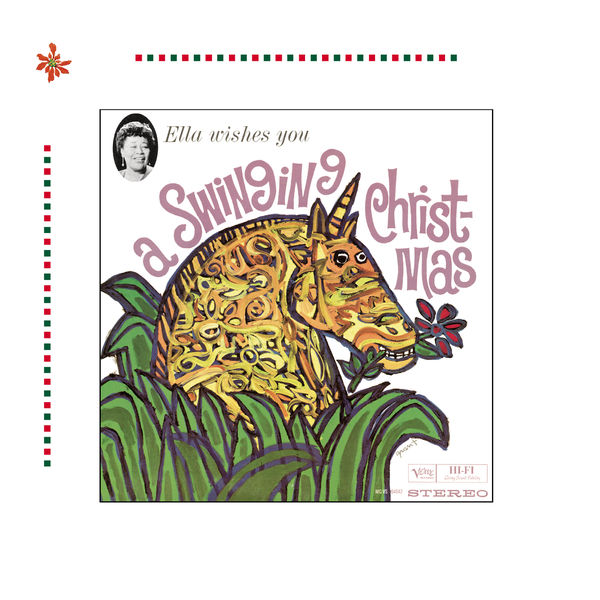
Ella Wishes You A Swinging Christmas (Verve 1960)
OK, not a lot of kitsch here, but one of the fastest versions of Jingle Bells ever (OK, not as fast as Barbara Streisand here, but still pretty fast). The track selection is a little bit more classical than Holly Cole, so you get all your Rudolph The Red Nose Reindeer, Let It Snow, and Winter Wonderlands, but with the usual charm and swing of Ella’s beautiful voice.
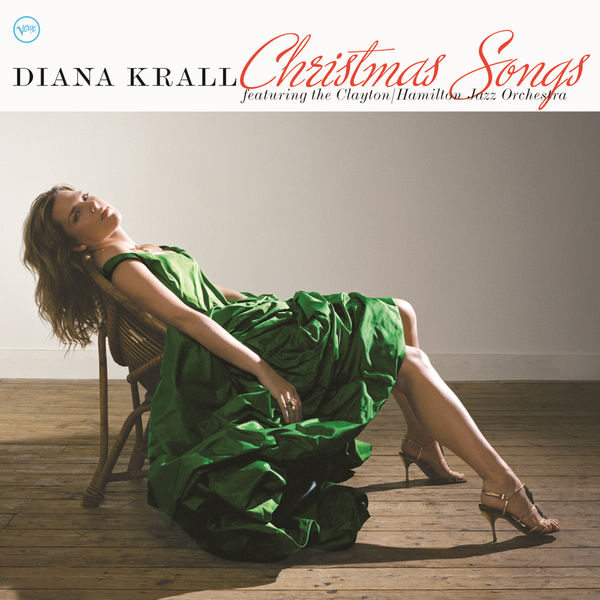
Diana Krall’s voice is just perfect for Christmas songs, and the not too overloaded Clayton/Hamilton Orchestra is doing a great job here (although poor drummer Jeff Hamilton probably get’s a bit bored here). OK, you get your occasional dose if strings, but they don’t dominate the album too much.
My favorite song on this album is Winter Wonderland, which has a beautiful swing to it.
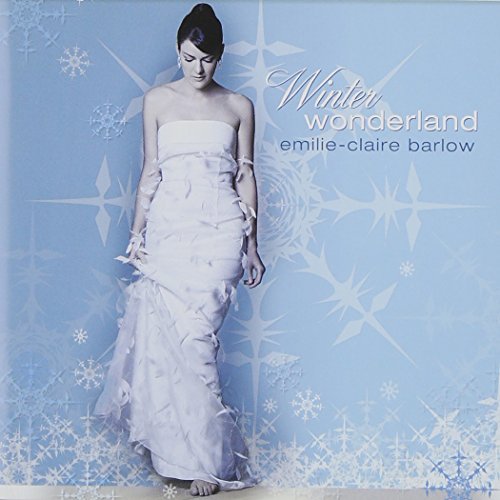
Emilie-Claire Barlow doesn’t have the same near celebrity status as her fellow Canadian Diana Krall, but she’s also a very fine singer. She has a very particular tone, much brighter than all the other singers listed above, if you’ve heard her once, you’ll recognize her immediately.
One particularity of this album is that she turns Sleigh Ride into a Samba.
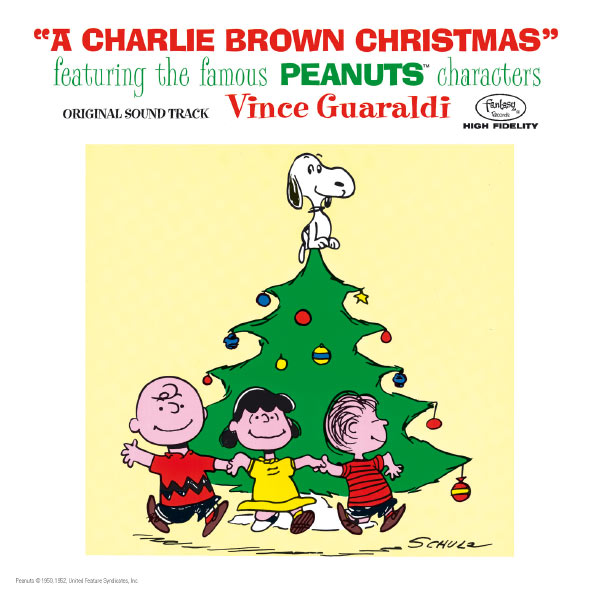
Vince Guaraldi: A Charlie Brown Christmas (Fantasy 1965)
And given that I’m a fan of the Jazz Piano Trio, a non-vocal classic had to be on this list. You’ve never heard O Tannenbaum (O Christmas Tree) swinging better!




 musicophilesblog - From Keith Jarrett to Johannes Brahms