Another Disappointing New Release by Seong-Jin Cho

Seong-Jin Cho

Cho is the winner of last years Warsaw Chopin competition, that in the past used to launch piano legends, e.g. Krystian Zimerman, or Martha Argerich.

However, in my previous review of his debut recording, I already was quite surprised by the choice of last years jury.

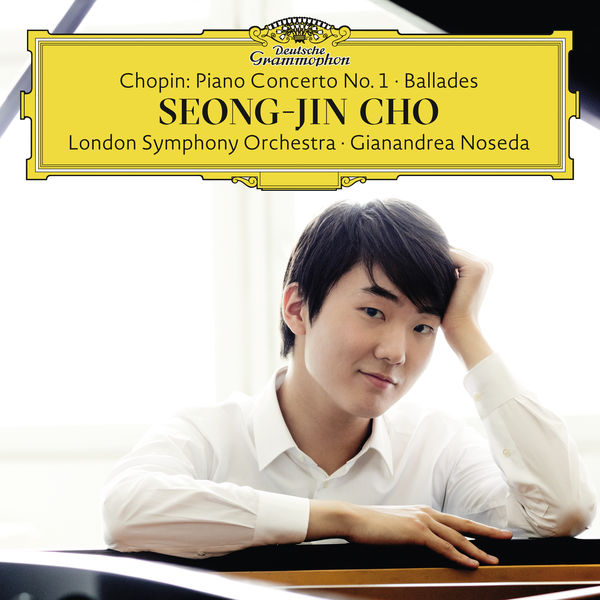
And unfortunately, his latest release, a full Chopin album with the piano concerto no. 1 and the ballades, confirms my disappointment.

Chopin: Piano Concerto No. 1 / Ballades – Seong-Jin Cho (Deutsche Grammophon 2016)

Let’s start with the good part. Piano concerto no. 1 is an overall convincing performance. He uses a lot of rubato, which I really like in Chopin, the brilliant parts are brilliant as expected, but the slower parts also get a well reflected treatment.

We are clearly not yet beating Zimerman’s both recordings on Deutsche Grammophon, but at least this is interesting and worth listening to.

The LSO under Gianandrea Noseda are a quite powerful partner. Let’s face it, the Chopin piano concertos aren’t the most satisfying material for orchestras, they often are nothing more than “background” for the soloist. But their playing here cannot be faulted.

Chopin: PIano Concerto No. 1 / Ballades Seong-Jin Cho, London Symphony Orchestra, Giandandrea Noseda Deutsche Grammophon 2016 24/96

The Ballades

The Chopin ballades are just amazingly beautiful. My favorite version is again, Zimerman, as already featured in my Top 10 Classical Pianists posts. Another favorite of mine, Murray Perahia, is also exceptional.

Getting to Cho, something is just wrong. The slow parts are often just plain boring, I can’t even fully put my finger on it.

When it gets fast, like after 2 min into Ballade No. 2 he becomes impressive, but more technically than musically, unfortunately.

It is very clear that Cho has amazing technical reserves that are barely even challenged here in these works. Maybe he would be perfect for Liszt, but here in the simple ballades, what you really need are nuances, and these are missing to my simple ear.

It pains my heart writing this, but I don’t think Cho is up there with his peers from previous competitions.

Let me know what you think, do you agree? Disagree? Think I’m completely nuts? Please share your comments.

My rating: 3 stars

You can find it here (Qobuz) and here (HDTracks)

UPDATE January 5, 2016: By now, some other reviewers have had more positive opinions than me about this album, I’d say the general consensus is around 4 stars. Doesn’t change my personal rating but I wanted to flag this to ensure you get a balanced view.


Murray Perahia’s French Suites – A Must Have

Japanese Art – Ukiyo-e

I must admit while I feel at least somehow reasonably comfortable with my understanding of Western art and paintings, I’m pretty ignorant when it gets to Japanese art.

Nevertheless, Bach’s music often reminded me of the the abstracted image I have in my head of Japanese art (mainly the Ukiyo-e style) often depicting landscapes, with delicate details of trees and flowers.

Why am I writing this here? Well, the latest recording by Murray Perahia makes me permanently think of this. These Japanese artworks often are woodblock prints. This essentially woks by chiseling away wood around the outlines of the drawing.

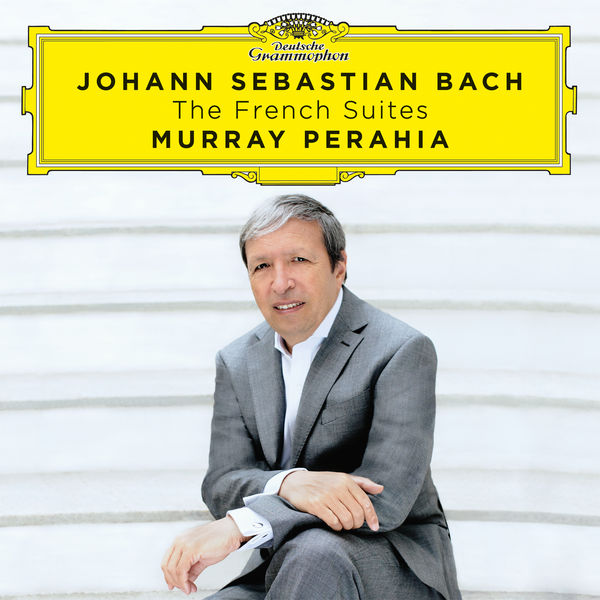
Murray Perahia’s French Suites

Well, in a way, that is exactly how I hear Perahia play these little miniature gems that are the French suites. He chisels away all everything superfluous and only leaves you with the outlines, and what remains is something of outstanding beauty.

Johann Sebastian Bach: The French Suites - Murray Perahia (24/96) Deutsche Grammophon 2016

My first encounter, as so often with Bach, was via the Glenn Gould recordings, and I also had the version by Keith Jarrett for a long time. Since then I’ve added about 3-4 other versions to my collection.

However, this really is the new star for me. I’ve listed Perahia in my Top 10 Favorite Classical Pianists post, especially for his Bach (his Goldberg are among my absolute best versions there are out there).

And here again, he doesn’t disappoint. This is intellectual and emotional at the same time, something which is sometimes hard to achieve with Bach’s keyboard music, as artists tend to focus either on one or the other.

Here’s the official trailer so you get an idea what to expect:

By the way, Gramophone agrees and has listed this as their “Editor’s Choice” for their November issue. Classica is also globally positive,  giving 4 stars (the highest rating below the CHOC, their equivalent of a five star).

No hesitation on my side however:

My rating: 5 stars

You can find it here (Qobuz) and here (Prostudiomasters).

UPDATE Nov 29: if you need any further reassurance: French magazine Diapason has given this album it’s highest rating, the Diapason d’or, in the November issue. And it was named “recording of the month” by BBC Music magazine.

Why Bother Reading Reviews If There Is No Consensus? The Example Of Esfahani’s New Goldberg Variations?

Professional Music Reviews

I’ve been very clear on my blog here that whatever I’m writing is nothing more than my personal view on the music and interpretations I write about.

You’d think that it should be different for professional reviewers. OK, maybe nuances according to individual tastes, but a good album is a good one, and a bad one is bad, right?

Well, I’ve previously given already one example of a Mahler album that received extremly contrasting reviews from two of the most respected classical review magazines out there, UK-based Gramophone, and French Classica.

And here we go again:

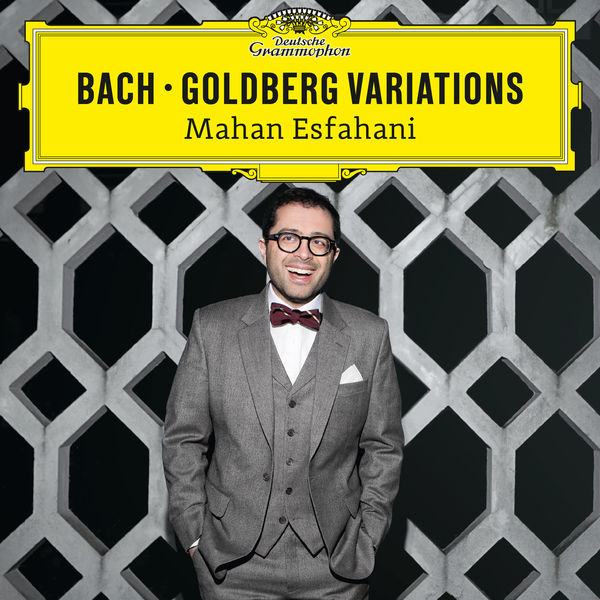
Bach: Goldberg Variations – Mahan Esfahani (Deutsche Gramophon 2016)

Bach: Goldberg Variations - Mahan Esfahani (24/48) Deutsche Grammophon 2016

Mahan Esfahani is one of the rising stars on the harpsichord. I’ve briefly mentioned him in my musing’s on the Gramophone Awards 2015, but haven’t properly reviewed any of his albums yet.

I really liked his previous album Time Present And Time Past that went from Scarlatti to Reich.

So I was very curious about his take of the Goldberg Variations. I’ve previously praised Pierre Hantaï on harpsichord and Igor Levit on a modern piano. Both remain favorites of mine, but I have dozens alternatives.

Gramophone and Classica totally disagree

But before I get into my personal assessment, let me get back to my opening comment: How professional reviewers can disagree, in the most drastic possible way.

October Issue Gramophone: “His navigations of the music’s structure […] is carefully considered without sounding in the least bit studied, or different for the sake of being different. His Goldberg Variations clearly belongs […] in all serious Bach collections”. They even gave it a Gramophone Award.

October Issue Classica: “Il donne même l’impression de réinventer le Bach machine à coudre” (he even leaves the impression of reinventing the “sewing machine” Bach style), or “errements d’un jeu qui se laisse aller à un rubato et des manières agacants” (this is a bit harder to translate, but basically they find the same freedom that Gramophone likes above totally annoying), and speak of “La première version post baroque” (the first post-baroque version). Result: 2 out of 5 stars, which is their  way of saying “disappointing”.

So what is it? Does a disappointing album belong in all serious Bach collections? I don’t blame you for being confused.

But this is my point, right? You can never use any kind of review individually. You can try to find a magazine (or even better, individual reviewer) that has a similar taste to yours, but then need to make up your own mind.

Side note: This is why I love streaming so much, as you can simply try out new music as much as you want before buying. But please, don’t forget to buy stuff you really like, if you want the musician to make a living.

To close this chapter on reviews, what is helpful if you find “meta-reviews”, that compares and contrast several individual reviewers. If you find consensus among many reviewers, you probably have a higher chance of finding something truly exceptional. Classica every month does just that, unfortunately only comparing French reviewers, they call that table “Les Coups de Coeurs” and summarize the opinions of 6 different French classical music specialists from Le Figaro to France Musique. But I don’t think anybody does this at an international level.

So what do I think about this album?

Now it get’s difficult. Esfahani’s recording is clearly VERY different.

What I love about it is the sound of the harpsichord, a two keyboard reconstruction that has a splendid sound (and isn’t ruined to much by Deutsche Gramophones sound engineers).

About the version? You’d think this is a love or hate recording. Well actually, it isn’t. I’ve now listened to it at least 5 or 6 times, but it doesn’t touch me as much as a Goldberg recording should. I’m just a bit indifferent. I clearly see how this recording is different, and why Esfahani does what he does, but I don’t think this version will get a lot of additional spins on my system. I’d go to Hantaï, or Levit, or Perahia, or, or, or.

My rating: 3 stars


You can find it here (Qobuz) and here (Prostudiomasters)

Alice in Grieg’s Wonderland

The usual excuses first

I’ve been crazy busy the last weeks being home on average about 1-2 nights per week, the rest full of business and private travel. Therefore, my blog writing has suffered quite a bit.

And this is not because of a lack of interesting new albums to write about. Well, on Jazz, it partially is, while I do have two reviews upcoming, this site may be a bit disappointing for you currently if you’re more in to Jazz than Classical music. Hope you bear with me.

But with regards to classical, there have been a number of interesting albums released recently, all of which I have planned to write about, including Andreas Staier’s new Schubert Trios, Benjamin Grosvenor’s new release, Adam Laloum getting into Schumann and Schubert, the Chiaroscuro Quartet playing Hadyn, the Belcea Quartet playing Brahms, etc. etc.

OK, so the paragraph above should put enough pressure on me to actually write all these reviews in the next weeks, where hopefully my travel activity should be a bit more measured.

Alice Sara Ott

Alice Sara Ott is a young pianist (born 1988) of German and Japanese origin. She’s recorded already quite a number of albums but the only one I have had on my radar screen so far is her recording of the Complete Waltzes by Chopin. I kind of liked that album, but then again the waltzes are about my least favorite Chopin works relatively speaking, so I didn’t spend much time on it.

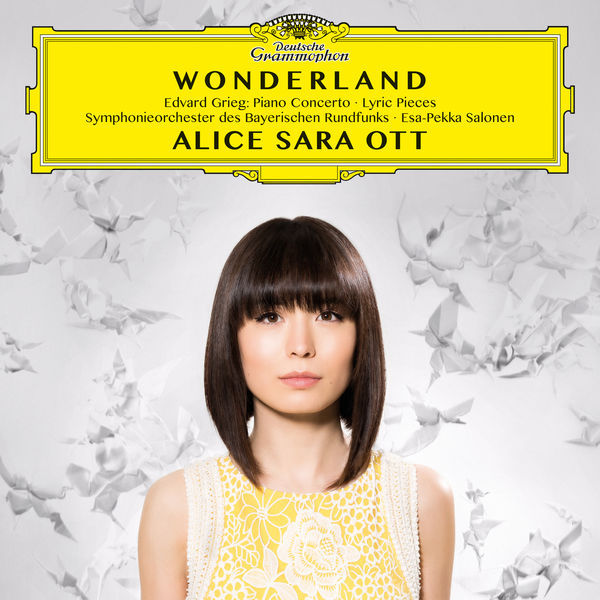
Wonderland

Honestly, the title of her latest album put me off a little bit, the wordplay is just a little bit too obvious. But then again, you don’t buy a book for it’s cover, and the same logic should apply for classical albums.

Wonderland Grieg Piano Concerto Lyric Pieces Alice Sara Ott Deutsche Grammophon 2016 24/48

And I’m happy I went further, because this recording of the piano concerto is really worth it.

I’ve previously written about Javier Perianes who did a similar coupling of the piano concerto with the Lyric pieces (see my review here), and this recording, while being quite different, is really at the same level.

If you want to compare the two, Perianes is probably the more energetic, Ott with Esa-Pekka Salonen and the BR symphony takes a more lyrical approach. You’ll get lots of rubato (the concept of “stealing” time to give it back later, i.e. variations of the tempo), with some moments being even extremely slow (already in the opening bars for example).

But unlike the recent recording of the Schumann piano concerto by Melnikov, where I was a bit put off with the slow speed of the third movement, here all slow moments make perfect sense to me. And don’t get me wrong, when the piece needs energy and passion, you’ll get plenty.

Does this version beat my reference version from Leif Ove Andsnes? Well, not exactly, but it is clearly a worthy alternative.

As a “filler”, you don’t get the usual coupling with Schumann, but similar to Perianes, you get a selection of the Lyric pieces, and given that these are little gems, they are very much worth having. To lighten things up a bit more, you even get piano transcriptions of Grieg’s most famous piece, Peer Gynt, in the mix.

My rating: 4 stars

You can find it here (Qobuz) or here (Prostudiomasters)

My Reflections on the 2016 Gramophone Awards (Part V): All The Rest

And All The Rest

After 4 parts on my favorite categories of the 2016 Gramophone Award nominations, I discovered that I simply don’t have enough to say about most albums in the other categories, so I decided to lump all remaining categories (Baroque Instrumental, Choral, Contemporary, Early Music, Opera, Orchestral, Recital, Solo Vocal) into one big “super-post” and only write about the albums I really care about in this remaining sections.

So, here we go:

Baroque Instrumental

Masaaki Suzuki plays Bach Organ Works (BIS 2016)

I must admit, I bought this album initially because I finally wanted to have a well recorded modern version of the Toccata d-minor BWV565, probably Bach’s best known work even for lay people.
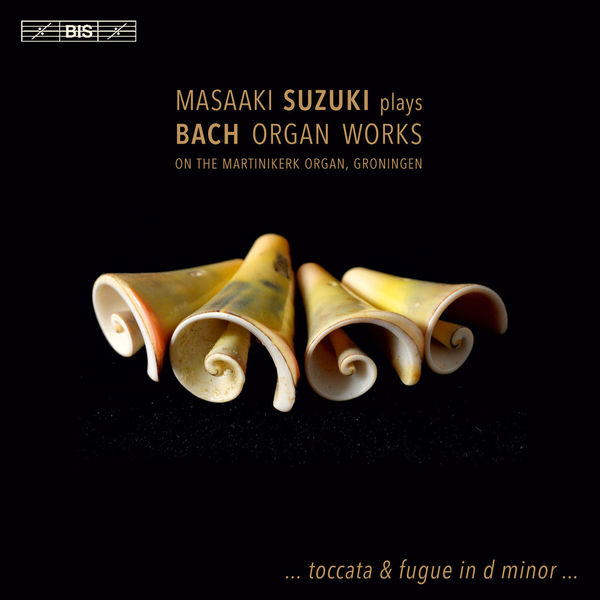
Masaaki Suzuki plays Bach Organ Works BIS 2016 24/96

Well, that and the fact that I truly admire Masaaki’s efforts with the Bach Collegium Japan, and have pretty much his entire Cantata cycle. So I was curious to hear him as a soloist.

Well, I wasn’t disappointed. BIS can usually be trusted for recording quality, and this recording delivers (although has quite a bit of reverb from the Marinikerk in Groninen, so if you don’t like this, look elsewhere).

The good thing of this album is as well that once you go beyond the Toccata earworm, there is lots of beautiful music to discover. I don’t listen to organ very regularly, so this album pushes me in the right direction.

And Masaaki surely knows how to play. This album has received some controversial reviews, some like Diapason and obviously Gramophone love it, some critisize Suzuki takes too many liberties. Well, I’m certainly in the first camp.

My rating: 4 stars


WF Bach Keyboard Concertos – Maude Gratton (Mirare 2015)
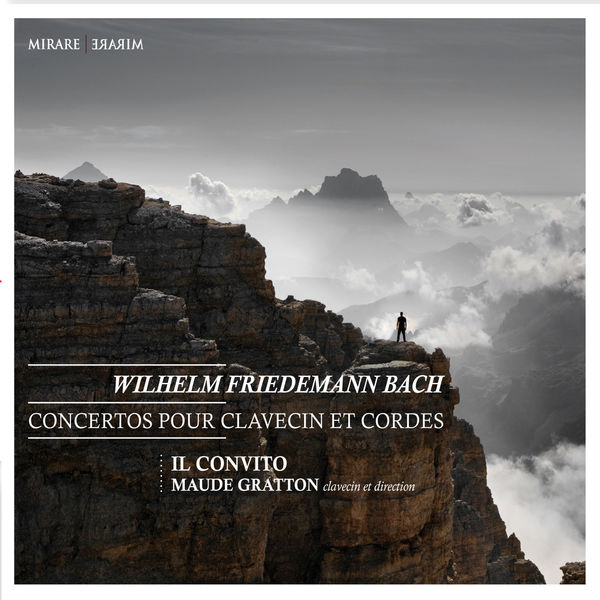
Wilhelm Friedemann Bach: Concertos pour Clavecin et Cordes / Cembalo Concerts Maude Gratton Il Convito

I’ve reviewed this album previously and unfortunately, it still isn’t my cup of tea.


Biber: Rosary Sonatas – Rachel Podger (Channel Classics 2016)

Ah, Rachel Podger. I’m a big fan, and like pretty much everything she recorded, see also here.
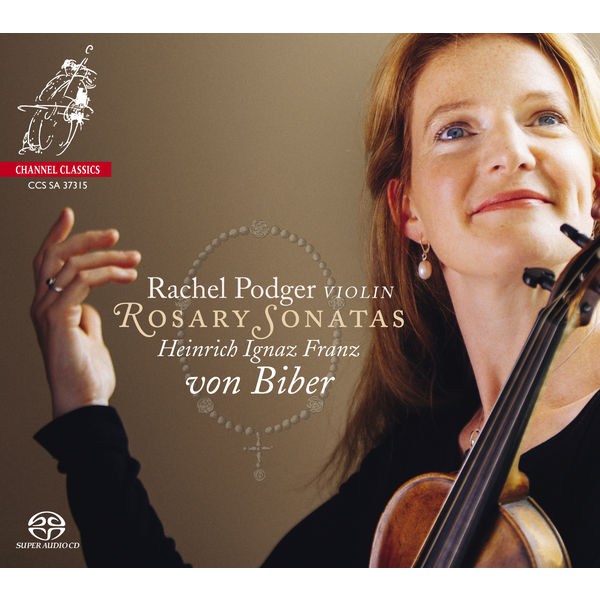
Biber: Rosary Sonatas - Rachel Podger Channel Classics 2016 DSD

Sometimes, even in the music world, there seem to be trends.

You barely heard about Heinrich Ignaz Franz von Biber (to quote his full name) for years, and all over sudden, you get 3 recordings of the Rosary Sonatas in a row.

Not sure about the exact order, but we got Ariadne Daskalakis on BIS, Hélène Schmitt on Aeolus, and Rachel Podger in the space of about 12 months.

What’s even more difficult: all of the above are very good.

Nevertheless Podger has an edge over the two others in my ear due to the sheer beauty of the playing. Now, you could argue, is beauty the right approach for these works.

Well I’m not religious, but if Wikipedia is correct, the Mystery of the Rosaries are meditations on important moments in the life of Christ and the Virgin Mary. I personally would want these to be beautiful. The outstanding recording quality of Channel Classics in DSD only makes it more breathtaking. 

My rating: 5 stars

In any case, check out the two others as well before buying.

My prediction

So who will win in the category? Both Suzuki and Podger have made it into the final three, I’d expect a tight race here. I personally give the edge to Podger.

Opera

I recently bought Netrebko’s beautiful recording of Tchaikovsky’s Iolanta and enjoyed it a lot, so I really need to check out the recording of Pique Dame that Gramophone recommends here by Mariss Jansons, but I haven’t done so yet, so will refrain from any comment at this stage.

The only album in the opera category I’ve heard (and own) is:

Verdi: Aidi – Antonio Pappano – Anja Harteros – Jonas Kaufmann (Warner 2015)
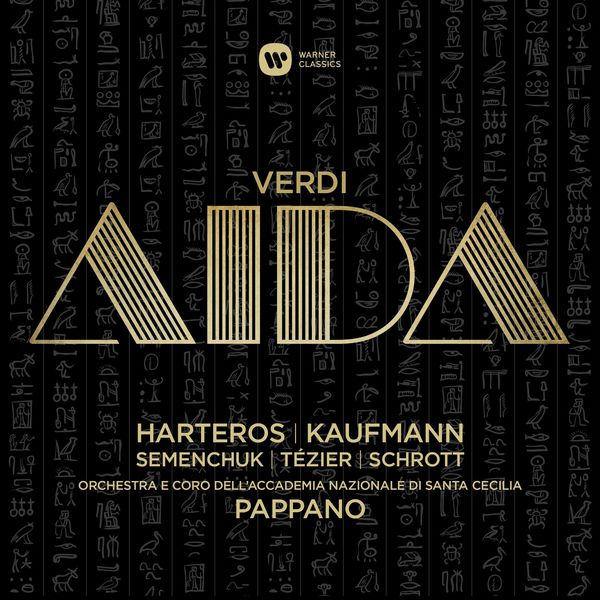
Verdi: Aida Pappanis Anja Harteros Jonas Kaufmann

Well, no change to my previous five star rating (see the review here), and I wouldn’t be surprised if this album will also win. Like the Tchaikovsky mentioned above, it made it into the final three candidates.

Orchestral

I’m a bit surprised myself that I wasn’t able to write a dedicated blog post about the Orchestral category, but there are simply too many albums nominated from composers that I dont’ care enough about, often 20th century, from Casella, Dutilleux, Elgar, to Vaughan Williams.

So just a quick note about two albums in this section:

Schubert: Symphony No. 9 – Claudio Abbado – Orchestra Mozart
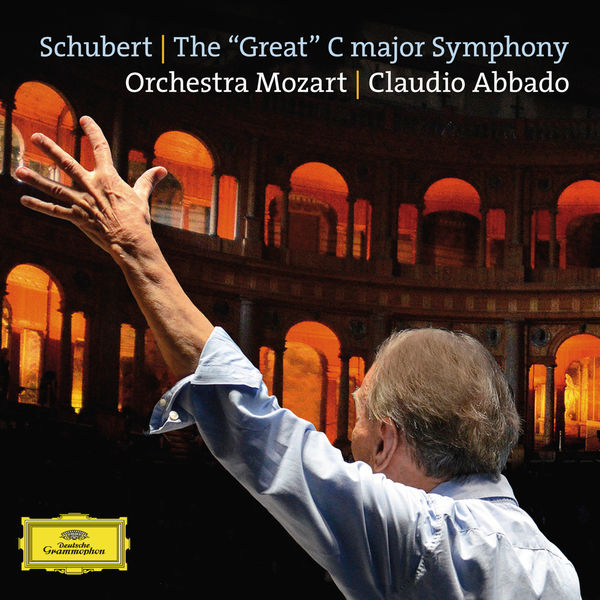
Schubert Symphony No. 9 Abbado Orchestra Mozart Deutsche Grammophon 2015

Going to be brief here, I love a lot of the stuff that Abbado did with his Orchestra Mozart, this isn’t my favorite. I’d much rather go with Dohnanyi as reviewed here.

And then there is Andris Nelson’s BSO recording of Shostakovich symphony no. 10. I don’t have that one yet, but really like his even more recent release of symphonies no. 5 and 9.
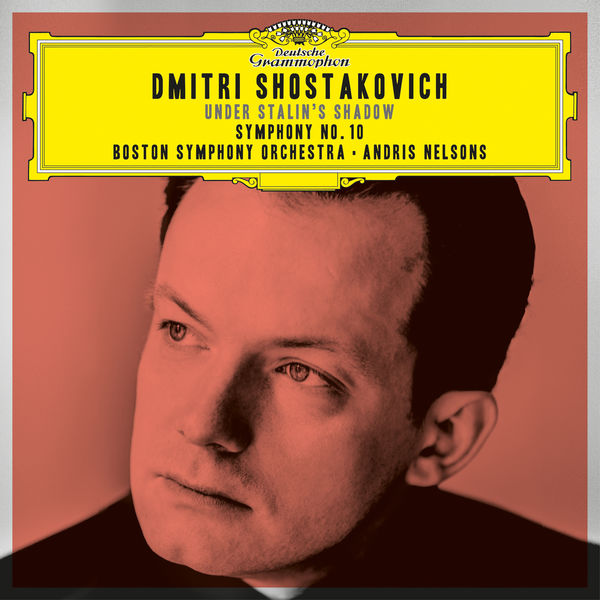
Shostakovich Symphony No. 10 Andris Nelson Boston Symphony Orchestra Deutsche Grammophon 2016 24 96

Given that I haven’t heard 90% of the albums in this category, predicting the winner is obviously preposterous. But I wouldn’t be surprised if Nelsons wins here.

Recital

I’ve only spent a decent amout of time with one album in this section, the excellent Weber Sisters.

A side note on the Ricercar Cavalli album, I skipped through it, but found the Christina Pluhar album released pretty much at the same time more exciting. I may need to revisit that though.

And I gave Jonas Kaufmann’s Nessun Dorma as a present to my mother-in-law, she’s a big Kaufmann fan, and I must admit, the album is really worth checking out.

Mozart and the Weber Sisters – Sabine Devieilhe – Raphael Pichon – Ensemble Pygmalion
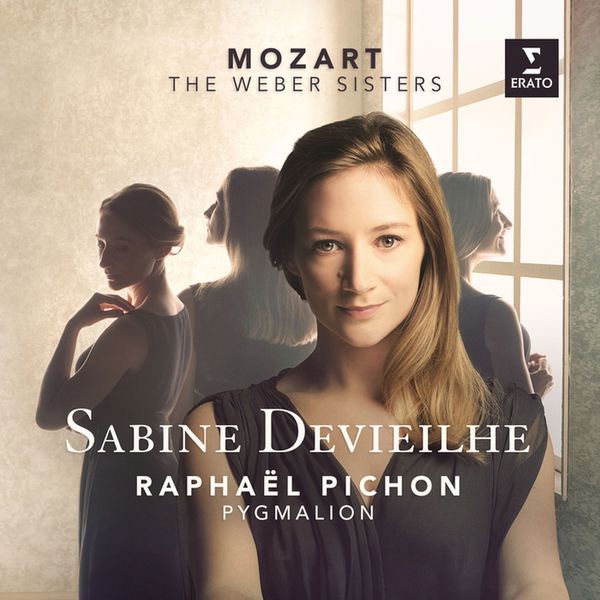
Mozart: The Weber Sisters Sabine Devielhe Raphael Pichon Pgymalion Erato 2015

I’ve already reviewed this album, with 5 stars.

And I keep going back to it over and over again.

This is again one of the rare birds of albums where Classica (Choc de l’année), Diapason (5 stars), Gramophone (Editor’s choice, Gramphone Award nominee), and Telerama (4F) all agree.

She is nominated among the final 3 contenders in this category, I really hope she wins!


So in summary: Podger’s Biber, Pappano’s Aida, and Devielhe’s Mozart are the must have albums for me here, with Suzuki’s organ works also highly recommended.


What do you think? I’d love to hear your opinions!


You can find the albums here:

Bach Suzuki Organ Works

WF Bach Cembalo Concertos

Biber Rosary Sonatas Podger

Verdi Aida Pappano

Schubert 9 Abbado

Nelsons BSO Shostakovich 10

The Weber Sisters


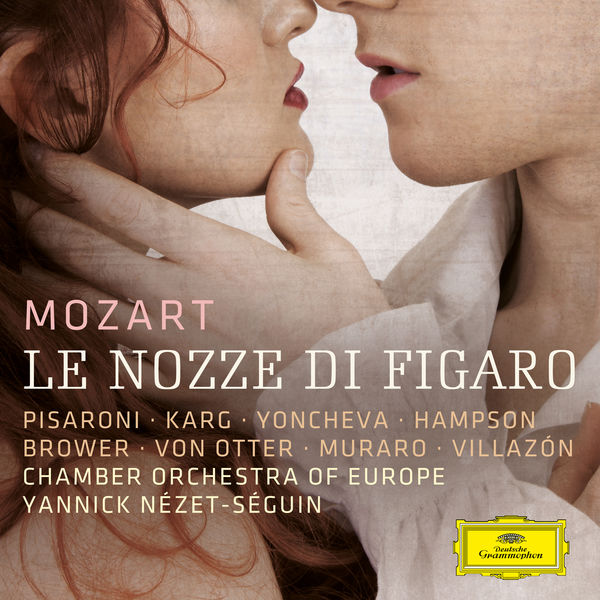
Nézet-Séguin’s Figaro – Nice, but lacking some sparkle

I don’t regularly write about opera, as I don’t really consider myself an opera expert. I come from instrumental music, and tend to judge operas much more on the orchestral performance than on the singers.

But then again, occasionally there are operas I really care about and therefore feel comfortable enough sharing my impression. My favorite opera composer by far is Mozart, and I’ve mentioned Jacobs’ beautiful Idomeneo in My Must Have Mozart Albums

Furthermore, there is one more five star rating opera review, Nézet-Séguin’s Cosi Fan Tutte, recorded live in  Baden-Baden. Cosi is my absolute favorite Mozart opera, closely followed by Le Nozze di Figaro.

So as you can kind of guess, when Nézet-Séguin’s Figaro was very recently released, I clicked buy pretty much instantaneously.

Le Nozze di Figaro – Nézet-Séguin (Deutsche Grammophon 2016)

Mozart: Le Nozze di Figaro - Yannick Nézet-Séguin - Chamber Orchestra of Europe 24/96 Deutsche Grammophon 2016

Maybe I should have used my streaming subscription first.

No, that’s a bit harsh, I don’t expect to regret the purchase. It’s just that after the great Cosi I just expected more. I expect drive, lightness, sparkle! Just what the libretto of this slightly silly story requires.

And what we get here is slightly different. Nothing really wrong, beautiful singers, and the COE plays well, but there is the certain “Je ne sais quoi” missing.

I mean, we have with Thomas Hampson and Sonya Yoncheva a beautiful Almaviva couple.

However, both Pisaroni and Karg convince me a bit less. They sound a bit too much Belcanto, and not enough Mozart, if you know what i mean.

And even Nézet, who usually plays so energetically, just takes a slightly lower, heavier tone here with the COE. Nuances, I admit, but I still rather go back to Jacobs, Erich Kleiber, or James Levine at the Met.

I’m curious to hear if these are only my personal impressions, or if you share them. Please agree or disagree with me in the comments section!

My rating: 4 stars (it is still very much worth owning, may just not be the best out there)

You can find it here (Qobuz) and here (Prestoclassical)

UPDATE Aug 15: Gramophone agrees with me in their September 2016 issue, saying that “the drama slips through his [Nézet-Séguin’s] fingers at some places.

The 2015 Chopin Competition – I Don’t Get It

Subjectivity

As you know if you’ve read this blog, before, I have absolutely no problem with subjectivity (see also how do I rate?) even if it may be controversial, and so I don’t hesitate putting my opinion out there, even if I may be a minority (e.g. with Staier’s Bach concertos that the whole world but me seems to love).

The 2015 Chopin Competition

However, things were slightly different with the 2015 Chopin competition. I mean we’re talking about one of the most important, if not the most important piano competition in the world, only held every 5 years! Former winners include legends like Martha Argerich and Maurizio Pollini, and in more recent years Yundi and Rafal Blechacz. Martha, Yundi, and Chopin specialist Nelson Goerner were part of the Jury this year!

So I felt rather belittled compared to those giants, and when the recording of the winner, South-Jorea’s Seong-Jin Cho came out on Deutsche Grammophon, and I didn’t really like the recording, I felt it must be me. Maybe these geniuses saw or heard something I don’t.

So I didn’t write about it yet on my blog and decided to give the album some more spins before I formally make up my mind. And then I must admit I forgot about it.

Seong-Jin Cho At the 2015 Warsaw Chopin Competition (Deutsche Grammophon 2015)

Song-Jin Cho Winner of the 17th International Fryderyk Chopin Piano Competition Warsaw 2015

Just recently, the two classical journals I subscribe to, Gramophone and Classica, came out with their latest issue, and both reviewed it. And guess what, in both cases, the reviewers were significantly underwhelmed (3 out of 5 stars for Classica, and rather negative comments from Gramophone).

So at least it wasn’t just me. Don’t get me wrong, this is fine Chopin playing, but compare his preludes to Blechacz, and sorry but we’re talking night and day in my personal opinion. And then you get Sonata No. 2. Compare this to Argerich herself, or Pogorelich, or Rubinstein, again, this is absolutely no match.

Not sure what happened, maybe Deutsche Grammophon just released the wrong takes, maybe Cho will develop over time, but so far I really don’t get it.

But even if you take the pressure of a competition and live performance into account, just compare Cho to Blechacz’ final performance in Warsaw 11 years ago, and really, there is so much more presence:


Obviously, you can’t have a new Argerich every year, but still my expectations were higher.

So what do YOU think?

My rating: 3 stars

In any case, you can find it here (Qobuz) and here (Prestoclassical)


Classical Life

A classical music blog by music critic Tim Mangan

This Week's Music

Making Classical Accessible

From my Macbook to the Net

Evaporation of my thoughts and observations

Elestra

Author: Artienne

My Life in Music

Playing, Singing and Listening

ArsX3

A brand new journal reviewing books, cinema, music

LawrenceEz's Blog

Creative and Performing Arts: Writing, Classical Music, Photography

Laetitia Strauch-Bonart

Contemporary Politics & Culture

sibling revelry

reveling in all things classical

It's A Raggy Waltz

I collect jazz on vinyl, I dig the Dave Brubeck Quartet, & I write about it

La Musica

By two cousins

thejazzbreakfast

Dishing it out from the heart of England

only jazz

random thoughts about music that matters to me

The Culture Project

Exploring the world of literature, wine, art, music and more.

René Spencer Saller

The music causes me to dream of fabulous empires, filled with fabulous sins.

Breaking Baroque

Blog of Tafelmusik Baroque Orchestra and Chamber Choir

Tasting Nirvana

Eating your Dosha

The Immortal Jukebox

A Blog about Music and Popular Culture

April Greene

Writer + Editor

a pianist's musings

A history of your favorite classical music.

Classical music for all

Boris Giltburg's blog

I HEAR VOICES

An orchestra seat in the web space