Brahms Latest Work: The Clarinet Sonatas by Coppola and Staier

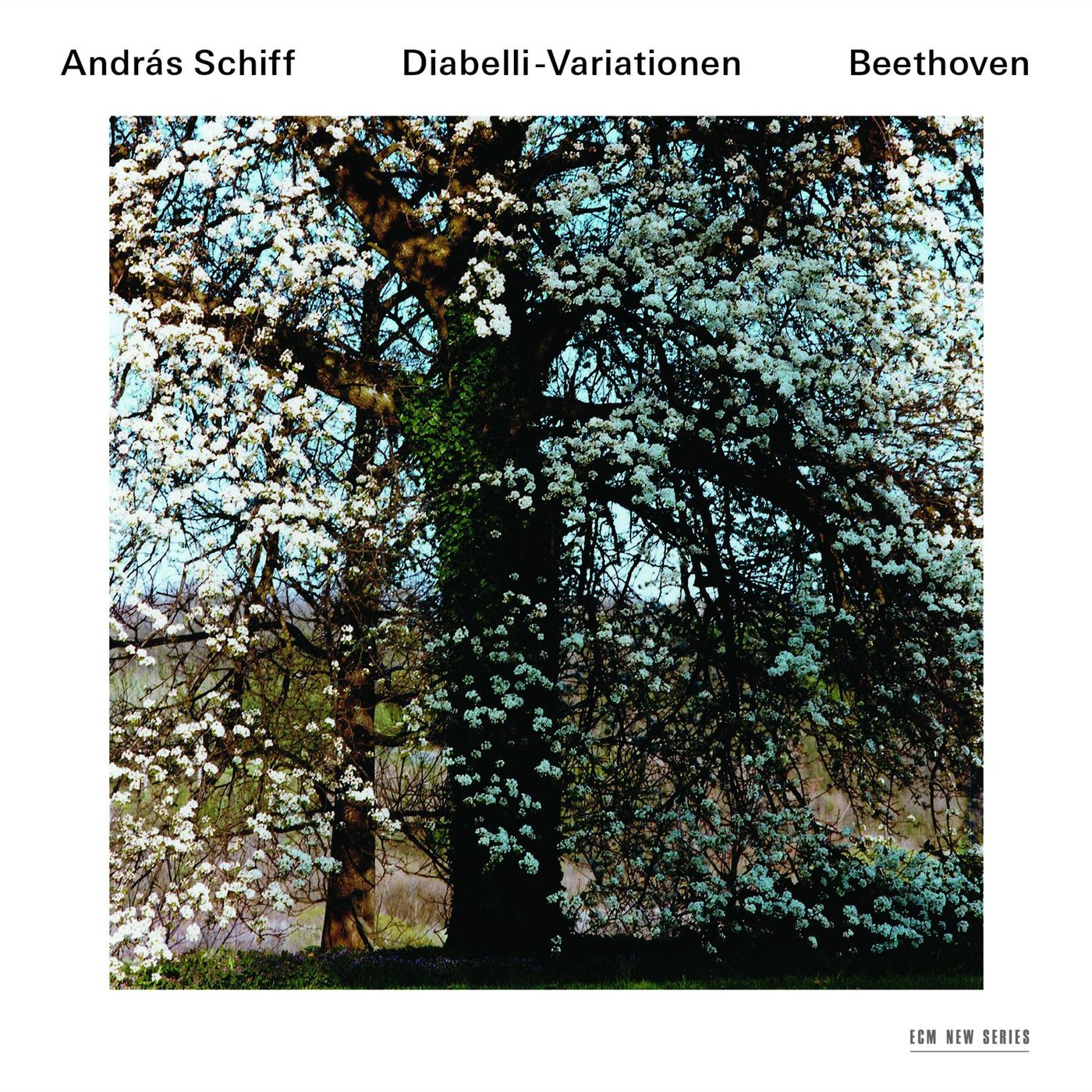
I’ve said it before, I’m a big fan of Andreas Staier. His Diabelli-Variations are outstanding (see review here). Therefore, I was rather disappointed not to like his recent release of the Bach harpsichord concertos (see here). It appears now that most other reviewers don’t share my opinion by the way. I’m still not convinced unfortunately.

But from Bach, let’s move more than a century later.

I haven’t reviewed any Brahms album for a while, which is weird given that he appears in my blog title.

Brahms’ Clarinet Sonatas op. 120

I must admit I wasn’t historically a big fan of these sonatas, I found them not very accessible.

These sonatas, as well as the Clarinet quintet & trio, were triggered by Brahms meeting the famous clarinet player Richard Mühlfeld.  But with Andreas Staier, I had to give them a go, so I went ahead and purchased this 2015 Harmonia Mundi album.
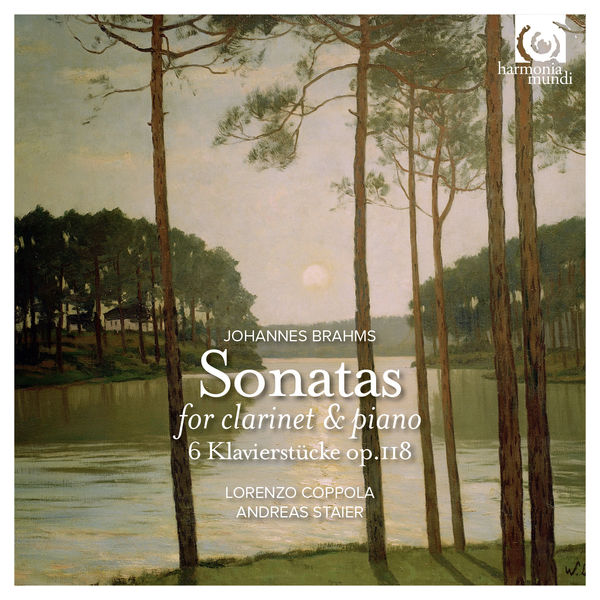
Lorenzo Coppola Andreas Staier Brahms Clarinet Sonatas Harmonia Mundi 2015

Andreas Staier plays a Steinway on this album, which could be considered somewhat unusual given that he is known for playing historical instruments. Well guess what, this Steinway actually is from 1875, apparently the type that Brahms really appreciated.

On clarinet, we get the Italian Lorenzo Coppola, who plays a 2001 reproduction of a historic clarinet which is very similar to the one Mühlfeld played.

So we’re getting really close to what Brahms could have listened to in his final years. And all over sudden, the full beauty of these late works really becomes apparent.

6 Klavierstücke op. 118

However, to me (with my piano background), the true highlight on this album are Staier’s version of the 6 piano pieces op. 118. Let me clarify first of all that I love Brahms late piano pieces from op. 116-119, and op. 118 is a particular favorite of mine.

And here, especially the second Intermezzo (track 6) is played more beautifully than on any of my other recordings (I’ll be writing about some of them soon). Staier uses tons of rubato, but it comes fully naturally. There is so much intensity in this playing that I’ve had them on constant repeats quite regularly recently. Or take the “Romanze”, truly romantic indeed.

As usual on Harmonia Mundi, this is well recorded.

My rating: 4 stars for the clarinet sonatas (rating my preference of the repertoire here, not the playing), 5 stars for the op. 118.

P.S. If you like op. 120, you should know that there is also a version of these sonatas replacing the clarinet by a viola. The well-known viola player Nils Mönkemeyer has just released an album on Sony playing these sonatas.
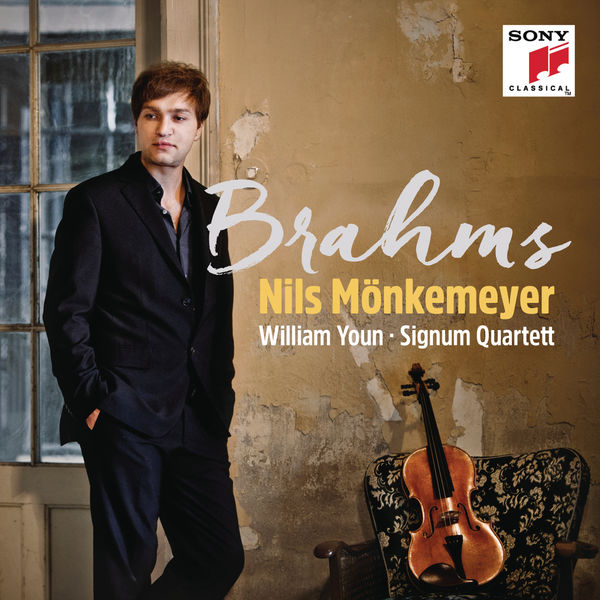
Nils Mönkemeyer Brahms Sony 2015

This album is really quite beautiful and also worth checking out.

You can download the Coppola/Staier here (Qobuz) or here (eclassical)
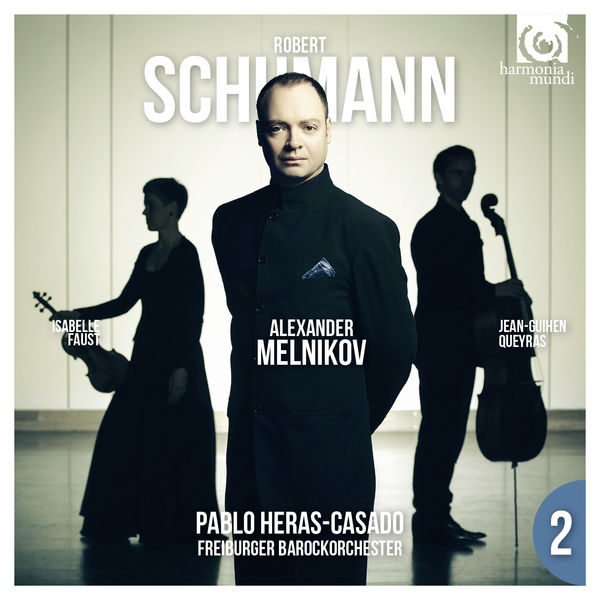
Captivating Period Schumann from Alexander Melnikov

Alexander Melnikov / Isabelle Faust / Jean-Guihen Queyras

I’ve already praised Isabelle Faust and Alexander Melnikov for their excellent Hindemith chamber album, and the outstanding Brahms violin concerto, but they have done many other beautiful recordings together, including a recent version of the Beethoven Archduke trio with Queyras, or my preferred version of the Beethoven violin sonatas. Queyras is one of our leading cellists these days, and has recently recorded the complete Beethoven cello sonatas (very much worth checking out) with Melnikov. So as you can see, these three play regularly together, and you can hear it.

Schumann

This outstanding trio is now working for the second time together (hence the “2” on the cover) on their Schumann trilogy. This trilogy is twofold: it combines in each volume one of the three Schumann Piano Trios, and one of the three solo concertos (violin, piano, cello) he wrote, in collaboration with the Freiburger Barockorchester (which I usually like very much, although I was disappointed this week by their latest Bach release) under the young Spanish conductor Pablo Heras-Casado.

The series started with Faust playing the little known violin concerto (Clara Schumann even actively suppressed it, deeming it not worth of her husband’s legacy), which is very much worth checking out, and is now moving to the warhorse of the a-minor piano concerto.

The Schumann piano concerto

Schumann piano concerto Melnikov Freiburger Barockorchester Pablo Heras-Casado Harmonia Mundi 2015

This beautiful romantic work is one of the most recorded and best known piano concertos out there, and so you have literally hundreds of recordings to chose from, including some outstanding ones. Among my favorites you’ll find Dinu Lipatti with the young Herbert von Karajan, or Radu Lupu with André Previn.

However, I haven’t yet heard this romantic concerto on period instruments. The Freiburger Barockorchester, as their name indicates, are focused on HIP (historically informed) performance, and even more interesting, Melnikov plays on a 1837 Erard, which really gives the work a different color. I’m sure Schumann would have loved a modern Steinway, but it is interesting to hear how this sounded when it was composed.

However, period instruments are not a goal in itself. The performance has to match. And here I’m a bit torn. I love the way movements 1 and 2 are handled, but the third movement, while powerful, is just too slow,. which takes too much energy away for me. I wonder whether this choice was driven by Melnikov or Heras-Casado. In any case, it was clearly a very conscious choice. The overall movement takes 12:14, by far the longest I have in the 10+ versions in my library(as a comparison, my beloved Lipatti/Karajan took 10:01), and even the recent Pires/Gardiner  recording I didn’t particularly like (review here) was only 11:04.

That said, overall this concerto is still a real pleasure, and while it may not become my reference version, it is a very interesting alternative, to hear Schumann’s most famous work like you’ve never heard it before.

In any case, when you get to the trio, all is well, Melnikov, Faust, and Queyras play together as beautiful as ever, and this relatively unknown Schumann chamber work really shines.

I’m really looking forward to vol. 3 with Queyras playing the Cello concerto.

Overall rating: 4 stars (FYI, the reviews I’ve seen so far are divided, Gramophone loved it (Editor’s choice), the Guardian’s Kate Molleson didn’t like it very much with 3 stars), you really need to make up your own mind. It is absolutely worth checking out.

You can download it here (Qobuz), or here (eclassical)

A Disappointment From Andreas Staier – How Can That Be? – My Review of the Bach Harpsichord Concertos

Andreas Staier

Let me start by pointing out that I’m a big fan of Andreas Staier. I’ve praised his Diabelli Variations here, I like his approach to Mozart and Schumann, as well as his album “Pour Passer la Mélancholie”. His 2012 album of the 6 piano concertos by Carl Philipp Emmanuel Bach is outstanding.

Freiburger Barockorchester

The same goes for the Freiburger Barockorchester (who joins Staier on excellent the CPE Bach album above). Their recording of the Bach Orchestral Suites is my go-to version, and the recently started Schumann cycle with Isabelle Faust, Alexander Melnikov and Jean-Guihen Queyras (more about the Melnikov in the next days) is very very good.

The Bach “Piano” concertos

Bach wrote quite a number of concertos for harpsichord. As was not unusual at the time, several of them were probably recycled from other sources, e.g. other solo concertos or cantatas. You’ll find concertos for 1-4(!) soloists.

So far, I still haven’t found “my” version. My currently preferred versions are the 2011 Linn recording of the Retrospect Ensemble with Matthew Halls conducting and playing, Pierre Hantai’s slightly idiosyncratic but very interesting version with Le Concert Français (see my review of his Goldberg variations here), and most of all Café Zimmermann’s energetic readings, which are unfortunately spread over 6 albums (all worth getting anyhow!) and only have the concertos with several instruments.

Therefore, when I heard about this recording by Staier with the Freiburger, I was very excited and already had it on pre-order. Luckily, I was distracted, didn’t get to click on buy, and therefore ended up listening to it on Qobuz streaming first.

Bach: Harpsichord Concertos - Andreas Staier - Freiburger Barockorchester - Harmonia Mundi 2015

I’m happy I did, because at this stage I don’t think I will end up buying this album.Maybe it was just that I was expecting too much, but my “inner ear” has a very different idea on how these concertos should sound.

It pains me to write critical words about musicians that I admire very much, but the album generally sounds a bit heavy and slow, and does not at all the lightweight “swing” I so much love about most recent Historically Informed Performances.

In a way this reminds me of Karl Richter’s way of playing Bach. There is obviously nothing wrong with approaching the music this way, it is just really not my cup of tea.

Obviously this approach, and the sometimes slower tempi also allow for more nuances and there are very beautiful moments in this album, e.g. in the Largo of BWV1056.

But most of the time, this is not for me.

Overall rating: 3 stars. I really didn’t expect ever to give such a relatively low rating to these outstanding musicians. is it just me? I’d really love to hear your feedback especially if you disagree!

EDIT August 28, 2015: I seem to be the odd one out here with my opinion. Classica “Choc”, 5 stars from Diapason, 5 stars from the Guardian. So be warned, I may just be a crazy lunatic in not particularly liking this album. I’d appreciate even more your feedback on this, as after 4 more listenings, I stand by my opinion. Please tell me if I need a new pair of ears!

EDIT Oct 11, 2015: Just reading the review in the October issue of Gramophone, and at least Jonathan Freeman-Atwood seems to have heard what I’ve heard. To quote: “If you’re looking for fun, abandon, lyricism, radiant lift off […] and luminosity, then maybe this one is not for you”. He’s spot on, that’s exactly what’s lacking for me.

Beethoven: Diabelli-Variations – an acquired taste?

Beethoven. You could be saying that I’m really trying to tick off the famous “great Three B’s” first. How creative of me.

Well, while the general consensus doesn’t get everything right, there’s a reason why the three B’s are so important. And in any case, I probably wasn’t mean to be a rebel to tell the establishment they got it all wrong.

Back to Ludwig van. I’ve been a fan, like forever (excuse me for sounding like an over-excited American teenager). The symphonies I can never never never get bored with (except, as already mentioned before, the ninth, which somehow escapes me). His piano sonatas are amazing and cover his entire spectrum from something that sounds like young Haydn (and were not surprisingly his op. 2) to the extremely well-known sonatas in his middle period, many of which got their reputation due to their nickname (from Mondschein to Apassionata), to the late works (op. 109 to 111) which are anything but immediately accessible for the average listener, including me.

But let me talk about the Diabelli variations today. They are probably not as well known as their famous variations older brother (Bach’s Goldberg), but still are seen by most experts as an absolutely masterpiece. And let me admit: until recently, I just never “got” them. I tried again and again with the small handful of versions I had (including Brendel nevertheless), and nothing ever stuck, I just never really fell in love.

Until recently. Two and a half versions (I was tempted to do a Charlie Sheen joke here) of this, and very repeated listening, changed my mind.

Andras Schiff

The first version, is the one I kind of called 1.5. To be fair, they are two, but both played by the same pianist and on the same album. Andras Schiff, the great Hungarian pianist, recorded the Diabelli-Variations twice, for ECM (yes, I know, ECM again...)

Disc 1 (if in the times of computer audio it still makes sense to speak of discs) contains a recording on a 1921 Bechstein grand. This version really opened my eyes for the beauty of the Diabellis.

Disc 2 contains the same piece again, played this time on a fortepiano from Beethoven’s time. I recently started enjoying the fortepiano more and more (thanks to great pianists like Roland Brautigam, Kristian Bezuidenhout), as not only “it sounds like Beethoven would have heard it” (if he wouldn’t have been deaf by the time this was composed), but also it gives a totally different degree of transparency.

Andreas Staier

But when we get to the fortepiano, there is another version I prefer even more, from an artist with pretty much the same first name: Andreas Staier on Harmonia Mundi. Andreas Staier is a German fortepiano and harpsichord player, and I have yet to find any recording of him that seriously disappointed me.

This has been recommended by several people I usually trust well. But because of my scepticism until recently regarding the Diabellis, I only got this version some weeks ago. What a mistake. It is just amazing.

Luckily for us, both versions are also very well recorded (you can usually trust both ECM and Harmonia Mundi to get that part right), and are available as high-res downloads.

Check both out, you won’t be disappointed.

P.S: I just discovered this interesting article from Nick van Bloss describing his recording the Diabellis on Gramophone’s blog. I haven’t checked out his album yet, but his description and approach are certainly worth reading.

P.P.S. If you prefer a modern piano reading, read my addendum I just published.

P.P.P.S. Gramophone also likes Staier, but has yet another alternative

P.P.P.P.S: Igor Levit has recorded another outstanding alternative on a modern piano.

Please let me know if I missed any good version out there, I can certainly live with more!

Classical Life

A classical music blog by music critic Tim Mangan

This Week's Music

Making Classical Accessible

From my Macbook to the Net

Evaporation of my thoughts and observations

Elestra

Author: Artienne

My Life in Music

Playing, Singing and Listening

ArsX3

A brand new journal reviewing books, cinema, music

LawrenceEz's Blog

Creative and Performing Arts: Writing, Classical Music, Photography

Laetitia Strauch-Bonart

Contemporary Politics & Culture

sibling revelry

reveling in all things classical

It's A Raggy Waltz

I collect jazz on vinyl, I dig the Dave Brubeck Quartet, & I write about it

La Musica

By two cousins

thejazzbreakfast

Dishing it out from the heart of England

only jazz

random thoughts about music that matters to me

The Culture Project

Exploring the world of literature, wine, art, music and more.

René Spencer Saller

The music causes me to dream of fabulous empires, filled with fabulous sins.

Breaking Baroque

Blog of Tafelmusik Baroque Orchestra and Chamber Choir

Tasting Nirvana

Eating your Dosha

The Immortal Jukebox

A Blog about Music and Popular Culture

April Greene

Writer + Editor

a pianist's musings

A history of your favorite classical music.

Classical music for all

Boris Giltburg's blog

I HEAR VOICES

An orchestra seat in the web space