Christmas Time Is Here – Two More Beautiful Christmas Jazz Compilations

Christmas Jazz

I’ve already written about my 5 favourite Christmas Jazz albums here, not to mention the recent post about Joey Alexander’s Beautiful Christmas Jazz EP.

But some of my readers complained (rightfully so) that I’ve neglected the Jazz genre a bit on this blog. So just a handful of day before Christmas, let me point you to two beautiful Christmas Jazz compilations by two great labels.

A Concord Jazz Christmas

A Concord Jazz Christmas The Gene Harris Quartet Charlie Byrd

Concord Jazz is a great label that unfortunately has a bit disappeared from the map. Nevertheless, this best of Christmas Jazz is really worth it.

My favorite titles are Scott Hamilton’s Christmas Love Song, and obviously, being a great Gene Harris fan, I’ll Be Home For Christmas. But overall, the album avoids the overly cheesy territory and rather stays on the swinging side. Note that Concord also released a V2 of this album later, which I find much less appealing (even if it has some beautiful tracks)

Verve Presents: The Very Best of Christmas Jazz
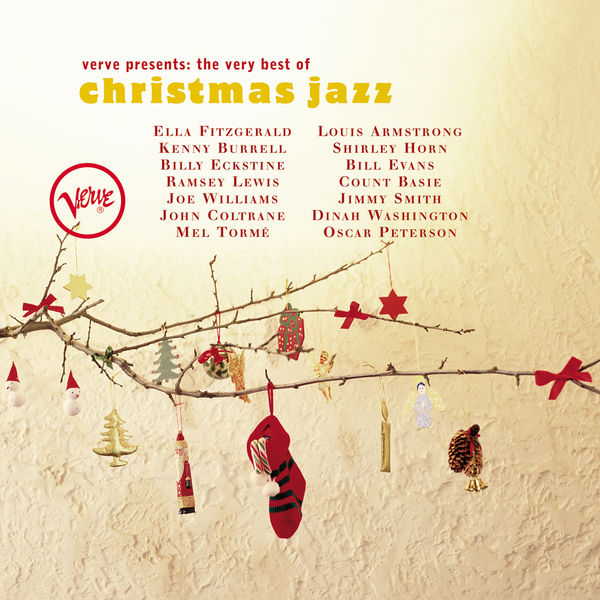
Verve Presents: The Very Best of Christmas Jazz Ella Fitzgerald, Kenny Burrell, Bill Evans, Louis Armstrong, Jimmy Smith, Oscar Peterson

The legendary Verve label obviously has released a number of Christmas albums over the years. However, this must be one of the best.

Look at the list: Ella Fitzgerald (obviously), but also Kenny Burrell, Shirley Horn, Bill Evans, John Coltrane, Jimmy Smith, Oscar Peterson. Kind of the Verve All Stars.

You get a beautiful version of A Child Is Born with Oscar Peterson, Bill Evans Playing Santa Claus Is Coming To Town, and even a great Jingle Bells by Jimmy Smith. And yes, it also includes Rudolph, The Rednose Reindeer, Ella’s Christmas classic.

Again, an album that while giving you a nice Christmas feel, avoids the sugary overkill of some more contemporary collections.

Both are highly recommended.

My rating: 4 stars

Wishing all of you some relaxing Christmas days, or whatever other holiday you’re celebrating this year end!

You can find the albums here (Concord) and here (Verve)

Wishing you a Merry Christmas with Joey Alexander

Christmas Music

I was hesitating a moment to call whether I should call this thread “Happy Holidays” instead of “Merry Christmas”, as I’ve no idea what religion my dear readers are following (if at all). 

I then decided against it, for several reasons. A) I’m personally not religious at all, but grew up in Europe where Christmas is the most important holiday and B) I hope that if you’re following any other religion and don’t particularly care for Christmas, you either just skip this post or, even better, still check out the album below, as it is actually really nice.

If you want more Christmas music, be it Jazz or Classical music, I suggest you also check out my Top 5 Christmas Jazz post, my Favorite Seasonal Music, my recommendations for the Messiah, and obviously, the Christmas Oratorio.

A Joey Alexander Christmas (Motema 2018)

A Joey Alexander Christmas (Motema 2018)

This “EP” (a concept really a bit outdated in the world of streaming and downloads) of only 4 tracks features some outstanding musicians.

I haven’t mentioned Joey Alexander yet. A big mistake. It’s actually an amazing story. He comes from the Jazz hotspot of Bali (sorry, cheap pun), and played at the Lincoln centre at the age of 10, and started recording music at the age of 11!!!! Now he still is at the tender age of 15, and if you wouldn’t see it in the video below, you’d have now way of knowing.

He’s playing here both solo and trio. On the trio tracks we get Larry Grenadier of Brad Mehldau fame, on bass, and Eric Harland, who’s played with a lot of Jazz celebrities (MyCoy Tyner, Dave Holland, etc.).

This EP features two seasonally inspired tracks, O Come All Ye Faithful (see the Youtube clip below), and What A Friend We Have In Jesus.

As an add on, we get remastered versions of My Favorite Things, a duo with Larry Grenadier, recorded in 2015 (I’ll let you do the math of Alexander’s age at the time, but its just unbelievable), as well as a solo version of A Wonderful World. Both are just fantastic.

A truly enjoyable album that  you shouldn’t limit only to the Christmas season!

My rating: 4 stars 

You can find it here (Qobuz) or here (several others)

Bertrand Chamayou plays Saint-Saëns’ Piano Concertos No. 2 and 5 – A Review

Camille Saint-Saëns

Camille Saint-Saëns is one of those composers that outside of his native France isn’t that well known. Sure, many of us will have heard his most famous piece, Le Carnaval des Animaux (The Carnival of the Animals), if you’re a little bit deeper into classical music, you may know his Organ Symphony (no. 3). 

And typically, that’s where most average classical listeners wits will end. I must admit it was very similar for me until quite recently. In fact, this is the very first time I even write a blot post about this composer. 

However, nicely enough in the recent months, two new recordings of some of his piano concertos were released, triggering my interest. Both feature his apparently most famous concerto, no. 2. The first new release, with Louis Lortie, Edward Gardner, and the BBC Philharmonic, is more complete, featuring also concertos no. 1 & 4. You’ll find it on the Chandos label (and here on Qobuz). However, I overall have a slight preference for the other new release of 2018, namely: 

Saint-Saëns: Piano Concertos No. 2 and 5 – Bertrand Chamayou – Emmanuel Krivine – Orchestre National de France (Erato 2018)


The 2nd concerto starts like a Bach solo work, which as a great fan of Johann Sebastian I really appreciate. But obviously, this is concerto of the romantic era (written in 1868), and once the orchestra sets in, there is no doubt about that. The concerto isn’t very “balanced”, the first movement being nearly as long, and “heavier” than the two other movements together. 

You’d never be able to tell this work was written in only 17 days (it was written in a rush for Anton Rubinstein), and it is for a good reason the best known of the concertos.

That said, don’t skip concerto no. 5. It is a bit more intimate, but has many beautiful moments as well.

I’ve praised Chamyou for his beautiful Ravel box, and his playing is brilliant here as well. The ONF does a great job too, I believe they have a natural advantage over foreign orchestras as Saint-Saëns still gets much more air time in his home country and abroad. 

To complete the album, Chamayou also plays several of Saint-Saëns Piano works, which were completely unknown to me. A particularly beautiful example are the 6 Etudes op. 111, that really show a close relationship to Debussy and Ravel, reminding us that Sain-Saëns lived long into the 20th century (he died in 1921).

Overall, a very enjoyable album that I highly recommend

My rating: 4 stars (5 star playing, 4 star repertoire)

You can find it here (Qobuz) and here (Prestoclassical)

Piotr Anderszewski at Lucerne Festival with Bach and Beethoven – A Review

Piotr Anderszewski

My first “contact”, obviously virtual, with the Polish pianist Piotr Anderszewski was  when I reviewed the 2015 Gramophone Award nominees back in the early days of my blog. 

At the time, I wasn’t blown away by his recording of the English Suites, compared to my other favourites in this area, particularly Perahia and Pierre Hantaï.

So I was even more surprised when he won the Gramophone Award in this category over my personal favourites Levit and Grosvenor. 

In a nutshell, Piotr and I didn’t get off to a good start. 

Things improved more recently, when he was nominated again in 2017, for his Schumann album, which I really liked. I even meant to formally review it, which never happened for lack of time, but this album to this day is one I recommend without hesitation. 

But when I saw that he was playing the closing concert of the fall Lucerne Festival, which is always dedicated to the piano, and I happened to be in the area, I had to check it out.

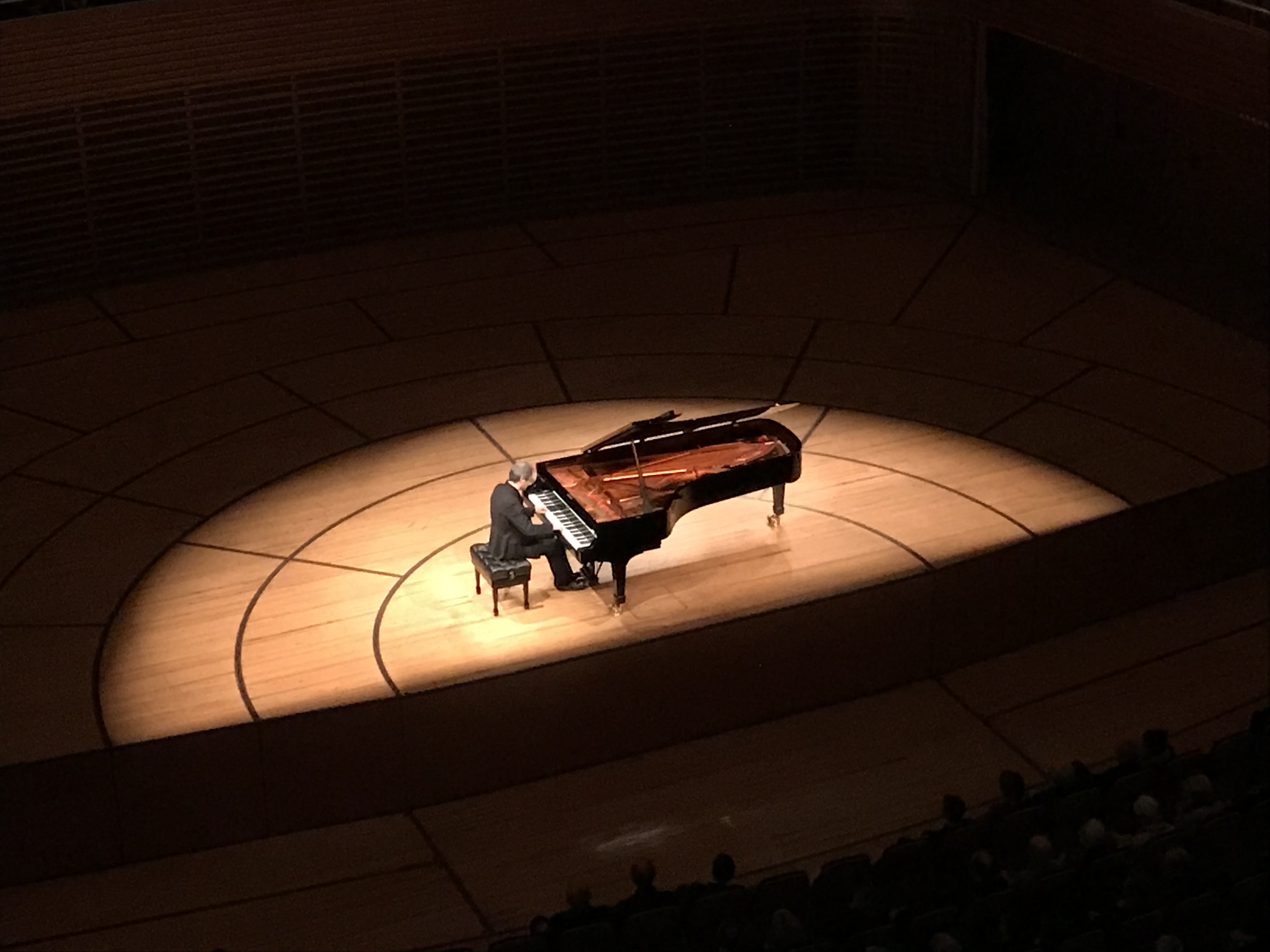
Piotr Anderszewski at the 2018 Piano Lucerne Festival, KKL Lucerne, November 25, 2018

Piotr Anderszwewski at the KKL Lucerne, Lucerne Festival, November 25, 2018

If I needed any more convincing, the program helped. 

Anderszewski started off with parts of the Wohltemperiertes Klavier, especially the second book of the Well Tempered Clavier that I must admit I listen to much less than the first volume. 

This was really an amazing experience. Amazing intensity, while at the same time never too extrovert, a dense flow of sound, that really took you in as a listened. 

During the break, we got to admire the beautiful Christmas tree that Lucerne built up in front of the KKL’s main entry, together with a illuminated ice skating ring for kids that looked like taken out of a fairy tale (ok, I actually don’t know any fairy tales that feature ice skating rings, but you get the picture). Together with a glass of bubbly the break passed quickly.

Moving on to the “main  act”, Beethoven’s Diabelli Variations. I’ve previously written about them how they really aren’t easily accessible. It basically took me years to really appreciate them. By now, I have several favourites, including Andreas Staier, and obviously Igor Levit.

This was now the first time I heard this Opus Magnum live. I had pretty high  expectations after Andrew Clements in the Guardian called a similar performance by Anderszewski earlier this yearperhaps the most completely convincing reading of the Diabelli I’ve ever heard in the concert hall“.

Now, it was clearly also the most convincing reading for me, given that I heard it live for the first time, but bad pun aside, it was a fascinating reading.

What struck me most was the speed, or actually lack of it, that Anderszewski took. In many parts he really stopped time, or so it seemed. This may not be a performance that works on a recording, but in the beautiful acoustics of the large KKL hall, it worked wonders, and it truly became a transcendental experience in some moments. 

Overall, an amazing concert experience.

P.S. I didn’t find many reviews of this concert, but both the great Swiss critic Peter Hagmann, as well as Leonard Wüst on behalf of the Bochumer Zeitung, both reported very positively about their experience (both links in German only).

A Quick Look at Gramophone’s November Edition Editor’s Picks

Gramophone

To this day, Gramophone Magazine is probably THE reference for classical music reviews.

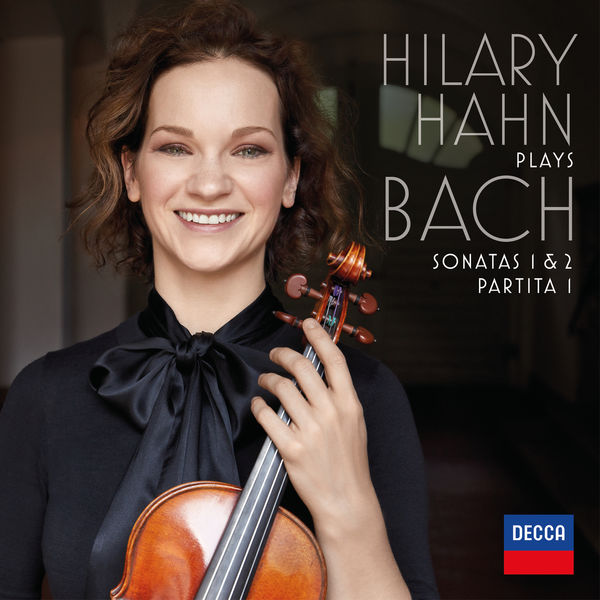
I haven’t always been fully aligned with their latest recommendations. For example, Hillary Hahn’s new recording of the Bach violin sonatas they have as recording of the month in November, which I personally don’t really like, way too much vibrato for me.

Give me Milstein, Szeryng, or Isabelle Faust anytime instead.

Hilary Hahn Plays Bach Sonatas 1&2 Partita 1 Decca 2018


However, beyond this, there are a lot of familiar albums I’ve previously recommended on this blog:


Vikingur Olafsson – Johann Sebastian Bach

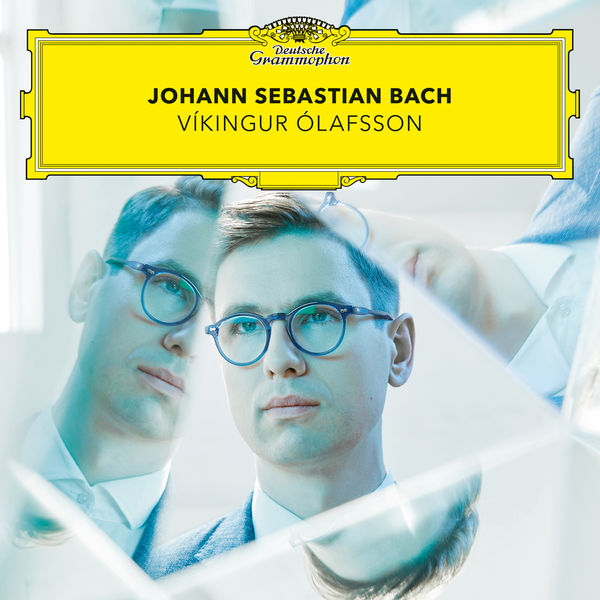
Víkingur Ólafsson Johann Sebastian Bach Vikingur Olafsson Deutsche Grammophon 2018 24/96

See my review here. Gramophone talks about “glowing lyricism and sparkling virtuosity”. Fully agree.


Igor Levit, Life

xojnuoc6qpxsb_600

Gramophone says “A triumph of imaginative programming that ranges from Bach to Rzewski, and elevated further by masterly pianism“. Yep, see also my thoughts here.

And finally, there’s an album I really like, have purchased, but didn’t get to review it yet:

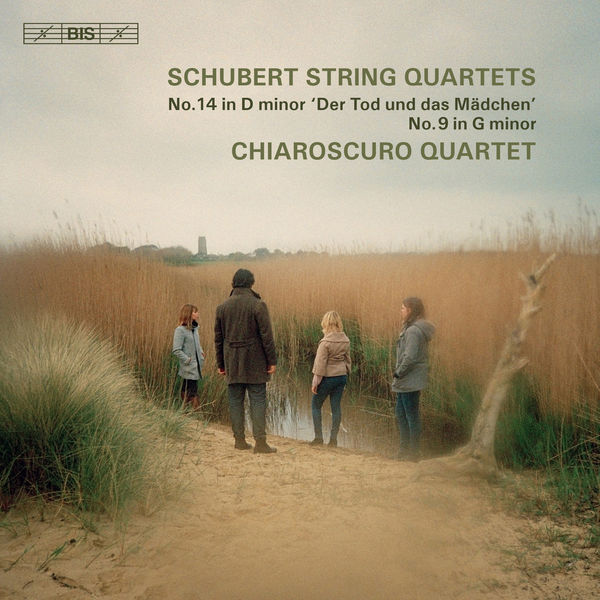
Schubert: String Quartets No. 9 and 14 “Death and the Maiden” – Chiaroscuro Quartet – BIS 2018

Schubert String Quartet No. 14 Death and the Maiden No. 9 Chiaroscuro Quartet  24/96 BIS

I’m a big fan of the young Chiaroscuro quartet, which features Alina Ibragimova as first violin. The previous recording I bought from them is an excellent Haydn op. 20.

This latest recording is also excellent. Gramophone says it is “played with enourmous conviction and power by this very stylish ensemble”. I can’t really comment on the stylishness of the musician, but I fully agree that this album is strongly recommended. I hope I’ll get around to a formal review eventually, but in the meantime, it won’t replace my favorite versions by the Takacs and Pavel Haas Quartets, but it is a truly worthwile addition to the catalogue and worth having!

You can find it here (eclassical).

The links to the other albums you’ll find in my original reviews (see links above).

Víkingur Ólafsson’s Beautiful Bach

Should Bach be romantic?

Let me start by asking the more fundamental question: Should Bach be “allowed” to be played on a contemporary piano?

I personally think Bach wouldn’t have minded. Keyboard instruments were under constant evolution during his time, he was very open to adapting music from one instrument to another (and often did so with his own work). Now, what Bach would have done had he been able to ever play a modern Steinway is a very interesting, if rather theoretical question.

Now, does playing on a modern piano allow you to have a “romantic” sound while playing good old JSB?  Let’s explore this thought with this recently released album.

Víkingur Ólafsson: Johann Sebastian Bach

Víkingur Ólafsson Johann Sebastian Bach Vikingur Olafsson Deutsche Grammophon 2018 24/96

Víkingur Ólafsson is only the second Icelandic musician I know (Silly Bjork jokes, anybody?).

He rose to fame at rather young age with his Philipp Glass album (and being signed by Deutsche Grammophon), now he releases his first venture into Bach.

To give you an example what I mean by “romantic”, is track no. 31, the adagio from BWV974. In a way, this could easily be the slow movement of a Mendelssohn or Schubert work.

Do I mind? Au contraire, I really like this album. It is a very personal approach, a very personal selection of material as well. But it never falls into the trap of being the only thing you’re not allowed to be with Bach, which is boring.

To make this album even more appealing to me, we get yet another piano transcription of one of the violin partitas (see here for my original article on the topic)

And also when you take individual well known works like the excerpts of the Well Tempered Clavier, it is very apparent that Olafsson knows what he’s doing, even compared to famous reference versions.

So to answer my initial question: it’s a very clear yes!

My rating: 4 stars

You can find it here (Qobuz) or here (Prostudiomasters)

Well, I Actually DO Like Scarlatti – A Review of Jean Rondeau’s Latest Recording

Domenico Scarlatti

I had written previously some time ago that I don’t particularly like Scarlatti. Or to be more precise, to quote myself “I’ve never heard any Scarlatti that has touched me”.

I got quite a lot of readers comments on this, recommending some very good recordings of Scarlatti. And while there were some that I found somewhat interesting (e.g. Pletnev), I still really hadn’t found my way into the universe of Scarlatti.

I’m pleased to report I’ve finally found the first Scarlatti album I go back to on a regular basis.

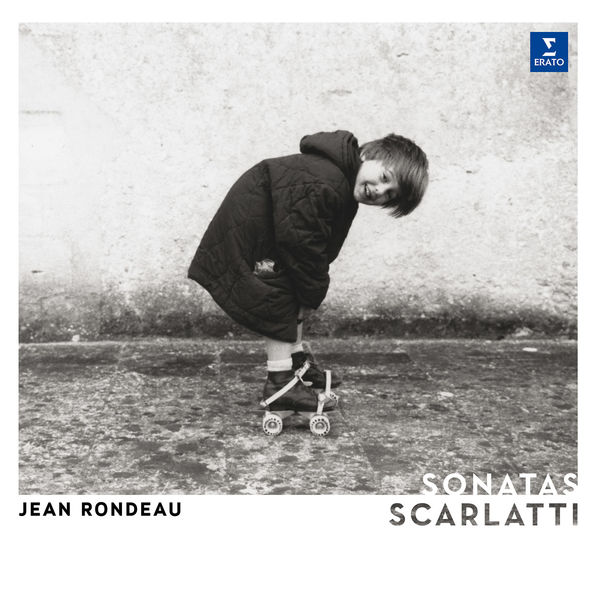
Scarlatti: Sonatas – Jean Rondeau (Erato 2018)

Scarlatti Sonatas Jean Rondeau Erato 2018 (24/96) Warner Classics

I’ve mentioned Rondeau’s very good Bach album here; I really like this young French harpsichord player.

So I was naturally curious about his take on Scarlatti? Would it finally be for me?

Well, I’ve given it away above, the answer is a clear yes.

To be fair, an important factor is the very beautiful sound of the harpsichord Rondeau is playing, apparently a quite recent construction built in 2006 after historic German models by Jonte Knif and Arno Pelto just has a fantastic roundness, and none of the sometimes annoying characteristics of the harpsichord that can be annoying for longer listening sessions.

Rondeau,  winner of the first prize at the International Harpsichord Competition in Bruges, plays these with a power, energy, and conviction that is just blowing me away. Some other Scarlatti recordings sometimes can have that “typewriter” playing, none of that here.

I’m curious to hear what the Scarlatti experts, which I’m clearly not, will be saying about this new album.

In the meantime, I can strongly recommend you check it out!

My rating: 5 stars

You can find it here (Qobuz) and here (Acoustic Sounds)

Classical Life

A classical music blog by music critic Tim Mangan

This Week's Music

Making Classical Accessible

From my Macbook to the Net

Evaporation of my thoughts and observations

Elestra

Author: Artienne

My Life in Music

Playing, Singing and Listening

ArsX3

A brand new journal reviewing books, cinema, music

LawrenceEz's Blog

Creative and Performing Arts: Writing, Classical Music, Photography

Laetitia Strauch-Bonart

Contemporary Politics & Culture

sibling revelry

reveling in all things classical

It's A Raggy Waltz

I collect jazz on vinyl, I dig the Dave Brubeck Quartet, & I write about it

La Musica

By two cousins

thejazzbreakfast

Dishing it out from the heart of England

only jazz

random thoughts about music that matters to me

The Culture Project

Exploring the world of literature, wine, art, music and more.

René Spencer Saller

The music causes me to dream of fabulous empires, filled with fabulous sins.

Breaking Baroque

Blog of Tafelmusik Baroque Orchestra and Chamber Choir

Tasting Nirvana

Eating your Dosha

Shadow of Iris

Poetry, fiction, short stories, more ...

The Immortal Jukebox

A Blog about Music and Popular Culture

April Greene

Writer + Editor

a pianist's musings

A history of your favorite classical music.

Classical music for all

Boris Giltburg's blog

I HEAR VOICES

An orchestra seat in the web space