Easy Living: My Favorite Enrico Rava Album

Enrico Rava

In my previous post on Enrico Pieranunzi I was asked about other Italian artists I like, and José in his comment listed among others Enrico Rava. This is what triggered this blog post.

Well, first of all, my initial answer is that Rava has a beautiful sound, a very soft, dreamy voice, that I really like.

With regards to his recorded albums, I’m more torn, as I don’t have a single album with Rava in the lead of which I love every single track. I’ll explain further below why.

That said, without doubt Rava is one of the leading figures of the Italian Jazz scene.

I have about 10 albums of Rava in my collection, and would like to present here what overall is my favorite Rava album: Easy Living

Easy Living (ECM 2003)

Why this particular album?

Well, first of all, Easy Living is one of my favorite standards (I originally fell in love with Sarah Vaughan singing it). And Rava does a gorgeous version of this song here.
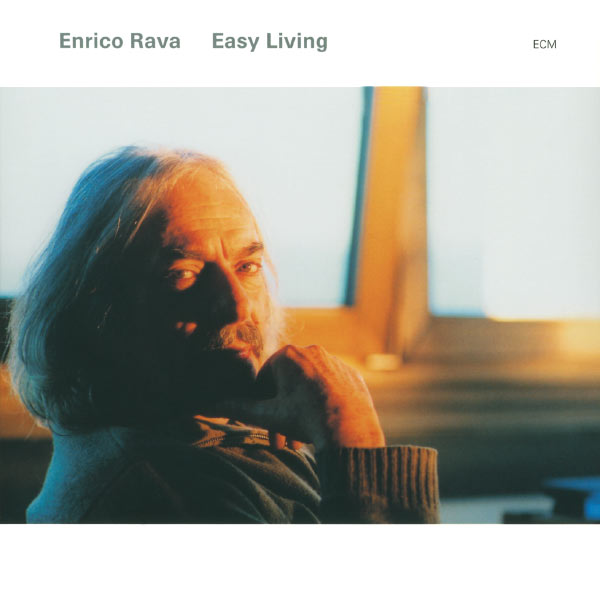
Enrico Rava Easy Living ECM 2003

Second, Stefano Bollani.

I’ve previously written about him and how much I appreciate his piano playing, and he’s also one of the factors why I particularly appreciate this album. Take his solo on track 8, Hornette and the Drum Things and you’ll understand why.

Track 1, Chromosomi, is already a great start. It sets the scene for an album that is generally meditative, dreamy, perfect for a lazy Sunday morning like this one (as I write it, it has started to snow outside, and this song sounds like the perfect soundtrack for watching the  falling snowflakes).

Now to explain, as already mentioned above, what I don’t like about certain Rava songs, let’s take the example of Traveling Night (track 7). I’ve written time and time over again, how much I need melodies. My brain is just wired that way.

I actually like Rosario Bonaccorso’s bass solo, and then Roberto Gatto and Stefano chiming in the same mood. But then I get lost in rhythmic and harmony changes, and my little brain never finds its way out again, it just feels to random.

I’ve had this discussion with Jazz musicians, and for some of them, when it gets more random and adventurous, this is when music really starts getting interesting, for some others, this is when it starts to lose interest. I’m not arguing quality here, but just personal preference.

One special thing to mention on this album is the beautiful complementarity between Rava and Gianluca Petrella on trombone.

This album is recorded by ECM, and therefore, as usual, the recording quality is really good.

My rating: 4 stars

You can find it here (Qobuz)


Nearly (But Not Quite) Perfect – Gardiner’s New Recording of Bach’s B-Minor Mass

Bach’s b-minor mass was the subject of one of my first blog posts nearly six months ago. I just love and admire this monumental work of beauty.

John Eliot Gardiner

I’m also a big fan of Gardiner. Many of his recordings with the Orchestre Révolutionnaire et Romantique of the classical and romantic symphonies are outstanding (e.g. his Schumann cycle), and his entire Bach cantata cycle with the Monteverdi choir is among my favorite versions.

The 2015 recording of the B-minor Mass (SDG 2015)

So when Gardiner released a new recording of the b-minor mass (his first dates back to 1985 for Deutsche Grammophon, still early days for the historically informed practice movement) I was all ears and have listened to it now for several times.

Obviously, a lot of thought and the experience gained from the entire cantata cycle went into this new recording (there is a great article about it in the November 2015 issue of Gramophone).

Bach: Mass in B-Minor - Gardiner (2015) - SDG

How does it compare to my reference version, Herreweghe’s 2012 recording? Well, it’s really very good, but doesn’t replace it. Let me try to explain why.

With this monumental work, one thing you need to get right is the balance between power and nuance. The old recordings of the 1960s and 70s (e.g. Otto Klemperer’s legendary version, or Karl Richter) are powerful grandiose affairs, and then you have other versions that very much limit the number of singers, resulting in a very light and transparent sound.

Gardiner choses something more on the lighter side (approx 30 singers), and also goes for a very clear and natural orchestral playing.

And here we get to the only minor bit of criticism to the otherwise beautiful and near perfect recording, very occasionally, I’d just like a little bit more power and brilliance, exactly what Herreweghe does.

Basically, the little additional sparkle, which he so often has in his cantata cycles, but here it feels somehow a little bit held back, not going at their full power.

Enough nitpicking, this is an excellent recording, and really worth checking out. But I’m in love with Herreweghe and will stick to his version for the moment.

My rating: 4 stars

You can download it here (Qobuz) or here (Prostudiomasters)

UPDATE Dec 5: Gramophone really likes this album and gives it an Editor’s Choice in the December 2015 issue

Cécile McLorin Salvant Live At Volkshaus Basel – November 17, 2015

Cécile McLorin Salvant

I’ve already written previously how much I admire Cécile McLorin Salvant.

Her first two albums show that not only she is an outstanding singer, but that she really has deep musical insight and a very strong personality.

If she’s already great on album, I presumed she must be even better live.

So I was very happy to be able to see her yesterday during her European tour.

Live at Volkshaus Basel, November 17, 2015

Cécile had her band from the latest album with her, the great Aaron Diehl (mentioned here already) on piano, Paul Sikivie on bass, and Lawrence Leathers on drums.

I always had the feeling listening to her albums that she is an artist that really needed the incremental freedom of a live concert, and what I saw was fully confirming this hypothesis.

She took her songs, many from her albums, but also some new ones, and turned them into something sometimes even larger than life.

A big part here is her outstanding stage presence. I don’t know how she does it, at the age of 26, but she just owned the audience. At some point she just started laughing, infecting even Diehl by this, and the audience just loved it.

Obviously, having a great band helped. Aaron Diehl is a true virtuoso. Luckily, many songs started as duets between Diehl and Salvant, and those intimate moments were among the best times of the evening.

That said, the rest of her rhythm section is outstanding as well. Unfortunately, Lawrence only got to solo rarely, but when he did, it was impressive. And Paul Sikivie on bass was amazing (I’m very jealous about his coolness, he looked like a 30 year younger version of Tommy Lee Jones in Man in Black, if you get the picture).

Already from her albums I was impressed by the range of her songs, but you got everything from Cole Porter Standards I get a kick out of you to Burt Bacharach’s great Wives and Lovers.

But my absolute favorite was her second encore, Gordon Jenkins Goodbye, in duo with Paul Sikivie.

Her tour continues, if she comes anywhere near you, this is a must see!

You will find pictures of the event on Céciles Facebook page

3 Hours Of Timeless Beauty – Keith Jarrett Bregenz München

What do Bregenz and Munich have in common? Not a lot on paper, the nice Austrian town on Lake Constance and the Bavarian capital, in spite of the fact that they are only about 2h away from each other by car.

So why bother writing about them here? Well, you’ll have guessed it already, Keith Jarrett gave one of his famous solo concerts in both places.

And as promised previously, I plan to eventually review all the Jarrett solo concert recordings (fun fact, it’s been nearly 6 month ago that I attended one myself for the first time and started this blog, see my post here)

Bregenz München (ECM 1981/2013)

These recordings date from 1981, i.e. 6 years after the famous Köln Concert. Jarrett by then had developed a clear style for his concerts, and these recordings show that he developed already a certain maturity.

Keith Jarrett Concerts Bregenz München ECM

Bregenz comes first: Part 1 starts swinging, with nearly a ragtime feel occasionally. After 10 minutes he slows down, into a more melancholic mood.

I just love the flowing passage around 15:00, that turns much heavier around 17:30. At around 19 he become more rhythmic, using the piano’s body regularly as percussion.

Part II keeps the rhythm, driven by the left hand, and the percussion elements. All this at a faster pace. At some time we even get Calypso elements.

Bregenz Heartland is one of my favorites on this album. As said before I’m a sucker for melodies. And luckily Jarrett on his encores nearly always delivers.

And the good news is: Munich gets even better. This concert is longer, in 4 parts, and 2 encores, including another one title Heartland, again astonishingly beautiful. I’m going to spare you a more detailed description, you get that I like it very much.

Keith Jarrett has a long history of playing classical music, and you can hear it here.

This is a thoroughly enjoyable album and very much worth having.

My rating: 4 stars (compared to the very high standards of Jarrett’s solo concerts, actually I’m on the edge of giving this 5 stars, and may revisit my rating after formally reviewing more of his solo albums, but so far, I’d probably still prefer Köln, Bremen Lausanne, and Sun Bear).

You can find it here (Highresaudio) or here (HDtracks)

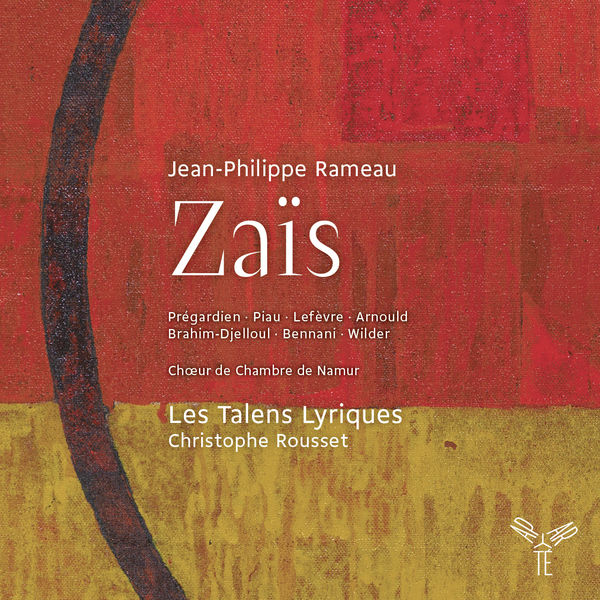
Rameau’s Zaïs – Beautiful French Baroque Opera by Christophe Rousset

Jean-Philippe Rameau

As mentioned previously, I’m anything but a French baroque expert. I’m a big fan of Bach, love Händel’s operas and oratorios, but my main encounter with Rameau has so far been two excellent “best of” albums, the 2014 Le Jardin de Monsieur Rameau by the brilliant William Christie, and the equally beautiful 2013 album by the young soprano Sabine Devielhe with Alexis Kossenko, Le Grand Théatre de l’Amour.

Zaïs (Aparté 2015)

So I had a vague idea of what to expect when I purchased the latest release by Christophe Rousset and his ensemble Les Talens Lyriques.

By the way, I’m not the only one who will discover the beauty of this opera. Unlike many of Händel’s operas that have seen major revivals in the last 30 years, the last time this has been recorded was 40 years ago by one of the fathers of the historically informed practice, Gustav Leonhard.

Whether the story is worth following is up for debate. Luckily I speak French so I am able to follow the singing, but whether you’re actually interested in understanding what the genie Zaïs is up to, well your call. Basically, not surprisingly, he’s after a woman (Zélide), disguises himself as a shepard, and eventually is willing to give up his magic powers to be able to marry her. Luckily, his boss, Oromazès, king of the genies, is so impressed by the sacrifice that he’s ok to immortalize them both. Nice, isn’t it? What is interesting to note is that apparently, similar to Mozart’s Zauberflöte, this is a work inspired by freemasonry, the booklet tells me.

Rameau Zais Christophe Rousset Les Talens Lyriques 24 96 2015

Rousset is  well known for his recordings of Rameau’s harpsichord works. He does a brilliant job leading his baroque ensemble, there is power and drive (check out the dramatic overture), but also always the right level of nuance if required.

Some great singers as well. Sandrine Piau (love her), Julien Prégardien (son of Christophe), and their colleagues, if unknown to me, all do a great job.

This album has been awarded “Choc de l’Année” (their equivalent of album of the year) by Classica Magazine and 5 stars by Diapason d’or.

I wouldn’t go just as far. On my personal scale, Rameau still comes behind Bach and Händel, but he’s climbed some serious steps on my personal appreciation ladder with this album.

My rating: 4 stars (true 5 star playing, but as said above, I still prefer other baroque composers). But you won’t regret buying it, I guarantee!

You can download it here (Qobuz, hoping they survive their current financial difficulties), or here (Prestoclassical)

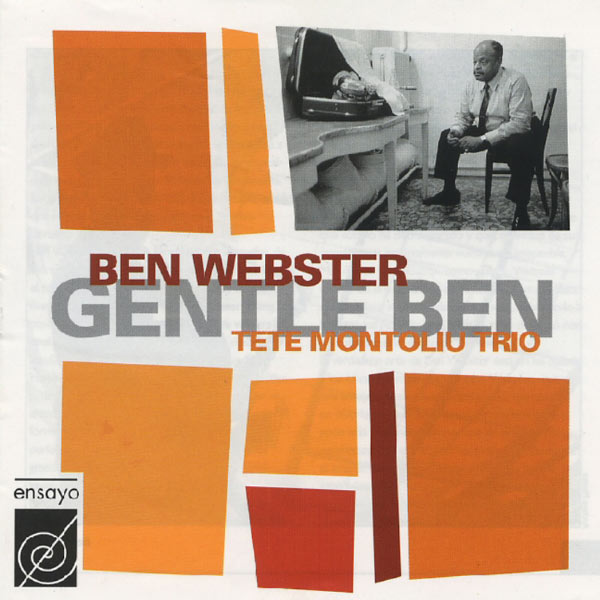
Gentle Ben – Ben Webster & Tete Montoliu

Finally writing about Jazz again

I’ve been a bit disappointed by the Jazz releases of the recent months, I’ve been checking out pretty much every new album on my streaming service, but there weren’t a lot of new albums that raised my curiosity.

So let’s go back to the classics and talk about two not very well-known artists that both were outstanding musicians.

Ben Webster 

If you ask Jazz fans about well-known Sax players, you get Bird, Rollins, Coltrane. Does anybody mention Webster? Yes, when you ask them, but he’s clearly not top of mind.

This is really a pity. He has a very unique sound, full, with a lot of “air”. I’m not usually very good at identifying saxophone players at their sound, but Webster is very easily recognizable.

He is as much at ease in uptempo as he is in beautiful ballads.

I could have mentioned several Ben Webster albums here, e.g. Ben Webster Meets Oscar PetersonColeman Hawkins Encounters Ben Webster, or Soulville, all classic Verve albums from the late 1950s.

However, I’ve chosen another one, recorded in 1973, one of his very last albums. Why?

Tete Montoliu

Well, to allow me to write about Tete Montoliu, another not as well-known musician, from Barcelona. No idea why this excellent piano player didn’t become more famous? Maybe because his main career was in the 1970s, when everybody was listening to Fusion?

Gentle Ben

Ben Webster Tete Montoliu Trio Gentle Ben

Whatever the reasons were, this album is proof that both artists were outstanding musicians.

Take the starter track, Ben’s Blues. 9 minutes of pure concentrated swing.

The Man I Love is one of my favorite Jazz ballads. I’ve rarely heard it better played than here. You really can hear Billie Holiday in his saxophone voice.

Or Don’t Blame Me, another beautiful slow ballad, where you get all the nuances of Websters amazing sound.

This album really is a lot of fun all the way.

My rating: 4 stars

You can still download it here (Qobuz), unfortunately, my favorite download and streaming provider seems to be in major financial trouble and may not be around any more in the near future, which would be a pity.

Hype vs. Hype – Lang Lang vs. Benjamin Grosvenor

First of all, to my subscribers, you may have been surprised not to see a post yesterday. This indeed has been the first time since I started this blog nearly 6 month ago that I didn’t post anything on my regular schedule of every 2-3 days. I unfortunately had a health issue in the family. I’ll really target to get fully back on schedule with posts appearing at least every 3 days.

Second, to the Jazz fans among my readers, hope you don’t get bored, my blog has been rather focused on classical music for the last posts. I’m working on getting back to Jazz ASAP.

But well, one more on classical music.

This one was triggered by my mother in law, suggesting I should write about Lang Lang’s latest album. When I spoke to her, I mentioned that I hadn’t heard it yet, but wasn’t a big fan of Lang Lang in general. Her answer was, “So why don’t you compare it to something you like better?”.

Well, here we go.

“Hyped* classical music artists

Every once in a while there are musicians out there, that, usually helped either by YouTube (e.g. Valeria Lisitsa) or by the label (remember Vanessa Mae?) that are rather well-known even to a non classical audience, and have a certain pop-star following. Sometimes (e.g. Jonas Kaufmann) the hype is correlated with quality, more often than not, I find the correlation between fame and quality in classical music to be not very strong.

Lang Lang is a typical example. He’s probably today’s best known pianists (don’t have any data to back this up unfortunately). And as I said to my mother-in-law above, I have yet to hear a Lang Lang album I really like.

But thanks to my streaming subscription I could simply check the latest album out and make up my own mind.

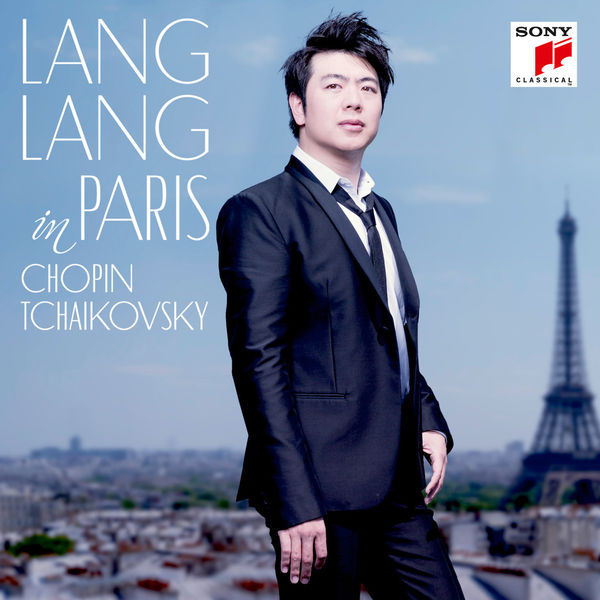
Lang Lang in Paris Chopin Tchaikovsky Sony 2015

The Chopin Scherzi

A word of introduction on the music: the album consists of the four Chopin Scherzi, and Tchaikovsky’s The Seasons for piano. I’m not very familiar with the latter, so I’m not going to comment on the performance.

However, I just love the Scherzi. There is an entire world in the 6-12 minutes of each one, and they are among my absolute favorite piano pieces by Chopin.

So my expectations were rather high. And I’m sorry to say I was disappointed.

No. 1 was just too nervous, to ADHD (my wife told me to switch albums when we listened to it together).

No. 2 is nicely flowing at the beginning, but getting a bit quirky over time, and again too nervous in the fast parts.

No. 3 is probably the best of the four, a bit too much still, but quite enjoyable nevertheless.

The worst was probably no. 4, just too much forte all over the place, and just too slow for my taste.

Benjamin Grosvenor

Now, as suggested by my wise mother-in-law, let me write about my recommended alternative.

And actually another form of “hype”, albeit at a smaller scale.

Benjamin Grosvenor at the tender age of 24 has won more awards already than others in a lifetime. He was Gramophone’s youngest-ever double award winner, and the rest of the British (and partially international) press went just as crazy about him.

So how’s the hype working out here?

Well actually, I’m a HUGE fan. His Chopin Liszt Ravel album, which features all 4 Scherzi, is just outstanding, and his more recent release Dances was not far behind in terms of quality (I mentioned it my comments about the 2015 Gramophone awards here).

There are obviously other outstanding versions of the Scherzi out there (Argerich for no. 3, Rubinstein, and the best I’ve heard was Kristin Zimerman for no. 2 in a live concert), but the recording here is pretty close to perfect.

Benjamin Grosvenor Chopin Liszt Ravel Decca 2011

My rating: 3 stars (Lang Lang) vs. 5 stars (Grosvenor)

You can find the Lang Lang here (Qobuz) if you really insist, and the Grosvenor here (Qobuz) and here (Prestoclassical).

The official “making of” of the Lang Lang in Paris album here:

Classical Life

A classical music blog by music critic Tim Mangan

This Week's Music

Making Classical Accessible

From my Macbook to the Net

Evaporation of my thoughts and observations

Elestra

Author: Artienne

My Life in Music

Playing, Singing and Listening

ArsX3

A brand new journal reviewing books, cinema, music

LawrenceEz's Blog

Creative and Performing Arts: Writing, Classical Music, Photography

Laetitia Strauch-Bonart

Contemporary Politics & Culture

sibling revelry

reveling in all things classical

It's A Raggy Waltz

I collect jazz on vinyl, I dig the Dave Brubeck Quartet, & I write about it

La Musica

By two cousins

thejazzbreakfast

Dishing it out from the heart of England

only jazz

random thoughts about music that matters to me

The Culture Project

Exploring the world of literature, wine, art, music and more.

René Spencer Saller

The music causes me to dream of fabulous empires, filled with fabulous sins.

Breaking Baroque

Blog of Tafelmusik Baroque Orchestra and Chamber Choir

Tasting Nirvana

Eating your Dosha

Shadow of Iris

Poetry, fiction, short stories, more ...

The Immortal Jukebox

A Blog about Music and Popular Culture

April Greene

Writer + Editor

a pianist's musings

A history of your favorite classical music.

Classical music for all

Boris Giltburg's blog

I HEAR VOICES

An orchestra seat in the web space