Know What I Mean? What Great Album!

Blogging – but about what?

I suppose every blogger knows this question: what should I write about on my blog?

Well, you could say with several thousand albums in my personal library and 30M tracks in my Qobuz streaming subscription, finding material shouldn’t really be a problem. And it actually isn’t too much of an issue.

The harder question is often: What do I write about right now?

I often get inspired by either recent releases, by reading the specialized press, or by something I just happened to play on my stereo recently.

However, tonight I was a bit clueless. I knew it was time for another blog post, but didn’t really feel inspired about anything in particular.

Then the radio on my car trip back from work came to my rescue, as they played a track from the album below. I immediately knew I had to write about it.

So here we go:

Cannonball Adderley

Julian “Cannonball” Adderley is probably one of the more underestimated saxophone players. He never go the reputation of a Coltrane, Bird, or even Sonny Rollins. That said, he’s done some amazing albums. Not only he played on Kind Of Blue (see my post on my 25 essential Jazz albums), but also on Something Else from 1958 which has the best version ever of Autumn Leaves on it. Not to mention many other great albums, with or without Miles Davis.

Know What I Mean – Cannonball Adderley With Bill Evans (Riverside 1961)

Adderley and Bill Evans already played together on the above-mentioned legendary album Kind Of Blue in 1959. Two years later, on the Riverside label this time, they work together again, without Miles Davis this time. You have Percy Heath on bass, and Connie Kay on drums.

And the mood is completely different to Kind Of Blue‘s intimacy, this is swinging Jazz that will make you smile immediately.
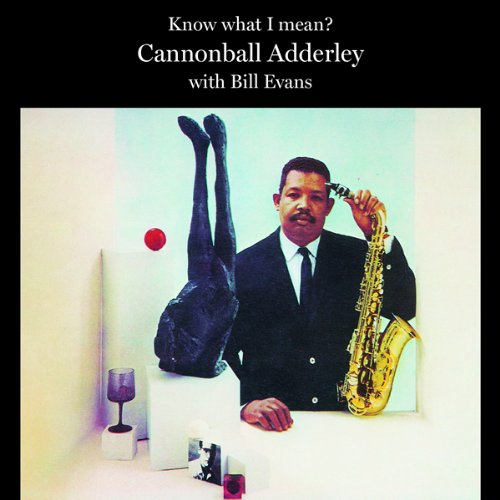
Cannonball Adderley with Bill Evans Know What I Mean Riverside

You start with the great Bill Evans standard Waltz For Debbie, a song I personally cannot get enough of. And this is probably one of the best versions out there, with Adderley really swinging like crazy.

Toy, a Clifford Jordan original, is another great uptempo track.

And then there’s the title track (which depending on which release you get, you may have several takes to compare), which starts as a beautiful ballad (Kind Of Blue‘s particular mood is popping up again), but soon turns back to softly swinging.

This is mainstream jazz (in the positive sense of the word) at its best.

My rating: 4 stars

You can find it here (Qobuz).

The Site Is Getting Too Big – New Artist Category

A quick internal note on the site organization

The site is now grown to well over 100 posts in about 9 months, so it is getting increasingly complicated even for me to find stuff, especially on the Jazz side.

Composers

I’ve been using the Composer category, so you can quickly find all reviews or articles about a given composer. However, on the Jazz side you were basically limited to the genre, which wasn’t very helpful any more.

New Artist Category

So I’ve now created another category, Artist, which will only apply to Jazz albums (the classical ones will still be sorted by composer). You’ll find it in the long category list on the  side bar, so you can access all articles on any given Jazz artist directly.

I hope you find this useful. In any case, there is always the free text search as well where you can search the whole site, or use the Tag cloud.

Thank you again to all your readers and subscribers for the interest in my site! It has exceeded all my expectations.

My Favorite Version of the Brandenburg Concertos

Bach, once more

I hope you’re not getting bored by me writing about good old Johann Sebastian. I have to admit my obsession with the composer only developed in the last decade of my life, before I was much more into Romantic composers like Brahms or Bruckner.

But I suppose, sooner or later the timeless beauty of this potentially best of all composers sooner or later gets you. What is outstanding that he was able to write intellectual masterpieces like the Goldberg variations, bring religious music to absolute summits (e.g. the b-minor Mass reviewed here), but also write extremely approachable music that even non-classical listeners appreciate or at least have heard (Air on the g-string anybody?)

The Brandenburg Concertos

Today I’ll be writing again about another one of his “greatest hits”, as the Brandenburg concertos are among the most popular of his works.

The 6 concertos got their name from the nobleman they were dedicated to, Christian Ludwig, Margrave of Brandenburg-Schwedt. While they are ususally presented as a group, they actually each feature quite different solo instruments (harpsichord, flute, trumpets, etc.), this is probably one of the reasons why they are so popular, as they present an interesting variety.

These concertos have been recorded hundreds of times. Personally, I can only listen to more recent recordings influenced by the historically informed practice, on smaller ensembles. However, this shouldn’t stop you from checking out how this music was played by the likes of Herbert Karajan in the 1950’s and 60’s, nothing wrong with it, but not my cup of tea, it just sounds wrong to my ears.


Renaldo Alessandrini / Il Concerto Italiano (Naïve 2005)

I’ve checked out dozens of recordings to find my personal favorite. This 2005 recording by Rinaldo Alessandrini with the Concerto Italiano (who I had the pleasure to hear live playing Vivaldi in a church some years ago) has all I want, which is mainly: fun, fun, and fun.

Bach Brandenburg Concertos Rinaldo Alessandrini Naive 2005

You just never get bored listening to this music with all the energy and refinement you’re getting from this outstanding ensemble. I love when Jazz is swinging, but let’s face it, this music is (and has to) swing as well. It is clearly visible and audible that baroque music in many ways was strongly influenced by the dance music of the time.

Obviously, Alessandrini is not the only outstanding version out there. I particularly like the efforts by the French ensemble Café Zimmermann, John Butt’s Dunedin Consort is also excellent. But I keep going back to Alessandrini as my personal reference.

My rating: 5 stars

You can find it here (Qobuz) and here (Prestoclassical)


Bach’s Well-Tempered Clavier – beautifully played by Céline Frisch

Das wohltemperierte Klavier

Yes, I know, Bach once more.

But to my defense, this is the first time I’ve written about this particular work, the famous Well-Tempered Clavier BWV 846-893.

Prelude no. 1 in C-major is probably known even to many  non-classical listeners, as it forms the basis of Gounod’s Ave Maria, and it is accessible enough for most piano students to attack it at some point during their classes (including me).

Obviously, there is much more to this cycle of works that takes you through every single key step by step. It consists of two “books” or parts of preludes and fugues covering all keys of our Western scale

Side note: In case you didn’t know, the term “well-temperament” refers to the tuning of the keyboard that was at that time recently invented. Before the well-tempered tuning, any given tuning used at the time worked well for some keys but didn’t really work for others. To simplify, the well-tempered scale by Andreas Werkmeister was the first where you could easily switch between keys without any of the keys sounding out of tune.

I already had a couple of nice recordings of this work, from old-fashioned but great Sviatoslav Richter to Andras Schiff (obviously), to both recordings of Angela Hewitt.

However, I never had a recording on harpsichord that really convinced me. Earlier I used to like Keith Jarrett’s recording on ECM. However, I’ve outgrown this recoding a bit. Both Egarr and Levin are very good, but still I wasn’t 100% satisfied.

Céline Frisch’s Well Tempered Clavier Book 1 

Céline Frisch The Well Tempered Clavier Book I Alpha 2015

I had first heard about Céline Frisch regarding her Goldberg Variation recording. But I never checked her out I must admit. I was too happy with Hantaï, and more recently Levit.

However, the February 2016 issue of Classica pointed me towards her Well-Tempered Clavier recording, so I went to Qobuz and gave it a listen. They awarded this album a “Choc“, their way of saying 5 stars, and called this “une interprétation magistrale“, probably best translated with “authoritative recording”. (It also received the highest rating from Diapason, the Diapason d’or).

And I was impressed, this version is so spot-on, so precise, but never technical, never dull. Bach on a harpsichord can easily get boring or annoying, when it is played too much like robot, or lacking any other kind of differentiation, as obviously on a harpsichord you cannot modulate your touch like you can do on a modern piano.

None of this here, you will be drawn into the music from the first second, and will want to listen to the entire thing. Not an easy achievement, given that this was composed to use Bach’s own words (translation thanks to Wikipedia) “for the profit and use of musical youth desirous of learning, and especially for the pastime of those already skilled in this study”, i.e. essentially a piece to study your skills, not really for public performance and for somebody else to listen to it.

Frisch plays a copy of a Silbermann harpsichord. This instrument at the beginning takes some getting used to, it being a bit bright and slim. However, you get into it really quickly, also thanks to Alpha’s usual good recording technique, and after a while you really appreciate the transparency that let’s you hear through even more complicated fugues.

My rating: 5 stars

You can find it here (Qobuz) and here (Prostudiomasters)

P.S. And you can be sure her Goldberg’s are next on my playlist.

The 2015 Chopin Competition – I Don’t Get It

Subjectivity

As you know if you’ve read this blog, before, I have absolutely no problem with subjectivity (see also how do I rate?) even if it may be controversial, and so I don’t hesitate putting my opinion out there, even if I may be a minority (e.g. with Staier’s Bach concertos that the whole world but me seems to love).

The 2015 Chopin Competition

However, things were slightly different with the 2015 Chopin competition. I mean we’re talking about one of the most important, if not the most important piano competition in the world, only held every 5 years! Former winners include legends like Martha Argerich and Maurizio Pollini, and in more recent years Yundi and Rafal Blechacz. Martha, Yundi, and Chopin specialist Nelson Goerner were part of the Jury this year!

So I felt rather belittled compared to those giants, and when the recording of the winner, South-Jorea’s Seong-Jin Cho came out on Deutsche Grammophon, and I didn’t really like the recording, I felt it must be me. Maybe these geniuses saw or heard something I don’t.

So I didn’t write about it yet on my blog and decided to give the album some more spins before I formally make up my mind. And then I must admit I forgot about it.

Seong-Jin Cho At the 2015 Warsaw Chopin Competition (Deutsche Grammophon 2015)

Song-Jin Cho Winner of the 17th International Fryderyk Chopin Piano Competition Warsaw 2015

Just recently, the two classical journals I subscribe to, Gramophone and Classica, came out with their latest issue, and both reviewed it. And guess what, in both cases, the reviewers were significantly underwhelmed (3 out of 5 stars for Classica, and rather negative comments from Gramophone).

So at least it wasn’t just me. Don’t get me wrong, this is fine Chopin playing, but compare his preludes to Blechacz, and sorry but we’re talking night and day in my personal opinion. And then you get Sonata No. 2. Compare this to Argerich herself, or Pogorelich, or Rubinstein, again, this is absolutely no match.

Not sure what happened, maybe Deutsche Grammophon just released the wrong takes, maybe Cho will develop over time, but so far I really don’t get it.

But even if you take the pressure of a competition and live performance into account, just compare Cho to Blechacz’ final performance in Warsaw 11 years ago, and really, there is so much more presence:


Obviously, you can’t have a new Argerich every year, but still my expectations were higher.

So what do YOU think?

My rating: 3 stars

In any case, you can find it here (Qobuz) and here (Prestoclassical)


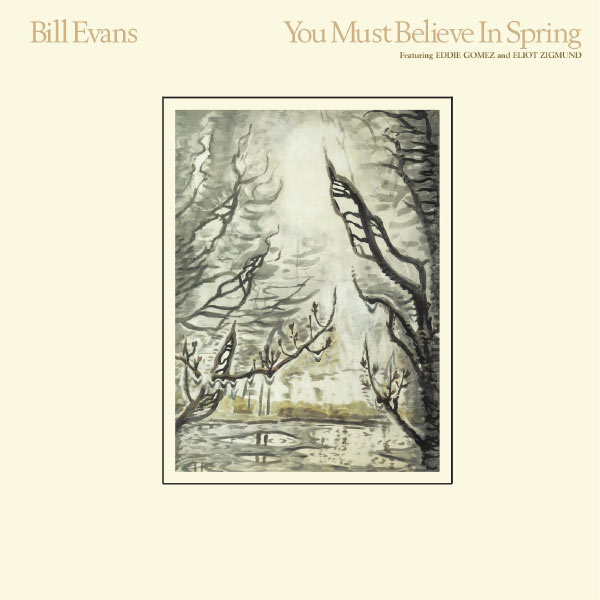
Bill Evans – You Must Believe In Spring

Bill Evans

I haven’t written any single post on Bill Evans yet (well with the exception of this not very serious one, and my 25 Essential Jazz albums).

Shame on me. Given how much I love this pianist, and the form of the Jazz Piano Trio that he essentially created (or at least brought it to a whole new level), this is a sin.

To be rectified right now.

Bill’s Three Trios

Bill Evans essentially had three trios over time. He started with the mythic combination of  Scott LaFaro and Paul Motian in the 1950s and early 60s, until Scott died tragically in a car accident. If you don’t have Live At The Village Vanguard or Waltz for Debbie, you have missed some outstanding recordings.

For many Bill Evans purists, there is no true Bill Evans after LaFaro’s death. Some may concede that his last trio with Marc Johnson and Joe LaBarbera did some outstanding recordings (and I’d agree, hence them being listed in my above mentioned 25 essential Jazz albums with Consecration.

However, the trio that Evans ended up playing the longest time, with Eddie Gomez and several different drummers, doesn’t get the same level of awareness.

Which is a pity as there are some true gems, and Gomez has a very particular sound to his bass, which suits Evans really well.

You Must Believe In Spring (Rhino/Warner 1977/1981)

Bill Evans You Must Believe In Spring Rhino Warner 1977

This is the last album that Evans played with Gomez before he left the trio. On drums we feature Eliot Zigmund.

Why do I love this album so much? Well, as mentioned above, Gomez has a really nice sound, and this being a decent studio recording it really comes across very well.

Furthermore there is the title song You Must Believe In Spring, written by the great Michel Legrand for the musical movie Les Demoiselles de Rochefort by the French Director Jacques Demy.

It is taken from one of the most cheesy scenes of the entire movie, the young sailor singing about his troubles trying to find his dream girl, also known as La Chanson de Maxence:

For comparison, here’s Bill Evans version:

For context, I usually hate musicals, and any kind of movie where people all over sudden start singing (sorry, Bollywood), but somehow this movie is different. Probably this is due to the fact that I saw it during my student days in an old Roman theatre in the middle of summer in an open air cinema with good friends.

The entire atmosphere was so nice that I cannot help myself but having positive memories with this movie, and therefore having a Jazz version of this song helps (Note that I had the album before I even saw the movie, and somehow my subconscious recognized the melody when I saw the film for the first time).

The rest of the album is nice mixture of late Bill Evans standards like the famous Theme From M.A.S.H but also some lesser know compositions. All are very enjoyable.

My rating: 4 stars

You can find it here (Qobuz)

How Many Versions Of Brahms Violin Concerto Does One Need?

My dear readers and fellow music lovers, no I’m not dead nor sick, I’ve just been on an intense 3 weeks business trip which kept me from posting.

Everything should be back to the regular 2-3x update schedule as of now. Thanks for your patience!

Brahms Violin Concerto

To answer my own rhetorical above question first: One more than you currently own as of recently.

OK, if you were a purist, you could say, just get Heifetz and be done with it. And you’d have a valid point. But then again, you’d be missing so much, for example the recording I’m just about to write about.

At latest count, I have 24 versions of this masterpiece in my library, and this is not counting the huge number of versions I could access any time via Qobuz streaming.

So why the heck would I want to add one more? Especially with Heifetz’ legendary version around, not even mentioning Faust’s fantastic version (reviewed here previously, 5 stars)?

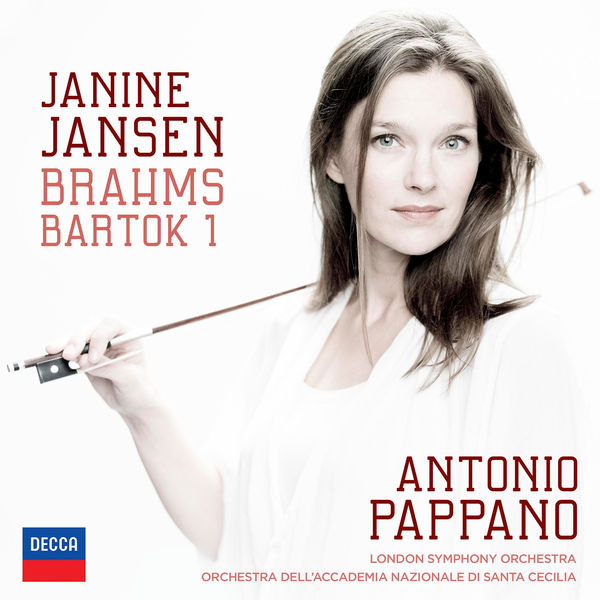
Janine Jansen

The answer is simple and is called Janine Jansen. If you’ve been reading this blog for a while you know I’m a big Isabelle Faust fanboy, and gobble up and love pretty much all she’s doing.

Janine Jansen, the Dutch violinist, is another example where I’ve rarely ever been disappointed. Her Beethoven and Mendelssohn recordings are among my absolute favorites, and even her Four Seasons are a lot of fun. I’ve already mentioned her a couple of times, including here and here, in her role as excellent chamber musician. But obviously she really shines when she is in the lead.

Janine Jansen and Antonio Pappano playing Brahms and Bartók

Janine Jansen Brahms Bartok Violin Concertos Antonio Pappano London Symphony Orchestra Orchestra dell'Accademia Nazionale di Santa Cecilia Decca 2015

How to describe Jansen’s Brahms? Well, between the two extremes of Heifetz (extreme passion) and Faust (extreme clarity), you probably get a nice balance in between.

There is definitely more vibrato and more rubato than with Faust, and while I love the clean sound of Faust’s Sleeping Beauty Stradivarius,  Jansen’s Barrere from the same genius violin maker’s factory, with a slightly darker tone, is outstanding as well.

Another difference is the cadenza, Faust playing the rare Busoni cadenza, with Jansen chasing the more traditional Joachim cadenza (by Brahms’ friend and favorite violinist).

Obviously I also need to mention Pappano. He’s done great things with his recent opera recordings (e.g. the Aida reviewed here), but if any more proof was needed he’s also an excellent conductor for concertos, here you have it.

In a nutshell, this is perfection. A different kind of perfection than Faust or Heifetz, but perfection nevertheless. A must have if you like Brahms. (At some point I’ll do a comparison between all my 25 versions, from Neveu to Jansen. Just need to find a LOT of time).

Bartók

I haven’t written a word about the Bartók yet. This is simply because I’m much more unfamiliar with this work than the Brahms, my only two comparators being Faust (again, I know), and Oistrakh, so I won’t comment here beyond the fact that I like what I hear. Maybe this is the version that will finally get me more hooked on the Hungarian composer (I really appreciate him, but rarely listen extensively).

My rating: 5 stars

You can find it here (Qobuz) and here (HDtracks)

Classical Life

A classical music blog by music critic Tim Mangan

This Week's Music

Making Classical Accessible

From my Macbook to the Net

Evaporation of my thoughts and observations

Elestra

Author: Artienne

My Life in Music

Playing, Singing and Listening

ArsX3

A brand new journal reviewing books, cinema, music

LawrenceEz's Blog

Creative and Performing Arts: Writing, Classical Music, Photography

Laetitia Strauch-Bonart

Contemporary Politics & Culture

sibling revelry

reveling in all things classical

It's A Raggy Waltz

I collect jazz on vinyl, I dig the Dave Brubeck Quartet, & I write about it

La Musica

By two cousins

thejazzbreakfast

Dishing it out from the heart of England

only jazz

random thoughts about music that matters to me

The Culture Project

Exploring the world of literature, wine, art, music and more.

René Spencer Saller

The music causes me to dream of fabulous empires, filled with fabulous sins.

Breaking Baroque

Blog of Tafelmusik Baroque Orchestra and Chamber Choir

Tasting Nirvana

Eating your Dosha

The Immortal Jukebox

A Blog about Music and Popular Culture

April Greene

Writer + Editor

a pianist's musings

A history of your favorite classical music.

Classical music for all

Boris Giltburg's blog

I HEAR VOICES

An orchestra seat in the web space