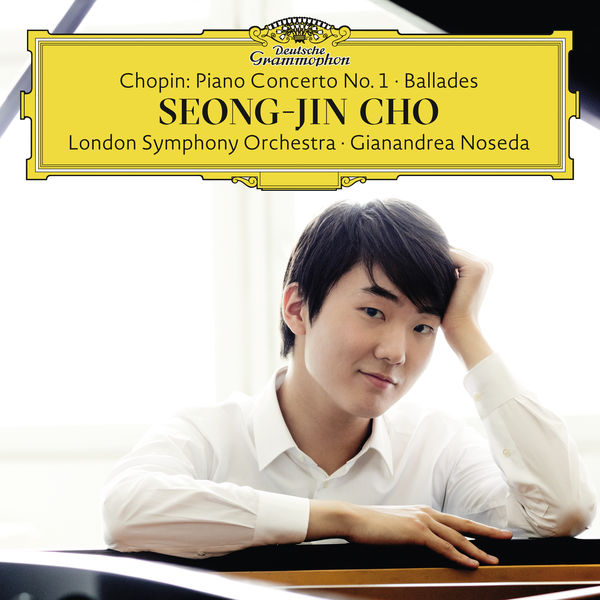
And unfortunately, his latest release, a full Chopin album with the piano concerto no. 1 and the ballades, confirms my disappointment.
Chopin: Piano Concerto No. 1 / Ballades – Seong-Jin Cho (Deutsche Grammophon 2016)
Let’s start with the good part. Piano concerto no. 1 is an overall convincing performance. He uses a lot of rubato, which I really like in Chopin, the brilliant parts are brilliant as expected, but the slower parts also get a well reflected treatment.
We are clearly not yet beating Zimerman’s both recordings on Deutsche Grammophon, but at least this is interesting and worth listening to.
The LSO under Gianandrea Noseda are a quite powerful partner. Let’s face it, the Chopin piano concertos aren’t the most satisfying material for orchestras, they often are nothing more than “background” for the soloist. But their playing here cannot be faulted.
The Ballades
The Chopin ballades are just amazingly beautiful. My favorite version is again, Zimerman, as already featured in my Top 10 Classical Pianists posts. Another favorite of mine, Murray Perahia, is also exceptional.
Getting to Cho, something is just wrong. The slow parts are often just plain boring, I can’t even fully put my finger on it.
When it gets fast, like after 2 min into Ballade No. 2 he becomes impressive, but more technically than musically, unfortunately.
It is very clear that Cho has amazing technical reserves that are barely even challenged here in these works. Maybe he would be perfect for Liszt, but here in the simple ballades, what you really need are nuances, and these are missing to my simple ear.
It pains my heart writing this, but I don’t think Cho is up there with his peers from previous competitions.
Let me know what you think, do you agree? Disagree? Think I’m completely nuts? Please share your comments.
UPDATE January 5, 2016: By now, some other reviewers have had more positive opinions than me about this album, I’d say the general consensus is around 4 stars. Doesn’t change my personal rating but I wanted to flag this to ensure you get a balanced view.
I’ve been very clear on my blog here that whatever I’m writing is nothing more than my personal view on the music and interpretations I write about.
You’d think that it should be different for professional reviewers. OK, maybe nuances according to individual tastes, but a good album is a good one, and a bad one is bad, right?
Well, I’ve previously given already one example of a Mahler album that received extremly contrasting reviews from two of the most respected classical review magazines out there, UK-based Gramophone, and French Classica.
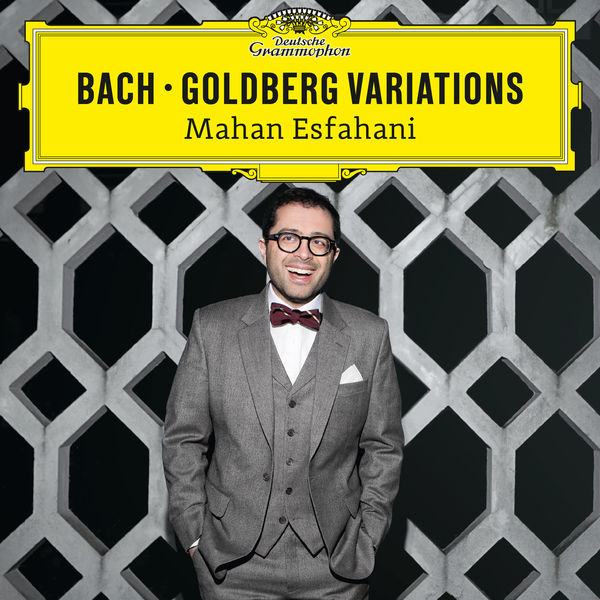
Mahan Esfahani is one of the rising stars on the harpsichord. I’ve briefly mentioned him in my musing’s on the Gramophone Awards 2015, but haven’t properly reviewed any of his albums yet.
I really liked his previous album Time Present And Time Past that went from Scarlatti to Reich.
But before I get into my personal assessment, let me get back to my opening comment: How professional reviewers can disagree, in the most drastic possible way.
October Issue Gramophone: “His navigations of the music’s structure […] is carefully considered without sounding in the least bit studied, or different for the sake of being different. His Goldberg Variations clearly belongs […] in all serious Bach collections”. They even gave it a Gramophone Award.
October Issue Classica: “Il donne même l’impression de réinventer le Bach machine à coudre” (he even leaves the impression of reinventing the “sewing machine” Bach style), or “errements d’un jeu qui se laisse aller à un rubato et des manières agacants” (this is a bit harder to translate, but basically they find the same freedom that Gramophone likes above totally annoying), and speak of “La première version post baroque” (the first post-baroque version). Result: 2 out of 5 stars, which is their way of saying “disappointing”.
So what is it? Does a disappointing album belong in all serious Bach collections? I don’t blame you for being confused.
But this is my point, right? You can never use any kind of review individually. You can try to find a magazine (or even better, individual reviewer) that has a similar taste to yours, but then need to make up your own mind.
Side note: This is why I love streaming so much, as you can simply try out new music as much as you want before buying. But please, don’t forget to buy stuff you really like, if you want the musician to make a living.
To close this chapter on reviews, what is helpful if you find “meta-reviews”, that compares and contrast several individual reviewers. If you find consensus among many reviewers, you probably have a higher chance of finding something truly exceptional. Classica every month does just that, unfortunately only comparing French reviewers, they call that table “Les Coups de Coeurs” and summarize the opinions of 6 different French classical music specialists from Le Figaro to France Musique. But I don’t think anybody does this at an international level.
So what do I think about this album?
Now it get’s difficult. Esfahani’s recording is clearly VERY different.
What I love about it is the sound of the harpsichord, a two keyboard reconstruction that has a splendid sound (and isn’t ruined to much by Deutsche Gramophones sound engineers).
About the version? You’d think this is a love or hate recording. Well actually, it isn’t. I’ve now listened to it at least 5 or 6 times, but it doesn’t touch me as much as a Goldberg recording should. I’m just a bit indifferent. I clearly see how this recording is different, and why Esfahani does what he does, but I don’t think this version will get a lot of additional spins on my system. I’d go to Hantaï, or Levit, or Perahia, or, or, or.
My rating: 3 stars
You can find it here (Qobuz) and here (Prostudiomasters)
As regular readers know, I’m always on the lookout for new piano trios, as it is one of my favorite art forms.
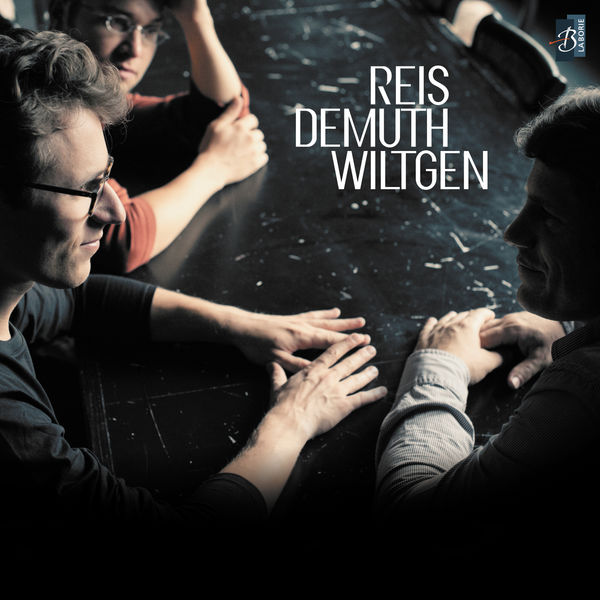
The trio I’ll be writing below isn’t new to me, I already discovered them with their previous album, which was simply titled Reis/Demuth/Wiltgen and released on the French label Laborie Jazz.
Reis/Demuth/Wiltgen
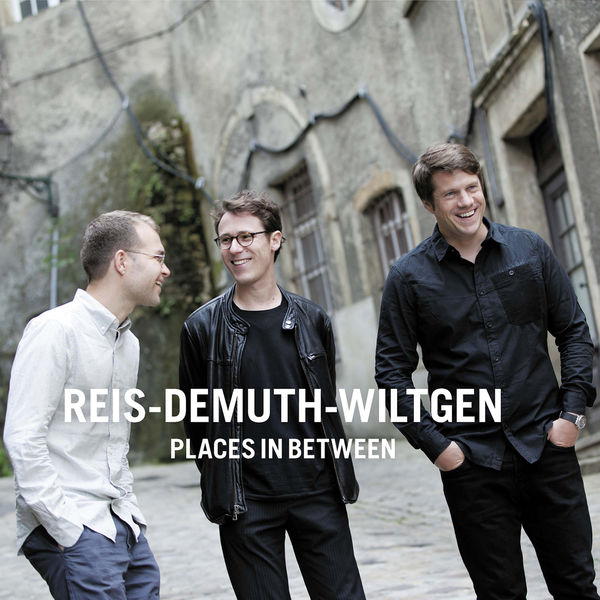
The naming of the band isn’t very complicated to explain, as we have Michel Reis on piano, Marc Demuth on bass, and Paul Wiltgen on drums.
All three come from Luxembourg, the small place in the middle of Europe known to most people as a tax haven, and somehow next to Brussels and Strasbourg host to some of the EU institutions. Beyond those clichés it’s actually a beautiful little place.
I really liked their first debut album on Laborie, so I was very curious to hear their latest release, which came out some weeks ago in August.
Places In Between (Double Moon Records 2016)
So how do I like it? Well to be honest, I liked their previous album better, I found it more inspiring.
Don’t get me wrong, this is a well done jazz trio album. You can really feel that the three musicians are well connected, this isn’t some collection of stars just put together for one album.
So what’s my issue with it? I guess it’s probably the songs. All are “nice”, but I don’t know, they leave me hungry for more.
More of what? If only I knew. I guess this won’t be the most useful music review I’ve ever written, as I keep rambling without giving you anything concrete. There are nice moments, e.g. the melodic developments on Joule’s Last Glimpse, the light swing of The Story of You and Me, or the excellent drive of Paul Wiltgen on Shai.
And it is really hard to put my finger on it as there’s really nothing wrong with the album.
I’ll just leave it at that and recommend their 2013 album instead, and wait if the new album grows on me. It has happened before.
My rating: 3 stars (could eventually turn into 4 stars, let’s see) for Places In Between, and 4 stars for Reis/Demuth/Wiltgen.
I just checked, and my last entry dates back more than a month ago. Shame on me. Lots of reasons, too much travel, too busy, too whatever. Who cares, let’s get back to it, shall we?
Gramophone Awards
Although I’ve recently had quite a number of disagreements with reviews by this venerable magazine, it probably remains the most important source for the entire classical music industry, and winning a Gramophone Award is rather prestigious.
I’ve already started reflecting about them last year, which generated some really interesting discussions here and elsewhere (plus lead me to discover David Watkin’s outstanding Cello Suites), so let’s have a look at who has been nominated this year.
If you want to do the same, best is to get our your tablet, get the Gramophone App, and get the Gramophone Awards issue for free.
As last year, I have no ambition to be exhaustive, I’m just giving my 2 cents on a number of albums that I’ve heard as well.
Concerto
Concerto is usually my favorite category, and the one where I’ve heard the largest number of the recordings.
We have 8 albums nominated this year, 5 of which I’ve heard and can comment on.
Brahms Violin Concerto x 2
We start with two versions of Brahms violin concerto, one coupled with Bartok, the other one with Brahms’ own String Quintet No. 2.
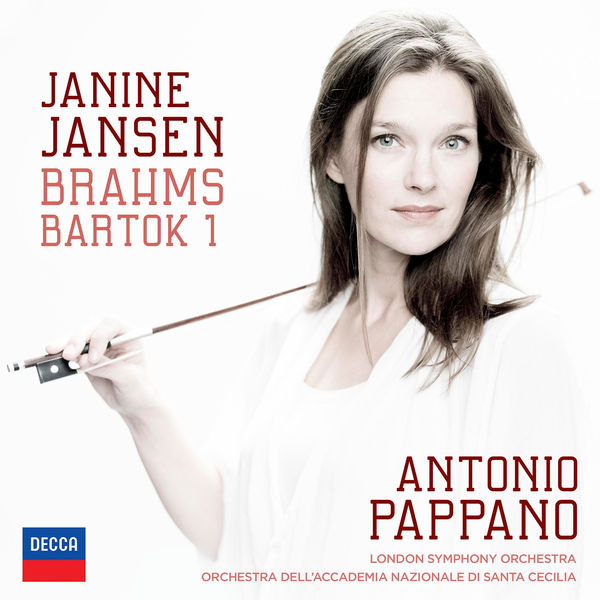
The first one is the new Janine Jansen recording, which I’ve reviewed here. I still fully stand by the 5 stars I’ve given there, and this is an album absolutely worth having in spite of heavy competition.
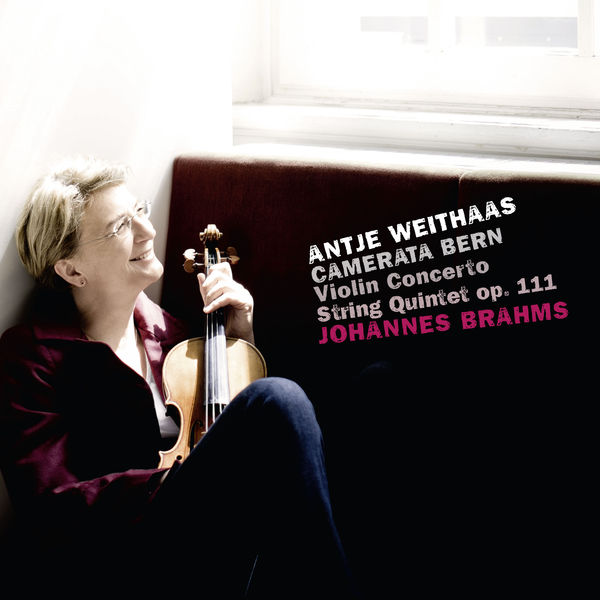
The second Brahms recording is with the less known German violinist Antje Weithaas, with the Camerata Bern.
I must admit I didn’t expect a lot, as I was pretty disappointed by the recording of Bach’s keyboard concertos with the Camerata Bern (2010 on Universal).
Well, I was positively surprised, up to a point. To be clear: Weithaas really plays exceptionally well.
However, the Camerata Bern is unfortunately no match for Pappano’s Santa Cecilia. They are really the limiting factor on this recording, which becomes especially apparent in the highly energetic third movement.
The string quintet is ok, but a bit heavy. Overall, I’d probably give this 3 stars.
Beethoven’s piano concertos x 2
The next two albums aren’t albums, but DVDs. I don’t have a DVD/Blueray player, and so have no way of reviewing these.
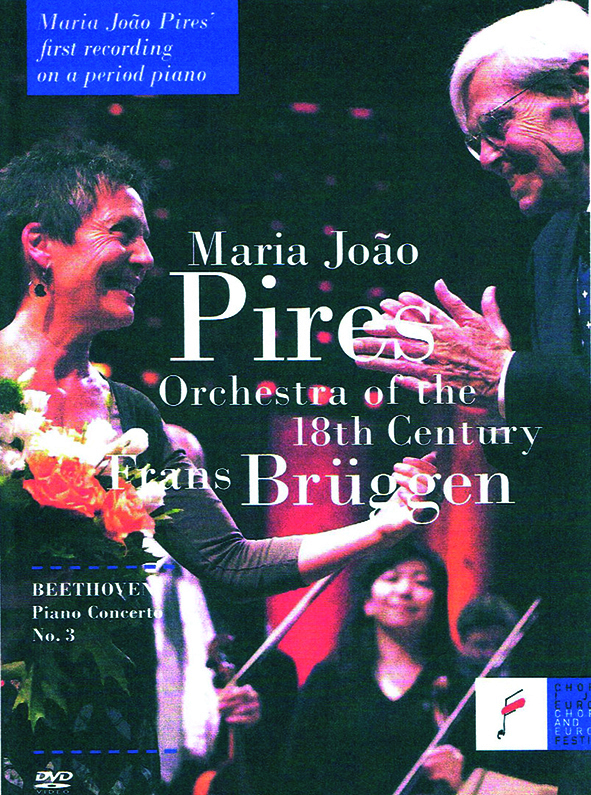
DVD no. 1 is Maria Joao Pires with Frans Brüggen playing Beethoven’s concerto no. 3.
There is a snippet on Youtube, and I wasn’t particularly impressed, but one shouldn’t judge from 39 seconds.
Interestingly enough, Pires won already last year with the same concerto but Daniel Harding conducting. Again, didn’t really impress me back then either. But if you’re into DVD’s, you may want to check it out. Just to clarify, I’m a big fan of Pires for a lot of solo recordings (e.g. Chopin, Mozart), but her recent orchestral recordings just aren’t my cup of tea (see also my review of her Schumann recording with Gardiner here).
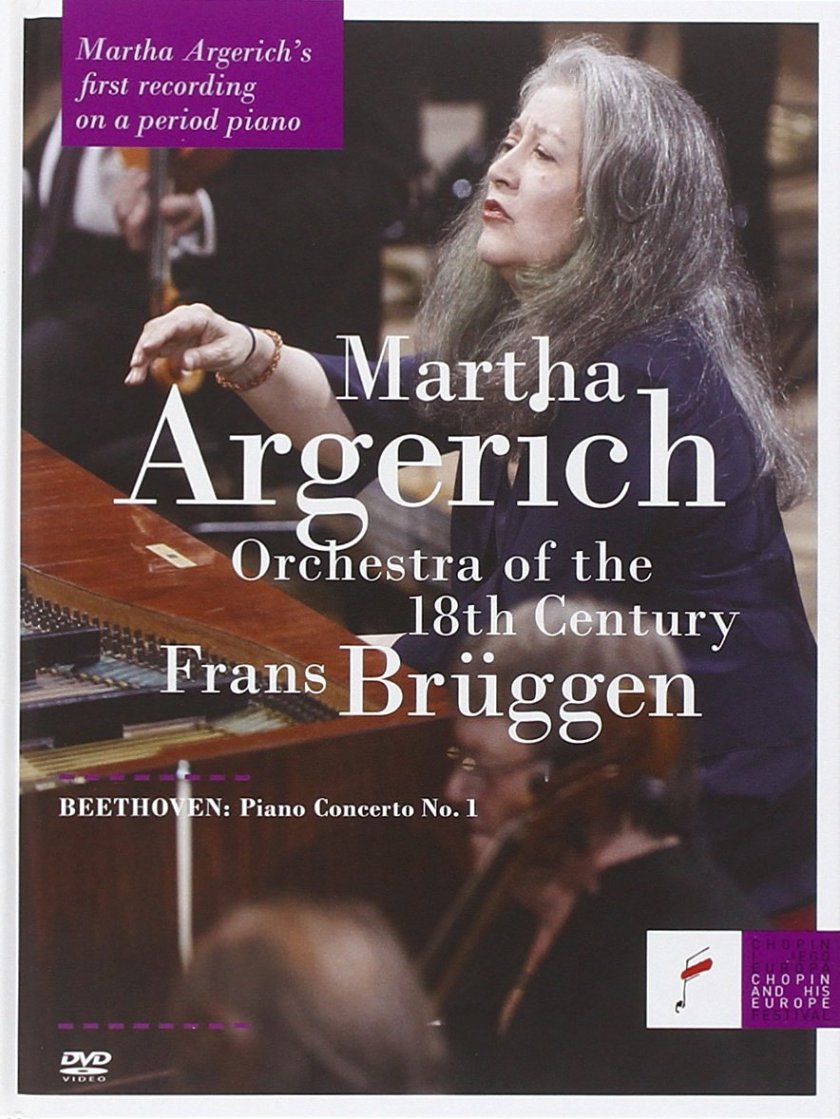
The other DVD, also from Warsaw, again with Frans Brüggen, has one of my absolute piano godesses on the piano, the mighty Martha Argerich.
Here’s the 40 second Youtube snippet:
This is already more to my taste. But again, you simply cannot judge a recording on 40 seconds.
Britten & Korngold by Vilde Frang
I’m a big Vilde Frang fan, her Sibelius is one of my all time favorites, see here.
Unfortunately, the music on this album really isn’t getting me excited, so I’m not qualified enough to comment about the interpretation.
I must admit I wouldn’t even know Korngold if it weren’t for some old Heifetz albums, and even here, his music that would at moments be rather fitting for the next Star Wars soundtrack doesn’t inspire me very much. OK to listen to once or twice, but nothing I’d consider purchasing.
I can comment even less on the Britten. There is unfortunately only one English composer I really love, Henry Purcell, everything after just isn’t for me.
Rachmaninov by Trifonov
Now we’re getting back into my home turf (not physically, obviously, I’m not Russian), but musically speaking.
This is an album I should have reviewed a long time ago, as it is a true 5 star recording.
We start with Nézét-Séguin, who here again is in top form, and with the Paganini Variations. Already an exceptional start.
However, this album shouldn’t actually be in the “Orchestral” section, as the entire rest of the 1:18 are all solo piano.
We’re talking about the Variations On A Theme Of Chopin, Op.22, the Variations On A Theme Of Corelli, Op.42, and some Rachmaniana pieces by Trifonov himself.
The Corelli’s are already great, but my absolute favorite here are the quite rarely played Chopin variations. Amazing, you really get the best of both worlds here, the melodical genius of Chopin together with the romantic virtuoso of Rachmaninov. Absolutely worth having.
My rating: 5 stars
So, my take home messages (or albums) are clearly Jansen and Trifonov. Both are absolutely worth having.
And my prediction for the Gramophone Award winner? The Trifonov.
What do you think? Let me hear!
Update August 18,2016: Gramophone has released the three finalists for the category: Pires’ Beethoven, Frang’s Britten, and Trifonov’s Rachmaninov. So my prediction above (written previously) could still come true.
Regular readers of my blog won’t be surprised by the fact that I love the Jazz piano trio.
So I was actually a bit surprised when I read quite a lot about Bill Charlap’s Trio on several discussion fora, and had never heard of the guy. And this came from people who generally have a good taste (or to be more neutral, a taste similar to mine…).
So when I recently saw on my streaming service the release of his latest album, released on Impulse (the legendary label that has seen a great revival in the last decade), I was obviously very interested.
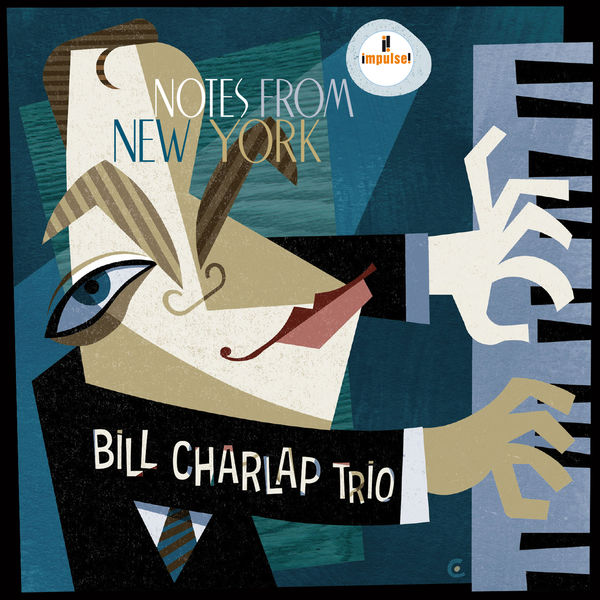
Notes From New York (Impulse 2016)
And now I will unfortunately disappoint the several Bill Charlap fans I know: This is really not my cup of tea.
Let me try to explain why. An old friend of mine, Jazz lover as well, often basically distinguishes Jazz groups by the quality of their drummer (and I’m not even talking technical quality). Basically, if the drummer doesn’t work for him, he doesn’t care about the rest of the music (when you read this, I’m paraphrasing).
So, I’m not as black and white, as I’m coming from the piano, this is usually the most important instrument for me a in a combo. And that said, Charlap is really excellent.
However (and maybe it is only on this particular album, need to check out others), but basically here I have exactly the same problem, I don’t like what Kenny Washington does on drums. To quote Duke Ellington again, It don’t mean a thing if it ain’t got that swing. Well, saying that Washington doesn’t swing isn’t fair, but he’s nevertheless the main reason why this album leaves me completely cold.
On very slow ballads, like Too Late Now, the music is much more focused on the piano and bass, and here I start appreciating the qualities of these artists (also Peter Washington on bass). But unfortunately, the rest just doesn’t do it for me.
I nevertheless strongly recommend you check this album out, there is nothing wrong with it, and these are without doubt excellent musicians, but it’s just not my cup of tea.
My (very personal) rating: 3 stars
You can find it here (Qobuz) and here (Prostudiomasters)
I just wrote about the Quatuor Ebène’s brilliant new Schubert recording, which received an Editor’s Choice in Gramophone. This legendary magazine is obviously among the ultimate references in reviewing classical music.
Therefore, I checked out another Editor’s Choice from Gramophone’s May Edition:
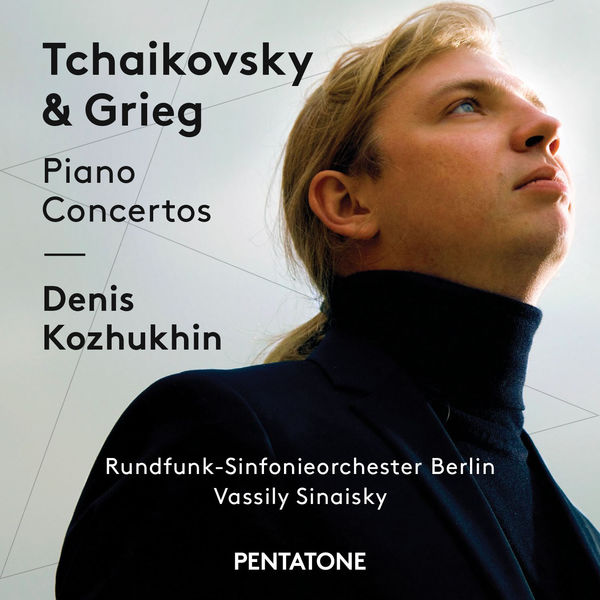
Tchaikovsky & Grieg: Piano Concertos – Denis Kozhukin – Vassily Sinalsky – Rundfunksinfonieorchester Berlin (Pentatone 2016)
Then I started listening. And couldn’t believe my ears. The Tchaikovsky is about as far as my idea of an ideal recording as it could be.
To be fair, I’m not a big fan of Tchaikovsky in the first place (see also here), and I have played his 1st piano concerto too much in my youth, unfortunately on another recording which today I really don’t like, Evgeny Kissin’s famous (or notorious) recording with Herbert von Karajan and the BPO.
To give you an idea how for my ears this concerto should be played, check out this legendary 1943 concerto played by Vladimir Horowitz and Arturo Toscanini:
This version really couldn’t be any more different to this new Pentatone release
So what does Patrick Rucker praise in his review? He mainly compliments Kozhukin’s naturalness. And I get that. The slow movement of the Grieg for example is beautifully played (I still prefer Andnes by quite a bit though). However, he then goes on and writes “you’re left with one thing: the music”. Well I really don’t get it, to me this music without the full power of the emotion of these romantic masterpieces is missing so much, TOO much for me.
My rating: Three stars (I don’t want to give Kozhukhin less than this, as I can clearly hear from this album that he has potential, although if I follow my own rating system systematically, it should have been 2 stars, as I’ll definitely won’t be listening to this album again).
P.S. I already had this recording typed out and ready for publishing when I read the review in the just released May issue of Classica Magazine, my other reading of choice.
And guess what: Two stars! (out of 5), to quote Clément Serrano about the Tchaikovsky “sans prise de risque”, without risk-taking, and similar, although slightly friendlier words about the Grieg. He reminds his readers again about the recent Perianes – Oramo recording of the Grieg, and I couldn’t agree more.
So in a nutshell, never trust a single review of a classical music album, even if it comes from a very reputable source, but always make up your own mind before buying. Luckily, in the days of streaming services, this is easier than ever.
Regular readers of my blog know that I’m a big fan of Kenny Barron. To me, he’s the ultimate partner for duos, see for example his great collaboration with Dave Holland, The Art Of Conversation (reviewed here), or the amazing live work with Stan Getz on People Time (see Musicophile’s 25 Essential Jazz Albums).
So when Kenny came out with a new trio album on Impulse, I obviously had to check it out.
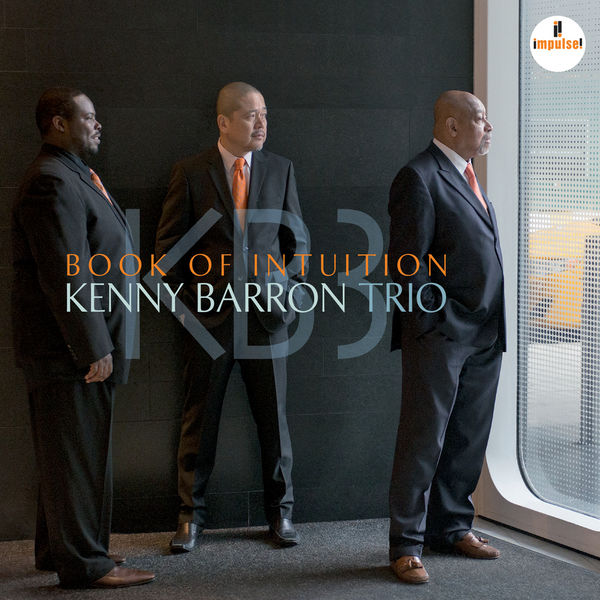
Book of Intuition (Impulse 2016)
Kenny Barron plays with Kiyoshi Kitagawa on bass and Johnathan Blake on drums here. The trio has been working together for a while, but this is apparently their first recording as a trio.
Unfortunately, while I’m still a huge fan of Kenny, I’m getting more of a mixed impression from this album.
The first for tracks are Kenny Barron originals.
Let’s start with the opening track, Magic Dance, an medium tempo track with some latin elements in the groove. In a live concert, this could be a nice warm-up, but on a recorded album, it kind of leaves me a bit cold. Nothing wrong with it, but nothing special either.
The next track, Bud Like, although this is already picking up on drive and swing, it still isn’t something that get’s me fully excited. Cook’s Bay is again solid swing.
Where Kenny and his trio really shine are on slower tracks. The first example is In The Slow Lane. Another beautiful example is the Monk composition Light Blue, where Kenny plays essentially solo.
Probably my favorite track on the album is the ballad Nightfall, and here you get again all I like about this amazing pianist. And maybe I just like Johnathan Blake best when he uses brushes? Kitagawa also gets to solo here, and his sound is just beautiful.
So in a nutshell, would I recommend this album? Yes and no. I wouldn’t call it an essential addition to the catalogue of Jazz Trio albums, but it certainly has very beautiful moments. I encourage you to check it out on a streaming site before buying.
My rating: 3-4 stars (3 stars for the uptempo tracks, 4 for the slower ones)
You can find it here (Qobuz) and here (Prostudiomasters)



 musicophilesblog - From Keith Jarrett to Johannes Brahms