The Nutcracker – Or Why I Sometimes Do Like Tchaikovsky

The Nutcracker

In my previous post on Tchaikovsky’s symphony no. 5 I’ve stated that I don’t like Tchaikovsky very much. However, I must admit he really did some magical (and not in the Disney sense of the word) melodies in his ballets.

Western Christmas traditions now include regular performances of the Nutcracker. The story was originally a German fairy tale of a prince turned into a nutcracker, by E.T.A Hoffmann, later adapted by Alexandre Dumas. Tchaikovsky conducted the premiere in 1892, and both the ballet and the “best-of” excerpt, the suites, are these days among the most famous of his works.

Tchaikovsky: The Nutcracker – Simon Rattle – Berliner Philharmoniker  (EMI Classics 2010)
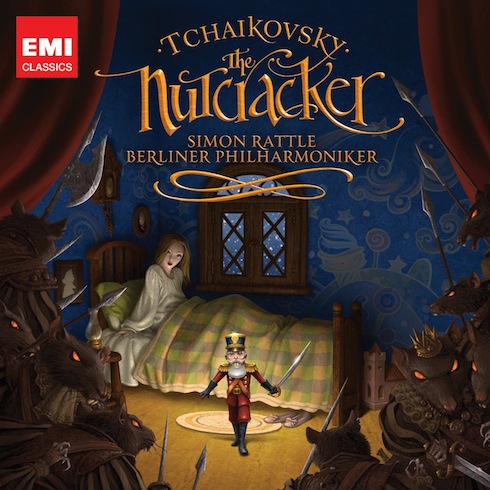
Tchaikovsky The Nutcracker Simon Rattle Berliner Philharmoniker EMI Classics

My first version was the legendary one by André Previn with the London Symphony Orchestra (also on EMI). That version is still very nice, so I didn’t look for a new recording for years (I basically listen to this work literally once or twice per year, usually some time in December).

However, two  years ago I heard about this relatively new (2010) recording by Rattle on the radio, and I checked it out and I really liked it. Beautiful orchestral colors by the great BPO, and most importantly all the energy that this music really needs (I’m anything but a dancer, but this music makes me want to get up from my sofa and move to it).

You’ll find some excerpts of the recording here, with a nice interview with Sir Simon Rattle and some BPO musicians:


Note that some people say that Russian music can only be played well by Russian conductors, and indeed Gergiev did a great job on his Decca recording with the Kirov orchestra from the 1990s.

But still, Rattle did such a fine version that I doubt I’ll ever buy another Nutcracker again (well, never say never).

My rating: 5 stars

You can buy the CD here, I haven’t found a decent lossless download source.
My Favorite Versions of Bach’s Christmas Oratorio

Christmas Music

Only three weeks left until Christmas. Usually, during this time there are three unavoidable things: Some singer releasing a Christmas album (that reminds me that I need to write a post about my favorite Jazz Christmas albums, watch this space), you hear Wham again on the radio 5 times per day, and most households that have some form of love for classical music play the Christmas oratorio, in a similar frequency to the Last Christmas repetitions on popular radio.

I’m very similar, during the month of December the Oratorio gets played at least 10-20 times. I wonder myself why I still like it. But let’s face it, this is Bach, and you can never get too much Bach.

Listening to this work you’re best of when you speak at least some German, as you get the entire beautiful Christmas story told to you by the Evangelist, but if you don’t, either get the booklet or just enjoy the music

(Side note: I’m not religious, but having grown up in a Western country Christmas has become more of a family tradition than a religious event for me like for many others).

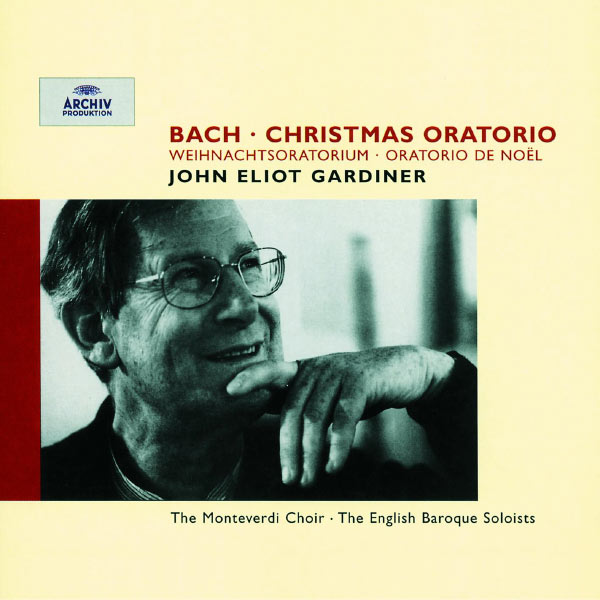
Gardiner / Monteverdi Choir (DG Archiv 1987)

Bach Christmas Oratorio John Eliot Gardiner Monteverdi Choir English Baroque Soloists DG Archiv 1987

Gardiner’s version from 1987 is probably the best known, and it is still my favorite version. I’m not sure if my preference isn’t biased by the fact that I’ve heard it so much over and over again, but Gardiner plays with so much drive and energy, that although I must have heard this hundreds of times, it still doesn’t get boring.

There are obviously many alternatives.

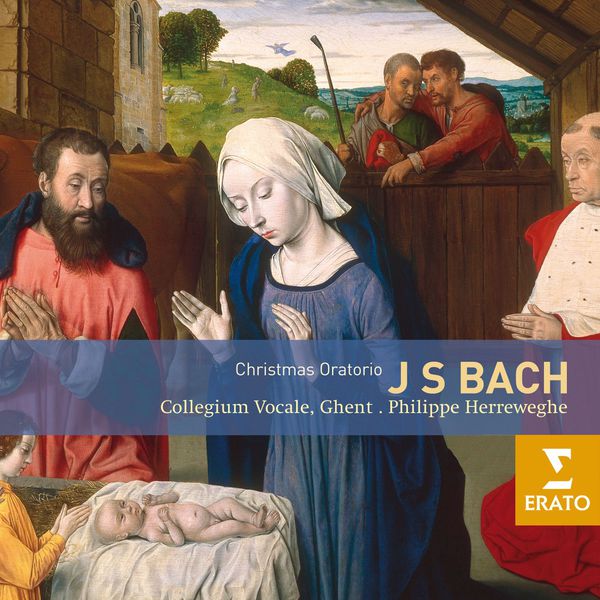
Philippe Herreweghe (Erato 1992)

One of my favorite alternatives around is also a bit older. Philippe Herreweghe’s version is a bit more mellow than Gardiner, but still has all the beauty in both playing and singing.

Bach Christmas Oratorio Philippe Herrweghe Collegium Vocale Ghent Erato

I have listened to a number of more recent versions, but still go back to these two above most of the time. Among the more recent alternatives I’ve tried are Mazaaki Suzuki (polished, but a bit too behaved), Diego Fasolis (really fast, not my cup of tea), and Gramophone’s favorite version, Harnoncourt 2nd version on Deutsche Harmonia Mundi (good but I like both versions above better).

My rating: 4 stars for both (I’m still waiting for the perfect version, but both come pretty close)

You can download the Gardiner here (Qobuz) and the Herreweghe here (Qobuz again)

Montreux Alexander Live!

Monty Alexander

For whatever reason, although I really like piano trios as every regular reader of my blog will have understood by now, Monty Alexander flew under the radar screen for me until rather recently

Luckily, some other music lovers pointed me to him, and the trigger for purchasing this particular album was fellow Jazz addict JoeWhip’s entry to Audiostream’s Lovely Recordings, a new feature on the site:  (The rest of his list is also very much worth exploring, I had a bit more than half of it already and purchased most of the rest after reading the list).

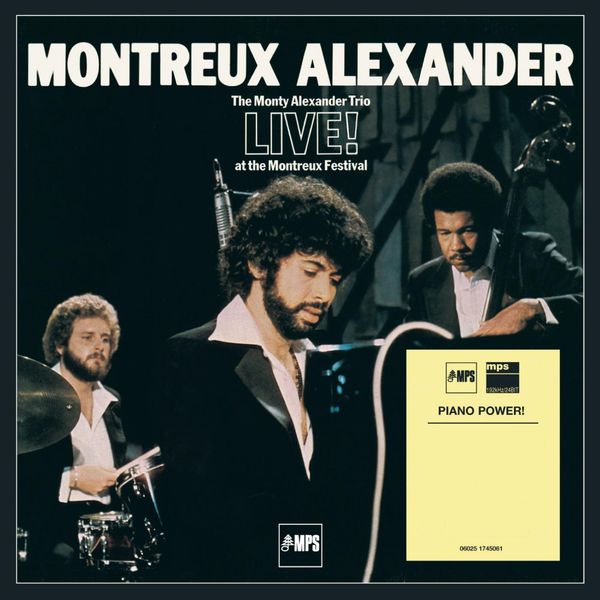
Montreux Alexander Live! (MPS 1985/2014)

Montreux Alexander - The Monty Alexander Trio Live! At The Montreux Festival MPS

What a nice recommendation!

Live albums often are either really good or really dull. The dull ones often just try to hard, or don’t really capture the spirit and feeling of the concert and leave you uninvolved. The good ones are just the opposite.

Luckily, the latter applies here, you feel like you’re actually sitting in the concert and the groove get’s you immediately.

Jeff Hamilton is a great asset obviously, his ability to make any kind of music swing is just outstanding (he also plays, in a very similar style on Ray Brown Live At the Loa, one of my 25 Essential Jazz albums).

John Clayton is not that well known, but he is a Ray Brown pupil and you can hear it.

I can only agree with JoeWhip on his assessment that this is music that will make you smile no matter how down you are.

Recommended.

My rating: 4 stars

You can find it here (Qobuz)

Easy Living: My Favorite Enrico Rava Album

Enrico Rava

In my previous post on Enrico Pieranunzi I was asked about other Italian artists I like, and José in his comment listed among others Enrico Rava. This is what triggered this blog post.

Well, first of all, my initial answer is that Rava has a beautiful sound, a very soft, dreamy voice, that I really like.

With regards to his recorded albums, I’m more torn, as I don’t have a single album with Rava in the lead of which I love every single track. I’ll explain further below why.

That said, without doubt Rava is one of the leading figures of the Italian Jazz scene.

I have about 10 albums of Rava in my collection, and would like to present here what overall is my favorite Rava album: Easy Living

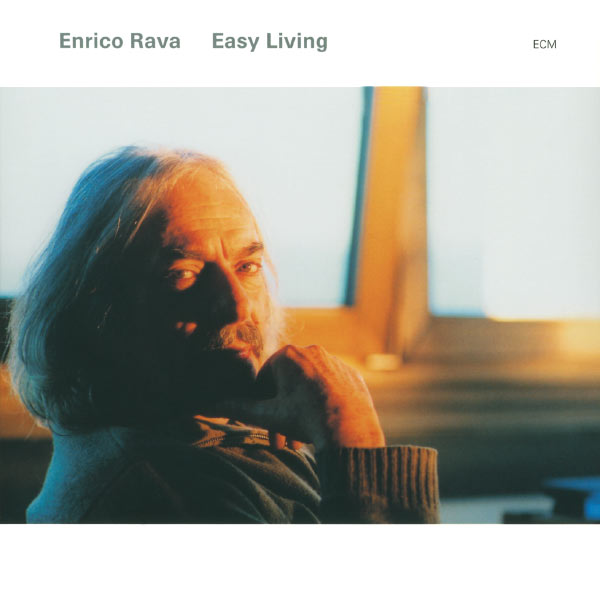
Easy Living (ECM 2003)

Why this particular album?

Well, first of all, Easy Living is one of my favorite standards (I originally fell in love with Sarah Vaughan singing it). And Rava does a gorgeous version of this song here.

Enrico Rava Easy Living ECM 2003

Second, Stefano Bollani.

I’ve previously written about him and how much I appreciate his piano playing, and he’s also one of the factors why I particularly appreciate this album. Take his solo on track 8, Hornette and the Drum Things and you’ll understand why.

Track 1, Chromosomi, is already a great start. It sets the scene for an album that is generally meditative, dreamy, perfect for a lazy Sunday morning like this one (as I write it, it has started to snow outside, and this song sounds like the perfect soundtrack for watching the  falling snowflakes).

Now to explain, as already mentioned above, what I don’t like about certain Rava songs, let’s take the example of Traveling Night (track 7). I’ve written time and time over again, how much I need melodies. My brain is just wired that way.

I actually like Rosario Bonaccorso’s bass solo, and then Roberto Gatto and Stefano chiming in the same mood. But then I get lost in rhythmic and harmony changes, and my little brain never finds its way out again, it just feels to random.

I’ve had this discussion with Jazz musicians, and for some of them, when it gets more random and adventurous, this is when music really starts getting interesting, for some others, this is when it starts to lose interest. I’m not arguing quality here, but just personal preference.

One special thing to mention on this album is the beautiful complementarity between Rava and Gianluca Petrella on trombone.

This album is recorded by ECM, and therefore, as usual, the recording quality is really good.

My rating: 4 stars

You can find it here (Qobuz)


Nearly (But Not Quite) Perfect – Gardiner’s New Recording of Bach’s B-Minor Mass

Bach’s b-minor mass was the subject of one of my first blog posts nearly six months ago. I just love and admire this monumental work of beauty.

John Eliot Gardiner

I’m also a big fan of Gardiner. Many of his recordings with the Orchestre Révolutionnaire et Romantique of the classical and romantic symphonies are outstanding (e.g. his Schumann cycle), and his entire Bach cantata cycle with the Monteverdi choir is among my favorite versions.

The 2015 recording of the B-minor Mass (SDG 2015)

So when Gardiner released a new recording of the b-minor mass (his first dates back to 1985 for Deutsche Grammophon, still early days for the historically informed practice movement) I was all ears and have listened to it now for several times.

Obviously, a lot of thought and the experience gained from the entire cantata cycle went into this new recording (there is a great article about it in the November 2015 issue of Gramophone).

Bach: Mass in B-Minor - Gardiner (2015) - SDG

How does it compare to my reference version, Herreweghe’s 2012 recording? Well, it’s really very good, but doesn’t replace it. Let me try to explain why.

With this monumental work, one thing you need to get right is the balance between power and nuance. The old recordings of the 1960s and 70s (e.g. Otto Klemperer’s legendary version, or Karl Richter) are powerful grandiose affairs, and then you have other versions that very much limit the number of singers, resulting in a very light and transparent sound.

Gardiner choses something more on the lighter side (approx 30 singers), and also goes for a very clear and natural orchestral playing.

And here we get to the only minor bit of criticism to the otherwise beautiful and near perfect recording, very occasionally, I’d just like a little bit more power and brilliance, exactly what Herreweghe does.

Basically, the little additional sparkle, which he so often has in his cantata cycles, but here it feels somehow a little bit held back, not going at their full power.

Enough nitpicking, this is an excellent recording, and really worth checking out. But I’m in love with Herreweghe and will stick to his version for the moment.

My rating: 4 stars

You can download it here (Qobuz) or here (Prostudiomasters)

UPDATE Dec 5: Gramophone really likes this album and gives it an Editor’s Choice in the December 2015 issue

3 Hours Of Timeless Beauty – Keith Jarrett Bregenz München

What do Bregenz and Munich have in common? Not a lot on paper, the nice Austrian town on Lake Constance and the Bavarian capital, in spite of the fact that they are only about 2h away from each other by car.

So why bother writing about them here? Well, you’ll have guessed it already, Keith Jarrett gave one of his famous solo concerts in both places.

And as promised previously, I plan to eventually review all the Jarrett solo concert recordings (fun fact, it’s been nearly 6 month ago that I attended one myself for the first time and started this blog, see my post here)

Bregenz München (ECM 1981/2013)

These recordings date from 1981, i.e. 6 years after the famous Köln Concert. Jarrett by then had developed a clear style for his concerts, and these recordings show that he developed already a certain maturity.

Keith Jarrett Concerts Bregenz München ECM

Bregenz comes first: Part 1 starts swinging, with nearly a ragtime feel occasionally. After 10 minutes he slows down, into a more melancholic mood.

I just love the flowing passage around 15:00, that turns much heavier around 17:30. At around 19 he become more rhythmic, using the piano’s body regularly as percussion.

Part II keeps the rhythm, driven by the left hand, and the percussion elements. All this at a faster pace. At some time we even get Calypso elements.

Bregenz Heartland is one of my favorites on this album. As said before I’m a sucker for melodies. And luckily Jarrett on his encores nearly always delivers.

And the good news is: Munich gets even better. This concert is longer, in 4 parts, and 2 encores, including another one title Heartland, again astonishingly beautiful. I’m going to spare you a more detailed description, you get that I like it very much.

Keith Jarrett has a long history of playing classical music, and you can hear it here.

This is a thoroughly enjoyable album and very much worth having.

My rating: 4 stars (compared to the very high standards of Jarrett’s solo concerts, actually I’m on the edge of giving this 5 stars, and may revisit my rating after formally reviewing more of his solo albums, but so far, I’d probably still prefer Köln, Bremen Lausanne, and Sun Bear).

You can find it here (Highresaudio) or here (HDtracks)

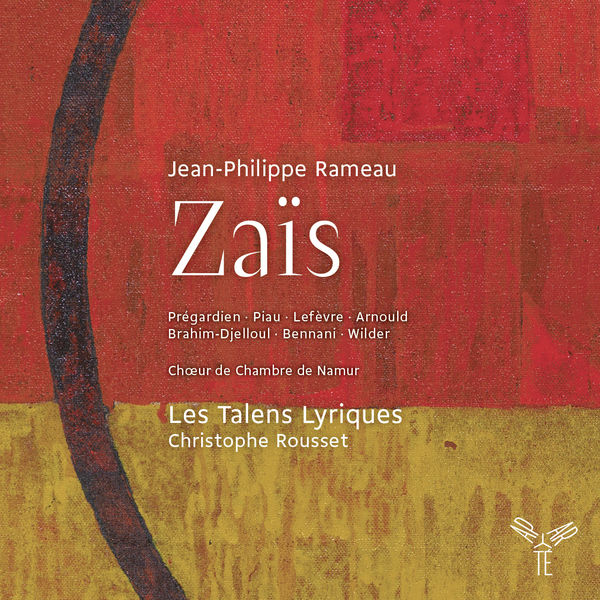
Rameau’s Zaïs – Beautiful French Baroque Opera by Christophe Rousset

Jean-Philippe Rameau

As mentioned previously, I’m anything but a French baroque expert. I’m a big fan of Bach, love Händel’s operas and oratorios, but my main encounter with Rameau has so far been two excellent “best of” albums, the 2014 Le Jardin de Monsieur Rameau by the brilliant William Christie, and the equally beautiful 2013 album by the young soprano Sabine Devielhe with Alexis Kossenko, Le Grand Théatre de l’Amour.

Zaïs (Aparté 2015)

So I had a vague idea of what to expect when I purchased the latest release by Christophe Rousset and his ensemble Les Talens Lyriques.

By the way, I’m not the only one who will discover the beauty of this opera. Unlike many of Händel’s operas that have seen major revivals in the last 30 years, the last time this has been recorded was 40 years ago by one of the fathers of the historically informed practice, Gustav Leonhard.

Whether the story is worth following is up for debate. Luckily I speak French so I am able to follow the singing, but whether you’re actually interested in understanding what the genie Zaïs is up to, well your call. Basically, not surprisingly, he’s after a woman (Zélide), disguises himself as a shepard, and eventually is willing to give up his magic powers to be able to marry her. Luckily, his boss, Oromazès, king of the genies, is so impressed by the sacrifice that he’s ok to immortalize them both. Nice, isn’t it? What is interesting to note is that apparently, similar to Mozart’s Zauberflöte, this is a work inspired by freemasonry, the booklet tells me.

Rameau Zais Christophe Rousset Les Talens Lyriques 24 96 2015

Rousset is  well known for his recordings of Rameau’s harpsichord works. He does a brilliant job leading his baroque ensemble, there is power and drive (check out the dramatic overture), but also always the right level of nuance if required.

Some great singers as well. Sandrine Piau (love her), Julien Prégardien (son of Christophe), and their colleagues, if unknown to me, all do a great job.

This album has been awarded “Choc de l’Année” (their equivalent of album of the year) by Classica Magazine and 5 stars by Diapason d’or.

I wouldn’t go just as far. On my personal scale, Rameau still comes behind Bach and Händel, but he’s climbed some serious steps on my personal appreciation ladder with this album.

My rating: 4 stars (true 5 star playing, but as said above, I still prefer other baroque composers). But you won’t regret buying it, I guarantee!

You can download it here (Qobuz, hoping they survive their current financial difficulties), or here (Prestoclassical)

Classical Life

A classical music blog by music critic Tim Mangan

This Week's Music

Making Classical Accessible

From my Macbook to the Net

Evaporation of my thoughts and observations

Elestra

Author: Artienne

My Life in Music

Playing, Singing and Listening

ArsX3

A brand new journal reviewing books, cinema, music

LawrenceEz's Blog

Creative and Performing Arts: Writing, Classical Music, Photography

Laetitia Strauch-Bonart

Contemporary Politics & Culture

sibling revelry

reveling in all things classical

It's A Raggy Waltz

I collect jazz on vinyl, I dig the Dave Brubeck Quartet, & I write about it

La Musica

By two cousins

thejazzbreakfast

Dishing it out from the heart of England

only jazz

random thoughts about music that matters to me

The Culture Project

Exploring the world of literature, wine, art, music and more.

René Spencer Saller

The music causes me to dream of fabulous empires, filled with fabulous sins.

Breaking Baroque

Blog of Tafelmusik Baroque Orchestra and Chamber Choir

Tasting Nirvana

Eating your Dosha

Shadow of Iris

Poetry, fiction, short stories, more ...

The Immortal Jukebox

A Blog about Music and Popular Culture

April Greene

Writer + Editor

a pianist's musings

A history of your favorite classical music.

Classical music for all

Boris Giltburg's blog

I HEAR VOICES

An orchestra seat in the web space