My favorite Four Seasons by Giuliano Carmignola with the Venice Baroque Orchestra

Another blog post triggered by the series of blind comparisons on Swiss radio, Disques en lice, the French version, this time. They’ve recently compared 7 versions of the world famous Four Seasons.

Antonio Vivaldi and The Four Seasons

I’ve mentioned previously that I’m not a very big Vivaldi fan. On my personal scale, Bach and even partially Händel are miles ahead of the Red Priest. I wouldn’t go as far as Stravinsky who said Vivaldi had written the same concerto 400 times, he has a point though.

But obviously, you just HAVE to have a version of the world most famous program music, the Four Seasons, in any decent record collection (or music collection to be more generic, does anybody still collect records out there?).

Obviously this has been overplayed to death. But if you haven’t listened to it for a while and actually give it a go again with a fresh ear, there are many beautiful elements in there that makes it worth going back to it occasionally. On my personal playlist it appears about 1 per year.

How to choose a version

Obviously, this work has been recorded a gazillion times. I had chosen my personal preference, the recording by Carmignola below, some time ago after comparing about 20 versions. So take this with a grain of salt, obviously there are many other good recordings out there.

In any case, I was obviously very curious if it would appear in the Disques en lice selection, and how it would compare.

Unfortunately, exactly this recording didn’t appear. However, luckily for me, Carmignola actually recorded the Four Seasons twice, and his earlier recording with the Sonatori de la Gioiosa Marca was selected. I was surprised how close these two versions were, in spite of being recorded with 10 years between them.

In a nutshell, that program confirmed my clear preference for Carmignola. The three experts in the program liked it as well, but in the end found it a bit too middle of the road (and they have a point in a way) and preferred in the end the more extreme recordings by Diego Faso’s,  very theatrical, worth checking out, but a bit “too much” for me, and Midori Seiler with the Akademie für Alte Musik, a really good recording but I personally don’t like the sound of Seiler’s violin very much).

Carmignola’s 2nd recording of the Four Seasons
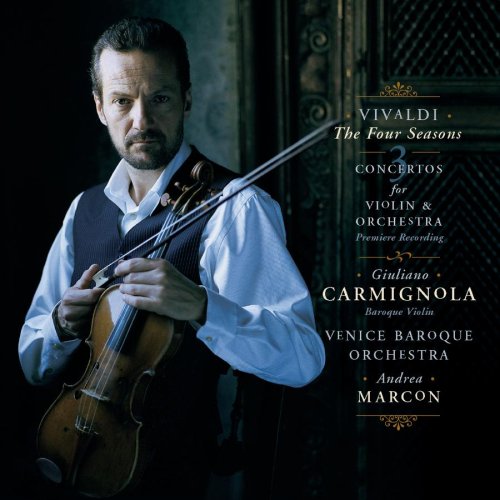
Vivaldi Four Seasons Giuliano Carmignola Andrea Marcon Venice Baroque Orchestra Sony

So what does Carmignola do? Well nothing special, just everything right, and very right. His Guarneri has a beautiful voice, and the Venice Baroque Orchestra plays with just the right level of energy, speed and drive, and a lot of transparency (which by the way luckily is very well recorded, so you get the same transparency transported very well).

Ah yes, and you also get two world premiere recordings of two previously unknown violin concertos as a filler. But in a way, we’re back here to Stravinsky’s 400 times the same, there don’t really disturb, but I really don’t feel you would have missed anything if these had stayed unrecorded for just a little bit longer.

My rating: Four stars (It’s a true five-star performance though, but I just cannot get myself to give 5 stars to Vivaldi, so just ignore the star rating and get it anyhow).
You can get it here (Prestoclassical) and here (Qobuz).

Tord Gustavsen Trio: The Ground – Atmospheric Trio Jazz from Norway

ECM

Enough ink has been spilled on Manfred Eicher’s outstanding Jazz label from Munich, Germany. He obviously was smart enough to land a superstar like Keith Jarrett, but they’ve been such an important driving force for contemporary jazz (and classical music) that you owe it to yourself to check out each new ECM release. To be fair, for me their output is hit and miss, on average every 2nd album I just love, every other is not my cup of tea. But I never regret checking them out.

Tord Gustavsen

Like Helge Lien (reviewed here), Tord Gustavsen comes from Norway. That, plus the fact that they both won an important Norwegian Jazz award, is probably the only apparent commonality between the two (plus the fact that they both have played with Silje Nergaard at some point, probably a mandatory rite of passage for Norwegian jazz pianists).

Lien is much more energetic, and experimental. Gustavsen in his arrangements in a way represents the typical ECM house sound, atmospheric, sometimes a bit detached, and extremely well recorded.

He has released a number of albums, mostly in trio, but also more recently with Saxophone, however, this 2004-5 album remains my favorite album of his.

The Ground

The Ground was Gustavsen’s 2nd ECM album, after the equally beautiful Changing Places, which gave him quite some visibility.

His style is really the opposite of what was developed by Esbjörn Svensson Trio, his neighbor from Sweden. It is very minimalistic, laid back. He has been called “the Satie of Jazz”. This is music to savor late at night, with a glass of single malt (I’d recommend a Caol Ila 12).

Critics around the globe mainly loved this album, calling the music “shimmering” (the Village Voice), and quoting the ” liquid, flowing quality of his motion” (AllAboutJazz). You did find some critical voices as well, usually finding this a little bit too laid back, or some even called it boring.

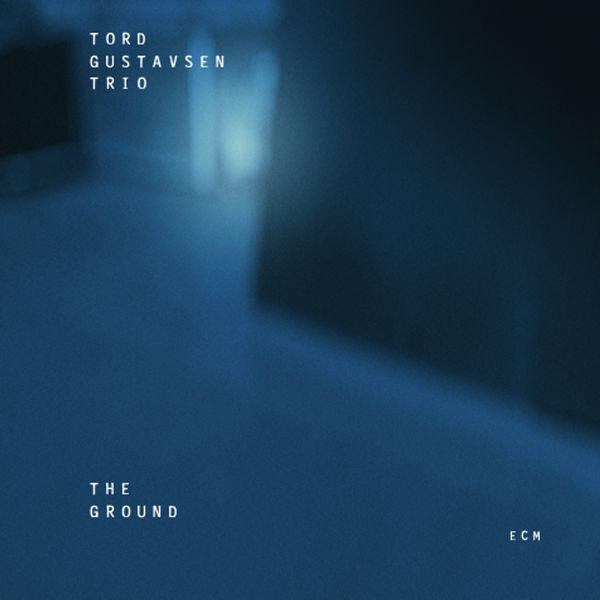
Tord Gustavsen Trio The Ground 24 96 ECM 2005

Well, obviously if you want high energy jazz that brings you to the edges of contemporary creativity, look elsewhere. But if you, like me, appreciate the ECM sound, this album is really worth checking out.

Actually, I’m a big fan of the very minimalistic and modern ECM cover art in general, but on this particular album they really nailed it. The blue, unfocused feeling you get from the cover is exactly what the music will do with you. You’ll get lost in space and time (the Caol Ila certainly helping….).

Note that the recording quality of this album is truly outstanding, so if you have a good hi-fi, you’ll enjoy it twice as much.

My rating: 4 stars

You can download it here (Qobuz) or here (Gubemusic)

Mendelssohn, Shakespeare, and Dausgaard

Mendelssohn

I’ve already written previously that I consider Felix Mendelssohn an underrated composer. Well, here’s another proof, if needed.

Mendelssohn’s opus 21, Ein Sommernachtstraum after Shakespeare’s comedy A Midsummer Night’s Dream, is probably one of Mendelssohn’s most popular works. Not only for the music itself, but obviously because of the most important “hit”, his wedding march.

(Small parenthesis, it took me until after my own wedding to figure out that there are two world-famous wedding marches, this one, and the one taken from Wagner’s Lohengrin, nowadays known from American RomComs as “Here Comes The Bride”.

If you read the story of Lohengrin, and the sad ending with Lohengrin having to leave and Elsa dying, you wonder why everybody wants this to be played at your wedding.

Well, during my own civil ceremony, not realizing I should have been more specific, I just had ordered “The Wedding March” thinking of Mendelssohn, and ended up getting the Wagner one. Well, lesson learned. Lucikly, no swan nor dove has taken me away yet).

Thomas Dausgaard and the Swedish Chamber Orchestra

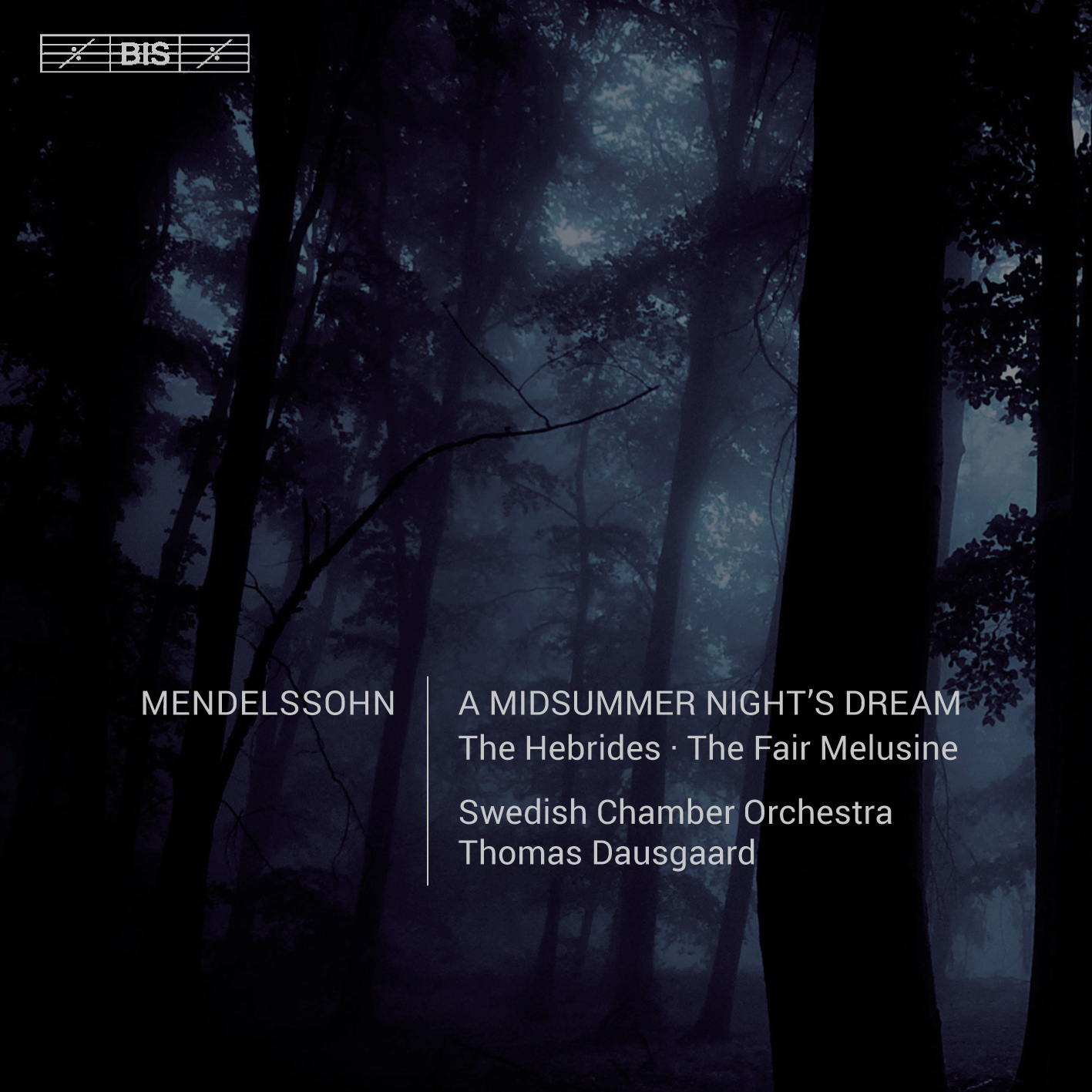
Mendelssohn Midsummer Night's Dream Thomas Dausgaard Swedish Chamber Orchestra BIS 2015

Have I already mentioned how much I appreciate BIS? It is really one of those amazing smaller labels that really care about music, like Hyperion, or Chandos, and that is giving the major labels a hard time. Luckily for us, they care about music and about sound quality, and are always exceedingly well recorded.

I already have a number of Dausgaard’s recordings with the Swedish Chamber, and am especially fond of his Schumann. So when this recording was flagged to me, I didn’t hesitate long, as this is just the right music for this ensemble. Dausgaard’s tempi are always fast, there’s tons of energy and drive, and the smaller size of the Swedish Chamber sounds just right here.

On top of Shakespeare, you get the rather well-known Hebrides overture (beautifully played), and the  Schöne Melusine overture which so far was unknown to me. Obviously, like everything Mendelssohn, it is a charming work and well worth discovering.

My rating: 4 stars

You can get it from the label’s own shop, classical. At the time of writing, the 24/96 version of the album is even discounted. This only lasts some weeks usually, so if you like it, get it now).

UPDATE Jan 4, 2016: Gramophone has just very positively reviewed this album in it’s January 2016 edition. They would love to see this as the beginning of a Mendelssohn symphony cycle, and I wholeheartedly agree!

Bach / Beethoven / Rzewski – Igor Levit Attacks Goldberg and Diabelli – Wow!

Wunderkinder?

The classical music scene, like all other entertainment industries, likes hypes. Quite often those are a bit fabricated, and at a closer look tend to disappoint (sorry, Lang Lang), or their presence in the limelight is very short-lived just to be replaced by the next wunderkind. And I’m afraid, the big classical labels have their share of the blame (well, they have to sell their stuff, too).

That said, in this long list of young stars and starlets, every once in a while you’ll find a true artist. I’ve already written about Rafal Blechacz and Benjamin Grosvenor, both of which will end up in the pantheon of the best pianists of the 21st century, I’m willing to be a lot of money on that.

Igor Levit

My third name in the triumvirate of 21st century giants is Igor Levit. I’ve already praised his outstanding partitas here, and his first album, the late Beethoven sonatas, is also exceptional.

Levit was born in Russia but moved at the age of 8 to Hanover, Germany, where he lives to this day (why somebody would stay in what is probably the dullest city in Germany escapes me, but at least nothing there distracts him from practicing, which is good for the rest of us).

He has now released his third album, a massive 3 CD affair (or what used to be 3 CDs in the pre-download area). It takes some guts to start your recording career on nothing less than Beethoven’s late piano sonatas at the age of 26. Well, with his latest release, he doesn’t attack only one, but two of the absolute summits of the piano repertoire, the Goldberg AND the Diabelli variations. So will he lose his breath in this Himalaya?

Goldberg and Diabelli

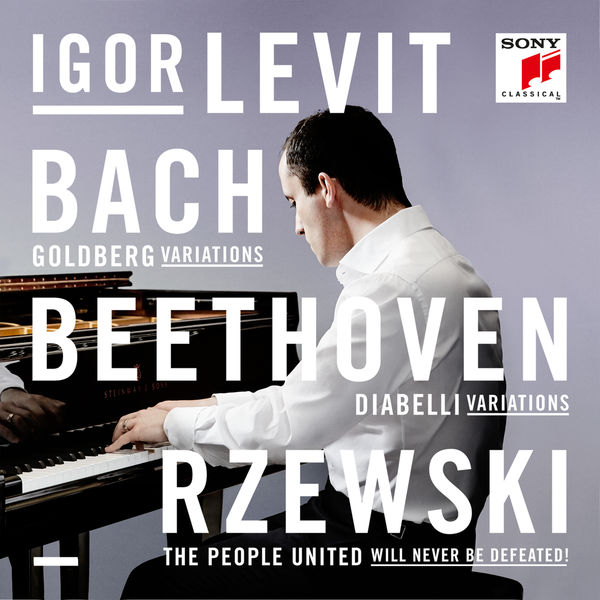
Igor Levit Bach Goldberg Variations Beethoven Diabelli Variations Rzewski The People United Will Never Be Defeated Sony 2015

I’ve already shared my preference on both (see here for the Goldberg’s and here for the Diabelli’s), so how does Levit compare to Hantaï, Schiff, and Staier?

Well, let’s make it quick: this is yet another outstanding album. His Goldberg’s are really among the best I’ve ever heard on modern piano. All you Gould lovers out there, check this out! Really. You may miss Glenn’s humming, but honestly there is nothing else to miss here.

Levit plays with astonishing precision, but at the same time you just hear every note is just there, just at the right moment, with just the right weight. This immediately becomes my go-to version on modern piano (although I still prefer harpsichord here, so will remain loyal to Hantaï nevertheless).

Now to the Diabelli’s. I’ve already given my preference with Schiff’s ECM recording and Staier on pianoforte. And now I immediately have to add this recording to this list.

Again, what wins me over immediately is the precision and timing. And don’t get me wrong, just because I mention precision so much doesn’t mean this is heartless robot playing. To the contrary.

Just to quote some examples: On the slow variations 14 and 20, time just seems to stop. For a moment you are in a different time and space. Absolutely absorbing.

Or take variation 21. moving from fast to slow all the time, which on some recordings can make you feel a bit sea-sick. Not here, any tempo change just comes along completely natural.

You get a glimpse of his virtuosity in the breathtaking speed of variation 27. But Levit is anything but your classical virtuoso, he uses his outstanding technical capabilities only for purely musical purposes, never to impress (although I’d be very curious to hear Levit eventually moving away from Bach and Beethoven and attack Rachmaninov et al, unfortunately he’s already said he doesn’t want to play Chopin as Blechacz does it so well).

I’m not going to comment on the Rzewski, I’m just completely incompetent to add any meaningful comment to any music that goes beyond traditional tonality. That said, this piece has enough moments that make me want to listen to more, which is more that I can say about a lot of other 21st century classical music.

So, overall, yet another absolute must have album from Levit.

My rating: 5 stars

UPDATE Nov 6, 2015: Gramophone agrees with me and gives this album a “Recording of the Month”.

UPDATE Nov 29: My other preferred classical review magazine, Classica, is also pleased and gives this recording 4 stars.

You can get it here (Qobuz) and here (Prestoclassical)

Eeriness or How To Summarize Michael Wollny’s New Release in One Word

Michael Wollny

I’ve already praised his latest live album in my 25 essential Jazz albums. Michael Wollny, 37, is certainly one of the greatest talents in Jazz Germany has to offer these days.

So I was very glad when I was pointed to his latest album he just released, Nachtfahrten (literally, night rides or night drives).

Really, you’re going to say, my last post was about Chopin’s Nocturnes, and here comes another one about music of (or for) the night? Well, this wasn’t on purpose.

Nachtfahrten

In any case, when you listen to this album, think much more Debussy’s nocturnes, or Scriabin, than Chopin. There is none of the peacefulness of the Chopin around, the word that comes to mind listening to this new album is the beautiful English word “eery”, actually, you never feel fully safe listening to this album.

Michael Wollny Nachtfahrten Christian Weber Eric Schaefer ACT 2015

Where does this eeriness come from? Well, very slow tempi, dark harmonics, a very light touch by Eric Schaefer on drums, but all this doesn’t even come close to describing the feelings you’ll get from this album.

The track titles like Nachtmahr, a rather unusual German translation of nightmare,  Feu Follet, French for will-o’-the-wisp, Marion (named after Marion Crane, the blonde victim of the Psycho shower scene), or Metzengerstein, the name of Edgar Allen Poe’s first novel, don’t really help. Well, you get the idea.

There are some slightly lighter titles like Ellen, which is one of the few occasions where the trio gets to show that they are able to swing really well, but even these don’t break the overall dark mood of the album.

Several journalists have asked the question whether this is Jazz, Pop, or contemporary classical. Well, honestly, who cares. It is impressive music, full of a strange and irritating energy, that will draw you into the music. This is anything but background music for a cocktail party. It needs your full attention (and dimmed lights).

My rating: 4 stars

Two videos to give you an example, one with Michael commenting on the album, unfortunately in German only.

You can find it here (Qobuz) or here (Highresaudio)

My Favorite Versions of Chopin’s Nocturnes

Another post on Chopin? Why not, given that the Chopin competition in Warsaw is going on right now, and I’ve mentioned in my previous post on the Préludes how important this competition is.

The Nocturnes

Furthermore, I’ve just had an interesting discussion on the Nocturnes on a forum, which triggered me to listen to several of my Nocturnes again.

The Nocturnes actually are not one single opus, they are individual or coupled words Chopin wrote over nearly 20 years. They share however a common character,  not surprisingly, nocturnal.

Chopin is the name everybody associates with this “genre” these days, but actually other composers (e.g. the Irishman John Fields) have used this title previously.

They are less focused on virtuosity and glamour, but are much more intimate. So you don’t need all the pianistic firepower to shine here, you need delicacy and insight.

Moravec

The are many good recordings out there. Rubinstein has recorded them at least 3 times (my preferred version dates from the 1930s), the Chopin legend Samson François has done a version, Claudio Arrau, Nelson Freire, and many others are worth considering.

However, my personal favorites are Ivan Moravec and Maria  Joao Pires.

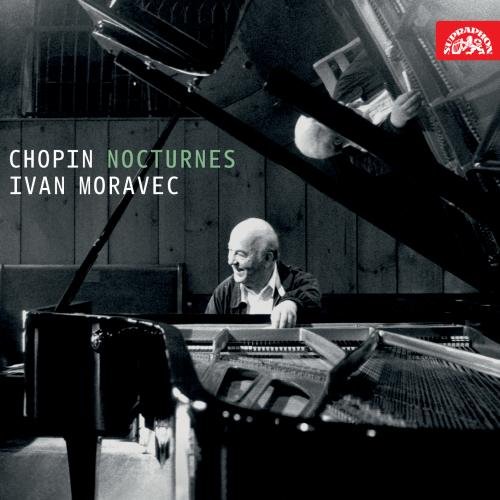
Ivan Moravec Chopin Nocturnes

Moravec’s Nocturnes are legendary, are rightfully so. I’ve never heard the Nocturnes played with more intensity and emotion. The recording is from the 1960s with only average sound quality but you’ll quickly for get that listening to this album. Just outstanding.

Chopin The Nocturnes Maria Joao Peres Deutsche Grammophon

I haven’t been very friendly to Pires in my recent review of her album with Gardiner, but there  is absolutely no fault to be found with this recording. Less intense then Moravec, but even more intimate. You feel like you’re sitting at home late at night in front of your fireplace, having a nice glass of wine in your hand, and she’s in the room playing just for you. This is the image that ever always comes up when I listen to her version.

I wouldn’t want to miss either one of these two outstanding recordings.
My rating for both albums: 5 stars

You can find the remastered Moravec here (Prestoclassical).

Rafal Blechacz’ Magnificent Chopin Préludes

The Chopin Piano Competition

It feels like these days there are so many competitions out there for young musicians. One one hand, that is a good thing, increasing their exposure, on the other hand it is hard for the outside to judge the quality of the different competitions.

Well, there is one competition that clearly has proven its relevance over time, the Chopin Piano competition in Warsaw. First of all it is only held every five years. Furthermore, it’s been around for nearly a century. Several times, the jury was critical enough not go give a first price.

And then, most importantly, are the winners. What is the common ground between Maurizio Pollini, Martha Argerich, Krystian Zimerman, and Yundi Li, beyond the fact that they are all recognized world-class artists today? Well you’ve guessed it.

In 2005, after Krystian Zimerman, another Pole won this competition (you probably know that Chopin, in spite of his French name, was Polish by origin), Rafal Blechacz.

I have added below a link to a Youtube video from Polish television of the recital of the winner. I suggest you ignore the poor image and sound quality and skip the introduction, and go directly to the music. Amazing isn’t it?

(Update Jan 31, 2016: see also my blog post on the winner of the 2015 competition, Song-Jin Cho here)

Rafal Blechacz

I’ve had the pleasure of seeing Blechacz live two years ago, he still looks rather shy and is not your flashy Lang Lang-style virtuoso at first sight. But then he sits down at the piano and you cannot be but amazed but how beautiful he plays.

Chopin’s Préludes

Chopin’s préludes, especially op. 28, are among his most famous works. And in my opinion, they are among the most beautiful pieces for piano ever written. Don’t get me wrong, Beethoven sonatas are amazing, Schubert’s late works are very beautiful, etc. But there is a certain intensity in the Preludes that makes them very special to me.

Obviously, they’ve been recorded many times, both Argerich and Pollini, Blechacz predecessors in Warsaw, have done excellent versions. You also wouldn’t go wrong with Rubinstein (obviously) or Chopin Complete The Preludes Rafal Blechacz Deutsche Grammophon

But my favorite these days is Rafal Blechacz recording on Deutsche Grammophon. Particularly beautiful are no. 13 in F sharp minor, and the Raindrops no. 15 is so delicately played it really reminds you of a light summer drizzle.

My rating: 5 stars

You can find it here (Prestoclassical), both physically and as download.

And as promised above, the Polish TV show on the winning recital at the 2005 Warsaw competition.

Classical Life

A classical music blog by music critic Tim Mangan

This Week's Music

Making Classical Accessible

From my Macbook to the Net

Evaporation of my thoughts and observations

Elestra

Author: Artienne

My Life in Music

Playing, Singing and Listening

ArsX3

A brand new journal reviewing books, cinema, music

LawrenceEz's Blog

Creative and Performing Arts: Writing, Classical Music, Photography

Laetitia Strauch-Bonart

Contemporary Politics & Culture

sibling revelry

reveling in all things classical

It's A Raggy Waltz

I collect jazz on vinyl, I dig the Dave Brubeck Quartet, & I write about it

La Musica

By two cousins

thejazzbreakfast

Dishing it out from the heart of England

only jazz

random thoughts about music that matters to me

The Culture Project

Exploring the world of literature, wine, art, music and more.

René Spencer Saller

The music causes me to dream of fabulous empires, filled with fabulous sins.

Breaking Baroque

Blog of Tafelmusik Baroque Orchestra and Chamber Choir

Tasting Nirvana

Eating your Dosha

Shadow of Iris

Poetry, fiction, short stories, more ...

The Immortal Jukebox

A Blog about Music and Popular Culture

April Greene

Writer + Editor

a pianist's musings

A history of your favorite classical music.

Classical music for all

Boris Giltburg's blog

I HEAR VOICES

An orchestra seat in the web space