Can Heaven Be Captured On Disc? Bach’s B-minor Mass BWV 232

Another entry on Bach. Maybe I should add him to my Blog title.

In any case, I just had to write about the b-minor mass, as it is such a fantastic work of art, one of the absolute highlights of the entire classical repertoire in my view.

Again, if you want to know more about the history, I don’t feel like I need to copy Wikipedia here, the only thing that is a bit particular about the story of this mass is actually that it is a full traditional catholic mass, given that Bach was a protestant composer. Actually, Bach apparently never performed the full thing in one go during his lifetime.

Well we don’t need to care about these historic details, we can just sit back and enjoy this amazing beauty. It is pretty long, around 2h, but there is so much to discover that it is worth putting down our tendency of ADHD (and I’m the first to admit to that disease) and listen to it from back to back. If your ADHD is too much of an issue, just pick out parts, as JSB would have done during his time.

The Great Catholic Mass

What is so special about this work (to give it its formal title “Messe in h-moll BWV232“, or as Carl Phillip Emanuel Bach called it the “Great Catholic Mass”? To me, it is most of all the overwhelming power. I’ve said before that I’m not religious, but  when I hear the choir sing the “Kyrie eleyson” (Lord, have mercy) with full organ backup,  I’m sometimes getting second thoughts. Or take the “Qui tollis”, how the choir interacts with the solo flute, or to give a final example, the beautiful glory of the “Sanctus”. Just amazing.

Karl Richter

The first version I ever had of this was, as many other probably, Karl Richter’s legendary 1961 version.

MI0003369506

There is still a lot of positives about this recording today, including the outstanding soloists (Fischer-Dieskau, anybody?). That said, a lot of time has passed since this version and the last 50 years have completely changed our reception of Bach and other Baroque works, thanks to the movement of “historically informed performance” by Harnoncourt et al. in the 1970s/80s.

Therefore, as much as I appreciate the sheer power of this version, I’m not going back to it that often.

Philippe Herreweghe – omne trium perfectum – All Good Things Come By in Threes

Philippe Herreweghe (yes I know, again as well) has recorded the b-minor mass three times (to quote Herreweghe himself: “If at first you don’t succeed, try, try again”). All three recordings are very good, my preferred one by small margin is the last one from 2011 on his own label Phi. It was recorded in Berlin.
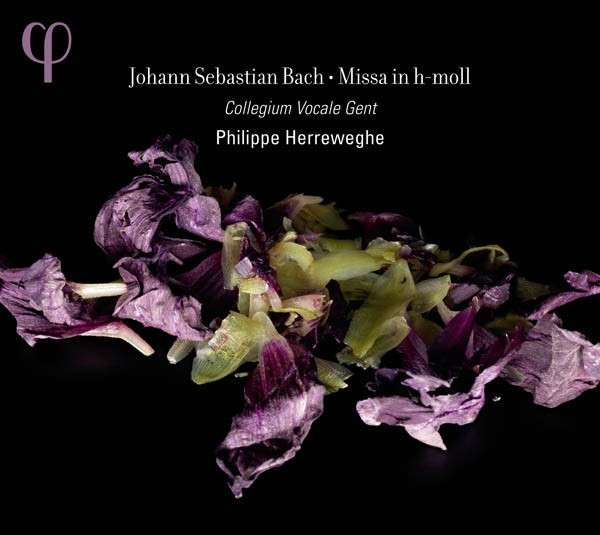
5400439000049

It just gives you the perfect balance, it is not over the top, but extremely intense.

Another excellent alternative, and my other favorite, is Frans Brüggen’s older recording from 1990 on Philips.

1267109913107

Obviously, there are many others that have done an excellent job, from Gardiner (see also here) to Hengelbrock, to Suzuki. But these two recordings are just one tiny notch above the very busy crowd.

5 stars for both recordings.

UPDATE Nov 20, 2015: You’ll find a review of Gardiner’s 2015 recording of the b-minor mass here.


You can find the Herreweghe here (Qobuz)
Bach Cello Suites – Purity at the highest level

While Brahms made it into the title of my blog, as he’s been historically my favorite composer, I may as well have mentioned Bach. I know I’m not very creative in my choice of composers as good old Johann Sebastian figures in so many best of composers lists, but to be fair, he’s there for a reason.

Bach in a way is the founding father of modern music. Anything before him sounds if you listen to it today very “old” (take early Baroque like Monteverdi or Renaissance artists), but most stuff from Bach, if you hear it today, sounds relatively contemporary in the chord changes and harmonies. Is it because the well-tempered scale was invented around that time? Well, more scholarly minds than me have certainly spent a lot of time thinking about it.

You can never have enough Bach. There is barely a month where I don’t add a new Bach album to my collection (latest additions were Claire-Marie LeGuay’s album and Pierre Hantaï’s English Suites). His St. Matthew’s and St John’s passions are a must hear every year doing the Easter period (and again, I’m not religious at all), there is no Christmas without his Oratorio, his Orchestral Suites and Brandenburg Concertos, while being the “pop” music of his time, still please after 100s of times being heard. His b-minor mass is probably the most beautiful liturgical work ever written (ok, it has serious competition, but anyhow). His sonatas for solo violin are about the only way a single violin on its own is enjoyable to listen to.

And now writing about another of his solo masterpieces: the Cello Suites (BWV 1007-1012). Pablo Casals did a great job promoting them, and his recording still is a must have. Unfortunately, from a recording point of view it is really not pleasure.

Steven Isserlis

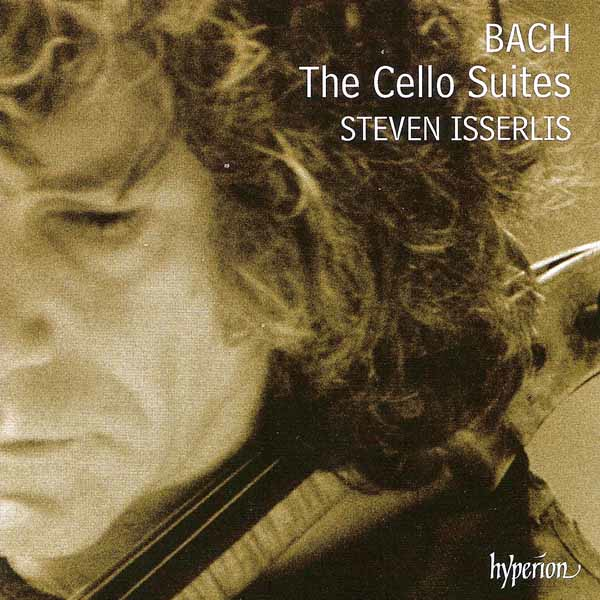
Now which one to choose if you want a contemporary one? A tough decision, given that pretty much every Cello player on earth has played (and often recorded) them. My personal favorite at this stage is Steven Isserlis 2007 recording on Hyperion.

Bach_ Cello-Suiten - Isserlis

Why this out of this extensive catalogue? Well in any case there are many other beautiful versions I appreciate (Starker, Queyras, Wispelwey to name just a few), what makes Isserlis so special to me is the purity of his tone. As both the bible and the Tropicana commercial say, “nothing added, nothing taken away”. He is not excessive in his tempi or phrasing, there is very little vibrato, the sound of the cello is beautiful, clear, but not overly heavy or dark.

In a way, this recording reminds me of one of those famous Japanese Zen gardens, just freshly raked. You don’t even want to touch the little pebbles, fearing to destroy the balance. This is where Isserlis takes me.

EDIT: August 27, 2015: Thanks to the Gramophone Awards 2015, I finally stumbled across the recent version by David Watkin. See my entry here. Watkins recording is a just outstanding, near-perfect version on a historic cello. I still love Isserlis, but this is even better.

Classical Life

A classical music blog by music critic Tim Mangan

This Week's Music

Making Classical Accessible

From my Macbook to the Net

Evaporation of my thoughts and observations

Elestra

Author: Artienne

My Life in Music

Playing, Singing and Listening

ArsX3

A brand new journal reviewing books, cinema, music

LawrenceEz's Blog

Creative and Performing Arts: Writing, Classical Music, Photography

Laetitia Strauch-Bonart

Contemporary Politics & Culture

sibling revelry

reveling in all things classical

It's A Raggy Waltz

I collect jazz on vinyl, I dig the Dave Brubeck Quartet, & I write about it

La Musica

By two cousins

thejazzbreakfast

Dishing it out from the heart of England

only jazz

random thoughts about music that matters to me

The Culture Project

Exploring the world of literature, wine, art, music and more.

René Spencer Saller

The music causes me to dream of fabulous empires, filled with fabulous sins.

Breaking Baroque

Blog of Tafelmusik Baroque Orchestra and Chamber Choir

Tasting Nirvana

Eating your Dosha

The Immortal Jukebox

A Blog about Music and Popular Culture

April Greene

Writer + Editor

a pianist's musings

A history of your favorite classical music.

Classical music for all

Boris Giltburg's blog

I HEAR VOICES

An orchestra seat in the web space