A Disappointment From Andreas Staier – How Can That Be? – My Review of the Bach Harpsichord Concertos

Andreas Staier

Let me start by pointing out that I’m a big fan of Andreas Staier. I’ve praised his Diabelli Variations here, I like his approach to Mozart and Schumann, as well as his album “Pour Passer la Mélancholie”. His 2012 album of the 6 piano concertos by Carl Philipp Emmanuel Bach is outstanding.

Freiburger Barockorchester

The same goes for the Freiburger Barockorchester (who joins Staier on excellent the CPE Bach album above). Their recording of the Bach Orchestral Suites is my go-to version, and the recently started Schumann cycle with Isabelle Faust, Alexander Melnikov and Jean-Guihen Queyras (more about the Melnikov in the next days) is very very good.

The Bach “Piano” concertos

Bach wrote quite a number of concertos for harpsichord. As was not unusual at the time, several of them were probably recycled from other sources, e.g. other solo concertos or cantatas. You’ll find concertos for 1-4(!) soloists.

So far, I still haven’t found “my” version. My currently preferred versions are the 2011 Linn recording of the Retrospect Ensemble with Matthew Halls conducting and playing, Pierre Hantai’s slightly idiosyncratic but very interesting version with Le Concert Français (see my review of his Goldberg variations here), and most of all Café Zimmermann’s energetic readings, which are unfortunately spread over 6 albums (all worth getting anyhow!) and only have the concertos with several instruments.

Therefore, when I heard about this recording by Staier with the Freiburger, I was very excited and already had it on pre-order. Luckily, I was distracted, didn’t get to click on buy, and therefore ended up listening to it on Qobuz streaming first.

Bach: Harpsichord Concertos - Andreas Staier - Freiburger Barockorchester - Harmonia Mundi 2015

I’m happy I did, because at this stage I don’t think I will end up buying this album.Maybe it was just that I was expecting too much, but my “inner ear” has a very different idea on how these concertos should sound.

It pains me to write critical words about musicians that I admire very much, but the album generally sounds a bit heavy and slow, and does not at all the lightweight “swing” I so much love about most recent Historically Informed Performances.

In a way this reminds me of Karl Richter’s way of playing Bach. There is obviously nothing wrong with approaching the music this way, it is just really not my cup of tea.

Obviously this approach, and the sometimes slower tempi also allow for more nuances and there are very beautiful moments in this album, e.g. in the Largo of BWV1056.

But most of the time, this is not for me.

Overall rating: 3 stars. I really didn’t expect ever to give such a relatively low rating to these outstanding musicians. is it just me? I’d really love to hear your feedback especially if you disagree!

EDIT August 28, 2015: I seem to be the odd one out here with my opinion. Classica “Choc”, 5 stars from Diapason, 5 stars from the Guardian. So be warned, I may just be a crazy lunatic in not particularly liking this album. I’d appreciate even more your feedback on this, as after 4 more listenings, I stand by my opinion. Please tell me if I need a new pair of ears!

EDIT Oct 11, 2015: Just reading the review in the October issue of Gramophone, and at least Jonathan Freeman-Atwood seems to have heard what I’ve heard. To quote: “If you’re looking for fun, abandon, lyricism, radiant lift off […] and luminosity, then maybe this one is not for you”. He’s spot on, that’s exactly what’s lacking for me.
A second addendum to Diabelli – this time from Gramophone

Diabelli and Gramophone

Following up to my own post on the Diabelli variations and the addendum with the input from Classica here, now my other favorite classical music magazine, Gramophone, in their recently released August edition, has tried to identify the best version of the Diabelli-Variations.

Andreas Staier

I’m glad to report that my personal preference, Andreas Staier, gets a special mention as “Period-Instrument Choice”, and therefore one of the four recommended versions out of more than 80. Staier’s ECM also gets a honorable mention.

A live recording from Rudolf Serkin gets the “Historic Choice”, Olli Mustonen’ RCA recording get’s the “Iconoclastic Choice” (the recording is on Qobuz streaming, so I’ll check it out later).

Top-Choice

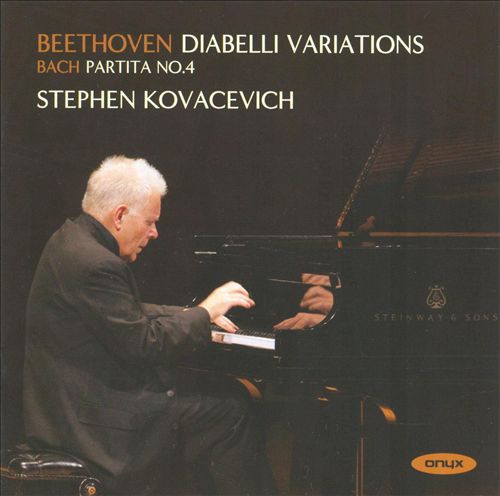
But their top-choice unfortunately is on the Onyx label, which is more restrictive on streaming, so I haven’t heard it yet. It is the 2008 recording by Stephen Kovacevich. Given that he started his career with this work in 1961, I’m not too surprised about this choice. Worth checking out, and on my list to purchase in the near future.

Stephen Kovacevich Ludwig van Beethoven Diabelli Variations Onyx 2008.

My Reflections on the 2015 Gramophone Award Nominees – Part I – Instrumental

Gramophone Award Nominees

The Gramophone awards nominees are now officially declared. This award is probably among the most prestigious award in classical music (beyond the obvious Grammy), so it is always interesting to see who’s in.

As said before, I don’t always agree with Gramophone but their opinions are always worth checking out.

If you have an iPad, you can download the Gramophone magazine app (the primary way I read the magazine these days, no shipment, no paper wasted) and get the Gramophone awards nominee issue for free. It’s worth checking out.

Let me comment on some recordings I know well and also play Oracle of Delphi who will eventually win.

Instrumental

There are four album in here I own or have heard, three of which I’ll be talking about here.

Bach’s English Suites with Piotr Anderszewski

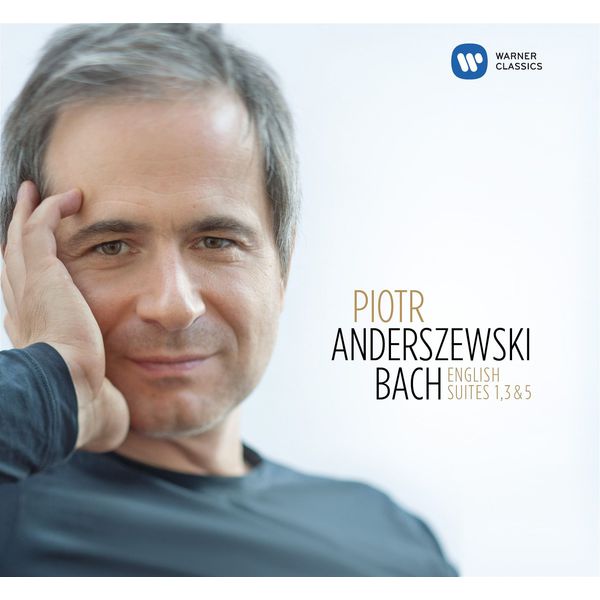
Piotr Anderszewski Bach English Suites 1 3 5 Warner Classics

Well this one is a typical example where I don’t agree with Gramophone.  I can’t really put my finger on it but this album just doesn’t excite me. Maybe it is the tempo, maybe it is the touch, don’t know. Bach on a modern piano is always tricky, you really need to justify these days why you’d use the “wrong” instrument (instead of a harpsichord or similar).

My rating: 3 stars

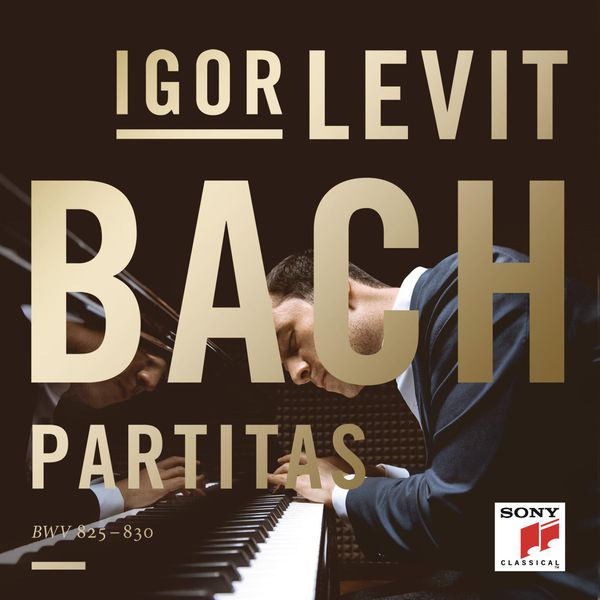
Bach: Partitas – Igor Levit

Igor Levit Bach Partitas Sony Classical

This album, however, is a typical example of getting it just right. I don’t mind one second not hearing a harpsichord. Levit is an extraordinary talent; his previous recording of the late Beethoven sonatas was outstanding as well.

I’ve been listening to this times and times over, it’s been replacing even Perahia as my go-to version. So this album to me is a hot contender to win this category.

My rating: 5 stars

However, if I had to bet, I’d say the following will be the category winner (and not only because let’s say Gramophone sometimes seems to have a certain preference for their countrymen):

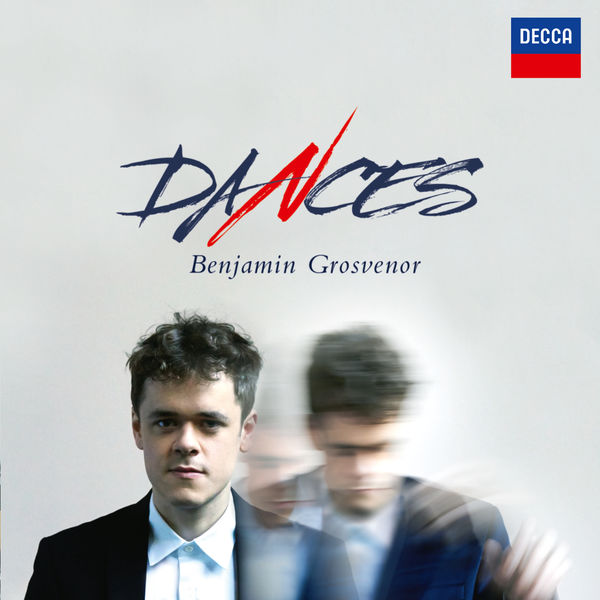
Benjamin Grosvenor – Dances

Benjamin Grosvenor Dances Decca Classics

5 years younger than the still very young Levit (years of birth 1992 and 1987 respectively), Grosvenor could be qualified as a Wunderkind. What a horrible term.

Actually, it really goes beyond this, he is just a truly brilliant artist who just happens to be very young. His previous album Chopin/Liszt/Ravel was truly fantastic, and his new release with “Dances” from Bach via Granados to Scriabin is another example of what he can achieve. With him, even relatively useless (sorry) pieces like Schulz-Evler’s questionable version of An der schönen Blauen Donau become enjoyable. (Ok, he could have skipped the Boogie-Woogie…).

An absolute must have!

My rating: 5 stars

Also nominated are a live recital of Mahan Esfahani (haven’t heard), Sokolov’s Salzburg recital (his Chopin Preludes here really aren’t my cup of tea, 3 stars), and La Fauvette passerinette by Peter Hill (haven’t heard either).

So what are your thoughts and ideas? Who would you have chosen?

Claire-Marie Le Guay’s Gentle and Perceptive Bach

Bach again, really? I am reviewing too much Bach. But then again, can anybody have too much Bach? Probably not. To be fair, it took me a while to really appreciate Bach. In my youth, I barely listened to him, and my handful of experiences playing him myself made matters worse (I was never a good piano student, to lazy to practice). I assume the beauty and clarify of Bach is something that really needs to grow on you over time. In my thirties (I’m now in my forties) i started realizing that I started to listen more and more to Baroque music, and particularly Bach. It wasn’t a conscious choice, it just happened naturally. And today I literally just can’t get enough (ha, do you have Depeche Mode playing in your head now as well? I do every time I write this phrase in English).

Claire-Marie Le Guay

I must admit I hadn’t noticed her before this “Choc” by Classica some months ago, released on Mirare in 2015. But then I saw her teachers included Alicia de Larrocha and Andreas Staier, I got curious. She has won several competitions and has notably quite busy doing chamber music.

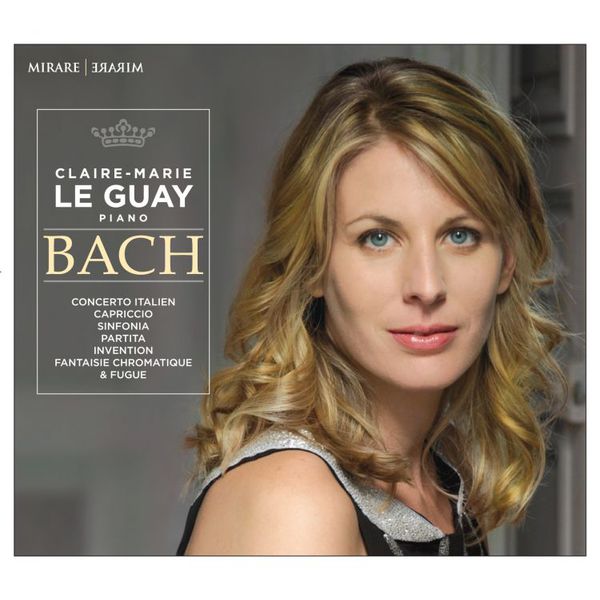
Her Bach album

Claire-Marie Le Guay - Bach Mirare 2015

As usual, when a French magazine reviews a French artist and sells him or her as “the best thing since sliced bread”, I usually take it with a grain of salt. But when I checked out this particular album, I just had to get it pretty much immediately. And this in spite of me being more and more skeptical about Bach on a modern Steinway. What sets this album apart is her touch. Delicate, almost caressing. Bach can be quite tough sometimes, or mechanical, if played by the wrong musician. None of this is here. And in spite of all this gentleness, the music is fully there. You don’t miss any single counterpoint turn in the beautiful Italian Concerto, and even the Chromatic Fantasia BWV903, which sometimes can be a bit academic, is just drawing you in.

Overall rating: 4 stars (I hesitated a long time whether I should give 5 stars, but somehow my subconscious tells me only harpsichord Bach should get the best possible rating, which is probably bullshit)

You can get it here as CD and here as download

Bach’s Goldberg Variations and The Brilliant Pierre Hantaï

The Goldberg Variations

I’ve already mentioned the written about the Diabelli-Variations, this K2 of the piano variation catalogue. Now I’m attacking the Everest, and all this without Sherpa.

Well to be fair, all I need to do is write about it, I wouldn’t be able to play any of them beyond the Aria in any case. So probably no Sherpa needed.

What makes the Goldberg-Variations so special? I still have a hard time putting my finger on it. Obviously, you’ll have heard it in a gazillion of movies, whenever the director want to portrait a hero as particularly intellectual, the Goldberg’s come up sooner or later. Hannibal Lecter may only be the most prominent of them. In any case, there is something just extremely fascinating how Bach takes this extremely simple melody and deconstructs it 32 times, in an almost analytical cubist way.

Glenn Gould – yes, there’s him, too

You can’t write about the Goldbergs without mentioning Glenn Gould, one of the first pop stars of the classical world (2M copies sold may not impress Madonna, but still). He recorded the variations twice, once in 1955, really helping this work to become world-famous, and once again in 1981. Fans have been arguing forever which version is better. Personally, I prefer the 1981 version, that said, the Goldbergs are somehow really something I appreciate much more on harpsichord. Plus, his humming with the music, I kind of tolerate this with Keith Jarrett, but for classical music it is really annoying.

Anyway, enough ink has been spilled on these, let me go to my personal preferred artist for these, Pierre Hantaï. (If you prefer the Goldbergs on a modern piano, check out Angela Hewitt, Andras Schiff, or Murray Perahia).

Pierre Hantaï

Hantaï is a French harpsichord player and conductor who has worked with all the great masters of baroque, from Gustav Leonhardt to Sigiswald Kuijken to Jordi Savall. Unfortunately, he records way to rarely, so you will find only a handful of albums from him. This probably hasn’t helped his international reputation, he seems to be still relatively unknown in the non-French speaking world. This is a real pity.

PIerre Hantai Goldberg 1992 recording, Naive reissue

Given how few solo recordings he’s made, you’ll be surprised to see that he has recorded the Goldberg variations twice, in 1992 (recently re-released on the Naïve label) and in 2003 on the Mirare label.

Pierre Hantai Goldberg variations Mirare 2003

Which one to get? Honestly, I don’t know, and I’m going to bail out and say, if you can afford it, both. Both are performances that trump pretty much all of what I’ve heard elsewhere. 1992 is occasionally more energetic, 2003 more reflective, but both are just superb.

In the booklet to the 2003 edition it is mentioned that the Goldberg’s are a work that “he’s played more often than any other since childhood”. Malcolm Gladwell in his book Outliers has written about the 10,000 hours it takes to truly master something. While this claim has recently been challenged, I suppose this is still one of those examples of this rule.

My rating: 5 stars for both

You can find the recordings here and here as downloads and here in physical form (1992 recording only, the 2003 seems to be harder to find on CD).

Georg Friedrich Händel – beyond the Messiah

I’ve already mentioned before that my personal ranking of Baroque composers is Bach first, Händel is second.

So let me write about no. 2 on the list. Händel is German, although he spent quite a bit of his professional life in London and is somehow adopted English, so probably you’re more familiar with the George Frideric spelling of his name.

Most well-known classical music pieces

If you ask the average guy on the street whose typical musical fare is contemporary pop music, chances are he or she has at least heard a couple of ultra-famous classical pieces. These often include the “Da-da-da-daaaa” from Beethoven’s 5th, Bach’s Toccata BWV565 etc. etc.. Somebody even bothered to compile a top 10. Not surprisingly, this top 10 list includes our friend Georg Friedrich (sorry, I’ll stick to his birth name). Guess which one it is? Obviously: “Hallelujah” from the Messiah.

I’m not such a big fan of the Messiah, it’s good, but I can only listen to it ever so often. But it summarizes one of the two things Händel does really well: Glorious Oratorios, often with festive character. His two other rather well-known pieces, the fireworks- and water music, are of similar character.

The other thing Händel is really great at, is related, amazing stage drama. His Baroque operas and oratorios (many oratorios are actually operas, but weren’t allowed to be called opera as the pope Clement XI had some issue with this form of entertainment). I’ll certainly post more about the baroque operas later.

Music for Queen Caroline

3149028063127_600

Back to the festive music. Obviously key clients for composers at the time were royals, and royal festivities like the arrival of a new queen, the coronation, or even funerals, required the appropriate musical soundtrack.

This album from William Christie and his Les Arts Florissants ensemble from 2014 brings you all three. Like many others, William Christie, the American turned French conductor has created his own label for this release. By the way, usually you can buy most of Christie’s releases blindly, he’s rather ever done a bad album and many are outstanding. His Messiah is still my personal reference version.

You’ll get three oeuvres on this album, all related to Queen Caroline (another German in the long history of German blood in the British royal family by the way): The Coronation Anthem, a Te Deum that was even nicknamed after her, and her funeral music.

All three are just outstanding pleasure to listen to, and William Christie does an amazing job here. This is 1h12 packed with emotions, with very little time to relax. Furthermore, this album is very well recorded, which makes the impact on a good stereo even stronger.

Highly recommended.

My rating: 4 stars

(this is one potential 5 star candidate, but I’ve only acquired it recently and need to give it some more spins before making u p my mind).

Update Oct 2016: I’ll stick to the 4 star rating. It is really nice to have but not essential.

What is your favorite piece by Händel?

Telemann – beyond Tafelmusik

Baroque Composers

Baroque composers. What comes to mind spontaneously? Bach, Vivaldi, Rameau maybe? And yes, if you remind people, specifically, there’s also Telemann. Personally, my “ranking” of baroque composers is very simple: Johann Sebastian Bach,  After that, with some distance, Georg Friedrich Händel. Then for quite some time pretty much nothing else, and finally, all the rest.

Let me explain. Vivaldi is “nice”, but the nasty saying that he composed only one violin concerto – but 200 times – has some truth to it. I usually get bored pretty quickly. Then there are the composers I still don’t “get”. I’ve never heard any Scarlatti (Alessandro and Domenico) that personally touched me. For the French baroque stars with Rameau, Lully, etc., well, I’m currently in learning mode. For Purcell, I love Dido and Aeneas, but still need to dig much deeper into the rest of this oeuvre.

Georg Philipp Telemann

And then there is Telemann. He probably didn’t do himself a favor by composing the famous “Tafelmusik” (literally “table music”, apparently a marketing term invented by Telemann himself to better sell his music). I wouldn’t be surprised if I’m not the only one who uses Telemann’s Tafelmusik as background entertainment when receiving guests for a dinner party (usually after preparing a rather fancy dinner decoration including lots of chandeliers that even Mr Carson of Downton Abbey would approve of). In a nutshell, the 18th century equivalent of the latest Café Del Mar mix. But I pretty much didn’t know anything else from him, beyond the infamous recorder concertos (remember that horrible instrument that many kids, including me, get tortured with for educational purposes).

So as you can see, Telemann didn’t have an easy start with me. However, when Classica Magazine gave a “Choc Classica” (their way of saying 5 stars) to a Telemann album in the latest issue of the magazine, I was intrigued. I figured I had to get it just to revisit my Telemann bias.

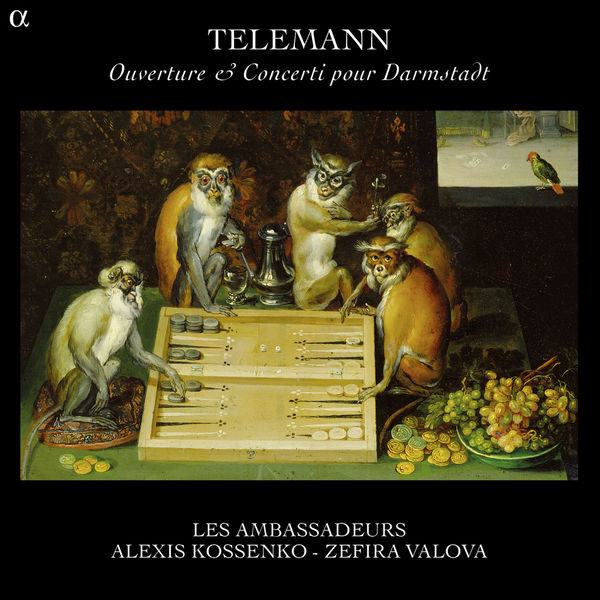
3760014192005_600

I’m glad I did, in spite of the weird monkeys playing backgammon cover, and the fact that I hadn’t (consciously) heard of any of the artists on this album. I’ve been very positively surprised by several albums from the French Alpha label in the past, including the outstanding 6-album Café Zimmermann Bach cycle, so that helped a bit.

Alexis Kossenko – Les Ambassadeurs

Alexis Kossenko is a French flute player that founded the period instrument orchestra “Les Ambassadeurs” around 5 years ago, mainly composed of younger musicians. I only noticed after purchasing this that I already had another excellent album with this orchestra, the recent Sabine Devieilhe Rameau recital “Le Grand Théâtre de l’Amour” on Erato, purchased relatively recently as part of my self-educational efforts with regards to French baroque composers (see above).

What do you get on this album?

An overture, a violin concerto, two flute concerto, and a flute/violin double concerto. The latter is really my favorite of the album. All played with so much energy but at the same time attention to detail, it is a pure pleasure. This music is no b-minor mass obviously, but certainly on par with the Brandenburg concertos or Overtures by my admired Johann Sebastian. I really need to explore more Telemann, and certainly more of Les Ambassadeurs. As a bonus, Alpha is doing a great job in making their recordings sound very well, so if you have a good hifi, you’ll certainly enjoy this album even more.

Overall rating: 4 stars.

Classical Life

A classical music blog by music critic Tim Mangan

This Week's Music

Making Classical Accessible

From my Macbook to the Net

Evaporation of my thoughts and observations

Elestra

Author: Artienne

My Life in Music

Playing, Singing and Listening

ArsX3

A brand new journal reviewing books, cinema, music

LawrenceEz's Blog

Creative and Performing Arts: Writing, Classical Music, Photography

Laetitia Strauch-Bonart

Contemporary Politics & Culture

sibling revelry

reveling in all things classical

It's A Raggy Waltz

I collect jazz on vinyl, I dig the Dave Brubeck Quartet, & I write about it

La Musica

By two cousins

thejazzbreakfast

Dishing it out from the heart of England

only jazz

random thoughts about music that matters to me

The Culture Project

Exploring the world of literature, wine, art, music and more.

René Spencer Saller

The music causes me to dream of fabulous empires, filled with fabulous sins.

Breaking Baroque

Blog of Tafelmusik Baroque Orchestra and Chamber Choir

Tasting Nirvana

Eating your Dosha

Shadow of Iris

Poetry, fiction, short stories, more ...

The Immortal Jukebox

A Blog about Music and Popular Culture

April Greene

Writer + Editor

a pianist's musings

A history of your favorite classical music.

Classical music for all

Boris Giltburg's blog

I HEAR VOICES

An orchestra seat in the web space