Oops, He Did It Again: Benjamin Grosvenor with Another Great Album!

Benjamin Grosvenor

I’ve mentioned Benjamin Grosvenor several times already, including here, and here in my comments about last year’s Gramophone Awards. If you read through these reviews and comments, you’ll quickly see I’m a huge fan. This young artist (he’s only 24!) is really spectacular.

So far, I have yet to hear a disappointing album from him.

So my hopes were high when he released his new album, Homages.

Homages (Decca 2016)
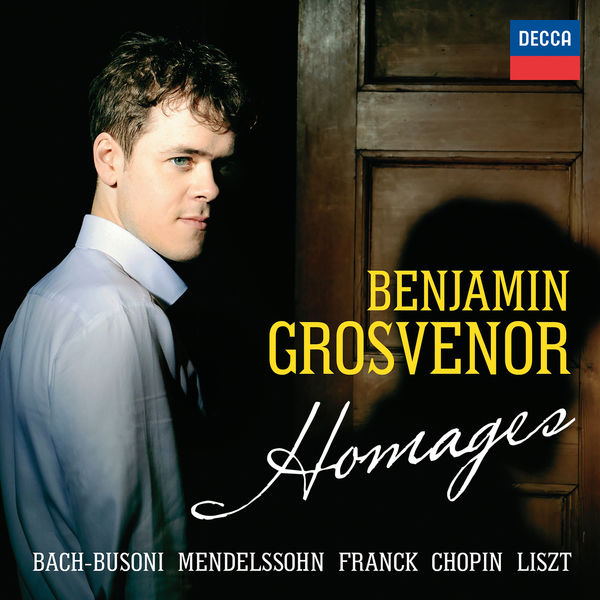
Benjamin Grosvenor Homages (24/96) Decca 2016

Grosvenor likes albums mixing several composers around a theme. His last album was called Dances, now we’re talking about Homages.

And we start strongly, with Busoni’s piano setting of the famous Chaconne from Bach’s suites for solo violin. This is rather rarely played, which is a pity, as for once a transcription actually adds something (more often than not, they do not work that well for me). You really get the full bandwidth of this beautiful piece, and the outstanding beauty of Milstein’s legendary interpretation comes to mind, while Busoni’s fireworks around the well known melody really works. This sounds almost like Brahms (who by the way also transcribed the Chaconne, but into a version for left hand only), or actually even occasionally like Rachmaninov. A true showpiece, but without any negative connotation that is usually associated with this term.

From this grandiose opening, we move to another rather unfamiliar music, Mendelssohn’s preludes & fuges op. 35. Mendelssohn was essential for the “rediscovery” of Bach in his time, and you can hear the spirit of Bach in these little-known, but beautiful gems.

From these Bach homages, we move on to more traditional romantic piano music with Chopin and Liszt, an area where Grosvenor feels very much at home.

The booklet tries to give some story around why Chopin’s beloved Barcarolle and parts of Liszt’ Années de Pélérinage are homages as well. I must admit I don’t care that much, I just love his playing.

The Barcarolle op. 60 is one of my all time favorites from Chopin. I heard it some years ago by Krystian Zimerman live, in what remains my personal reference. However, this interpretaion really stands on its own, and I like it a lot.Liszt’s Venezia e Napoli is also really well played.

He closes off with Ravel, as already in his Decca debut, focusing Le Tombeau de Couperin, where the homage aspect is already evident from the title.

I wonder if Grosvenor ever will record e.g. an entire cycle or work, or if he’ll stick to this kind of “concept” album. I wouldn’t be surprised if he sticks to the latter, which is great, because it gets me to discover music I wouldn’t necessarily have discovered without him.

Keep going!

My rating: 4 stars (to clarify: this is absolutely 5 stars playing, but not always essential repertoire)
You can find it here (Qobuz) or here (Prestoclassical)

Mendelssohn, Shakespeare, and Dausgaard

Mendelssohn

I’ve already written previously that I consider Felix Mendelssohn an underrated composer. Well, here’s another proof, if needed.

Mendelssohn’s opus 21, Ein Sommernachtstraum after Shakespeare’s comedy A Midsummer Night’s Dream, is probably one of Mendelssohn’s most popular works. Not only for the music itself, but obviously because of the most important “hit”, his wedding march.

(Small parenthesis, it took me until after my own wedding to figure out that there are two world-famous wedding marches, this one, and the one taken from Wagner’s Lohengrin, nowadays known from American RomComs as “Here Comes The Bride”.

If you read the story of Lohengrin, and the sad ending with Lohengrin having to leave and Elsa dying, you wonder why everybody wants this to be played at your wedding.

Well, during my own civil ceremony, not realizing I should have been more specific, I just had ordered “The Wedding March” thinking of Mendelssohn, and ended up getting the Wagner one. Well, lesson learned. Lucikly, no swan nor dove has taken me away yet).

Thomas Dausgaard and the Swedish Chamber Orchestra

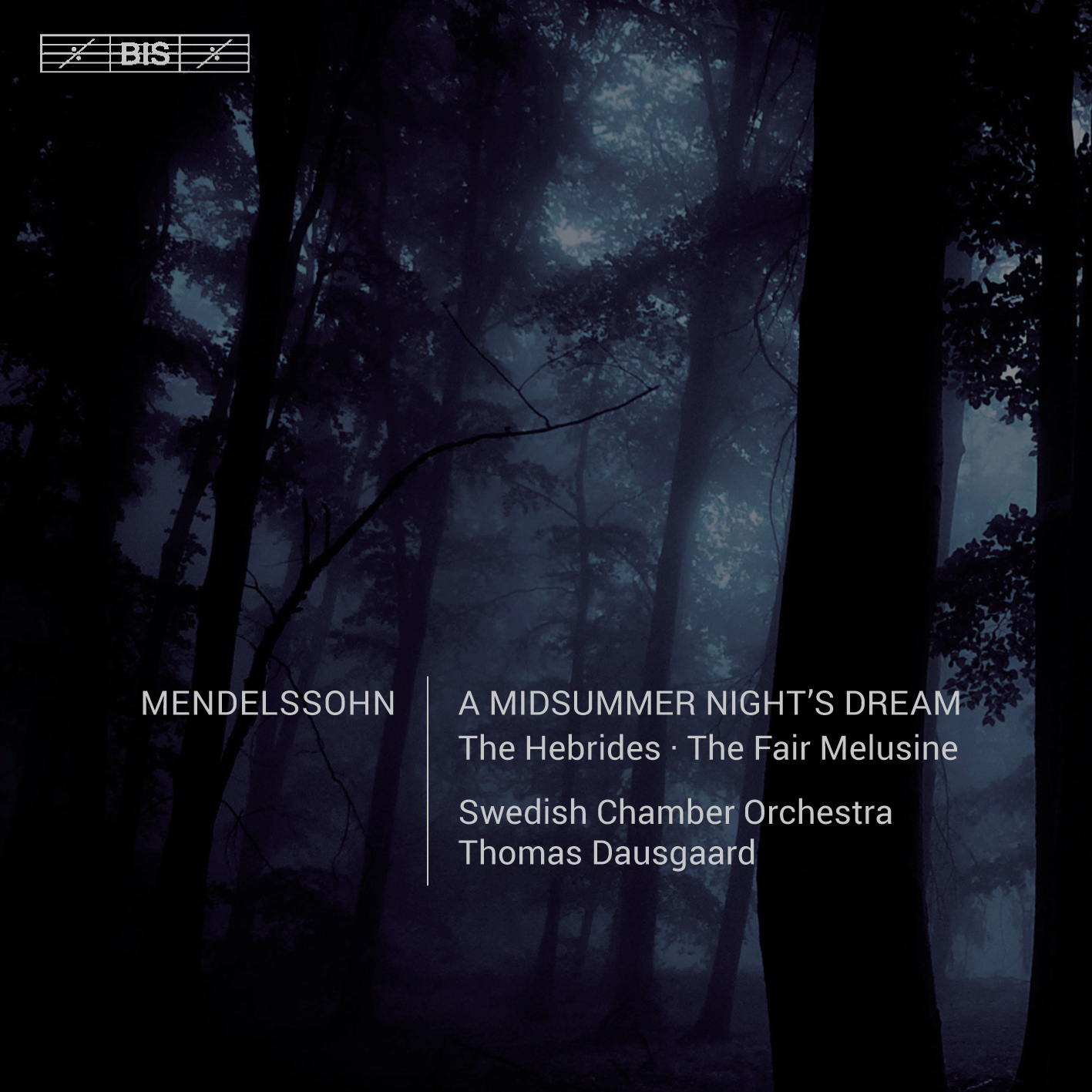
Mendelssohn Midsummer Night's Dream Thomas Dausgaard Swedish Chamber Orchestra BIS 2015

Have I already mentioned how much I appreciate BIS? It is really one of those amazing smaller labels that really care about music, like Hyperion, or Chandos, and that is giving the major labels a hard time. Luckily for us, they care about music and about sound quality, and are always exceedingly well recorded.

I already have a number of Dausgaard’s recordings with the Swedish Chamber, and am especially fond of his Schumann. So when this recording was flagged to me, I didn’t hesitate long, as this is just the right music for this ensemble. Dausgaard’s tempi are always fast, there’s tons of energy and drive, and the smaller size of the Swedish Chamber sounds just right here.

On top of Shakespeare, you get the rather well-known Hebrides overture (beautifully played), and the  Schöne Melusine overture which so far was unknown to me. Obviously, like everything Mendelssohn, it is a charming work and well worth discovering.

My rating: 4 stars

You can get it from the label’s own shop, classical. At the time of writing, the 24/96 version of the album is even discounted. This only lasts some weeks usually, so if you like it, get it now).

UPDATE Jan 4, 2016: Gramophone has just very positively reviewed this album in it’s January 2016 edition. They would love to see this as the beginning of a Mendelssohn symphony cycle, and I wholeheartedly agree!

Two Recent Releases I Really Don’t Like

What “Not Good” Looks Like

I’ve been writing a lot about albums I really like, just witness the number of 4 and 5 star reviews (you can click on the link on the side bar, categories to find them) I’ve recently written (for more information about my personal rating scale, see here)

However, for this site to be useful to anybody, I strongly believe I also need to write about stuff I don’t like that much, so you can check if your taste really agrees with mine.

Too many reviewers seem to have their rating scale only between 4 and 5. How do you really separate the good from the bad this way? Obviously, a  big part of this is just selection bias.

I assume, professional reviewers are not too much unlike me and much more prefer to write about stuff they like vs. stuff they don’t  like. Same has happened on my site so far, with few exceptions.

My two main sources of classical reviews, Gramophone (UK) and Classica (FR) don’t shy away from low ratings, that’s what I like about them. Gramophone doesn’t use a rating scale beyond the Editor’s Choice, but you can clearly read from the text whether they are enthusiastic or not.

And Classica really doesn’t shy away from using 1 stars, given the two examples below. And unfortunately, I wholeheartedly agree with their assessment.

Dudamel, Barenboim and Brahms

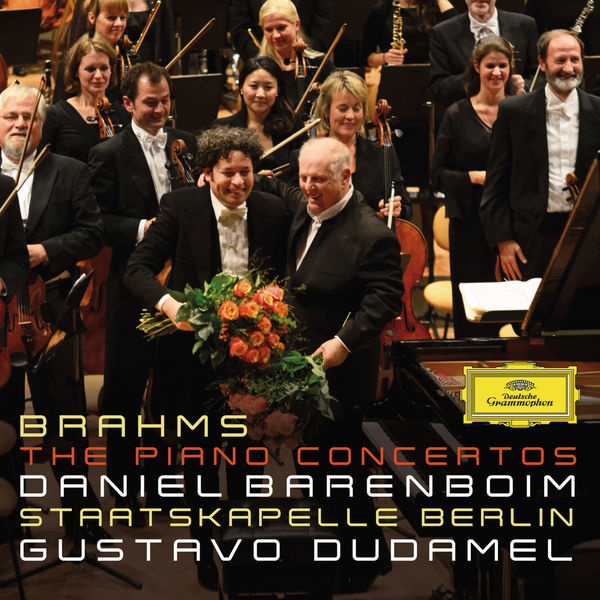
Classical uses a 4 star plus “Choc” scale, which equals about my 5 star system. However, in their most recent October issue, I’ve seen a new rating of a hollow star which I had never noticed before, for this recent DG release of Barenboim for once back at the piano, with the young superstar Dudamel. Unfortunately, I must agree with Classica here. I really cannot find any positive element to these recordings of the two concertos that I love so much (how weird I haven’t mentioned them yet on the blog).

Honestly, 1 min into the opening of the first piano concerto I had enough; there was nothing at all of the drama and desperation that so much impressed me when I heard this first at the age of 17. I know Dudamel has many fans, but I have yet to hear a recording of him that I really like (admittedly, I’ve only heard a few). And when Barenboim comes in, it doesn’t get any better. I’m really thankful for streaming these days that let’s you listen to recordings without having to buy them, I’d really have major regrets for this one.

Brahms Piano Concertos Dudamel Barenboim 2015

My rating: 2 stars (1 star for me really means un-listenable, and Brahms will always be Brahms, even if butchered like here).

For the Brahms concertos, you have many good alternatives, from pretty much every recording that Georges Szell ever made of them (be it Fleischer, Curzon, or Serkin), to Chailly with Freire for a more contemporary one.

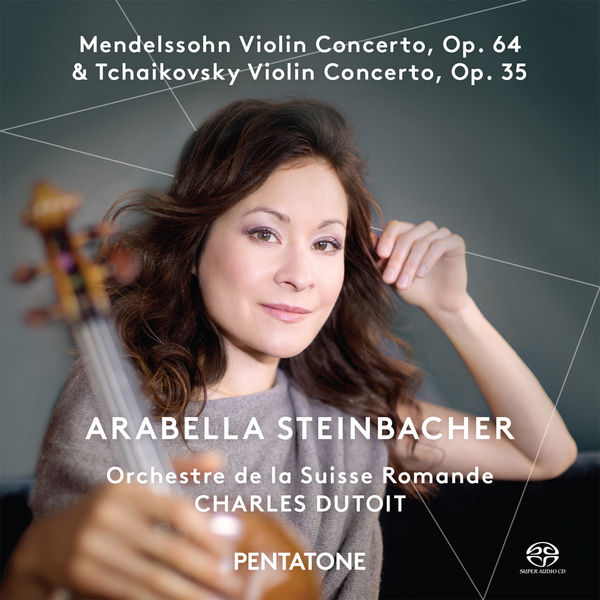
Arabella Steinbacher Plays Mendelssohn and Tchaikovsky

Arabella Steinbacher Mendelssohn Tchaikovsky Violin Concertos Orchestre de la Suisse Romande Charles Duitoit Pentatone

Here’s another disappointment: Arabella Steinbacher is a truly great violin player. However, from the opening moments of the Mendelssohn I knew something was very wrong. A very sweet tone with a lot of vibrato, but very little energy behind it.

And in comes the orchestra (let me open a little parenthesis here for fun: Mendelssohn is one of the very few orchestras that starts with the soloist, not with the orchestra, there’s an urban legend that a violinist player was relaxed at the beginning of the concert, assuming he’ll have to play Beethoven. The conductor gives him signal after signal, but the violinist doesn’t get it. Finally, the conductor desperately starts, the violinist after the first second realizes his mistake and raises up the violin literally last-minute. Parenthesis closed. If somebody has a source that this has really happened, please let me know) and it really doesn’t get any better.

The Tchaikovsky is equally uninteresting unfortunately.

Classica agrees with me, giving this recording a rather brutal 1 star and talking about a “lack of engagement” which nicely summarizes my feelings as well.

My rating: 2 stars (again, 1 star would be too brutal, I can listen to this, I just don’t want to).

Excellent alternatives are Janine Jansen on Decca for the Mendelssohn , and Julia Fischer for the Tchaikovsky (like the Steinbacher, on Pentatone).

Mendelssohn’s Lieder Ohne Worte in Two Beautiful Versions by Perianes and Brautigam

Felix Mendelssohn

One of those famous underrated composers. I’ve read many times that Mendelssohn is “only” beautiful. Arrrgh! Even if his music were “only” beautiful, I’m sorry, but what would be wrong with this? Luckily, I don’t even agree with the “only”. Proof is here: these wonderful “Songs Without Words” – can somebody truly listen to this and call it “only beautiful” and not see the lyric depth?

These songs, actually 8 books of them, were written during nearly the entire lifetime of the composer.

There are many recordings of these available, one of the artists who is probably most closely associated with them is Daniel Barenboim.

However, I’d like to highlight here two very recent recordings from 2014 and 2014 respectively.

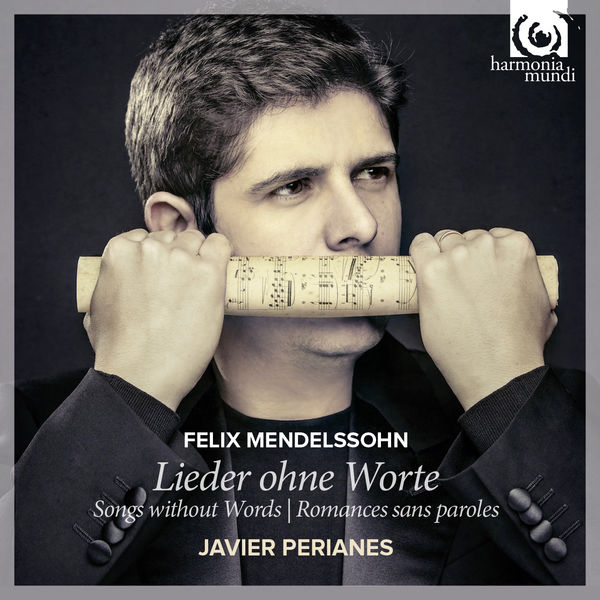
Javier Perianes

I have already reviewed his excellent Grieg recording here. Surprisingly enough, I had missed this great 2014 recording on Harmonia Mundi of a selection of the Lieder one Worte. Luckily, after discovering the Grieg, I ended up listening to this.

Felix Mendelssohn Lieder Ohne Worte Javier Perianes Harmonia Mundi

And what a beautiful recording it is. Nuanced, delicate, but passionate. Just what this music needs. On top of a selection of Mendelssohn’s Lieder you also get he Andante con variationi op. 82, the Rondo Capriccioso op. 14, a Prelude and Fuge, and his 17 Variations sérieuses op. 54.

This recording has received a lot of praise, the Classica “Choc”, 5 stars by Diapason and Fono Forum, and I full-heartedly agree with this! Sorry Mr. Barenboim, but this is my new reference.

However, if you’ve been following this blog for a bit, you may have noticed that I have a special weak spot for piano music on historic instruments. They just give a completely new and fresh perspective on familiar works, compared to the modern Steinway.

However, as I’ve noted in my review of Andras Schiff’s recent Schubert recording, the sound of a historic fortepiano is obviously much more variable than what Steinway’s factories produce these days, so you really need to make sure you like the sound of the particular historic instrument being recorded.

Luckily, in the next album, released on BIS, both the playing and the instrument are superb.

Ronald Brautigam

Mendelssohn Lieder Ohne Worte Ronald Brautigam  BIS

Brautigam is one of the leading pianists on historic instruments. His Beethoven cycle is one great example. He plays a modern reconstruction by Paul McNulty of a 1830 Pleyel. It just sounds beautiful. The Pleyels at the time, with their big local competitor Erard, were counted among the best pianos France produced, and this was at the time when Paris (closely followed by Vienna) ruled the cultural world.

Unlike Perianes, Brautigam plays systematically the first four books of the lieder, without adding any other material (with the exception of some more lieder without an individual opus number).

Again, the playing like with Perianes, is absolutely top-notch. Overall, I may have just a slight preference for Perianes, but the sound and the clarity of the Pleyel gives the music such a different character that it would really be a pity not to own both if you like this music.

My rating: 5 stars (Perianes), 4 stars (Brautigam)

Both Harmonia Mundi and BIS are known for paying attention to the recording quality, and both albums are no exception.

You can download them here (Perianes) and here (Brautigam)

UPDATE: You can find my review of the second volume of Brautigam’s recording here

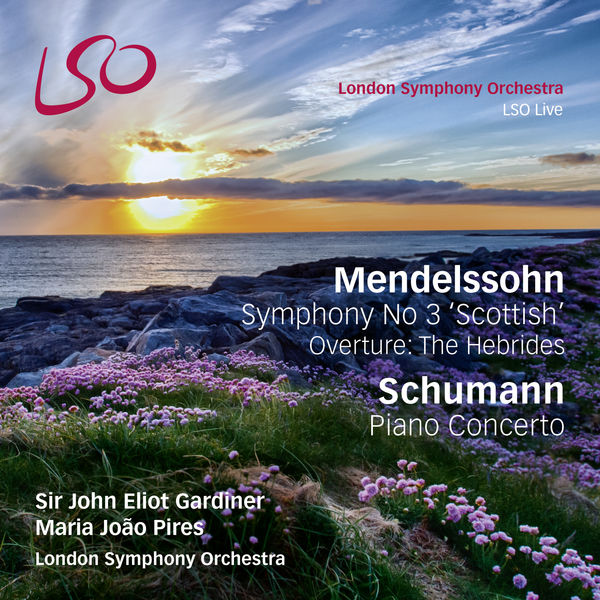
Am I Deaf or How Could This Go So Wrong – Gardiner & Pires’ Schumann & Mendelssohn

Sometimes there are albums coming out where just looking at the artists involved you really anticipate something great.

So when I read about this album of Maria João Pires playing the Schumann piano concerto together with the LSO conducted by Gardiner, I was really looking forward to hearing this. A beautiful pairing as well with Mendelssohn’s Scottish symphony that I really like.

Schumann piano concerto Mendelssohn Symphony No. 3 Maria Joao Pires John Eliot Gardiner LSO Live

Pires plays fantastic Mozart and Chopin (e.g. her Nocturnes are just beautiful), and I’m a big fan of Gardiner not only for his Bach cantatas, but also for his symphony recordings with the ORR. And obviously, the London Symphony is a great orchestra.

So all the stars are aligned. On top this album has received a Gramophone Editor’s Choice, plus some other great reviews.

And then I start listening (luckily I went for streaming first instead of just immediately buying), and can’t help to think I must have clicked on the wrong album. The Schumann piano concerto is just plain boring! Total lack of passion and energy. And a perceived speed that feels way too slow. Then I check, and it is really Gardiner and Pires playing here. How could this go wrong?

You have plenty of other alternatives here, go for Radu Lupu, Dino Lipatti (a disc to convert Karajan haters by the way), Andsnes again, etc. etc. etc.

But I don’t give up and check the Scottish symphony. Again, I can’t believe my ears. At best, an average performance. The worst is the forth movement which feels plump, and on some occasions (this is a live recording) the LSO even sounds out of sync. This is not the brilliant Gardiner of Schumann’s 4th with the ORR, this is somebody else entirely.

For Mendelssohn, I’d recommend you rather go with Abbado, or Christoph von Dohnanyi.

No idea what the guys at Gramophone heard here. I just don’t get it.

Overall rating: Just about 3 stars (It really pains me to give such a mediocre rating as these are all amazing musicians individually. But I just can’t help it.)

Classical Life

A classical music blog by music critic Tim Mangan

This Week's Music

Making Classical Accessible

From my Macbook to the Net

Evaporation of my thoughts and observations

Elestra

Author: Artienne

My Life in Music

Playing, Singing and Listening

ArsX3

A brand new journal reviewing books, cinema, music

LawrenceEz's Blog

Creative and Performing Arts: Writing, Classical Music, Photography

Laetitia Strauch-Bonart

Contemporary Politics & Culture

sibling revelry

reveling in all things classical

It's A Raggy Waltz

I collect jazz on vinyl, I dig the Dave Brubeck Quartet, & I write about it

La Musica

By two cousins

thejazzbreakfast

Dishing it out from the heart of England

only jazz

random thoughts about music that matters to me

The Culture Project

Exploring the world of literature, wine, art, music and more.

René Spencer Saller

The music causes me to dream of fabulous empires, filled with fabulous sins.

Breaking Baroque

Blog of Tafelmusik Baroque Orchestra and Chamber Choir

Tasting Nirvana

Eating your Dosha

The Immortal Jukebox

A Blog about Music and Popular Culture

April Greene

Writer + Editor

a pianist's musings

A history of your favorite classical music.

Classical music for all

Boris Giltburg's blog

I HEAR VOICES

An orchestra seat in the web space