Easy Living: My Favorite Enrico Rava Album

Enrico Rava

In my previous post on Enrico Pieranunzi I was asked about other Italian artists I like, and José in his comment listed among others Enrico Rava. This is what triggered this blog post.

Well, first of all, my initial answer is that Rava has a beautiful sound, a very soft, dreamy voice, that I really like.

With regards to his recorded albums, I’m more torn, as I don’t have a single album with Rava in the lead of which I love every single track. I’ll explain further below why.

That said, without doubt Rava is one of the leading figures of the Italian Jazz scene.

I have about 10 albums of Rava in my collection, and would like to present here what overall is my favorite Rava album: Easy Living

Easy Living (ECM 2003)

Why this particular album?

Well, first of all, Easy Living is one of my favorite standards (I originally fell in love with Sarah Vaughan singing it). And Rava does a gorgeous version of this song here.
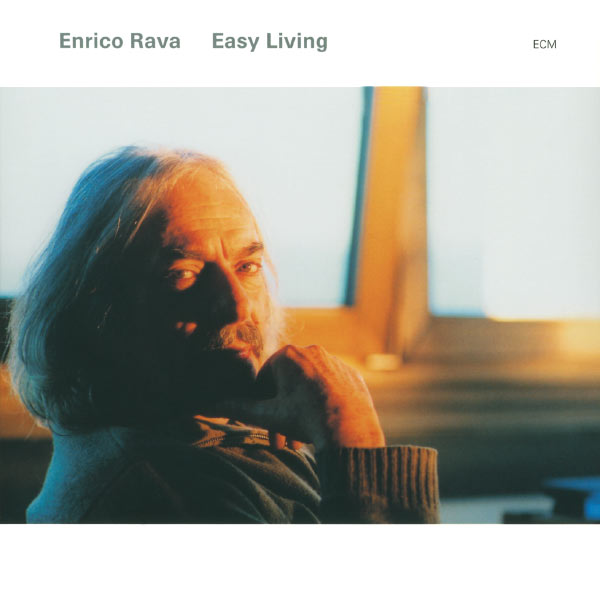
Enrico Rava Easy Living ECM 2003

Second, Stefano Bollani.

I’ve previously written about him and how much I appreciate his piano playing, and he’s also one of the factors why I particularly appreciate this album. Take his solo on track 8, Hornette and the Drum Things and you’ll understand why.

Track 1, Chromosomi, is already a great start. It sets the scene for an album that is generally meditative, dreamy, perfect for a lazy Sunday morning like this one (as I write it, it has started to snow outside, and this song sounds like the perfect soundtrack for watching the  falling snowflakes).

Now to explain, as already mentioned above, what I don’t like about certain Rava songs, let’s take the example of Traveling Night (track 7). I’ve written time and time over again, how much I need melodies. My brain is just wired that way.

I actually like Rosario Bonaccorso’s bass solo, and then Roberto Gatto and Stefano chiming in the same mood. But then I get lost in rhythmic and harmony changes, and my little brain never finds its way out again, it just feels to random.

I’ve had this discussion with Jazz musicians, and for some of them, when it gets more random and adventurous, this is when music really starts getting interesting, for some others, this is when it starts to lose interest. I’m not arguing quality here, but just personal preference.

One special thing to mention on this album is the beautiful complementarity between Rava and Gianluca Petrella on trombone.

This album is recorded by ECM, and therefore, as usual, the recording quality is really good.

My rating: 4 stars

You can find it here (Qobuz)
 

3 Hours Of Timeless Beauty – Keith Jarrett Bregenz München

What do Bregenz and Munich have in common? Not a lot on paper, the nice Austrian town on Lake Constance and the Bavarian capital, in spite of the fact that they are only about 2h away from each other by car.

So why bother writing about them here? Well, you’ll have guessed it already, Keith Jarrett gave one of his famous solo concerts in both places.

And as promised previously, I plan to eventually review all the Jarrett solo concert recordings (fun fact, it’s been nearly 6 month ago that I attended one myself for the first time and started this blog, see my post here)

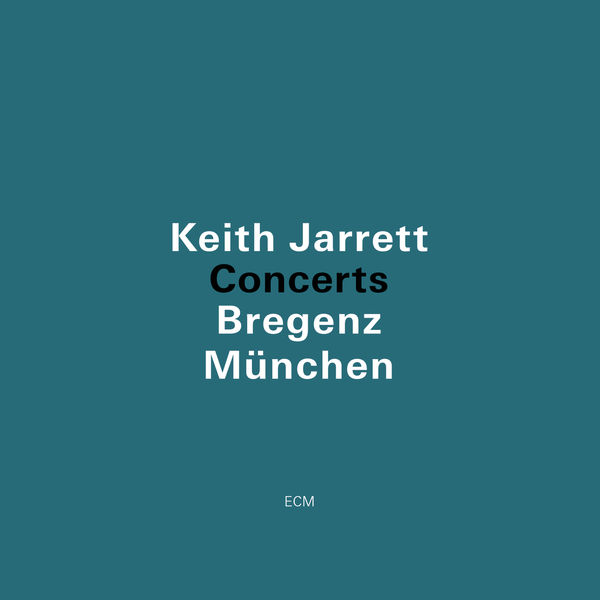
Bregenz München (ECM 1981/2013)

These recordings date from 1981, i.e. 6 years after the famous Köln Concert. Jarrett by then had developed a clear style for his concerts, and these recordings show that he developed already a certain maturity.

Keith Jarrett Concerts Bregenz München ECM

Bregenz comes first: Part 1 starts swinging, with nearly a ragtime feel occasionally. After 10 minutes he slows down, into a more melancholic mood.

I just love the flowing passage around 15:00, that turns much heavier around 17:30. At around 19 he become more rhythmic, using the piano’s body regularly as percussion.

Part II keeps the rhythm, driven by the left hand, and the percussion elements. All this at a faster pace. At some time we even get Calypso elements.

Bregenz Heartland is one of my favorites on this album. As said before I’m a sucker for melodies. And luckily Jarrett on his encores nearly always delivers.

And the good news is: Munich gets even better. This concert is longer, in 4 parts, and 2 encores, including another one title Heartland, again astonishingly beautiful. I’m going to spare you a more detailed description, you get that I like it very much.

Keith Jarrett has a long history of playing classical music, and you can hear it here.

This is a thoroughly enjoyable album and very much worth having.

My rating: 4 stars (compared to the very high standards of Jarrett’s solo concerts, actually I’m on the edge of giving this 5 stars, and may revisit my rating after formally reviewing more of his solo albums, but so far, I’d probably still prefer Köln, Bremen Lausanne, and Sun Bear).

You can find it here (Highresaudio) or here (HDtracks)

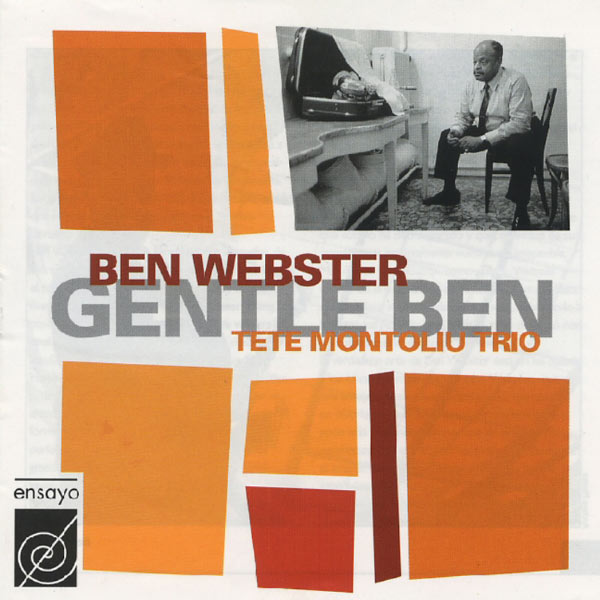
Gentle Ben – Ben Webster & Tete Montoliu

Finally writing about Jazz again

I’ve been a bit disappointed by the Jazz releases of the recent months, I’ve been checking out pretty much every new album on my streaming service, but there weren’t a lot of new albums that raised my curiosity.

So let’s go back to the classics and talk about two not very well-known artists that both were outstanding musicians.

Ben Webster 

If you ask Jazz fans about well-known Sax players, you get Bird, Rollins, Coltrane. Does anybody mention Webster? Yes, when you ask them, but he’s clearly not top of mind.

This is really a pity. He has a very unique sound, full, with a lot of “air”. I’m not usually very good at identifying saxophone players at their sound, but Webster is very easily recognizable.

He is as much at ease in uptempo as he is in beautiful ballads.

I could have mentioned several Ben Webster albums here, e.g. Ben Webster Meets Oscar PetersonColeman Hawkins Encounters Ben Webster, or Soulville, all classic Verve albums from the late 1950s.

However, I’ve chosen another one, recorded in 1973, one of his very last albums. Why?

Tete Montoliu

Well, to allow me to write about Tete Montoliu, another not as well-known musician, from Barcelona. No idea why this excellent piano player didn’t become more famous? Maybe because his main career was in the 1970s, when everybody was listening to Fusion?

Gentle Ben

Ben Webster Tete Montoliu Trio Gentle Ben

Whatever the reasons were, this album is proof that both artists were outstanding musicians.

Take the starter track, Ben’s Blues. 9 minutes of pure concentrated swing.

The Man I Love is one of my favorite Jazz ballads. I’ve rarely heard it better played than here. You really can hear Billie Holiday in his saxophone voice.

Or Don’t Blame Me, another beautiful slow ballad, where you get all the nuances of Websters amazing sound.

This album really is a lot of fun all the way.

My rating: 4 stars

You can still download it here (Qobuz), unfortunately, my favorite download and streaming provider seems to be in major financial trouble and may not be around any more in the near future, which would be a pity.

Keith Jarrett: La Scala

Keith Jarrett’s Live Albums

Keith Jarrett and his solo piano concerts are legendary.

If Wikipedia is to be trusted, his Köln Concert is the best-selling solo and piano album in the history, with more than 3.5M albums sold. This may not be much by Taylor Swift standards, but for Jazz, where albums usually selling a some thousands of albums, this number is just mind-boggling.

And what is probably even more mind-boggling is that the Köln Concert is not a one hit wonder, but Jarrett has turned out dozens of solo concert albums in the last thirty years, and usually nearly all of them are worth having.

I’ve started this blog writing about the lucky chance I had to see Jarrett live earlier this year, and it is truly an outstanding experience.

In my 25 Essential Jazz albums post, I’ve promised to myself that I’ll eventually review all of his live solo albums.

This will be a challenging task, but well, you’ve got to have ambitions in life. Let’s see how long this journey is going to take.

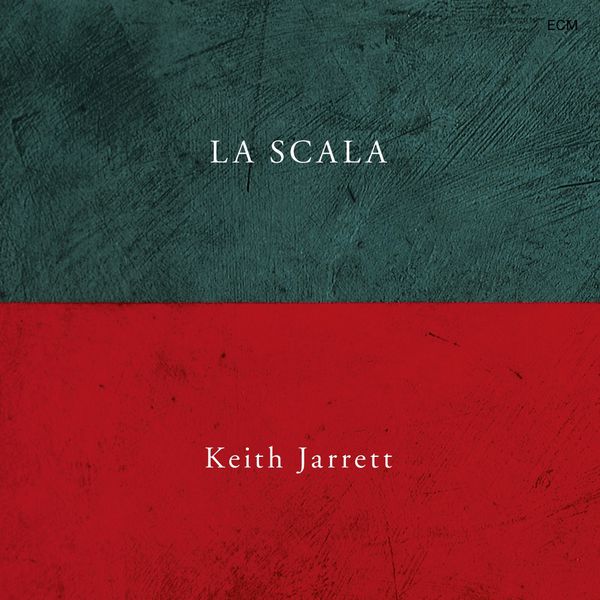
La Scala (ECM 1997)

Every journey has got to start somewhere. I rather randomly chose La Scala for a start. Why? Well, the cover is beautiful, and it is probably one of the lesser known albums.

La Scala was recorded (you would have guessed) in Milan’s famous opera house, in 1995, and released in 1997. Apparently, this is the first time a solo jazz concert was hosted in these illustrious walls.

Keith Jarrett La Scala ECM 1997

The formal structure of the concert is very simple, you have “Part I” (approx 45 min) and Part II, adding 28 more minutes.

Part I evolves very slowly over time. it reminds me of a large river maeandering slowly and majestically. You have time to let your mind wander around while listening to this. In a way, this nearly becomes meditation music, but this is Jarrett, so you can rest assured that you won’t get bored, instead you just keep floating with the river.

Part II starts a bit randomly. This is the style I personally don’t really like that much, I just get lost without a clear melody and rhythm. Well luckily for me he doesn’t overdo the randomness, and structure reemerges rather quickly after around 4 minutes or so. Unlike part I, this part has some much faster flows, and while part I was focused on chords, here you often just get a chain of individual notes. Around 10 min in, the character changes again, chords reappear, and a melodic structure reemerges.

And in my personal opinion, he’s really saving the best for last. The encore is “Over the Rainbow”, in a very simple, minimalistic approach. I’ve mentioned previously how much I love this song, and I’m not disappointed here either.

My rating: 4 stars (not the most essential of Jarrett’s solo albums, but we’re really talking from a very high standard here, this is still better than 95% of other solo piano albums out there).

You can download it here (Qobuz) or here (HDTracks)

The Legacy of the Jazz Messengers (6): Freddie Hubbard’s Hub-Tones

I’ve a little bit neglecting my Jazz Messengers Mini-Series, don’t really know why. Maybe it is because I consider Freddie Hubbard’s albums for example as just a little bit less essential than the artists I’ve written about so far. Well, anyway, here we go again:

Freddie Hubbard

Freddie Hubbard is considered among musicians as one of the trumpet legends. He probably is one of the typical “musician’s musician”. He has, as my title indicates, played with the Jazz Messengers, but has played with pretty much every well-known Jazz musician of the period, be it John Coltrane, Miles Davis, Wayne Shorter, Herbie Hancock, you name it. He also plays on The Blues And The Abstract Truth, one of my 25 Essential Jazz albums.

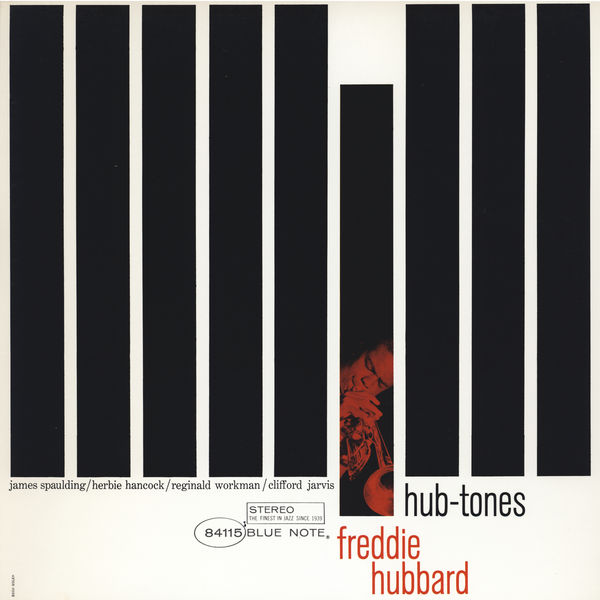
Hub-Tones

Why the 1962 Blue Note album Hub-Tones?

Well, I was torn for a while whether I should feature Open Sesame, Ready For Freddie (both released 1 and 2 years prior to Hub-Tones on BlueNote), or one of the two subsequent releases on Impulse, The Artistry of Freddie Hubbard, or The Body And The Soul. 

You get the picture, these years between 1960 and 1965 were highly productive for Freddie, and all of the above mentioned albums are worth having.

Freddie Hubbard Hub-Tones 24/192 Blue Note 1962

One of the reasons I chose Hub-Tones is probably the cover. Blue Note’s cover art from this period was generally excellent, but I really like the minimalist cover of this particular album.

The other reason is Herbie Hancock, which I prefer slightly to McCoy Tyner on the two previous Blue Note albums (yes, I have a piano background so those things matter to me).

Finally, this album features a lot of Hubbard originals, which I really appreciate.

Another great artist on this album is James Spaulding playing the flute and alto sax alternatively, who is not that well known these days, but has played as a sideman for a large number of Blue Note albums.

My rating: 4 stars

You can download it here (Qobuz) or here (HDTracks)

Tord Gustavsen Trio: The Ground – Atmospheric Trio Jazz from Norway

ECM

Enough ink has been spilled on Manfred Eicher’s outstanding Jazz label from Munich, Germany. He obviously was smart enough to land a superstar like Keith Jarrett, but they’ve been such an important driving force for contemporary jazz (and classical music) that you owe it to yourself to check out each new ECM release. To be fair, for me their output is hit and miss, on average every 2nd album I just love, every other is not my cup of tea. But I never regret checking them out.

Tord Gustavsen

Like Helge Lien (reviewed here), Tord Gustavsen comes from Norway. That, plus the fact that they both won an important Norwegian Jazz award, is probably the only apparent commonality between the two (plus the fact that they both have played with Silje Nergaard at some point, probably a mandatory rite of passage for Norwegian jazz pianists).

Lien is much more energetic, and experimental. Gustavsen in his arrangements in a way represents the typical ECM house sound, atmospheric, sometimes a bit detached, and extremely well recorded.

He has released a number of albums, mostly in trio, but also more recently with Saxophone, however, this 2004-5 album remains my favorite album of his.

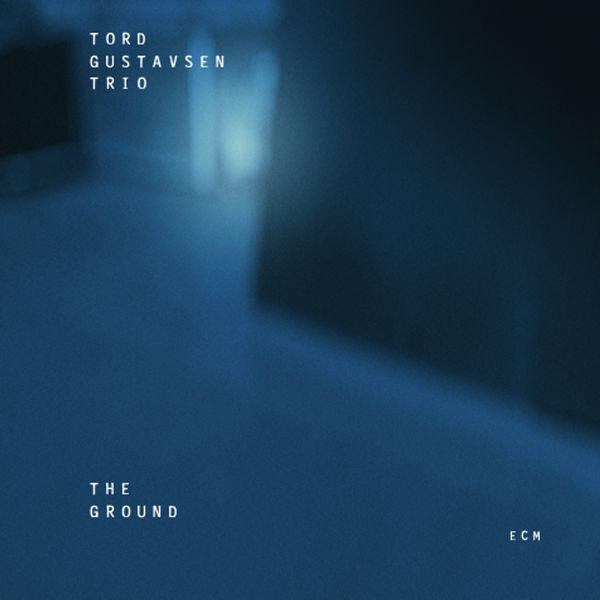
The Ground

The Ground was Gustavsen’s 2nd ECM album, after the equally beautiful Changing Places, which gave him quite some visibility.

His style is really the opposite of what was developed by Esbjörn Svensson Trio, his neighbor from Sweden. It is very minimalistic, laid back. He has been called “the Satie of Jazz”. This is music to savor late at night, with a glass of single malt (I’d recommend a Caol Ila 12).

Critics around the globe mainly loved this album, calling the music “shimmering” (the Village Voice), and quoting the ” liquid, flowing quality of his motion” (AllAboutJazz). You did find some critical voices as well, usually finding this a little bit too laid back, or some even called it boring.

Tord Gustavsen Trio The Ground 24 96 ECM 2005

Well, obviously if you want high energy jazz that brings you to the edges of contemporary creativity, look elsewhere. But if you, like me, appreciate the ECM sound, this album is really worth checking out.

Actually, I’m a big fan of the very minimalistic and modern ECM cover art in general, but on this particular album they really nailed it. The blue, unfocused feeling you get from the cover is exactly what the music will do with you. You’ll get lost in space and time (the Caol Ila certainly helping….).

Note that the recording quality of this album is truly outstanding, so if you have a good hi-fi, you’ll enjoy it twice as much.

My rating: 4 stars

You can download it here (Qobuz) or here (Gubemusic)

Eeriness or How To Summarize Michael Wollny’s New Release in One Word

Michael Wollny

I’ve already praised his latest live album in my 25 essential Jazz albums. Michael Wollny, 37, is certainly one of the greatest talents in Jazz Germany has to offer these days.

So I was very glad when I was pointed to his latest album he just released, Nachtfahrten (literally, night rides or night drives).

Really, you’re going to say, my last post was about Chopin’s Nocturnes, and here comes another one about music of (or for) the night? Well, this wasn’t on purpose.

Nachtfahrten

In any case, when you listen to this album, think much more Debussy’s nocturnes, or Scriabin, than Chopin. There is none of the peacefulness of the Chopin around, the word that comes to mind listening to this new album is the beautiful English word “eery”, actually, you never feel fully safe listening to this album.

Michael Wollny Nachtfahrten Christian Weber Eric Schaefer ACT 2015

Where does this eeriness come from? Well, very slow tempi, dark harmonics, a very light touch by Eric Schaefer on drums, but all this doesn’t even come close to describing the feelings you’ll get from this album.

The track titles like Nachtmahr, a rather unusual German translation of nightmare,  Feu Follet, French for will-o’-the-wisp, Marion (named after Marion Crane, the blonde victim of the Psycho shower scene), or Metzengerstein, the name of Edgar Allen Poe’s first novel, don’t really help. Well, you get the idea.

There are some slightly lighter titles like Ellen, which is one of the few occasions where the trio gets to show that they are able to swing really well, but even these don’t break the overall dark mood of the album.

Several journalists have asked the question whether this is Jazz, Pop, or contemporary classical. Well, honestly, who cares. It is impressive music, full of a strange and irritating energy, that will draw you into the music. This is anything but background music for a cocktail party. It needs your full attention (and dimmed lights).

My rating: 4 stars

Two videos to give you an example, one with Michael commenting on the album, unfortunately in German only.

You can find it here (Qobuz) or here (Highresaudio)

Classical Life

A classical music blog by music critic Tim Mangan

This Week's Music

Making Classical Accessible

From my Macbook to the Net

Evaporation of my thoughts and observations

Elestra

Author: Artienne

My Life in Music

Playing, Singing and Listening

ArsX3

A brand new journal reviewing books, cinema, music

LawrenceEz's Blog

Creative and Performing Arts: Writing, Classical Music, Photography

Laetitia Strauch-Bonart

Contemporary Politics & Culture

sibling revelry

reveling in all things classical

It's A Raggy Waltz

I collect jazz on vinyl, I dig the Dave Brubeck Quartet, & I write about it

La Musica

By two cousins

thejazzbreakfast

Dishing it out from the heart of England

only jazz

random thoughts about music that matters to me

The Culture Project

Exploring the world of literature, wine, art, music and more.

René Spencer Saller

The music causes me to dream of fabulous empires, filled with fabulous sins.

Breaking Baroque

Blog of Tafelmusik Baroque Orchestra and Chamber Choir

Tasting Nirvana

Eating your Dosha

Shadow of Iris

Poetry, fiction, short stories, more ...

The Immortal Jukebox

A Blog about Music and Popular Culture

April Greene

Writer + Editor

a pianist's musings

A history of your favorite classical music.

Classical music for all

Boris Giltburg's blog

I HEAR VOICES

An orchestra seat in the web space