Easter Time Is Coming Up Soon – And With It The Magnificent Matthew Passion

Seasonal Music For Easter

Easter time is coming. At least over here in Europe, that means most shops fill up with chocolate eggs and bunnies. Nothing wrong with that.

But while I’m not religious, there are two pieces of music that are intrinsically linked for me to this time of the year. Both essentially tell the same story, the well-known biblical story of the last days of Jesus Christ as accounted for in the gospels of John and Matthew respectively.

At yes, this will be yet another blog post about Bach. Sorry for this, but he put both of these accounts into such beautiful music that it really doesn’t matter what religion you follow (or if at all), both of these works, the BWVs 245 and 244, respectively the Johannes-Passion and Matthäus-Passion, are among the most outstanding musical works ever written.

I’ll write about the St John Passion later, it is the possibly slightly less well-known of the two.

St Matthew Passion BWV244

But let me start with the St Matthew Passion, for the simple reason that I just spent a lot of money on a concert ticket. I’ll have the pleasure in a couple of weeks to see John Eliot Gardiner and the Monteverdi Choir live playing this masterpiece.

I highly encourage you to seek this concert out if you live in Europe, they are touring several countries starting with Valencia, Spain. I can guarantee this to be an outstanding concert experience by one of the greatest Bach interpreters and choirs ever. It also includes the great Mark Padmore as Evangelist.

I’ll be certainly writing about this concert experience here.

This work is also of historical importance, as its revival in the 19th century by Mendelssohn triggered also a much more general appreciation of Bach as the musical genius he truly was.

St Matthew’s Passion – John Butt – Dunedin Consort

Let me talk about another outstanding Bach interpreter here. I’ve written about John Butt and the Dunedin Consort several times already, regarding the Mozart Requiem, Händel’s Messiah, and more recently on the Brandenburg concertos.

If you believe Gramophone Magazine, he rarely misses a recording, having received a number of Gramophone Editor’s choices and Awards. Obviously, one needs to be a bit careful as Gramophone often suffers from a certain anglophilia in their reviews, and local artists more often than not get rather favorable reviews.

However, in this particular case, I fully concur with Gramophone’s opinion, whatever John Butt and his Dunedin Consort touch is usually worth checking out. Furthermore, being recorded on the Linn label (of legendary turntable fame), these recordings are what is often to referred as audiophile.
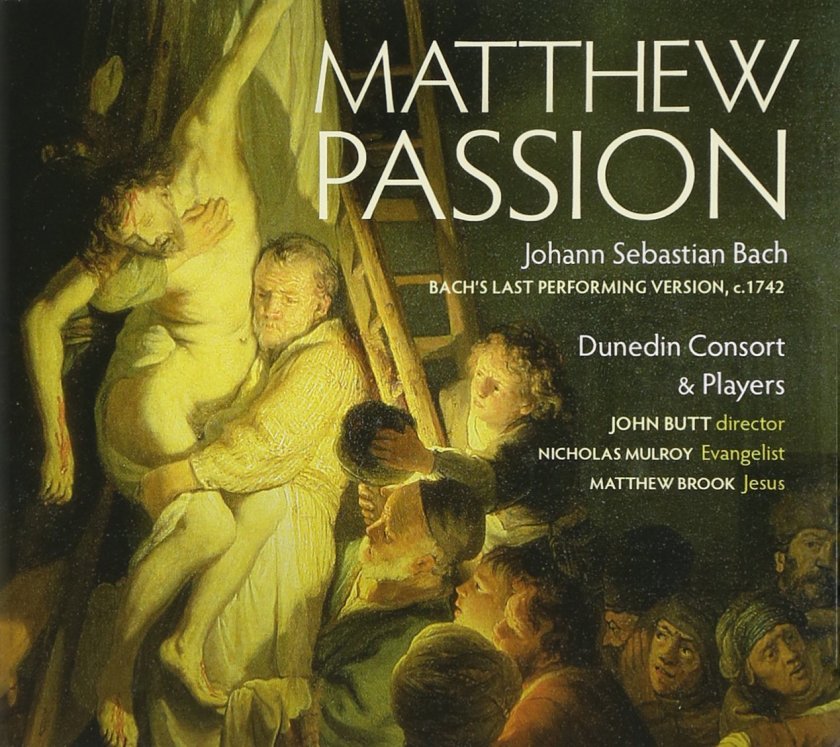
Matthew Passion Dunedin Consort John Butt Linnrecords 24 88

A word of advice, even if the story may be familiar to you if you are Christian, take the booklet and follow the lyrics (even better if you speak German obviously). It is just outstanding how much Bach’s music reflects the feeling of what is going on at any time of the 2h18, and really helps absorbing this masterpiece better.

This is particularly true in the very last Chorus Wir setzen uns mit Tränen nieder (we sit down in tears). If this track doesn’t touch your emotions, I don’t know what does.

The Dunedin’s version brings an astounding amount of clarity to the reading. This doesn’t mean it is lightweight, but it is played with beautiful transparency. Nicely enough, although none of the singers are German, their pronunciation of the text is exceptional.

Now is John Butt’s version the one and only to have for Matthew? Certainly not. There are other great versions out there that are worth checking out, from Gardiner’s and Herreweghe’s classic accounts in the late 1980s, via Kuijken and Suzuki, to the recent controversial but thought-provoking René Jacobs reading.

And although you’ll have noticed that I’m a big fan of historically informed practice, the legendary version of Karajan, with Gundola Janowitz, Christa Ludwig, Peter Schreier and Dietrich Fischer-Dieskau is worth checking out for the beautiful singing (although the tempi are really too slow for my ears with Kommt Ihr Töchter taking a full 9:21 vs. 6:38 with the Dunedins).

But overall the Dunedin version is an excellent starting point for exploring this masterpiece.

My rating: 5 stars

You can find it here (Linn Records)
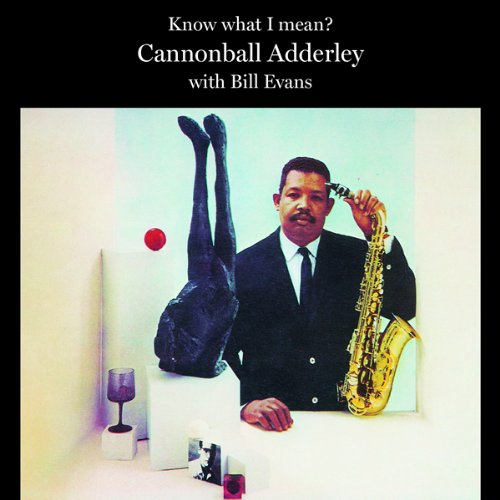
Know What I Mean? What Great Album!

Blogging – but about what?

I suppose every blogger knows this question: what should I write about on my blog?

Well, you could say with several thousand albums in my personal library and 30M tracks in my Qobuz streaming subscription, finding material shouldn’t really be a problem. And it actually isn’t too much of an issue.

The harder question is often: What do I write about right now?

I often get inspired by either recent releases, by reading the specialized press, or by something I just happened to play on my stereo recently.

However, tonight I was a bit clueless. I knew it was time for another blog post, but didn’t really feel inspired about anything in particular.

Then the radio on my car trip back from work came to my rescue, as they played a track from the album below. I immediately knew I had to write about it.

So here we go:

Cannonball Adderley

Julian “Cannonball” Adderley is probably one of the more underestimated saxophone players. He never go the reputation of a Coltrane, Bird, or even Sonny Rollins. That said, he’s done some amazing albums. Not only he played on Kind Of Blue (see my post on my 25 essential Jazz albums), but also on Something Else from 1958 which has the best version ever of Autumn Leaves on it. Not to mention many other great albums, with or without Miles Davis.

Know What I Mean – Cannonball Adderley With Bill Evans (Riverside 1961)

Adderley and Bill Evans already played together on the above-mentioned legendary album Kind Of Blue in 1959. Two years later, on the Riverside label this time, they work together again, without Miles Davis this time. You have Percy Heath on bass, and Connie Kay on drums.

And the mood is completely different to Kind Of Blue‘s intimacy, this is swinging Jazz that will make you smile immediately.

Cannonball Adderley with Bill Evans Know What I Mean Riverside

You start with the great Bill Evans standard Waltz For Debbie, a song I personally cannot get enough of. And this is probably one of the best versions out there, with Adderley really swinging like crazy.

Toy, a Clifford Jordan original, is another great uptempo track.

And then there’s the title track (which depending on which release you get, you may have several takes to compare), which starts as a beautiful ballad (Kind Of Blue‘s particular mood is popping up again), but soon turns back to softly swinging.

This is mainstream jazz (in the positive sense of the word) at its best.

My rating: 4 stars

You can find it here (Qobuz).

Papa Haydn – Or Not? Ottavio Dantone’s Haydn Symphonies

Joseph Haydn

I haven’t written a lot about Haydn yet, actually, there is so far only one blog that mentions a Haydn album in passing.

This is not entirely by chance, I’m generally not a big Haydn fan.

Baroque, yes please! Mozart, Beethoven, give me more. But Haydn? Somewhere stuck in between.

The old saying of “Papa” Haydn certainly has a point. I very much like his Cello concertos, and his masterly string quartets. But his symphonies? More than 100? Not really my cup of tea.

Or so I thought. Apparently I’m not alone, in the most recent issue of Gramophone, an article commenting about the recording I’ll be discussing below mentioned that Haydn apparently doesn’t sell well.

So what has changed?

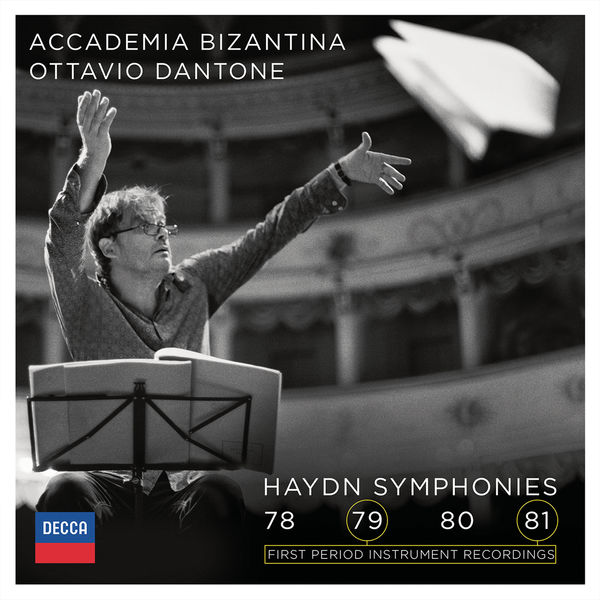
Haydn: Symphonies No. 78-81 by Ottavio Dantone and the Academia Bizantina (Decca 2016)

Haydn: Symphonies 78, 79, 80, 81 - Ottavio Dantone - Accademia Bizantina (24/96)

Ottavio Dantone? Isn’t that the guy that I have several lovely Corelli recordings from? Yes indeed, he is mainly known for his Baroque albums. And now he attacks the traditional “Wiener Klassik”. How does he manage this material?

Actually, really well. The historically informed practice, gut strings et al., really helps Haydn a lot. What it adds is precision and clarity.

This album to be sounds like very precisely drawn with a fine pencil. You don’t miss a single detail. At the same time, there is a lot of energy. “Papa” Haydn really gets a kick in the butt, metaphorically speaking (excuse my French), and this is what this music needs. Extremely refreshing.

Now, about the music itself. Are we talking about something similar to a Beethoven symphony? Well, not to me (although especially the early Beethoven symphonies were clearly inspired by Haydn). But there is enough going on to make this recording interesting and worth discovering even for people (like me) who would usually shun Haydn.

Side note: There currently is a highly exciting complete Haydn HIP style cycle in the making, called Haydn 2032, by Giovanni Antonini and the Kammerorchester Basel. This cycle so far has only released some of Haydn’s earlier symphonies that I really cannot be bothered with, but are played so well that I’ll be closely following this project.

Back to Dantone: My rating: 4 stars

You can find it here (Qobuz) or here (Prostudiomasters)

Iiro Rantala String Trio: Anyone With A Heart – Review

A String Trio Playing Jazz? Seriously?

Yes I know, this is a very unusual combination. You get Iiro Rantala from Finland, formerly with the Trio Töykeät, Adam Baldych on Violin, and Asja Valcic on Cello.

But don’t get scared, this is worth exploring!

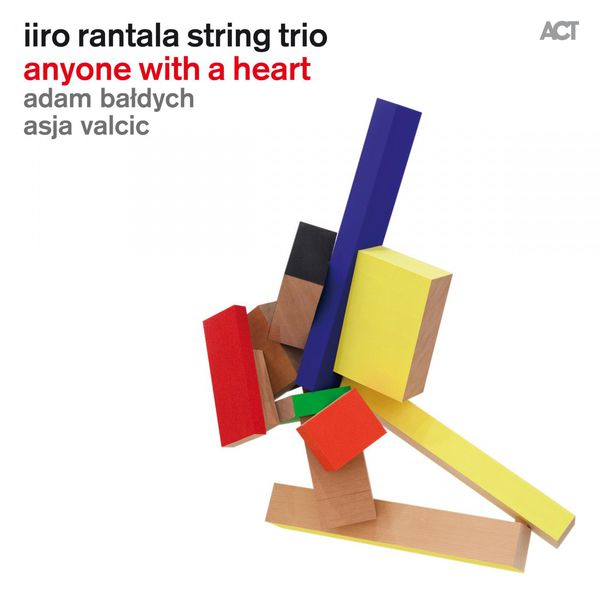
Iro Rantala String Trio: Anyone With A Heart (ACT 2014)

Well, first of all, is this Jazz? Honestly, no idea. Rantala has studied not only Jazz, but also classical music, and is a proclaimed Bach fan. In any case, it is fascinating music, all composed by Rantala himself.

Iiro Rantala String Trio Anyone With A Heart Adam Baldych Asja Valcic Act 2014


One of my favorite tracks is Freedom, inspired by Jonathan Franzen’s novel (which I never really liked by the way). Here he dampens the piano to get a very particular sound. The strings even have oriental elements in their playing. All this is driven by a constant groove, that pulls you in and lets you sit on the edge of your chair. Here’s a video of Rantala performing a solo version of Freedom in his own place, to give you an idea what to expect:


My other favorite is the ballad Alone, that prominently features the beautiful sound of Valcic’s cello.

Again, this track probably isn’t what you’d call typical Jazz. I couldn’t care less. This is music that escapes traditional categories and genres, but is beautifully played by musicians who are in it with all their heart.

This is worth exploring if you’re looking for something different.

My rating: 4 stars

You can find it here (Qobuz) and here (Prostudiomasters)

My Favorite Version of the Brandenburg Concertos

Bach, once more

I hope you’re not getting bored by me writing about good old Johann Sebastian. I have to admit my obsession with the composer only developed in the last decade of my life, before I was much more into Romantic composers like Brahms or Bruckner.

But I suppose, sooner or later the timeless beauty of this potentially best of all composers sooner or later gets you. What is outstanding that he was able to write intellectual masterpieces like the Goldberg variations, bring religious music to absolute summits (e.g. the b-minor Mass reviewed here), but also write extremely approachable music that even non-classical listeners appreciate or at least have heard (Air on the g-string anybody?)

The Brandenburg Concertos

Today I’ll be writing again about another one of his “greatest hits”, as the Brandenburg concertos are among the most popular of his works.

The 6 concertos got their name from the nobleman they were dedicated to, Christian Ludwig, Margrave of Brandenburg-Schwedt. While they are ususally presented as a group, they actually each feature quite different solo instruments (harpsichord, flute, trumpets, etc.), this is probably one of the reasons why they are so popular, as they present an interesting variety.

These concertos have been recorded hundreds of times. Personally, I can only listen to more recent recordings influenced by the historically informed practice, on smaller ensembles. However, this shouldn’t stop you from checking out how this music was played by the likes of Herbert Karajan in the 1950’s and 60’s, nothing wrong with it, but not my cup of tea, it just sounds wrong to my ears.


Renaldo Alessandrini / Il Concerto Italiano (Naïve 2005)

I’ve checked out dozens of recordings to find my personal favorite. This 2005 recording by Rinaldo Alessandrini with the Concerto Italiano (who I had the pleasure to hear live playing Vivaldi in a church some years ago) has all I want, which is mainly: fun, fun, and fun.

Bach Brandenburg Concertos Rinaldo Alessandrini Naive 2005

You just never get bored listening to this music with all the energy and refinement you’re getting from this outstanding ensemble. I love when Jazz is swinging, but let’s face it, this music is (and has to) swing as well. It is clearly visible and audible that baroque music in many ways was strongly influenced by the dance music of the time.

Obviously, Alessandrini is not the only outstanding version out there. I particularly like the efforts by the French ensemble Café Zimmermann, John Butt’s Dunedin Consort is also excellent. But I keep going back to Alessandrini as my personal reference.

My rating: 5 stars

You can find it here (Qobuz) and here (Prestoclassical)


GoGo Penguin’s Man Made Object – The True Successor to EST?

Esbjörn Svensson Trio

I’ve previously written about the Esbjörn Svensson Trio (EST) and their essential role of bringing the Jazz Piano Trio to the 21st century.

However, with the untimely death of Esbjörn Svensson in 2008, I’ve been wondering who would become a worthy successor.

I’ve written about a number of piano trios already, and there is certainly no lack of exciting new trios around. However, none of the trios I’ve written about got close to the particularity of the EST combining elements outside of Jazz into the art form, and having a focus on rhythms that come more from pop, rock, and electro. Well, maybe the US trio The Big Plus, or the Swiss Rusconi (that I both have yet to write about).

However, there is one trio that probably get’s closest to the originality of EST.

GoGo Penguin

Manchester-based GoGo Penguin, has already released two albums, Fanfares (2012), and v2.0 (2014). I started noticing them with the latter album, which I really like.

The trio is drummer Rob Turner, double bassist Nick Blacka and pianist Chris Illingworth. This order is taken directly from their website, and is inverting the usual order of giving the pianist’s name first. Well, I’m pretty sure this order is a very conscious choice, as Rob’s pulsating rhythms are really what sets this group apart from all other trios I’ve heard so far.

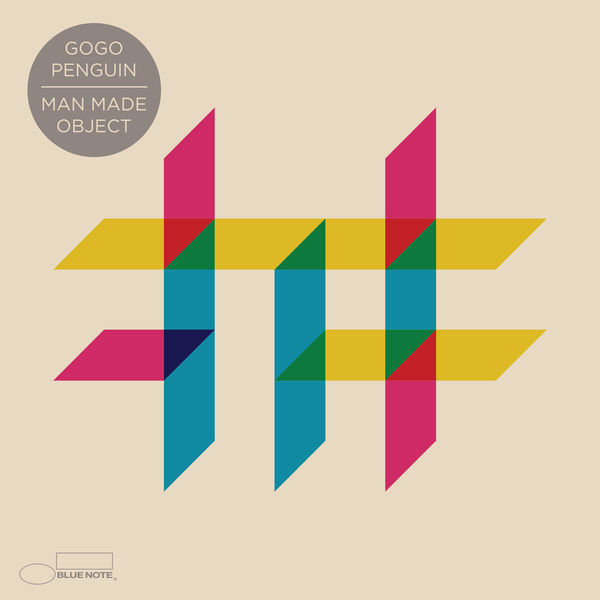
Man Made Object (2016 Blue Note)

This is the group’s first album on Blue Note, which should hopefully help them to get to the level of awareness they should be at.

GoGo Penguin Man Made Object 24/44 Blue Note 2016

I bought this album pretty much immediately when it came out.

The rhythmic drive, which is clearly influenced by contemporary electro music, is addictive. Combine to this the groove of Blacka’s bass, and Illingworth’ rather simple, but fascinating harmonics, and you cannot help but being drawn into the music.

My favorite tracks on this album are Weird Cat, epitomizing their style. Smart is another great example. You start out with an experimental intro and then jump pretty much immediately in a strongly syncopated groove by Turner and is joined by Blacka and Illingworth to slowly build up an entire harmonic and rhythmic landscape. Amazing.

Here’s the official video for the opening track, All Res, that should give you a pretty good idea:


My rating: 5 stars

You can find it here (Qobuz) or here (Prostudiomasters)

Bach’s Well-Tempered Clavier – beautifully played by Céline Frisch

Das wohltemperierte Klavier

Yes, I know, Bach once more.

But to my defense, this is the first time I’ve written about this particular work, the famous Well-Tempered Clavier BWV 846-893.

Prelude no. 1 in C-major is probably known even to many  non-classical listeners, as it forms the basis of Gounod’s Ave Maria, and it is accessible enough for most piano students to attack it at some point during their classes (including me).

Obviously, there is much more to this cycle of works that takes you through every single key step by step. It consists of two “books” or parts of preludes and fugues covering all keys of our Western scale

Side note: In case you didn’t know, the term “well-temperament” refers to the tuning of the keyboard that was at that time recently invented. Before the well-tempered tuning, any given tuning used at the time worked well for some keys but didn’t really work for others. To simplify, the well-tempered scale by Andreas Werkmeister was the first where you could easily switch between keys without any of the keys sounding out of tune.

I already had a couple of nice recordings of this work, from old-fashioned but great Sviatoslav Richter to Andras Schiff (obviously), to both recordings of Angela Hewitt.

However, I never had a recording on harpsichord that really convinced me. Earlier I used to like Keith Jarrett’s recording on ECM. However, I’ve outgrown this recoding a bit. Both Egarr and Levin are very good, but still I wasn’t 100% satisfied.

Céline Frisch’s Well Tempered Clavier Book 1 

Céline Frisch The Well Tempered Clavier Book I Alpha 2015

I had first heard about Céline Frisch regarding her Goldberg Variation recording. But I never checked her out I must admit. I was too happy with Hantaï, and more recently Levit.

However, the February 2016 issue of Classica pointed me towards her Well-Tempered Clavier recording, so I went to Qobuz and gave it a listen. They awarded this album a “Choc“, their way of saying 5 stars, and called this “une interprétation magistrale“, probably best translated with “authoritative recording”. (It also received the highest rating from Diapason, the Diapason d’or).

And I was impressed, this version is so spot-on, so precise, but never technical, never dull. Bach on a harpsichord can easily get boring or annoying, when it is played too much like robot, or lacking any other kind of differentiation, as obviously on a harpsichord you cannot modulate your touch like you can do on a modern piano.

None of this here, you will be drawn into the music from the first second, and will want to listen to the entire thing. Not an easy achievement, given that this was composed to use Bach’s own words (translation thanks to Wikipedia) “for the profit and use of musical youth desirous of learning, and especially for the pastime of those already skilled in this study”, i.e. essentially a piece to study your skills, not really for public performance and for somebody else to listen to it.

Frisch plays a copy of a Silbermann harpsichord. This instrument at the beginning takes some getting used to, it being a bit bright and slim. However, you get into it really quickly, also thanks to Alpha’s usual good recording technique, and after a while you really appreciate the transparency that let’s you hear through even more complicated fugues.

My rating: 5 stars

You can find it here (Qobuz) and here (Prostudiomasters)

P.S. And you can be sure her Goldberg’s are next on my playlist.

Classical Life

A classical music blog by music critic Tim Mangan

This Week's Music

Making Classical Accessible

From my Macbook to the Net

Evaporation of my thoughts and observations

Elestra

Author: Artienne

My Life in Music

Playing, Singing and Listening

ArsX3

A brand new journal reviewing books, cinema, music

LawrenceEz's Blog

Creative and Performing Arts: Writing, Classical Music, Photography

Laetitia Strauch-Bonart

Contemporary Politics & Culture

sibling revelry

reveling in all things classical

It's A Raggy Waltz

I collect jazz on vinyl, I dig the Dave Brubeck Quartet, & I write about it

La Musica

By two cousins

thejazzbreakfast

Dishing it out from the heart of England

only jazz

random thoughts about music that matters to me

The Culture Project

Exploring the world of literature, wine, art, music and more.

René Spencer Saller

The music causes me to dream of fabulous empires, filled with fabulous sins.

Breaking Baroque

Blog of Tafelmusik Baroque Orchestra and Chamber Choir

Tasting Nirvana

Eating your Dosha

Shadow of Iris

Poetry, fiction, short stories, more ...

The Immortal Jukebox

A Blog about Music and Popular Culture

April Greene

Writer + Editor

a pianist's musings

A history of your favorite classical music.

Classical music for all

Boris Giltburg's blog

I HEAR VOICES

An orchestra seat in the web space