Eeriness or How To Summarize Michael Wollny’s New Release in One Word

Michael Wollny

I’ve already praised his latest live album in my 25 essential Jazz albums. Michael Wollny, 37, is certainly one of the greatest talents in Jazz Germany has to offer these days.

So I was very glad when I was pointed to his latest album he just released, Nachtfahrten (literally, night rides or night drives).

Really, you’re going to say, my last post was about Chopin’s Nocturnes, and here comes another one about music of (or for) the night? Well, this wasn’t on purpose.

Nachtfahrten

In any case, when you listen to this album, think much more Debussy’s nocturnes, or Scriabin, than Chopin. There is none of the peacefulness of the Chopin around, the word that comes to mind listening to this new album is the beautiful English word “eery”, actually, you never feel fully safe listening to this album.

Michael Wollny Nachtfahrten Christian Weber Eric Schaefer ACT 2015

Where does this eeriness come from? Well, very slow tempi, dark harmonics, a very light touch by Eric Schaefer on drums, but all this doesn’t even come close to describing the feelings you’ll get from this album.

The track titles like Nachtmahr, a rather unusual German translation of nightmare,  Feu Follet, French for will-o’-the-wisp, Marion (named after Marion Crane, the blonde victim of the Psycho shower scene), or Metzengerstein, the name of Edgar Allen Poe’s first novel, don’t really help. Well, you get the idea.

There are some slightly lighter titles like Ellen, which is one of the few occasions where the trio gets to show that they are able to swing really well, but even these don’t break the overall dark mood of the album.

Several journalists have asked the question whether this is Jazz, Pop, or contemporary classical. Well, honestly, who cares. It is impressive music, full of a strange and irritating energy, that will draw you into the music. This is anything but background music for a cocktail party. It needs your full attention (and dimmed lights).

My rating: 4 stars

Two videos to give you an example, one with Michael commenting on the album, unfortunately in German only.

You can find it here (Qobuz) or here (Highresaudio)

My Favorite Versions of Chopin’s Nocturnes

Another post on Chopin? Why not, given that the Chopin competition in Warsaw is going on right now, and I’ve mentioned in my previous post on the Préludes how important this competition is.

The Nocturnes

Furthermore, I’ve just had an interesting discussion on the Nocturnes on a forum, which triggered me to listen to several of my Nocturnes again.

The Nocturnes actually are not one single opus, they are individual or coupled words Chopin wrote over nearly 20 years. They share however a common character,  not surprisingly, nocturnal.

Chopin is the name everybody associates with this “genre” these days, but actually other composers (e.g. the Irishman John Fields) have used this title previously.

They are less focused on virtuosity and glamour, but are much more intimate. So you don’t need all the pianistic firepower to shine here, you need delicacy and insight.

Moravec

The are many good recordings out there. Rubinstein has recorded them at least 3 times (my preferred version dates from the 1930s), the Chopin legend Samson François has done a version, Claudio Arrau, Nelson Freire, and many others are worth considering.

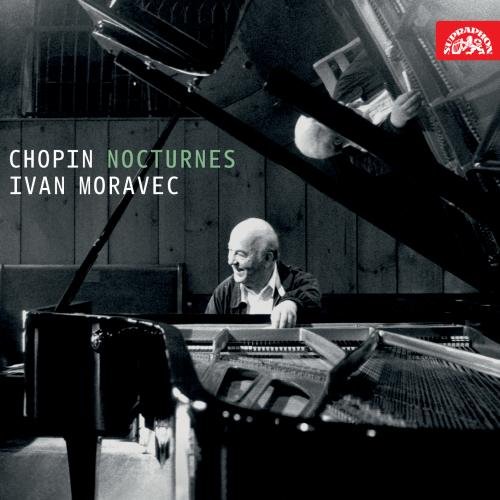
However, my personal favorites are Ivan Moravec and Maria  Joao Pires.

Ivan Moravec Chopin Nocturnes

Moravec’s Nocturnes are legendary, are rightfully so. I’ve never heard the Nocturnes played with more intensity and emotion. The recording is from the 1960s with only average sound quality but you’ll quickly for get that listening to this album. Just outstanding.

Chopin The Nocturnes Maria Joao Peres Deutsche Grammophon

I haven’t been very friendly to Pires in my recent review of her album with Gardiner, but there  is absolutely no fault to be found with this recording. Less intense then Moravec, but even more intimate. You feel like you’re sitting at home late at night in front of your fireplace, having a nice glass of wine in your hand, and she’s in the room playing just for you. This is the image that ever always comes up when I listen to her version.

I wouldn’t want to miss either one of these two outstanding recordings.
My rating for both albums: 5 stars

You can find the remastered Moravec here (Prestoclassical).

Rafal Blechacz’ Magnificent Chopin Préludes

The Chopin Piano Competition

It feels like these days there are so many competitions out there for young musicians. One one hand, that is a good thing, increasing their exposure, on the other hand it is hard for the outside to judge the quality of the different competitions.

Well, there is one competition that clearly has proven its relevance over time, the Chopin Piano competition in Warsaw. First of all it is only held every five years. Furthermore, it’s been around for nearly a century. Several times, the jury was critical enough not go give a first price.

And then, most importantly, are the winners. What is the common ground between Maurizio Pollini, Martha Argerich, Krystian Zimerman, and Yundi Li, beyond the fact that they are all recognized world-class artists today? Well you’ve guessed it.

In 2005, after Krystian Zimerman, another Pole won this competition (you probably know that Chopin, in spite of his French name, was Polish by origin), Rafal Blechacz.

I have added below a link to a Youtube video from Polish television of the recital of the winner. I suggest you ignore the poor image and sound quality and skip the introduction, and go directly to the music. Amazing isn’t it?

(Update Jan 31, 2016: see also my blog post on the winner of the 2015 competition, Song-Jin Cho here)

Rafal Blechacz

I’ve had the pleasure of seeing Blechacz live two years ago, he still looks rather shy and is not your flashy Lang Lang-style virtuoso at first sight. But then he sits down at the piano and you cannot be but amazed but how beautiful he plays.

Chopin’s Préludes

Chopin’s préludes, especially op. 28, are among his most famous works. And in my opinion, they are among the most beautiful pieces for piano ever written. Don’t get me wrong, Beethoven sonatas are amazing, Schubert’s late works are very beautiful, etc. But there is a certain intensity in the Preludes that makes them very special to me.

Obviously, they’ve been recorded many times, both Argerich and Pollini, Blechacz predecessors in Warsaw, have done excellent versions. You also wouldn’t go wrong with Rubinstein (obviously) or Chopin Complete The Preludes Rafal Blechacz Deutsche Grammophon

But my favorite these days is Rafal Blechacz recording on Deutsche Grammophon. Particularly beautiful are no. 13 in F sharp minor, and the Raindrops no. 15 is so delicately played it really reminds you of a light summer drizzle.

My rating: 5 stars

You can find it here (Prestoclassical), both physically and as download.

And as promised above, the Polish TV show on the winning recital at the 2005 Warsaw competition.

My Top10 Jazz Covers Of Pop Songs

Pop/Rock music in Jazz

The usage of pop music in Jazz is actually nothing new, to be fair, many of what are considered today’s Jazz standards were initially “pop” songs of their times.

In my list below, I’ve taken some kind of liberty with the definition of “Pop/Rock” song (in a nutshell it is just another list of music I love).

The entire list started with me listening to Christian McBride’s recent live album I just reviewed and particularly his “Car Wash” song, his version of this 1970s disco classic.

Don’t pay any attention to the numbering, this is just completely random, no ranking implied.

I’m pretty sure I’ve missed many others, please add your favorites in the comments!

1. Christian McBride – Car Wash

As mentioned before, from the great Album Live At The Village Vanguard 

The Christian McBride Trio Live At The Village Vanguard 2015 MackAvenue

2.  Brad Mehldau – Exit Music For a Film

I’ve already listed Brad Mehldau in my 25 Essential Jazz Albums, and he actually has two pop covers on there, I could have chosen both Nick Drake’s Riverman and this cover from Radiohead.

Brad Mehldau Art of the Trio vol 3 Songs Warner Jazz 1998

3. Sophie Hunger – I Put A Spell On You

I’ve already reviewed this great Nina Simone tribute album, and this version of the Screamin’ Jay Hawkins classic is my favorite song on there. Love it!

Autour de Nina Verve Compilation Sophie Hunger Melody Gardot

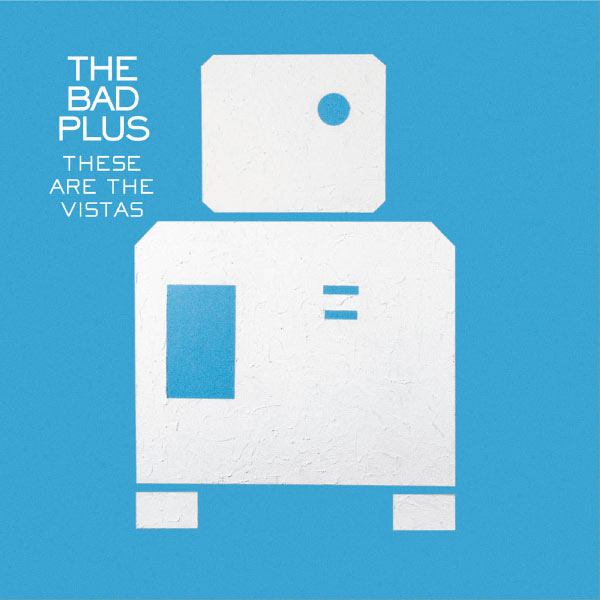
4.  The Bad Plus – Smells Like Teen Spirit

I haven’t mentioned this American trio on my blog yet, interestingly enough. They do a lot of cover versions which are usually a lot of fun, like this Nirvana classic from their 2003 album These Are The Vistas.

The Bad Plus These Are The Vistas 2003

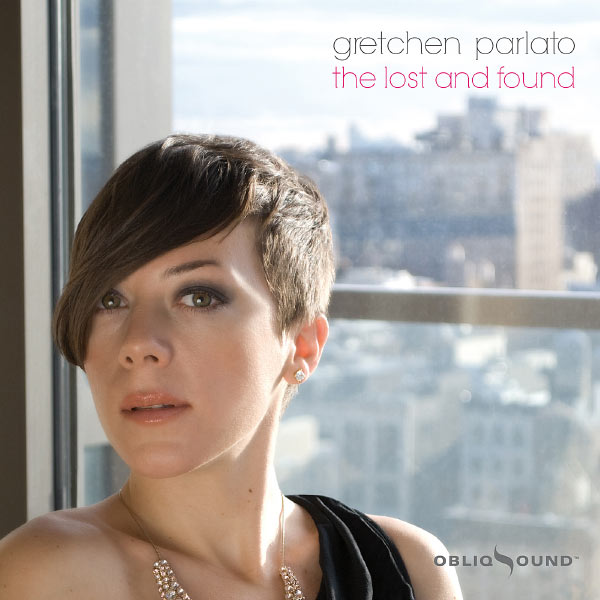
5.  Gretchen Parlato – Holding Back the Years

The American singer Gretchen Parlato has really found her very own style, you’ll recognize her immediately. She deserves even more attention than she currently gets!

And as much as I hate Simply Red in general, I really like this cover a lot.

Gretchen Parlato The Lost And Found

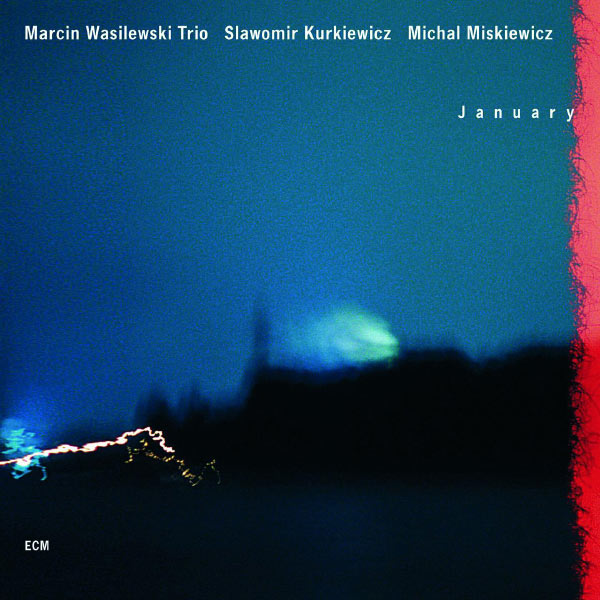
6. Marcin Wasilewski Trio – Diamonds and Pearls

Marcin Wasilewski is a great Polish pianist, his trio recordings on ECM are very beautiful, and he’s played quite a bit on other great recordings as well. Here he’s covering Prince.

Marcin Wasilewski January


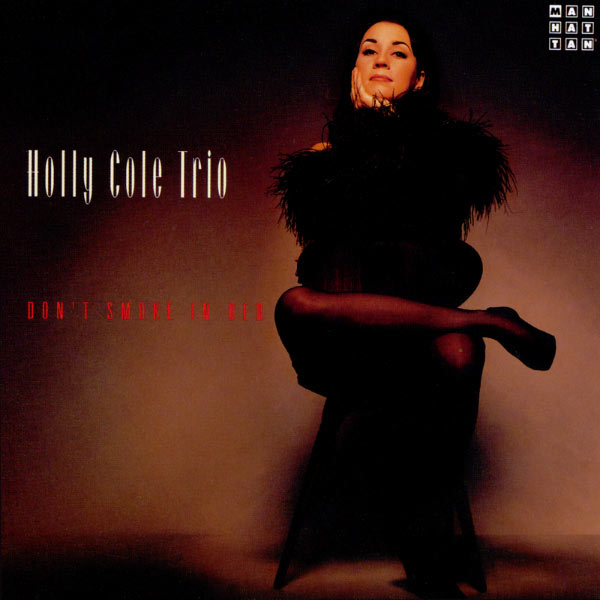
7. Holly Cole – Tennessee Waltz

Is Holly Cole actually a Jazz singer? Well, probably borderline. Who cares, this album is amazingly beautiful. One of my favorite songs on here is the 1940s classic Tennessee Waltz.

Holly Cole Don't Smoke In Bed

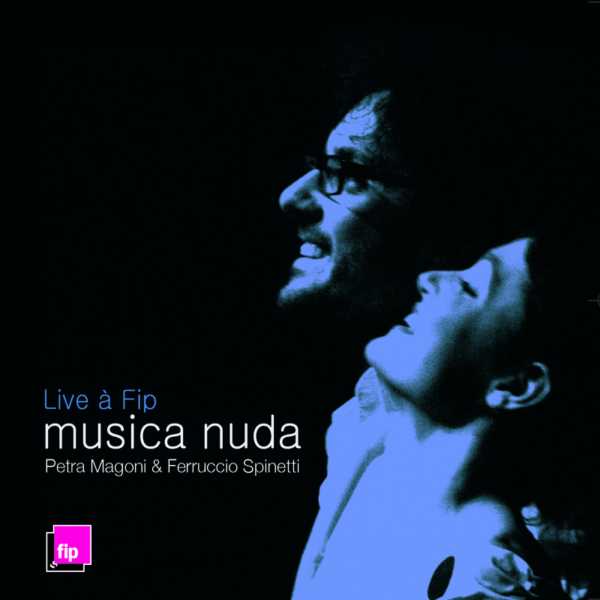
8. Musica Nuda – Roxane 

Musica Nuda, the Italian duo of Petra Magoni (vocals) and Ferruccio Spinet (double bass) is not very well-known outside of Italy, which is a pity, as it is really astounding to hear what you can do with this rather improbable “nude” combination of voice and bass, without any piano or drums. The do cover quite a lot of pop songs, The Police’s Roxane is just one beautiful example.

Musica Nuda Live At Fip

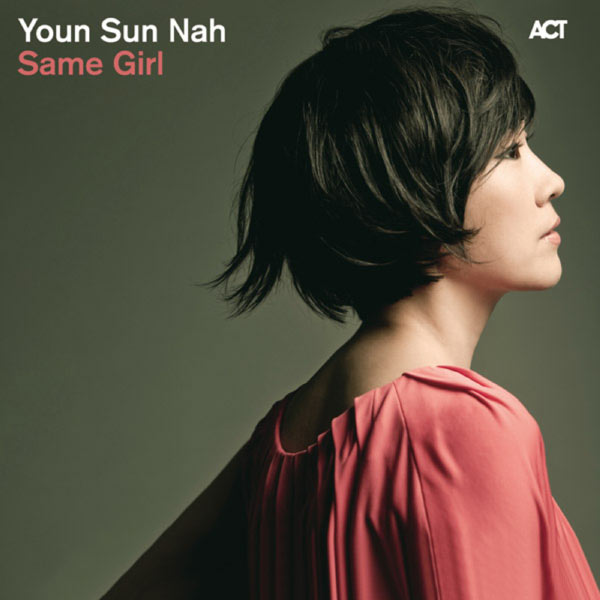
9. Youn Sun Nah – Enter Sandman

Youn Sun Nah also has a great track on Autour de Nina (mentioned above), but her own albums are equally impressive, e.g. this album Same Girl on ACT, which gives us this beautiful Metallica cover.

Youn Sun Nah Same Girl

[/embed]

10. Sarah McKenzie – Moon River

I’ve recently praised Sarah McKenzie’s new release We Could Be Lovers, and still have it in constant rotation. Moon River is just out of this world!

Sarah McKenzie We Could Be Lovers Impulse 2015

So, what do you think? I’m considering a second edition of this blog post. Any recommendations would be appreciated!

A Follow-Up on Grieg’s Piano Concerto – Andsnes Still Wins

Disques en lice

I’ve mentioned several times that Swiss radio has two great shows, one in German, one in French, that both have the same approach, select 5-6 versions of a classical work, get 2-3 experts and a  moderator in a radio studio, and have the experts compare these versions blindly. The German version is called Diskothek im Zwei, the French version is called Disques en lice.

I follow both regularly. I often don’t agree with the invited experts, but it is a really nice challenge to see if you listen to the same music without knowing who’s playing, you still like it (or maybe like it less if you’re not aware one of your heros is playing).

A similar concept exists with wine (my other passion), and unlike my wife who has a much better nose, I’m only average at blind tastings. Luckily, I usually do better with music.

Grieg’s piano concerto

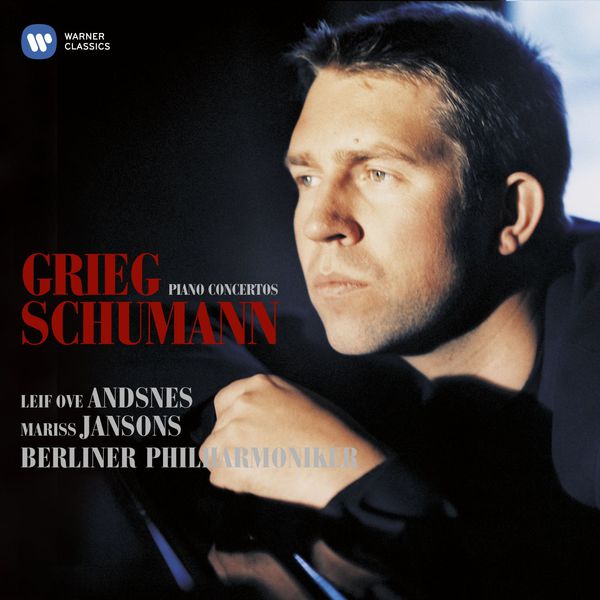
I’ve already written about Grieg’s piano concerto previously in this post about Javier Perianes recent recording. There I mentioned that my all time favorite is the version with Leif-Ove Andsnes.

Grieg Schumann Piano Concertos Leif Ove Andsnes Maris Jansons Berliner Philharmoniker

I’m a big Andsnes fan boy, as also documented in my recent commentary about his Beethoven concertos here. So I was really hoping that Disques en lice would include his version, as I wanted to ensure that I still like the version when actually I don’t know it’s him. Luckily for me they did (link to the show here).

Let me brag a little here (sorry!), but I recognized his version blindly in all three movements, and am still as enthusiastic about it as before! I really don’t know how one could do this concerto any better than Andsnes and Jansons.

The competition included:

  • The very recent Vadym Kholodenko recording on Harmonia Mundi with the Norjan Radion Orkesteri. Well, overall I kind of liked the version but must agree with the experts that the orchestra just isn’t the same level than the others, so this got kicked out after the first round (3 stars)
  • Nikolai Lugansky with Kent Nagano and the DSO Berlin: well, ok, but nothing special. Also got voted out rather rapidly, fine by me (3 stars)

The three versions that made it to the final round (3rd movement) are Andsnes, and these two:

  • Nelson Freire, Rudolf Kempe, with the Munich Philharmonic. Interesting version, the still very young Freire has tons of energy here. Unfortunately I liked the orchestral playing quite a bit less (4 stars overall). Nevertheless, this version convinced one  of the three commenting experts

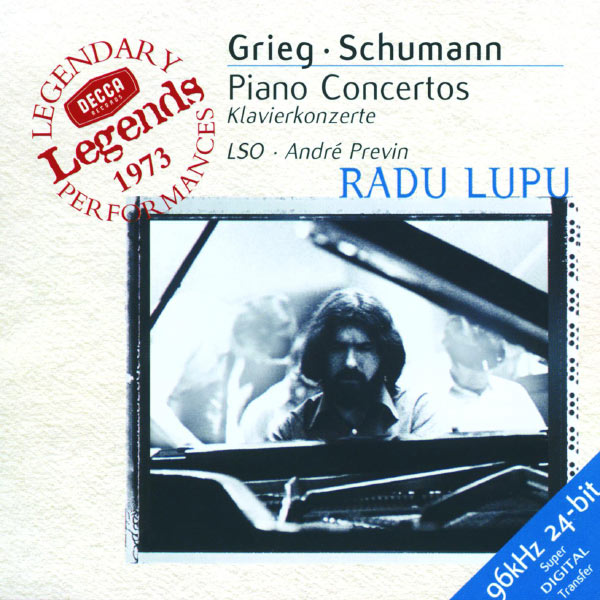
Grieg Schumann Piano Concertos Radu Lupu André Previn, London Symphony Orchestra Decca

  • Radu Lupu, André Previn, London Symphony. This version won for the two other experts. Well, I get what they like, Lupu is obviously doing an outstanding job, and the way they play the 2nd movement is out of this world! Unfortunately, overall this version is just a tad too slow for me, losing too much energy in the process especially in the first movement (still 4 stars though).

Therefore, Andsnes remains my hero for Grieg, and I reconfirm my 5 stars for this album!

The Perianes version from my last post was played at the beginning of the show unfortunately “hors concours”, I still like this recording a lot

And the Moog recording I commented about last time I’ve seen reviewed twice now. Gramophone really loved it, Classica in the latest issue only give it 3 star, in line with my rating.

Two Recent Releases I Really Don’t Like

What “Not Good” Looks Like

I’ve been writing a lot about albums I really like, just witness the number of 4 and 5 star reviews (you can click on the link on the side bar, categories to find them) I’ve recently written (for more information about my personal rating scale, see here)

However, for this site to be useful to anybody, I strongly believe I also need to write about stuff I don’t like that much, so you can check if your taste really agrees with mine.

Too many reviewers seem to have their rating scale only between 4 and 5. How do you really separate the good from the bad this way? Obviously, a  big part of this is just selection bias.

I assume, professional reviewers are not too much unlike me and much more prefer to write about stuff they like vs. stuff they don’t  like. Same has happened on my site so far, with few exceptions.

My two main sources of classical reviews, Gramophone (UK) and Classica (FR) don’t shy away from low ratings, that’s what I like about them. Gramophone doesn’t use a rating scale beyond the Editor’s Choice, but you can clearly read from the text whether they are enthusiastic or not.

And Classica really doesn’t shy away from using 1 stars, given the two examples below. And unfortunately, I wholeheartedly agree with their assessment.

Dudamel, Barenboim and Brahms

Classical uses a 4 star plus “Choc” scale, which equals about my 5 star system. However, in their most recent October issue, I’ve seen a new rating of a hollow star which I had never noticed before, for this recent DG release of Barenboim for once back at the piano, with the young superstar Dudamel. Unfortunately, I must agree with Classica here. I really cannot find any positive element to these recordings of the two concertos that I love so much (how weird I haven’t mentioned them yet on the blog).

Honestly, 1 min into the opening of the first piano concerto I had enough; there was nothing at all of the drama and desperation that so much impressed me when I heard this first at the age of 17. I know Dudamel has many fans, but I have yet to hear a recording of him that I really like (admittedly, I’ve only heard a few). And when Barenboim comes in, it doesn’t get any better. I’m really thankful for streaming these days that let’s you listen to recordings without having to buy them, I’d really have major regrets for this one.
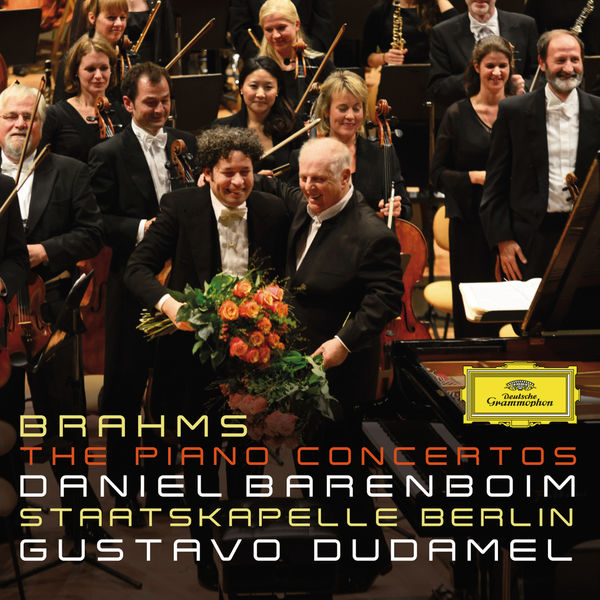
Brahms Piano Concertos Dudamel Barenboim 2015

My rating: 2 stars (1 star for me really means un-listenable, and Brahms will always be Brahms, even if butchered like here).

For the Brahms concertos, you have many good alternatives, from pretty much every recording that Georges Szell ever made of them (be it Fleischer, Curzon, or Serkin), to Chailly with Freire for a more contemporary one.

Arabella Steinbacher Plays Mendelssohn and Tchaikovsky
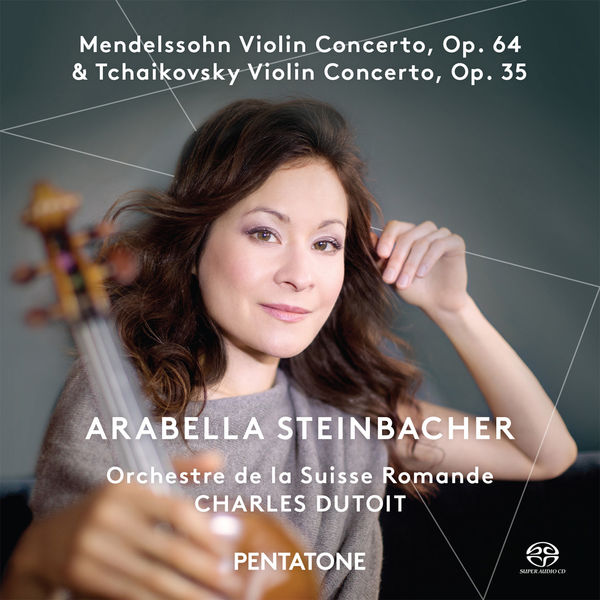
Arabella Steinbacher Mendelssohn Tchaikovsky Violin Concertos Orchestre de la Suisse Romande Charles Duitoit Pentatone

Here’s another disappointment: Arabella Steinbacher is a truly great violin player. However, from the opening moments of the Mendelssohn I knew something was very wrong. A very sweet tone with a lot of vibrato, but very little energy behind it.

And in comes the orchestra (let me open a little parenthesis here for fun: Mendelssohn is one of the very few orchestras that starts with the soloist, not with the orchestra, there’s an urban legend that a violinist player was relaxed at the beginning of the concert, assuming he’ll have to play Beethoven. The conductor gives him signal after signal, but the violinist doesn’t get it. Finally, the conductor desperately starts, the violinist after the first second realizes his mistake and raises up the violin literally last-minute. Parenthesis closed. If somebody has a source that this has really happened, please let me know) and it really doesn’t get any better.

The Tchaikovsky is equally uninteresting unfortunately.

Classica agrees with me, giving this recording a rather brutal 1 star and talking about a “lack of engagement” which nicely summarizes my feelings as well.

My rating: 2 stars (again, 1 star would be too brutal, I can listen to this, I just don’t want to).

Excellent alternatives are Janine Jansen on Decca for the Mendelssohn , and Julia Fischer for the Tchaikovsky (like the Steinbacher, on Pentatone).

Bill Evans’ Heritage At Its Best – Enrico Pieranunzi’s Deep Down

Enrico Pieranunzi

When starting this post I was trying to find a good reason why I didn’t mention the brilliant Italian pianist Enrico Pieranunzi in my 25 Essential Jazz albums. Actually, I couldn’t really find one.

Probably the only one that comes to mind that out of the enormous recording legacy that Pieranunzi has done over the years (and he’s still recording) it is really hard to pick a winner, there are so many good albums in his discography.

Obviously, Bill Evans influenced many contemporary pianists. However, his influence is audible even more with Pieranunzi. He certainly doesn’t make a secret out of it, he’s even written a book about Bill Evans, and on the 1986 recording below and many others, he’s even taken on Marc Johnson, the bassist of Evans last trio (see his brilliant playing on Consecration).

That said, don’t think that Pieranunzi is merely a Evans clone, far from that, he is one of the most extraordinary piano players of our times for me.

Deep Down

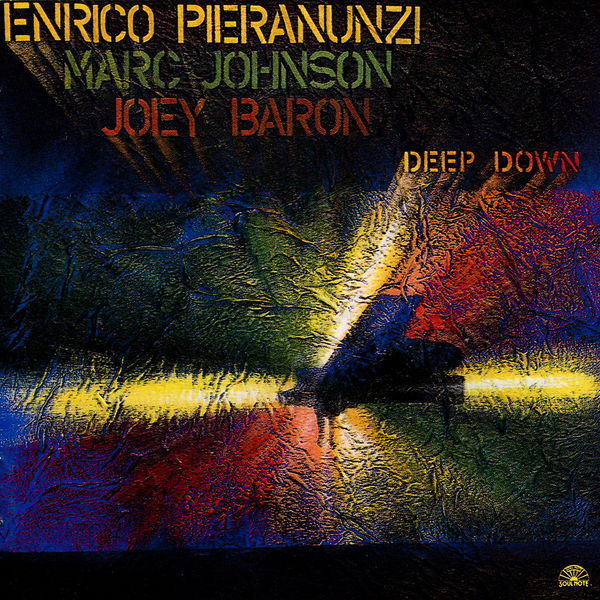
Enrico Pieranunzi Marc Johnson Joey Barron Deep Down 1987 Soul Note

This 1986 album is an excellent example of what I like about Pieranunzi. You get beautiful ballads (We’ll Be Together Again or Atigny), swinging melodies (Dee Song), and one of my most loved standards (Someday My Prince Will Come) in a beautiful, very individual version.

Overall, Pieranunzi will never only record standards, he’ll always contribute his own compositions (4 of the 9 album tracks, with Marc Johnson contributing another original).

My rating: 5 stars (yes I know, again 5 stars, but rest assured, my blog so far just has a very heavy bias to the stuff I really like, it is really not that I’ll fork out 5 stars at every corner).

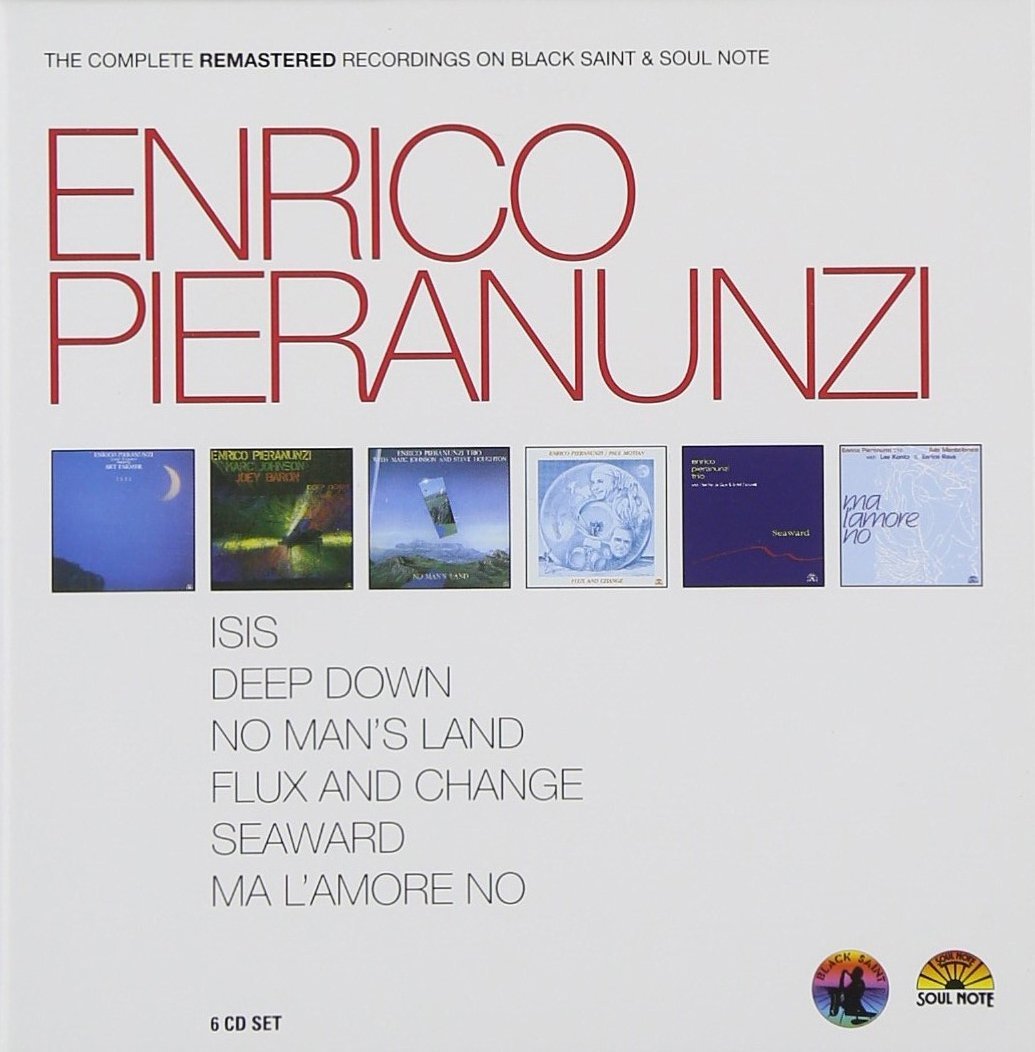
I strongly suggest you don’t limit yourself in the exploration of Pieranunzi to this album, there is so much more to discover. For example, I’d recommend you get this full 6CD box at Amazon, which includes 5 other albums from his earlier period, all good to excellent.

Enrico Pieranunzi The Complete Recordings on Black Saint and Soul Note 6 CD Box

You can also just download the individual album here (Qobuz).

Classical Life

A classical music blog by music critic Tim Mangan

This Week's Music

Making Classical Accessible

From my Macbook to the Net

Evaporation of my thoughts and observations

Elestra

Author: Artienne

My Life in Music

Playing, Singing and Listening

ArsX3

A brand new journal reviewing books, cinema, music

LawrenceEz's Blog

Creative and Performing Arts: Writing, Classical Music, Photography

Laetitia Strauch-Bonart

Contemporary Politics & Culture

sibling revelry

reveling in all things classical

It's A Raggy Waltz

I collect jazz on vinyl, I dig the Dave Brubeck Quartet, & I write about it

La Musica

By two cousins

thejazzbreakfast

Dishing it out from the heart of England

only jazz

random thoughts about music that matters to me

The Culture Project

Exploring the world of literature, wine, art, music and more.

René Spencer Saller

The music causes me to dream of fabulous empires, filled with fabulous sins.

Breaking Baroque

Blog of Tafelmusik Baroque Orchestra and Chamber Choir

Tasting Nirvana

Eating your Dosha

Shadow of Iris

Poetry, fiction, short stories, more ...

The Immortal Jukebox

A Blog about Music and Popular Culture

April Greene

Writer + Editor

a pianist's musings

A history of your favorite classical music.

Classical music for all

Boris Giltburg's blog

I HEAR VOICES

An orchestra seat in the web space