A Lot Of Fun At The Vanguard – Christian McBride’s New Live Album

3 Kinds of Piano Trios

I’ve written about a lot of piano trio album already, as this is one of my favorite genres, from Shai Maestro, to Helge Lien, to the obvious Keith Jarrett (here and here). By the way, if you’re interested in reading all my posts about a particular genre like the piano trio, just click on the category link in the  sidebar (or here). I spent a lot of effort categorizing and tagging my posts as I want you to be able to find stuff easily. Otherwise there is always the free text search.

I personally mentally categorize the Jazz piano trio into three classes:

  1. Focusing on the melody

These move a bit away from the traditional Jazz, and have a strong focus on the melody and harmonic development. Typical examples for me are Triosence, Edgar Knecht, or the Tingvall trio. As you can see from my previous reviews, I really like this category, as I am a sucker for melodies.

2. Avantgarde

Going beyond traditional harmonies and rhythmic structures, these groups tend to be more exploratory, recent examples include Vijay Iyer or Giovanni Guidi. Often, these aren’t really my cup of tea. That’s why you won’t be reading a lot about them here, in spite of the fact that I admire their artistic creativity.

3. It Don’t Mean A Thing if It AInt’ Got that Swing

Typical examples are Oscar Peterson and Ray Brown, where a certain Swing is always present.

I very much like this form of piano Jazz, nothing better to cheer you up if you are in a bad mood.

Obviously, these classifications are never clear-cut, but they help me mentally organize my music collection.

Christian McBride Live At The Village Vanguard

i was pointed to this album by forum contributor JoeWhip (see here).

For whatever reason McBride, a bassist close to the great Ray Brown, kind of flew under the radar for me, probably he was more active as a sideman than a leader, what a miss!

I’m glad I finally rediscovered him. He plays here with Ulysses Owens Jr on drums and Christian Sands on piano.

The Christian McBride Trio Live At The Village Vanguard 2015 MackAvenue

This album is a typical example where I just can’t sit still. Whenever I’m in a Jazz concert I’m always surprised that there are so many people in the audience that sit completely still. That’s ok for me maybe during a ballad.

But on any uptempo song I just need to somehow move with the music, whether it is my foot, hand, or whatever. I may look a bit silly, but it is completely impossible for me not to go with the music. And this is how the third category of trio jazz I mentioned above should be!

This is excellent live Jazz, nothing else but pure enjoyment. And the extra energy of the mythical Vanguard that I always visit when my travels get me to NYC probably helps.

After Aaron Diehl and Cécile McLorin Salvant, Mack Avenue has another winner here!

My rating: 4 stars

You can download it here (Qobuz) or here (HDTracks)

Brahms Sonatas: Another Masterpiece from Faust and Melnikov

Yes I know, I come across a an Isabelle Faust fan boy (see my review of her Brahms concerto here and of her contribution to the Schumann trio here). Well what the heck, I stand by it, she’s great.

And in the fabulous combination with Alexander Melnikov even more. Their Beethoven violin sonatas are my absolute favorite version.

And now they release a Brahms recording! As you have seen from the title of my blog, I’m a big Johannes fan as well. So, expectation were high, high enough for me to even pre-order the album (don’t know why I bother doing this, it’s not that you get it any sooner, and I could otherwise stream the content before making my purchase to check). Well, call it dedication, or silliness.

Brahms Violin Sonatas 2 & 3

Brahms Isabelle Faust Alexander Melnikov Violin Sonatas 2 & 3 Harmonia Mundi 2015

Well, this one’s got tough competition, as my reference version is none less than Szeryng and Rubinstein for op. 108! (to be fair, this was also my first ever recording of the sonatas, so I may be biased.

On top of the sonatas 2&3 (op. 100 and 108) from Brahms, you get a set of Romances (op. 94) by Schumann, and a very rarely played work, the “F.A.E.” (“frei aber einsam“, free but lonely) collaboration of Brahms, Schumann, and Schumann’s unknown pupil Albert Dietrich. Frei aber einsam was the motto of Joseph Joachim, the famous violin player, friend of both Schumann and Brahms, he actually introduced the two in the first place. Both “fillers” are beautiful pieces that are well worth being discovered.

But you’ll obviously buy this mainly for the sonatas, and you won’t be disappointed. Alexander Melnikov plays a beautiful 1875 Bösendorfer period instrument, and Faust her regular “Sleeping Beauty” Stradivarius. You get energy, passion, but also extremely nuanced quieter moments.

Does this kick my Szeryng/Rubinstein version from the throne? Maybe not quite. But it stands on equal foot right next to it.

Highly recommended. Plus you get the beautiful Harmonia Mundi sound.

My rating: 5 stars

You can buy it here (Qobuz) or here (Prestoclassical)

P.S. My iMac bluetooth keyboard is going nuts, the “s” and “w” keys don’t work properly any more. Have you ever noticed how ubiquitous the letter “S” is? And guess what pleasure it is writing a post about “sonatas” without the letter “s”…. This took forever to write!

UPDATE Sep 29: Just noticed the latest Classica gave this album a “Choc”, i.e. 5 stars as well.

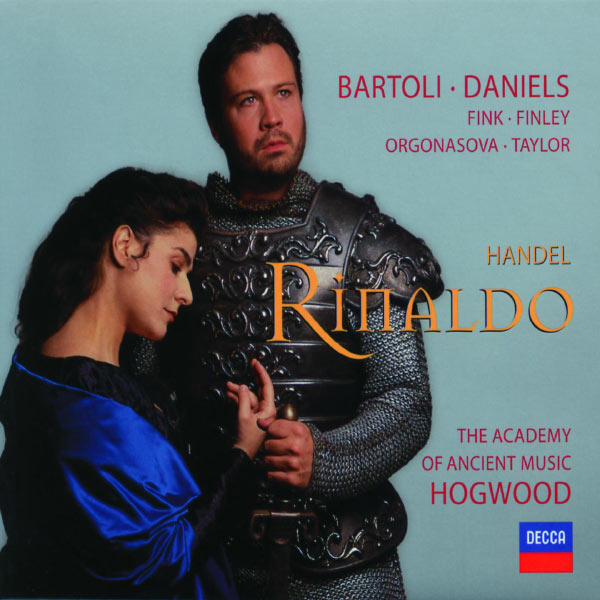
Let Me Weep – Rinaldo, Händel’s First Major Opera

In my post some time ago on The Top 10 Music That Gives Me Goose Bumps, I mentioned the famous aria “Lascia ch’io pianga” (Let me weep).

Georg Friedrich Händel

I still haven’t written about this piece, or actually about Georg Friedrich Händel  (I still prefer his German spelling, although in later years he became one of the first “expats” of all times in London and the English spelling of George Frideric may be more familiar to you) in general

Rinaldo, as its HWV number of 7 indicates, is one of the earlier Händel works, but in spite of this, Lascia is what we’d call recycling today, as it has been used twice before in other works, once without words in his op. 1, the opera Almira (rarely played these days), and also in the oratorio Il Trionfo Del Tempo E Del Disinganno (which in spite of its HWV number of 71 is also really early, but was reworked).

This kind of recycling in the baroque area was very common, even Bach used it all over the place, by the way. Many cantatas all over sudden will remind you of the Christmas Oratorio, or have a piece of the Brandenburg concertos.

Rinaldo HWV7

But back to Rinaldo. This was probably the first of his London operas. The story, is based during the first crusade near Jerusalem, and based on an epic by Torquato Tasso.

In spite of the great success of Lascia, the entire opera hasn’t been recorded that often. These days you basically have the choice between three versions (plus some DVD editions).

The oldest one is Jean-Claude Malgoires 1977 recording on Sony, still quite nice.

The to more recent ones are René Jacobs that I haven’t written about a lot yet, and Christopher Hogwood, both from the first decade of this century. Between the two I have a preference for Hogwood, thanks to its outstanding cast, in spite of the fact that Cecilia Bartoli sometimes is a bit heavy in terms of vibrato (I prefer the cleaner singing of the modern “historically informed performance” style).

This recording should be on every collectors shelf (or these days more likely, hard drive).

My rating: 4 stars (as beautiful as it is, I still think this can be bettered in a future version).

Handel Rinaldo Christopher Hogwood Cecilia Bartoli Decca

Recitals or “Best Of Compilations”

When I was younger, I was very snobby towards Best Of or “Highlight” versions of operas, I always wanted to get the full opera. With operas of the classical period, I’m still that way, however, for baroque opera, that are usually very long, have rather complex and/or weird stories I must admit I don’t always have the patience for 3h plus of Opera seria. Luckily you’ll find the most popular (and outstandingly beautiful) arias of Händel et al quite often on recital albums by individual soloist.

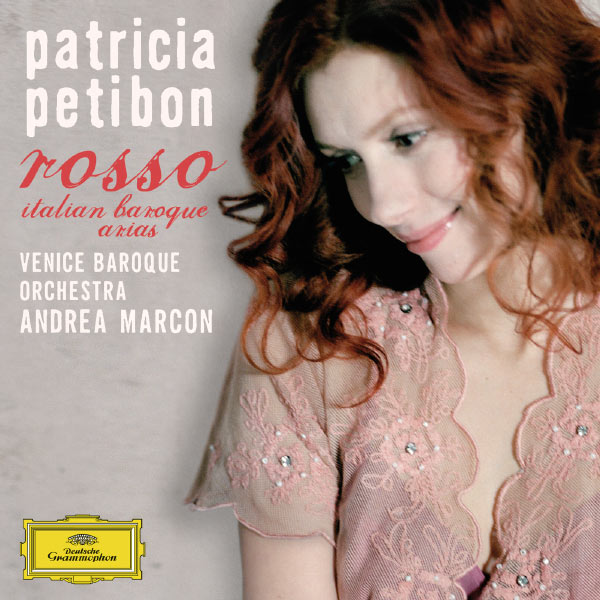
Let me recommend two very beautiful ones here that feature Lascia, by Patricia Petibon and Simone Kermes, respectively called Rosso and Drama, and both highly recommended. They offer an excellent entry into baroque opera.

Patricia Petitbon Rosso Andrea Marcon Venice Baroque Orchestra Deutsche Grammophon

Simone Kermes Dramma Sony

And finally, let me mention another beautiful version of Lascia, in a Jazz version this time, by the amazing trumpet player Paolo Fresu, on the album Kosmopolites:

Download Sources:

Hogwood’s Rinaldo: here (Qobuz)

Patricia Petitbon: Rosso: here (Qobuz)

Simone Kermes: here (Qobuz)

Paolo Fresu: Kosmopolites: here (Qobuz)

The Art of Conversation – Dave Holland and Kenny Barron

Dave Holland

I got a lot of reactions to my 25 essential Jazz albums. One of them was saying: but what of Dave Holland? Well, I’m overall not such a big fan.

I’ve heard him live once at the New Morning in Paris, and very much enjoyed the concert, but his ECM albums usually don’t excite me that much. I must admit I haven’t gone through his entire discography yet, probably there are some gems to be discovered.

One such gems is the album below.

Jazz Duos

Let’s face it, there is a reason why Jazz is usually played at least in trio form: Duos are mostly boring. There is just something lacking without e.g. a drummer.

But to make sure: the rule above has its exceptions. And one person is usually involved in these, and that is the brilliant pianist Kenny Barron. He is one of the few who can pull it off without drums, as he’s already swinging like crazy, and you basically have the drum track in your head right with it.

One excellent example of an outstanding duo recording I already mentioned in the 25 essential Jazz albums: his collaboration with Stan Getz in People Time.

The Art Of Conversation

Kenny Barron Dave Holland The Art Of Conversation Impulse 2014

This 2014 Impulse album is excellent. And as a Keith Jarrett fan it pains me to admit that this collaboration is better to my ears than both the recent Jarrett / Charlie Haden duo recordings(Jasmine and Last Dance).

It is basically the result of a long tour of these two outstanding musicians together in 2012, actually, Jean-Philippe Allard, the producer of People Time mentioned above, saw them in concert in 2012 in Paris and asked them whether they wanted to do a duo recording. Luckily both agreed.

There are beautiful long ballads like Rain, Swinging monsters like In Walked Bud (I never would have believed that anybody else than Monk can pull this track off). In Your Arms is an outstanding Dave Holland original with a lot of intensity. Basically, this album really never becomes boring, but it is like to smart people having an intelligent conversation, the title is spot-on.

My rating: 4 stars

You can get it here (Qobuz) and here (HDTracks)

My Favorite Bruckner – Günter Wand’s Late Recordings With The Berlin Philharmonic

Anton Bruckner

Pretty much at the same time, around the end of high school, my two favorite composers were Brahms and Bruckner. As you can see, one survived and made it to the subtitle of my blog.

The other one, good old Anton, I listen too much less regularly these days. I still love mainly symphonies no. 4 and 7, but overall the broad romanticism and huge mountains of symphony blocks appeal less to me than they did at back then. Probably for similar reasons, I really still don’t appreciate Wagner that much, with some rare exceptions.

In parallel my taste moved backwards in time from the late romantic area to really appreciating Mozart and Bach. When I was really young I thought of Mozart as “too light”, and Bach as “could be composed by a computer, like painting by numbers”, Ah, the stupid arrogance of teenagers.

Anyhow, back to Bruckner. I still like him, even if I listen to his works only occasionally.

But if I do, it is usually with this box:

Anton Bruckner: Symphonies – Günter Wand – Berliner Philharmoniker

Günter Wand Anton Bruckner Symphonies Berliner Philharmoniker RCA Red Seal

Günter Wand is one of those amazingly underrated conductors, and usually only well known by die-hard Bruckner fans. There is something special about Wand and Bruckner. To be fair, Wand has recorded the symphonies at least 3 times, from a very good cycle in Cologne in the seventies, to several recordings with the NDR Symphony Orchestra in Hamburg he lead for many years, to this one, where he got to lead the BPO for a selection of the symphonies.

I grew up on Wand’ reading with the NDR. I even had the pleasure of hearing him live twice, with Bruckner 4 and 8. So obviously I’m biased, and you should certainly also check out other Bruckner specialists like Eugen Jochum or good old Karajan (yes, you Karajan haters out there, his Bruckner is great. Mind you, I used to be a Karajan hater as well….).

I only got introduced to this set 3-4 years ago from a good friend of mine from high school, who attended some of the Wand concert with me. A I had kind of moved on from Bruckner, I simply stuck to my old CDs whenever I wanted to go back and hadn’t really looked in to new recordings for nearly 20 years.

So what do I like about this? Well, it’ best of two worlds, you get Günter Wand who knows Bruckner inside out, and really has a lot of insights to offer, and you get a world-class orchestra like the Berlin Philharmonic. The sound of the BPO is just perfect for Bruckner. As much as I like the NDR, they are obviously in a different league.

Wand approaches the symphonies in a very clean way: there is no romantic overload, no sweet sugary drama, just illustrating the actually rather introvert struggle of an underrated, very catholic Austrian organ player with an inferiority complex that Anton Bruckner apparently was for most of his life.

(Bruckner experts, if I painted a wrong portrait taken mainly from reading too many booklets, please correct me!).

My rating: 5 stars (I notice I’m giving too many five stars recently. But I still think this is purely due to selection bias of me wanting to write about music I really like and not some kind of star inflation).

You can get it here (Qobuz).

P.S. David Hurvitz disagrees with me and thinks Wand’s Hamburg recordings are superior to the BPO ones. You may want to check them out too if you find them, e.g. in this box set. You never know, I may eventually return to my “roots” as well.

UPDATE Jan 29, 2016: In the Feb 2016 issue of Classica magazine, the reviewers compared blindly ten selected versions of Bruckner’s 9th. Günter Wand’s BPO version comes out on top! Here’s the comment: “The best possible version for discovering this work. Pure music, marked by the seal of infinity and eternity” (French sometimes have a certain way of getting very poetic with their language).

Esbjörn Svensson Trio Live In Hamburg

I’ve received quite a bit of feedback on my posts on my 25 essential Jazz albums. Many of them were asking why artist X, Y or Z wasn’t listed. Most of these had a point.

The Esbjörn Svensson Trio

One example is the Esbjörn Svensson Trio (e.s.t.). Why didn’t I list it? if we do a brief history of (no, not time, come on guys, I’m not Stephen Hawking) the Jazz Piano Trio, from its early starts in the 1950s with the like of Art Tatum, Errol Garner, and Oscar Peterson, I see three major steps in the development:

Bill Evans took this art form to a much higher intellectual level, and made sure all 3 musician are true partners. Keith Jarrett took over when Bill unfortunately left us and dominated the art for for twenty years, until a bunch of Scandinavians around Esbjörn Svensson came, and brought this art form to the 21st century, and introducing it to audiences way beyond the traditional Jazz audience, as there is a lot of rock and electronic influence.

So why the heck haven’t I reviewed any album of this trio yet (although to be fair I mention it regularly)? The answer is easy, e..t. is a bit too much out of the box for me on most of their albums (I’m a guy who’s extremely comfortable IN the box!). There’s usually some “craziness” going on, and quite often just a bit too much for my personal taste. That said, I fully recognize their importance. Unfortunately we lost an outstanding musician when Esbjörn died in a diving accident in 2008.

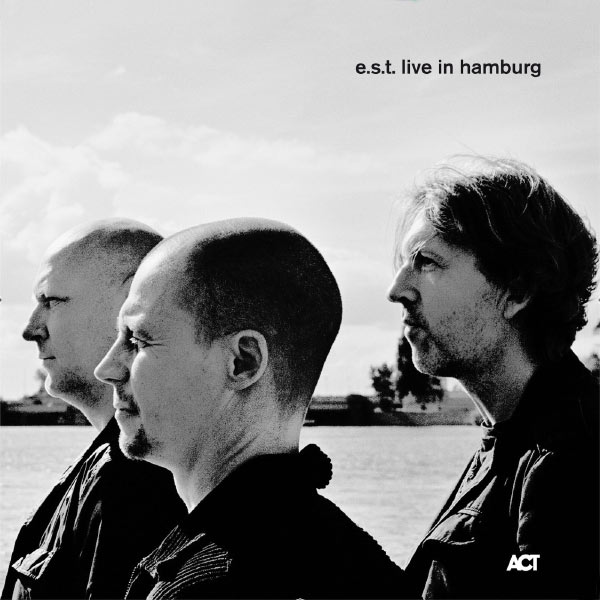
 Live in Hamburg

Esbjörn Svensson Trio Live in Hamburg

This 2007 live album (released on ACT) from a late 2006 concert (in Hamburg obviously) is just outstanding, and shows e.s.t. at their peak.

There is still some craziness ongoing (e.g. Definition of A Dog), but overall it is tame enough for my ears to really enjoy it,. And then, there is just tons of energy, including outstanding 17:39 minute long tracks like Dolores In A Shoestand. There is not a minute of boredom. This is two hours of pure adrenaline!

My rating: 5 stars

You can get it here (Qobuz), or go for the high quality 4 vinyl edition

Brahms Latest Work: The Clarinet Sonatas by Coppola and Staier

I’ve said it before, I’m a big fan of Andreas Staier. His Diabelli-Variations are outstanding (see review here). Therefore, I was rather disappointed not to like his recent release of the Bach harpsichord concertos (see here). It appears now that most other reviewers don’t share my opinion by the way. I’m still not convinced unfortunately.

But from Bach, let’s move more than a century later.

I haven’t reviewed any Brahms album for a while, which is weird given that he appears in my blog title.

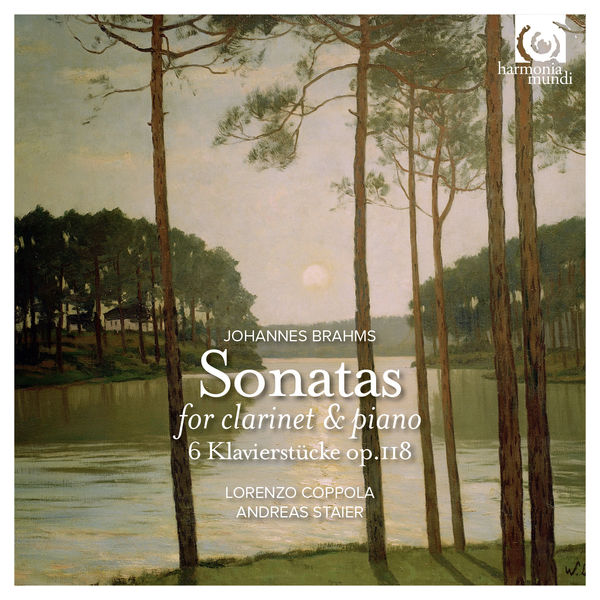
Brahms’ Clarinet Sonatas op. 120

I must admit I wasn’t historically a big fan of these sonatas, I found them not very accessible.

These sonatas, as well as the Clarinet quintet & trio, were triggered by Brahms meeting the famous clarinet player Richard Mühlfeld.  But with Andreas Staier, I had to give them a go, so I went ahead and purchased this 2015 Harmonia Mundi album.

Lorenzo Coppola Andreas Staier Brahms Clarinet Sonatas Harmonia Mundi 2015

Andreas Staier plays a Steinway on this album, which could be considered somewhat unusual given that he is known for playing historical instruments. Well guess what, this Steinway actually is from 1875, apparently the type that Brahms really appreciated.

On clarinet, we get the Italian Lorenzo Coppola, who plays a 2001 reproduction of a historic clarinet which is very similar to the one Mühlfeld played.

So we’re getting really close to what Brahms could have listened to in his final years. And all over sudden, the full beauty of these late works really becomes apparent.

6 Klavierstücke op. 118

However, to me (with my piano background), the true highlight on this album are Staier’s version of the 6 piano pieces op. 118. Let me clarify first of all that I love Brahms late piano pieces from op. 116-119, and op. 118 is a particular favorite of mine.

And here, especially the second Intermezzo (track 6) is played more beautifully than on any of my other recordings (I’ll be writing about some of them soon). Staier uses tons of rubato, but it comes fully naturally. There is so much intensity in this playing that I’ve had them on constant repeats quite regularly recently. Or take the “Romanze”, truly romantic indeed.

As usual on Harmonia Mundi, this is well recorded.

My rating: 4 stars for the clarinet sonatas (rating my preference of the repertoire here, not the playing), 5 stars for the op. 118.

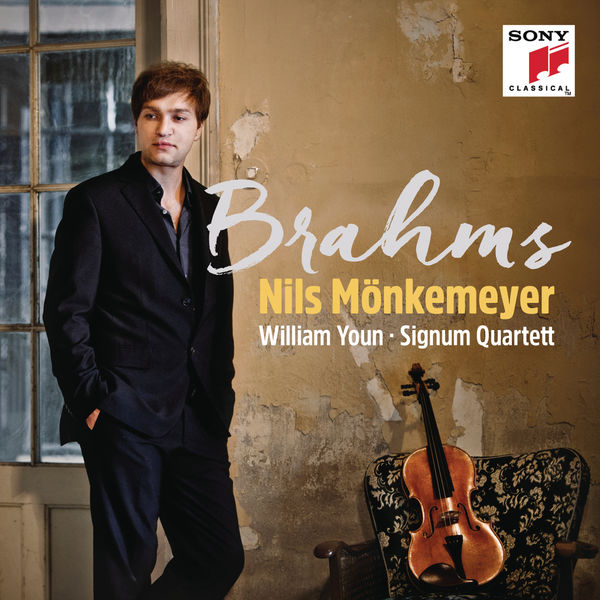
P.S. If you like op. 120, you should know that there is also a version of these sonatas replacing the clarinet by a viola. The well-known viola player Nils Mönkemeyer has just released an album on Sony playing these sonatas.

Nils Mönkemeyer Brahms Sony 2015

This album is really quite beautiful and also worth checking out.

You can download the Coppola/Staier here (Qobuz) or here (eclassical)

Classical Life

A classical music blog by music critic Tim Mangan

This Week's Music

Making Classical Accessible

From my Macbook to the Net

Evaporation of my thoughts and observations

Elestra

Author: Artienne

My Life in Music

Playing, Singing and Listening

ArsX3

A brand new journal reviewing books, cinema, music

LawrenceEz's Blog

Creative and Performing Arts: Writing, Classical Music, Photography

Laetitia Strauch-Bonart

Contemporary Politics & Culture

sibling revelry

reveling in all things classical

It's A Raggy Waltz

I collect jazz on vinyl, I dig the Dave Brubeck Quartet, & I write about it

La Musica

By two cousins

thejazzbreakfast

Dishing it out from the heart of England

only jazz

random thoughts about music that matters to me

The Culture Project

Exploring the world of literature, wine, art, music and more.

René Spencer Saller

The music causes me to dream of fabulous empires, filled with fabulous sins.

Breaking Baroque

Blog of Tafelmusik Baroque Orchestra and Chamber Choir

Tasting Nirvana

Eating your Dosha

Shadow of Iris

Poetry, fiction, short stories, more ...

The Immortal Jukebox

A Blog about Music and Popular Culture

April Greene

Writer + Editor

a pianist's musings

A history of your favorite classical music.

Classical music for all

Boris Giltburg's blog

I HEAR VOICES

An orchestra seat in the web space