Keith Jarrett’s My Song – I Really Shouldn’t Be Liking This Album

Keith Jarrett again

Time for another post on Keith Jarrett, given that he prominently figures in my blog’s subtitle. I’ve also mentioned My Song is my recent Songs That Give Me Goose Bumps post .

Jarrett is obviously one of the most brilliant artists in the Jazz world. So why do I say I shouldn’t like this album? Well, two things: a) I love most of Jarrett’s solo albums from the 1970s (the obvious Köln Concert, the Sun Bear Concerts, Bremen/Lausanne), but I find his regular 1970s Jazz albums, very much hit and miss to my taste (with significantly more misses than hits). This is not a particular Keith Jarrett problem, but more my personal problem with the 1970 Jazz scene overall.

Furthermore, I’m not a big fan of Jan Garbarek . Most of the albums I’ve heard of him leave me rather cold and slightly bored. No judgment implied here, just personal taste. (A notable exception is the recently released 2009 Dresden live recording).

My Song
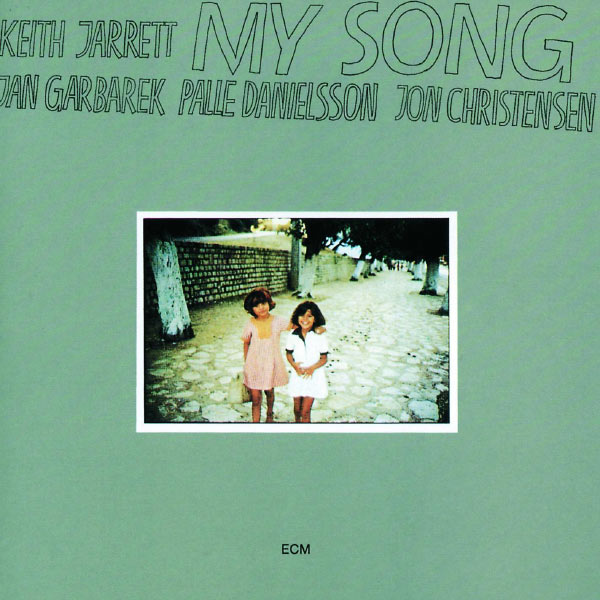
Keith Jarrett MySong_600

So how come this 1977 album is among my absolute all-time favorites? Well, to be fair, one thing that plays in its favor is the fact that this was my first ever Jazz album. Before buying this at the age of 18 or so, Jazz was weird people playing weird music in my mind.

And then I heard this album: amazingly beautiful melodies, very simple and straightforward arrangements. I couldn’t really believe this was what Jazz was all about. So I copied the vinyl on compact cassette (quick history lesson for my younger readers, google it for your general education, this is what MP3s used to look like) and played it in the car radio over and over and over.

Usually, with stuff I used to listen to a lot during my youth I’ve outgrown it by now. Not this album though. There is a timeless beauty in the melodies. All original compositions by Keith by the way.

My preferred song is the eponymous title song, which is one of my preferred melodies of all times (you can hear the crowd cheering when Jarrett plays this as an encore on the Carnegie Hall solo concert, see also the above mentioned post for a Youtube clip).

The other favorite is the relatively short Country, where Jarrett introduces the theme, before Garbarek get’s to take it over. The rest of the album is very nice as well, with the exception of the slightly random (to my ears) Mandala. All the rest, after all these years, I can still listen to over and over and over again. A rare achievement.

My rating: 5 stars

If you want to buy it, the recent 2015 remaster available in 24/96 and 24/192 is of astounding quality. It’s rather expensive, but you could never guess listening to it that this recording is nearly 40 years old. This was originally recorded and mastered in Oslo by Jan Erik Kongshaug, a true recording magician.
You can find it here and here.

Schubert on Fortepiano by Andras Schiff – not for beginners

In his comment on my initial Diabelli thread, Jud asked about the new Schubert recording of Schiff on ECM.

0002894811577_600Curiosity got the better of me, and I bought it blindly (instead of streaming it first as I would have done usually), Actually, I’m glad I did.

Andreas Schiff uses the same 1820’s Franz Brodmann fortepiano he also uses on the Diabelli’s second “disc”. This is not very surprising given that he actually owns this since 2010. (It is usually on loan to the Beethoven-Haus in Bonn).

When listening to Fortepiano, the differences are much larger than with modern grand pianos. Sure, a Bösendorfer has a different house sound to a Steinway, and a trained pianists will be able to tell one Steinway from the other (witness the fascinating movie Pianomania if you want to know more), but that said, for most of us mere mortals all sound pretty nice.

In the early 1800s we were far from this homogeneity. This is important to know before you purchase a fortepiano recording, as they really can sound quite differently, and you may not like all sounds.

There are some I cannot listen to for a long time (e.g. Malcolm Bilson’s recording of the Mozart piano concertos), while I love the sound of others (e.g. Roland Brautigam playing a Paul McNulty replica of an 1820 fortepiano in his amazing Beethoven piano music cycle).

Brodmann Hammerflügel

The sound of this particular Brodmann Hammerflügel I very much like on the Diabelli, due to their very intellectual nature. It takes much more getting used on the romantic beauty of Schubert (I know Schubert was borderline between classical and romantic period, but to me is is clearly in the latter), especially if your current reference is this:

uchida schubert

Mitsuko Uchida

The sheer beauty of Uchida on Schubert is just outstanding. Well, the sound of the Brodmann is anything but beautiful at first ear.

Funnily enough, Andras Schiff himself is on record (from the 1990s) dreading somebody playing Schubert on a fortepiano. He has obviously by now made up his mind and admitted he was wrong.

And to be fair, he was. There is so much to discover here, not only you because you hear the music “as Schubert would have played it” (and unlike Beethoven, at least he wasn’t deaf), but the colors, the nuances, everything is different. This is NOT a recording to lay back and enjoy, this is a journey into the music.

Real highlights to me are the Moments Musicaux (revealing their true Viennese charm) and the amazing sonata D960.

If you don’t have any Schubert piano works yet, don’t buy this as a first album. Go for Uchida, Brendel, Lewis, etc (or the recently released outstandin album by David Fray).

And please do, as Schubert (to my ears) wasn’t great in the symphonic genre, but has done marvelous work both on the piano and in the chamber music fields (more on this later).

But if you know what you’re getting, check this out, you won’t disappointed. And obviously as usual ECM is very well recorded.

Overall rating: 4 stars

Is the Jazz Piano Trio the ideal art form of the 21st century? – Keith Jarrett’s Standards Vol. 2

Let me answer my rhetorical question immediately: obviously not, there are so many art forms out there today that trying to single out one of them is clearly ridiculous.

So let me rephrase: Is the Jazz Piano Trio my ideal art form? And the answer is, pretty close. There is something special about the intimacy of 3 musicians together, interacting and generating something amazing. It is in a way the modern equivalent of the String Quartet, which many consider the summit of classical chamber music.

I’d like to start by one album which I consider somehow the birth of the contemporary (meaning the last 30 years, I’m starting to get older….): Keith Jarrett’s Standards vol. 2 (footnote: vol. 1 is great as well, I just have a very slight preference for the 2nd volume).

Oh no, you’re going to say, not Jarrett again. Well first of all, you’ve been warned, it is in my subtitle of the blog, and second, I promise I’ll be talking about other musicians as well in the future.

Back to my old friend Keith (not that I’ve ever met him beyond being about 25 meters away last Friday): Why is this album so important?

The lost decade

Well, put yourself in the early 1980s (assuming you were already alive then, I was, but not for long). Jazz just came out of an entire decade of trying to break the “limits” of traditional jazz by first going “Free”, and later by going to Jazzrock and Fusion. Well, I’m sure to offend some here, but to me this was a complete dead-end, and both genres bore me to death (slightly exaggerating to make a point here).

As important as the 70s were for genres like Rock, for Jazz it is my personal lost decade. Most of my collection goes from 1956/7 – 1966, and then starts again in the 80s. So in the early 1980s, we have Keith Jarrett, who already did the amazing solo concerts in the 1970s including the famous Köln concert, apparently the best-selling solo piano album of all times, and had been playing some quartet work both in the US and in Europe (I’ll talk about some of my favorite albums from that period later, so it wasn’t 100% a lost decade, just maybe 90%….).

So then, early 1980s, the bass player Gary Peacock, the drummer Jack de Johnette, and Keith, get together to record first Standards vol. 1, in 1983, and then vol. 2, in 1985. Both are obviously inspired from the key representatives of the traditional piano trio, e.g. Bill Evans first trio, Art Tatum, or Oscar Peterson, but represent something new. And obviously, luckily, don’t contain any element of fusion any more.

Standards vol. 2

I’m not going to review Standards vol. 2 in detail, many smarter people than me have done that. It is an album I keep going back to again and again. I’ve actually just purchased it again very recently. ECM just released some weeks ago a new remaster, now in high-res format of up to 24/192 (bit/khz respectively). Whether high-res files are better than the regular CD format (called 16/44 or “red book”) is a debate I’m certainly not going to start here, you’ll have enough sites to get that discussion going. What is really better is the remastering. ECM; Jarrett’s Munich based record label is known for the excellent recordings, and this new remaster really sounds way better than the CD version. I actually still have the original vinyl in my basement, maybe I should actually get a record player again at some point.

(Footnote again: Do I advocate everybody to get the high res version? It is quite pricey, ECM has always been a premium label. So only get it if you have a decent playback chain and care enough about that album).

So to me, Standards vol. 2 is the “standard” (sorry for the cheap pun) to which I compare all my piano trio recordings.

Since then, the standards trio has recorded many live albums, most of which are outstanding and absolutely worth having. Examples include At the Blue Note, Whisper Not, Standards Live, and even again at the KKL in 2009, Somewhere. (a pity I missed that concert, but at least I have the recording, released in 2014)

Luckily, today we’re living in the Golden Age of the piano trio, we have so many fantastic artists out there that we’re not limited to Keith Jarrett any more. But we really have to thank him for revitalizing this genre (EST then took it to the next level in the 90s, but more about that later).

My rating: 5 stars

UPDATE (Oct 2016): I’ve since reviewed many more Jazz piano trio albums, you can check them all out by clicking on this link.

And please let me know if you have any recommendations for me in the comments section below!

Classical Life

A classical music blog by music critic Tim Mangan

This Week's Music

Making Classical Accessible

From my Macbook to the Net

Evaporation of my thoughts and observations

Elestra

Author: Artienne

My Life in Music

Playing, Singing and Listening

ArsX3

A brand new journal reviewing books, cinema, music

LawrenceEz's Blog

Creative and Performing Arts: Writing, Classical Music, Photography

Laetitia Strauch-Bonart

Contemporary Politics & Culture

sibling revelry

reveling in all things classical

It's A Raggy Waltz

I collect jazz on vinyl, I dig the Dave Brubeck Quartet, & I write about it

La Musica

By two cousins

thejazzbreakfast

Dishing it out from the heart of England

only jazz

random thoughts about music that matters to me

The Culture Project

Exploring the world of literature, wine, art, music and more.

René Spencer Saller

The music causes me to dream of fabulous empires, filled with fabulous sins.

Breaking Baroque

Blog of Tafelmusik Baroque Orchestra and Chamber Choir

Tasting Nirvana

Eating your Dosha

The Immortal Jukebox

A Blog about Music and Popular Culture

April Greene

Writer + Editor

a pianist's musings

A history of your favorite classical music.

Classical music for all

Boris Giltburg's blog

I HEAR VOICES

An orchestra seat in the web space