Bach’s Goldberg Variations and The Brilliant Pierre Hantaï

The Goldberg Variations

I’ve already mentioned the written about the Diabelli-Variations, this K2 of the piano variation catalogue. Now I’m attacking the Everest, and all this without Sherpa.

Well to be fair, all I need to do is write about it, I wouldn’t be able to play any of them beyond the Aria in any case. So probably no Sherpa needed.

What makes the Goldberg-Variations so special? I still have a hard time putting my finger on it. Obviously, you’ll have heard it in a gazillion of movies, whenever the director want to portrait a hero as particularly intellectual, the Goldberg’s come up sooner or later. Hannibal Lecter may only be the most prominent of them. In any case, there is something just extremely fascinating how Bach takes this extremely simple melody and deconstructs it 32 times, in an almost analytical cubist way.

Glenn Gould – yes, there’s him, too

You can’t write about the Goldbergs without mentioning Glenn Gould, one of the first pop stars of the classical world (2M copies sold may not impress Madonna, but still). He recorded the variations twice, once in 1955, really helping this work to become world-famous, and once again in 1981. Fans have been arguing forever which version is better. Personally, I prefer the 1981 version, that said, the Goldbergs are somehow really something I appreciate much more on harpsichord. Plus, his humming with the music, I kind of tolerate this with Keith Jarrett, but for classical music it is really annoying.

Anyway, enough ink has been spilled on these, let me go to my personal preferred artist for these, Pierre Hantaï. (If you prefer the Goldbergs on a modern piano, check out Angela Hewitt, Andras Schiff, or Murray Perahia).

Pierre Hantaï

Hantaï is a French harpsichord player and conductor who has worked with all the great masters of baroque, from Gustav Leonhardt to Sigiswald Kuijken to Jordi Savall. Unfortunately, he records way to rarely, so you will find only a handful of albums from him. This probably hasn’t helped his international reputation, he seems to be still relatively unknown in the non-French speaking world. This is a real pity.
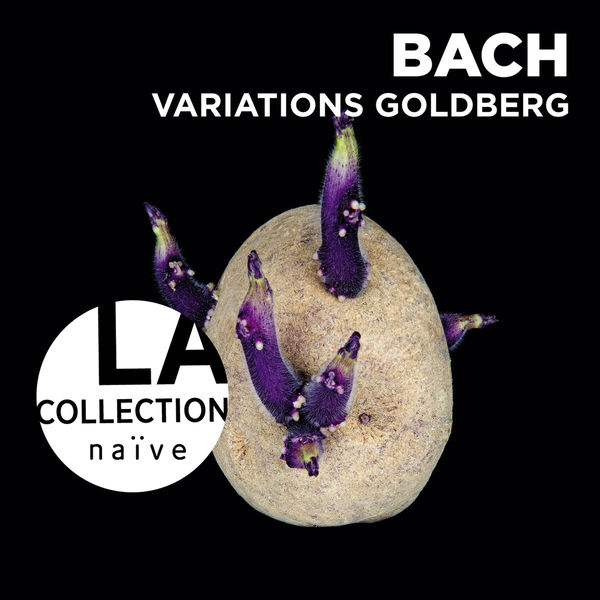
PIerre Hantai Goldberg 1992 recording, Naive reissue

Given how few solo recordings he’s made, you’ll be surprised to see that he has recorded the Goldberg variations twice, in 1992 (recently re-released on the Naïve label) and in 2003 on the Mirare label.

Pierre Hantai Goldberg variations Mirare 2003

Which one to get? Honestly, I don’t know, and I’m going to bail out and say, if you can afford it, both. Both are performances that trump pretty much all of what I’ve heard elsewhere. 1992 is occasionally more energetic, 2003 more reflective, but both are just superb.

In the booklet to the 2003 edition it is mentioned that the Goldberg’s are a work that “he’s played more often than any other since childhood”. Malcolm Gladwell in his book Outliers has written about the 10,000 hours it takes to truly master something. While this claim has recently been challenged, I suppose this is still one of those examples of this rule.

My rating: 5 stars for both

You can find the recordings here and here as downloads and here in physical form (1992 recording only, the 2003 seems to be harder to find on CD).
An addendum to Diabelli – the point of view of Classica Magazine in a blind test

As a quick addendum to my previous post on the Diabelli variations, when I opened the latest issue of the French magazine Classica on my iPad today (a bit late, it came out several days ago), I was pleased to discover that they dedicated their monthly blind test column, where their review staff compare 8 versions of a given oeuvre blindly, and ranks them, to just this work.

Classica – l’écoute en aveugle (the blind test)

I usually have a large overlap in taste with Classica, so I was a bit surprised to see none of my two recommended recordings even mentioned. But then I read it in the text, “les pianofortes atteignent leur limited“, the fortepianos reach their limits. Interesting, so Beethoven composed something that couldn’t have been played on the instrument he was used to. To be fair he was deaf at that time, but this is still an interesting conclusion. But ok, let’s see where they take it from here.

Laurent Cabasso

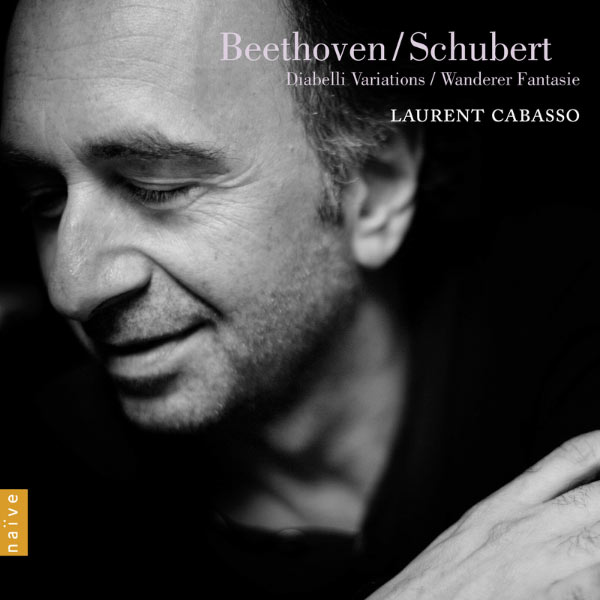
Well, their recording that is leading the pack is a recent recording on the label Naive played by the French pianist Laurent Cabasso.

0822189019983_600

Well, the French press, very much like the English, has a certain patriotic tendency in their reviews. But remember, this is a BLIND test, so let’s assume they haven’t cheated. I obviously had to listen to it immediately, and luckily my streaming provider, Qobuz, has the album available.

Don’t forget Richter

My conclusion remains the same, I’m personally much more touched by the fortepiano versions than by this admittedly very good, but not outstanding recording (4 star on my personal rating scale). So if you prefer a modern piano, you may want to check this version out. But if you do, also compare it to the much more extremist (in a positive sense) Sviatoslav Richter (FYI, no. 5 in the Classica ranking). Otherwise, Schiff and Staier are a must on your playlist.

P.S. Gramophone has done a similar comparison in their August 2015 edition, you’ll find a summary here.

Classical Life

A classical music blog by music critic Tim Mangan

This Week's Music

Making Classical Accessible

From my Macbook to the Net

Evaporation of my thoughts and observations

Elestra

Author: Artienne

My Life in Music

Playing, Singing and Listening

ArsX3

A brand new journal reviewing books, cinema, music

LawrenceEz's Blog

Creative and Performing Arts: Writing, Classical Music, Photography

Laetitia Strauch-Bonart

Contemporary Politics & Culture

sibling revelry

reveling in all things classical

It's A Raggy Waltz

I collect jazz on vinyl, I dig the Dave Brubeck Quartet, & I write about it

La Musica

By two cousins

thejazzbreakfast

Dishing it out from the heart of England

only jazz

random thoughts about music that matters to me

The Culture Project

Exploring the world of literature, wine, art, music and more.

René Spencer Saller

The music causes me to dream of fabulous empires, filled with fabulous sins.

Breaking Baroque

Blog of Tafelmusik Baroque Orchestra and Chamber Choir

Tasting Nirvana

Eating your Dosha

The Immortal Jukebox

A Blog about Music and Popular Culture

April Greene

Writer + Editor

a pianist's musings

A history of your favorite classical music.

Classical music for all

Boris Giltburg's blog

I HEAR VOICES

An orchestra seat in the web space