Miles Davis’ Rubberband – An Album That Better Should Have Stayed Unpublished

Thank you again for all your feedback

I get a lot of comments, both on the site itself and via direct message. And I truly appreciate every single element of feedback. It is what keeps me going now 5 years in a row.

Recently you told me you’d like more reviews of Jazz albums, and also encouraged me to write more critical reviews. I often tend to shy away from them, as my reviews clearly are very subjective opinions, and I really don’t like to critisize great musicians just because I don’t like some of their albums.

That said, the next musician won’t mind, a) he’s passed away a long time ago, and b) he’s one of the most brilliant musicians ever and nothing I’ll write here will take anything away from this

Miles Davis – Rubberband (Warner 2019)

This is a negative review that is more of a warning. Stay away from this zombie at all cost.

In the 1980s, Miles Davis had finally left his long term label Columbia to sign up with Warner. He then started recording some tracks. For several reasons, these tracks were never fully finished, and ended up in a drawer somewhere.

Now, somebody decided, let’s take these tracks, complete what Miles didn’t complete, and let’s see if we can still milk the Miles Davis brand.

First of all, people think of Miles Davis as a Jazz musician. Let’s be clear, in the 1980s had moved on, to a style much more influenced by funk and pop. Nothing wrong with this, it’s not really my cup of tea, but Tutu an album that was recorded shortly after this, is a modern classic. It will never get a lot of playtime on my system, but I understand why some people like it.
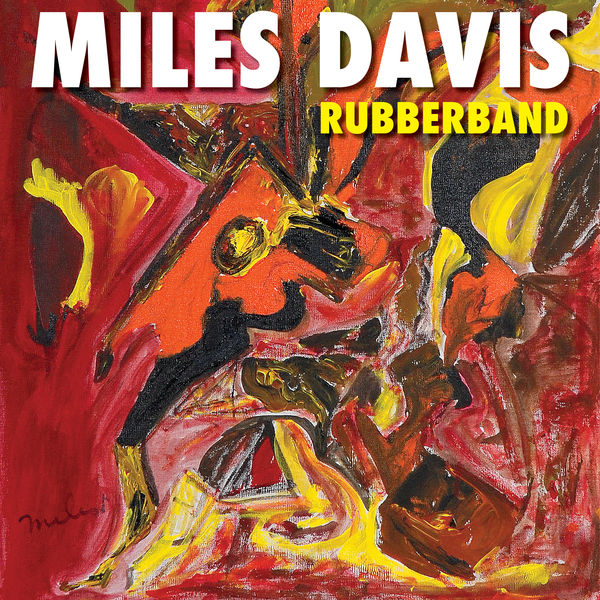
Rubberband really never should have been published in my opinion. Without Davis’ trademark horn popping up every once in a while, it would have just been a very bland synthetic late funk / 80s pop album. So if you’re interested in 1980s funk jazz, get Tutu (or some Herbie Hancock stuff from that era). But really avoid this “album” at all cost.

My rating: 1 star (this is now officially my first 1 star review in 5 years and more than 300 posts)

If you still want to check it out, you can find it here (Qobuz)
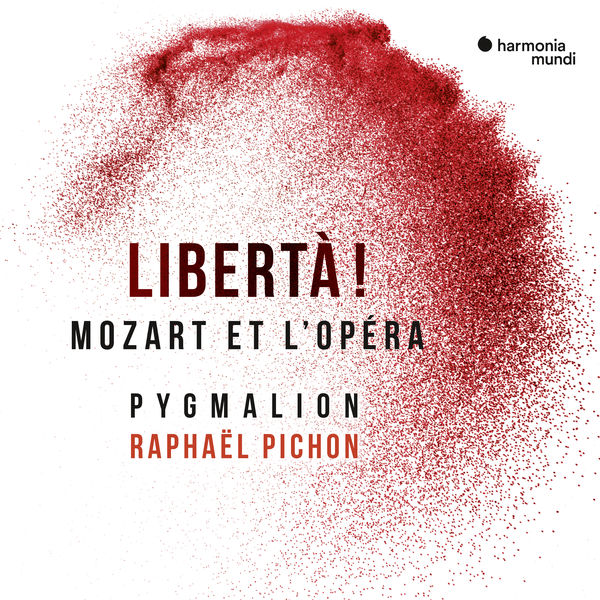
Libertà – Mozart Et L’Opéra by Raphaël Pichon – An Outstanding Album!

No, I haven’t Forgotten About Jazz

Some quick words to start:

Sorry for the Jazz fans subscribing to my blog, I know I’ve been pretty heavy on classical articles and not a lot of Jazz. I simply haven’t found too many good new albums, reviewing albums I don’t really like is much less fun, and I prefer writing about new releases, so my occasional reviewing of older albums also didn’t progress a lot. I hereby promise that I’ll try to restore the old balance of 50/50 between Jazz and Classical. So please subscribe if you haven’t done so yet.

Best-Of Albums

I used to hate “best of” or “highlights” albums, especially for Opera when I was younger. I thought the composer had taken the time to do the full opera, we should be appreciating the work in its entirety.

I’ve since evolved and really see the benefit of somebody else curating the music, especially when we’re talking about lesser known works, like in the album that I’m about to write about.

Furthermore, conductor Raphaël Pichon doesn’t do “best-of’s”, he does “concept” albums, that follow a story combining the different tracks, be it Stravaganza, Birth of The Opera At the Medici Court, or Enfers (Hells).

I’ve previously praised another of his concept albums, Mozart – The Weber Sisters, with the fantastic soprano Sabine Devielhe, which I’ve also listed in My Top 5 Classical Albums of 2016.

So I was very happy to see that in this new album that was released yesterday, that Devielhe is again featured.

Libertà – Mozart and the Opera – Raphaël Pichon – Pygmalion (Harmonia Mundi 2019)

Liberta Mozart Et L'opera Raphael Pichon Pygmalion 24 96 Harmonia Mundi 2019

On this album, Devielhe isn’t the only star, we’re actually getting several other great singers, from Siobhan Stagg via Linard Vrielink to Nahuel di Pierro.

I’m not going to comment too much about the concept, which the booklet nicely explains on several pages, including an interview with Pichon.

Let’s summarise what you’re buying: You’re getting 1h44 of mainly Mozart opera extracts. We’re mostly talking about his less known operas, like Lo Sposo Deluso, L’Oca del Cairo, or Der Schauspieldirektor.

What does that mean? Actually, Pichon did a fantastic job selecting gems among these lesser known works that definitely are worth discovering.

Pichon and his ensemble Pygmalion deliver some Mozart playing as it should be in the 21st century: Inspired, energetic, but dedicate where needed, clearly historically informed, but not overly “baroque”. And as mentioned, you get really good singers.

This album already is one of my favourite new releases of this year, and I wouldn’t be surprised if it ends up featured on my Best of 2019 list at the end of the year.

An absolute delight, worth having for any Mozart opera fan, especially in times where new opera productions are too rare.

Highly recommended.

My rating: 5 stars

You can find it here (Qobuz)

UPDATE Sep 12: Classica agrees and gives this album a “Choc”, their highest rating.

A Review of Two Recent Recordings of Mahler 1 by Vänskä and Roth

Gustav Mahler

You can easily tell that I’m still struggling a bit with Gustav Mahler by the number of posts I have done on him, so far a grand total of 1 (one!), commenting about very divergent reviews of Mahler’s 9th.

I find many of his symphonies hard to approach, too big, to complex, getting lost in the weeds. The one symphony that I semi-regularly go back to is no. 1. It is to me by far the most approachable, taking many of the beautiful melodies in the symphony directly from his own earlier the song cycle Lieder eines fahrenden Gesellen (and if you read this blog regularly you know I’m a sucker for melodies).

My first recording of Mahler 1 with retrospect is not a reference, but at least a quite decent performance, with Eliahu Inbal and the HR Radio Symphony orchestra (I mainly bought the album initially because it was a so-called audiophile recording by Denon).

SInce then, on Mahler, I’ve been through all the great classics (Klemperer, Walter, Bernstein, Kubelik), but also many new releases of this work (Fischer, Zinman, Janssons), and these days most often go back to Ivan Fischer on Channel Classics, a very nice, if a bit middle-of-the-road performance (again, VERY audiophile, it’s a fantastic test for your speakers, but you may not make friends with your neighboring appartments if you explore the full dynamic range).

So I was very curious when in the space of a couple of months two new recordings of Mahler 1 came out, both by conductors I respect a lot.

Mahler: Symphony No. 1 – François Xavier Roth – Les Siècles (Harmonia Mundi 2019)

The first one is François-Xavier Roth with his relatively recent ensemble Les Siècles, which I now very much see on track to become one of the most important French orchestras, particularly for French composers (have a look at their recent Debussy and Ravel recordings).

Gustav Mahler Titan Symphony No. 1 Hamburg Weimar 1893-1894 version Les Siècles François Xavier Roth 24/96

So I was particularly curious how they’d do with German composers like Mahler .

What’s interesting about this recording is that they use a different version, “Hamburg/Weimar 1893-1894”, turning the symphony into a “tone poem”. Well, overall, you’ll still very much recognize most of the symphony, but you’ll notice an less familiar 2nd movement sneaking in, Blumine, making the symphony 5 movements long.

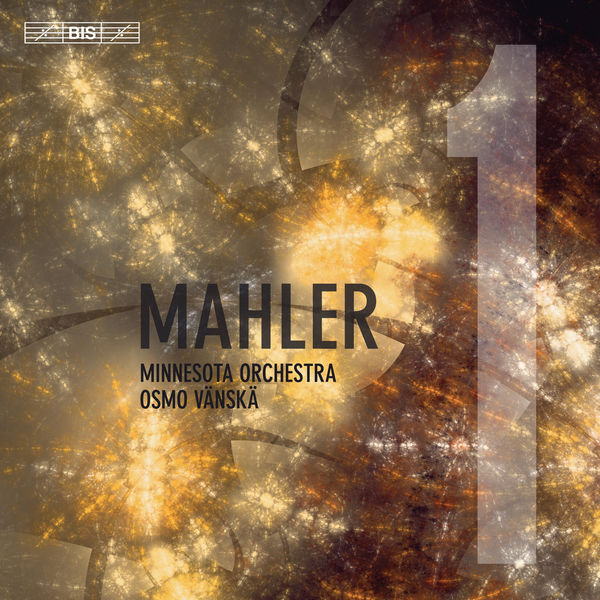
Mahler: Symphony No. 1 – Osmo Vänskä – Minnesota Orchestra (BIS 2019)

Gustav Mahler Symphony No. 1 Osmo Vänskä Minnesota Orchestra BIS 2019 24/96

The even more recent new release is a conductor I’ve loved for a long time, Osmo Vänskä, who has done fantastic work with the Minnesota Orchestra. Take for example his outstanding recording of the Beethoven piano concertos 2 & 4 with Yevgeny Sudbin.

Vänskä takes the “traditional” version of the symphony with 4 movements.

Now, are any of these worth getting, you’ll ask?

Well, let me start with the Vänskä. Given how much energy and passion Vänskä typically puts into his recordings, this was a major disappointment. The entire symphony just feels very slow and uninspired. I try to stay away from too drastic words especially when we’re talking about such fantastic artists like Vänskä. But I can’t help it, this recording really isn’t for me.

Roth is already a different story. The Blumine addition already gives you something to look out for, and overall, the tone is much more energetic and joyful in the first three movements, and has the appropriate amount of drama in the fourth movement. Overall, a very satisfying performance, maybe not a new reference, but you won’t regret buying it.

Now I’m curious what you think? Am I completely off? Do you love Vänskä’s approach, and I’m just deaf? Which other versions of Mahler 1 should I check out?

My rating: 4 stars (Roth), 2 stars (Vänska)

You can find them here (Roth, Qobuz) and here (Vänskä, Qobuz)

Update Aug 16: Classicstoday seems to agree with my assessment of the Vänskä, calling it a “CD from Hell” in their recent review.

Update Sep 11: Classics is a bit less positive on Roth, giving it 3 stars.

A fantastic live album by Yuja Wang

Yuja Wang

If you read this blog regularly, you could think that I may be a bit biased towards Asian pianists. I’m really not a big fan of Lang Lang, and also can’t understand all the praise that Seong-Jin Cho is getting (see here and here). I really hope I don’t have any intrinsic biases and judge purely on the music though.

I had a more ambivalent opinion of Yuja Wang until recently. There was stuff I really appreciated (her Ravel concerto for example), but there are other albums like the Brahms sonatas with Kavakos (that got a lot of praise) that are not 100% my cup of tea.

But this latest live release (it actually already came out end of last year, I’m a bit behind here), is a truly exceptional album

Yuja Wang – The Berlin Recital (DG 2018)

Yuja Wang The Berlin Recital Rachmaninov Scriabin Ligeti Prokofiev 24 96 Deutsche Grammophon 2018

The album starts off with an engaging performance of the famous Rachmaninov Prelude op. 23 no. 5. You already are getting a level of energy, excitement, but also precision, that is drawing you in from the very beginning.

She follows with several other pieces of Rachmaninov, keeping up the level of engagement. A first highlight however is in the much more subtle Scriabin sonata. Here Wang demonstrates that she is not just the virtuoso, but can also be very nuanced. Scriabin isn’t easy to pull off. I had one of my most memorable performances of a live concert by Rudolf Serkin back in the early 90s, and this is one of the first time that Scriabin really moves me.

I’m still mostly struggling with most of 20th century music, but the Ligeti etudes are quite accessible even to me.

But a real highlight of this album is the closing, Prokofiev’s sonata no. 8. Again, not a showpiece, much more introvert, written during the horrible year of 1943 in the middle of World War II. Again, Wang shows how complete she is as an artist in this performace.

Overall, the album is very well recorded, giving you a premium seat in the Berlin Philharmonie.

I’m not the only one liking this album by the way, it’s got top reviews from pretty much every one in the business (Gramophone Editor’s Choice, Choc de Classica, 5 stars by Diapason and FonoForum).

Highly recommended.

My rating: 5 stars

You can find it here (Qobuz)

Tchaikovsky Symphony No. 6 with Kirill Petrenko or Why Maybe I Do Like Tchaikovsky After All

Peter Ilyitch Tchaikovsky

My first ever post on this blog regarding Tchaikovsky created a bit of a debate among my readers, as it was titled Tchaikovsky Symphony No. 5 with Neeme Järvi or Why I Don’t Like Tchaikovsky.

Several of them couldn’t believe that I don’t really like Tchaikovsky that much, and tried to convince me otherwise.

That said, this post has been some years ago and I still basically limited my Tchaikovsky listening to about once yearly going back to said Symphony No. 5, occasionally the Violin Concerto with Heifetz (but more likely because it is on the same album as his fantastic Brahms), and every once in a while testing out new versions of his piano concerto no. 1, more often than not being disappointed.

And, for sure, during the pre-Christmas period, the Nutcracker, ideally by Rattle, was a must have.

I’ve tried the four early symphonies by Tchaikovsky, never got them, but most surprisingly his 6th, which many consider his symphonic masterpiece, never got my attention.

So when the Berlin Philharmonic finally released his first album with their new boss (elected many years ago), I got curious.

I’m very happy I did check it out.

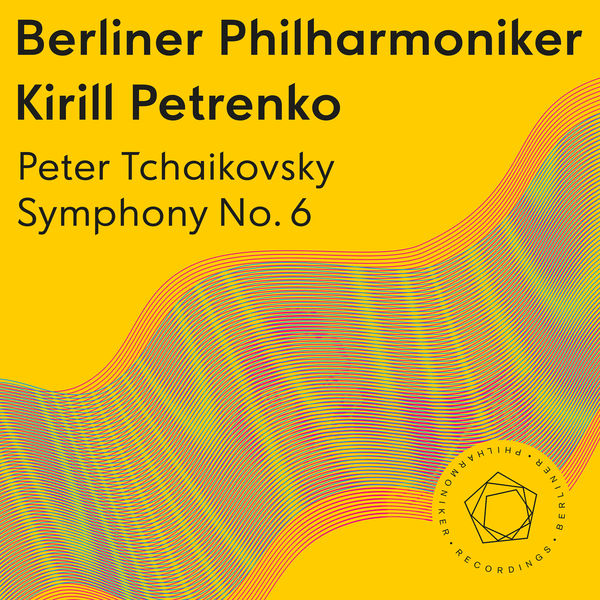
Tchaikovsky Symphony No 6 – Kirill Petrenko – Berlin Philharmonic Orchestra (BPO 2019)

So far, I must admit I always go a bit lost in this piece. Guess what, Petrenko really opened my eyes and ears here.

His very transparent reading helped me to see the structure, to understand the nuances, to see the many beautiful similarities with the beautiful orchestral sounds of his ballets.

At the same time, this is not a slim HIP-inspired baroque interpretation, as the word “transparent” may imply. This is the romantic power and suave sound of the BPO at it’s best. So all the necessary drama of the “Pathétique” is there when it is needed.

If this is an indication of the future of the Berlin Philharmonic under his new conductor, I hope this was not only a snapshot from the honeymoon period. We could be really entering a new Golden Age of the BPO, and we all should be going back to Scharoun’s yellow tent more often (if you can get tickets).

My rating: 5 stars

P.S. Gramophone agrees, giving this album an Editor’s Choice in the July 2019 edition

You can find it here (Qobuz)

Janine Jansen and Herbert Blomstedt for a Magnificent Brahms Performance at the Tonhalle Maag – June 28, 2019

Janine Jansen

I presume if you’ve followed this blog for a bit (or read it’s subtitle) you’ve figured out that I really like Brahms.

You’ve probably also noticed that I really like Janine Jansen, and see her as one of the best violin players alive.

Last year I went through a series of concerts aiming to see all my favourite violin players live, and succeeded being in concerts of Alina Ibragimova, Julia Fischer, Lisa Batiatishvili, Isabelle Faust, and Janine Jansen all in 2018. What a year.

The concert I saw with Jansen, also at the Tonhalle Maag, was with her husband Daniel Blendulf conducting, and playing a contemporary composition by Swedish composer Anders Eliasson. I didn’t get to write about this concert here on this blog, but I found the concert surprisingly enjoyable (I’m typically not very much into any classical music after 1930).

But now, when Jansen came back to Zurich playing Brahms of all violin concertos, I knew I had to be there, after all, I had given her Brahms concerto recording with Pappano a five star review here.

Brahms Violin Concerto & Symphony No. 3 – Janine Jansen – Herbert Blomstedt – Tonhalle Orchester Zurich – Tonhalle Maag, June 28, 2019

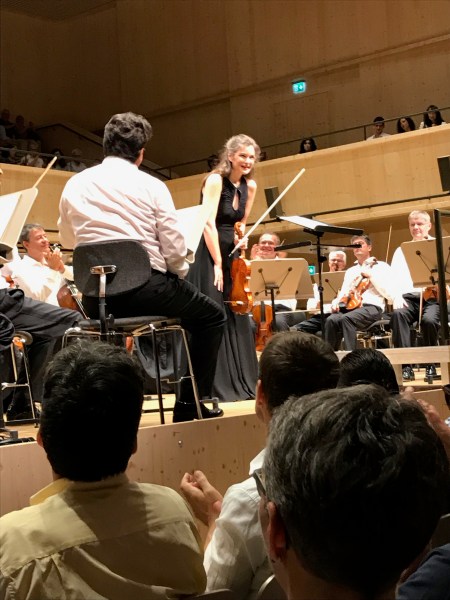
Janine Jansen after the Brahms Violin Concerto June 28, 2019 Tonhalle Maag with Herbert Blomstedt Tonhalle Orchestra
Janine Jansen had to come back out four times

Well, to make it short, I’m so happy I went. This was just a fantastic concert. Blomstedt chose a relatively slow tempo for the first movement. This can have the risk of being a big boring and drawn out. But obviously, none of that here. Janine Jansen put her energy into every single note that the audience was following, completely mesmerised.

The orchestra, in spite of this being the third consecutive night of performing the same program, was following with the same energy and power, clearly enjoying themselves.

To quote Felix Michel, who did a fantastic review on the NZZ (here, in German), the word he used several times was “Wunder” (miracle). Yes, that is kind of a fitting description of what we witnessed yesterday in the scorching Zurich summer heat (>36° Celsius, I’m happy the Tonhalle Maag seemed to have some form of AC).

Herbert Blomstedt

I haven’t written a lot about Herbert Blomstedt yet. I’ve last seen him, again conducting the Tonhalle playing Mendelssohn’s violin concerto, another magnificent evening.

He isn’t one of those flashy maestros that will make headlines, but like many others, e.g. Haitink, is much more of a Musician’s musician.

At the age of 91 (he’ll soon turn 92, but is already scheduled to appear back in Zurich in the fall), when he’s up there conducting, he’s more alive and present than many 20 year olds.

Now to the 3rd symphony. Here, the energy taking from the furious beginning with the violin concerto certainly continued after the break. The two most outstanding moments here were the famous 3rd movement, which you may know from several commercials and other uses in the movies, but even more impressively in the finale. Unlike most symphonies, this finale ends very quietly.

Blomstedt really made us enjoy this quiet ending, not dropping his hands (no baton) for several seconds after the last note expired, to keep the quiet tension.

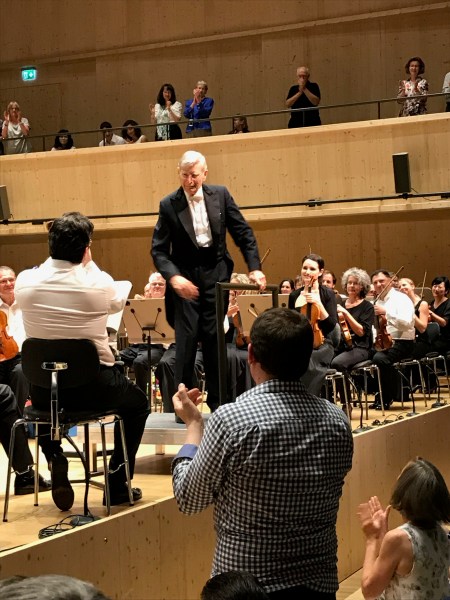
Herbert Blomstedt, Tonhalle Maag, Brahms SympZurichhony No. 3 , June 27, 2019
Maestro Blomstedt getting standing ovations

As always, when the final movement lacks a climatic finish, the applause came more slowly. However, it became even more powerful, especially after it became apparent that one of the musicians of the Tonhalle had his last day pre-retirement and was showered with flowers and gifts. The applause lasted for a long time. Well deserved for a fantastic end of a season.

Looking forward to the next season, where my admired Paavo Järvi will take over the orchestra.

An Beautiful New Vocal Jazz Album with Giovanni Mirabassi and Sarah Lancman

Giovanni Mirabassi

Giovanni Mirabassi remains one of my favorite Jazz pianists. I really love his trio efforts, be it on Terra Furiosa, Live in Toyko, or, probably my preferred one, Architectures.

Mirabassi is Italian, but has been living in Paris for many years. As mentioned above, he trio output (mainly with Gianluca Renzi and Leon Parker) is fantastic, but he’s also collaborated with some excellent singers, e.g. Angela Elvira Herrera Zaparta and Maikel Ante Fajardo on Adelante, and on Sarah Lancman’s previous 2018 albums A Contretemps and Inspiring Love. Both albums only featured Sarah on the title, now we have a recording where both Lancman and Mirabassi share the cover. The two already met in 2015 and have toured together.

Sarah Lancman

Sarah Lancman is a young French singer, who studied in Paris, and has released three albums so far.

There is no shortage of excellent Jazz singers today, but still, Lancman has a very recognisable, unique voice. Not suprisingly, she won the first price in a jazz contest hosted by Quincy Jones.

Giovanni Mirabassi – Sarah Lancman – Intermezzo (Starprod 2019)

So what do you get? Well, you could argue, is this still Jazz?

You basically get beautiful duos where Mirabassi plays in a very intimate and connected way with Sarah, who singing exclusively in Italian (note the album cover kind of gives it away) on this album.

Every once in a while, Olivier Bogé joins playing the saxophone, with a sound somewhat reminiscent of Stan Getz. So who cares if this is Jazz or not?

All of this is just hugely enjoyable, beautiful, intimate music, and really worth checking out.

My rating: 4 stars

You can find it here (Qobuz)

Classical Life

A classical music blog by music critic Tim Mangan

This Week's Music

Making Classical Accessible

From my Macbook to the Net

Evaporation of my thoughts and observations

Elestra

Author: Artienne

My Life in Music

Playing, Singing and Listening

ArsX3

A brand new journal reviewing books, cinema, music

LawrenceEz's Blog

Creative and Performing Arts: Writing, Classical Music, Photography

Laetitia Strauch-Bonart

Contemporary Politics & Culture

sibling revelry

reveling in all things classical

It's A Raggy Waltz

I collect jazz on vinyl, I dig the Dave Brubeck Quartet, & I write about it

La Musica

By two cousins

thejazzbreakfast

Dishing it out from the heart of England

only jazz

random thoughts about music that matters to me

The Culture Project

Exploring the world of literature, wine, art, music and more.

René Spencer Saller

The music causes me to dream of fabulous empires, filled with fabulous sins.

Breaking Baroque

Blog of Tafelmusik Baroque Orchestra and Chamber Choir

Tasting Nirvana

Eating your Dosha

Shadow of Iris

Poetry, fiction, short stories, more ...

The Immortal Jukebox

A Blog about Music and Popular Culture

April Greene

Writer + Editor

a pianist's musings

A history of your favorite classical music.

Classical music for all

Boris Giltburg's blog

I HEAR VOICES

An orchestra seat in the web space