My Reflections on the 2016 Gramophone Awards (Part II): Baroque Vocal

The Gramophone Awards 2016

Following yesterday’s post on the Gramophone Awards Nominees in the Concerto category, let’s attack another one: Baroque Vocal. Again, this isn’t meant to be an exhaustive review of the nominated albums, but just a couple of comments and reflections, as usually I’ll know quite a number of the recommendations well.

And if I don’t, I’ll try to find out (or shut up).

Baroque Vocal

Baroque vocal is not surprisingly one of my favorite categories. As written previously, you can never have enough Bach.

The good thing is, this year’s Gramophone award nominees in this category feature 3 times this great composer, even twice with his outstanding b-minor mass (sorry for all the superlatives here, but what else can you call this?).

Bach: Magnificat – John Butt – Dunedin Consort

Gramophone starts very appropriately for this hot summer season with… Christmas Music.

Well, actually, the title piece is the Magnificat BWV 243a, which is as magnificent as the name implies. I’ve praised John Butt and his Dunedin consort several times here on this blog (e.g. his fantastic St Matthew Passion), and this album keeps the very high level of playing of this great ensemble (plus the beautiful recording quality of the Scottish label Linn, known for their turntables, and more recently, excellent digital hifi).
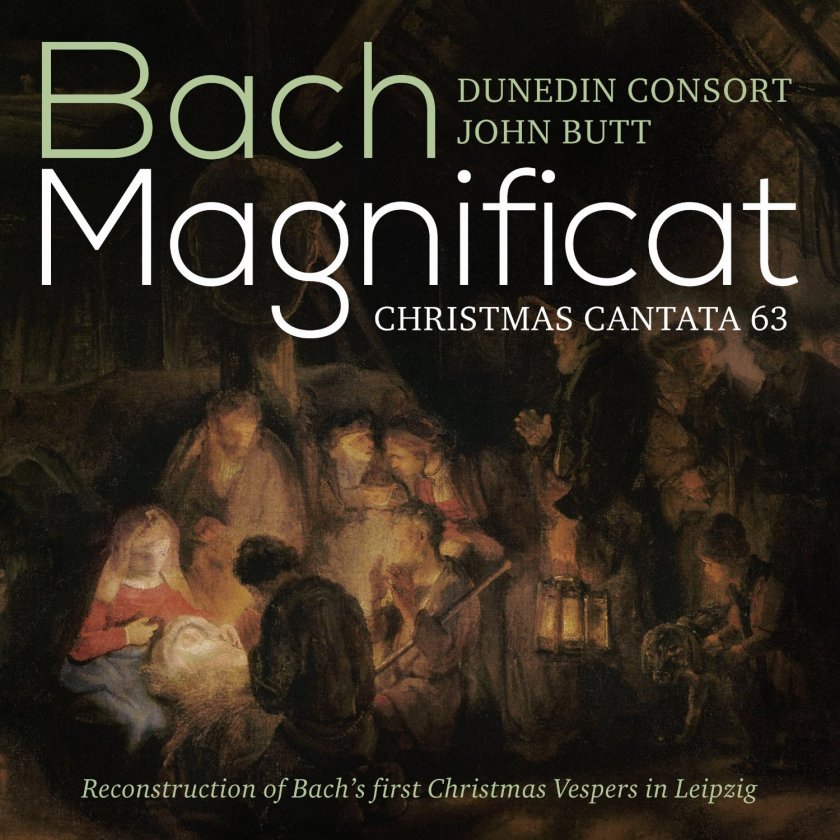
Bach: Magnificat Christmas Cantata 63 John Butt Dunedin Consort Linn Records

You also get a Christmas cantata plus some other church music (this is trying to recreate Bach’s first Christmas Vespers as he could have performed them), so make sure you get this excellent album under your Christmas tree this year (side note: this is one of the downside of the virtual download era, a FLAC file doesn’t look that pretty even wrapped).

My rating: 5 stars

Bach: B-minor Mass by Gardiner and the Monteverdi Choir

Bach: Mass in B-Minor - Gardiner (2015) - SDG

Already reviewed here, so no need to repeat my four star rating. Very well done, but I still prefer Herreweghe (no matter which version, see also here).


Bach: B-minor Mass by the Lars Ulrik Mortensen and the Concerto Copenhagen
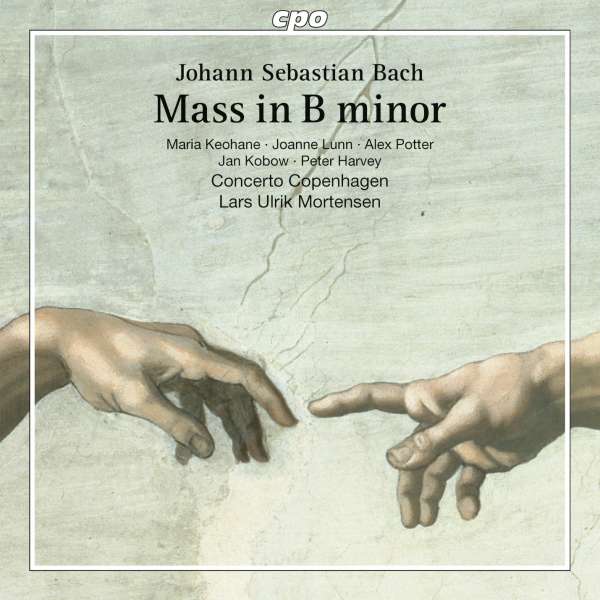
Bach: Mass in B Minor Lars Ulrik Mortensen Concerto Copenhagen CPO

Yes, another version of the masterpiece. And admittedly one I haven’t heard. This is mainly due to the fact that this SACD release doesn’t seem to be available on my streaming provide of choice.

Mortensen’s recordings of the Bach keyboard concertos are, and I’m not a big fan. However, the couple of snippets of this b-minor I was able to find on the internet sound interesting. The couple of reviews I’ve read speak of a lot of transparency. Once this becomes available on a streaming site I’ll have another look, and if you have an SACD player, you may even want to check it out right now.


Händel: Partenope – Riccardo Minasi – Il Pomo d’Oro

From baroque giant no. 1 to no. 2, Händel.
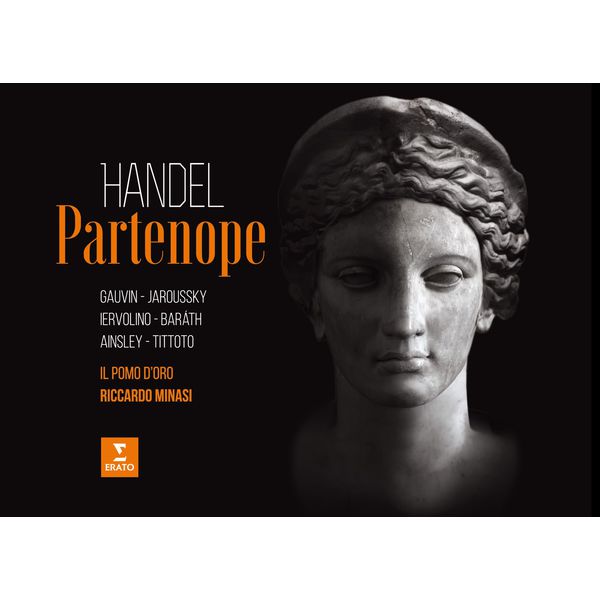
Händel: Partenope - Riccardo Minasi - Il Pomo d'Oro - Gauvin - Jaroussky Erato 2016

No idea why I haven’t purchased this one yet. I’m usually a big fan of the countertenor Philippe Jarrousky, and Riccardo Minasi is very reliably producing high level baroque productions.

And Erato (in spite of being part of Warner these days) is also a gauge of quality.

In spite of this album being available on Qobuz, I haven’t spent a lot of time on this recording yet, so I’m not going to offer any judgment beyond that I like what I’ve heard so far.


Monteverdi: Madrigali Vol. 1 – Cremona – Paul Agnew – Les Arts Florissants

First of all, reading “Les Arts Florissants” and not seeing William Christie in the same entry is a bit weird. They have been associated for so many years (and I’m looking forward to seeing him live again in the soon to open Hamburg Elbphilharmonie early next year).

But Paul Agnew, his disciple, does an outstanding job there.

Monteverdi: Madrigali vol. 1 Cremona Paul Agnew Les Arts Florissants 2016

I must admit I listen to Monteverdi less than I should. While my musical brain feels immediately at home in the harmonic world of a Bach and Händel, the 100+ years between them and Monteverdi, the very beginning of what can be called baroque music, makes is much less immediately approachable to me.

However, when I’m in the mood and have the patience, it can be a very rewarding experience.

Again, I haven’t spent enough time with this album for proper judgment, but my initial impressions are very positive.

Le Concert Royal De La Nuit: Sebastian Daucé – Ensemble Correspondances

From Germany via England (Händel) and Italy now to France (Well to be fair, of the previous mentioned countries, only France and England actually were countries, Germany and Italy still had to wait for a couple of centuries for this pleasure).

And directly to the court of the Sun King, Louis XIV.

Why haven’t I written about this fantastic album yet, although I purchased it months ago? No idea, shame on me. This is putting you directly into the front row at Versailles, into a musical spectacle of first order.
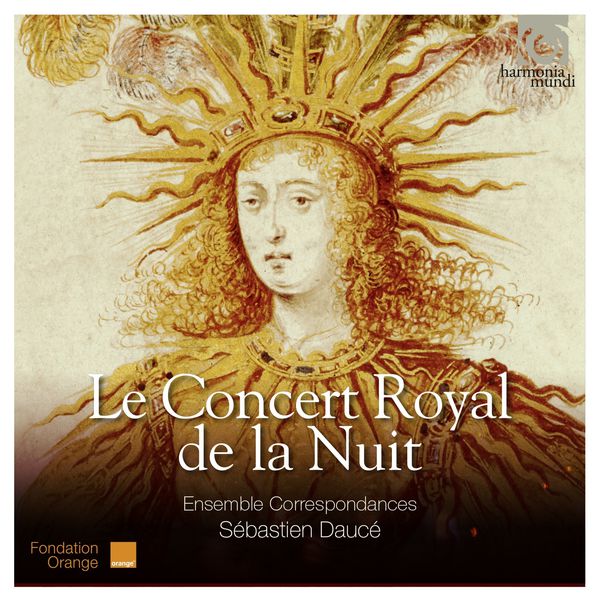
Le Concert Royal de la Nuit: Sébastian Daucé - Ensemble Correspondances Harmonia Mundi 2016

I must admit, I didn’t know any of the composers previously (I’m not a great expert in French music in the first place), but the booklet quotes them as:  Cambefort, Boesset, Constantin, Lambert, Cavalli and Rossi.

Never mind, just sit back, close your eyes, and enjoy the beauty of the music!

By the way, this was also a Choc Classica in addition to the Gramophone Editors choice. It is rare that these two magazines agree, but if they do, it’s usually on something rather outstanding.

My rating: 5 stars

Now, the tricky question, who should win this year’s Gramophone Awards? My guess is Gardiner will make it, as a sort of lifetime award (and having seen him live earlier this year, he’d certainly deserve it).

But my personal call would go for the outsider: Sébastian Daucés account of a night at Versailles. Let’s see.

Who would you choose?


UPDATE Aug 18: Gramophone has just communicated the three finalists for each category. For this one, still in the running are the Dunedin Magnificat, the Monteverdi, and the Concert Royal. So my personal favorite has a one in 3 chance of winning. Nice!


You can find the recordings here:
Bach Magnificat Dunedin

Bach B-minor Mass Gardiner

Bach B-Minor mass Mortensen

Händel: Partenope

Monteverdi: Madrigali vol. 1

Le Concert Royal de la Nuit


It’s Gramophone Award Time Again – My Reflections Part I: Concerto

Feeling terribly guilty

Dear readers, I’m really sorry.

I just checked, and my last entry dates back more than a month ago. Shame on me. Lots of reasons, too much travel, too busy, too whatever. Who cares, let’s get back to it, shall we?

Gramophone Awards

Although I’ve recently had quite a number of disagreements with reviews by this venerable magazine, it probably remains the most important source for the entire classical music industry, and winning a Gramophone Award is rather prestigious.

I’ve already started reflecting about them last year, which generated some really interesting discussions here and elsewhere (plus lead me to discover David Watkin’s outstanding Cello Suites), so let’s have a look at who has been nominated this year.

If you want to do the same, best is to get our your tablet, get the Gramophone App, and get the Gramophone Awards issue for free.

As last year, I have no ambition to be exhaustive, I’m just giving my 2 cents on a number of albums that I’ve heard as well.

Concerto

Concerto is usually my favorite category, and the one where I’ve heard the largest number of the recordings.

We have 8 albums nominated this year, 5 of which I’ve heard and can comment on.

Brahms Violin Concerto x 2

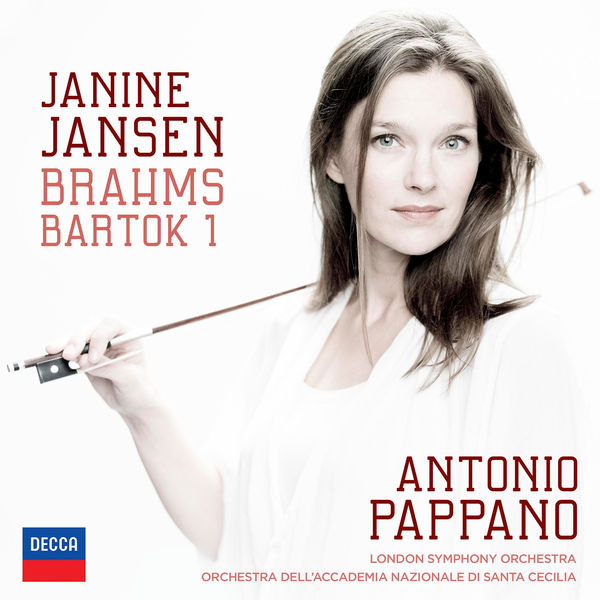
We start with two versions of Brahms violin concerto, one coupled with Bartok, the other one with Brahms’ own String Quintet No. 2.

The first one is the new Janine Jansen recording, which I’ve reviewed here. I still fully stand by the 5 stars I’ve given there, and this is an album absolutely worth having in spite of heavy competition.


Janine Jansen Brahms Bartok Violin Concertos Antonio Pappano London Symphony Orchestra Orchestra dell'Accademia Nazionale di Santa Cecilia Decca 2015

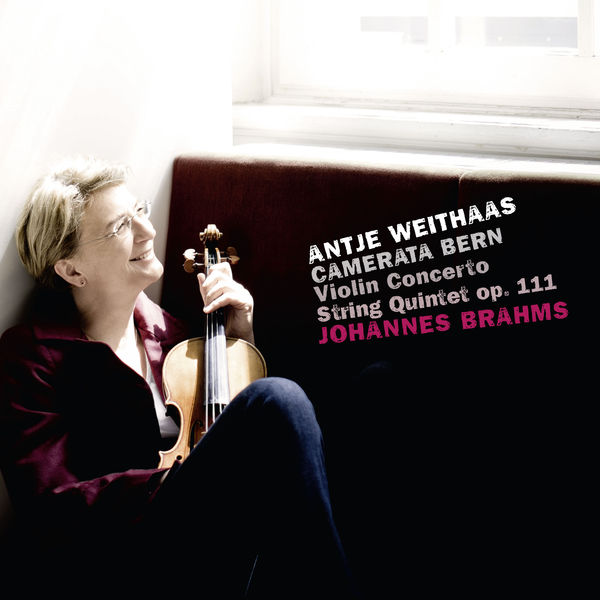
The second Brahms recording is with the less known German violinist Antje Weithaas, with the Camerata Bern.

Brahms Violin Concerto String Quartet No. 2 Antje Weithaas Camerata Bern

I must admit I didn’t expect a lot, as I was pretty disappointed by the recording of Bach’s keyboard concertos with the Camerata Bern (2010  on Universal).

Well, I was positively surprised, up to a point. To be clear: Weithaas really plays exceptionally well.

However, the Camerata Bern is unfortunately no match for Pappano’s Santa Cecilia. They are really the limiting factor on this recording, which becomes especially apparent in the highly energetic third movement.

The string quintet is ok, but a bit heavy. Overall, I’d probably give this 3 stars.

Beethoven’s piano concertos x 2

The next two albums aren’t albums, but DVDs. I don’t have a DVD/Blueray player, and so have no way of reviewing these.

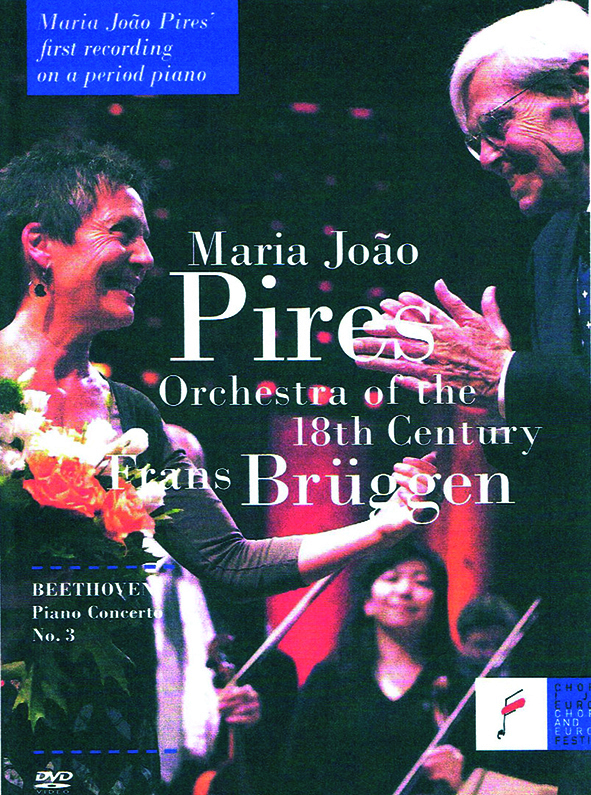
DVD no. 1 is Maria Joao Pires with Frans Brüggen playing Beethoven’s concerto no. 3.

Beethoven Piano Concerto No. 3 Frans Brüggen Orchestra of the 18th Century Maria Joao Pires DVD

There is a snippet on Youtube, and I wasn’t particularly impressed, but one shouldn’t judge from 39 seconds.

Interestingly enough, Pires won already last year with the same concerto but Daniel Harding conducting. Again, didn’t really impress me back then either. But if you’re into DVD’s, you may want to check it out. Just to clarify, I’m a big fan of Pires for a lot of solo recordings (e.g. Chopin, Mozart), but her recent orchestral recordings just aren’t my cup of tea (see also my review of her Schumann recording with Gardiner here).

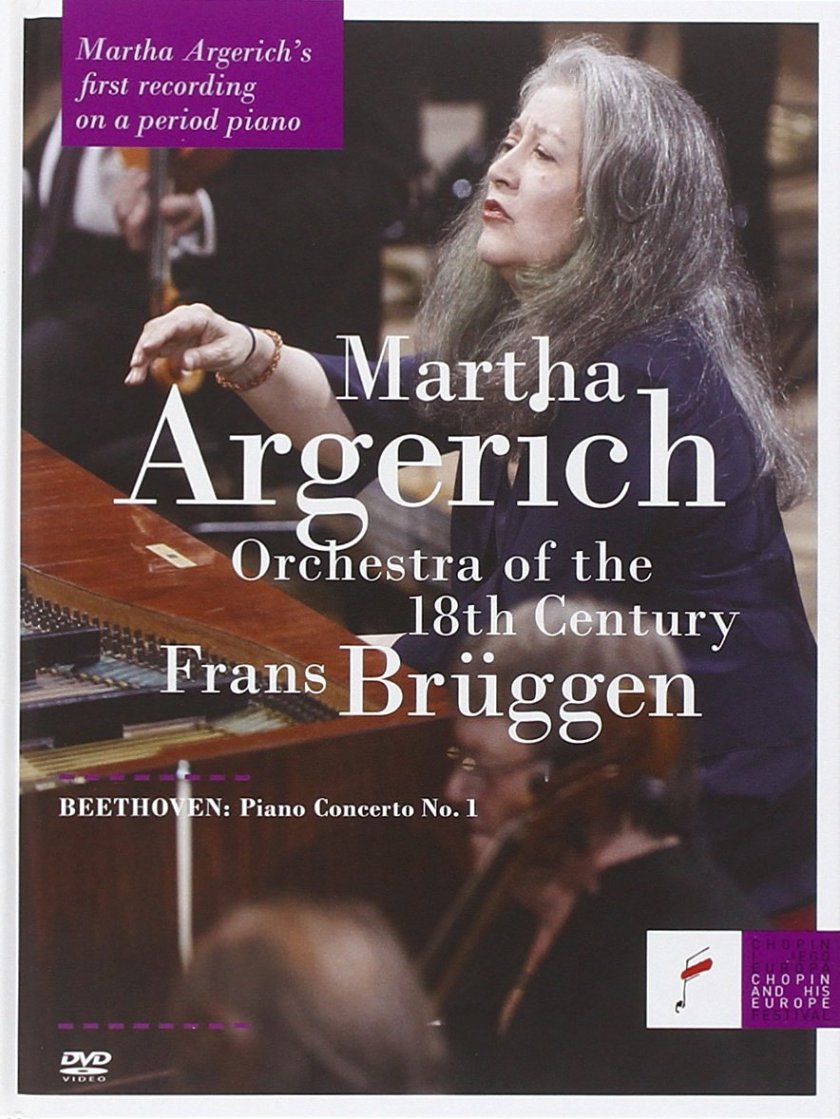
The other DVD, also from Warsaw, again with Frans Brüggen, has one of my absolute piano godesses on the piano, the mighty Martha Argerich.

Beethoven Piano Concerto No. 1 Frans Brüggen Orchestra of the 18th Century Martha Argerich DVD

Here’s the 40 second Youtube snippet:

This is already more to my taste. But again, you simply cannot judge a recording on 40 seconds.

Britten & Korngold by Vilde Frang

Britten/Korngold Violin Concertos James Gaffigan Frankfurt Radio Symphony James Gaffigan

I’m a big Vilde Frang fan, her Sibelius is one of my all time favorites, see here.

Unfortunately, the music on this album really isn’t getting me excited, so I’m not qualified enough to comment about the interpretation.

I must admit I wouldn’t even know Korngold if it weren’t for some old Heifetz albums, and even here, his music that would at moments be rather fitting for the next Star Wars soundtrack doesn’t inspire me very much. OK to listen to once or twice, but nothing I’d consider purchasing.

I can comment even less on the Britten. There is unfortunately only one English composer I really love, Henry Purcell, everything after just isn’t for me.

Rachmaninov by Trifonov

Rachmaninov Variations Trifonov Nézét-Séguin Philhadelphia Orchestra Deutsche Grammophon 2016

Now we’re getting back into my home turf (not physically, obviously, I’m not Russian), but musically speaking.

This is an album I should have reviewed a long time ago, as it is a true 5 star recording.

We start with Nézét-Séguin, who here again is in top form, and with the Paganini Variations. Already an exceptional start.

However, this album shouldn’t actually be in the “Orchestral” section, as the entire rest of the 1:18 are all solo piano.

We’re talking about the Variations On A Theme Of Chopin, Op.22, the Variations On A Theme Of Corelli, Op.42, and some Rachmaniana pieces by Trifonov himself.

The Corelli’s are already great, but my absolute favorite here are the quite rarely played Chopin variations. Amazing, you really get the best of both worlds here, the melodical genius of Chopin together with the romantic virtuoso of Rachmaninov. Absolutely worth having.

My rating: 5 stars

So, my take home messages (or albums) are clearly Jansen and Trifonov. Both are absolutely worth having.

And my prediction for the Gramophone Award winner? The Trifonov.

What do you think? Let me hear!


Update August 18,2016: Gramophone has released the three finalists for the category: Pires’ Beethoven, Frang’s Britten, and Trifonov’s Rachmaninov. So my prediction above (written previously) could still come true.


You can find the albums here:

Brahms/Jansen

Brahms/Weithaas

Beethoven/Pires

Beethoven/Argerich

Korngold & Britten/Frang

Rachmaninov/Trifonov

Recommended: Brahms Cello Sonatas by Marie-Elisabeth Hecker

OutThere Music – Alpha Classics

In the old days (i.e. 1980s and previous), you basically had a number of big guys in the classical music industry, Deutsche Grammophon, Philips, RCA, Decca. Minor labels didn’t play such a big role, as most of the important artists were all signed to one of these major labels.

These days, while the big guys are still around (as brands that are part of large conglomerates), the smaller labels really strive.

BIS, Chandos, Hyperion, Harmonia Mundi, all of the really produce excellent classical albums, and if you were to check my 4 and 5 star recommendations on this site, I bet (but haven’t checked) that the independents probably outweigh the former majors by 2:1 at least.

Alpha Classics, now part of the Belgian/French OutThere Music, is one of those labels, that produces an outstanding number of great recordings, featuring great artist like Céline Frisch (see my review of her Well-Tempered Clavier here), Nelson Goerner, Alexis Kossenko’s Les Ambassadors (see my review of their Telemann album here), or Café Zimmermann (review of their Bach albums coming up).

One more strong point about most of these labels is that they do care about the sound quality of the recordings, which is not always guaranteed with the majors, who often tend to “over”-produce a recording.

Brahms’ Cello Sonatas

Brahms two cello sonatas were the first work of chamber music I ever owned by Brahms. I was lucky and started with a very nice version, with Leonard Rose on cello and Jean-Bernard Pommier on piano.

Since then, the cello sonatas have always been around, and I’ve constantly been on the lookout for the “perfect version”. On the way, I collected at least a dozen of versions, my most recent additions (both good) are Torleif Thédeen and Roland Pötinen on BIS and Ophelie Gaillard and Louis Schwizgebel-Wang on Aparté Music (note that both are independent labels…)

But to quote U2, I still haven’t found what I’m looking for.

Until now, at least for sonata no. 2.

Brahms Cello Sonatas – Marie-Elisabeth Hecker – Martin Heimchen (Alpha Classics 2016)

I had already started listening to this album briefly, as my streaming provider of choice, Qobuz, has a list of recommendations, where this album popped up.

Brahms Cello Sonatas Marie-Elisabeth Hecker Martin Heimchen Alpha Classics 2016 24 96

Being the Brahms fan I am (see my blog title), I obviously went to check it out.

I was pleased by what I heard in the first two movements of sonata no. 1, but not blown away. Well played, but not so different from many other recordings I’ve heard. So I got distracted and never got to the end of the album. Big mistake.

The July issue of my favorite classical music magazine, Classica, just came out, and had the album as a “Choc”. Usually, our tastes match quite well, so I gave it another virtual spin on Qobuz.

And guess what, once I got to the F-major sonata, I was blown away. In spite of being the later of the two sonatas (by approximately 20 years), this one is the much more passionate one.

And here finally you get all the passion I’ve always been waiting for. Hecker (winner of the famous Rostropovich award in 2005) and Helmchen (Concours Clara Haskil 2001) just play with so much energy, it just sucks you in.

Therefore, sonata no. 2 is the true highlight of this album for me, while the search continues for the e-minor sonata.

Nevertheless:

My rating: 5 stars (worth it for the 2nd sonata!)

You can find it here (Qobuz) and here (Prostudiomasters)

Argerich vs. Angelich – Liszt’s B-Minor Sonata

Gramophone

The new July issue of Gramophone appeared rather early on my iPad (I’m not into paper subscriptions any more).

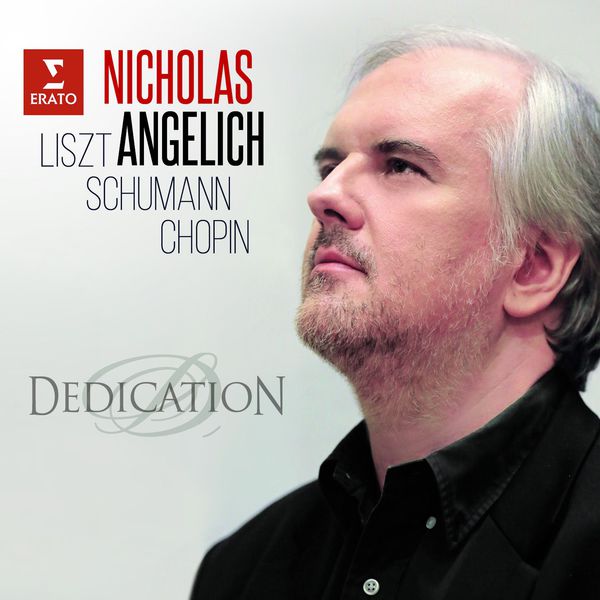
As usual, impatient that I am, I jump immediately to the Editor’s Choices, starting with the Recording of the Month. This time, Nicolas Angelich recent Dedication Liszt/Schumann/Chopin album. Cool, I think to myself, another great recording to check out of Liszt’s b-minor sonata.

Liszt’s b-minor sonata

I’m not a huge fan of Liszt in general (too much, especially his orchestral works). But there are certain works I really like, including most of all his great b-minor sonata.

My favorite version by the way is Michael Pletnev’s recording on DG by the way (maybe to be reviewed at some point in the future).

In any case, I must admit, I didn’t really even get to listen to the entire Angelich album, I stopped about 5 minutes into the b-minor sonata. I was really stunned. Liszt was supposed to be the greatest virtuoso of his time, and this version, well, let’s just say, it didn’t touch me at all.

To be fair, my taste may not be universal, as I really liked Katia Buniatishvili’s recording on Sony, which was anything if not controversial, to say the least (some just hated it, stating is was too much…).

But again, this post won’t be about Angelich (which I have yet to properly listen to beyond my 5 minute trial) nor about Pletnev or Buniatishvili, but about one of the greatest pianists  of all times:

Martha Argerich

Yes, the fiery Argentine pianist. She has a very particular sound and style (in a blind test on Swiss radio, two experts blindly identified her vs another artist on 5 out of 5 different pieces, and even I got 3 out of 5), and once you’ve heard her, you’ll never forget her.

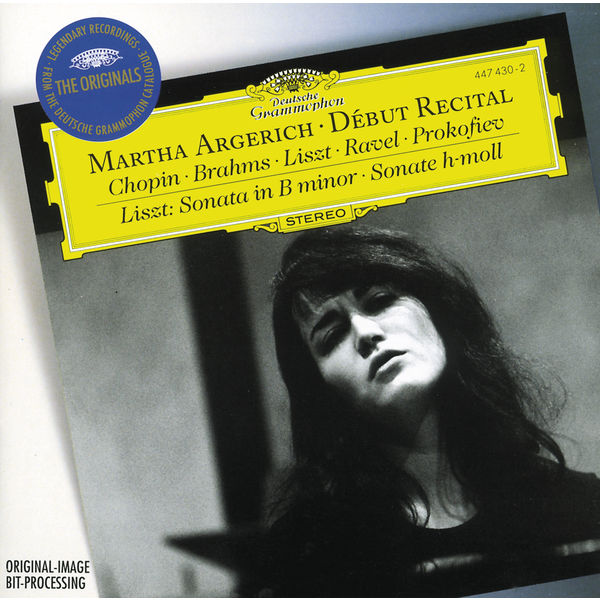
So I recently found myself buying her legendary debut album, remastered and released as a 24/96 download (I had bought in on CD ages ago, but hadn’t listened to it regularly enough).

Martha Argerich: Debut Recital (DG)

Martha Argerich Debut Recital Deutsche Gramophon 24 96

Wow.

Somehow, the Chopin competition really means something. Look at the winners, Pollini, Blechacz (see here), Yundi, and Argerich! (well, this year seems to be a bit of an outlier, see my comment here). Basically she was a pure genius from day one.

Her Chopin barcarolle, so beautiful. And the Scherzo no. 3, my favorite! Her Brahms is ok, not outstanding, but when we get to Liszt, all hell breaks loose! Already the Hungarian Rhapsody is full of fire and energy, her trademark, but go to b-minor, and check out every savory moment, from the quiet introvert moments to the amazing prestissimo (track 17).

If this leaves you bored, you’re probably deaf.

And now go back to your streaming provider of choice and check out the Angelich against it, and I guess you’ll understand what I mean.

My rating: 5 stars plus!

You can find it here (Qobuz) and here (Prostudiomasters)

Note that getting the 24/96 remaster is not necessarily a must, unfortunately the original recording was already rather poor, and even the remaster still sounds rather like a shoe box.


UPDATE June 11: Another word about the Angelich recording that I browsed over a little bit superficially above.

The Angelich album not only got high praises from Gramophone as mentioned above, but also a Choc from Classica magazine, and this recording of the b-minor sonata was just selected in their June 2017 issue as best version in a blind test comparing 10 recordings out of the ones released in the last 20 years.

Nicholas Angelich Liszt Schumann Chopin Dedication Erato 2017

Triggered by this I listened again to Angelich. Well, to be fair, it is a good recording. However, I still prefer much more the more extreme versions like Argerich, Bunatishvili, etc. For me, this extreme work requires extreme playing. I find the Angelich a bit too “middle of the road”. But given that several reviewers I really respect disagree with me, you have to check it out.

#GERUKR differently: Brahms Piano Concerto no. 2 with Gilels (UKR) and Jochum (GER)

No, this is blog is not suddenly turning into a sports blog.

To explain the title hashtag to my non-EU readers: we currently have the Football Euro Cup 2016  going on in France (the real football, not the one where guys in funny plastic armor carry an egg around and jump at each other), and Germany just won against the Ukraine 2:0.

Emil Gilels

Let me instead write about my favorite Ukrainian of all times (and no, it’s not Vladimir Klitschko, and this is still not a sports blog): Emil Gilels. Born in Odessa, which seems to be a hotbed for great musicians, he is probably one of the best Brahms players I’ve ever heard.

Brahms Piano Concertos

More than one year into the life of this blog dedicated to Brahms in the subtitle, and I still haven’t written about the piano concertos yet. There are several reasons. a) there are among my absolute favorite pieces of music ever. b) there are just so many outstanding versions out there, I’m still not sure which one really is my favorite.

Especially for his 2nd piano concerto, which could also be called symphony with piano (as unlike the typical romantic piano concerto of the time, piano and orchestra are very interwoven), the Golden Age for the recordings were the 1950s and 60s. You can pretty much buy all versions the great Georges Szell has ever recorded (Fleischer, Curzon, Serkin), take the absolutely brilliant recoding by Serkin with Erich Leinsdorf on RCA, etc. etc. etc.

And then there is Gilels. So far, my favorite Gilels version always was the great version with Fritz Reiner and the Chicago Symphony, again on RCA. His later recording on Deutsche Grammophon I bought later on CD, but listened to it much less.

Today, I ended up buying the new remaster of this recording, which features both concertos and the Fantasias op. 116.

Brahms Piano Concertos – Emil Gilels – Eugen Bochum – Berliner Philharmonic (DG 1972/2015)

Brahms: The Piano Concertos Emil Gilels Eugen Bochum Berliner Philharmoniker 24/96 DG 1972 2015

Gilels plays here with Eugen Jochum, a German conductor I mainly associated with his great Brucker cycles (both his EMI and DG cycles are excellent). And in a way this is fitting.

Especially in the slower parts, Brahms sounds a bit like Bruckner (which Brahms would probably have taken as an insult, he didn’t have a very high opinion of Bruckner). There are quite a low of slow moments. But slow with so much tension.

The 2nd concerto is in any case the much more mature (written in his 40s) piano concerto compared to the energy of the first concerto written in Brahms’ early 20s. So the slowness actually adds something. And Gilels manages to align perfectly with Jochum and the excellent BPO. There are so many more nuances in this recording that I’ve never heard in any other version.

Will this become my preferred version ever of no. 2? Honestly, I don’t know. In any case it is one of the absolute best out there, and it will always stay close to my heart.

I won’t comment today on concerto no. 1, which is equally contained on this release. Suffice it to say it is very good, but I’ll write more about it in a later post.

My rating: 5 stars

You can find it here (Qobuz), discounted at the time of writing this, and here (Prostudiomasters)

Charlie Haden’s Nocturne – Music for the Tropical Summer Nights

For us here in the Northern Hemisphere, summer is finally on it’s way.

The ideal location for this album is outside, in the warm breeze of a tropical evening, sipping a nicely aged Dominican rum, a Pisco Sour, or maybe even just a Gin and Tonic (no Schweppes please though…).

The ideal place would be sitting by a pool, with the sea not too far away. And obviously, the essential part would be sitting there with your favorite other half.

Got the picture? If you’re not there right now, get onto your streaming service of choice and play this album, at least mentally you’ll be there in no time:

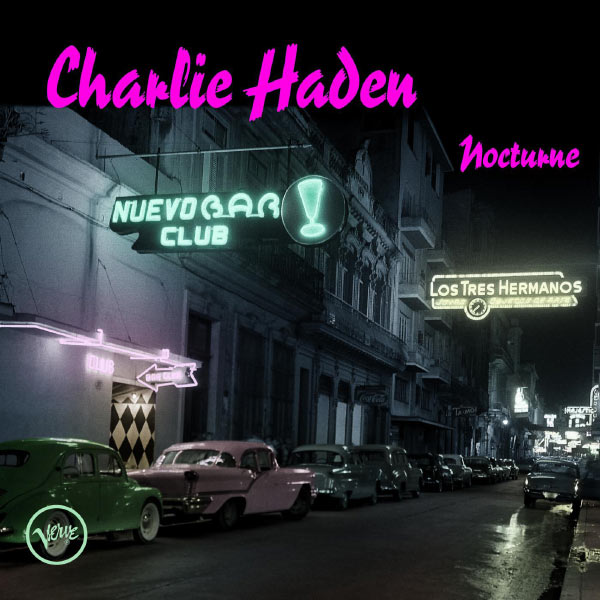
Charlie Haden – Nocturne (Verve 2001)

Another way to give you an idea about this beautiful album is a reference to Ray Cooder’s Buena Vista Social Club, that during some points of the late 1990s you simply couldn’t get away from in any bar or restaurant you walked in pretty much anywhere on the planet.

This really overdosed me for the next decade, and I only recently rediscovered the new high-res release of Buena Vista, and now enjoy it again, but in moderate doses.

Charlie Haden Nocturne Verve 2001

However, Nocturne has been with me and on regular rotation since I first discovered it in 2004.

But by now you really get the picture, I assume. Charlie Haden is playing soft latin rhythms, inspired by Cuba and Mexico, and this is really made for the late night.

Charlie Haden

I’ve only seen Haden live once in Paris, but was very fond of him, so his recent passing made me sad. I really don’t know why I haven’t written about him yet, he has done so many beautiful albums, and is one of my favorite bass players. Well, watch this space.

Outstanding Musicians

Charlie has assembled an outstanding team of musicians here. Gonzalo Rubalcaba is a great pianist (saw him once live in solo, great experience), Ignacio Berroa on drums, Pat Metheny (that I’m generally not that fond of, except when he plays with Haden), Federico Britos Ruiz on the violin. Joe Lovano (excellent, he also played when I saw Haden live in Paris at Vincennes Jazz) and David Sanchez keep relatively low profile on this album, but are there when you need them to.

So by now you have a pretty good idea of what to expect. Please, given the title of both the album and several songs (Noche de Ronda, Nocturnal, Moonlight, Nightfall), really listen to this album late at night, that is when it does all it’s magic.

Usually receiving a Grammy isn’t necessarily a safe gauge of quality (I still need to figure out what criteria they use, but they not very often get close to my taste), but in this case, the 2002 Grammy for best latin album was spot on.

My rating: 5 stars

You can find it here (Qobuz) or here (Spotify), or quite overpriced at Amazon.

Quatuor Ebène & Gautier Capuçon play Schubert’s String Quintet – Can’t get enough of it

On my absence

2016 has been a very bad year for me posting-wise so far. Last year I was usually able to stick to my self-imposed posting schedule, of about 2 per week.

Since the beginning of the year this frequency has plummeted. Sorry for that. There is a couple of reasons involved, too much business travel, late nights at the office, some long week-ends / short vacation, and most recently, a nasty gastro-intestinal flu that isn’t fully over yet. Plus there’s been a bit of a writing block on the occasional days that I could have written.

Well anyhow, I really hope you should be able to read my posts more often in the future, fingers crossed.

Thanks in any case for your loyalty, my dear readers. Very much appreciated.

Schubert’s String Quintet

Yes, I’ve written about it before. Schubert’s string quartet, to me personally the highest peak that chamber music ever reached (sorry LvB fans).

I’ve already recommended the Pavel Haas Quartet’s version here, the Takacs also have done a beautiful version.

So there is obviously no need to talk about it again.

Quatuor Ebène

Well, actually there is. The reason is called Quatuor Ebène. This French quartet is noteworthy not only for being one of the leading classical string quartets of our time, but also do crossover, i.e. interpret Jazz and contemporary musical classically.

I must admit the term crossover usually makes me run away as fast as I can, as it is usually just horrible André Rieu / David Garrett / Vanessa Mae etc. trash (sorry, but I really can’t help it, that’s about the only word that expresses what I feel about this stuff).

But obviously to every rule there is an exception. Ebène is one of the few classical artists to really pull this off well!

Back to Schubert.

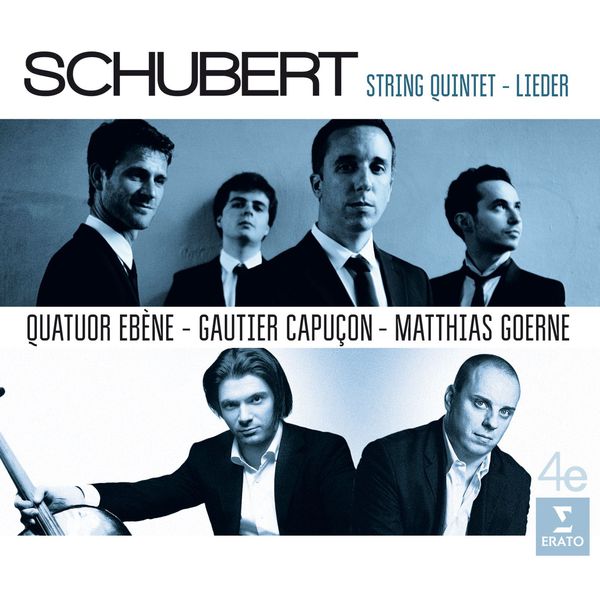
Schubert: Quintet & Lieder – Quatuor Ebène – Gautier Capuçon – Matthias Gerne (ERATO/WARNER 2016)

Schubert String Quintet - Lieder - Quatuor Ebène - Gautier Capuçon - Matthias Goerne  ERATO 2016

I would have checked out this album even without a “Choc” from Classica and an Editor’s Choice recommendation by Gramophone. But obviously, having the highest possible endorsement from both of my favorite classical magazines helped.

Let’s write about the Quatuor first. They are joined by Gautier Capuçon on 2nd cello. Gautier is the younger brother of the well-known violinist Renaud.

So what makes this recording so special? Two words spring to mind, rough and fresh. Rough isn’t meant that this is not high quality playing, far from that. But there is a real direct quality in the playing, that let’s you notice all the little angles and details than more polished recordings.

I’ve mentioned the energy that sets apart the Pavel Haas Quartet’s reading. You’ll find some of this here, but overall this is even more “chamberesque” (is this a word?) and intimate in this reading with Ebène.

This recording never just let’s you enjoy it, this album forces you to live the music.

The String quintet is already nearly 1h long, so many other artist would have just stopped there. Here however, you get an interesting bonus. Schubert is obviously famous for his Lieder (songs), and many of his chamber works are inspired by his songs (e.g. Death and the Maiden, see also here).

Usually, these songs have a piano arrangement. I must admit, I’ve never heard them with a string quartet supporting the singer. Well, here we go. And obviously, you don’t just get any kind of singer, you get Matthias Goerne, a Schubert legend. It is surprising how well this works. This is really way more than just a filler.

My rating: 5 stars – absolutely worth checking out, even if you already own the Haas or another reference version.

You can find it here (Qobuz) and here (Prestoclassical)


Classical Life

A classical music blog by music critic Tim Mangan

This Week's Music

Making Classical Accessible

From my Macbook to the Net

Evaporation of my thoughts and observations

Elestra

Author: Artienne

My Life in Music

Playing, Singing and Listening

ArsX3

A brand new journal reviewing books, cinema, music

LawrenceEz's Blog

Creative and Performing Arts: Writing, Classical Music, Photography

Laetitia Strauch-Bonart

Contemporary Politics & Culture

sibling revelry

reveling in all things classical

It's A Raggy Waltz

I collect jazz on vinyl, I dig the Dave Brubeck Quartet, & I write about it

La Musica

By two cousins

thejazzbreakfast

Dishing it out from the heart of England

only jazz

random thoughts about music that matters to me

The Culture Project

Exploring the world of literature, wine, art, music and more.

René Spencer Saller

The music causes me to dream of fabulous empires, filled with fabulous sins.

Breaking Baroque

Blog of Tafelmusik Baroque Orchestra and Chamber Choir

Tasting Nirvana

Eating your Dosha

Shadow of Iris

Poetry, fiction, short stories, more ...

The Immortal Jukebox

A Blog about Music and Popular Culture

April Greene

Writer + Editor

a pianist's musings

A history of your favorite classical music.

Classical music for all

Boris Giltburg's blog

I HEAR VOICES

An orchestra seat in the web space