Mendelssohn, Shakespeare, and Dausgaard

Mendelssohn

I’ve already written previously that I consider Felix Mendelssohn an underrated composer. Well, here’s another proof, if needed.

Mendelssohn’s opus 21, Ein Sommernachtstraum after Shakespeare’s comedy A Midsummer Night’s Dream, is probably one of Mendelssohn’s most popular works. Not only for the music itself, but obviously because of the most important “hit”, his wedding march.

(Small parenthesis, it took me until after my own wedding to figure out that there are two world-famous wedding marches, this one, and the one taken from Wagner’s Lohengrin, nowadays known from American RomComs as “Here Comes The Bride”.

If you read the story of Lohengrin, and the sad ending with Lohengrin having to leave and Elsa dying, you wonder why everybody wants this to be played at your wedding.

Well, during my own civil ceremony, not realizing I should have been more specific, I just had ordered “The Wedding March” thinking of Mendelssohn, and ended up getting the Wagner one. Well, lesson learned. Lucikly, no swan nor dove has taken me away yet).

Thomas Dausgaard and the Swedish Chamber Orchestra
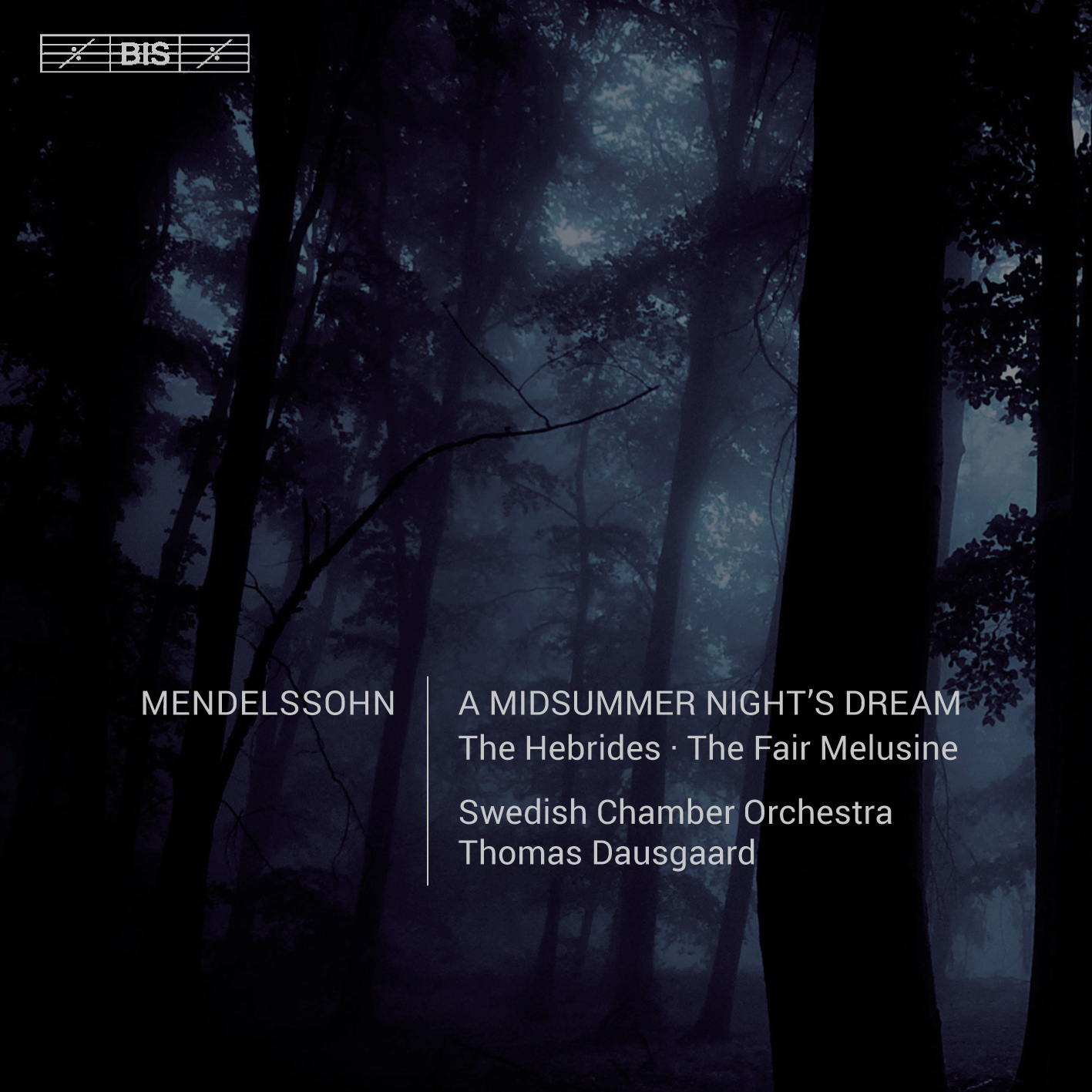
Mendelssohn Midsummer Night's Dream Thomas Dausgaard Swedish Chamber Orchestra BIS 2015

Have I already mentioned how much I appreciate BIS? It is really one of those amazing smaller labels that really care about music, like Hyperion, or Chandos, and that is giving the major labels a hard time. Luckily for us, they care about music and about sound quality, and are always exceedingly well recorded.

I already have a number of Dausgaard’s recordings with the Swedish Chamber, and am especially fond of his Schumann. So when this recording was flagged to me, I didn’t hesitate long, as this is just the right music for this ensemble. Dausgaard’s tempi are always fast, there’s tons of energy and drive, and the smaller size of the Swedish Chamber sounds just right here.

On top of Shakespeare, you get the rather well-known Hebrides overture (beautifully played), and the  Schöne Melusine overture which so far was unknown to me. Obviously, like everything Mendelssohn, it is a charming work and well worth discovering.

My rating: 4 stars

You can get it from the label’s own shop, classical. At the time of writing, the 24/96 version of the album is even discounted. This only lasts some weeks usually, so if you like it, get it now).

UPDATE Jan 4, 2016: Gramophone has just very positively reviewed this album in it’s January 2016 edition. They would love to see this as the beginning of a Mendelssohn symphony cycle, and I wholeheartedly agree!

Eeriness or How To Summarize Michael Wollny’s New Release in One Word

Michael Wollny

I’ve already praised his latest live album in my 25 essential Jazz albums. Michael Wollny, 37, is certainly one of the greatest talents in Jazz Germany has to offer these days.

So I was very glad when I was pointed to his latest album he just released, Nachtfahrten (literally, night rides or night drives).

Really, you’re going to say, my last post was about Chopin’s Nocturnes, and here comes another one about music of (or for) the night? Well, this wasn’t on purpose.

Nachtfahrten

In any case, when you listen to this album, think much more Debussy’s nocturnes, or Scriabin, than Chopin. There is none of the peacefulness of the Chopin around, the word that comes to mind listening to this new album is the beautiful English word “eery”, actually, you never feel fully safe listening to this album.

Michael Wollny Nachtfahrten Christian Weber Eric Schaefer ACT 2015

Where does this eeriness come from? Well, very slow tempi, dark harmonics, a very light touch by Eric Schaefer on drums, but all this doesn’t even come close to describing the feelings you’ll get from this album.

The track titles like Nachtmahr, a rather unusual German translation of nightmare,  Feu Follet, French for will-o’-the-wisp, Marion (named after Marion Crane, the blonde victim of the Psycho shower scene), or Metzengerstein, the name of Edgar Allen Poe’s first novel, don’t really help. Well, you get the idea.

There are some slightly lighter titles like Ellen, which is one of the few occasions where the trio gets to show that they are able to swing really well, but even these don’t break the overall dark mood of the album.

Several journalists have asked the question whether this is Jazz, Pop, or contemporary classical. Well, honestly, who cares. It is impressive music, full of a strange and irritating energy, that will draw you into the music. This is anything but background music for a cocktail party. It needs your full attention (and dimmed lights).

My rating: 4 stars

Two videos to give you an example, one with Michael commenting on the album, unfortunately in German only.

You can find it here (Qobuz) or here (Highresaudio)

Sarah McKenzie – Another Outstanding Vocal Jazz Talent

Me And Vocal Jazz

Already in my review of Cécile McLorin Salvant’s album I’ve said that I don’t listen a lot to contemporary vocal jazz. Too many of the albums just sound too interchangeable, without individual character. Cécile McLorin Salvant is one major exception to that rule.

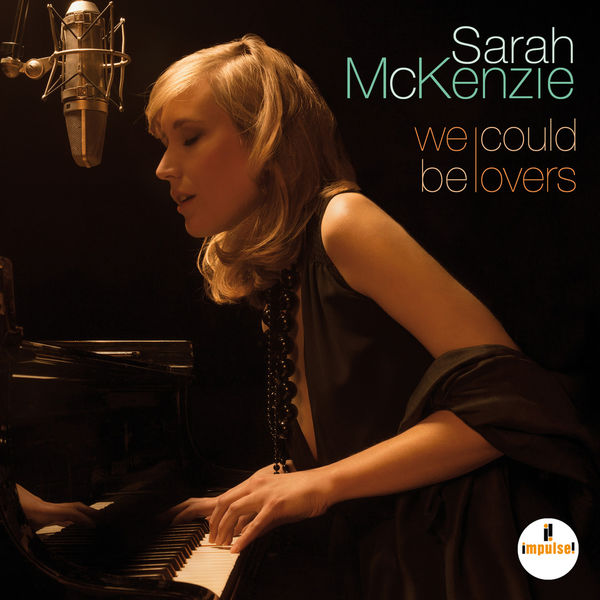
So I didn’t expect a lot when I just clicked on one of the latest new Jazz release on Qobuz’ streaming site, the album “We Could Be Lovers” that was just released on Impulse.

We Could Be Lovers (Impulse 2015)

Sarah McKenzie We Could Be Lovers Impulse 2015

How wrong I was!

After listening for about 3 minutes I noticed that this album really is different, this is not one more of the many jazz vocalists that will never stand out from the crowd.

I then checked her biography and discovered she comes originally from Australia, had received a full scholarship for Berklee, probably the best music school of the planet, and has just signed her first album with Impulse, a label that is doing great things again after being one of the major jazz labels in the 60s (see also my review of the Kenny Barron and Dave Holland duo album here).

One warning ahead: this is as mainstream jazz as it gets. As you’ve probably seen from my blog before, I don’t mind that one bit.

You get jazz standards, but also some of their own compositions. She also plays the piano, and not just a bit, she swings like crazy (see some of the YouTube extracts below). Impulse was kind enough to give her outstanding musicians for this album,

The entire album and style sometimes recall the early Diana Krall, but you’ll quickly notice that she has already found her own voice, her own style, at the age of 27 nonetheless.

And I must admit, any singer doing Moon River get extra cookie points from me…. Reminds me every time of my first trip to NYC with my wife where we watched Breakfast at Tiffany’s on the hotel rooms VCR.

Keep your eyes and ears open for her!

My rating: 4 stars

Below two examples of her work, an earlier live recording during her time at Berklee, and the official clip of one of her tracks from the new album (not her strongest one by the way, but still fun to listen to).

http://https://www.youtube.com/watch?v=-FPOpqZXqLk

You can download it here (Qobuz) or here (Highresaudio)

EDIT: I was notified by a reader that this album doesn’t seem to be available in the US yet. My chin dropped and I just couldn’t believe it. But it is true, Amazon US features this album only as “Import”. Seriously? Dear Execs at Universal, what are you thinking? Are these the 1980s? Is there one good rationale reason (probably beyond the weird parallel world of music licensing rights) why you wouldn’t make available an album by an Australian artist on a supposedly US label (impulse) in the US? I really don’t get it.

UPDATE: You’ll find a review of her live concert in Zurich in 2015 here.

A Lot Of Fun At The Vanguard – Christian McBride’s New Live Album

3 Kinds of Piano Trios

I’ve written about a lot of piano trio album already, as this is one of my favorite genres, from Shai Maestro, to Helge Lien, to the obvious Keith Jarrett (here and here). By the way, if you’re interested in reading all my posts about a particular genre like the piano trio, just click on the category link in the  sidebar (or here). I spent a lot of effort categorizing and tagging my posts as I want you to be able to find stuff easily. Otherwise there is always the free text search.

I personally mentally categorize the Jazz piano trio into three classes:

  1. Focusing on the melody

These move a bit away from the traditional Jazz, and have a strong focus on the melody and harmonic development. Typical examples for me are Triosence, Edgar Knecht, or the Tingvall trio. As you can see from my previous reviews, I really like this category, as I am a sucker for melodies.

2. Avantgarde

Going beyond traditional harmonies and rhythmic structures, these groups tend to be more exploratory, recent examples include Vijay Iyer or Giovanni Guidi. Often, these aren’t really my cup of tea. That’s why you won’t be reading a lot about them here, in spite of the fact that I admire their artistic creativity.

3. It Don’t Mean A Thing if It AInt’ Got that Swing

Typical examples are Oscar Peterson and Ray Brown, where a certain Swing is always present.

I very much like this form of piano Jazz, nothing better to cheer you up if you are in a bad mood.

Obviously, these classifications are never clear-cut, but they help me mentally organize my music collection.

Christian McBride Live At The Village Vanguard

i was pointed to this album by forum contributor JoeWhip (see here).

For whatever reason McBride, a bassist close to the great Ray Brown, kind of flew under the radar for me, probably he was more active as a sideman than a leader, what a miss!

I’m glad I finally rediscovered him. He plays here with Ulysses Owens Jr on drums and Christian Sands on piano.

The Christian McBride Trio Live At The Village Vanguard 2015 MackAvenue

This album is a typical example where I just can’t sit still. Whenever I’m in a Jazz concert I’m always surprised that there are so many people in the audience that sit completely still. That’s ok for me maybe during a ballad.

But on any uptempo song I just need to somehow move with the music, whether it is my foot, hand, or whatever. I may look a bit silly, but it is completely impossible for me not to go with the music. And this is how the third category of trio jazz I mentioned above should be!

This is excellent live Jazz, nothing else but pure enjoyment. And the extra energy of the mythical Vanguard that I always visit when my travels get me to NYC probably helps.

After Aaron Diehl and Cécile McLorin Salvant, Mack Avenue has another winner here!

My rating: 4 stars

You can download it here (Qobuz) or here (HDTracks)

Let Me Weep – Rinaldo, Händel’s First Major Opera

In my post some time ago on The Top 10 Music That Gives Me Goose Bumps, I mentioned the famous aria “Lascia ch’io pianga” (Let me weep).

Georg Friedrich Händel

I still haven’t written about this piece, or actually about Georg Friedrich Händel  (I still prefer his German spelling, although in later years he became one of the first “expats” of all times in London and the English spelling of George Frideric may be more familiar to you) in general

Rinaldo, as its HWV number of 7 indicates, is one of the earlier Händel works, but in spite of this, Lascia is what we’d call recycling today, as it has been used twice before in other works, once without words in his op. 1, the opera Almira (rarely played these days), and also in the oratorio Il Trionfo Del Tempo E Del Disinganno (which in spite of its HWV number of 71 is also really early, but was reworked).

This kind of recycling in the baroque area was very common, even Bach used it all over the place, by the way. Many cantatas all over sudden will remind you of the Christmas Oratorio, or have a piece of the Brandenburg concertos.

Rinaldo HWV7

But back to Rinaldo. This was probably the first of his London operas. The story, is based during the first crusade near Jerusalem, and based on an epic by Torquato Tasso.

In spite of the great success of Lascia, the entire opera hasn’t been recorded that often. These days you basically have the choice between three versions (plus some DVD editions).

The oldest one is Jean-Claude Malgoires 1977 recording on Sony, still quite nice.

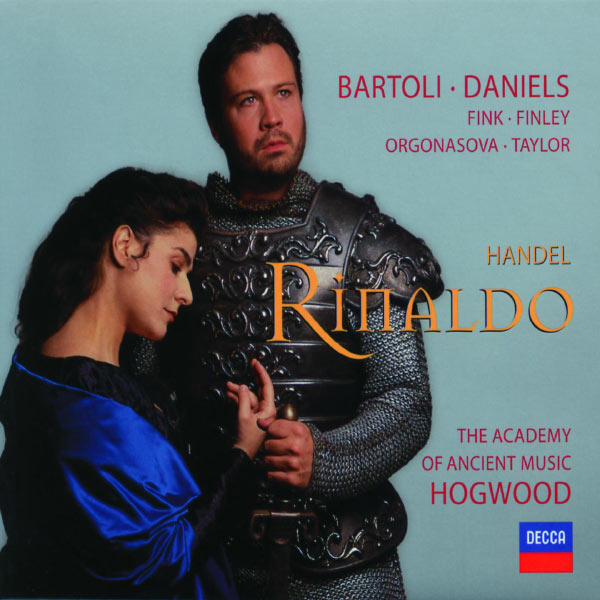
The to more recent ones are René Jacobs that I haven’t written about a lot yet, and Christopher Hogwood, both from the first decade of this century. Between the two I have a preference for Hogwood, thanks to its outstanding cast, in spite of the fact that Cecilia Bartoli sometimes is a bit heavy in terms of vibrato (I prefer the cleaner singing of the modern “historically informed performance” style).

This recording should be on every collectors shelf (or these days more likely, hard drive).

My rating: 4 stars (as beautiful as it is, I still think this can be bettered in a future version).

Handel Rinaldo Christopher Hogwood Cecilia Bartoli Decca

Recitals or “Best Of Compilations”

When I was younger, I was very snobby towards Best Of or “Highlight” versions of operas, I always wanted to get the full opera. With operas of the classical period, I’m still that way, however, for baroque opera, that are usually very long, have rather complex and/or weird stories I must admit I don’t always have the patience for 3h plus of Opera seria. Luckily you’ll find the most popular (and outstandingly beautiful) arias of Händel et al quite often on recital albums by individual soloist.

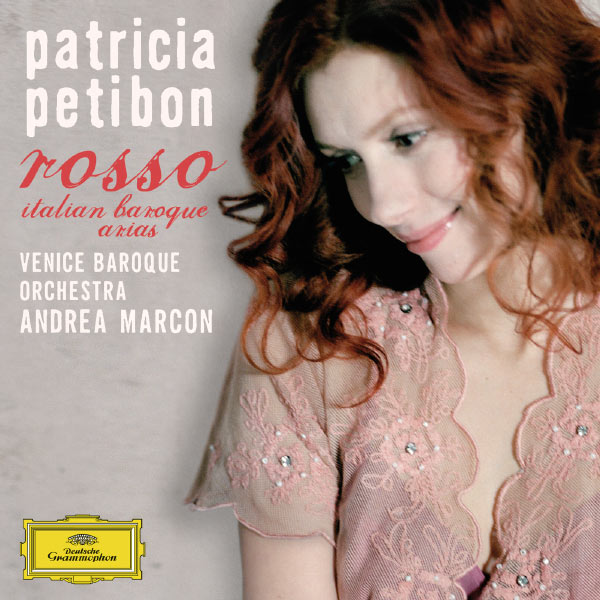
Let me recommend two very beautiful ones here that feature Lascia, by Patricia Petibon and Simone Kermes, respectively called Rosso and Drama, and both highly recommended. They offer an excellent entry into baroque opera.

Patricia Petitbon Rosso Andrea Marcon Venice Baroque Orchestra Deutsche Grammophon

Simone Kermes Dramma Sony

And finally, let me mention another beautiful version of Lascia, in a Jazz version this time, by the amazing trumpet player Paolo Fresu, on the album Kosmopolites:

http://https://www.youtube.com/watch?v=d3bXeGwSJBc

Download Sources:

Hogwood’s Rinaldo: here (Qobuz)

Patricia Petitbon: Rosso: here (Qobuz)

Simone Kermes: here (Qobuz)

Paolo Fresu: Kosmopolites: here (Qobuz)

The Art of Conversation – Dave Holland and Kenny Barron

Dave Holland

I got a lot of reactions to my 25 essential Jazz albums. One of them was saying: but what of Dave Holland? Well, I’m overall not such a big fan.

I’ve heard him live once at the New Morning in Paris, and very much enjoyed the concert, but his ECM albums usually don’t excite me that much. I must admit I haven’t gone through his entire discography yet, probably there are some gems to be discovered.

One such gems is the album below.

Jazz Duos

Let’s face it, there is a reason why Jazz is usually played at least in trio form: Duos are mostly boring. There is just something lacking without e.g. a drummer.

But to make sure: the rule above has its exceptions. And one person is usually involved in these, and that is the brilliant pianist Kenny Barron. He is one of the few who can pull it off without drums, as he’s already swinging like crazy, and you basically have the drum track in your head right with it.

One excellent example of an outstanding duo recording I already mentioned in the 25 essential Jazz albums: his collaboration with Stan Getz in People Time.

The Art Of Conversation

Kenny Barron Dave Holland The Art Of Conversation Impulse 2014

This 2014 Impulse album is excellent. And as a Keith Jarrett fan it pains me to admit that this collaboration is better to my ears than both the recent Jarrett / Charlie Haden duo recordings(Jasmine and Last Dance).

It is basically the result of a long tour of these two outstanding musicians together in 2012, actually, Jean-Philippe Allard, the producer of People Time mentioned above, saw them in concert in 2012 in Paris and asked them whether they wanted to do a duo recording. Luckily both agreed.

There are beautiful long ballads like Rain, Swinging monsters like In Walked Bud (I never would have believed that anybody else than Monk can pull this track off). In Your Arms is an outstanding Dave Holland original with a lot of intensity. Basically, this album really never becomes boring, but it is like to smart people having an intelligent conversation, the title is spot-on.

My rating: 4 stars

You can get it here (Qobuz) and here (HDTracks)

Brahms Latest Work: The Clarinet Sonatas by Coppola and Staier

I’ve said it before, I’m a big fan of Andreas Staier. His Diabelli-Variations are outstanding (see review here). Therefore, I was rather disappointed not to like his recent release of the Bach harpsichord concertos (see here). It appears now that most other reviewers don’t share my opinion by the way. I’m still not convinced unfortunately.

But from Bach, let’s move more than a century later.

I haven’t reviewed any Brahms album for a while, which is weird given that he appears in my blog title.

Brahms’ Clarinet Sonatas op. 120

I must admit I wasn’t historically a big fan of these sonatas, I found them not very accessible.

These sonatas, as well as the Clarinet quintet & trio, were triggered by Brahms meeting the famous clarinet player Richard Mühlfeld.  But with Andreas Staier, I had to give them a go, so I went ahead and purchased this 2015 Harmonia Mundi album.

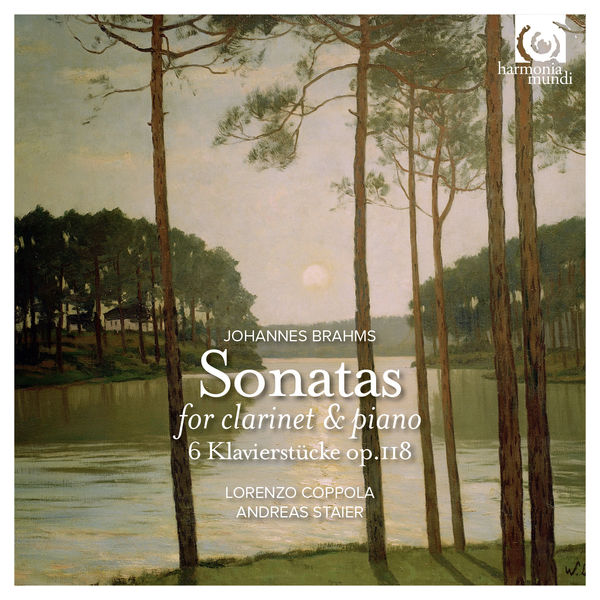
Lorenzo Coppola Andreas Staier Brahms Clarinet Sonatas Harmonia Mundi 2015

Andreas Staier plays a Steinway on this album, which could be considered somewhat unusual given that he is known for playing historical instruments. Well guess what, this Steinway actually is from 1875, apparently the type that Brahms really appreciated.

On clarinet, we get the Italian Lorenzo Coppola, who plays a 2001 reproduction of a historic clarinet which is very similar to the one Mühlfeld played.

So we’re getting really close to what Brahms could have listened to in his final years. And all over sudden, the full beauty of these late works really becomes apparent.

6 Klavierstücke op. 118

However, to me (with my piano background), the true highlight on this album are Staier’s version of the 6 piano pieces op. 118. Let me clarify first of all that I love Brahms late piano pieces from op. 116-119, and op. 118 is a particular favorite of mine.

And here, especially the second Intermezzo (track 6) is played more beautifully than on any of my other recordings (I’ll be writing about some of them soon). Staier uses tons of rubato, but it comes fully naturally. There is so much intensity in this playing that I’ve had them on constant repeats quite regularly recently. Or take the “Romanze”, truly romantic indeed.

As usual on Harmonia Mundi, this is well recorded.

My rating: 4 stars for the clarinet sonatas (rating my preference of the repertoire here, not the playing), 5 stars for the op. 118.

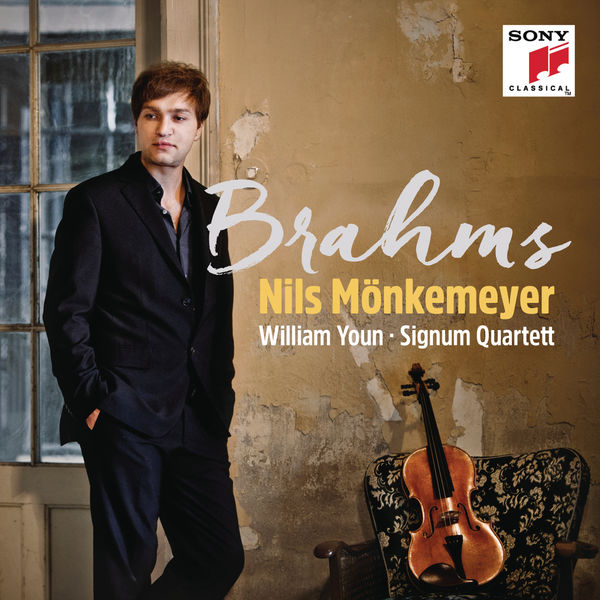
P.S. If you like op. 120, you should know that there is also a version of these sonatas replacing the clarinet by a viola. The well-known viola player Nils Mönkemeyer has just released an album on Sony playing these sonatas.

Nils Mönkemeyer Brahms Sony 2015

This album is really quite beautiful and also worth checking out.

You can download the Coppola/Staier here (Qobuz) or here (eclassical)

Classical Life

A classical music blog by music critic Tim Mangan

This Week's Music

Making Classical Accessible

From my Macbook to the Net

Evaporation of my thoughts and observations

Elestra

Author: Artienne

My Life in Music

Playing, Singing and Listening

ArsX3

A brand new journal reviewing books, cinema, music

LawrenceEz's Blog

Creative and Performing Arts: Writing, Classical Music, Photography

Laetitia Strauch-Bonart

Contemporary Politics & Culture

sibling revelry

reveling in all things classical

It's A Raggy Waltz

I collect jazz on vinyl, I dig the Dave Brubeck Quartet, & I write about it

La Musica

By two cousins

thejazzbreakfast

Dishing it out from the heart of England

only jazz

random thoughts about music that matters to me

The Culture Project

Exploring the world of literature, wine, art, music and more.

René Spencer Saller

The music causes me to dream of fabulous empires, filled with fabulous sins.

Breaking Baroque

Blog of Tafelmusik Baroque Orchestra and Chamber Choir

Tasting Nirvana

Eating your Dosha

Shadow of Iris

Poetry, fiction, short stories, more ...

The Immortal Jukebox

A Blog about Music and Popular Culture

April Greene

Writer + Editor

a pianist's musings

A history of your favorite classical music.

Classical music for all

Boris Giltburg's blog

I HEAR VOICES

An orchestra seat in the web space