RIP Maestro Harnoncourt

Nikolaus Harnoncourt passed away today.

What a loss for classical music!

I’ve not written about any of his recordings on my blog. He’s been mentioned a couple of times as a great alternative version, but I’ve never recommended his version as the best.

Just to be clear this is not because I do not absolutely admire this genius! His influence on classical music by being a leading advocate of historically informed practice is huge.

I have many many of his recordings, and like most of them. There was never an uninteresting version, he always had something to say. He will be missed.

Playing in his honor today on my stereo is:

Mozart Requiem Nikolaus Harnoncourt Concentus Musicus Wien Deutsche Harmonia Mundi 24 44

You can find this outstanding recording here (Qobuz)

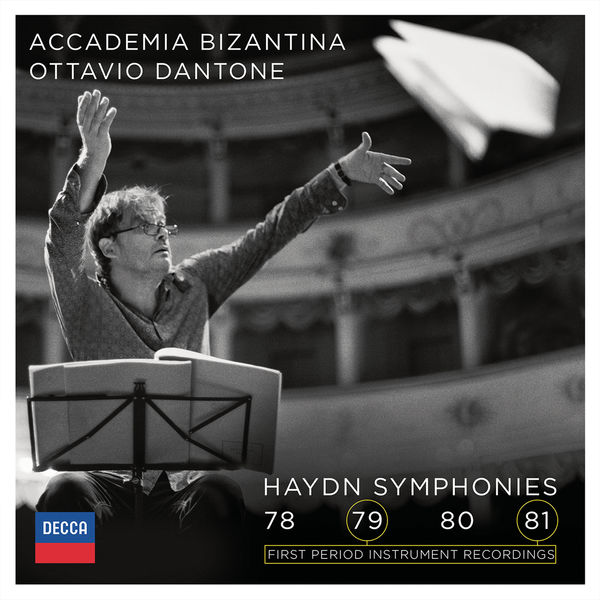
Papa Haydn – Or Not? Ottavio Dantone’s Haydn Symphonies

Joseph Haydn

I haven’t written a lot about Haydn yet, actually, there is so far only one blog that mentions a Haydn album in passing.

This is not entirely by chance, I’m generally not a big Haydn fan.

Baroque, yes please! Mozart, Beethoven, give me more. But Haydn? Somewhere stuck in between.

The old saying of “Papa” Haydn certainly has a point. I very much like his Cello concertos, and his masterly string quartets. But his symphonies? More than 100? Not really my cup of tea.

Or so I thought. Apparently I’m not alone, in the most recent issue of Gramophone, an article commenting about the recording I’ll be discussing below mentioned that Haydn apparently doesn’t sell well.

So what has changed?

Haydn: Symphonies No. 78-81 by Ottavio Dantone and the Academia Bizantina (Decca 2016)

Haydn: Symphonies 78, 79, 80, 81 - Ottavio Dantone - Accademia Bizantina (24/96)

Ottavio Dantone? Isn’t that the guy that I have several lovely Corelli recordings from? Yes indeed, he is mainly known for his Baroque albums. And now he attacks the traditional “Wiener Klassik”. How does he manage this material?

Actually, really well. The historically informed practice, gut strings et al., really helps Haydn a lot. What it adds is precision and clarity.

This album to be sounds like very precisely drawn with a fine pencil. You don’t miss a single detail. At the same time, there is a lot of energy. “Papa” Haydn really gets a kick in the butt, metaphorically speaking (excuse my French), and this is what this music needs. Extremely refreshing.

Now, about the music itself. Are we talking about something similar to a Beethoven symphony? Well, not to me (although especially the early Beethoven symphonies were clearly inspired by Haydn). But there is enough going on to make this recording interesting and worth discovering even for people (like me) who would usually shun Haydn.

Side note: There currently is a highly exciting complete Haydn HIP style cycle in the making, called Haydn 2032, by Giovanni Antonini and the Kammerorchester Basel. This cycle so far has only released some of Haydn’s earlier symphonies that I really cannot be bothered with, but are played so well that I’ll be closely following this project.

Back to Dantone: My rating: 4 stars

You can find it here (Qobuz) or here (Prostudiomasters)

The 2015 Chopin Competition – I Don’t Get It

Subjectivity

As you know if you’ve read this blog, before, I have absolutely no problem with subjectivity (see also how do I rate?) even if it may be controversial, and so I don’t hesitate putting my opinion out there, even if I may be a minority (e.g. with Staier’s Bach concertos that the whole world but me seems to love).

The 2015 Chopin Competition

However, things were slightly different with the 2015 Chopin competition. I mean we’re talking about one of the most important, if not the most important piano competition in the world, only held every 5 years! Former winners include legends like Martha Argerich and Maurizio Pollini, and in more recent years Yundi and Rafal Blechacz. Martha, Yundi, and Chopin specialist Nelson Goerner were part of the Jury this year!

So I felt rather belittled compared to those giants, and when the recording of the winner, South-Jorea’s Seong-Jin Cho came out on Deutsche Grammophon, and I didn’t really like the recording, I felt it must be me. Maybe these geniuses saw or heard something I don’t.

So I didn’t write about it yet on my blog and decided to give the album some more spins before I formally make up my mind. And then I must admit I forgot about it.

Seong-Jin Cho At the 2015 Warsaw Chopin Competition (Deutsche Grammophon 2015)

Song-Jin Cho Winner of the 17th International Fryderyk Chopin Piano Competition Warsaw 2015

Just recently, the two classical journals I subscribe to, Gramophone and Classica, came out with their latest issue, and both reviewed it. And guess what, in both cases, the reviewers were significantly underwhelmed (3 out of 5 stars for Classica, and rather negative comments from Gramophone).

So at least it wasn’t just me. Don’t get me wrong, this is fine Chopin playing, but compare his preludes to Blechacz, and sorry but we’re talking night and day in my personal opinion. And then you get Sonata No. 2. Compare this to Argerich herself, or Pogorelich, or Rubinstein, again, this is absolutely no match.

Not sure what happened, maybe Deutsche Grammophon just released the wrong takes, maybe Cho will develop over time, but so far I really don’t get it.

But even if you take the pressure of a competition and live performance into account, just compare Cho to Blechacz’ final performance in Warsaw 11 years ago, and really, there is so much more presence:


Obviously, you can’t have a new Argerich every year, but still my expectations were higher.

So what do YOU think?

My rating: 3 stars

In any case, you can find it here (Qobuz) and here (Prestoclassical)


How Many Versions Of Brahms Violin Concerto Does One Need?

My dear readers and fellow music lovers, no I’m not dead nor sick, I’ve just been on an intense 3 weeks business trip which kept me from posting.

Everything should be back to the regular 2-3x update schedule as of now. Thanks for your patience!

Brahms Violin Concerto

To answer my own rhetorical above question first: One more than you currently own as of recently.

OK, if you were a purist, you could say, just get Heifetz and be done with it. And you’d have a valid point. But then again, you’d be missing so much, for example the recording I’m just about to write about.

At latest count, I have 24 versions of this masterpiece in my library, and this is not counting the huge number of versions I could access any time via Qobuz streaming.

So why the heck would I want to add one more? Especially with Heifetz’ legendary version around, not even mentioning Faust’s fantastic version (reviewed here previously, 5 stars)?

Janine Jansen

The answer is simple and is called Janine Jansen. If you’ve been reading this blog for a while you know I’m a big Isabelle Faust fanboy, and gobble up and love pretty much all she’s doing.

Janine Jansen, the Dutch violinist, is another example where I’ve rarely ever been disappointed. Her Beethoven and Mendelssohn recordings are among my absolute favorites, and even her Four Seasons are a lot of fun. I’ve already mentioned her a couple of times, including here and here, in her role as excellent chamber musician. But obviously she really shines when she is in the lead.

Janine Jansen and Antonio Pappano playing Brahms and Bartók
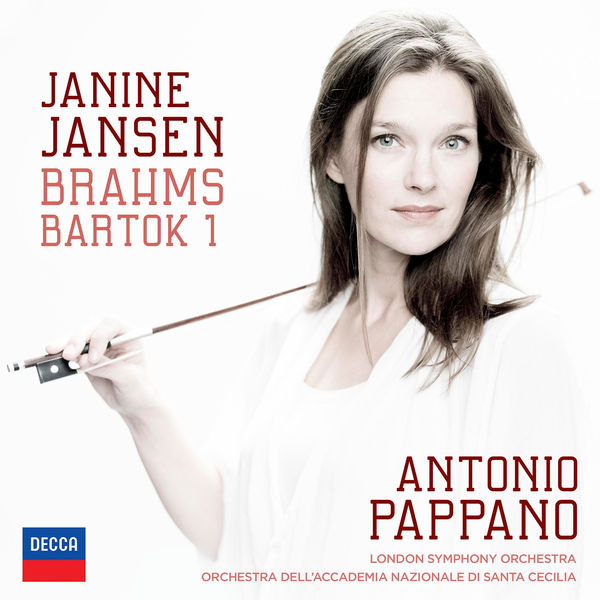
Janine Jansen Brahms Bartok Violin Concertos Antonio Pappano London Symphony Orchestra Orchestra dell'Accademia Nazionale di Santa Cecilia Decca 2015

How to describe Jansen’s Brahms? Well, between the two extremes of Heifetz (extreme passion) and Faust (extreme clarity), you probably get a nice balance in between.

There is definitely more vibrato and more rubato than with Faust, and while I love the clean sound of Faust’s Sleeping Beauty Stradivarius,  Jansen’s Barrere from the same genius violin maker’s factory, with a slightly darker tone, is outstanding as well.

Another difference is the cadenza, Faust playing the rare Busoni cadenza, with Jansen chasing the more traditional Joachim cadenza (by Brahms’ friend and favorite violinist).

Obviously I also need to mention Pappano. He’s done great things with his recent opera recordings (e.g. the Aida reviewed here), but if any more proof was needed he’s also an excellent conductor for concertos, here you have it.

In a nutshell, this is perfection. A different kind of perfection than Faust or Heifetz, but perfection nevertheless. A must have if you like Brahms. (At some point I’ll do a comparison between all my 25 versions, from Neveu to Jansen. Just need to find a LOT of time).

Bartók

I haven’t written a word about the Bartók yet. This is simply because I’m much more unfamiliar with this work than the Brahms, my only two comparators being Faust (again, I know), and Oistrakh, so I won’t comment here beyond the fact that I like what I hear. Maybe this is the version that will finally get me more hooked on the Hungarian composer (I really appreciate him, but rarely listen extensively).

My rating: 5 stars

You can find it here (Qobuz) and here (HDtracks)

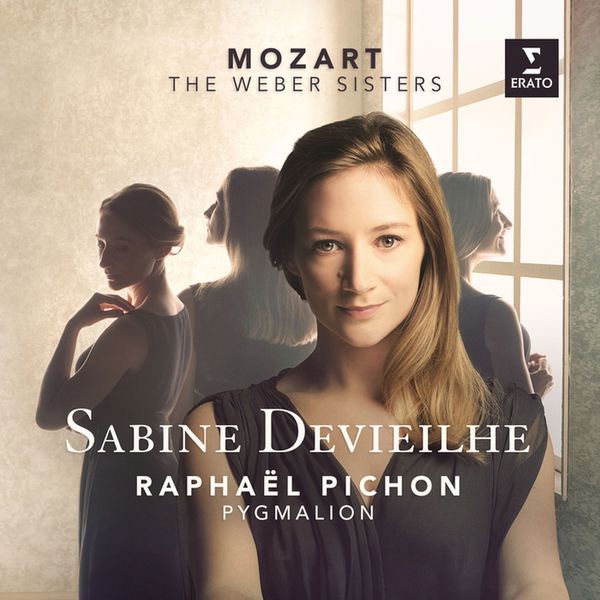
There Must Be An Angel: Mozart – The Weber Sisters

If reading the blog post title you wonder what the connection is between a 1990s Eurythmics title, Mozart, and some sisters called Weber, let me explain.

The angel is simply referring to Sabine Devieilhe, the young soprano on the album I’m about to write about. Not only she looks pretty much like one (see the cover photo below), she really has an angelic voice. Clear, bright, shiny, with a beautiful color and an amazing range.

I first noticed her in her debut recording on Erato, with Alexis Kossenko (previously mentioned for his Telemann recording here), Le Grand Théatre de l’Amour dedicated to Jean-Philippe Rameau.

Mozart: The Weber Sisters (Erato 2015)

Mozart: The Weber Sisters Sabine Devielhe Raphael Pichon Pgymalion Erato 2015

This is Sabine Devileilhe’s second album on Erato, recorded this time with Raphaël Pichon’s ensemble Pygmalion.

I hesitated for quite some time to write about his album as I’m generally not a big fan of “best-of” type albums. I don’t mind them for baroque music as much, as it can be sometimes a bit tedious to go through 3+ hours of an opera seria, but for Mozart and beyond I prefer to listen to the entire opera instead. However, the selection on this particular album includes quite a number of single arias that are not part of a larger opera and are not recorded that often.

Let me briefly explain the Weber Sisters title of his album, as this is kind of a concept album. The most famous Weber sister is Constanze, Mozart’s wife, but actually Mozart was a close friend of the Weber family and as the booklet extensively explains, was at some point in love with the youngest sister, Aloysia, and the middle sister, Josepha, also played an important role in his life.

What music do you get? Well known hits like the famous Queen of the Night aria, or the French song Ah vous dirais-je maman, but also as mentioned previously several lesser known arias. All this is beautifully player by Raphaël Pichon’s ensemble, and Devileilhe’s voice is an absolute pleasure to hear.

This albums was elected among the albums of the year by Classica magazine, and I fully agree that his album is highly recommended.

My rating: 5 stars

You can find it here (Qobuz)

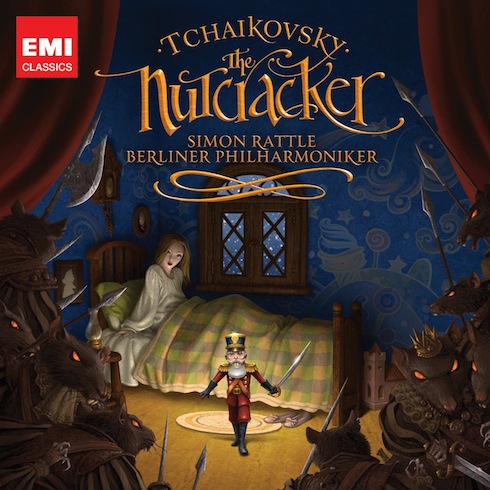
The Nutcracker – Or Why I Sometimes Do Like Tchaikovsky

The Nutcracker

In my previous post on Tchaikovsky’s symphony no. 5 I’ve stated that I don’t like Tchaikovsky very much. However, I must admit he really did some magical (and not in the Disney sense of the word) melodies in his ballets.

Western Christmas traditions now include regular performances of the Nutcracker. The story was originally a German fairy tale of a prince turned into a nutcracker, by E.T.A Hoffmann, later adapted by Alexandre Dumas. Tchaikovsky conducted the premiere in 1892, and both the ballet and the “best-of” excerpt, the suites, are these days among the most famous of his works.

Tchaikovsky: The Nutcracker – Simon Rattle – Berliner Philharmoniker  (EMI Classics 2010)

Tchaikovsky The Nutcracker Simon Rattle Berliner Philharmoniker EMI Classics

My first version was the legendary one by André Previn with the London Symphony Orchestra (also on EMI). That version is still very nice, so I didn’t look for a new recording for years (I basically listen to this work literally once or twice per year, usually some time in December).

However, two  years ago I heard about this relatively new (2010) recording by Rattle on the radio, and I checked it out and I really liked it. Beautiful orchestral colors by the great BPO, and most importantly all the energy that this music really needs (I’m anything but a dancer, but this music makes me want to get up from my sofa and move to it).

You’ll find some excerpts of the recording here, with a nice interview with Sir Simon Rattle and some BPO musicians:


Note that some people say that Russian music can only be played well by Russian conductors, and indeed Gergiev did a great job on his Decca recording with the Kirov orchestra from the 1990s.

But still, Rattle did such a fine version that I doubt I’ll ever buy another Nutcracker again (well, never say never).

My rating: 5 stars

You can buy the CD here, I haven’t found a decent lossless download source.

My Top 5 Classical Albums of 2015

Post no. 100

First something internal: this is my post no. 100, and this blog did celebrate it’s 6 month anniversary some days ago.

I’m positively overwhelmed by the number of visitors and the reaction I’m getting, and I hope you enjoy this blog as much as I do writing it.

Top Albums of the Year

Fellow blogger Jacob Stockinger at his great site The Well Tempered Ear has published some posts on the recent suite of Album of the Year articles by the NY Times, the BBC Music, and the Telegraph.

There are really some great recordings in this list, so I figured, why don’t I do my own?

So here we go, no particular order. I’ll probably follow up with some of my preferred Jazz albums later.

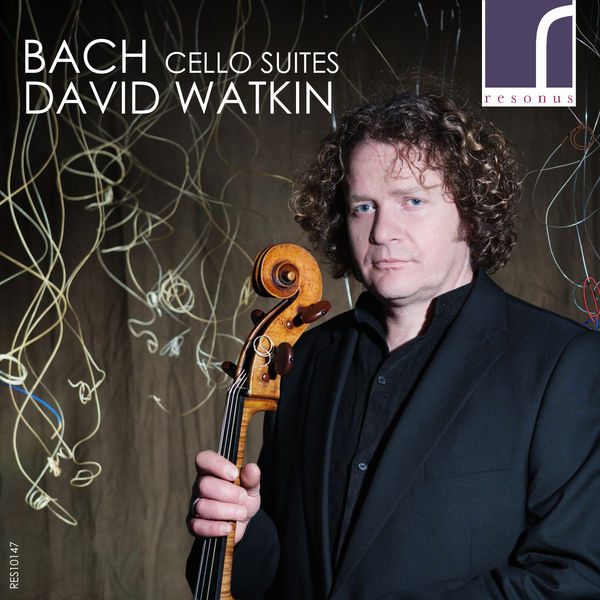
Bach: Cello Suites – David Watkin (Resonus)

David Watkin Bach Cello Suites Resonus

Mentioned here and here on my blog already. I already had a ton of Bach’s Cello Suites, but this is truly an outstanding version. Gramophone called it “definitive”, and they really have a point.


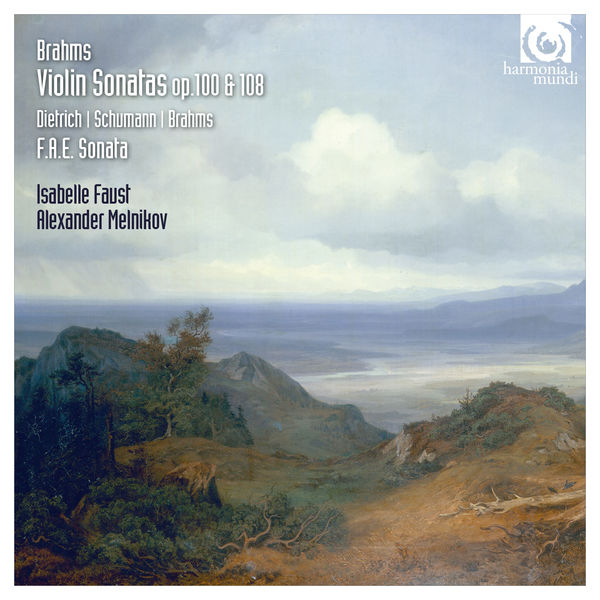
Brahms: Violin Sonatas No. 2 & 3 – Isabelle Faust – Alexander Melnikov (Harmonia Mundi)

Brahms Isabelle Faust Alexander Melnikov Violin Sonatas 2 & 3 Harmonia Mundi 2015

I know I’m an Isabelle Faust fanboy, but this album is again just another outstanding example of her amazing art. Reviewed here.


Igor Levit: Bach Beethoven Rzweski (Sony)

Igor Levit Bach Goldberg Variations Beethoven Diabelli Variations Rzewski The People United Will Never Be Defeated Sony 2015

This young pianist is impressive. Three albums released, all three amazing. Reviewed here.


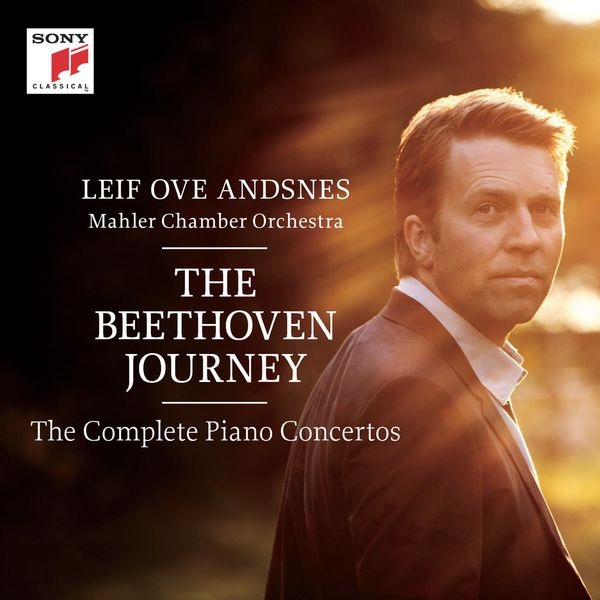
Leif Ove Andsnes: The Beethoven Journey (Sony)

The Beethoven Journey Leif Ove Andsnes Mahler Chamber Orchestra The Complete Beethoven Concertos Sony 2015

I’ve had the pleasure of hearing him live play nos. 2-4 and can confirm this gets pretty close to my idea on how these concertos should be played these days. I’ve previously written about it here.


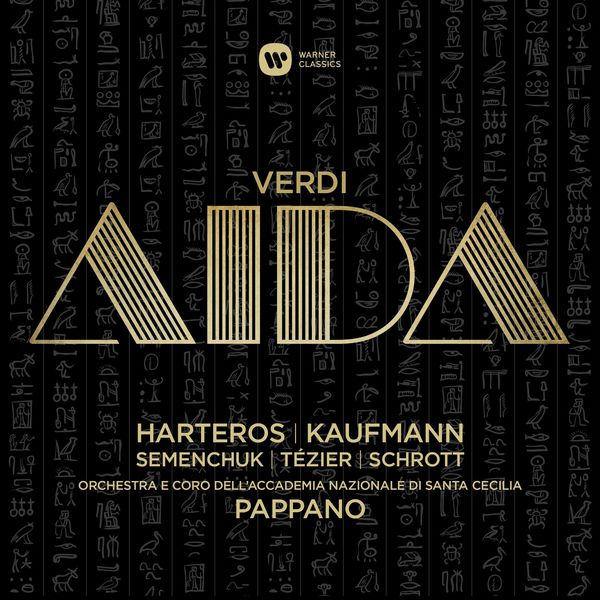
Verdi: Aida – Pappano (Warner Classics)

Verdi: Aida Pappanis Anja Harteros Jonas Kaufmann

As mentioned previously, I’m very happy we still get to see this kind of opera performance recorded these days.


So what are your albums of 2015?

Classical Life

A classical music blog by music critic Tim Mangan

This Week's Music

Making Classical Accessible

From my Macbook to the Net

Evaporation of my thoughts and observations

Elestra

Author: Artienne

My Life in Music

Playing, Singing and Listening

ArsX3

A brand new journal reviewing books, cinema, music

LawrenceEz's Blog

Creative and Performing Arts: Writing, Classical Music, Photography

Laetitia Strauch-Bonart

Contemporary Politics & Culture

sibling revelry

reveling in all things classical

It's A Raggy Waltz

I collect jazz on vinyl, I dig the Dave Brubeck Quartet, & I write about it

La Musica

By two cousins

thejazzbreakfast

Dishing it out from the heart of England

only jazz

random thoughts about music that matters to me

The Culture Project

Exploring the world of literature, wine, art, music and more.

René Spencer Saller

The music causes me to dream of fabulous empires, filled with fabulous sins.

Breaking Baroque

Blog of Tafelmusik Baroque Orchestra and Chamber Choir

Tasting Nirvana

Eating your Dosha

Shadow of Iris

Poetry, fiction, short stories, more ...

The Immortal Jukebox

A Blog about Music and Popular Culture

April Greene

Writer + Editor

a pianist's musings

A history of your favorite classical music.

Classical music for all

Boris Giltburg's blog

I HEAR VOICES

An orchestra seat in the web space