Schubert’s amazing chamber music (1) – The String Quintet played by the Pavel Haas Quartet

Franz Schubert

I’ve previously written about Schubert’s piano music, which I love. As a side note, I’m not a big fan of his symphonies, even his “great” 8th (or 9th depending on the counting system) doesn’t particularly motivate me to listen to it. I occasionally play the Unfinished, but being unfinished it’s over rather quickly. Anything else in his symphony repertoire is really just a bit too juvenile for me (if only he’d lived as long as Beethoven or Brahms…).

In my personal opinion, his late string quartets and especially the string quintet are the greatest pieces of chamber music ever written. Full stop. I know others will prefer Beethoven, but the emotional density and beautiful “singing” (let’s not forget Schubert was also a major composer of “Lieder”) in the music you’ll only find with Schubert.

The String Quintet

This absolute masterpiece beats by far every symphony Schubert has ever written. With over 50 minutes of playing time, it is also longer than pretty much everything he’s written. If length translates into too many repetitions, like with the C-major symphony, it can be boring. None of this you’ll find here. Actually, you’d (or at least I’d) love this work to go on forever, it is that beautiful.

Pavel Haas Quartet

Gramophone has a certain tendency of “hyping” some artist, they can’t do anything wrong, and every album of them gets an Editors-Choice or more. Sometimes, I quite disagree with this assessment. In the case of the Pavel Haas quartet, I fully agree, I’ve yet to hear a bad album from this young Czech quartet named after a Czech composer killed in Auschwitz.
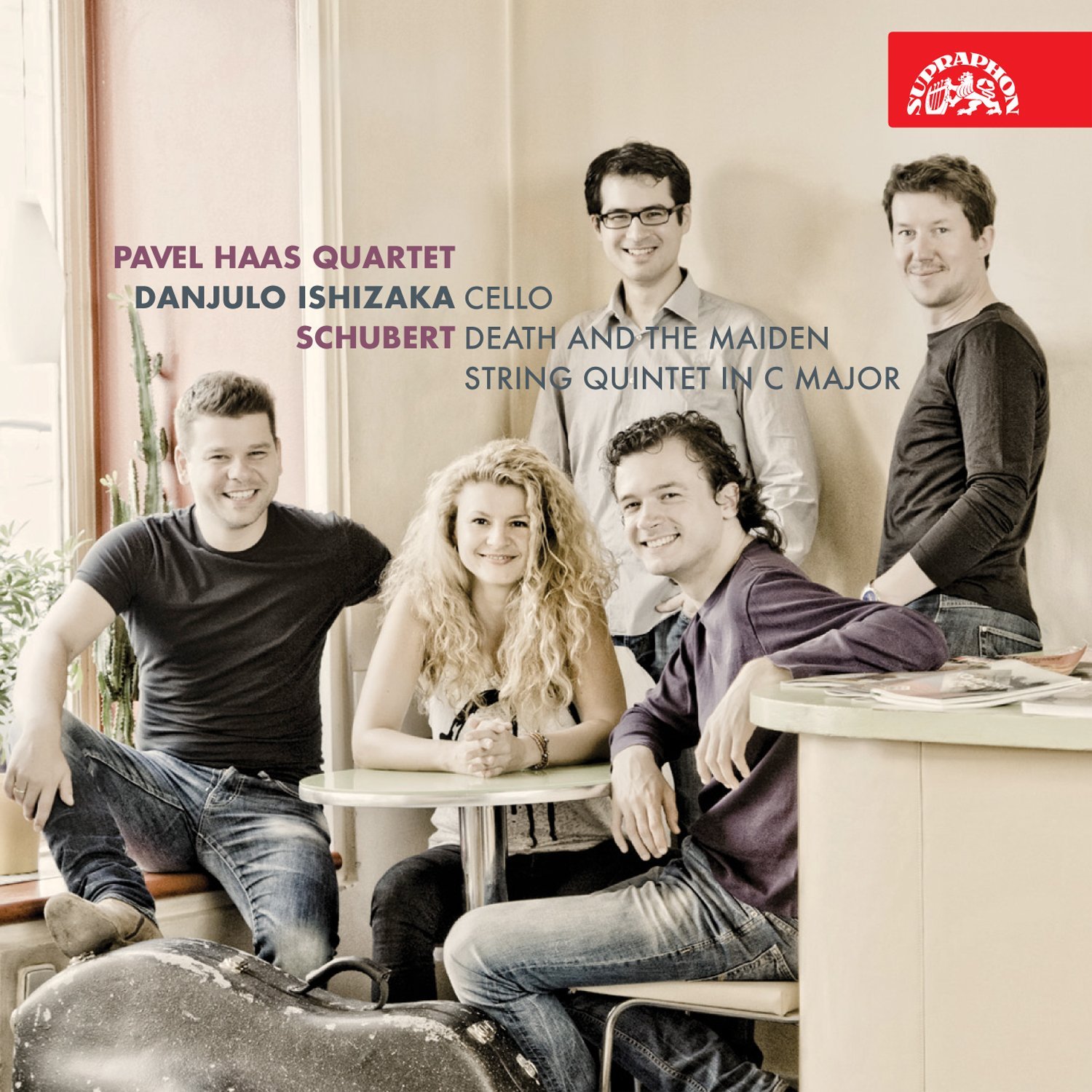
Pavel Haas Quartet String Quintet Schubert Death and the Maiden

This particular recording, which also includes an outstanding recording of the Death and the Maiden quartet no. 14, has been Gramophone Awards winner in the chamber music category in 2014, and very rightfully so. They are joined for the Quintet by the 2nd cello, played by the German-Japanese Danjulo Ishizaka.

What set’s this recording apart is the pure energy level that goes into the playing. This is not music to be enjoyed leaning back sipping a glass of bourbon on the rocks in your favorite rocking chair, this is music made for listening to with constant attention, barely keeping you on your couch any more.

There are many other good to outstanding versions out there, including the Takacs Quartet, the Tokyo Quartet, the Hagen Quartet with Heinrich Schiff, but this one really beats them all. The Czech label Supraphone has done quite a decent job on the recording quality.

My rating: 5 stars (with no hesitations)

You can get it here if you prefer downloads, and here if you prefer a physical disc (or 2 of them to be precise)

UPDATE April 27, 2016: see also my review of the String Quintet by the Quatuor Ebène and Gautier Capuçon here
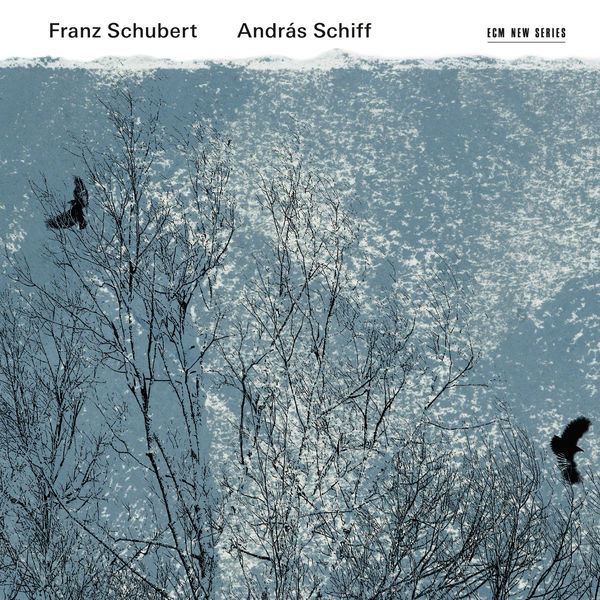
Schubert on Fortepiano by Andras Schiff – not for beginners

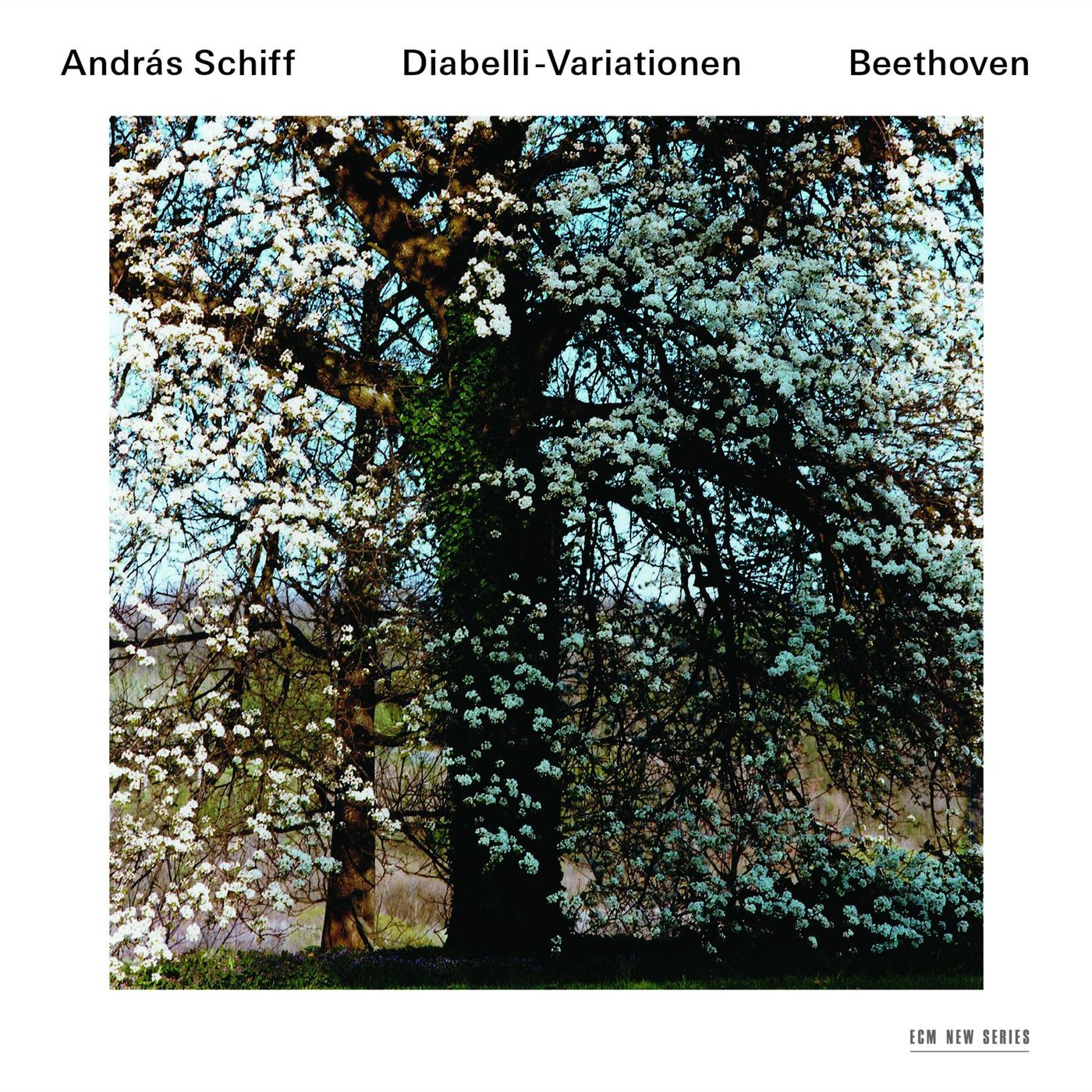
In his comment on my initial Diabelli thread, Jud asked about the new Schubert recording of Schiff on ECM.

0002894811577_600Curiosity got the better of me, and I bought it blindly (instead of streaming it first as I would have done usually), Actually, I’m glad I did.

Andreas Schiff uses the same 1820’s Franz Brodmann fortepiano he also uses on the Diabelli’s second “disc”. This is not very surprising given that he actually owns this since 2010. (It is usually on loan to the Beethoven-Haus in Bonn).

When listening to Fortepiano, the differences are much larger than with modern grand pianos. Sure, a Bösendorfer has a different house sound to a Steinway, and a trained pianists will be able to tell one Steinway from the other (witness the fascinating movie Pianomania if you want to know more), but that said, for most of us mere mortals all sound pretty nice.

In the early 1800s we were far from this homogeneity. This is important to know before you purchase a fortepiano recording, as they really can sound quite differently, and you may not like all sounds.

There are some I cannot listen to for a long time (e.g. Malcolm Bilson’s recording of the Mozart piano concertos), while I love the sound of others (e.g. Roland Brautigam playing a Paul McNulty replica of an 1820 fortepiano in his amazing Beethoven piano music cycle).

Brodmann Hammerflügel

The sound of this particular Brodmann Hammerflügel I very much like on the Diabelli, due to their very intellectual nature. It takes much more getting used on the romantic beauty of Schubert (I know Schubert was borderline between classical and romantic period, but to me is is clearly in the latter), especially if your current reference is this:

uchida schubert

Mitsuko Uchida

The sheer beauty of Uchida on Schubert is just outstanding. Well, the sound of the Brodmann is anything but beautiful at first ear.

Funnily enough, Andras Schiff himself is on record (from the 1990s) dreading somebody playing Schubert on a fortepiano. He has obviously by now made up his mind and admitted he was wrong.

And to be fair, he was. There is so much to discover here, not only you because you hear the music “as Schubert would have played it” (and unlike Beethoven, at least he wasn’t deaf), but the colors, the nuances, everything is different. This is NOT a recording to lay back and enjoy, this is a journey into the music.

Real highlights to me are the Moments Musicaux (revealing their true Viennese charm) and the amazing sonata D960.

If you don’t have any Schubert piano works yet, don’t buy this as a first album. Go for Uchida, Brendel, Lewis, etc (or the recently released outstandin album by David Fray).

And please do, as Schubert (to my ears) wasn’t great in the symphonic genre, but has done marvelous work both on the piano and in the chamber music fields (more on this later).

But if you know what you’re getting, check this out, you won’t disappointed. And obviously as usual ECM is very well recorded.

Overall rating: 4 stars

An addendum to Diabelli – the point of view of Classica Magazine in a blind test

As a quick addendum to my previous post on the Diabelli variations, when I opened the latest issue of the French magazine Classica on my iPad today (a bit late, it came out several days ago), I was pleased to discover that they dedicated their monthly blind test column, where their review staff compare 8 versions of a given oeuvre blindly, and ranks them, to just this work.

Classica – l’écoute en aveugle (the blind test)

I usually have a large overlap in taste with Classica, so I was a bit surprised to see none of my two recommended recordings even mentioned. But then I read it in the text, “les pianofortes atteignent leur limited“, the fortepianos reach their limits. Interesting, so Beethoven composed something that couldn’t have been played on the instrument he was used to. To be fair he was deaf at that time, but this is still an interesting conclusion. But ok, let’s see where they take it from here.

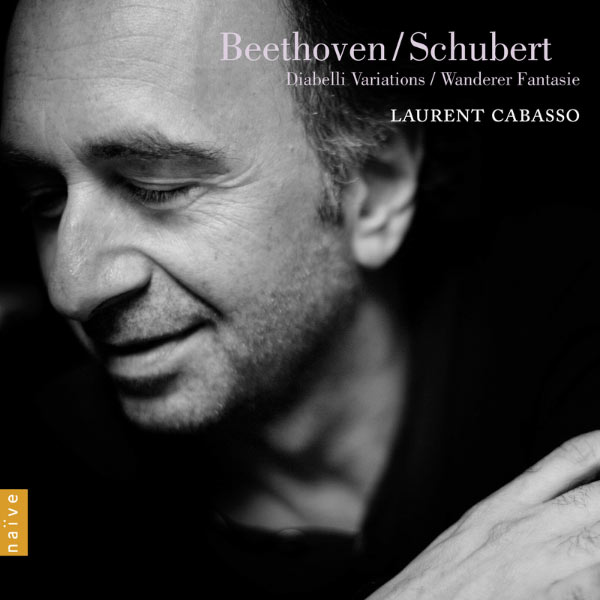
Laurent Cabasso

Well, their recording that is leading the pack is a recent recording on the label Naive played by the French pianist Laurent Cabasso.

0822189019983_600

Well, the French press, very much like the English, has a certain patriotic tendency in their reviews. But remember, this is a BLIND test, so let’s assume they haven’t cheated. I obviously had to listen to it immediately, and luckily my streaming provider, Qobuz, has the album available.

Don’t forget Richter

My conclusion remains the same, I’m personally much more touched by the fortepiano versions than by this admittedly very good, but not outstanding recording (4 star on my personal rating scale). So if you prefer a modern piano, you may want to check this version out. But if you do, also compare it to the much more extremist (in a positive sense) Sviatoslav Richter (FYI, no. 5 in the Classica ranking). Otherwise, Schiff and Staier are a must on your playlist.

P.S. Gramophone has done a similar comparison in their August 2015 edition, you’ll find a summary here.

Brahms lesser known choral works brilliantly performed by Philippe Herreweghe

One more post on Brahms (again).

I was thinking I’d be writing next about his amazing Deutsches Requiem, the only major requiem I know of that is not written to the traditional latin text but where Brahms himself has chosen parts of the bible he really cared about and in his native language, German (hence the title).

But somehow, this amazing work still overwhelms me and I don’t feel ready yet to talk about it at this stage. If you want to check it out, you can’t go wrong with Klemperer’s classic version on EMI, with the amazing Elisabeth Schwarzkopf and Dietrich Fischer-Dieskau. More about this later.

So let me write about all the works that share the beauty of the Requiem masterpiece but are much less known, and deserve to be known better, mainly the “Schicksalslied” and the “Alto Rhapsody”.

Schicksalslied op. 54

The Schicksalslied op. 54, or Song of Destiny, takes a Hoelderlin poem and puts is in words. Do yourself a favor and check out the beautiful lyrics. (I’m the first to admit I’m still not sure I fully understood it to be fair, but the beauty of the words are extremely touching.)

You’ll see that the text is split in two parts, one describing the beauty:

Luminous heaven-breezes

Touching ye soft,

Like as fingers when skillfully

Wakening harp-strings.

the second one about desperation:

To us is allotted

No restful haven to find

The music is split in two parts, of pretty much identical duration, that reflect the lyrics, you can feel the heaven-breezes in the first 8 minutes, while the music slides with us “Destined to disappearance below” in the second half of the work.

All in all, about 16 minutes of extreme intensity, both musically and vocally.

Alt-Rhapsodie op. 53

Written around the same time as the Schicksalslied (notice the relates opus numbers), and about 1 year after the requiem. On top of the chorus, this cantata has a solo alto.

On this work there is a background. I’ve mentioned before that Brahms was in love with the beautiful, young and extremely talented (she was one of the major piano virtuosos of her time) wife of his mentor, Clara Schumann. In a twist that would sound unrealistic even for a Hollywood blockbuster script, he later considered marrying one of her daughters, Julie. He actually never did (and apparently never even proposed), for unknown reasons, and remained a bachelor for his entire life. So he wrote this for her (Julie’s) wedding as a “good-bye” to marriage.

Now consider the starting lyrics of the alto aria, taken from Johann Wolfgang von Goethe (Brahms clearly knew his German classics) “Harzreise”:

Aber abseits, wer ist’s?“ (But who is that apart?) describing some poor fellow who is “engulfed by the wasteland”. In spite of these lyrics, the work is surprisingly calm and relaxed, and has very beautiful interaction between the solo alto and the chorus.

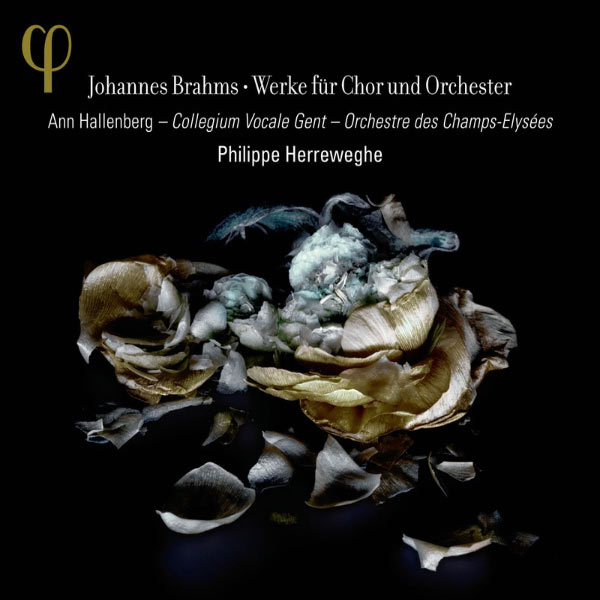
Philippe Herreweghe

The Belgian conductor Philippe Herreweghe has been one of the stars of the historically informed practice of playing music, and has started mainly with Baroque music. In recent years, he has ventured more and more into the romantic period, conducting Mahler, Dvorak, and also Brahms

5400439000032_600-1

His recording of the Alto Rhapsody and Schicksalslied dates from 2011 and has appeared on his own label, Phi. I’ve had the pleasure of seeing both works performed live, again at the KKL in Lucerne, I believe in 2012.

This version is outstanding. Ann Hallenberg doesn’t have the power of a Christa Ludwig on the legendary Klemperer recording (you’ll have noticed by now that you never go wrong with Klemperer on Brahms), but the recording it has so many beautiful nuances and shades, both in the excellent choral parts and the vocal solo, that is has become my go-to version of these beautiful works.

As “fillers”, you get three more choral works from Brahms that are even less known than the two before, a Motet, the Begräbnisgesang op. 13, and the Gesang der Parzen op. 89. None of them individually would be worth buying an album for, but there is a lot of beauty especially in the 11 minutes of the Gesang der Parzen. But if you don’t mind purchasing albums by the track, you can also stop after the first two tracks in my opinion.

My rating: 5 stars

Let me know what you think in the comments below!

Beethoven: Diabelli-Variations – an acquired taste?

Beethoven. You could be saying that I’m really trying to tick off the famous “great Three B’s” first. How creative of me.

Well, while the general consensus doesn’t get everything right, there’s a reason why the three B’s are so important. And in any case, I probably wasn’t mean to be a rebel to tell the establishment they got it all wrong.

Back to Ludwig van. I’ve been a fan, like forever (excuse me for sounding like an over-excited American teenager). The symphonies I can never never never get bored with (except, as already mentioned before, the ninth, which somehow escapes me). His piano sonatas are amazing and cover his entire spectrum from something that sounds like young Haydn (and were not surprisingly his op. 2) to the extremely well-known sonatas in his middle period, many of which got their reputation due to their nickname (from Mondschein to Apassionata), to the late works (op. 109 to 111) which are anything but immediately accessible for the average listener, including me.

But let me talk about the Diabelli variations today. They are probably not as well known as their famous variations older brother (Bach’s Goldberg), but still are seen by most experts as an absolutely masterpiece. And let me admit: until recently, I just never “got” them. I tried again and again with the small handful of versions I had (including Brendel nevertheless), and nothing ever stuck, I just never really fell in love.

Until recently. Two and a half versions (I was tempted to do a Charlie Sheen joke here) of this, and very repeated listening, changed my mind.

Andras Schiff

The first version, is the one I kind of called 1.5. To be fair, they are two, but both played by the same pianist and on the same album. Andras Schiff, the great Hungarian pianist, recorded the Diabelli-Variations twice, for ECM (yes, I know, ECM again...)

Disc 1 (if in the times of computer audio it still makes sense to speak of discs) contains a recording on a 1921 Bechstein grand. This version really opened my eyes for the beauty of the Diabellis.

Disc 2 contains the same piece again, played this time on a fortepiano from Beethoven’s time. I recently started enjoying the fortepiano more and more (thanks to great pianists like Roland Brautigam, Kristian Bezuidenhout), as not only “it sounds like Beethoven would have heard it” (if he wouldn’t have been deaf by the time this was composed), but also it gives a totally different degree of transparency.

Andreas Staier

But when we get to the fortepiano, there is another version I prefer even more, from an artist with pretty much the same first name: Andreas Staier on Harmonia Mundi. Andreas Staier is a German fortepiano and harpsichord player, and I have yet to find any recording of him that seriously disappointed me.

This has been recommended by several people I usually trust well. But because of my scepticism until recently regarding the Diabellis, I only got this version some weeks ago. What a mistake. It is just amazing.

Luckily for us, both versions are also very well recorded (you can usually trust both ECM and Harmonia Mundi to get that part right), and are available as high-res downloads.

Check both out, you won’t be disappointed.

P.S: I just discovered this interesting article from Nick van Bloss describing his recording the Diabellis on Gramophone’s blog. I haven’t checked out his album yet, but his description and approach are certainly worth reading.

P.P.S. If you prefer a modern piano reading, read my addendum I just published.

P.P.P.S. Gramophone also likes Staier, but has yet another alternative

P.P.P.P.S: Igor Levit has recorded another outstanding alternative on a modern piano.

Please let me know if I missed any good version out there, I can certainly live with more!

Brahms 1 – Still Looking

Following my previous post, I was thinking to myself, what if somebody asks you for a recording in stereo? Not everybody is willing to put up with a mono recording. Well, my recommendation goes to Otto Klemperer in this case (Philharmonia on EMI).

Next question: what if I want a recording that is less than 50 years old? And here I get in trouble. While there are decent contemporary recordings out there of the Brahms Symphonies, like the recent cycles from Chailly (very straightforward, but some excellent insights) to Thielemann, none of them get it fully right for no.1. Same goes for Gardiner and Dausgaard, that I admire on so many other recordings, e.g. Schumann. Both relatively recent Berlin Phil recordings with Rattle and Abbado leave me cold.

In the end, I’m hoping one of my current favorite next generation conductors will pick this up and just hit the same level of energy as now 64 years ago in Berlin. Good candidates for this are Nezet-Séguin (although he tends to be speedy) and Paavo Järvi, who’s Beethoven cycle with the Bremen Kammerphilharmonie is outstanding. Or Andris Nelsons with the BSO. Well, fingers crossed.

In the meantime, I’ll just live with a mono recording.

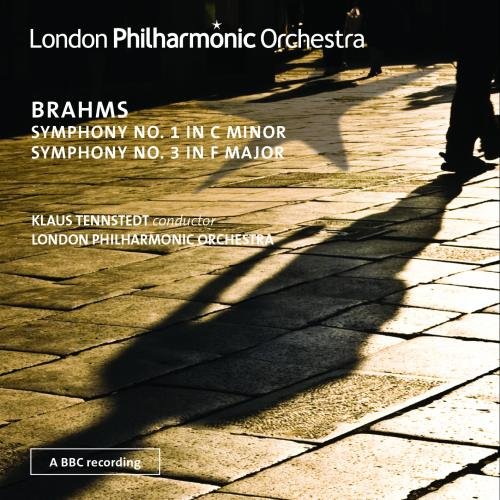
P.S. (October 2016), somebody pointed me to this live recording by Klaus Tennstedt with the LPO. Still, no replacement for Furtwängler, but at least getting the idea:

Brahms Symphony No. 1 No. 3 Klaus Tennstedt London Philharmonic BBC

You can find it here (Chandos)

And I’ll keep my eye open for future releases.

UPDATE August 20, 2017: Above I asked for Nelsons and the BSO to record a cycle. Well, now they did. And it is really good. See my review here.

Brahms 1st symphony – why it means so much to me

Well, the subtitle of my blog is “From Jarrett to Brahms”, so I after writing about the former I may as well write about the latter.

Brahms will always have a special place in my heart, not only he was born in my favorite city in the world (no, not NYC; although that comes close), but his music combines the best of what the so-called “classical” music (which spans several centuries of written music): He has the greatness of Beethoven (his idol), the romanticism of a Schumann (his mentor), the structure of Bach (Brahms studied Counterpoint extensively), he comes from my favorite instrument (the piano), and no matter what piece you hear from him, it has something very uniquely “Brahmsian” about it.

Smarter minds than me have tried to define what that actually consists of, I won’t even try. I’m pretty sure listening to several of Brahms works (for a start, how about Symphony 1, the German requiem, some of his late piano pieces op. 116-119, and some chamber music, e.g. his piano quartet op. 25), and I hope you feel and hear the commonality.

The first oeuvre from Brahms that impressed me was his first piano concerto, in a decent but not outstanding recording with Solti and Andras Schiff. I still very much like this, but will write on it later on. I very quickly started diving into his symphonies, and no. 1 quickly became my favorite (these days, 4 comes very close in my personal preference, 3 is a bit behind, and 2 is nice to have).

Wilhelm Furtwängler

By today, I’ve collected at latest count 30 version of “Sinfonie Nr. 1 c-moll op. 68”, to give it its official title. My first early favorite was Otto Klemperer’s version on EMI. Not to far after that, I discovered the legendary Wilhelm Furtwängler, and all 3 versions I have from him are very very good.

I cannot decide which of these is my favorite, but most likely it is the version with the Berliner Philharmoniker on Deutsche Grammophon, recorded in 1951 (or 52?). The other versions I have are with the Hamburg NDR orchestra and the Concertgebouw)

How do I compare versions of this work? Well, usually I’d use a more differentiated approach, but on symphony 1 I’m simple-minded: the chromatic opening part, with the characteristic tympani. If this part doesn’t have the right gravitas and tension (up to a point where I feel all my muscles tensing), I pass on. An example of how not to do it in my mind is Günter Wand (an underrated conductor that I otherwise adore, especially on Bruckner), which takes the opening WAY to fast.

Luckily, Furtwängler keeps the quailty at very high levels up to the end. In this symphony, the first and forth movement are so heavy and important, that the two movements in between barely count. You get a “relaxing” Andante, and a very short and sweet (approx 5 min) Poco Allegretto in between. This is good, because if one had to keep the tension and the overwhelming feelings from movements 1 and 4 for an entire 5 min, you’d probably feel like being on Botox and Extasy at the same time.

So, as said before, movement 1 lives on the dramatic chromatic opening. But it gets even better: movement no. 4 is as ecstatic as the 4th movement of Beethoven’s 9th (without all over sudden somebody shouting  “Oh Froyda” and all the other singing about freedom and equality that goes on after that which pretty much ruins this symphony to me). But you don’t get there easily. This movement with Furtwängler alone is more than 17, and you start very dark and desperate. Luckily we leave the desperation quickly, to a dramatic built up including the mandatory tympani, which gets us to the first amazingly beautiful horn solo at 2:57.

This solo is worth a quick excursion: this theme Brahms had already used earlier in a letter to his beloved Clara Schumann (yes, he was in love with his mentor’s wife, if you read his biography, you wonder why this soap opera material hasn’t made it into a major Hollywood movie yet), with the underlying text:

“Hoch auf´m Berg, tief im Tal grüß ich dich viel tausend mal!” (High on the mountain, deep in the valley, I salute you a thousand times). Yes, cheesy, even in the German original, but by then Brahms had moved from his native Hamburg to Austria, and fallen in love with the mountains, and you can really picture a lonely Alphorn playing that beautiful melody for the beloved.

But obviously at, 2:57 we’re not done yet, you 14 min more of “per aspera at astra” (you can google that yourself) fighting, with the occasional relaxing 2nd main motive, which Brahms even admitted was inspired by Beethoven 9. (When asked after the premiere if there are strange similarities between the two works, he replied sarcastically “And even stranger is the fact that every donkey seems to hear that immediately”.

Well in any case, in the last 5 min you get a lot of more brass, some more of the 2nd motive, some more of the Alphorn, tons of tympani some more fighting, which culminates in a dramatic climax in the last 2 min.

Obviously, my description of this amazing masterpiece is quite horrible. Don’t be misled: if you’re able to listen to this movement played by Furtwängler without getting goosebumps all over, you’re either deaf or challenged in some other way (or just have a different taste in music, but then you probably wouldn’t be reading this in the first place).

P.S. I’ve later published an addendum to this post here.

Classical Life

A classical music blog by music critic Tim Mangan

This Week's Music

Making Classical Accessible

From my Macbook to the Net

Evaporation of my thoughts and observations

Elestra

Author: Artienne

My Life in Music

Playing, Singing and Listening

ArsX3

A brand new journal reviewing books, cinema, music

LawrenceEz's Blog

Creative and Performing Arts: Writing, Classical Music, Photography

Laetitia Strauch-Bonart

Contemporary Politics & Culture

sibling revelry

reveling in all things classical

It's A Raggy Waltz

I collect jazz on vinyl, I dig the Dave Brubeck Quartet, & I write about it

La Musica

By two cousins

thejazzbreakfast

Dishing it out from the heart of England

only jazz

random thoughts about music that matters to me

The Culture Project

Exploring the world of literature, wine, art, music and more.

René Spencer Saller

The music causes me to dream of fabulous empires, filled with fabulous sins.

Breaking Baroque

Blog of Tafelmusik Baroque Orchestra and Chamber Choir

Tasting Nirvana

Eating your Dosha

The Immortal Jukebox

A Blog about Music and Popular Culture

April Greene

Writer + Editor

a pianist's musings

A history of your favorite classical music.

Classical music for all

Boris Giltburg's blog

I HEAR VOICES

An orchestra seat in the web space