Bach’s Well-Tempered Clavier – beautifully played by Céline Frisch

Das wohltemperierte Klavier

Yes, I know, Bach once more.

But to my defense, this is the first time I’ve written about this particular work, the famous Well-Tempered Clavier BWV 846-893.

Prelude no. 1 in C-major is probably known even to many  non-classical listeners, as it forms the basis of Gounod’s Ave Maria, and it is accessible enough for most piano students to attack it at some point during their classes (including me).

Obviously, there is much more to this cycle of works that takes you through every single key step by step. It consists of two “books” or parts of preludes and fugues covering all keys of our Western scale

Side note: In case you didn’t know, the term “well-temperament” refers to the tuning of the keyboard that was at that time recently invented. Before the well-tempered tuning, any given tuning used at the time worked well for some keys but didn’t really work for others. To simplify, the well-tempered scale by Andreas Werkmeister was the first where you could easily switch between keys without any of the keys sounding out of tune.

I already had a couple of nice recordings of this work, from old-fashioned but great Sviatoslav Richter to Andras Schiff (obviously), to both recordings of Angela Hewitt.

However, I never had a recording on harpsichord that really convinced me. Earlier I used to like Keith Jarrett’s recording on ECM. However, I’ve outgrown this recoding a bit. Both Egarr and Levin are very good, but still I wasn’t 100% satisfied.

Céline Frisch’s Well Tempered Clavier Book 1 

Céline Frisch The Well Tempered Clavier Book I Alpha 2015

I had first heard about Céline Frisch regarding her Goldberg Variation recording. But I never checked her out I must admit. I was too happy with Hantaï, and more recently Levit.

However, the February 2016 issue of Classica pointed me towards her Well-Tempered Clavier recording, so I went to Qobuz and gave it a listen. They awarded this album a “Choc“, their way of saying 5 stars, and called this “une interprétation magistrale“, probably best translated with “authoritative recording”. (It also received the highest rating from Diapason, the Diapason d’or).

And I was impressed, this version is so spot-on, so precise, but never technical, never dull. Bach on a harpsichord can easily get boring or annoying, when it is played too much like robot, or lacking any other kind of differentiation, as obviously on a harpsichord you cannot modulate your touch like you can do on a modern piano.

None of this here, you will be drawn into the music from the first second, and will want to listen to the entire thing. Not an easy achievement, given that this was composed to use Bach’s own words (translation thanks to Wikipedia) “for the profit and use of musical youth desirous of learning, and especially for the pastime of those already skilled in this study”, i.e. essentially a piece to study your skills, not really for public performance and for somebody else to listen to it.

Frisch plays a copy of a Silbermann harpsichord. This instrument at the beginning takes some getting used to, it being a bit bright and slim. However, you get into it really quickly, also thanks to Alpha’s usual good recording technique, and after a while you really appreciate the transparency that let’s you hear through even more complicated fugues.

My rating: 5 stars

You can find it here (Qobuz) and here (Prostudiomasters)

P.S. And you can be sure her Goldberg’s are next on my playlist.

The 2015 Chopin Competition – I Don’t Get It

Subjectivity

As you know if you’ve read this blog, before, I have absolutely no problem with subjectivity (see also how do I rate?) even if it may be controversial, and so I don’t hesitate putting my opinion out there, even if I may be a minority (e.g. with Staier’s Bach concertos that the whole world but me seems to love).

The 2015 Chopin Competition

However, things were slightly different with the 2015 Chopin competition. I mean we’re talking about one of the most important, if not the most important piano competition in the world, only held every 5 years! Former winners include legends like Martha Argerich and Maurizio Pollini, and in more recent years Yundi and Rafal Blechacz. Martha, Yundi, and Chopin specialist Nelson Goerner were part of the Jury this year!

So I felt rather belittled compared to those giants, and when the recording of the winner, South-Jorea’s Seong-Jin Cho came out on Deutsche Grammophon, and I didn’t really like the recording, I felt it must be me. Maybe these geniuses saw or heard something I don’t.

So I didn’t write about it yet on my blog and decided to give the album some more spins before I formally make up my mind. And then I must admit I forgot about it.

Seong-Jin Cho At the 2015 Warsaw Chopin Competition (Deutsche Grammophon 2015)

Song-Jin Cho Winner of the 17th International Fryderyk Chopin Piano Competition Warsaw 2015

Just recently, the two classical journals I subscribe to, Gramophone and Classica, came out with their latest issue, and both reviewed it. And guess what, in both cases, the reviewers were significantly underwhelmed (3 out of 5 stars for Classica, and rather negative comments from Gramophone).

So at least it wasn’t just me. Don’t get me wrong, this is fine Chopin playing, but compare his preludes to Blechacz, and sorry but we’re talking night and day in my personal opinion. And then you get Sonata No. 2. Compare this to Argerich herself, or Pogorelich, or Rubinstein, again, this is absolutely no match.

Not sure what happened, maybe Deutsche Grammophon just released the wrong takes, maybe Cho will develop over time, but so far I really don’t get it.

But even if you take the pressure of a competition and live performance into account, just compare Cho to Blechacz’ final performance in Warsaw 11 years ago, and really, there is so much more presence:


Obviously, you can’t have a new Argerich every year, but still my expectations were higher.

So what do YOU think?

My rating: 3 stars

In any case, you can find it here (Qobuz) and here (Prestoclassical)


How Many Versions Of Brahms Violin Concerto Does One Need?

My dear readers and fellow music lovers, no I’m not dead nor sick, I’ve just been on an intense 3 weeks business trip which kept me from posting.

Everything should be back to the regular 2-3x update schedule as of now. Thanks for your patience!

Brahms Violin Concerto

To answer my own rhetorical above question first: One more than you currently own as of recently.

OK, if you were a purist, you could say, just get Heifetz and be done with it. And you’d have a valid point. But then again, you’d be missing so much, for example the recording I’m just about to write about.

At latest count, I have 24 versions of this masterpiece in my library, and this is not counting the huge number of versions I could access any time via Qobuz streaming.

So why the heck would I want to add one more? Especially with Heifetz’ legendary version around, not even mentioning Faust’s fantastic version (reviewed here previously, 5 stars)?

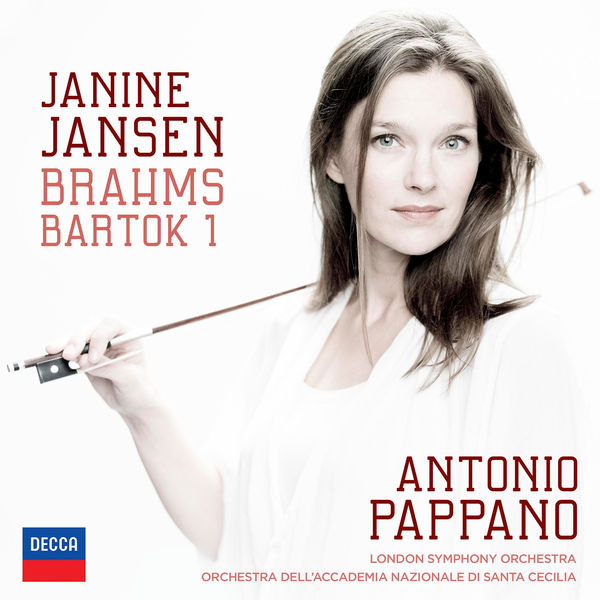
Janine Jansen

The answer is simple and is called Janine Jansen. If you’ve been reading this blog for a while you know I’m a big Isabelle Faust fanboy, and gobble up and love pretty much all she’s doing.

Janine Jansen, the Dutch violinist, is another example where I’ve rarely ever been disappointed. Her Beethoven and Mendelssohn recordings are among my absolute favorites, and even her Four Seasons are a lot of fun. I’ve already mentioned her a couple of times, including here and here, in her role as excellent chamber musician. But obviously she really shines when she is in the lead.

Janine Jansen and Antonio Pappano playing Brahms and Bartók

Janine Jansen Brahms Bartok Violin Concertos Antonio Pappano London Symphony Orchestra Orchestra dell'Accademia Nazionale di Santa Cecilia Decca 2015

How to describe Jansen’s Brahms? Well, between the two extremes of Heifetz (extreme passion) and Faust (extreme clarity), you probably get a nice balance in between.

There is definitely more vibrato and more rubato than with Faust, and while I love the clean sound of Faust’s Sleeping Beauty Stradivarius,  Jansen’s Barrere from the same genius violin maker’s factory, with a slightly darker tone, is outstanding as well.

Another difference is the cadenza, Faust playing the rare Busoni cadenza, with Jansen chasing the more traditional Joachim cadenza (by Brahms’ friend and favorite violinist).

Obviously I also need to mention Pappano. He’s done great things with his recent opera recordings (e.g. the Aida reviewed here), but if any more proof was needed he’s also an excellent conductor for concertos, here you have it.

In a nutshell, this is perfection. A different kind of perfection than Faust or Heifetz, but perfection nevertheless. A must have if you like Brahms. (At some point I’ll do a comparison between all my 25 versions, from Neveu to Jansen. Just need to find a LOT of time).

Bartók

I haven’t written a word about the Bartók yet. This is simply because I’m much more unfamiliar with this work than the Brahms, my only two comparators being Faust (again, I know), and Oistrakh, so I won’t comment here beyond the fact that I like what I hear. Maybe this is the version that will finally get me more hooked on the Hungarian composer (I really appreciate him, but rarely listen extensively).

My rating: 5 stars

You can find it here (Qobuz) and here (HDtracks)

Wilhelm Friedemann Is Not My Cup Of Tea

Bach, again

Another blog post on Bach you’ll ask? Haven’t I written enough about this genius yet? Well a) no, absolutely not, and b) this is actually one of his many sons.

I quite like Carl Philipp Emanuel, but Wilhelm Friedemann really was a blank spot in my library.

So when I read in the January 2016 edition about a new WF Bach recording that even got an Editor’s Choice, I got curious.

Other French reviewers (Diapason, Telegram) also liked this album, so thanks to Qobuz streaming surviving (after having found a new investor late last year), I was able to check it out.

And here comes the bad news: I just don’t get it.

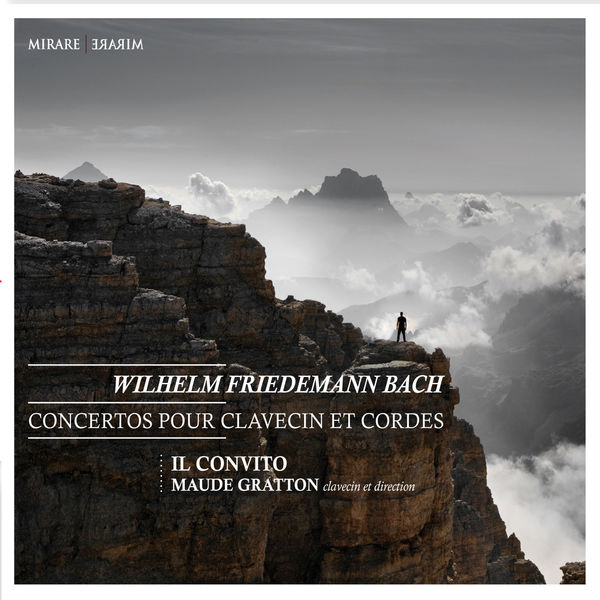
Wilhelm Friedemann Bach: Concertos for Cembalo and Strings – Maude Gratton – Il Convito (Mirare 2015)

Wilhelm Friedemann Bach: Concertos pour Clavecin et Cordes / Cembalo Concerts Maude Gratton Il Convito

But before I get there, there is really a lot about this album that I really like: First of all, this is really top-notch playing. This is obviously a rather small ensemble, so the playing of each individual musician can be heard (also due to the fact that the album is quite well recorded). The young French harpsichordist Maude Gratton and her ensemble do an outstanding job here.

Second, I really appreciate the fact that we have a female conductor here, something which is still to rare these days (Simone Young, Emmanuelle Haïm, and Marin Alsop are the only ones that come to my mind spontaneously).

Third, I really appreciate the fact if somebody tries to stay away from the mainstream repertoire and discover new gems.

Not my cup of tea

Well, now we obviously have to come to the downside: I just don’t particularly care about the music. There are obviously beautiful moments. But I cannot help myself to think too many times “Why is he (the composer) doing this now and not something else?”, or “isn’t there something missing?”. I know this may sound presumptuous, and it probably is (especially because I’m pretty clueless about composing). But in any case, I don’t get this music.

I often wonder how in musical history some composers stay on top and others are completely forgotten. I guess true quality often pays off in the long run. That doesn’t mean, as mentioned above that lesser known composers don’t deserve the attention (and my recent discovery of Cavalli thanks to Christina Pluhar is a case in point. But overall, there is probably a reason why Wilhelm Friedemann to this day still is rather far away from  his father’s father’s fame.

But again, this is my personal taste and nothing else, so if you disagree with me, please comment! I always appreciate feedback!

My rating: 3 stars (note that this is 5 star playing, but I just cannot be bothered with the music)

You can find it here (Qobuz) or here (Prostudiomasters)

UPDATE Jan 28, 2016: Classica agrees with me and gives this album 3 stars (out of 5), proving again that Classica probably is the magazine that overall has the highest overlap with my personal taste, and that Gramophone’s recommendations need to be taken with a grain of salt, at least for me personally.

There Must Be An Angel: Mozart – The Weber Sisters

If reading the blog post title you wonder what the connection is between a 1990s Eurythmics title, Mozart, and some sisters called Weber, let me explain.

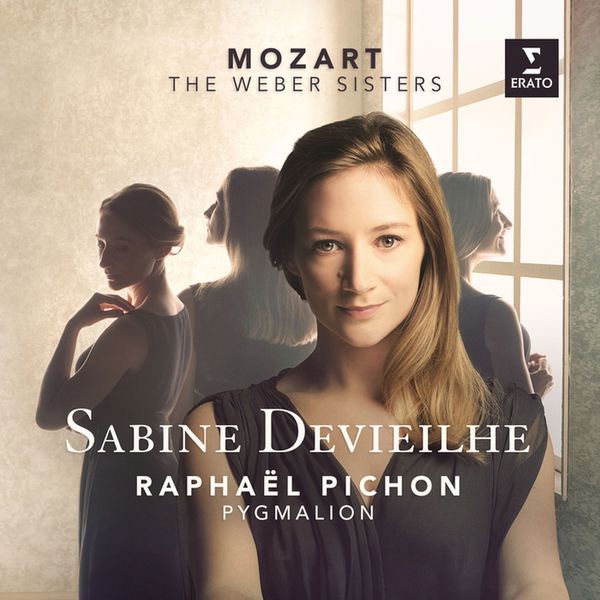
The angel is simply referring to Sabine Devieilhe, the young soprano on the album I’m about to write about. Not only she looks pretty much like one (see the cover photo below), she really has an angelic voice. Clear, bright, shiny, with a beautiful color and an amazing range.

I first noticed her in her debut recording on Erato, with Alexis Kossenko (previously mentioned for his Telemann recording here), Le Grand Théatre de l’Amour dedicated to Jean-Philippe Rameau.

Mozart: The Weber Sisters (Erato 2015)

Mozart: The Weber Sisters Sabine Devielhe Raphael Pichon Pgymalion Erato 2015

This is Sabine Devileilhe’s second album on Erato, recorded this time with Raphaël Pichon’s ensemble Pygmalion.

I hesitated for quite some time to write about his album as I’m generally not a big fan of “best-of” type albums. I don’t mind them for baroque music as much, as it can be sometimes a bit tedious to go through 3+ hours of an opera seria, but for Mozart and beyond I prefer to listen to the entire opera instead. However, the selection on this particular album includes quite a number of single arias that are not part of a larger opera and are not recorded that often.

Let me briefly explain the Weber Sisters title of his album, as this is kind of a concept album. The most famous Weber sister is Constanze, Mozart’s wife, but actually Mozart was a close friend of the Weber family and as the booklet extensively explains, was at some point in love with the youngest sister, Aloysia, and the middle sister, Josepha, also played an important role in his life.

What music do you get? Well known hits like the famous Queen of the Night aria, or the French song Ah vous dirais-je maman, but also as mentioned previously several lesser known arias. All this is beautifully player by Raphaël Pichon’s ensemble, and Devileilhe’s voice is an absolute pleasure to hear.

This albums was elected among the albums of the year by Classica magazine, and I fully agree that his album is highly recommended.

My rating: 5 stars

You can find it here (Qobuz)

The Nutcracker – Or Why I Sometimes Do Like Tchaikovsky

The Nutcracker

In my previous post on Tchaikovsky’s symphony no. 5 I’ve stated that I don’t like Tchaikovsky very much. However, I must admit he really did some magical (and not in the Disney sense of the word) melodies in his ballets.

Western Christmas traditions now include regular performances of the Nutcracker. The story was originally a German fairy tale of a prince turned into a nutcracker, by E.T.A Hoffmann, later adapted by Alexandre Dumas. Tchaikovsky conducted the premiere in 1892, and both the ballet and the “best-of” excerpt, the suites, are these days among the most famous of his works.

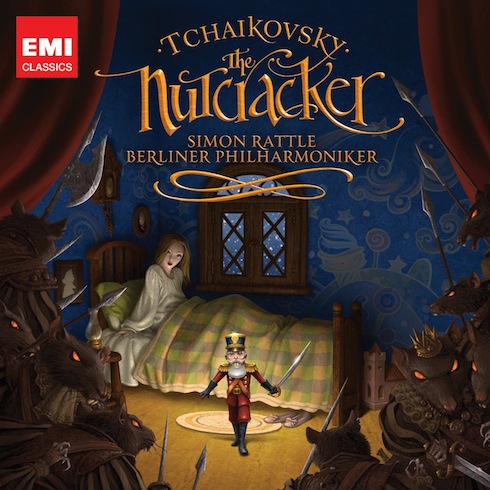
Tchaikovsky: The Nutcracker – Simon Rattle – Berliner Philharmoniker  (EMI Classics 2010)

Tchaikovsky The Nutcracker Simon Rattle Berliner Philharmoniker EMI Classics

My first version was the legendary one by André Previn with the London Symphony Orchestra (also on EMI). That version is still very nice, so I didn’t look for a new recording for years (I basically listen to this work literally once or twice per year, usually some time in December).

However, two  years ago I heard about this relatively new (2010) recording by Rattle on the radio, and I checked it out and I really liked it. Beautiful orchestral colors by the great BPO, and most importantly all the energy that this music really needs (I’m anything but a dancer, but this music makes me want to get up from my sofa and move to it).

You’ll find some excerpts of the recording here, with a nice interview with Sir Simon Rattle and some BPO musicians:


Note that some people say that Russian music can only be played well by Russian conductors, and indeed Gergiev did a great job on his Decca recording with the Kirov orchestra from the 1990s.

But still, Rattle did such a fine version that I doubt I’ll ever buy another Nutcracker again (well, never say never).

My rating: 5 stars

You can buy the CD here, I haven’t found a decent lossless download source.

My Favorite Versions of Bach’s Christmas Oratorio

Christmas Music

Only three weeks left until Christmas. Usually, during this time there are three unavoidable things: Some singer releasing a Christmas album (that reminds me that I need to write a post about my favorite Jazz Christmas albums, watch this space), you hear Wham again on the radio 5 times per day, and most households that have some form of love for classical music play the Christmas oratorio, in a similar frequency to the Last Christmas repetitions on popular radio.

I’m very similar, during the month of December the Oratorio gets played at least 10-20 times. I wonder myself why I still like it. But let’s face it, this is Bach, and you can never get too much Bach.

Listening to this work you’re best of when you speak at least some German, as you get the entire beautiful Christmas story told to you by the Evangelist, but if you don’t, either get the booklet or just enjoy the music

(Side note: I’m not religious, but having grown up in a Western country Christmas has become more of a family tradition than a religious event for me like for many others).

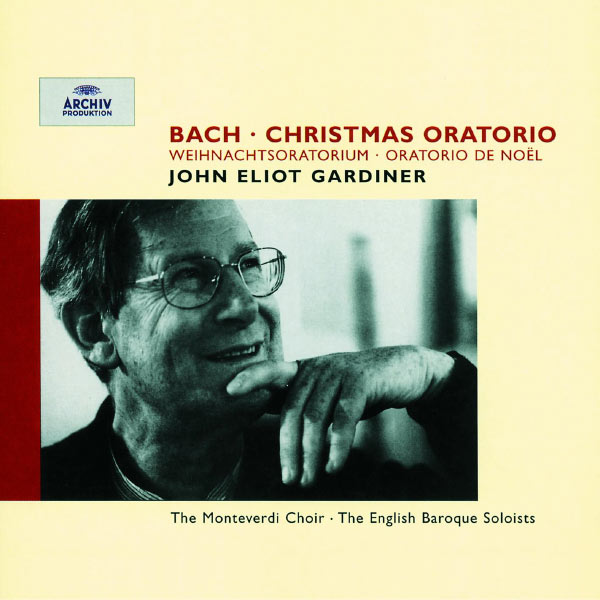
Gardiner / Monteverdi Choir (DG Archiv 1987)

Bach Christmas Oratorio John Eliot Gardiner Monteverdi Choir English Baroque Soloists DG Archiv 1987

Gardiner’s version from 1987 is probably the best known, and it is still my favorite version. I’m not sure if my preference isn’t biased by the fact that I’ve heard it so much over and over again, but Gardiner plays with so much drive and energy, that although I must have heard this hundreds of times, it still doesn’t get boring.

There are obviously many alternatives.

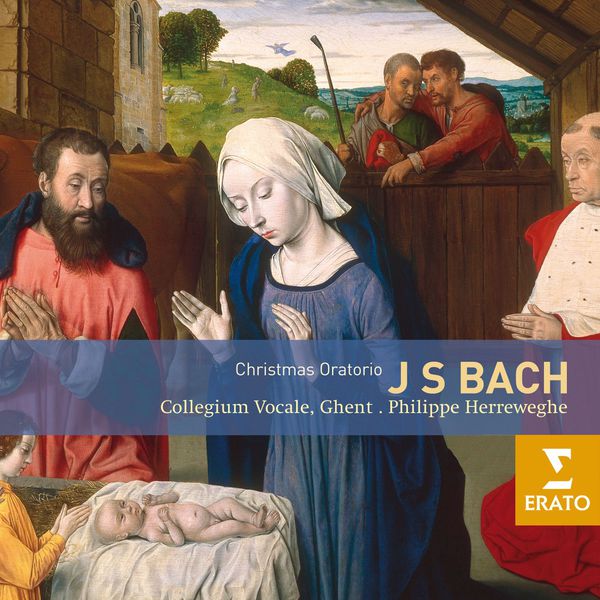
Philippe Herreweghe (Erato 1992)

One of my favorite alternatives around is also a bit older. Philippe Herreweghe’s version is a bit more mellow than Gardiner, but still has all the beauty in both playing and singing.

Bach Christmas Oratorio Philippe Herrweghe Collegium Vocale Ghent Erato

I have listened to a number of more recent versions, but still go back to these two above most of the time. Among the more recent alternatives I’ve tried are Mazaaki Suzuki (polished, but a bit too behaved), Diego Fasolis (really fast, not my cup of tea), and Gramophone’s favorite version, Harnoncourt 2nd version on Deutsche Harmonia Mundi (good but I like both versions above better).

My rating: 4 stars for both (I’m still waiting for the perfect version, but both come pretty close)

You can download the Gardiner here (Qobuz) and the Herreweghe here (Qobuz again)

Classical Life

A classical music blog by music critic Tim Mangan

This Week's Music

Making Classical Accessible

From my Macbook to the Net

Evaporation of my thoughts and observations

Elestra

Author: Artienne

My Life in Music

Playing, Singing and Listening

ArsX3

A brand new journal reviewing books, cinema, music

LawrenceEz's Blog

Creative and Performing Arts: Writing, Classical Music, Photography

Laetitia Strauch-Bonart

Contemporary Politics & Culture

sibling revelry

reveling in all things classical

It's A Raggy Waltz

I collect jazz on vinyl, I dig the Dave Brubeck Quartet, & I write about it

La Musica

By two cousins

thejazzbreakfast

Dishing it out from the heart of England

only jazz

random thoughts about music that matters to me

The Culture Project

Exploring the world of literature, wine, art, music and more.

René Spencer Saller

The music causes me to dream of fabulous empires, filled with fabulous sins.

Breaking Baroque

Blog of Tafelmusik Baroque Orchestra and Chamber Choir

Tasting Nirvana

Eating your Dosha

Shadow of Iris

Poetry, fiction, short stories, more ...

The Immortal Jukebox

A Blog about Music and Popular Culture

April Greene

Writer + Editor

a pianist's musings

A history of your favorite classical music.

Classical music for all

Boris Giltburg's blog

I HEAR VOICES

An orchestra seat in the web space