Janine Jansen and Herbert Blomstedt for a Magnificent Brahms Performance at the Tonhalle Maag – June 28, 2019

Janine Jansen

I presume if you’ve followed this blog for a bit (or read it’s subtitle) you’ve figured out that I really like Brahms.

You’ve probably also noticed that I really like Janine Jansen, and see her as one of the best violin players alive.

Last year I went through a series of concerts aiming to see all my favourite violin players live, and succeeded being in concerts of Alina Ibragimova, Julia Fischer, Lisa Batiatishvili, Isabelle Faust, and Janine Jansen all in 2018. What a year.

The concert I saw with Jansen, also at the Tonhalle Maag, was with her husband Daniel Blendulf conducting, and playing a contemporary composition by Swedish composer Anders Eliasson. I didn’t get to write about this concert here on this blog, but I found the concert surprisingly enjoyable (I’m typically not very much into any classical music after 1930).

But now, when Jansen came back to Zurich playing Brahms of all violin concertos, I knew I had to be there, after all, I had given her Brahms concerto recording with Pappano a five star review here.

Brahms Violin Concerto & Symphony No. 3 – Janine Jansen – Herbert Blomstedt – Tonhalle Orchester Zurich – Tonhalle Maag, June 28, 2019
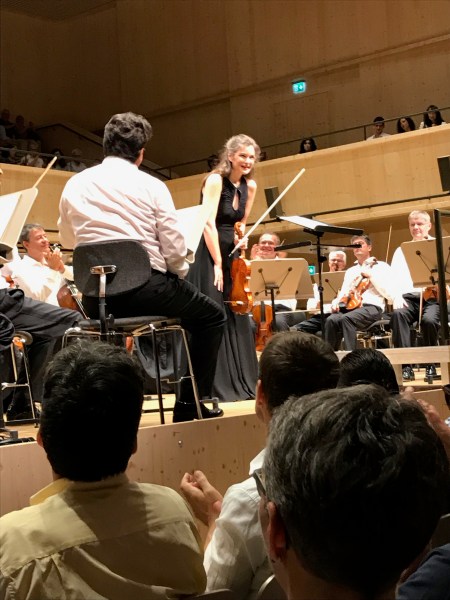
Janine Jansen after the Brahms Violin Concerto June 28, 2019 Tonhalle Maag with Herbert Blomstedt Tonhalle Orchestra
Janine Jansen had to come back out four times

Well, to make it short, I’m so happy I went. This was just a fantastic concert. Blomstedt chose a relatively slow tempo for the first movement. This can have the risk of being a big boring and drawn out. But obviously, none of that here. Janine Jansen put her energy into every single note that the audience was following, completely mesmerised.

The orchestra, in spite of this being the third consecutive night of performing the same program, was following with the same energy and power, clearly enjoying themselves.

To quote Felix Michel, who did a fantastic review on the NZZ (here, in German), the word he used several times was “Wunder” (miracle). Yes, that is kind of a fitting description of what we witnessed yesterday in the scorching Zurich summer heat (>36° Celsius, I’m happy the Tonhalle Maag seemed to have some form of AC).

Herbert Blomstedt

I haven’t written a lot about Herbert Blomstedt yet. I’ve last seen him, again conducting the Tonhalle playing Mendelssohn’s violin concerto, another magnificent evening.

He isn’t one of those flashy maestros that will make headlines, but like many others, e.g. Haitink, is much more of a Musician’s musician.

At the age of 91 (he’ll soon turn 92, but is already scheduled to appear back in Zurich in the fall), when he’s up there conducting, he’s more alive and present than many 20 year olds.

Now to the 3rd symphony. Here, the energy taking from the furious beginning with the violin concerto certainly continued after the break. The two most outstanding moments here were the famous 3rd movement, which you may know from several commercials and other uses in the movies, but even more impressively in the finale. Unlike most symphonies, this finale ends very quietly.

Blomstedt really made us enjoy this quiet ending, not dropping his hands (no baton) for several seconds after the last note expired, to keep the quiet tension.
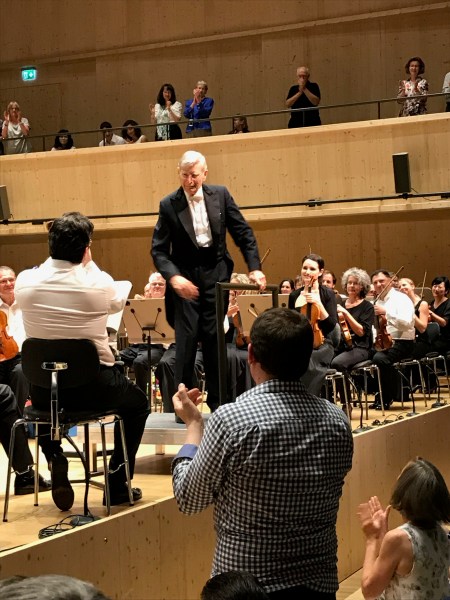
Herbert Blomstedt, Tonhalle Maag, Brahms SympZurichhony No. 3 , June 27, 2019
Maestro Blomstedt getting standing ovations

As always, when the final movement lacks a climatic finish, the applause came more slowly. However, it became even more powerful, especially after it became apparent that one of the musicians of the Tonhalle had his last day pre-retirement and was showered with flowers and gifts. The applause lasted for a long time. Well deserved for a fantastic end of a season.

Looking forward to the next season, where my admired Paavo Järvi will take over the orchestra.
An Excellent (Nearly) New Schumann Cycle by Rattle and the BSO

Schumann’s Symphonies

Schumann’s symphonies have long been underrated. The idea of “Schumann cannot compose for orchestra” has been going around in musicology circles for many years.

I really disagree. OK, he’s no Beethoven or Brahms, but I still really like his symphonies, especially no. 3 and 4.

To be fair, there are excellent recordings already out there, e.g. from Gardiner, Nezét-Séguin, or, a bit more unorthodox, Thomas Dausgaard, (mentioned in My 25 Essential Classical Albums).

Rattle is now on his way out from the Berlin Philharmonic, with Kirill Petrenko coming.

I’ve not always been a fan of Rattle’s work at the BPO, but he has left some very good recordings, so I was very interested when I recently rediscovered this 2014 cycle which launched BPO’s own label (I had missed it at the time).

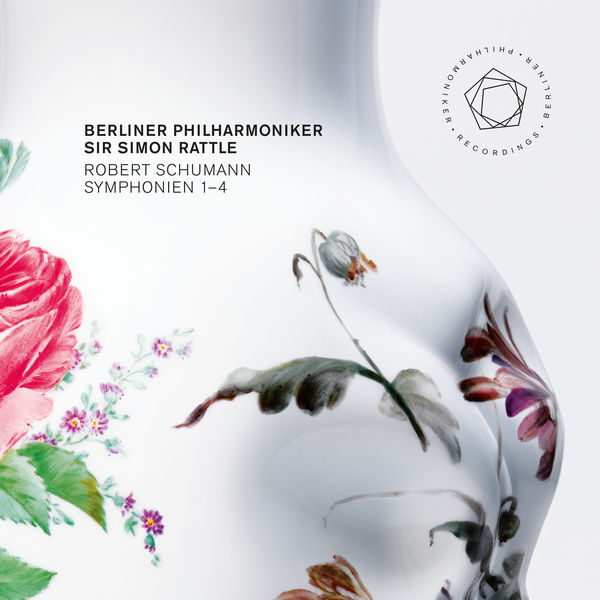
Schumann: The Symphonies – Simon Rattle – Berliner Philharmoniker (BPO Recordings 2014)

Berliner Philharmoniker Sir Simon Rattle Robert Schumann Symphonies 1-4 BPO Recordings 2014 24/96

So, what do we get? Overall, a very convincing package. I really enjoy every single symphony on this box. My favorite is actually no. 1, subtitled “spring”; where Rattle takes a very fresh and precise approach.

Potentially the weakest of the 4 is symphony no. 2, which I found slightly incoherent in certain parts. The “Rhenish” (my other favorite), and no. 4 both are presented in a way that combines on one hand a good view of the big picture, but really looks at many exciting details.

Overall, Rattle was clearly influenced by the historically informed movement, and the BPO doesn’t sound like during the Karajan era any more. Everything is much lighter and transparent.

A really enjoyable set.

My rating: 4 stars

You can find it here (Qobuz)

Mesmerising Viola Da Gamba Early Music by Paolo Pandolfo

Early Music

If you’re following this blog on a regular basic you know I’m not a specialist of Early Music (to simplify, most anything before Bach), and don’t listen to it very often.

Therefore, there is not a lot of coverage of the 16th century on this blog, and I want to put out a disclaimer that my review below is even more subjective than my regular ones, I’d certainly say my judgment is more educated in the 18th and 19th century than here.

But this brand new album has particularly touched me, so I still wanted to write about it. It’s been some weeks since my last review, because most of the recent new releases didn’t particularly motivate to write about them. This is the first one that does.

Paolo Pandolfo

Paolo Pandolfo is one of the leading soloists of the Early Music movement, but also plays a lot of baroque. His recording of the Bach cello suites is really quite beautiful and worth checking out. He plays both the cello, but also the Viola da Gamba, a string instrument that nearly disappeared around the 18th century.

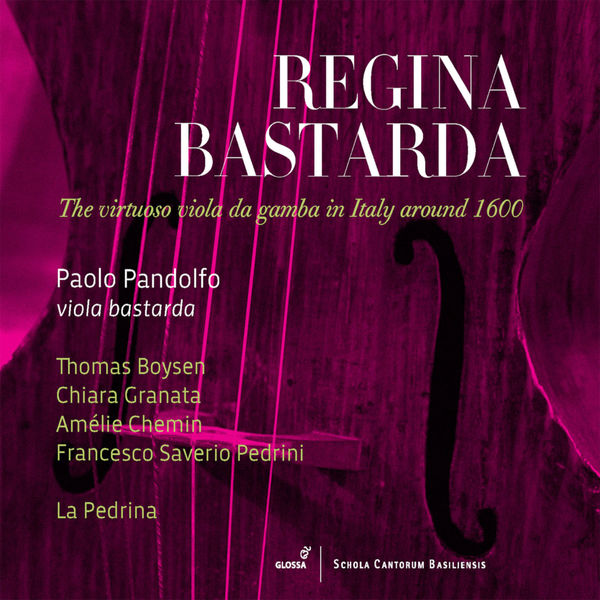
Regina bastarda – Paolo Pandolfo – La Pedrina (Glossa 2019)

Regina bastarda Paolo Pandolfo la Pedrina Glossa 2019 24 172

So what’s the “bastard queen” in the title all about? Well “alla bastarda” was basically an improvised version of popular songs and madrigals played on a solo instrument like the Viola da Gamba.

And that really is what we get here, a lot of solo improvisations of a true master of the Viola da Gamba of several composers of the 16th century.

To lighten the mix, the solo improvisations (which are not truly solo, there is a “continuo” of other instruments supporting Pandolfo (played by the excellent La Pedrina), are mixed with Madrigals from the same period, mostly by Palestrina.

Overall, this results in a mesmerizing mix of fascinating music, that will draw you in and require all your attention. This is not background music, but requires your full dedication. You won’t regret it!

My rating: 5 stars

Buxtehude: Membra Jesu Nostri by Philippe Pierlot’s Ricercar Consort – Just Beautiful

Easter time & music

I’m not religious, but I understand that Easter is the most important Christian holiday, and the history of his suffering and resurrection have dominated about 2000 years of European history.

Typically, around this time of the year, I’d be listening to the two masterpieces that Johann Sebastian Bach has composed, telling the story of the passion of Christ as recorded by the apostels John and Matthew (click on the links before and this one to see some of my reviews around them).

But obviously the great Bach is not the only one inspired by this important point of Western religion and culture. From Gesualdo, Pergolesi, via Telemann, Rossini, all the way to Pärt, all have written often amazingly beautiful music about it.

Dieterich Buxtehude

Regular readers of my blog know that I typically mainly write about music between 1700 and 1900, more or less from Bach to Mahler. In the 20th century, I often struggle, and before Bach, I’m often equally lost.

Therefore, if you look around at the 4.5 years of blogging history on this site, you’ll find only a small handful of mentions of Claudio Monteverdi, and that’s it.

So therefore, take the following review with a grain of salt, I’m clearly not an expert on Early Music.

Dieterich Buxtehude isn’t particularly well known any more today. He’s of Danish/German origins, and lived his entire life in the area of Southern Denmark and the very Northern end of Germany, and passed away in 1707.

However, in his time, he was a living legend. In his young years, Bach himself walked the 250 miles separating his home in Thüringen to Lübeck in Northern Germany just to hear Buxtehude play (and presumably study with him), and Händel even considered taking over his job after he died.

Buxtehude

Buxtehude: Membra Jesu Nostri – Philippe Pierlot – Ricercar Consort (Mirare 2019)

Buxtehude Membra Jesu Nostri Ricercar Consort Philippe Pierlot Mirare 2019 (24/96)

Membra Jesu Nostri, or if you prefer the full title Membra Jesu nostri patientis sanctissima (“The most holy limbs of our suffering Jesus”) is actually a selection of seven cantatas written in 1680 (so 5 years before Bach was even born).

I’m not going to bore you with more detail on the structure and story of the work, Wikipedia has some really good information here.

What I do want to share is the beauty of all of this. You have a small baroque ensemble, just a handful of voices. But this album is captivating every single one of the 1h20 of the album (you get another cantata as “filler” at the end as well).

I’ve already praised Pierlot and his Ricercar Consort in their recording of the St. John Passion, and here again, their singing and playing is exceptional.

Again, I’m not an early music expert, but I briefly compared this to some of the well known recordings of this work (Gardiner, Koopman, van Veldhofen), and can guarantee that you won’t regret the purchase of this album.

My rating: 4 stars (5 star playing, 4 star repertoire)

You can find it here (Qobuz).

Wonderful Bach Concertos with Isabelle Faust

Isabelle Faust

I mentioned two blog posts ago that I’m a fanboy. I’m a fanboy of Igor Levit, of Murray Perahia, of Sabine Deviehle, but probably one of my favorite artists these days is Isabelle Faust.

I’ve reviewed her countless time on this blog, playing Bach, Mozart, Brahms (here and here), Beethoven. And there are other albums I could have mentioned as well.

The only time I was ever disappointed by a recording by Isabelle Faust was her version of Mendelssohn’s violin concerto with Pablo Heras-Casado.

Therefore, when I went on my “quest” last year to see all of my favorite violin players in one year, I obviously had to go for Alina Ibragimova, Janine Jansen, Lisa Batiashvili, Julia Fischer, and yes, maybe the queen of all, Isabelle Faust. I was very lucky I managed to squeeze all of these live performances into one year.

Isabelle Faust offered one of my preferred programs (I saw her on Lake Geneva last summer during the festival at Château de Tannay), playing exclusively Bach. The program included some of the violin concertos, but also some chamber works. The concert (only slightly spoiled by being in the main air corridor towards Geneva airport) was not surprisingly hugely enjoyable.

So what a pleasure it was when I saw that Faust just released a very similar program on Harmonia Mundi

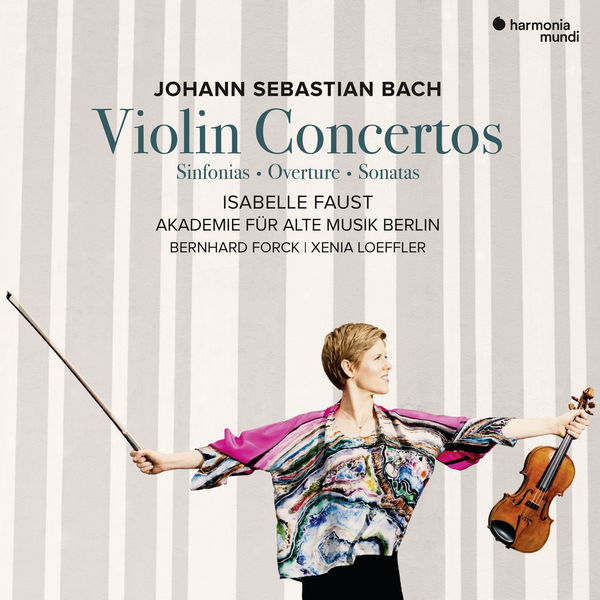
Bach: Violin Concertos – Isabelle Faust – Akademie für Alte Musik Berlin (Harmonia Mundi 2019)

Johann Sebastian Bach: Violin Concertos Sinfonias Overture Sonatas Isabelle Faust Akademie für Alte Musik Berlin Bernhard Forck, Xenia Loeffler Harmonia Mundi 2019

Isabelle Faust had recorded the violin concertos previously around the year 2000, with Helmut Rilling for the Hänssler label (included in their complete Bach edition). Already this recording was really very nice.

But here it get’s even better. The keywords here are precision, balance, and a complete lack of showmanship. This is one of the most introvert recordings of these concertos that I’ve ever heard.

Don’t get me wrong, there is absolutely nothing wrong with taking a lot of freedom with these works, at witnessed by the very beautiful recording of Alina Ibragimova with Arcangelo which I reviewed last year.

So this recording is the complete opposite. That said, I like it probably even a bit better. You really hear all the complexity of Bach’s counterpoint, the delicacy of the different instruments and their balance to form something bigger together. And Faust, just as she did in Tannay, wasn’t the star of the show, but really just one more musician as part of a team.

Another similarity to my Tannay experience is also that this album not only includes all violin concertos, including the reconstructed ones, but also one of the Orchestral Suites, several individual tracks such as the Sinfonia BWV1045, and some chamber music, the trio sonatas BWV 527 and 529. In total, you get nearly 2h30 of music.

If you like Bach and historically informed performance, this album is an absolute must have.

My rating: 5 stars

You can find it here (Qobuz)

UPDATE March 26: Listening to a recent Gramophone podcast where Gramophone speaks with Faust about this recording, I noticed I completely forgot to mention that Faust doesn’t play her typical Sleeping Beauty Stradivarius, but instead a German Steiner violin that Bach himself would have found familiar. In the interview she explained that this much better fits the ensemble sound than the Stradivarius, and that in general she really tries to be as close to what the composer intended as possible.

It is the same violin already used in the previous recording of the Bach violin sonatas (reviewed here).

In the podcast, the interviewer already said that the upcoming review of this album will be very positive. I’m not surprised.

UPDATE March 30: Classica likes it, but only gives it 4 stars, quoting the slightly remote sound quality, and the sometimes somewhat “martial” style of the orchestra. I can somewhat understand the first point, but don’t agree on the 2nd point.

Whereas Gramophone fully agrees with me and gives this album an “Editor’s Choice” in their April 2019 issue, calling it a “hugely enjoyable celebration of Bach”

Händel At Its Best with Emmanuelle Haïm, Sabine Devielhe, and Lea Desandre

Of being a fanboy

Yes, you can accuse me of being a fanboy. I’m a Belieber. Well, not exactly of the Canadian with the interesting haircuts, but there are some artists that I just pretty much like every single album of.

This list includes the brilliant Igor Levit, the amazing Isabelle Faust, but also French soprano Sabine Devielhe. I really must pay attention that I don’t just praise an album just because they release it. At least I’ve got one example to prove that even my gods are not perfect, but these are really the exception to the rule. Anyhow, I’ll stay vigilant, and please let me know in the comments if you disagree, as always! I really like hearing your opinions.

Sabine Devielhe hasn’t faulted me yet. Whether you take her Rameau album Le Grand Théâtre de l’Amour (not yet reviewed on my blog as released before I started it), her fantastic Mozart album The Weber Sisters, her more recent release Mirages, this young Soprano and her beguiling voice are always amazing.

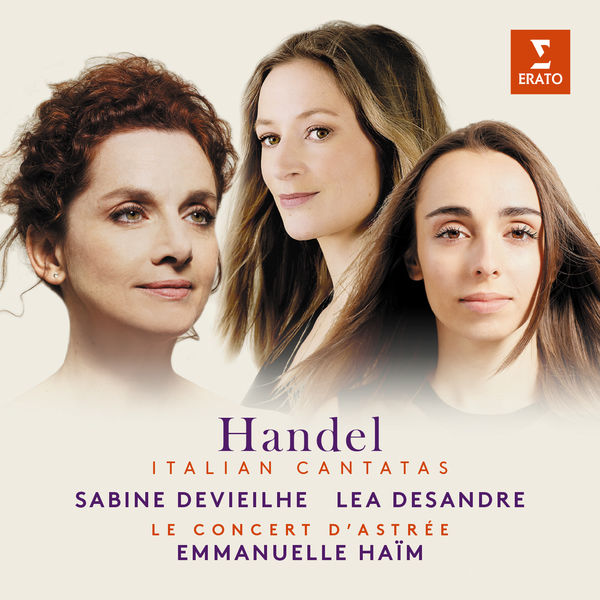
Handel: Italian Cantatas – Emmanuelle Haïm – Le Concert d’Astrée – Sabine Devielhe – Lea Desandre (Erato 2018)

Handel Italian Cantatas Sabine Devielhe Lea Desandre Le Concert d'Astrée Emmanuelle Haïm Erato 2018 24/96

In this album, we get another favourite of mine, Emmanuelle Haïm. I’ve first encountered her on another Händel album, Il trionfo del Tempo e del Disinganno with the great Nathalie Dessay, and have praised her fantastic Messiah.

Young French/Italian Mezzo Lea Desandre wasn’t on my radar screen yet, but after this album she certainly will be.

So what do you get on this album?

Well, you get Händel’s beauty, but in lesser known works. These cantatas, as the well written booklet tells me, were all written in Italy (hence non-surprisingly the album title). But unlike with many of the longer baroque operas, you don’t need to worry about the rather complicated and cumbersome stories. The cantatas do have stories (nicely enough shorter) as well, which you can follow thanks to the extensive booklet, but you can just be like me, and just enjoy the breathtaking beauty of this music. My personal favorite is track no. 10, Se vago rio fra sassi.

I’m a bit late to the party recommending this album, it’s already been Recording of the Month by Gramophone, has received a Choc by Classica, and 5 stars by Diapason.

So don’t hesitate and just go buy it now. You won’t regret it.

My rating: 5 stars

You can find it here (Qobuz)

Another Excellent Recording of the Mendelssohn Piano Concertos by Ronald Brautigam

Mendelssohn again

Pretty much simultaneously two recordings of the Mendelssohn piano concertos were released, by Jan Lisiecki and the Orpheus Chamber Orchestra, as reviewed by me recently, and another one by Ronald Brautigam with the Kölner Akademie under Michael Alexander Willens.

So, which one should you get?

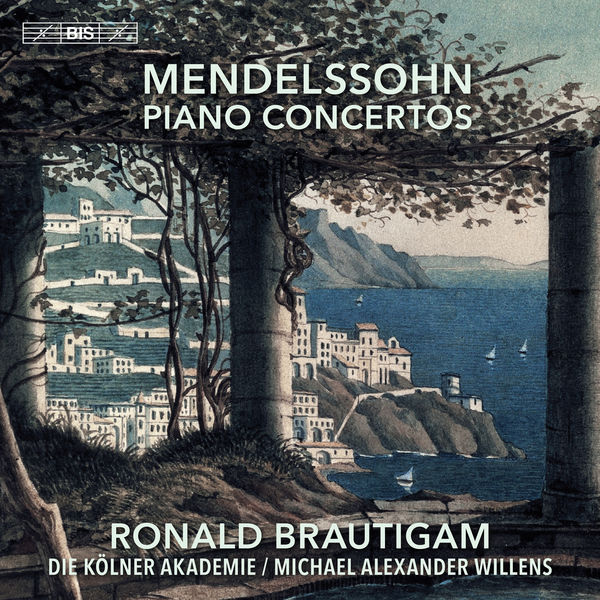
Mendelssohn Piano Concertos – Ronald Brautigam – Michael Alexander Willens – Die Kölner Akademie (BIS 2018)

Mendelssohn Piano Concertos - Ronald Brautigam Die Kölner Akademie - Michael Alexander Willens BIS 2019 24/96

Well, it’s not an easy choice.

I won’t do a full review here, as fellow music blogger Konsgaard has already done an excellent job here.

Let me focus more on the differences to Jan Lisiecki. The obvious one is the choice of instruments, Brautigam plays on his typical reconstructed Fortepiano, a Pleyel this time, and the Kölner Akademie clearly plays on historical instruments.

Overall, this gives a rougher, more unpolished, wilder sound than the more polished sound of Lisiecki’s modern Steinway.

Honestly, it’s very hard to choose. Both in their own way are excellent. I probably have a slight preference for Lisiecki and the Orpheus, the sound is just SOOO beautiful.

But then again, Brautigam clearly knows a thing or two about Mendelssohn. Furthermore, the two recordings differ by the choice of the “fillers” that you get on top of the piano concertos.

For Lisiecki, he intersperses some of the beautiful solo piano pieces. Brautigam and Willens instead go for some other lesser know pieces of the piano and concerto repertoire, the Rondo brilliant, the Capriccio brilliant, and the Serenade and Allegro giojoso. None of these works are particularly memorable individually, but taken together they really complement the piano concertos well, and are nice discoveries.

So back to the question, which one to choose? Well, while
my slight preference goes to Lisiecki, in the days of streaming, just check out both and make up your own mind. You won’t regret either of the two.

My rating: 4 stars

You can find it here (eclassical).

UPDATE March 30, 2019: Classica likes this a lot as well giving it 5 stars.

Classical Life

A classical music blog by music critic Tim Mangan

This Week's Music

Making Classical Accessible

From my Macbook to the Net

Evaporation of my thoughts and observations

Elestra

Author: Artienne

My Life in Music

Playing, Singing and Listening

ArsX3

A brand new journal reviewing books, cinema, music

LawrenceEz's Blog

Creative and Performing Arts: Writing, Classical Music, Photography

Laetitia Strauch-Bonart

Contemporary Politics & Culture

sibling revelry

reveling in all things classical

It's A Raggy Waltz

I collect jazz on vinyl, I dig the Dave Brubeck Quartet, & I write about it

La Musica

By two cousins

thejazzbreakfast

Dishing it out from the heart of England

only jazz

random thoughts about music that matters to me

The Culture Project

Exploring the world of literature, wine, art, music and more.

René Spencer Saller

The music causes me to dream of fabulous empires, filled with fabulous sins.

Breaking Baroque

Blog of Tafelmusik Baroque Orchestra and Chamber Choir

Tasting Nirvana

Eating your Dosha

Shadow of Iris

Poetry, fiction, short stories, more ...

The Immortal Jukebox

A Blog about Music and Popular Culture

April Greene

Writer + Editor

a pianist's musings

A history of your favorite classical music.

Classical music for all

Boris Giltburg's blog

I HEAR VOICES

An orchestra seat in the web space