The Suk Quartet’s New Recording – Beautiful

A question about review methodology

Before starting my review, I need to put in a caveat. Usually, in the classical world, I write about music I know well and that I can compared to existing recordings.

So how do you review a work that you’ve never heard before? How can you tell what good looks like?

Well this is the issue I’m facing for this review. Both works I’ve never heard before, and I was suprised to see that neither of the two works even are present in my music library (which I consider to have a pretty decent size).

Well, I’ll move away from best practice here and share my impressions no matter what. You’ve been warned.

Antonin Dvořák & Josef Suk

Antonin Dvořák, the Czech composer (we could even call him Bohemian, in the very original version of the word, as that’s where he was born) has only been featured once on my blog so far. And this more forced by the fact that it was one of Gramophone’s albums of the year I commented about.

Does that mean I don’t like Dvořák? Au contraire! I actually really appreciate this composter. The problem is just that I only appreciate a very small selection of his work.

The New World symphony obviously, although that has been so overplayed I can only tolerate it in small doses. His outstanding cello concerto, that even made his part-time mentor, Johannes Brahms, jealous. His underrated piano concerto. Some of his chamber music.

But there I usually stop. I also only have 32 albums of Dvořák in my library, more than 3/4 of which feature the above mentioned works.

Compare that to more than 200 albums I have in my library for Brahms and Beethoven each. Well, I’m starting to think I’ve made a mistake, and will use my streaming subscription to rectify this, and explore more of his work.

And for Josef Suk, another Czech composer, things get even worse from the point of view of my understanding. A total of 4 tracks(!) in my library, not even one entire album. I really knew nothing about this composer, up to a point that I made a stupid mistake writing about him in a previous version of this blog post that a reader kindly pointed out to me. Let’s just say that Suk was a Dvořák pupil, and clearly influenced by his master.

Well, the good news is, that no matter how well you think you know the space of classical music, there is always more to discover! Get a streaming subscription and just explore!

Josef Suk Piano Quartet: Dvořák Piano Quartet No. 2 & Suk Piano Quartet No. 1 (Supraphon 2017)

Josef Suk Piano Quartet: Antonin Dvorak Piano Quartet No. 2 op. 87 & Josef Suk: PIano Quartet op. 1 Supraphon 2017

So what do you get here?

Well, first of all, very passionate playing. Not a single moment, this music will leave you bored. The most impressive moment is probably in the 2nd movement of the Dvorak, Lento, where you have some truly out of this world movements. But the second movement of Josef Suk’s op. 1, Adagio, comes close in intensity.

A couple of words around the performers: The Josef Suk Piano Quartet is a quite recent creation. It was originally founded in 2007 as a piano trio (then called Taras). They won several prices at competitions. The new name, and the addition of a fourth member to form a piano quartet, started in 2014. They all have a strong background in chamber music. Eva Krestova for example, 2nd violin, was formerly with the Pavel Haas Quartet I’ve praised previously in these pages.

In a nutshell, this is beautiful romantic chamber music that definitely is worth exploring!

My rating: 4 stars

You can find it here (Qobuz) and here (Prestoclassical)

One Of My Favorite Handel Oratorios: Il Trionfo Del Tempo E Del Disinganno by Emmanuelle Haïm

Georg Friedrich Händel

I haven’t written that much about Händel yet.

My index (you can find all blog post in relation to any composer on the right, or just do a free text search) shows only 3 articles. Namely, his opera Rinaldo, Christie’s exciting album about Music For Queen Caroline, and, obviously, the Messiah.

This may indicate a lack of interest. Well actually, not at all, Händel is my second favorite baroque composer (JSB takes first place by a large margin).

My “problem” with Händel is that his true masterworks are his operas and oratorios, all of which are quite long, and require quite a long attention span, and time that I don’t always have.

But then again, there truly are pieces that are worth checking out.

Let me write about one of the first I really fell in love with.

Händel: Il Trionfo Del Tempo E Del Disinganno – Emmanuelle Haïm, Il Concert D’Astrée (Erato 2007)


Handel: Il Trinofo Del Tempo E Del Disinganno - Emmanuelle Haïm - Le Concert d'Astree - Natalie Dessay - Ann Hallenberg - Sonia Prina - Pavol Breslik Erato 2007

Il Trionfo Del Tempo E Del Disinganno was Händels very first Oratorio.

I’m not sure you really care about the story. I do speak some Italian and am able to follow, but honestly, like with many of the rather confusing stories (to me) of the baroque operas, you basically have personified Beauty, Pleasure, Time and however you best translate disinganno (probably somewhat around “disillusion”) about their relative merits. The story ends with beauty being frustrated and wanting to become a nun.

So in a nutshell, never mind the story, but just enjoy the outstandingly beautiful music.

Emmanuelle Haïm & Le Concert d’Astrée

Who is playing here?

Emmanuelle Haïm, a French cembalo player, has established herself as one of the leading conductors of baroque music over the last 15 years. She had some great mentors having worked with William Christie and even Simon Rattle. She founded her own baroque ensemble, Le Concert d’Astrée, in 2000. I’ve already written about her outstanding Messiah, and a very beautiful Mozart c-minor mass with Louis Langrée and the same ensemble.

But obviously, an oratorio not only needs outstanding orchestral playing, but also beautiful voices. Nathalie Dessay is truly one of the best baroque singers ever, and Ann Hallenberg and Sonia Prina are of outstanding beauty as well.

One track to look out for is Lascia La Spina, the original version of Lascia ch’io pianga, already mentioned in my post Top 10 Music That Gives Me Goose Bumps.

Again, as mentioned above, you are in for nearly 2h30 of music here, but it is worth taking the time for it.

My review: 4 stars

You can find it here (Prestoclassical)


9 Outstanding Live Jazz Recordings

Work and blogging

As many of you know, this really isn’t my day job. I work in a completely unrelated industry. Recently I’ve traveled on average 2-3 times per week, so my blogging has taken a back seat.

I’ll still try to get a blog post done every two weeks. The best you can do, instead of having to check back on my somewhat unreliable posting schedule, is just to sign up with your email on the right, so new updates will come to your inbox, or follow me on WordPress. Like this you don’t miss any update.

Live Jazz Recordings

Furthermore, given my workload, I’ll shamelessly steal from my own forum post here at Computer Audiophile, where I post quite regularly on music, and less so on audio gear.

I have previously written about my 25 Essential Jazz albums, but had never done a specific post on live jazz albums. Triggered by “Route66″‘s question, I went through my album library and had a look at which live albums I can particularly recommend. The  OP was particularly interested in small Jazz club-type venues, so this further limited the selection to the following 9 albums. Some of them I’ve written about previously, some of them are new to this blog.

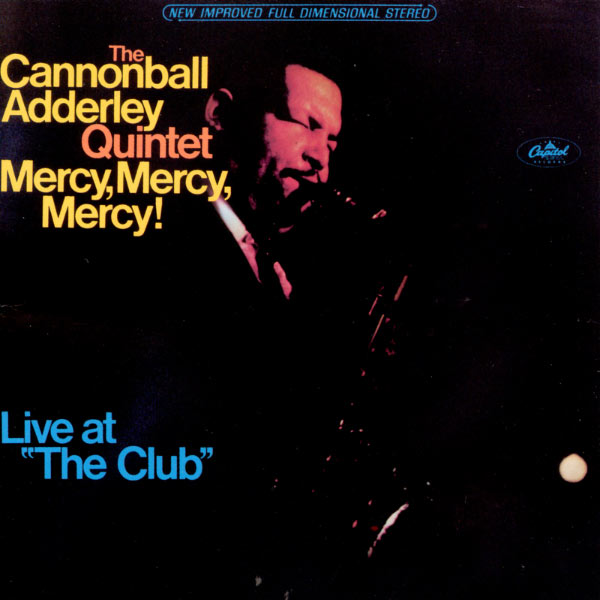
Cannonball Adderley: Mercy Mercy Mercy – Live At “The Club” (Capitol 1966)

The Cannonball Adderley Quintet Mercy, Mercy, Mercy Live at "The Club" Capitol / Blue Note 1966

I’ve previously written about this album here, and it is worth having already for the outstanding title track.

Bill Evans Trio: Waltz for Debby (1961)

I’ll mention Bill Evans twice on this blog post. Bill Evans during his career had three major trios (see also this blog post on his middle trio). He started, after the work with Miles Davis, with Scott LaFaro and Paul Motian. Unfortunately, LaFaro passed away in an accident shortly after the album below was recorded. Many still consider this early trio his best. I don’t necessarily agree, as I really love his later trios very much as well.

Bill Evans Trio Waltz for Debby

Waltz for Debby is part of several recordings taken by the trio live at the Village Vanguard. The Village Vanguard is one of the legendary NYC jazz clubs that is still open today. If you want more of it, you can also get The Complete Village Vanguard Recordings 1961 box, which includes the titles above. You’ll see it popping up a number of times below in this post.

The advantage of getting the individual Waltz For Debby album is that you can try to find one of the many audiophile remasters. I’ll leave it to others to debate which of the several available remasters is the best, and will recommend the HDtracks version which is already pretty good. Musically in any case, this album, is an absolute must have and really helped define the category of the Jazz Piano Trio.

My Rating: 5 stars

Bill Evans Trio: Consecration

Bill Evans Consecration The Final Recordings Part 2 Live At The Keystone Korner September 1980 Fantasy Recordings

Consecration is already mentioned as part of my 25 Essential Jazz albums. This is Evans’s latest trio, and actually his very final recording before his early passing.

Do I prefer Consecration over Waltz For Debby, or vice versa? Why decide? Get both!

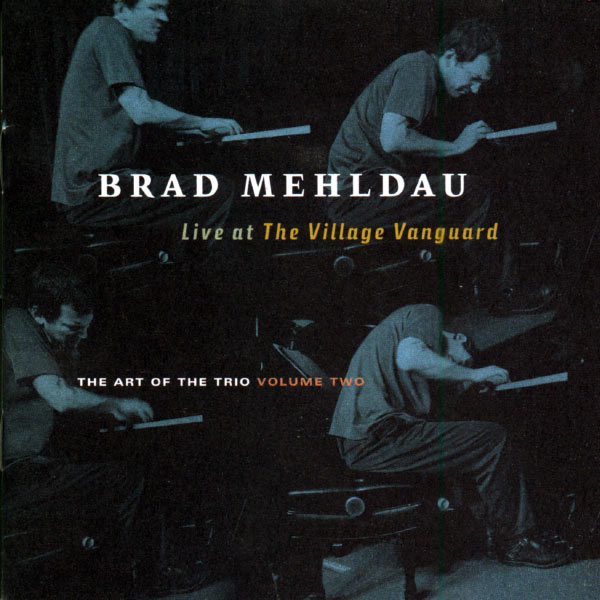
Brad Mehldau: The Art of the Trio Vol. 2 – Live At the Village Vanguard (1991)

This one is a new addition to the blog.

Brad Mehldau Live At The Village Vanguard The Art Of The Trio Volume Two

I’ve written about my love/hate relationship with Brad Mehldau several times (see here for example), but Vol. 3 of his early series The Art Of The Trio is listed in my 25 Essential Jazz albums. This live album is not as good as the studio vol. 3, but still very much worth having. Especially for Moon River, a particular favorite of mine. Recordede at the same Village Vanguard as the Bill Evans 30 years earlier.

My rating: 4 stars

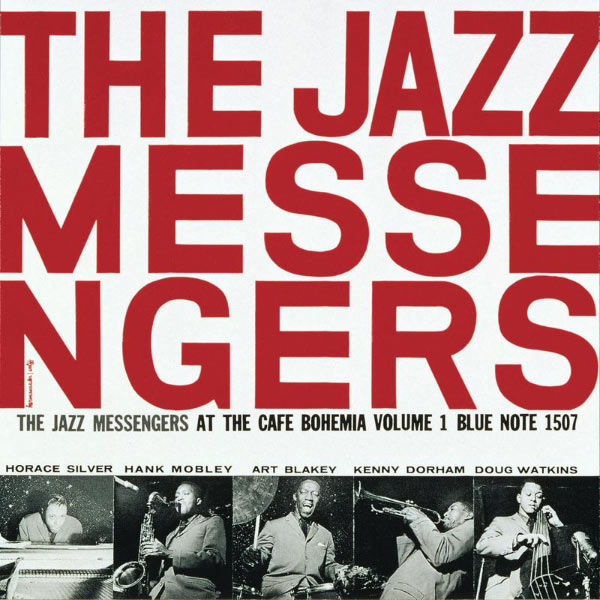
The Jazz Messengers At The Cafe Bohemia Vol. 1 (1955)

The Jazz Messengers At The Café Bohemia Vol. 1

I haven’t written about Hard Bop for a long time. Actually, I haven’t even listened to Hard Bop a lot recently, which is a pity, as this is one of my favorite genres.

I’ve even done an entire mini-series on the Jazz Messengers and their several alumni.

The above 1955 album is one of those who started it all. Look at the line-up. Horace Silver, Hank Mobley, Kenny Dorham. All of these had successful solo careers after which (check out my blog for recommended albums in the above mini series).

Unfortunately, there hasn’t been any new audiophile remastering of this album, so you can probably just as well go with the regular CD remastering by Rudy Van Gelder (although I’m not a particular fan of his remasters in general).

My rating: 4 stars

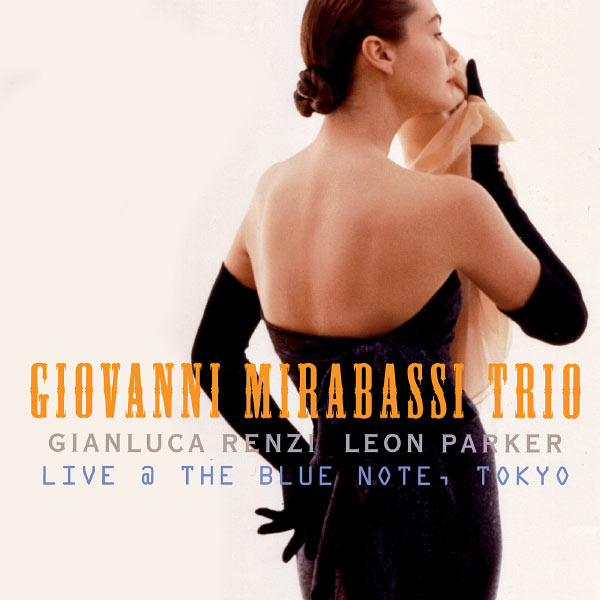
Giovanni Mirabassi: Live At the Blue Note Tokyo (2010)

3700426915557_600

Giovanni Mirabassi was also mentioned several times on this blog, including as part of my 25 Essential Jazz albums.

This album, recorded live in Toyko, is not my absolute favorite, but still a very good performance. What is nice about it that the trio takes time for each track, often 8-10 minutes, allowing melodic development and soloing.

My rating: 4 stars

Christian McBride Trio: Live At The Village Vanguard (2015)

The Christian McBride Trio Live At The Village Vanguard 2015 MackAvenue

No, I haven’t selected albums simply on the fact that they were recorded at the Vanguard. It is just simply a very popular recording spot.

I’ve written about this album previously, you’ll find my review here.

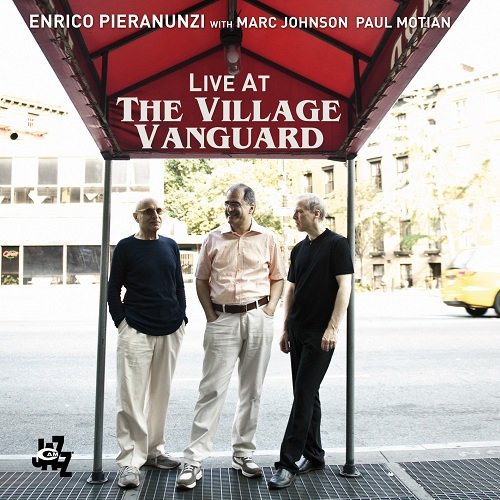
Enrico Pieranunzi: Live At The Village Vanguard (2013)

Yes, also Pieranunzi has recorded at the Vanguard in 2010.

I’ve written previously that I consider Pieranunzi as really following the Bill Evans heritage.

Enrico Pieranunzi with Marc Johnson Paul Motian Live At The Village Vanguard

And look at the lineup here: Paul Motian was already the drummer on Waltz For Debby above, and Marc Johnson was the bass player in Evans’ middle quartet (but has later played a lot with Pieranunzi).

This is a very good live album, but doesn’t get to the intensity swing-wise of his master. It’s very much worth having still. Pieranunzi really develops the lyrical side of Bill Evans even further.

Check out this video, how Paul Motian called up Pieranunzi for this one week live gig. The text is in Italian, but you get enough excerpts of the music to get a good idea.

My rating: 4 stars

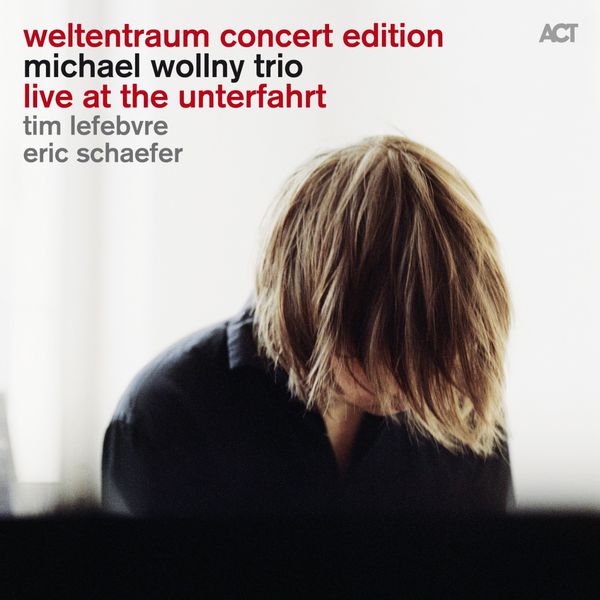
Michael Wollny Trio: Weltentraum Concert Edition – Live At The Unterfahrt

Michael Wollny Trio Live At The Unterfahrt Weltentraum Concert Edition ACT 2014 Tim Lefebvre Eric Schaefer

I’ve listed Weltentraum among my 25 Essential Jazz albums.

Michael Wollny is one of the most creative pianists we have today. This is the live album of Weltentraum, recorded at the Unterfahrt jazz club in Munich in 2014. This album is really as good as the studio one, in many respects even better. Very much worth having.

My rating: 5 stars

You can find the newly listed albums here, for links to the other albums please go to the original blog post.

Evans Waltz For Debby: here (HDTracks)

Brad Mehldau: here (Qobuz)

Jazz Messengers: here (Qobuz)

Giovanni Mirabassi: here (Qobuz)

Enrico Pieranunzi: here (Camjazz)

Michael Wollny: here (Qobuz)

A pretty useless review of Nézet-Séguin’s Mendelssohn Symphony Box

Spoiler alert

Yes, again no post in 2 weeks, but I assume you don’t want to hear my lame excuses (too much work, family, etc.).

So let me start with a spoiler alert (actually, a bit late given that the title already gives it away), this will be a relatively useless review. I’ll actually be writing only about 2 out of 5 symphonies, and you won’t even get a proper review, just a very subjective “I like it, but”, with out getting any more specific.

Mendelssohn

I haven’t written that much about Mendelssohn yet. And this is not because I don’t like the composer, to the contrary. I adore his Lieder ohne Worte  (Song without Words), and have written about them here.

I also very much like his violin concerto, and have mentioned Janine Jansen’s recording among my 25 Essential Classical albums.

But I haven’t really written about his symphonies yet. Why is that? Well, for once, I really only like symphonies 3 and 4, the Scottish and the Italian. No. 1 and 2 never touched me, and the reformation was with the exception of certain elements also not really my cup of tea.

Furthermore, I have yet to find my preferred set of these two. I still often go back to Christoph von Dohnanyi’s or Claudio Abbado’s old recordings.

I was very hopeful for the recent approach of Heras-Casado with the Freiburgers, but again, wasn’t convinced.

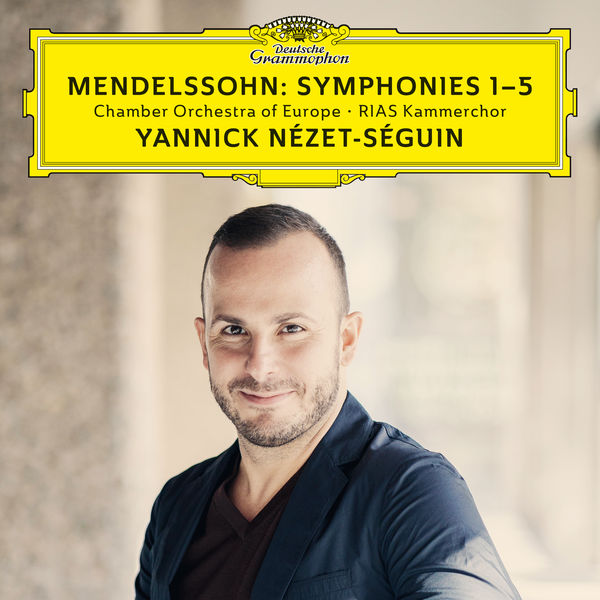
Therefore, I obviously immediately had to check out a new version by Yannick Nézet-Séguin with the COE.

Mendelssohn: The Symphonies – Yannick Nézet-Séguin – Chanber Orchestra of Europe (DG 2017)

Mendelssohn: Symphonies No. 1-5 - Yannick Nézet-Séguin - Chamber Orchestra of Europe - RIAS Kammerchor - Deutsche Grammophon 24/96

It is no secret, I generally like Nézet-Séguin, the dynamic Canadian, and especially so with the COE. Be it for his Cosi Fan Tutte or for example his great Rachmaninov recoring with Daniil Trifonov.

Some critics say he has too many orchestras, having been involved with the COE, the Philadelphia, and the Rotterdam, to just name some, but he still is one of the most promising conductors of our time.

So, after this long intro, what about his Mendelssohn?

As mentioned above, I’m not too familiar with Symphonies 1, 2, and 5, and will leave the judgment to others.

But for 3 and 4, I do have an opinion. I can simply say, after at least 4-5 listenings, this is a 4 star recording to me. Lots of energy, punch at the right places, enough darkness in the Scottish, enough lightness in the Italian (but with a twist).

So what is wrong, why not 5 stars? And here is again where I get useless. There is something missing, but I simply cannot put my finger on it. This will be a version that I’ll go to again many times, but will it be my reference? Probably not.

But then again, as mentioned above, I really don’t have a reference yet. Maybe the seemingly accessible symphonies 3 and 4 have some dirty secret, that just make them impossible to master. I’ll keep looking.

I’m curious what the professional reviewers will be saying (at the time of writing, I haven’t seen any reviews out there yet).

In the meantime, check out this recording. You won’t be disappointed, I promise, in spite of my rather useless review.

My rating: 4 stars

You can find it here (Qobuz) and here (Prestoclassical)

UPDATE Aug 11: In their September issue, Gramophone awards this box a Recording Of The Month. Richard Wigmore is talking about “imaginative, fabulously executed performances” that “guarantee abiding pleasure”.

UPDATE August 26: to add some further confusion: The Guardian give this box a 3 star rating only, calling technically ok but artistically not adding a lot. I guess you’ll really have to make up your own mind on this recording.

UPDATE Sep 3: also only 3 stars from the French Classica. So really your call. In a nutshell: Listen before you buy!

UPDATE Sep 10: Classics Today’s Victor Carr Jr gives 6 out of 10 points for this album, calling it a “rather pathetic drag”.

A Very Unlikely But Fascinating Combination: Country Folk in Hebrew by Jane Bordeaux

Very atypical

This really usually isn’t my kind of music. Up to the point I even had to create a new category for it in my category list (on the right if you’re reading this on a PC; below if you’re reading this on a smaller mobile device).

The genesis of this was a business trip to Tel Aviv some months ago. I ended up attending a meeting there, that as part of the entertainment program featured a local band.

According to the meeting organizer, this was really the latest hot sh..t in town. He explained it to me “take American country or folk. And then put lyrics in Hebrew over it”.

You’re probably having the same frown on your face now that I had when I heard the story for the first time.

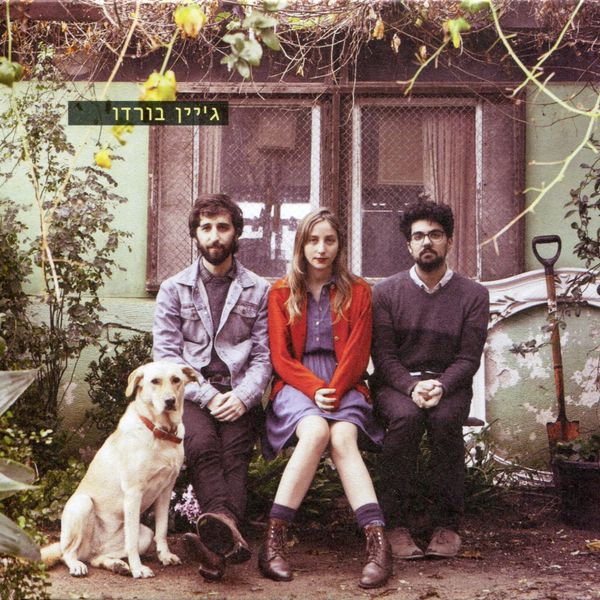
Later on during the event three people came on stage. A young, quite shy girl with an Ukulele (no kidding), another young guy with guitar, and a third slightly Hipster-type guy with an acoustic double bass. I really didn’t expect much.

And then the shy young girl started singing. And my jaw dropped. These guys are GOOD!

Jane Bordeaux

The name of the band is about as unlikely as the rest of the story. I have strictly no idea how they came up with that name. Their website doesn’t talk about it. But they must be a bit self-concious as the website ironically asks “How the hell did that happen?”. 

I’m not going to repeat the story here, but I really just want to point you to this funny, engaging, and intelligent music.

Obviously, I didn’t understand any of the lyrics (my Hebrew is a bit rusty…) beyond Whisky (one of the song titles), but I had a kind soul sitting next to me do a live translation, and what transpired is that they seem to think about the lyrics as much as about the music.

What you also should be checking out is their first music video, which is just beautiful. see below.


And then came the final song during that event, where at least I understood the lyrics. The video below wasn’t filmed at the event I attended, but the performance was of quite similar intensity:


I actually don’t like that Beatles song (nor, heresy am I a particular Beatles fan, but that’s another topic).

However, this little trio, especially the lead singer, Doron Talmon, has such an aura and presence, that they pulled off even this repetitive annoying song (don’t stone me) in such a way that I was simply impressed.

You really should check out their first album, titled simply Jane Bordeaux, it has a lot of little gems on there. And while the majority of their concerts seem to be in Israel, if you’re lucky enough to catch them at one of their rare concerts abroad, don’t hesitate.

Jane Bordeaux Jane Bordeaux album

My rating: 4 stars

You can find the album here (Qobuz) and here (Bandcamp).

Quatuor Ebène Plays Mozart & Beethoven – Tonhalle Zürich – June 11, 2017 – A Review

Quatuor Ebène

About a year ago I wrote about Quatuor Ebènes outstanding Schubert recording with Gautier Capuçon. For me, it was the album that should have won the Gramphone awards in 2016 in their category.

My first encounter with this young French quartet was even before that, with their excellent recordings of quartets by Felix and Fanny Mendelssohn.

They really are among the best string quartets out there in 2017, and this is not for a lack of competition.

So I was very pleased when I saw that they’d be coming to Zurich on a day where I’d be close by, yesterday, June 11, 2017

Tonhalle Zürich

A quick word about the Tonhalle Zürich. I’m actually not such a great fan of that venue (Luzern’s modern KKL is much nicer for my taste), but that said, both the big and small concert hall are have their end of 19th century luxury baroque style, and the 1930s incorporation of the old concert halls into the Zurich congress center is an interesting contrast of style.

Quatuor Ebene Tonhalle
Detail of Tonhalle Zürich Lobby


Between the two halls, I quite prefer the smaller one use for chamber music. I’ve had a number of fantastic concerts in here, including the great Quatuor Mosaiques with Haydn.

As a side note, the Tonhalle and the Kongresshaus will be renovated soon, and Zurich is currently preparing the Maag Music Hall in Zurich’s industrial “Kreis 5”, far away from the fancy shores of Lake Zurich, where the Tonhalle is a direct neighbor to the posh Hotel Baur Au Lac, to a completely different environment.

Maag Music Hall
Maag Music Hall back in January 2017


Quatuor Ebène at Tonhalle Zürich, June 11, 2017

But back to the good old Tonhalle.

Quatuor Ebène, dressed in black,  as the name (ebony) implies, started with Mozart.

Quatuor Ebène at Tonhalle Kleiner Saal Jun 11, 2017
Quatuor Ebène

But not with your Kleine Nachtmusik “Happy Mozart”, but with a romantic Sturm and Drang Mozart, the Mozart of Don Giovanni, sharing the same key, d-minor, somehow transporting Mozart directly into the 19th century. There is a lot of chiaroscuro, changing from shadows to the light in this work.

They have recorded this on their 2011 Mozart album, but this live interpretation went beyond what they recorded, there was an enormous passion in the room.

The move to Beethoven felt like a logical next step, with a very intimate connection to the Mozart.

They started with the latest of the “middle quartets”, op. 95, also known as Quartetto Serioso. Unlike some other nicknames like e.g. Moonshine, it appears that this name is genuinely by Beethoven.

It is not the most accessible of the middle quartets, it’s “seriousness” making it one of the most drastic works he’s ever written. This work mentally belongs much more to the late quartets.

Quatuor Ebene put all their energy into this and played as if their lives depended on it. The passion was tangible in the room.

After the break we returned to get the opus magnum of the evening. Just one number later in the list of Beethoven’s string quartets, no. 12 to be precise, op. 127. This work not only has the length of a symphony (and I’m talking Beethoven symphony), but also the power. Who would have thought that only 4 strings can fill a room with so much power?

But there wasn’t only power. The more than 16 minutes long Adagio was all subtleness, which transported the audience out of this world for the moment.

After the final movement, the Swiss audience simply didn’t want to stop clapping, clearly expecting an encore.

At the end, the four musicians came back out, without their instruments this time, explaining in a very friendly way that they felt that after such a work as op. 127, which they compared to the chamber equivalent of Beethoven’s Ode To Joy, there simply wasn’t any music they could play that wouldn’t be out of place.

I couldn’t have said it better.

What a concert. Magnificent


Sarah McKenzie Live in Berlin – May 5, 2017

Better late than never

This will be a post about all the things I’ve recently been late at.

Well not all the things, but at least two of them. One is recognizing the 2nd anniversary of my blog!

On May 22, 2015, I’ve published my first post here. We’re now a bit more than two years and 194 posts later, and I’m still doing it.

And really, what keeps me motivated doing this, beyond my passion for good music, is your feedback. I’ve heard from so many of you individually, so many encouraging comments, and appreciative notes, I just have to say a big THANK YOU!

The second thing I’m really late at is a review of the concert of Sarah McKenzie I saw about a month ago now.

Sarah McKenzie Live at Passionskirche Berlin

I’ve written about her three times already (here, here, and here) and I remain a great fan of this young Australian singer. So when I had the opportunity to see her live in Berlin, I grabbed it.

And I’m very glad I did. My review of her last album was a bit mixed. There was nothing wrong with the music per se, I just felt the album was a bit overproduced, a bit sterile.

Obviously, live you get a completely different experience.

Let me get the negative points out of the way first.

  • Never do a Jazz concert in a church

The Passionskirche in Kreuzberg is a beautiful building and room, but why on earth somebody would want to do a Jazz concert in there really is beyond me. The acoustics are really bad, and the long reverb half killed the excellent swing of the band. Well at least, for the first time in my life I had a beer (they sold drinks before the concert) in a church. An interesting experience.

  • No pictures please

Unfortunately, the organizers didn’t want me to take any pictures, although I had brought my little Fuji X100T. That’s really a pity, as I believe a concert report with some pictures of the event is much more interesting for the reader. So sorry guys, text only.

But as of now starts the positive part: It really was a fantastic concert.

Her band was as good as ever, and we got a really great mix of standards and her own compositions. So the program switched between the good old classics of  I’m old fashioned to her new Paris in the Rain. 

What were my highlights? Well, as always, Moon River, in a duet with guitar only. Pierre Boussaguet on bass, who managed to even improvise a Bach Cello Suite into his bass solo. A blues, where the entire band was just swinging like crazy.

And, maybe my personal favorite, Sarah has now added You Must Believe In Spring to her repertoire. I´ve written here how much I love this Michel Legrand Song that was made famous in the Jazz world by Bill Evans. It was fantastic hearing her perform this gem.

In a nutshell: Sarah Mckenzie is still on tour, including her very first time at the legendary Montreux Jazz festival in July. Here are her tour dates, make sure you check her out when you can, she is just amazing!


Classical Life

A classical music blog by music critic Tim Mangan

This Week's Music

Making Classical Accessible

From my Macbook to the Net

Evaporation of my thoughts and observations

Elestra

Author: Artienne

My Life in Music

Playing, Singing and Listening

ArsX3

A brand new journal reviewing books, cinema, music

LawrenceEz's Blog

Creative and Performing Arts: Writing, Classical Music, Photography

Laetitia Strauch-Bonart

Contemporary Politics & Culture

sibling revelry

reveling in all things classical

It's A Raggy Waltz

I collect jazz on vinyl, I dig the Dave Brubeck Quartet, & I write about it

La Musica

By two cousins

thejazzbreakfast

Dishing it out from the heart of England

only jazz

random thoughts about music that matters to me

The Culture Project

Exploring the world of literature, wine, art, music and more.

René Spencer Saller

The music causes me to dream of fabulous empires, filled with fabulous sins.

Breaking Baroque

Blog of Tafelmusik Baroque Orchestra and Chamber Choir

Tasting Nirvana

Eating your Dosha

Shadow of Iris

Poetry, fiction, short stories, more ...

The Immortal Jukebox

A Blog about Music and Popular Culture

April Greene

Writer + Editor

a pianist's musings

A history of your favorite classical music.

Classical music for all

Boris Giltburg's blog

I HEAR VOICES

An orchestra seat in the web space