Accordion And Guitar? Seriously? Absolutely! Rivages – A beautiful new ECM release by Jean-Louis Matinier and Kevin Seddiki

Is this Jazz?

I’ve not only been neglecting my blog overall quite a bit since 2020, but particularly if you’re following this site because you’re interested in Jazz, I’ve been really not writing about that a whole lot recently.

Unfortunately, this trend started already in 2019, when I barely found enough new releases that interested me enough to write about them, and really hasn’t improved this year. But when I saw this new cover popping up in the Qobuz New Releases section, with the beautiful typical ECM style cover, I had my hopes up.

Luckily enough, I wasn’t disappointed.

Now, before we go to the album itself, one could really argue if this is “Jazz” at all. A duo of accordion and guitar is certainly not your typical jazz setting.

And indeed, the music takes many inspirations, from “Manouche” type “gypsy” jazz, to more ethnic music (Matinier previously played on several of Anouar Brahem’s albums, and one of the tracks is coming from traditional Bulgarian folklore) to Gabriel Fauré (track 3, Les Berceaux).

But who cares, this is beautiful music, full stop. I anyhow already had a certain soft spot for the accordion, being a big fan of Richard Galliano (see here, here, and here).

Jean-Louis Matinier & Kevin Seddiki – Rivages (ECM 2020)
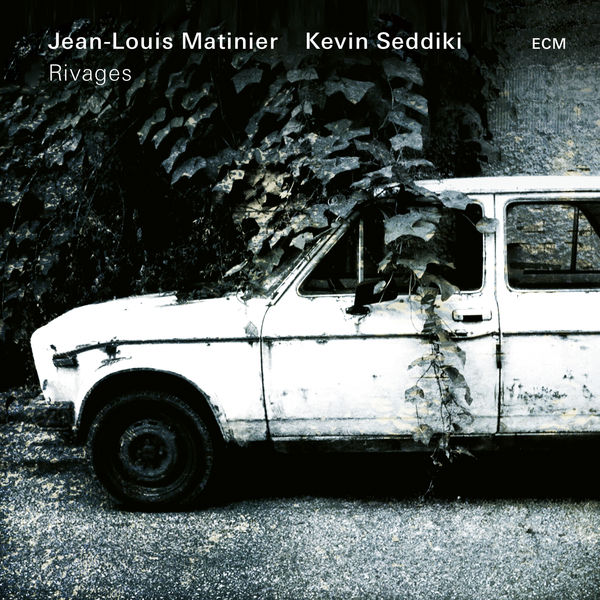
Jean-Louis Matinier Kevin Seddiki Rivages ECM 2020 24 96

I must admit, I’m not really sure what to write about this music.

I could be descriptive, and go into more details around Matinier’s long career including his contribution to Anouar Brahem’s masterpiece Le Pas Du Chat Noir.

I could equally detail the fascinating collaborations guitarist Kevin Seddiki has been part of over the years.

I could mention the amazing sounds quality of the album (though that’s not a surprise for an album produced by ECM’s Manfred Eicher).

Or I could go into a track by track description of the content. While I sometimes do this myself, I’m often struggling with the added value of trying to describe music.

Seriously, because this album is very special, I’d rather suggest you really give it a go directly. If you’re open to two outstanding musicians who just click and produce fascinating and intriguing music, check it out now.

My rating: 5 stars

You can find it here (Qobuz)
A wonderful new Chopin Concerto recording by Benjamin Grosvenor

Benjamin Grosvenor

Benjamin Grosvenor is still only 27. But what an amazing trajectory he’s already had.

I pretty much recommend every single one of his albums (see here or here for examples). I’ve even listed him in my Top 10 Classical Pianists, and he’s also featured in My Top 10 Chopin Albums.

So, obviously when he recently released the Chopin piano concertos, I was all ears.

So was Gramophone (Editor’s Choice March 2020), and the French magazine Diapason, who gave a Diapason d’or, their highest rating.

So far, my favorite versions of these were the great classics (Zimerman and Argerich), so do I agree with the praise this album got?

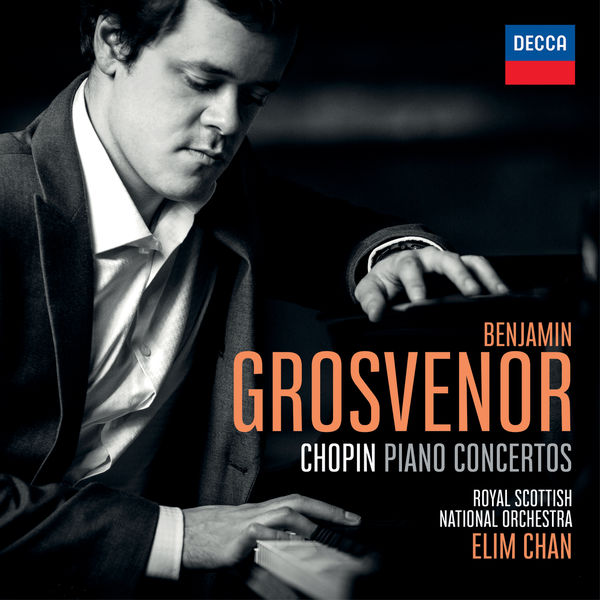
Chopin Piano Concertos – Benjamin Grosvenor – Elim Chan – Royal Scottish National Orchestra (Decca 2020)

And the simple answer is: Absolutely!

I must admit in the past when listening to the Chopin concertos I often skipped directly to the 2nd movements only. They are obviously the true peak of these works. But here with Grosvenor even the 1st and 3rd movements are highly enjoyable. I

One of the favourite pieces of the first movement starts from the 10 min mark. Here you really hear what an exceptional pianist Grosvenor is. He plays with the melody, keeps it singing all the time.

I must admit I didn’t know what to expect from the Royal Scottish National Orchestra. With the exception of a few recordings from the Neeme Järvi time this orchestra had never made it into my library.

And this album cover was the first time I’d ever heard of Elim Chan. One of the reasons is simply that she’s only 33, a very young age for a conductor. I’m very happy to see we’re finally getting more female conductors! Let’s watch her career closely.

The orchestra in any case isn’t the highlight of any Chopin concerto recording, many critics over the last one and and a half centuries dismissed it as mere “background” and claimed that Chopin didn’t know how to orchestrate. Whatever truth there is to this claim, in any case in this album, soloist and orchestra really complement each other, in a beautiful intensity.

So, while I presume you may already have a recording of the Chopin concerti, get this one anyhow. And if you don’t, get it now! This one is up there (or at least pretty close) with the Zimermans and Argerichs of this world.

My rating: 5 stars

You can find it here (Qobuz)

Brahms Late Piano Works In a New Fantastic Recording by Stephen Hough

Brahms Late Piano Pieces

I’ve written previously about these late masterpieces, op. 116 – 119, that are among the last pieces written by Brahms.

Brahms always was primarily a pianist. Whenever he wrote for other instruments, he got advice from experts, e.g. his friend Joseph Joachim for his violin works So it is not surprising that he wrote some of his most important but also most intimate works ever for the instrument he knew best.

I had been looking for a “definitive” version for a long time, and only some years ago fell in love with the album that the Russian pianist Volodos recorded in 2017 (see my review here). The only other version I reviewed here on this blog is by Andreas Staier on a fortepiano, only for op. 116.

So when I recently read two reviews, by Classicstoday and Gramophone, that both praised a new recording by Stephen Hough, I went out to buy it blindly.

You see, the issue is that Hyperion, the label that has Stephen Hough exclusively, doesn’t allow streaming, which is a key reason why I typically don’t buy his albums, as I can’t really explore them properly upfront, and also why I never reviewed any of his albums here, in spite of the fact that Gramophone is a huge fan.

But for my idol Brahms, it was worth the risk of GBP 13.

Brahms: The Final Piano Pieces – Stephen Hough (Hyperion 2020)

Stephen Hough Brahms The Final Piano Pieces Hyperion 2020 24 96

So, am I happy? To make it short, yes, very much. This is among the most unorthodox recordings of these work I’ve ever heard. None of these sound as I’m used to hearing them.

But honestly, it is worth the discovery. Once you overcome the initial surprise, you discover that Hough clearly has spent a long time thinking about these works, and each peculiarity is there for a reason. If you want to find out more about his approach to Brahms, check out this podcast about this new release.

I’m totally sold now. This is an album that I’ll go back over and over again, just because every single one of these little short gems is worth having a new look at them.

Here’s a Youtube example, so you can get an idea what I’m talking about. Let me know what you think!

In a nutshell, highly recommended! (My prediction is that this will make it into the Gramophone Award nomination list for 2020. Let’s see later this year if I’m right).

My rating: 5 stars

You can find it here (Hyperion Records).

Fauré’s Beautiful Requiem

Gabriel Fauré

This is my first ever entry on the French composer Gabriel Fauré, after more than 5 years of this blog and hundreds of posts. Why did it take me so long? Well to be fair, there are only a handful of his works of this late romantic composers that I actually know. Coming from a German speaking background originally, French composers just weren’t very high on the list of stuff that you’d be aware off. In my personal library that contains thousands of albums I only have 16 that include some music of him, mainly some piano and chamber music.

The only major work of him that I knew and loved for more than 20 years now is the requiem.

I still try to remember where I first discovered it. I still think it was in a movie soundtrack, I even remember a scene with clouds drifting over a sky, and this beautiful music that immediately struck me as truly celestial. I tried to find the movie, and Fauré is listed in more than 100 of them in IMDB, but I couldn’t retrace that scene just yet. I keep digging.

In any case, his requiem is truly special, unlike any other requiem that I’m aware of.

Catholic requiems are typically, in the spirit of Mozart and Verdi, to name two of the most famous ones, very big and sometimes even threatening affairs. After all, it includes the Dies irae, the “Day of Wrath”, that starts like this “Day of wrath and doom impending. David’s word with Sibyl’s blending, Heaven and earth in ashes ending.”.

Well, no ashes in Fauré’s requiem. He simply skips the Day of Wrath, and focuses rather on In Paradisum, which I presume does’t need translation.

Overall, this really is the most peaceful (even compared to my beloved Brahms German Requiem) of all works for mourning the dead that I’m aware off.

My father passed away about a year ago, so I’ve been listening to this, as well as the Brahms, quite regularly. While I’m not at all religious, both works really give me solace.

For years I only had one version, which I still treasure today, by Michel Corboz with the Berne Symphony Orchestra. Not necessarily a reference version, but still one of my favorites.

But I wanted to write about this one instead:

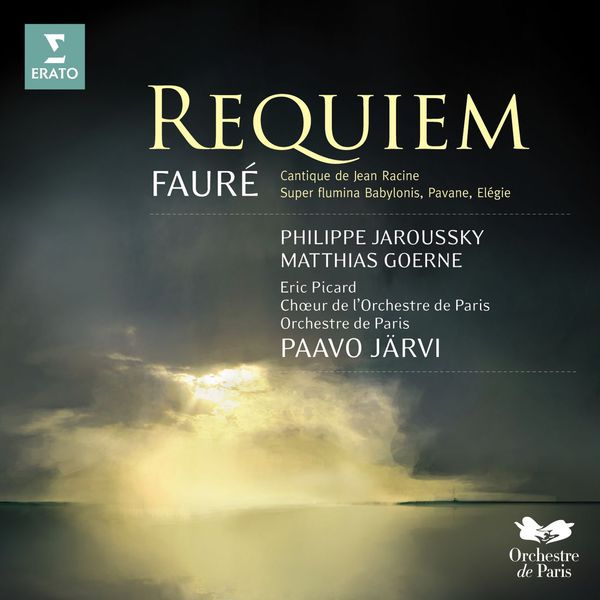
Fauré: Requiem – Paavo Järvi – Orchestre de Paris (Erato 2011)

Regular readers of my blog know that I’m a fan of Paavo Järvi. He is here conducting the Orchestre de Paris, which obviously is very familiar with this work. I still often see that French orchestras have an advantage for French music, as it is so engrained in their culture.

Fauré Requiem Cantique de Jean Racine, Super Flumina Babylonis, Pavane, Elegie Philippe Jaroussky Matthias Goerne, Eric Picard, Choeur de l'Orchestre de Paris, Orchestre de Paris Paavo Järvi 24 48 Erato Warner 2011 24 48

On top of a top notch conductor and an orchestra that knows what it is doing, you also get two fantastic soloists, Philippe Jaroussky and Matthias Goerne.

Finally, this album will also give you an overview of some of the other large orchestral works of Fauré that are worth knowing, like the Cantique de Jean Racine, the Elegie for Cello, and the Pavane.

Highly recommended.

My rating: 5 stars

You can find it here (Qobuz).

Quatuor Ebène’s truly enjoyable Razumovsky quartets

Beethoven’s String Quartets

I must admit I always found the category of the string quartets one of the most intellectually challenging, but at the same time, also one of the most rewarding categories in classical music.

I, like many started out my classical journey with symphonic music, and, coming from the piano as a (lousy) amateur myself, with solo piano music.

I had an easier access to chamber works with a piano in it, e.g. trios, violin sonatas. But the string quartet really seemed to me the most daunting works to approach.

That said, there are worse works to start your exploration than Beethoven’s Rasumovsky quartets, officially known as op. 59. These are the works of a Beethoven in a great phase, contemporary of the 4th symphony and the violin concerto. These are the first string quartets of the so-called “middle-period”, after the 6 “early” quartets in op. 18. By this time, Beethoven was truly established as a respected master in Vienna, at the age of 35.

By the way, even Beethoven waited for a while until he attacked the string quartets category, with such a strong tradition being established by Haydn and Mozart.

Op. 59 No. 1 and 2 present all the skill set of an accomplished composer, so no matter how often you listen to them, there’s always something new to discover. These were sponsored by Andrey Rasumowsky, an important diplomat in Vienna at that time.

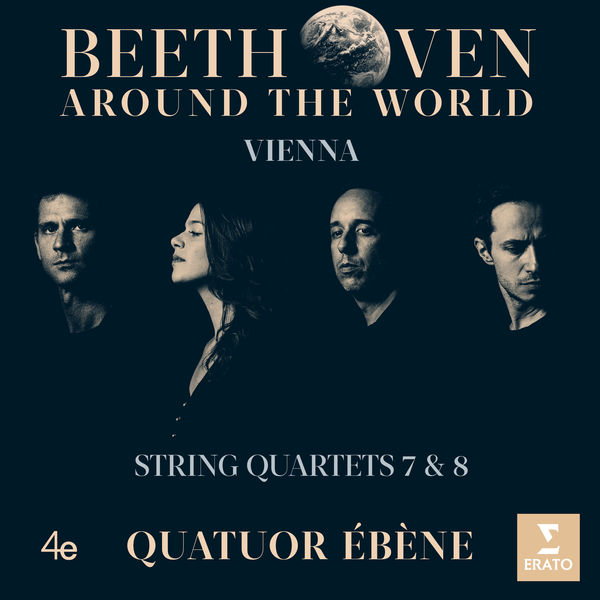
Quatuor Ebène: Beethoven Around The World – Vienna

Beethoven Around The World Vienna String Quartets 7 & 8 Quatuor Ebène Erato 2019 24 96

I’ve written about the French Quatuor Ebène before, praising their fantastic recording of Schubert’s string quintet.

I’ve even seen them live some years ago performing late Beethoven at the Tonhalle in Zürich (still in the old hall, not the current “factory” interim arrangement).

I therefore had high expectations when I read that they will release a complete cycle of Beethoven’s string quartets, taken from live recordings throughout the world, during 2020, which you know if you haven’t been hiding under a rock, is Beethoven’s 250th anniversary.

The “Vienna” in the album title refers to the recording location, so very appropriately starting in the town which was Beethoven’s home for so many years.

So what do you get, and how does it compare to my current reference cycle, by the great Takacs quartet?

Well to make it short: it is a truly great recording. Both Ebène and Takacs give you top-notch performances of both op. 59 No. 1 and 2. Ebène is occasionally a bit more on the extremes, while the Takacs are slightly more “polished”, but both are truly enjoyable performance of these masterpieces.

Really can’t wait for the rest of the tour of “Beethoven around the world”!

My rating: 5 stars

You can find it here (Qobuz)
My Top 3 Jazz Albums of 2019

Happy New Year

Wishing all of you a fantastic 2020!

I meant to complement my Top of the Year 2019 article I wrote on classical music with a similar one for Jazz. I didn’t get to finish that last year, so at least it is the first thing I do in the still very fresh year of 2020. Hope all of you had a nice New Year’s Eve last night.

Why is this post called “Top 3” and not “Top 5” as I typically do? Well, for one I did review significantly less albums in 2019 than in the years before, due to very extensive business travel.

Furthermore however, I find less and less new Jazz albums that truly excite me. Not sure if it is the Jazz scene, or my taste is evolving. Anyhow, let’s get to it.

Keith Jarrett – Munich 2016

Keith Jarrett Munich 2016 ECM 2019 24 96

Any new Keith Jarrett solo album is an event, but this is a particularly nice one. I’m slightly biased as me attending the 2015 concert in Lucerne that was part of the same tour triggered me to start this blog in the first place Highly recommended. You’ll find my original review of Munich 2016 here.

GoGo Penguin – Ocean in a Drop

GoGo Penguin Ocean In A Drop Music For A Film Blue Note 2019

Ocean In A Drop is a very special album. Not even originally intended to be released, it really captures a very special atmosphere of an improvised film soundtrack. I still haven’t seen the movie it refers to, but keep going back to the album on a regular basis.

Triosence: scorpio rising

Triosence: Scorpio Rising 2019 24 96

I’ve written about Triosence previously (here and here), but never got to formally review this album. They are a relatively unknown group from Germany, but their style is very much to my taste. So this may be the most subjective of my recommendations. Triosence are all about melody. Therefore, some may consider them a bit too mainstream. So check them out before you buy, but if you like modern trio jazz, they are a worthy discovery. You’ll find it here (Qobuz)

So, over to you, enlighten me! I’m sure I’ve missed plenty of good new releases in 2019 that should have been mentioned here. What would you recommend I check out?

Wishing you again a Happy New Year and thank you for all the great feedback and discussions we had in 2019!

My Top 5 Classical Albums of 2019

Isabelle Faust plays Bach Violin Concertos

This album just had to be there. I’m a big Isabelle Faust fan, as most of my regular readers know.

This is just a fantastic album overall, and an must have. Hugely enjoyable, Faust’s signature Sleeping Beauty Stradivarius sound, and the AKAMUS is a perfect partner. I had heard the same combination live in 2018, and it was already a great experience.

You’ll find the original review here

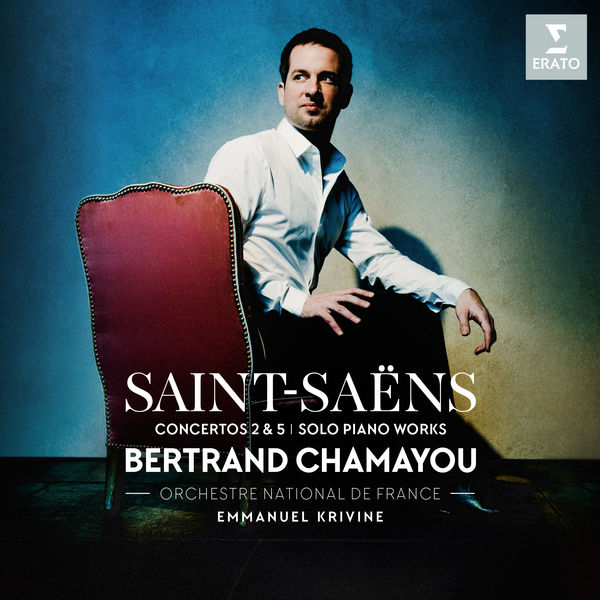
Saint-Saëns Piano Concertos 2&5 by Bertrand Chamayou

Saint Saens Concertos 2& 5 solo piano works Bertrand Chamayou Orchestre National de France Emmanuel Krivine Erato 2019 24 96

I really didn’t know Saint-Saëns really well before 2019. I still don’t, but at least the piano concertos were a true discovery for me, with Bertrand Chamayou’s fantastic recording, also with the equally exciting album by Alexandre Kantorow with the concertos 3-5.

The Chamayou album got the 2019 Gramophone award, and I can only highly recommend this, particularly for the concerto no. 2 which really has become a favourite of mine now.

Yuya Wang’s Berlin Recital

Yuya Wang The Berlin Recital Encores Deutsche Grammophon 2019 24 96

I’ve said it in the review, I wasn’t a big fan of Yuja Wang before this album. This live recital really has become one of my absolute favourites, for the playing, the recording quality, and the exciting repertoire. Highly recommended.

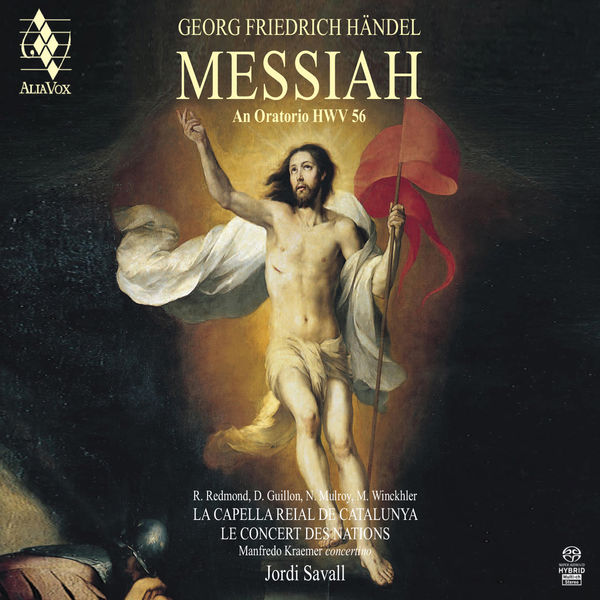
Savall’s mesmerising Messiah

Georg Friedrich Händel Messiah An Oratorio HWV 56 La Capella Reial de Catalunya Jordi Savall Alia Vox 2019 DSD 24 88

This album, which only came out some weeks ago, has been in constant rotation on my playlist. Being in the Christmas season helps, but this album constantly keeps playing in the back of my head, even when not listening to music at all. You’ll find my original review here.

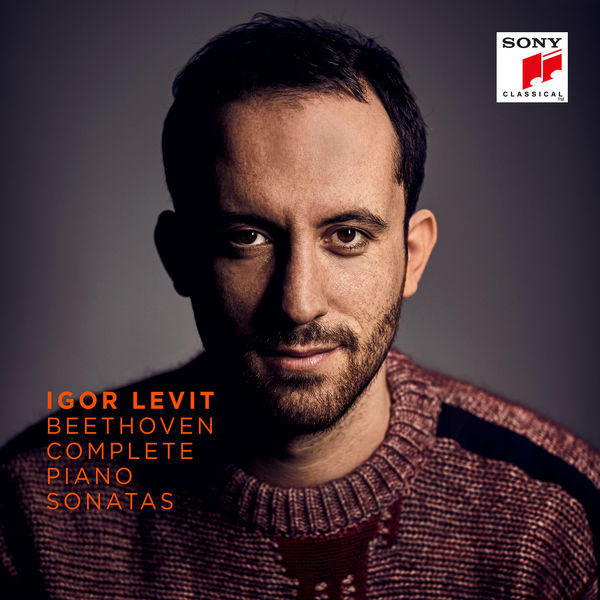
Igor Levit’s Beethoven Cycle

Igor Levit Beethoven Complete Piano Sonatas Sony Classical 24/96 2019

I had several contenders for the last spot on this list. There’s Volodos’ beautiful recording of the Schubert sonata D959 (not yet reviewed), Pichon’s Liberta compilation, several of the great Debussy recordings on Harmonia Mundi (e.g. Faust, or Roth), or Petrenko’s Tchaikovsky Pathétique. But ultimately I ended up choosing this fantastic cycle. I have yet to fully discover in detail every of the 32 sonatas (there’s just so much material), and I don’t think I’ll ever feel fully qualified to review all 32 sonatas in detail.

And I don’t necessarily agree with every single choice of style or particularly tempo. But one this is for sure, this cycle is special, and will make you think. Isn’t this what musical enjoyment is all about?

You’ll find the download links to all of the above in the original reviews.

So, up to you? Do you agree with my choices? Anything I missed?

Classical Life

A classical music blog by music critic Tim Mangan

This Week's Music

Making Classical Accessible

From my Macbook to the Net

Evaporation of my thoughts and observations

Elestra

Author: Artienne

My Life in Music

Playing, Singing and Listening

ArsX3

A brand new journal reviewing books, cinema, music

LawrenceEz's Blog

Creative and Performing Arts: Writing, Classical Music, Photography

Laetitia Strauch-Bonart

Contemporary Politics & Culture

sibling revelry

reveling in all things classical

It's A Raggy Waltz

I collect jazz on vinyl, I dig the Dave Brubeck Quartet, & I write about it

La Musica

By two cousins

thejazzbreakfast

Dishing it out from the heart of England

only jazz

random thoughts about music that matters to me

The Culture Project

Exploring the world of literature, wine, art, music and more.

René Spencer Saller

The music causes me to dream of fabulous empires, filled with fabulous sins.

Breaking Baroque

Blog of Tafelmusik Baroque Orchestra and Chamber Choir

Tasting Nirvana

Eating your Dosha

Shadow of Iris

Poetry, fiction, short stories, more ...

The Immortal Jukebox

A Blog about Music and Popular Culture

April Greene

Writer + Editor

a pianist's musings

A history of your favorite classical music.

Classical music for all

Boris Giltburg's blog

I HEAR VOICES

An orchestra seat in the web space